
On this page
Start here
Quick answer
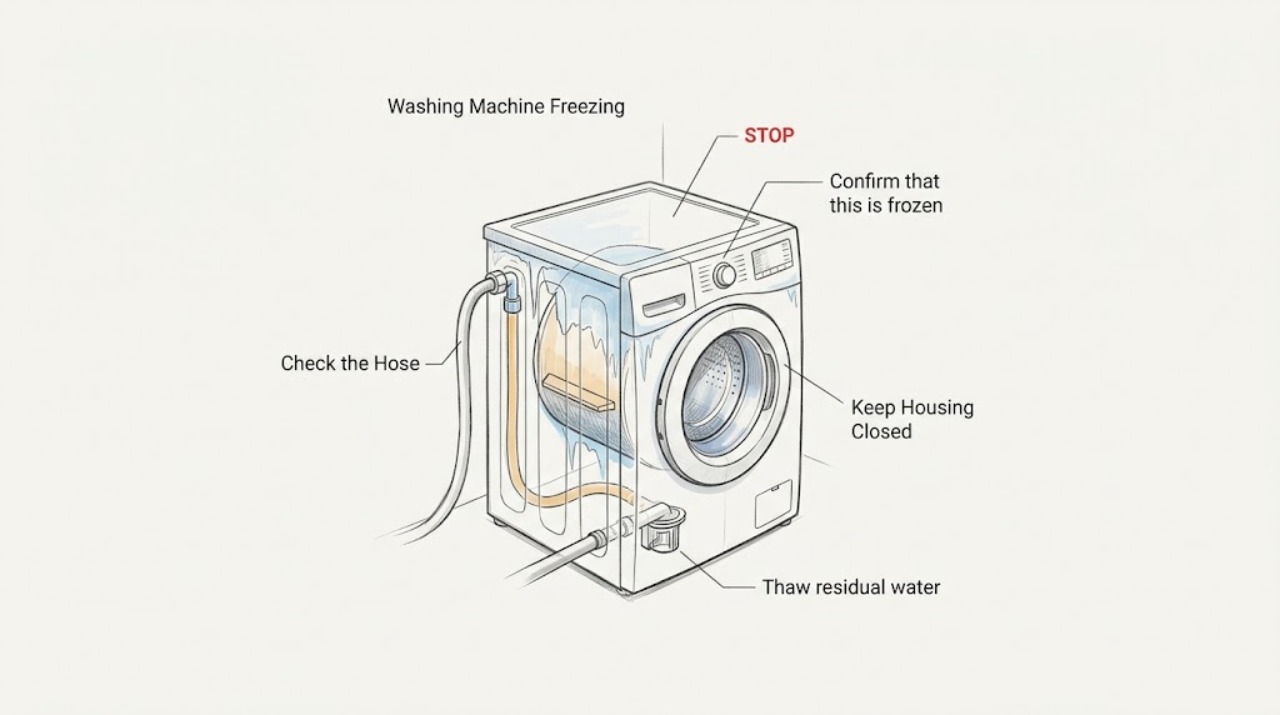
If a Zanussi washing machine has actually frozen after being left in a below-zero area, stop the programme, disconnect power, close the water tap, and do not force a hose or use sharp tools. Once the machine and its connections can be handled safely, Zanussi's washing-machine manual describes loosening the tap and inlet with warm water, placing the inlet pipe in warm water, adding warm water to the drum and waiting 10 minutes, then reconnecting the inlet and checking that filling and draining work normally. Reuse the machine only when the room is above 0 °C and there is no leak, cracked hose, electrical damage, or unusual noise. If “freezing” means a stuck display or a cycle that stops without visible ice, use the exact model's fault guidance instead; Zanussi identifies imbalance, water supply, and drainage as different mid-cycle causes.
Work through in order
Diagnostic checks
Use only checks that match the exact appliance or system and its official guide.
-
Confirm that this is frozen water, not a stuck cycle
From a dry, stable position, stop the programme if possible, disconnect the washer from power, close the water tap, and inspect only the visible tap, inlet hose, drain hose, and surrounding floor. Do not force a fitting or turn the machine on to test it while ice or standing water is present.
Expected result: The washer was in a below-zero room and there is visible ice, a rigid inlet or drain hose, or a frozen tap connection; alternatively, there is no visible ice and the symptom is only a locked display or a programme stopped mid-cycle.
Next step: If ice is visible and the appliance is dry and undamaged, continue to the gentle inlet-thaw check. If no ice is visible, keep the machine disconnected until you identify the exact model symptom and follow the no-ice branch.
Stop if: Stop and arrange qualified appliance or electrical help for water near the plug, a wet cabinet or control panel, a cracked hose, a damaged cord, smoke, burning odor, or any fitting that will not move without force.
Why this matters
Why: Visible ice in a cold location supports a frozen water path. No ice makes the freezing diagnosis uncertain and shifts attention to Zanussi's separate mid-cycle, power, water-supply, or drain guidance.
-
Thaw the tap and inlet hose without forcing it
With power still disconnected and the tap closed, use warm water to loosen the tap and inlet connection. If the hose can be removed without force and the exact manual permits it, place the inlet pipe in warm water until it is flexible; keep the hose ends contained so thaw water cannot reach the plug or controls.
Expected result: The tap and hose become flexible and intact, ice remains after gentle warming, the fitting will not release, or the hose shows a split, bulge, or leak.
Next step: If the hose is flexible and undamaged, leave power off and continue to the drum and drain-path thaw. If ice persists, let the room warm naturally and use the exact model manual; if damage or a leak appears, keep the tap closed and arrange service.
Stop if: Do not use boiling water, an open flame, a heat gun, a sharp tool, or force on the tap or hose. Stop for a cracked connector, uncontrolled water, or any water contacting electrical parts.
Why this matters
Why: A flexible, undamaged inlet supports a thawed supply path. Persistent ice suggests the machine or room still needs to warm. A damaged or forced connection can leak when water pressure returns and is no longer a routine thawing check.
-
Thaw residual water in the drum only when safe
Only while the washer remains unplugged, the room is warming, and there is no electrical or cabinet damage, add warm water to the washing drum as described in the reviewed Zanussi manual and wait 10 minutes. Do not open a pump cover or reach into a frozen drain path; follow the exact model manual for any drain-filter access.
Expected result: The drum water remains liquid and the machine can later accept and release water, ice or blockage remains, or water escapes from the base, hose, seal, or pump area.
Next step: Allow the appliance to reach an ambient temperature above 0 °C, then inspect from outside for leaks before restoring water or power. If water escapes or the drain path remains blocked, keep the washer isolated and arrange authorised service.
Stop if: Do not energize a wet appliance, remove panels, chip ice, or continue if the door seal, tub, pump housing, cabinet, or hose is cracked or distorted.
Why this matters
Why: A liquid drum and intact exterior after warming are consistent with the frozen water having thawed. Persistent blockage or a new leak may indicate freeze damage or a separate drain fault and cannot be diagnosed safely from this generic topic.
-
Restore the connections and check filling and draining
When the room is above 0 °C and all visible connections are flexible, dry, and undamaged, reconnect the inlet hose according to the exact manual, open the tap gradually, and perform only the model-approved empty test or programme from a dry, attended position.
Expected result: The washer fills and drains normally with no leak or unusual sound; it does not fill, does not drain, trips power, leaks, or returns a fault code.
Next step: If the test is normal, use the washer normally and complete the freeze-prevention check. If it fails, note the exact code and behaviour, close the tap, disconnect power, and provide that record to an authorised technician.
Stop if: Stop immediately for a leak, repeated breaker trip, smoke, burning odor, abnormal vibration, or any need to open the cabinet or test live electrical parts.
Why this matters
Why: Normal filling and draining support a cleared frozen path. A failure after thaw can reflect a blocked or damaged inlet, drain, sensor, pump, or control system, but the symptom alone does not identify a replaceable part.
-
Remove residual water before another cold spell
If the washer is installed or stored where it may freeze, close the tap and use the exact Zanussi manual's anti-freeze procedure to drain remaining water from the inlet and drain path. The reviewed manual places the inlet end into a container and describes a model-specific drain-out step before reconnecting it; use that procedure only when the appliance is thawed, empty, and operating safely.
Expected result: Water drains into the container and the inlet and drain paths are left empty, or water will not drain, the hose remains frozen, or a connection leaks.
Next step: Keep the machine in a room above 0 °C when possible, keep the tap closed during storage, and repeat the exact manual's draining steps before freezing weather. Arrange service when the path cannot be emptied without force.
Stop if: Do not improvise a pump-disassembly or hose-removal procedure, and do not leave a leaking connection under pressure.
Why this matters
Why: Removing residual water reduces the material available to freeze in the supply and drain paths. Failure to drain or a leak means the appliance is not ready for cold-weather storage and may need a model-specific service procedure.
Use your observations
Decision map
Find the observation that best matches what you see, then follow the next safe action.
-
PATH 01Next step
What you see
Ice or rigid water connections are visible after the washer has been in a below-zero room, and the plug, cabinet, hoses, and floor are dry and undamaged.
Do this next
Keep power disconnected and the tap closed, then use only the gentle warm-water thaw sequence in the exact model manual. Recheck for cracks and leaks before restoring water or power.
Why this path and its safety boundary
Why it matters: A frozen inlet, drum, or drain path is more likely than a control fault.
-
PATH 02Next step
What you see
The hoses are flexible and the room has warmed, but the washer still will not fill or drain, leaks, trips power, or reports a code.
Do this next
Close the tap, disconnect power, preserve the code and the fill/drain behaviour, and arrange authorised appliance service. Do not order a valve, pump, heater, or control board from this symptom alone.
Why this path and its safety boundary
Why it matters: The freeze may have caused damage, or a separate inlet, drain, sensor, or control fault may be present; thawing alone does not identify the failed component.
-
PATH 03Next step
What you see
There is no visible ice, but the display is locked or the programme stops mid-cycle.
Do this next
Do not add warm water to the drum. Check the exact model's error message and, only from safe access, the load balance, water supply, and drain path; use the model reset guidance once if appropriate, then request service if the stop repeats.
Why this path and its safety boundary
Why it matters: This is not enough evidence to call the machine physically frozen. Zanussi's mid-cycle guidance makes imbalance, water supply, and drainage more likely alternatives.
-
PATH 04Next step
What you see
The appliance is newly installed, was left in a cold location, and has no visible ice or damage.
Do this next
Let the appliance stand for a few hours to warm, then check the door closure and water supply using the exact manual. If it still will not start, arrange authorised service.
Why this path and its safety boundary
Why it matters: Zanussi says a new machine left below 10–15 °C may have difficulty starting until it warms; this is distinct from a confirmed frozen water path.
-
PATH 05Next step
What you see
Water reaches electrical parts, a hose or cabinet is cracked, the machine smells burned, trips power, or a fitting needs force.
Do this next
Leave the machine disconnected, keep the water tap closed, keep people away from the wet area, and arrange qualified appliance or electrical service from a safe location.
Why this path and its safety boundary
Why it matters: This is a safety or potential freeze-damage condition, not a routine thawing branch.
Helpful context
Understand the symptom
First separate frozen water from a frozen-looking cycle
A washer in an unheated room can freeze when residual water remains in the inlet or drain path. Look for a cold, below-zero environment, rigid or iced hose connections, or ice at the tap or drain area from a dry, safe position. If there is no ice and the control panel is simply stuck, the word “freezing” may describe a programme or display problem rather than frozen water. Zanussi's separate mid-cycle guidance points to an unbalanced load, water supply, or drain issue in that situation, so do not pour warm water into the drum unless there is evidence that the appliance itself is frozen.
Thaw gently and keep power isolated
The model-specific Zanussi manual reviewed here says to disconnect power before handling a frozen washer, use warm water to loosen the tap and inlet, and keep the ambient temperature above 0 °C before reuse. Treat those steps as a safe pattern, not a substitute for the manual for your exact model. Do not force a fitting, chip ice with a sharp object, energize a visibly wet appliance, or keep testing after a hose, seal, or cabinet has cracked.
If the washer is new and merely cold
A recently installed machine may have difficulty starting after being left in a cold location even when it is not visibly frozen. Zanussi advises allowing a cold new appliance to stand for a few hours to warm, then checking the closed door and water supply. If warming does not restore operation, or if the machine stops again, record the model and any display code and arrange authorised service rather than guessing at a part.
When checks do not resolve it
Need a professional?
Arrange authorised Zanussi or qualified appliance service when the machine remains inoperative after a safe thaw, will not fill or drain, leaks, returns a code, trips power, or shows cracked or distorted hoses, seals, pump housing, cabinet, or electrical parts. Provide the exact model or product number, the room conditions, where ice was seen, what was thawed, and the first post-thaw behaviour.
Common questions
FAQ
Can a Zanussi washing machine really freeze?
Yes, residual water in an inlet, drum, or drain path can freeze when the machine is left in a below-zero location. Confirm visible ice or rigid water connections before treating the symptom as physical freezing; a stuck display without ice can be a different fault.
Can I use boiling water or a sharp tool to thaw the washer?
No. Keep power disconnected and use only the gentle warm-water method permitted by the exact Zanussi manual. Do not force fittings, chip ice, use an open flame or improvised heat source, or allow thaw water near electrical parts.
What if the Zanussi washer is stuck but there is no ice?
Do not pour warm water into the drum just because the display or cycle appears frozen. Check the exact model's code and the safe load-balance, water-supply, and drain guidance; Zanussi treats those as possible causes of a machine that stops mid-cycle.
How do I prevent a Zanussi washing machine from freezing again?
Keep the appliance in an area above 0 °C when possible. If it must be in a location that can freeze, close the tap and follow the exact manual's anti-freeze procedure to remove remaining water from the inlet and drain path before storage.
Read the exact guide
Official sources
- Recently installed washing machine does not startZanussi · Supports the newly installed, cold-but-not-visibly-frozen branch only; it is not evidence of a universal temperature limit for every Zanussi model.
- 说明书Zanussi · Directly supports the reviewed Zanussi manual's frozen-washer thaw sequence, above-zero reuse condition, pre-maintenance power isolation, and residual-water removal. Steps are model-specific and should be checked against the reader's exact manual.
- Washing machine stops in the middle of a cycleZanussi · Supports the no-visible-ice branch when freezing means a mid-cycle stop rather than frozen water.
Community feedback
Share a repair observation
Share a plain-text repair observation. Accepted observations are published automatically; this page may take a moment to update.