
On this page
Start here
Quick answer
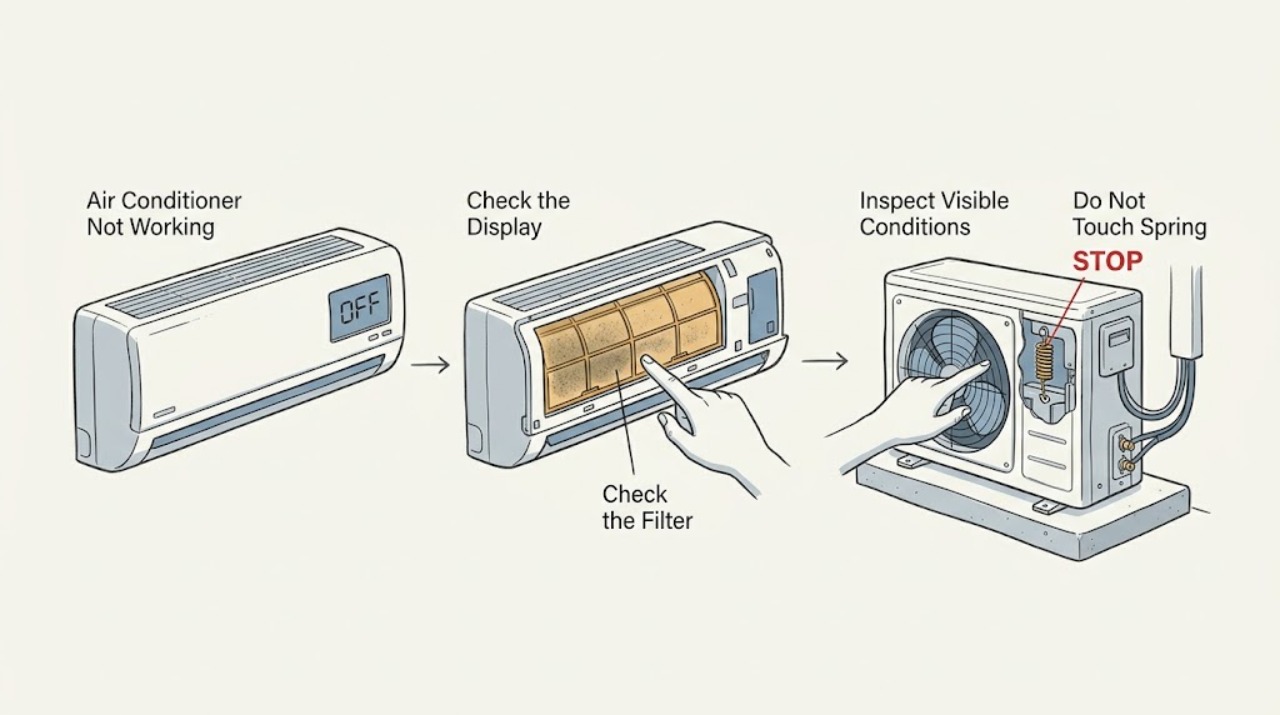
First separate the symptom: is the thermostat or display dead, is there indoor airflow that is not cool, or is there little or no airflow? Amana describes a typical central system as an indoor evaporator and blower connected by ducts to an outdoor condenser, compressor, fan, electrical controls, and refrigerant lines, so one external symptom does not identify one failed part. Check the thermostat's mode and batteries if applicable, replace a visibly clogged air filter with the type and schedule specified for the system, keep supply and return openings clear, and inspect the outdoor unit from a safe distance for leaves or grass blocking airflow. Do not open the equipment, test voltage, handle refrigerant, or repeatedly reset a breaker. If the system still will not run, the airflow is weak, a drain is overflowing, ice is present, or the outdoor unit is silent while the thermostat calls for cooling, arrange a licensed Amana HVAC professional; shut the system off for smoke, burning odor, exposed wiring, or water near electrical equipment.
Before you begin
Safety first
- The owner scope is limited to normal thermostat controls, user-replaceable batteries where applicable, an accessible filter, open registers and returns, and safe visual inspection of outdoor clearance and moisture. It excludes panels, wiring, voltage, motors, capacitors, compressors, coils, refrigerant, concealed drains, and bypassing safety controls.
Work through in order
Diagnostic checks
Use only checks that match the exact appliance or system and its official guide.
-
Check 1
At the wall thermostat or normal control, confirm that the display is on, the system is set to cooling, and the requested temperature is below the room temperature. Replace thermostat batteries only if the thermostat is designed for user-replaceable batteries and shows a low-battery indication. Note whether the indoor blower starts when cooling is requested.
Expected result: The thermostat is blank, the mode is not cooling, the battery warning is present, the thermostat responds but there is no indoor airflow, or the blower runs.
Next step: Correct only the user-accessible mode or battery condition, then make one normal cooling call. If the display remains blank, the blower will not run, or the system does not respond, stop at controls and arrange a licensed HVAC diagnosis.
Stop if: Do not remove the thermostat from its wiring base, open an air handler, or bridge thermostat terminals.
Why this matters
Why: A dead thermostat or wrong control state can prevent a cooling call. If the thermostat responds but the blower or outdoor unit does not, the fault may be in the system's power, controls, motor, or another component; the observation does not identify which one.
-
Check 2
Inspect the accessible air filter and replace it only with the type and orientation specified by the system or filter instructions if it is visibly loaded with dust. Check that supply registers and return grilles are not blocked by furniture or closed dampers. Do not remove a coil cover or reach into the blower compartment.
Expected result: The filter is clogged, several registers or returns are blocked, airflow improves after the approved filter change, or airflow remains weak with clear openings.
Next step: Allow the system to run normally after the filter change and monitor cooling. If airflow remains weak, ice forms, or the system still cannot cool, turn it off and arrange service rather than increasing fan speed or opening the air handler.
Stop if: Do not install an unapproved filter, force a filter into place, clean an indoor coil with chemicals, or access a powered blower.
Why this matters
Why: Amana says dirty filters restrict airflow and that blocked supply or return paths can alter airflow and system performance. Persistent weak airflow after the accessible filter and vent check can involve the blower, coil, ductwork, or another system condition.
-
Check 3
From a safe position, inspect the outdoor Amana unit without opening it. Look for leaves, grass, snow, stored items, or other debris pressed against the cabinet or blocking the outdoor coil. Also note whether the outdoor fan or unit starts when the thermostat calls for cooling, but do not touch the fan or electrical enclosure.
Expected result: Airflow around the outdoor unit is restricted, the outdoor unit is silent while indoor air moves, the fan makes a new loud or scraping sound, or the outdoor area is clear and the system still does not cool.
Next step: Remove only loose debris that is safely reachable without opening or moving the unit, then make one normal cooling call. If the unit remains silent, sounds abnormal, or does not cool, shut it off and arrange licensed service.
Stop if: Do not remove the service panel, reach through the grille, straighten coil fins, spray the unit, or test the fan, capacitor, compressor, or voltage.
Why this matters
Why: Amana says blocked airflow to the outdoor coil can reduce efficiency and performance. A silent outdoor unit or abnormal fan sound with a cooling call can involve controls, electrical parts, a motor, capacitor, or compressor, none of which can be distinguished safely by looking alone.
-
Check 4
Look only at accessible areas for condensate or ice clues: water around the indoor equipment or drain outlet, a drain pan that is visibly overflowing, heavy ice on accessible tubing or the coil cabinet, or a system that runs but delivers warm air. Do not remove panels, melt ice with a heat source, or clear a concealed drain.
Expected result: There is water, heavy ice, no visible drainage, warm air despite normal airflow, or no moisture or ice clue.
Next step: Turn the cooling system off if water is spreading, ice is heavy, or cooling is absent, protect nearby property, and arrange a licensed HVAC inspection. If no clue is visible but the system remains warm or non-operating, use the symptom pattern and model information for service.
Stop if: Do not pour chemicals into a drain, cut a drain line, thaw ice with a flame or heater, handle refrigerant, or restart a water-damaged unit.
Why this matters
Why: Amana identifies condensate drainage, coils, refrigerant lines, airflow, and refrigeration components as separate service areas. Water or ice may indicate a drainage or airflow/refrigeration condition, but the external clue cannot establish the cause or make refrigerant handling safe for a homeowner.
Use your observations
Decision map
Find the observation that best matches what you see, then follow the next safe action.
-
PATH 01Next step
What you see
The thermostat is blank or cannot call for cooling, and a user-replaceable battery or control-mode issue is visible.
Do this next
Correct only the manual-approved battery or mode issue and make one normal cooling call. If the thermostat remains blank or the system does not respond, arrange service and do not disturb wiring.
Why this path and its safety boundary
Why it matters: The symptom is more consistent with the control interface or its local power than with a confirmed outdoor refrigeration failure.
-
PATH 02Next step
What you see
The thermostat calls for cooling and the indoor blower runs, but airflow is weak or improves after a visibly clogged filter or blocked register is corrected.
Do this next
Monitor after the approved filter or vent correction. If airflow stays weak, ice appears, or rooms remain warm, stop and arrange HVAC service without opening the air handler.
Why this path and its safety boundary
Why it matters: An airflow restriction is more plausible than a total loss of electrical operation, but persistent weakness can still involve ductwork, the blower, or a coil.
-
PATH 03Next step
What you see
Indoor air moves but is not cool, the outdoor unit does not start, or the outdoor fan makes a new abnormal sound while the thermostat calls for cooling.
Do this next
Turn the system off if it is abnormal and arrange a licensed Amana HVAC diagnosis. Do not select a capacitor, motor, compressor, or refrigerant service based on this symptom alone.
Why this path and its safety boundary
Why it matters: The result points toward a system-level cooling, outdoor-unit, control, or electrical condition rather than a simple indoor filter problem. Amana's service guidance lists electrical controls, compressor, fan controls, capacitor, refrigerant, coils, and ductwork among professional inspection areas.
-
PATH 04Next step
What you see
Water is spreading, heavy ice is visible, a drain appears to overflow, or the system has smoke, burning odor, exposed wiring, repeated breaker operation, or water near electrical equipment.
Do this next
Shut the system off from a safe accessible control; keep clear of exposed wiring and water near electrical equipment; and arrange licensed service. Do not restart the system to reproduce the problem.
Why this path and its safety boundary
Why it matters: The symptom has crossed the safe homeowner boundary and may involve drainage, electrical, airflow, or refrigeration equipment damage.
Helpful context
Understand the symptom
Identify which part of the system is actually not working
A typical Amana central system has an outdoor unit, an indoor evaporator and blower, refrigerant lines, ductwork, and a thermostat or control system. 'Not working' can mean no thermostat response, no indoor air movement, air movement without cooling, or an outdoor unit that does not start. Write down the exact Amana model if available and describe the symptom before changing anything. The system layout and model determine which checks are appropriate.
Start with low-risk airflow and control observations
Amana identifies dead thermostat batteries, clogged filters, blocked supply or return airflow, duct problems, condensate drainage, and outdoor debris as different contributors to a warm or non-operating system. These observations can narrow the service call, but they do not prove a failed compressor, capacitor, motor, electrical connection, refrigerant charge, coil, or control. Keep all homeowner checks external and follow the equipment manual.
Do not turn an HVAC symptom into an electrical or refrigerant repair
Amana's maintenance guidance reserves electrical-connection, refrigerant, coil, blower, motor, pressure, and detailed drain work for a qualified HVAC dealer. Do not remove access panels, measure live voltage, open the refrigerant circuit, add refrigerant, or bypass a safety control. If there is smoke, a burning smell, exposed wiring, repeated breaker operation, water near electrical equipment, or heavy ice, shut the system off from a safe accessible control and obtain professional help.
When checks do not resolve it
Need a professional?
Arrange a licensed Amana HVAC service visit when the thermostat or indoor unit will not respond, airflow remains weak after an approved filter and vent check, the outdoor unit does not start, cooling remains absent, water or heavy ice appears, or the system makes a new abnormal sound. Shut the system off for smoke, burning odor, exposed wiring, repeated breaker operation, or water near electrical equipment. Do not open panels, test voltage, handle refrigerant, bypass controls, or replace a capacitor, motor, compressor, or control based on a symptom alone.
Safety scope: The owner scope is limited to normal thermostat controls, user-replaceable batteries where applicable, an accessible filter, open registers and returns, and safe visual inspection of outdoor clearance and moisture. It excludes panels, wiring, voltage, motors, capacitors, compressors, coils, refrigerant, concealed drains, and bypassing safety controls.
Common questions
FAQ
Why is my Amana air conditioner running but not cooling?
Start by checking airflow: a clogged filter, blocked registers or returns, duct problem, or coil condition can reduce cooling. If indoor airflow is normal but warm, or the outdoor unit does not start, the cause may be in controls, electrical components, the outdoor unit, coils, compressor, or refrigerant circuit. Those checks require a licensed HVAC technician.
Can I fix an Amana air conditioner that will not turn on by resetting the breaker?
Do not repeatedly reset a breaker. Check the thermostat display and normal control settings, and note whether another electrical symptom is present. If the breaker trips again, the thermostat is blank, or the equipment does not respond, leave the system off and arrange licensed service or an electrician as appropriate.
Should I add refrigerant when my Amana air conditioner is not cooling?
No. Amana describes refrigerant as part of a closed cooling system and says a professional should inspect refrigerant lines and leaks. A homeowner cannot confirm the charge or a leak from cooling symptoms, so do not open the system or add refrigerant; arrange licensed diagnosis.
Read the exact guide
Official sources
- How Central Air Conditioning Systems Work | AmanaAmana brand · Official Amana description of a typical central or split air-conditioning system; room or packaged systems can differ.
- Common Air Conditioning Problems | AC Repair Service | Amana brandAmana brand · Official Amana HVAC Learning Center article for residential air-conditioning service calls; exact equipment and installation determine the applicable checks.
- Can frost, ice, dirt or other debris keep the outdoor unit of my cooling system from operating effectively? | AmanaAmana brand · Official Amana FAQ for air conditioners and heat pumps; outdoor equipment and clearance requirements are model and installation dependent.
- Air Conditioner Maintenance | Save on Cooling | Amana® brandAmana brand · Official Amana homeowner maintenance guidance; filter type and maintenance intervals depend on the installed system and manufacturer instructions.
- Preventive Maintenance | Amana® brandAmana brand · Official Amana HVAC maintenance guidance; exact service tasks depend on the installed system and local requirements.
- HVAC Operation | Impacts on heating and cooling | Amana® brandAmana brand · Official Amana HVAC operation guidance for home heating and cooling systems; system design and installation vary.
Community feedback
Share a repair observation
Share a plain-text repair observation. Accepted observations are published automatically; this page may take a moment to update.