
Brand-independent appliance guidance
General Air Conditioner Repair Guides
Brand-independent troubleshooting and repair guidance for common air conditioner problems and maintenance questions.
General air conditioner guides
Use these guides when the problem is not limited to a specific manufacturer.
-
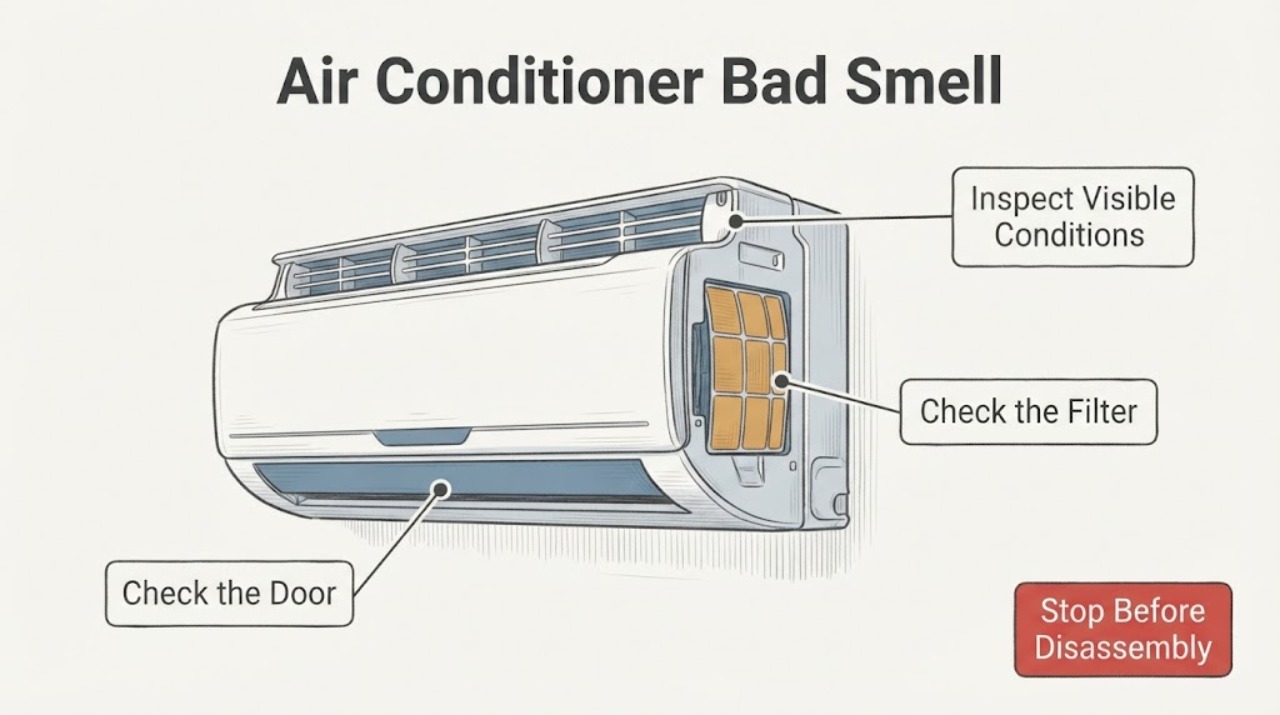
Air Conditioner Bad Smell: Identify the Odor Before Cleaning
An air conditioner with a bad smell should be classified by odor and timing before cleaning: musty odors often point to moisture, mold, coils, filters, or condensate drainage; burning, chemical, or rotten-egg odors require the system off and professional help. Check the filter and visible airflow path only when safely off, and arrange HVAC service for visible mold, standing water, persistent odor, or electrical or gas smells.
-
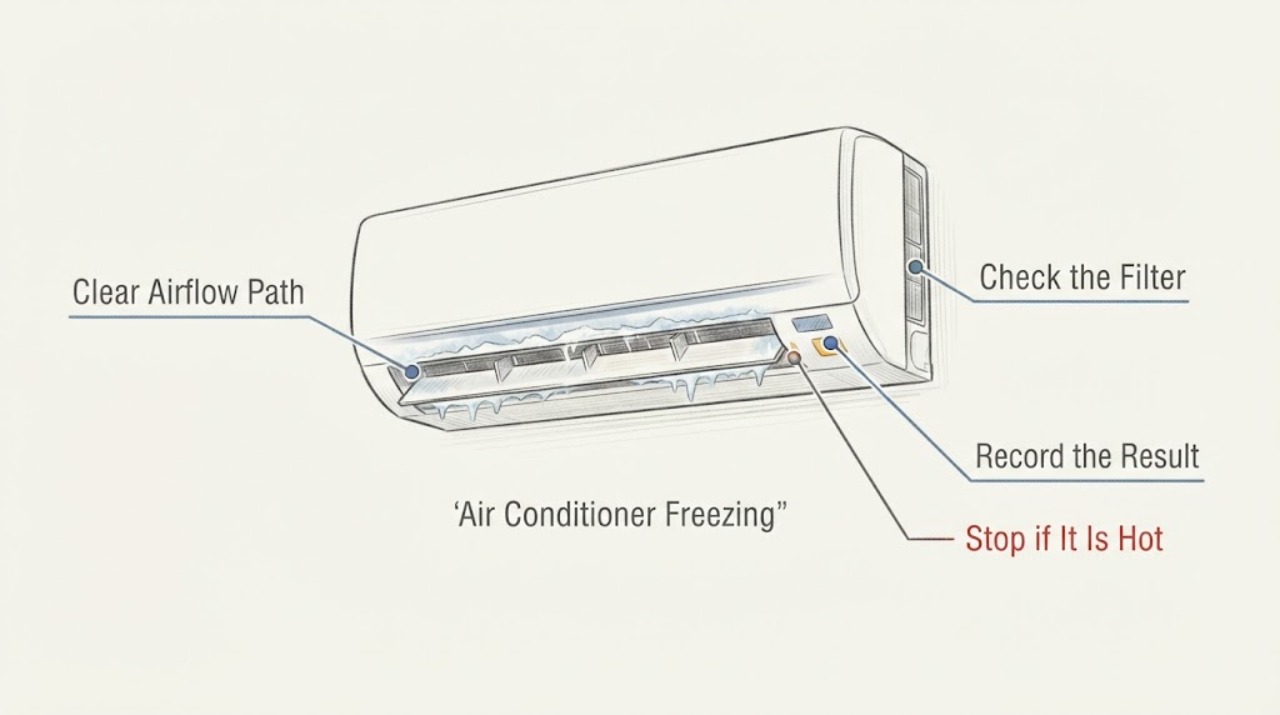
Air Conditioner Freezing
Turn off cooling when an air conditioner is frozen and let the ice thaw naturally. Check the accessible filter, open vents, and outdoor coil for dirt after power is isolated. Ice that returns or weak airflow needs qualified HVAC service; do not run with a frozen coil or handle refrigerant.
-
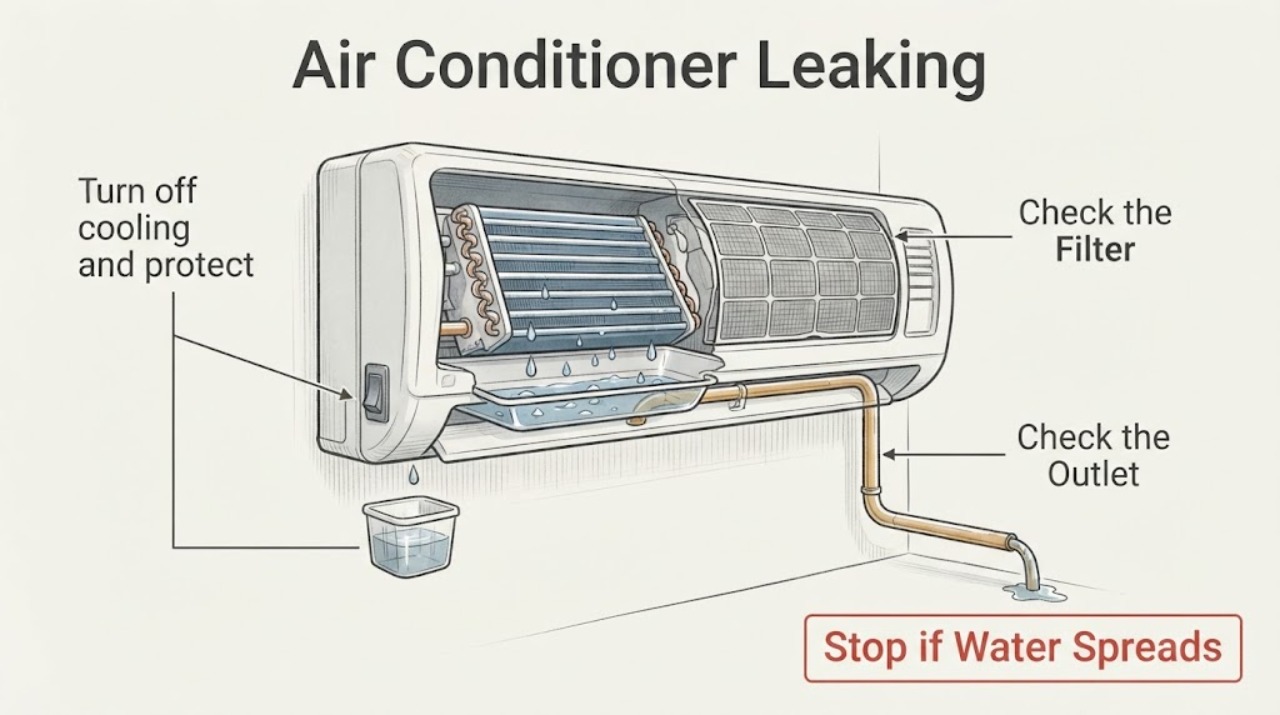
Air Conditioner Leaking
An air conditioner leaking water is usually a condensate drain problem, airflow restriction that freezes the coil, or a damaged pan. Turn it off, check the accessible filter and drain path, and use qualified HVAC service for persistent leaks, pooling, ice or poor cooling.
-
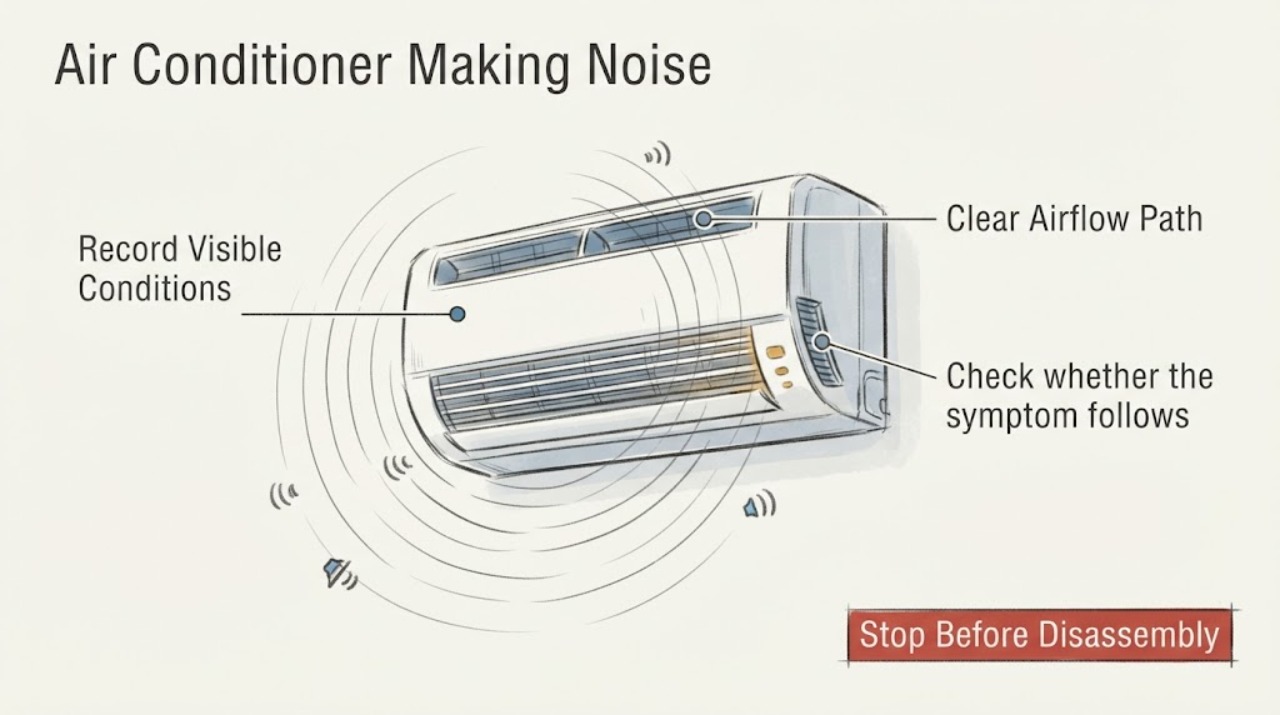
Air Conditioner Making Noise: Safe Checks and Service Boundaries
For an air conditioner that is making noise, record the unit type, model, room conditions, controls, airflow and any water or ice. Check only the accessible filter, airflow, installation and control conditions documented for that unit; stop for electrical or refrigerant hazards and arrange qualified HVAC service when the symptom persists.
-
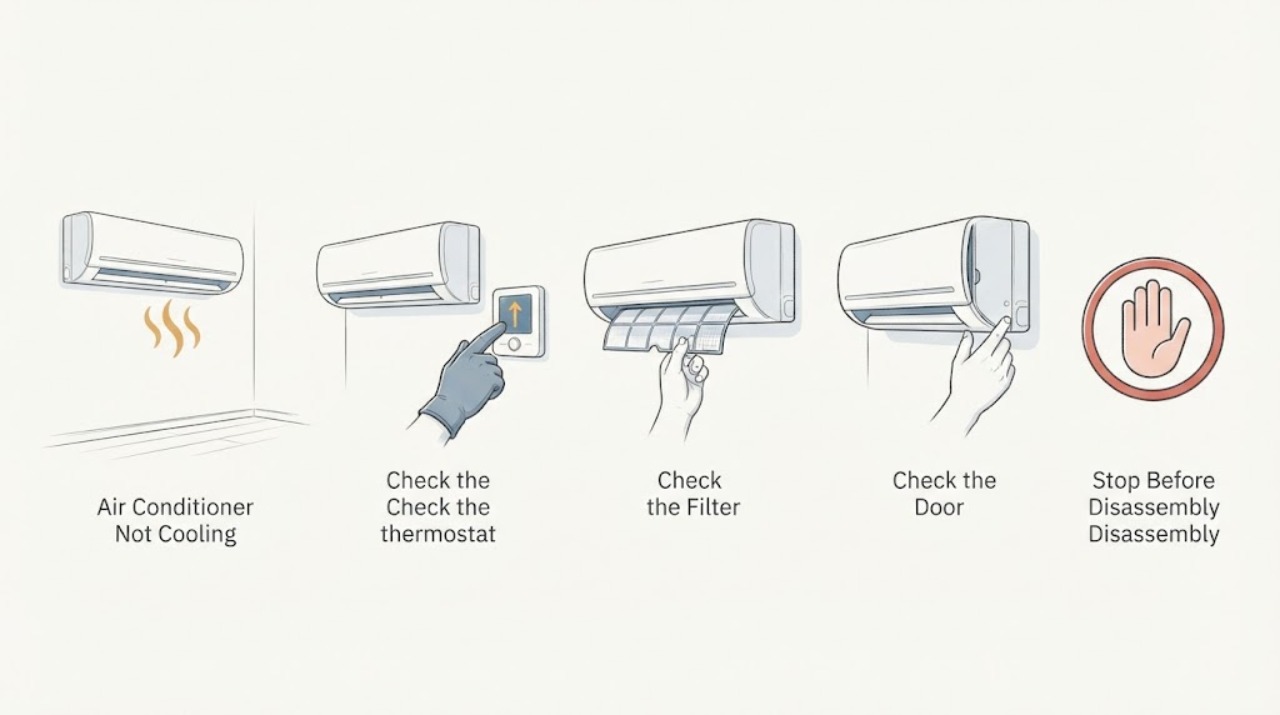
Air Conditioner Not Cooling
When an air conditioner is not cooling, first check the thermostat mode and setpoint, airflow through a clean filter, and visible debris around the outdoor condenser. Observe whether the indoor fan runs, whether the outdoor fan runs, and whether ice is present on lines or coils.
-
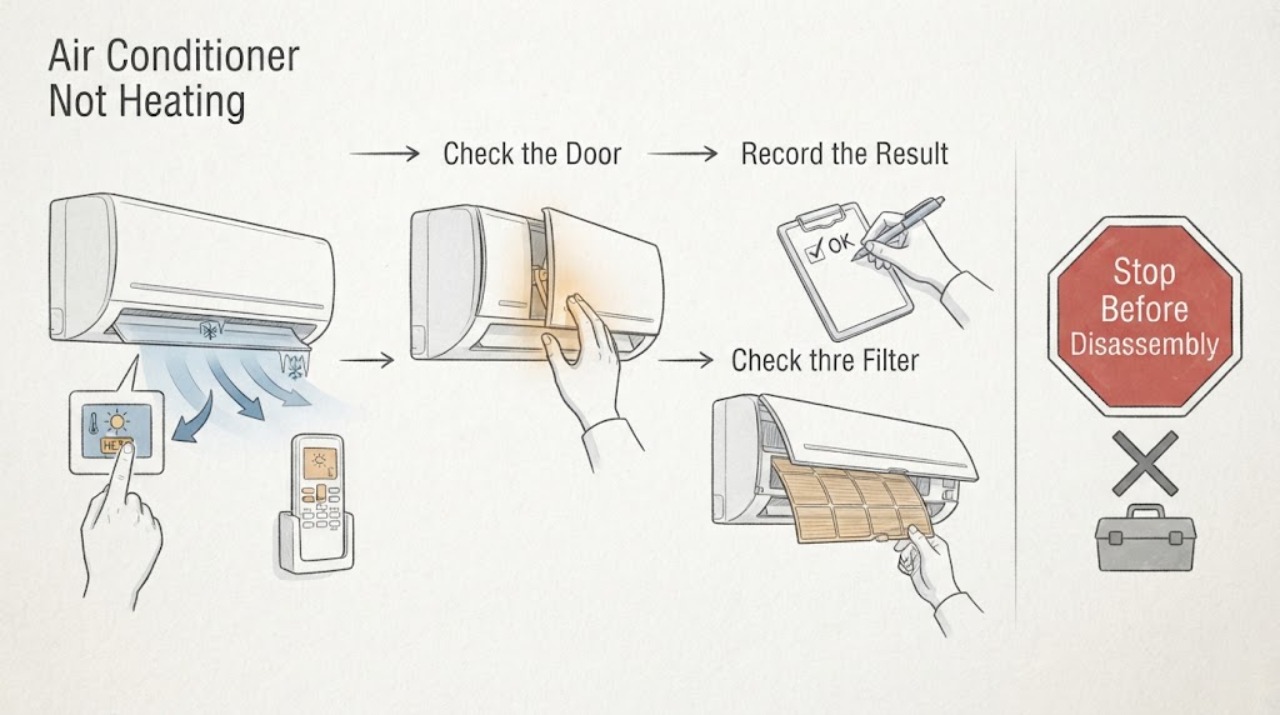
Air Conditioner Not Heating
For a heat-pump air conditioner that is not heating, select Heat and set the thermostat above room temperature, clean the accessible indoor filter, check power, and allow a normal defrost cycle. Constant cold air, a thickly frozen outdoor coil, or a system that never recovers needs HVAC service.
-
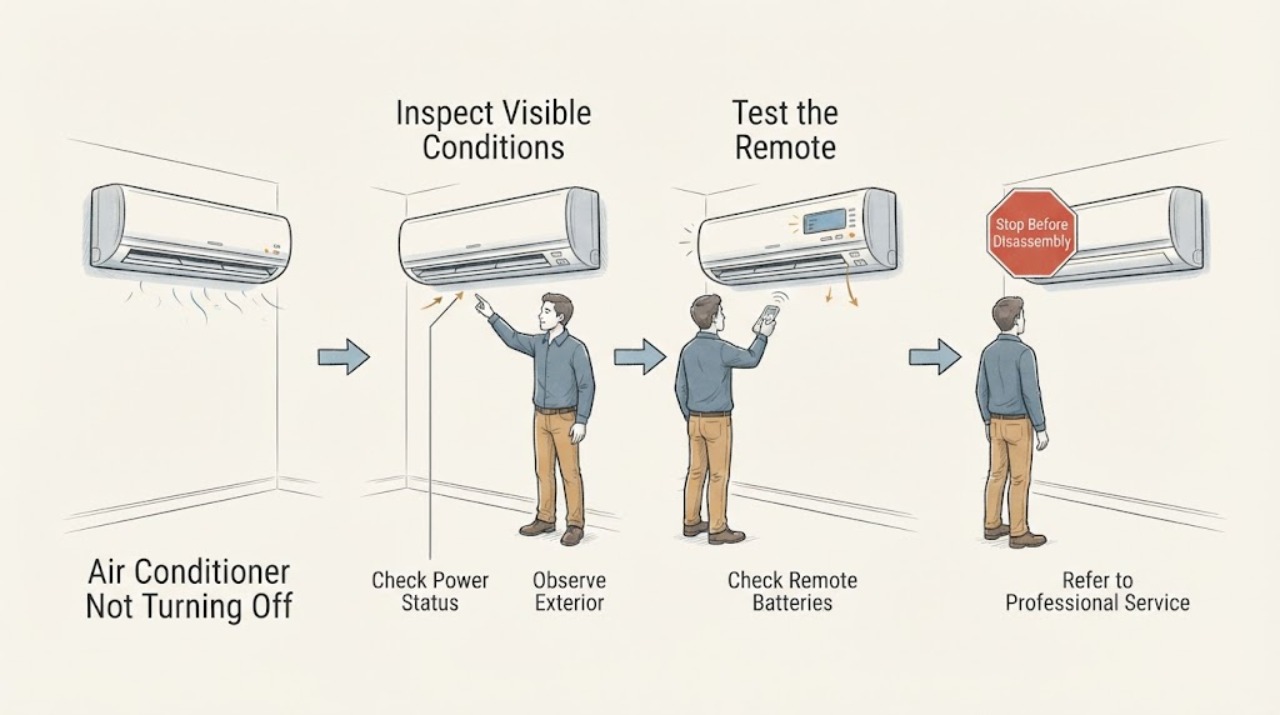
Air Conditioner Not Turning Off
An air conditioner may continue briefly after Stop because of an auto-dry or fan-delay routine, but continuous compressor or fan operation is different. Note which part runs, the selected mode, room temperature, timer, and any error light; then use the exact model manual for its stop and delay behavior. If the unit will not stop, trips power, leaks, smells hot, or shows a fault, isolate it when safe and arrange qualified HVAC service.
-
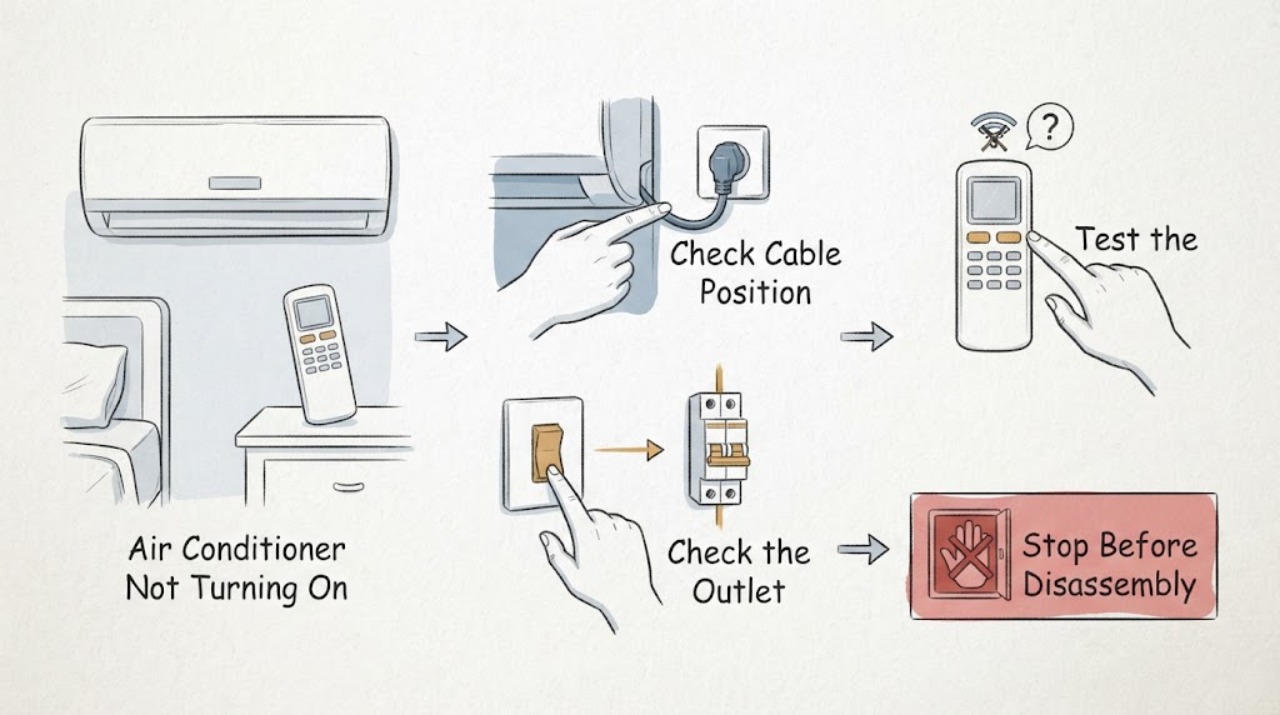
Air Conditioner Not Turning On: Check Power, Controls, and Safety
Check the breaker, external isolator, outlet, remote batteries, timer, and mode before calling for service. Government housing guidance identifies these as common no-start checks and says to consult the manual for an error code. Allow a restart delay after mode changes. Stop for a burning odor, smoke, hot plug, repeated breaker trip, or damaged cord and use a qualified technician.
-
Air Conditioner Not Working
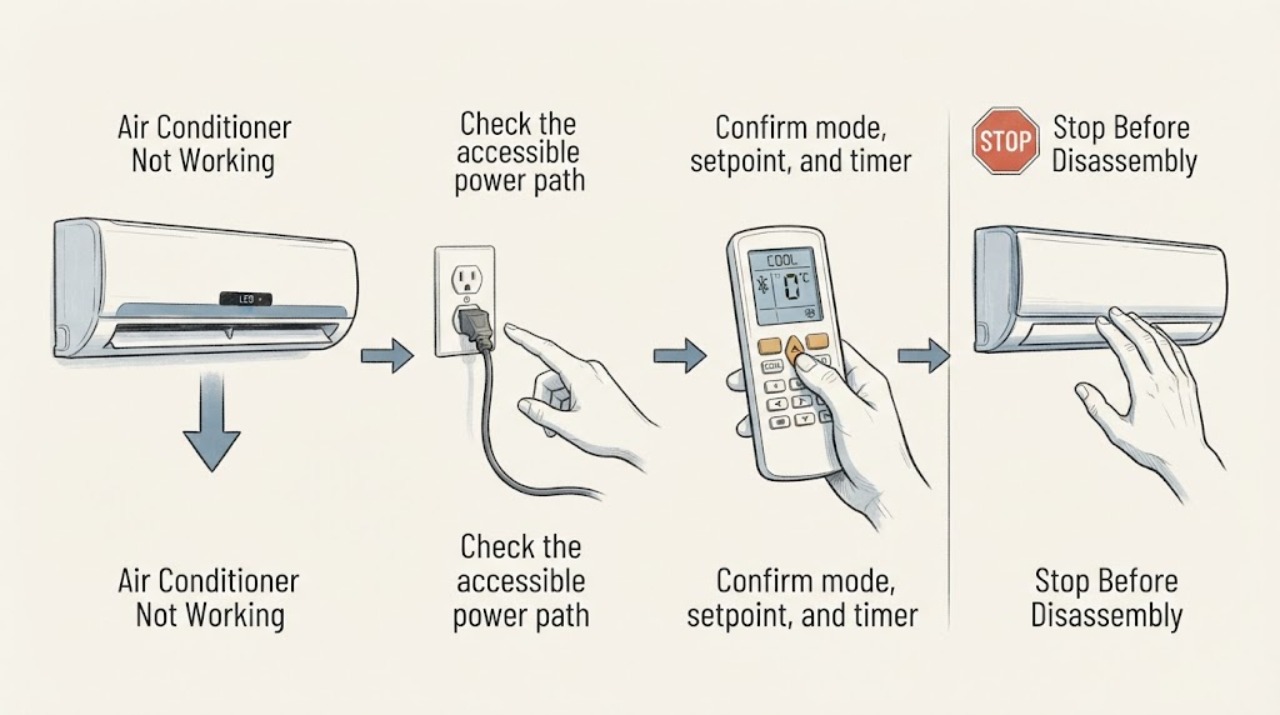
When an air conditioner is not working, separate no power, a control or timer setting, blocked airflow, and a true HVAC fault. Daikin’s official manual starts with the plug, timer, doors/windows, and air inlets/outlets, then directs persistent faults to the installer or dealer; refrigerant work is not a user check.
-
Air Conditioner Overflowing: Stop the Leak and Check Drainage
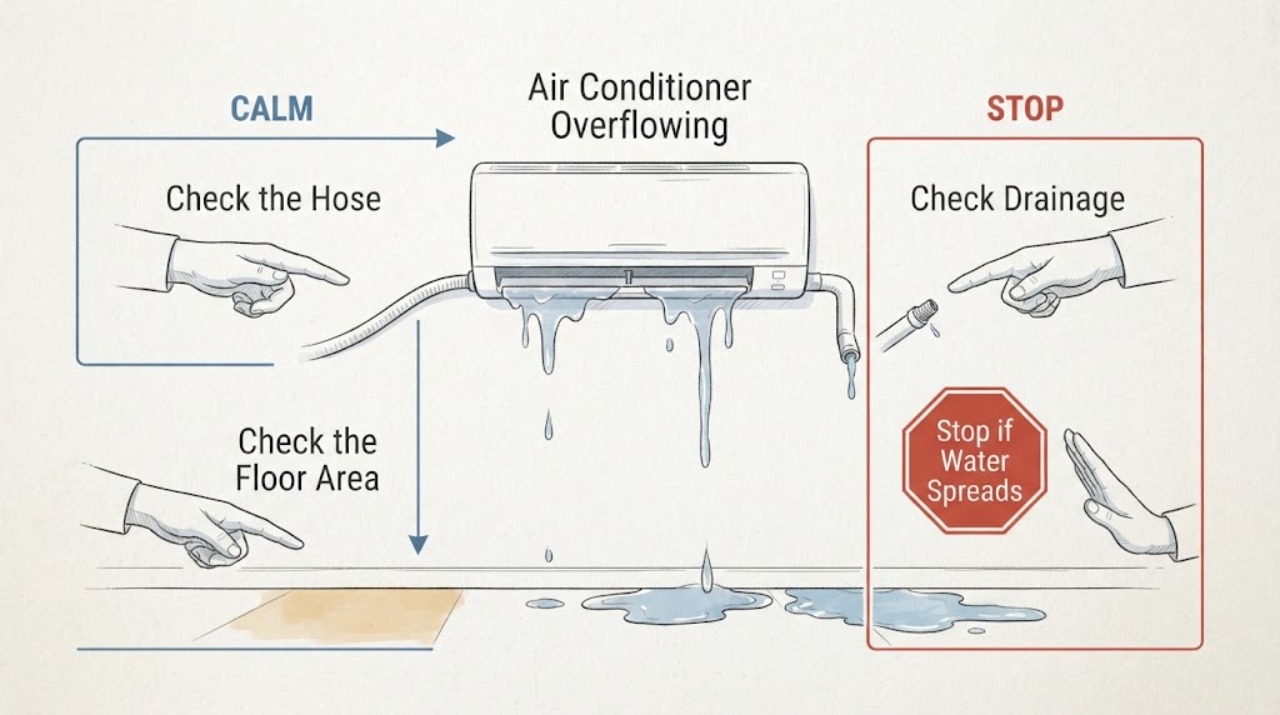
An overflowing air conditioner is usually a condensate-drain or airflow problem, but water near electrical equipment is a safety issue. Stop cooling, collect water, and isolate power if safe. Check the accessible filter and drain hose for dirt, kinks, poor slope, or blockage; do not open the sealed refrigerant system. Persistent overflow, a split drain pan, or a concealed line requires qualified HVAC service.