
On this page
Start here
Quick answer
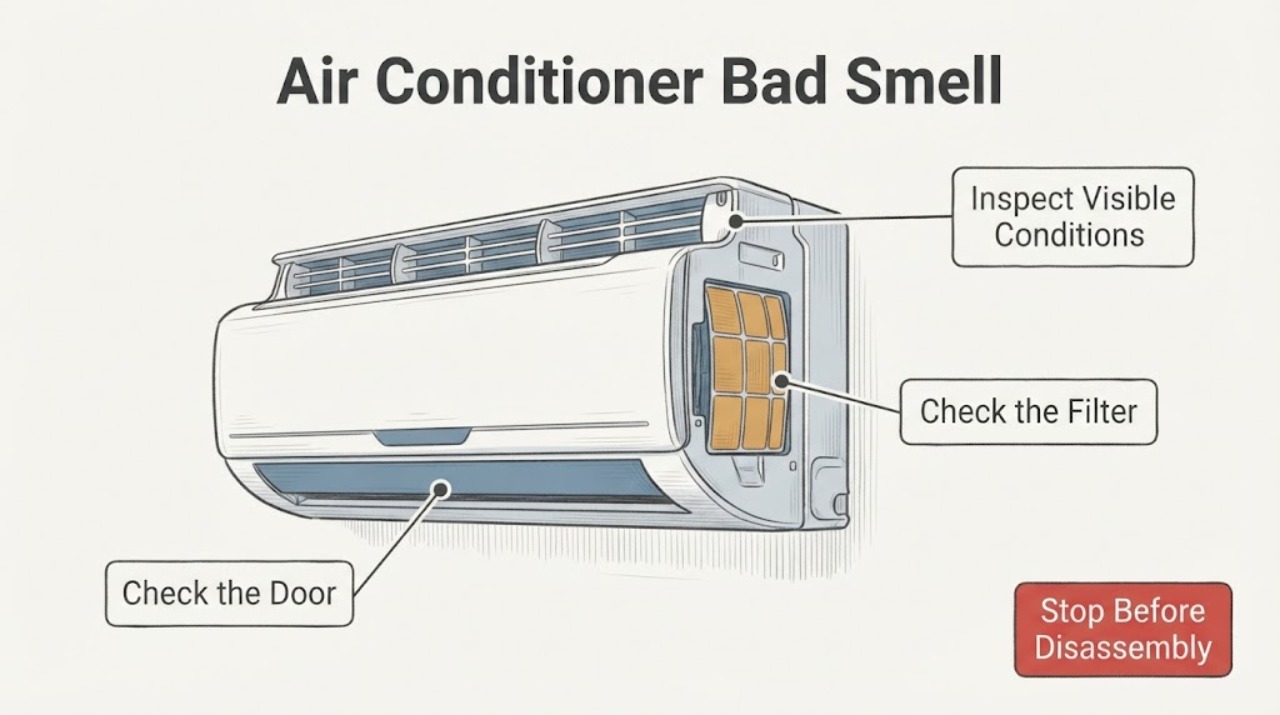
An air conditioner with a bad smell should be classified by odor and timing before cleaning: musty odors often point to moisture, mold, coils, filters, or condensate drainage; burning, chemical, or rotten-egg odors require the system off and professional help. Check the filter and visible airflow path only when safely off, and arrange HVAC service for visible mold, standing water, persistent odor, or electrical or gas smells.
Work through in order
Diagnostic checks
Use only checks that match the exact appliance or system and its official guide.
-
Check 1
Describe the odor and when it appears: dusty at first start, musty, sour, burning/plastic, chemical, or rotten egg; note whether it comes from vents or the outdoor unit.
Expected result: The odor is musty/sour, burning/electrical, gas-like, or only brief after seasonal startup.
Next step: Turn the system off and leave the area for gas-like odor; use professional help for burning or persistent smells.
Why this matters
Why: Odor type changes the safe next step; burning or gas-like smell is not a cleaning problem.
-
Check 2
Turn the system off and inspect the accessible return filter and grilles for heavy soil, wetness, or blockage.
Expected result: The filter is dirty/wet, or clean and dry.
Next step: Replace only with an approved size/type and do not run a wet or moldy system.
Why this matters
Why: A loaded or damp filter can hold odor and restrict airflow; a clean filter makes coils, drain, ductwork, or an external source more likely.
-
Check 3
Look for visible condensation, standing water, damp insulation, or a blocked condensate discharge without opening sealed panels.
Expected result: Water or damp material is visible, or the visible area is dry.
Next step: Stop for standing water or suspected mold and schedule inspection.
Why this matters
Why: Moisture supports mold and may indicate drain or pan trouble.
-
Check 4
Check whether the odor persists after an approved filter replacement and normal ventilation, without spraying fragrance or chemicals into the unit.
Expected result: The smell clears, returns, or becomes stronger.
Next step: Do not introduce unapproved cleaners; have a technician inspect.
Why this matters
Why: Clearing after filter service supports a maintenance source; recurrence points toward internal coils, drain, ductwork, or contamination.
-
Check 5
Note respiratory symptoms, visible mold, leaks, and whether odor changes with fan-only operation.
Expected result: Anyone has breathing symptoms, or mold/water and odor persist.
Next step: Stop using the system and obtain HVAC service; seek medical care for severe breathing symptoms.
Why this matters
Why: Mold and moisture can affect indoor air, while electrical or gas odors can signal immediate hazards.
Use your observations
Decision map
Find the observation that best matches what you see, then follow the next safe action.
-
PATH 01Next step
What you see
The odor is burning plastic, electrical, ozone-like, or rotten-egg/gas-like.
Do this next
Shut the system off, leave for gas odor, and contact the appropriate qualified professional.
Why this path and its safety boundary
Why it matters: A hazardous electrical or gas condition is more likely than routine filter odor.
-
PATH 02Next step
What you see
The odor is musty and there is a wet filter, standing water, or visible mold.
Do this next
Do not run a visibly mold-contaminated system; arrange HVAC/mold guidance.
Why this path and its safety boundary
Why it matters: Moisture, mold, coil, pan, or drain contamination is more likely.
-
PATH 03Next step
What you see
A clean approved filter removes a brief odor but the smell returns or airflow changes.
Do this next
Book a qualified HVAC inspection rather than masking the smell.
Why this path and its safety boundary
Why it matters: An internal coil, condensate, drain, duct, or source-control issue remains.
Helpful context
Understand the symptom
Carrier and CDC connect air-conditioner odors with distinct decision paths: filter and moisture checks for musty smells, and immediate shutdown for electrical or gas-like odors.
When checks do not resolve it
Need a professional?
Turn the system off for burning, electrical, ozone-like, rotten-egg/gas, smoke, visible mold, standing water near electrics, or severe breathing symptoms. Do not open sealed electrical or refrigerant sections.
Common questions
FAQ
Is a musty smell always mold?
No, but moisture, dirty filters, coils, drain pans, and ductwork are plausible sources. Persistent or visible-mold conditions need inspection.
Can I spray air freshener into the vents?
No. Masking the odor does not identify the source and can introduce an unapproved substance into the airflow path.
What smell means stop immediately?
Burning/electrical and rotten-egg/gas-like odors require the system off and qualified help; leave for a suspected gas leak.
Read the exact guide
Official sources
- MoldCenters for Disease Control and Prevention · Indoor mold and HVAC contexts
- Why Does My AC Smell? Causes and SolutionsCarrier · Residential air conditioners
Community feedback
Share a repair observation
Share a plain-text repair observation. Accepted observations are published automatically; this page may take a moment to update.