
On this page
Start here
Quick answer
Turn off the Samsung air conditioner and identify whether the odor is musty, dusty, chemical, or burning. For a routine musty smell, clean the removable filter as the model manual allows and dry it completely in a ventilated place, then run Auto Clean if your model provides it. A burning or chemical odor, smoke, water damage, or a smell that returns after cleaning is a stop-and-service condition.
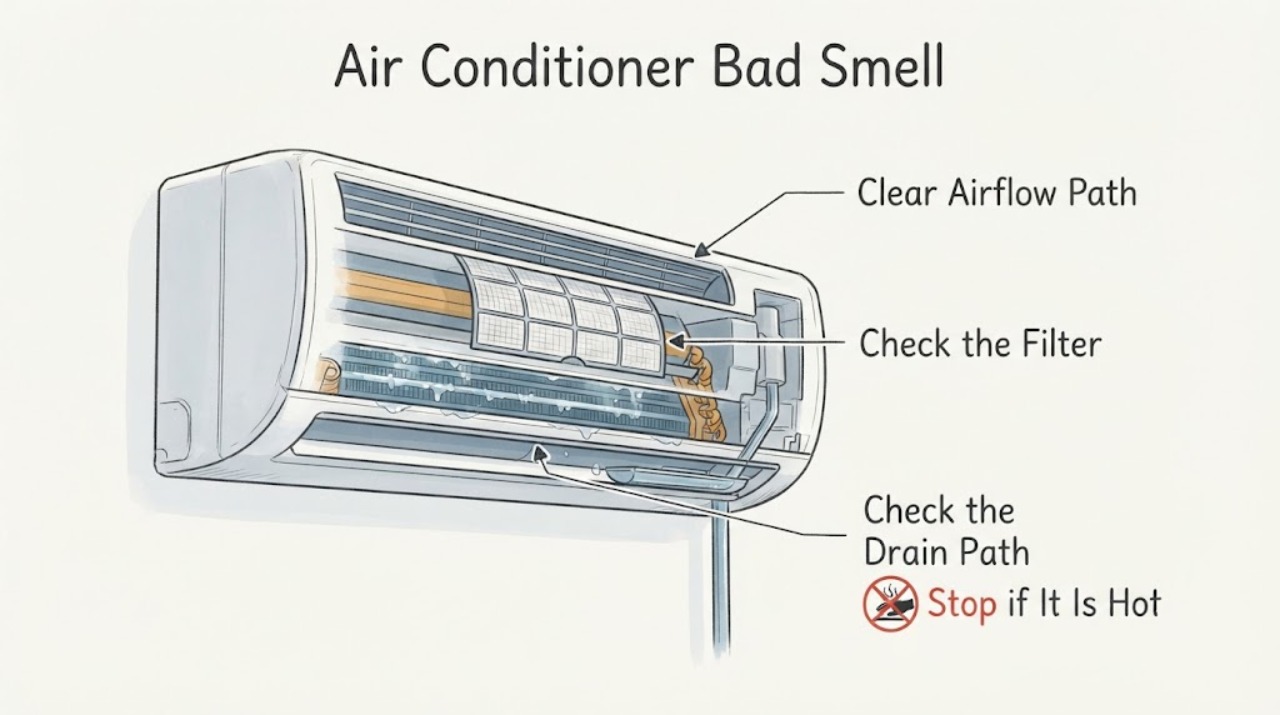
Work through in order
Diagnostic checks
Use only checks that match the exact appliance or system and its official guide.
-
Check 1
Turn the air conditioner off, note whether the smell appears only during airflow or remains when off, and classify it as musty, dusty, chemical, or burning.
Expected result: The odor is musty or dusty, or it is burning, chemical, or accompanied by smoke.
Next step: For hazardous odors, disconnect power only if safe and stop using the unit; otherwise continue with the filter check.
Why this matters
Why: A musty or dusty odor is consistent with filter or retained-moisture contamination; burning, chemical odor, or smoke may indicate a hazardous fault.
-
Check 2
With power off, remove only the user-accessible air filter described by the model manual and inspect it for dust, dampness, or odor.
Expected result: The filter is dirty or smells, or the filter is clean and odor-free.
Next step: Wash or clean the filter only as the manual permits and keep it out until completely dry.
Why this matters
Why: A dirty or damp filter can carry odor into the room; a clean filter makes retained moisture deeper in the indoor unit or another source more likely.
-
Check 3
Dry the cleaned filter in a ventilated area, reinstall it correctly, and confirm the front panel closes without forcing it.
Expected result: The smell is reduced after a dry filter is installed, or it remains unchanged.
Next step: Do not operate with a wet or mis-seated filter; continue to Auto Clean only if the model supports it.
Why this matters
Why: Improvement supports a filter-related odor; no change suggests the indoor unit, drain area, environment, or another fault needs assessment.
-
Check 4
Enable the Samsung Auto Clean function using the model's remote or manual and allow its drying cycle to finish without interrupting it.
Expected result: The indoor unit runs and completes Auto Clean, or the odor returns after the cycle.
Next step: Arrange Samsung service for recurring odor, water leakage, visible mold-like growth, or any odor that is not routine mustiness.
Why this matters
Why: Auto Clean is intended to clean and dry the indoor unit; recurrence after a completed cycle suggests deeper contamination, drainage, or service need.
Use your observations
Decision map
Find the observation that best matches what you see, then follow the next safe action.
-
PATH 01Next step
What you see
A musty smell decreases after a fully dry filter and completed Auto Clean cycle
Do this next
Keep the filter clean and dry and use Auto Clean according to the model manual.
Why this path and its safety boundary
Why it matters: Retained moisture or filter contamination was the more likely source.
-
PATH 02Next step
What you see
The filter is clean and dry but the smell returns quickly or is strongest at the indoor outlet
Do this next
Stop improvised spraying or disassembly and request Samsung service.
Why this path and its safety boundary
Why it matters: Moisture or contamination deeper in the indoor unit or drain path is more likely than the removable filter alone.
-
PATH 03Next step
What you see
The smell is burning or chemical, smoke is visible, or the unit has water or electrical damage
Do this next
Turn the unit off, disconnect power only if safe, leave it unused, and obtain qualified service.
Why this path and its safety boundary
Why it matters: This is a potential safety fault, not a routine odor-cleaning task.
Helpful context
Understand the symptom
Odor character changes the safe response
Moisture left in a filter or indoor unit can produce a musty smell, while burning or chemical odors can indicate an unsafe electrical or material problem. Do not spray cleaners into the unit or open its covers.
When checks do not resolve it
Need a professional?
Stop and request Samsung service for burning or chemical odors, smoke, water or electrical damage, visible growth, recurring odor after a dry filter and Auto Clean, or any unit that trips protection.
Common questions
FAQ
Why does a Samsung air conditioner smell musty?
A dirty or incompletely dried filter can carry odor, and retained moisture in the indoor unit can contribute as well. Clean and dry the filter as directed, then use Auto Clean if supported.
Can I keep running the unit if it smells like burning?
No. Turn it off and disconnect power only if that is safe. Do not continue testing a unit with a burning or chemical odor; arrange qualified service.
Read the exact guide
Official sources
- Air Conditioner Filter CleaningSamsung India Support · Samsung air conditioner filters
- How to Use Auto Clean on a Samsung Air ConditionerSamsung Australia Support · Samsung air conditioner models with Auto Clean
Community feedback
Share a repair observation
Share a plain-text repair observation. Accepted observations are published automatically; this page may take a moment to update.