
On this page
Start here
Quick answer
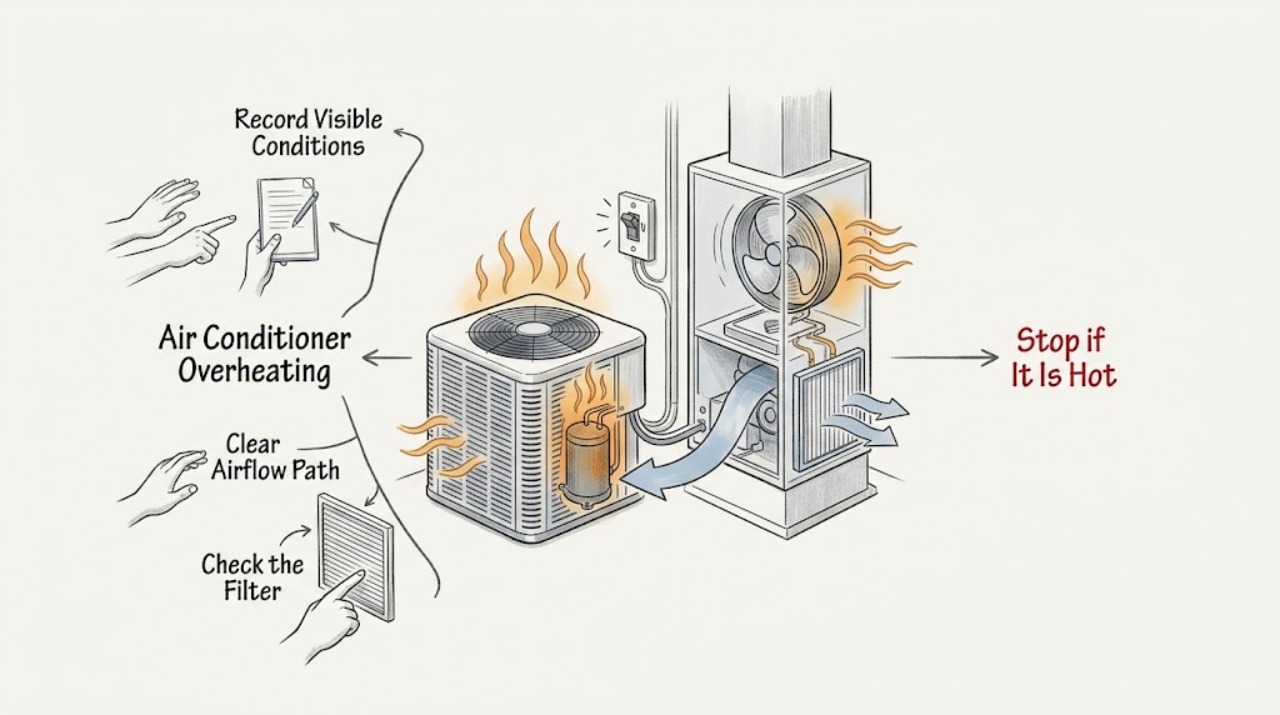
First identify whether this is an Amana room or portable air conditioner, PTAC, or central air-conditioning/heat-pump system; the support and user-accessible checks differ. For a room or portable unit, turn it off, let it cool, clear the visible air intake and outlet, clean and fully dry the user-removable filter, and ensure a window or exhaust panel is not blocked. Do not use an extension cord, and wait at least 3 minutes before restarting after a shutdown. If the power cord is damaged, the reset button trips again, a breaker repeatedly operates, there is smoke or a burning smell, or the unit remains hot and does not cool, leave it off and arrange qualified service. For central, heat-pump, or PTAC equipment, record the model and symptoms and contact the installing dealer or qualified HVAC technician; do not open the outdoor unit, refrigerant circuit, electrical compartment, or sealed system.
Before you begin
Safety first
- This article permits only model-appropriate external airflow and filter observations, safe control use, and one manual-approved protective reset on a cool, dry, undamaged room or portable unit. It does not authorize panel removal, live electrical testing, refrigerant or compressor work, fan access, protection bypass, or mixed-architecture troubleshooting.
Work through in order
Diagnostic checks
Use only checks that match the exact appliance or system and its official guide.
-
Check 1
Read the Amana model and serial label and classify the equipment before touching a setting: room or portable unit with a window or exhaust hose, PTAC through-wall unit, or central air conditioner or heat pump with indoor and outdoor sections. Record whether the heat is at the cabinet, exhaust, plug or cord, indoor air handler, or outdoor section.
Expected result: The unit is room/portable, PTAC, or central/heat-pump; the room is hot but the cabinet is normal; the cabinet or exhaust is unusually hot; or the plug, cord, breaker, or outdoor section shows heat or damage.
Next step: Use the room/portable checks only for that architecture. For PTAC or central/heat-pump equipment, record the symptom and contact the appropriate Amana dealer or qualified HVAC technician without opening the unit.
Stop if: Stop immediately for smoke, a burning smell, melting, a hot or damaged plug or cord, exposed wiring, refrigerant/oil evidence, or an active electrical or fire hazard.
Why this matters
Why: Amana assigns these equipment families to different manuals and support channels. A room or portable unit can have user-accessible filter and intake checks, while a central or PTAC symptom may involve installed equipment outside a safe homeowner procedure.
-
Check 2
For an Amana room or portable air conditioner that is cool enough to handle, turn it off and inspect only the visible air intake, outlet louvers, window slider or exhaust panel, and surrounding clearance. Remove loose curtains, blinds, furniture, or other external obstructions without dismantling the installation. Do not block the exhaust path or place items on the unit.
Expected result: The filter or intake is visibly obstructed, the exhaust panel or hose is pinched or blocked, curtains or furniture cover an intake, the room has substantial heat or moisture, or the visible airflow path is clear.
Next step: Clear only loose external obstructions and correct the window or exhaust installation according to the exact manual. If the unit remains hot, loses cooling, or shuts down after airflow is clear, keep it off and arrange service.
Stop if: Do not remove the cabinet, fan guard, outdoor grille, electrical cover, or refrigerant tubing, and do not reach into a moving fan.
Why this matters
Why: Amana's room/portable guidance links dirty filters, blocked intakes, blocked louvers, open windows or doors, and a very hot room to poor cooling or excessive run time. Clear airflow can improve heat rejection, but it does not rule out an internal fault.
-
Check 3
With the room or portable unit turned off, remove the user-accessible air filter exactly as the manual shows. Vacuum or wash it only as directed, let it dry completely, reinstall it correctly, and do not operate the air conditioner without the filter. For PTAC or central equipment, do not remove a filter or panel unless the equipment manual explicitly identifies it as a user task.
Expected result: The room/portable filter is dirty or obstructed, the filter is clean and correctly seated, or the equipment is PTAC/central and the filter or access arrangement is not confirmed.
Next step: Reinstall a clean, fully dry filter and observe one normal cooling period. If overheating, shutdown, weak cooling, or power protection returns, leave the unit off and contact qualified service; for PTAC/central systems, use the model-specific technician path.
Stop if: Do not operate without the filter, spray liquid into the cabinet, clean a coil by opening the unit, or use tools on the fan or electrical area.
Why this matters
Why: Amana says a dirty or obstructed room-air-conditioner filter reduces cooling performance and operating efficiency. A clean filter does not prove the compressor, fan, coil, controls, or refrigerant system is healthy, and PTAC/central configurations must not inherit portable-unit instructions.
-
Check 4
After the room/portable unit has cooled and only when the cord and outlet look dry and undamaged, check whether its protective power button or cord reset has tripped. If the model manual permits, press RESET once and allow at least 3 minutes after shutdown before restarting. Do not reset a hot, smoking, sparking, wet, or damaged unit and do not repeatedly reset a breaker.
Expected result: The reset button remains tripped, the unit restarts and cools normally after airflow and filter correction, the reset trips again, or a household breaker operates.
Next step: If protection trips again or cooling remains abnormal, leave the air conditioner off and arrange qualified appliance or electrical service. For central, PTAC, or heat-pump equipment, do not use this portable reset branch.
Stop if: Do not bypass the protective cord, change fuse or breaker capacity, use an extension cord or adapter, open the electrical compartment, or reconnect a damaged cord.
Why this matters
Why: Amana's room/portable manual associates a tripped power cord with current disturbance, overload, overheating, a pinched cord, or aging, and says restarting too soon can trip protection. A repeat trip is not a user-level confirmation of a single cause.
Use your observations
Decision map
Find the observation that best matches what you see, then follow the next safe action.
-
PATH 01Next step
What you see
The equipment is a room or portable Amana unit, the room is very hot, and the cabinet, plug, cord, and power protection are normal while a filter or intake is visibly obstructed.
Do this next
Clear loose external obstructions, clean and fully dry the filter, correct the visible exhaust path, and observe one normal cooling period. Escalate if the unit remains hot or does not cool.
Why this path and its safety boundary
Why it matters: Room heat and restricted airflow are more likely contributors than an immediately proven internal failure, but they do not authorize cabinet or coil disassembly.
-
PATH 02Next step
What you see
A room or portable unit's power cord reset or breaker trips again, the cord or plug is hot or damaged, or the unit overheats after the filter and airflow path are clear.
Do this next
Stop using the air conditioner and arrange qualified service. Use an electrician for a hot, damaged, or repeatedly tripping household outlet or circuit; do not reset protection again.
Why this path and its safety boundary
Why it matters: Amana identifies overload, overheating, a pinched or aging cord, and electrical supply conditions as possible protection-trip patterns; the repeat symptom needs professional diagnosis.
-
PATH 03Next step
What you see
The unit is a PTAC, central air conditioner, or heat pump, or the hot component is an indoor air handler or outdoor section that the user cannot safely identify.
Do this next
Keep access panels closed, record model, symptoms, temperatures or displays, and when the unit shuts down, then contact the installing dealer or a qualified HVAC technician.
Why this path and its safety boundary
Why it matters: Amana routes these systems through distinct HVAC support and installed-equipment channels. Portable-unit filter and reset steps cannot establish a safe diagnosis for a split or through-wall system.
-
PATH 04Next step
What you see
Smoke, burning smell, sparks, melting, exposed wiring, an active fire, or a wet or damaged electrical connection is present on any Amana air conditioner.
Do this next
Stop the appliance, isolate power only from a safe position, leave the area for an active fire or immediate danger, and obtain emergency or qualified electrical/HVAC help. Do not restore power to reproduce the symptom.
Why this path and its safety boundary
Why it matters: This is a safety event rather than an airflow or filter adjustment. A consumer reset or internal inspection could increase shock or fire risk.
Helpful context
Understand the symptom
Overheating is not one Amana architecture
Amana's owner-resource page sends HVAC and PTAC products to separate Goodman-based support channels, while room and portable air conditioners are covered under a different licensed manufacturer. A portable unit with a filter and exhaust window panel cannot be diagnosed like a central outdoor condenser. Find the model and serial label before applying any procedure, and use only the branch that matches the equipment in front of you.
Start with heat, airflow, and power symptoms
Record what is hot: the room, the cabinet, the exhaust air, the plug or cord, or a central outdoor component. Also note whether cooling stops, the fan continues, a reset button pops out, a breaker trips, an error appears, or smoke or a burning smell is present. A hot room alone may reflect load or sizing; a hot power connection or repeated protection trip is an electrical stop condition.
Keep the user checks external
The room/portable manual supports clearing visible intakes, cleaning the removable filter, and observing power protection after the unit is cool and safe. It does not authorize opening the cabinet or working on a compressor, refrigerant circuit, fan motor, control, or electrical connection. Central and PTAC equipment should remain within the installed system's professional service boundary.
When checks do not resolve it
Need a professional?
Arrange qualified service when an Amana air conditioner remains hot or fails to cool after the architecture-appropriate external airflow and filter checks, when a power cord reset or breaker trips again, or when the symptom involves the compressor, fan, coil, refrigerant, control, wiring, PTAC, central outdoor unit, or heat pump. Stop immediately for smoke, fire, sparks, burning smell, melting, or a hot or damaged plug or cord. Do not open panels, bypass protection, change electrical ratings, handle refrigerant, or choose a replacement part from this generic symptom.
Safety scope: This article permits only model-appropriate external airflow and filter observations, safe control use, and one manual-approved protective reset on a cool, dry, undamaged room or portable unit. It does not authorize panel removal, live electrical testing, refrigerant or compressor work, fan access, protection bypass, or mixed-architecture troubleshooting.
Common questions
FAQ
Why is my Amana air conditioner overheating and shutting off?
Identify the architecture first. On room or portable models, a dirty filter, blocked intake or exhaust, very hot room, too-soon restart, or power-protection trip can contribute. If it stays hot after the user-accessible airflow and filter checks, or protection trips again, leave it off and arrange service. Central, PTAC, and heat-pump units need their model-specific HVAC service path.
Can I keep running an Amana air conditioner with a hot cabinet?
Do not continue if the plug or cord is hot or damaged, a reset or breaker trips, there is smoke, burning smell, melting, or abnormal noise, or cooling remains poor. For a room or portable unit with no safety symptom, let it cool and check only the visible airflow path and clean, dry filter as the manual directs; persistent heat needs service.
What should I do if my Amana central air conditioner or heat pump overheats?
Do not apply portable-air-conditioner reset or filter instructions to the split system. Record the model, what component is hot, the display or shutdown behavior, and any electrical or burning symptom, then contact the installing Amana dealer or a qualified HVAC technician. Keep panels and the refrigerant circuit closed.
Read the exact guide
Official sources
- Owner's ManualAmana · Official Amana owner manual for a portable air-conditioner family; it is not a procedure for central, heat-pump, or PTAC equipment.
- Customer Support, Warranty Info & Service Plans | AmanaAmana · Official Amana Heating and Cooling support site for installed air conditioners and heat pumps; it is separate from room or portable appliance guidance.
- Manuals and GuidesAmana · Official Amana owner-resource page; it establishes the product-family boundary and directs the exact model to the applicable manual or licensed support channel.
Community feedback
Share a repair observation
Share a plain-text repair observation. Accepted observations are published automatically; this page may take a moment to update.