
On this page
Start here
Quick answer
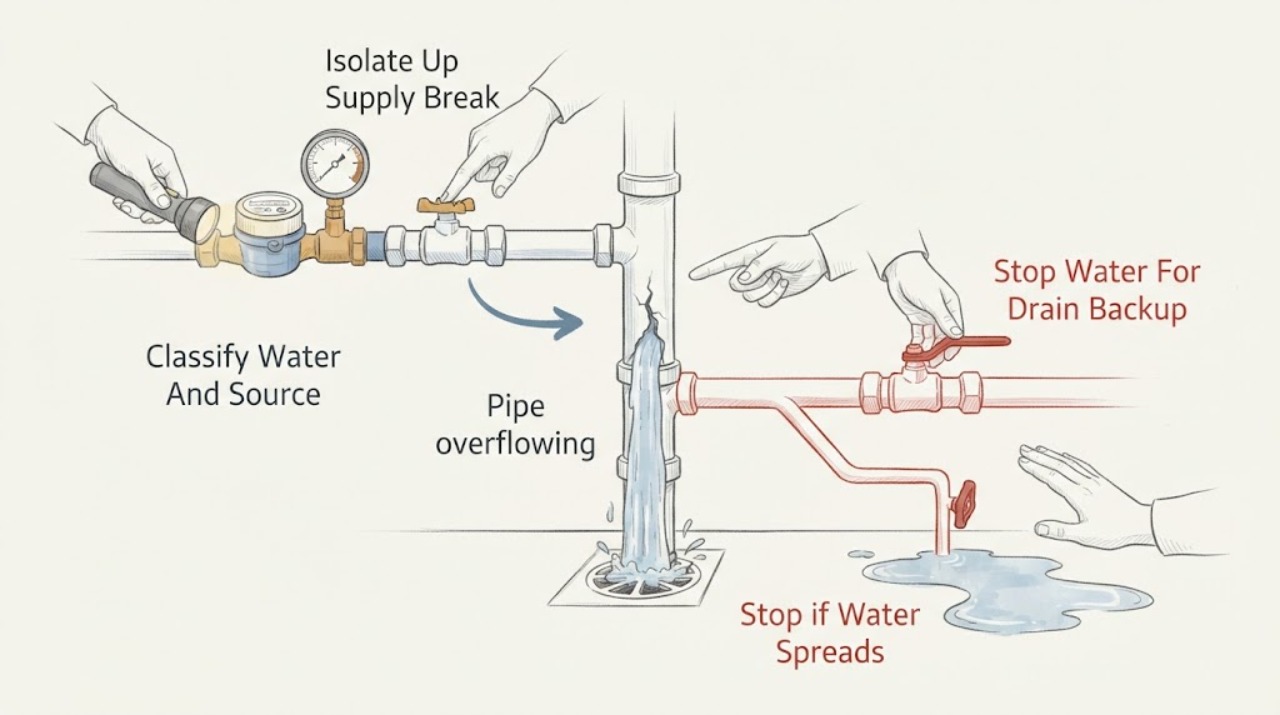
An overflowing pipe needs to be classified before you touch it: clear water actively spraying or flowing from a pressurized supply pipe calls for the accessible fixture or main water shutoff, while dirty, odorous, or rising water from a drain, cleanout, toilet, or floor drain means stop using all water and treat it as a possible sewer backup. Keep people and pets away from wastewater, never open a pressurized cleanout or use more water to test an active overflow, and do not work near wet electrical equipment. Call a qualified plumber for any pipe break, recurring backup, multiple blocked fixtures, inaccessible shutoff, contaminated water, or leak inside a wall or ceiling; contact the local sewer utility when a public sewer or property-line cleanout may be involved.
Work through in order
Diagnostic checks
Use only checks that match the exact appliance or system and its official guide.
-
Check 1
From a dry, stable position, identify whether the overflow is clear supply water or dirty, cloudy, or odorous wastewater. Note whether it comes from a visible supply pipe or fixture, a sink or toilet, a floor drain, a sewer cleanout, or a pipe inside a wall or ceiling, and whether it continues when all fixtures are idle.
Expected result: Water is clear and flowing from a pressurized pipe, or wastewater is rising from a drain or cleanout; the flow stops when a fixture stops, or continues with no water use.
Next step: Use the matching supply, single-fixture, drain-backup, or utility branch. Do not remove a cleanout cap, touch the water, or add water to test an active overflow.
Stop if: Stop for sewage odor, standing water near electrical equipment, water entering a wall or ceiling, structural damage, pressurized spray, or any need to enter contaminated water.
Why this matters
Why: Clear continuous flow favors a supply-side break; wastewater that rises during or after fixture use favors a private drain blockage, while wastewater rising with no household use may involve the building lateral or public sewer. Appearance alone cannot prove responsibility.
-
Check 2
If clean water is coming from a supply pipe or fixture, close the accessible fixture shutoff if it is dry and easy to reach. If that does not stop the flow and the main valve can be reached safely, close the home's main water shutoff; do not force a stuck valve or enter standing water.
Expected result: The local valve stops the flow, the main shutoff stops it, the flow continues, or the valve is inaccessible, damaged, or unsafe to approach.
Next step: Keep the water isolated and call a plumber. If the main valve cannot be safely operated, contact the property manager or water utility for emergency isolation; do not dismantle the valve or meter.
Stop if: Stop for electrical hazards, a pipe inside a wall or ceiling, a burst line spraying under pressure, a stuck valve requiring force, or water threatening the building structure.
Why this matters
Why: A local shutoff isolates one fixture; a main shutoff limits a larger supply break. A continuing flow can mean the wrong valve, a failed valve, or a leak upstream of the accessible valve.
-
Check 3
If wastewater is rising from a sink, toilet, floor drain, cleanout, or other drain, stop all household water use: do not flush, run sinks, shower, wash clothes, run the dishwasher, or add water to locate the blockage. Keep children and pets out of the affected area.
Expected result: The overflow slows when household water use stops, continues with no water use, or spreads to additional drains or lower areas.
Next step: Keep water use stopped, call a plumber, and contact the local sewer utility when a property-line cleanout, street, or public sewer may be involved. Do not use chemical drain cleaner or a forceful tool while wastewater is present.
Stop if: Stop for contaminated standing water, gas or electrical hazards, a backup reaching living areas, or any need to handle sewage or open a cleanout.
Why this matters
Why: A flow that responds to household use is consistent with a blocked private drain or lateral; continued flow with no use may involve the public sewer, groundwater, or another upstream source. Multiple or lower-level outlets indicate a larger obstruction or backup risk.
-
Check 4
Without running water, note which fixtures are affected and whether the property-line or exterior cleanout is visibly standing full or overflowing, only if it can be viewed without removing a cap or entering wastewater. Record whether the overflow is limited to one fixture, several fixtures, or the lowest drain.
Expected result: Only one fixture backs up, several fixtures back up together, the cleanout at the property line is full or overflowing, or the cleanout is not backing up while indoor fixtures are.
Next step: Keep all water use stopped and tell the plumber or utility the affected fixtures and cleanout observation. Do not run water as a test during an active overflow and do not loosen the cleanout cap.
Stop if: Stop for a bulging or leaking cleanout, sewage surfacing outdoors, an overflowing manhole, contaminated soil, or any need to approach an unstable cover.
Why this matters
Why: A single fixture points toward a local trap or branch; several fixtures or the lowest drain point toward a larger drain or lateral blockage. A property-line cleanout can help separate a private-line problem from a possible public sewer issue, but it does not replace professional inspection.
-
Check 5
Keep people and pets away from overflow water, move only dry, easily carried items from the edge of the affected area, and look from a safe position for outlets, appliances, furnaces, or cords that may be wet. Do not touch or move wet electrical equipment.
Expected result: Water has reached outlets, appliances, wiring, a furnace, or a panel; sewage has contaminated floors or belongings; or the affected area remains dry and isolated.
Next step: If it is safe without entering water, have the affected electrical area isolated by a qualified person; arrange professional sewage cleanup for contamination and plumbing service for the source. Document the location without entering the water.
Stop if: Stop for standing water near electricity, a submerged appliance, sewage contact, structural damage, strong gas odor, or any need to enter the affected area.
Why this matters
Why: Wet electrical equipment adds a shock hazard, and sewage can carry pathogens and damage materials. Dry, isolated water may still require prompt plumbing repair but has a different immediate hazard profile.
-
Check 6
Record the water appearance and odor, first emergence point, fixtures affected, whether household water use changes the flow, cleanout observations, shutoff response, recent plumbing work, weather or storm timing, and any water or electrical damage. Photograph only from a dry, safe position.
Expected result: The record distinguishes a supply break, local drain blockage, private lateral backup, and possible public sewer overflow and documents whether the immediate flow was isolated.
Next step: Keep the supply isolated or household water use stopped until the professional gives a safe restart instruction. Contact a plumber for private plumbing and the local sewer utility for a possible public overflow or property-line event.
Stop if: Do not continue when the next step requires opening a cleanout, cutting a pipe, entering contaminated water, using drain chemicals, or working around wet electrical equipment.
Why this matters
Why: Specific source and timing information helps the plumber or utility choose between fixture, branch, lateral, main, supply, and cleanup assessment without risky homeowner probing.
Use your observations
Decision map
Find the observation that best matches what you see, then follow the next safe action.
-
PATH 01Next step
What you see
Clear water is spraying or flowing from a supply pipe, fixture connection, wall, ceiling, or appliance line.
Do this next
Close the safe local or main water shutoff, keep clear of wet electrical equipment, and call a plumber. Do not cut into the pipe or force a stuck valve.
-
PATH 02Next step
What you see
Only one sink, toilet, shower, or appliance drain overflows when that fixture is used.
Do this next
Stop using the fixture and call a plumber for the trap or branch drain. Do not add water, use chemical cleaner, or disassemble a connection while the fixture is overflowing.
-
PATH 03Next step
What you see
Several fixtures back up together or wastewater rises from the lowest drain.
Do this next
Stop all water use, keep people and pets away, and call a qualified plumber for the building drain or lateral. Treat the water as potentially contaminated.
-
PATH 04Next step
What you see
A property-line or exterior sewer cleanout is standing full or overflowing.
Do this next
Stop household water use and contact the local sewer utility as well as a plumber as appropriate. Do not remove the cap, enter wastewater, or allow the discharge to reach a storm drain or public right of way.
-
PATH 05Next step
What you see
Wastewater backs up with no household water use, or the event coincides with a street, manhole, or neighborhood sewer overflow.
Do this next
Keep all water use stopped, keep away from the contaminated area, and report the possible public sewer event to the utility while arranging qualified plumbing assessment of the private lateral.
-
PATH 06Next step
What you see
Overflow water reaches electrical equipment, a wall or ceiling is bulging, the flow is uncontrolled, or the area is unsafe to enter.
Do this next
Keep clear, do not touch wet electrical equipment or structural materials, and obtain emergency electrical, building, plumbing, or cleanup assistance as appropriate. Do not enter contaminated or unstable areas.
Helpful context
Understand the symptom
Do not diagnose an overflow by the word pipe alone
A supply pipe carries clean, pressurized water to a fixture and may leak continuously even when no drain is running. A drain or sewer pipe carries wastewater and may rise when a sink, toilet, shower, washing machine, or another fixture discharges—or may back up when nobody is using water. Look from a safe position at the water's appearance and odor, where it first emerges, and whether a fixture is still demanding water. Do not remove a cleanout cap or add water to reproduce an active overflow.
The first safe response depends on the source
For a confirmed or strongly suspected supply break, close the accessible fixture valve or the home's main shutoff if it can be reached without entering water or approaching electrical hazards. For wastewater rising from a drain or cleanout, stop sinks, toilets, showers, laundry, dishwashers, and other water use; keep people and pets away and prevent discharge from reaching a storm drain or neighboring property. A sewer backup can contain pathogens and may originate in a private lateral or the public sewer, so plumbing and utility responsibility must be determined after the immediate flow is controlled.
Cleaning, pipe opening, and hidden leaks are professional boundaries
Do not enter contaminated standing water, handle sewage, open a pressurized cleanout, cut into a wall or ceiling, use drain chemicals, or work near wet electrical equipment. If water is inside a wall or ceiling, the pipe cannot be isolated, multiple fixtures are affected, or a backup recurs, a qualified plumber needs to inspect the line and identify the blockage or break. Sewage-affected areas also require appropriate cleanup and disinfection rather than ordinary household wiping.
Only after diagnosis
Potential parts
- fixture or main water shutoff valve
Consider this category only when a plumber confirms the accessible shutoff is failed, damaged, or missing after the supply-side leak is identified.
Confirm pipe material, connection type, size, access, local requirements, and whether the utility-side valve must remain untouched; a valve replacement does not repair the leaking branch. - sewer cleanout cap or lateral access component
Consider this category only when a qualified plumber identifies a damaged or missing private cleanout component after the overflow source and line condition are assessed.
Confirm cleanout diameter, thread or plug style, pipe material, access location, sealing requirements, and local code; do not remove or replace a cap during an active backup. - backwater valve
Consider this category only after a qualified plumber or utility confirms recurring backup risk and determines that a backwater device suits the building drain and local requirements.
Confirm lateral layout, flow direction, access, maintenance needs, permitted installation, and local code; a backwater valve does not clear an existing blockage.
When checks do not resolve it
Need a professional?
A supply pipe is broken, spraying, inside a wall or ceiling, or cannot be isolated safely., Wastewater overflows from several fixtures, a floor drain, cleanout, or the lowest drain., The overflow continues with no household water use or may involve the public sewer., Water or sewage reaches electrical equipment, damages structure, or contaminates floors and belongings., Diagnosis would require opening a cleanout, cutting a pipe, using drain chemicals or powered equipment, or entering contaminated water.
Common questions
FAQ
Should I turn off the main water when a pipe is overflowing?
If clear water is coming from a supply pipe and the main valve is dry, accessible, and safe to operate, closing it can limit damage. If wastewater is rising from a drain or cleanout, stop all water use instead; turning the supply main off does not clear a sewer blockage.
What if dirty water is coming up through a drain?
Stop flushing, running sinks, showering, washing clothes, and using other water appliances. Keep people and pets away, treat the water as potentially contaminated, and call a plumber; contact the local sewer utility if a property-line cleanout, street, or public sewer may be involved.
Can I open the sewer cleanout to release the overflow?
Do not open a cleanout during an active backup. It may be full or pressurized, and opening it can release contaminated water unexpectedly. Have a qualified plumber or utility worker inspect and access the line safely.
How can I tell whether the city sewer or my private pipe is blocked?
The affected fixtures, timing, and a safe visual check of the property-line cleanout can provide clues. A cleanout overflowing at the property line or wastewater rising without household use may involve the public sewer, while an indoor-only backup with a dry property-line cleanout may be in the private line. The utility and a plumber must confirm responsibility.
What should I do if overflow water reaches an outlet or appliance?
Do not touch or move wet electrical equipment or enter standing water. Keep clear and obtain qualified electrical and plumbing assessment; contaminated areas also need appropriate professional cleanup. Photograph damage only from a dry, safe location.
Read the exact guide
Official sources
- What to Do if Your Sewer Backs UpCity of Lincoln, California · Property-line cleanout checks, water-use stop, and private-versus-public sewer escalation
- Sanitary Sewer Overflow (SSO) Frequent QuestionsU.S. Environmental Protection Agency · Sanitary sewer overflow causes, contamination, and public-health context
- Household Plumbing TipsCity of Phoenix Water Services Department · Household supply-pipe breaks and main water shutoff guidance
Community feedback
Share a repair observation
Share a plain-text repair observation. Accepted observations are published automatically; this page may take a moment to update.