
On this page
Start here
Quick answer
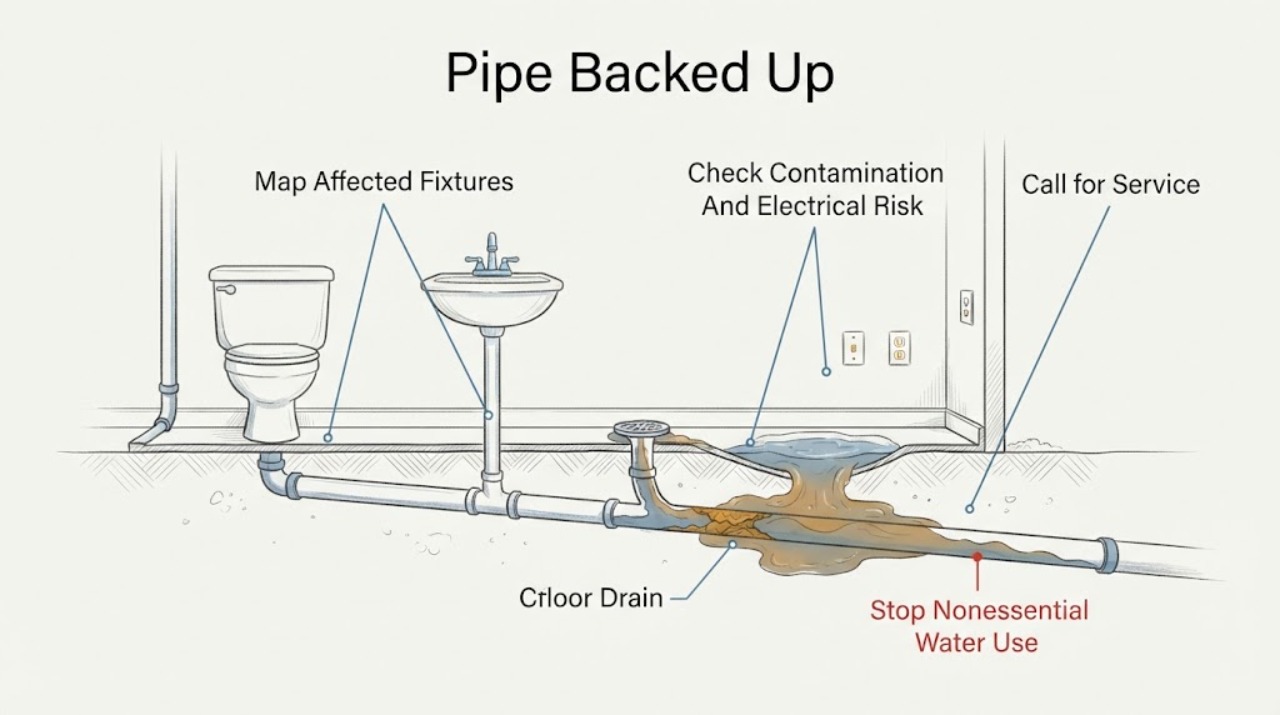
When a pipe backs up, stop adding water first. Do not flush toilets, run the dishwasher or washing machine, shower, or keep filling a sink while the route is unknown. From a safe, dry position, note whether one fixture is slow, several fixtures gurgle or back up, a floor drain overflows, or sewage is visible. A single affected fixture can be a local drain blockage; several fixtures, slow toilets and sinks, gurgling, or sewage returning through a low drain point toward a shared building sewer or septic problem. Avoid contact with sewage and keep children and pets away. Do not open a septic tank, enter standing sewage or floodwater, or touch wet electrical equipment. Arrange qualified plumbing or septic service when more than one fixture is affected, sewage is visible, the backup returns, there is a concealed leak or electrical hazard, or the cause is not clear.
Before you begin
Safety first
- This article supports stopping water use, mapping symptoms from a safe position, and reporting system context. Contaminated-water cleanup, sewer access, septic-tank or drainfield work, concealed pipe clearing, and electrical or structural hazards require the appropriate qualified professional.
Work through in order
Diagnostic checks
Use only checks that match the exact appliance or system and its official guide.
-
Check 1
Stop flushing, showering, washing dishes or clothes, and running other water-using fixtures until the backed-up path is understood; leave the affected drain undisturbed rather than adding water to test it.
Expected result: Record whether the water level stays stable when no water is used, continues rising on its own, or recedes slowly without additional use.
Next step: Keep water use to a minimum and arrange plumbing or septic assessment, especially when the level rises without use or the backup is contaminated.
Stop if: Do not add water, flush repeatedly, use another fixture to force flow, or enter standing water to reach a shutoff or pump.
Why this matters
Why: A stable level after water use stops reduces the immediate load but does not prove the pipe is clear. Continued rise or sewage movement suggests a larger restriction, backflow, or system failure that should be escalated.
-
Check 2
From dry, safe positions, list each affected sink, toilet, tub, shower, floor drain, or cleanout area and note whether it is slow, gurgling, overflowing, or showing sewage; do not open a cleanout or remove a drain cover to investigate.
Expected result: Classify the pattern as one fixture only, several fixtures in one room, fixtures on multiple floors, a low floor drain or basement backup, or a backup outside near a septic tank or drainfield.
Next step: Give the fixture map to a plumber, sewer utility, property manager, or septic professional so the responder can choose a building-side or onsite-wastewater assessment.
Stop if: Stop for sewage contact, unstable flooring, structural damage, a flooded electrical device, or any need to enter contaminated water or open underground equipment.
Why this matters
Why: A single fixture supports a possible local restriction. Several fixtures, gurgling, floor-drain overflow, or sewage in the home is more consistent with a shared drain, sewer, or septic path and is not a simple one-fixture diagnosis.
-
Check 3
Without touching the water, determine whether the backup is clear wastewater, visibly sewage-contaminated water, floodwater, or water near outlets, appliances, pumps, or other electrical equipment; keep people and pets away.
Expected result: Record visible sewage, odor, standing water, a flooded pump or electrical device, well-water exposure, or no contamination or electrical concern visible from safety.
Next step: Avoid contact, keep the area isolated, and contact a qualified plumber, septic professional, health department, or emergency responder as appropriate; do not use a wet electrical device.
Stop if: Do not wade into standing water, touch wet electrical equipment, pump contaminated water through household drains, or begin cleanup without the protective and professional guidance appropriate to the contamination.
Why this matters
Why: Sewage and floodwater may contain pathogens, and water near electrical equipment can create shock risk. A contaminated or electrically unsafe backup requires containment and professional or health-department guidance before ordinary clearing or cleanup.
-
Check 4
From a safe location, record whether the property uses a private septic system or public sewer, whether heavy rain or flooding preceded the backup, and whether there are outdoor damp spots, standing water, sewage odor, or a change in nearby utility service; do not open a tank, pump chamber, manhole, or drainfield.
Expected result: Classify the context as private septic with saturated or flooded ground, public sewer with possible neighborhood impact, recent installation or service, or unknown system type.
Next step: Contact the sewer utility or property manager for a possible public-side issue, or contact a qualified septic professional and local health department for a private-system concern; continue conserving water.
Stop if: Do not pump a septic tank during flooded or saturated drainfield conditions, dig into a drainfield, open a tank, or approach a manhole or pump chamber.
Why this matters
Why: EPA warns that saturated drainfields can cause backups and that pumping a septic tank in those conditions can damage or float the tank. A public-sewer or unknown-system pattern needs utility or professional assessment rather than a guessed tank or pipe procedure.
-
Check 5
Arrange qualified plumbing, sewer, or septic assessment and provide the fixture map, water-use status, contamination or electrical observations, system type, weather context, and photos taken only from a safe dry position.
Expected result: Ask the professional to identify whether the restriction is local, shared building-side, public-sewer, septic, structural, or related to a flooded pump or electrical component, and to state what area is safe to use.
Next step: Keep nonessential water use stopped until the professional or responsible utility clears the system and gives a safe-use and cleanup direction.
Stop if: Do not resume normal water use, re-enter contaminated areas, or improvise chemical, mechanical, septic, or electrical repairs while the cause remains unresolved.
Why this matters
Why: A professional inspection changes the response from symptom management to an identified blockage, line break, septic malfunction, or wastewater overflow; no remote observation can establish which pipe or component needs replacement.
Use your observations
Decision map
Find the observation that best matches what you see, then follow the next safe action.
-
PATH 01Safety boundary
What you see
Only one sink, tub, shower, or toilet is slow or backed up, with no sewage in the home, no standing water near electrical equipment, and no other fixture affected.
Do this next
Keep water use at that fixture stopped and follow the fixture manufacturer's or plumber's appropriate clearing procedure; arrange service if the restriction remains or returns.
Why this path and its safety boundary
Why it matters: A local fixture or branch restriction is possible, but the pipe has not been proven clear or safe to open.
Safety stop: Do not use caustic or improvised treatments, force a tool into an unknown pipe, or continue if sewage, a concealed leak, or a second affected fixture appears.
-
PATH 02Safety boundary
What you see
Several fixtures are slow or backing up, plumbing gurgles, a floor drain overflows, or sewage returns through a low fixture.
Do this next
Stop nonessential water use and contact a qualified plumber, sewer utility, property manager, or septic professional according to the system type.
Why this path and its safety boundary
Why it matters: The blockage or failure may be in a shared drain, building sewer, public sewer, or septic system rather than the visible fixture.
Safety stop: Do not keep flushing, run water from another fixture, open a cleanout or manhole, or attempt to push the backup farther downstream.
-
PATH 03Safety boundary
What you see
Sewage or potentially contaminated floodwater is visible inside or outside the home.
Do this next
Keep people and pets out, avoid contact, reduce water use, and obtain professional and local health guidance for containment, inspection, and cleanup.
Why this path and its safety boundary
Why it matters: The area may contain pathogens and may also have electrical or structural hazards; ordinary drain clearing is no longer the first decision.
Safety stop: Do not wade, touch wet electrical devices, pump contaminated water through the plumbing, or clean without suitable protective and professional guidance.
-
PATH 04Safety boundary
What you see
The property uses septic, the ground or drainfield is flooded or saturated, and the pipe backup follows heavy rain or flooding.
Do this next
Drastically reduce water use and contact a qualified septic professional or local health department; wait for professional direction before tank or drainfield work.
Why this path and its safety boundary
Why it matters: The system may be hydraulically overloaded or damaged, and pumping or digging at the wrong time can damage or displace the tank or drainfield.
Safety stop: Do not pump the tank in saturated conditions, dig into the drainfield, operate equipment over wet soil, or open the tank yourself.
-
PATH 05Safety boundary
What you see
The home is on public sewer, the system type is unknown, or neighbors or nearby low points show a similar backup.
Do this next
Keep water use low and contact the sewer utility, property manager, or qualified plumber with the timing and affected-fixture map.
Why this path and its safety boundary
Why it matters: The cause may be outside the fixture or property and cannot be assigned to a private pipe without utility or professional confirmation.
Safety stop: Do not open public or shared access points, enter sewage, or assume a private septic procedure applies.
Helpful context
Understand the symptom
Reduce the load before trying to identify the blockage
A backup gets worse when more water is sent into a restricted drain, sewer, or septic path. EPA and CDC guidance for wastewater failures recommends reducing nonessential water use and limiting flushing when the system is threatened. Start by stopping water use and documenting what is already happening; do not use a second fixture to reproduce the backup.
The affected fixtures reveal whether the problem is local or shared
One sink or tub that drains slowly can have a local restriction, while several slow fixtures, gurgling, floor-drain overflow, or sewage entering the home can indicate a shared sewer or septic path. EPA lists these patterns among signs of a failing septic system. This distinction changes who must respond and whether ordinary fixture-level work is even appropriate.
Sewage and standing water change the safety boundary
Sewage may contain harmful pathogens, and standing water can create an electrical hazard. EPA and CDC advise avoiding contact with contaminated water and obtaining health or professional guidance. Keep people and animals out of the affected area, do not touch wet electrical equipment, and do not open or pump a septic tank as an improvised first step, especially during flooding or saturated soil conditions.
Safety boundary
Stop conditions
- Stop all nonessential water use when a pipe backs up; do not keep flushing, showering, washing, or run appliances to force a result.
- Avoid sewage and floodwater, keep children and pets out, and do not touch wet electrical equipment or enter standing water.
- Do not open a septic tank, pump chamber, manhole, or cleanout; do not pump during flooded or saturated drainfield conditions or dig into a wet drainfield.
- Do not use an improvised chemical or mechanical clearing method when the system type, blockage location, contamination, or electrical condition is unknown.
- Arrange qualified plumbing, sewer, septic, health, or emergency help for multiple affected fixtures, visible sewage, outdoor overflow, recurring backup, concealed damage, or any unresolved cause.
When checks do not resolve it
Need a professional?
Arrange qualified plumbing or sewer service for any backup affecting more than one fixture, a recurring or complete blockage, gurgling or floor-drain overflow, suspected public sewer issue, concealed leak, or unknown system. Contact a qualified septic professional and local health department for a private-system or flood-related backup. If sewage, floodwater, structural instability, or wet electrical equipment is present, keep clear and obtain urgent professional or emergency guidance before entering or cleaning.
Safety scope: This article supports stopping water use, mapping symptoms from a safe position, and reporting system context. Contaminated-water cleanup, sewer access, septic-tank or drainfield work, concealed pipe clearing, and electrical or structural hazards require the appropriate qualified professional.
Common questions
FAQ
What should I do first when a pipe backs up?
Stop nonessential water use and do not flush or run appliances to force the pipe clear. Map which fixtures are affected from a safe position, avoid sewage and standing water, and arrange qualified plumbing or septic assessment if the backup is more than a single minor fixture issue.
How can I tell a local drain clog from a sewer or septic backup?
One slow fixture with no contamination may be local. Several slow sinks or toilets, gurgling, floor-drain overflow, sewage returning through a low fixture, or outdoor sewage or damp spots point toward a shared sewer or septic path and need professional assessment.
Can I pump my septic tank when the drainfield is flooded?
Do not pump it as an improvised first step during flooded or saturated drainfield conditions. EPA warns that pumping can cause the tank to float or damage inlet and outlet pipes. Reduce water use and contact a qualified septic professional or local health department.
Is backed-up sewage safe to clean up myself?
Avoid contact and keep children and pets away. Sewage may contain harmful pathogens, and standing water may be electrically hazardous. Obtain health and professional guidance for containment and cleanup, and do not touch wet electrical equipment or enter contaminated water.
When does a backed-up pipe need a plumber or septic professional?
Call for multiple affected fixtures, gurgling or floor-drain overflow, visible sewage, a recurring or complete backup, an unknown system, a suspected public sewer issue, a flooded septic system, concealed damage, or any electrical or structural hazard. Keep water use low until the system is assessed and cleared.
Read the exact guide
Official sources
- Septic Systems - What to Do after the FloodU.S. Environmental Protection Agency · EPA post-flood guidance for private septic systems; its tank and drainfield cautions apply only when a septic context is established.
- Resolving Septic System MalfunctionsU.S. Environmental Protection Agency · EPA guidance for septic and onsite wastewater systems; it helps distinguish shared or septic warning patterns but does not diagnose an unidentified household pipe.
- Guidelines for Septic and Onsite Wastewater SystemsCenters for Disease Control and Prevention · CDC emergency and septic-system guidance, especially for floods and onsite wastewater; it supports safety and escalation rather than a universal pipe-clearing procedure.
Community feedback
Share a repair observation
Share a plain-text repair observation. Accepted observations are published automatically; this page may take a moment to update.