
Plumbing guides
Pipes Repair Guides
Guidance for pipe leaks, noise, freezing, fittings, and water-pressure concerns.
Published pipes guides
Choose the guide that best matches the equipment and symptom you are seeing.
-
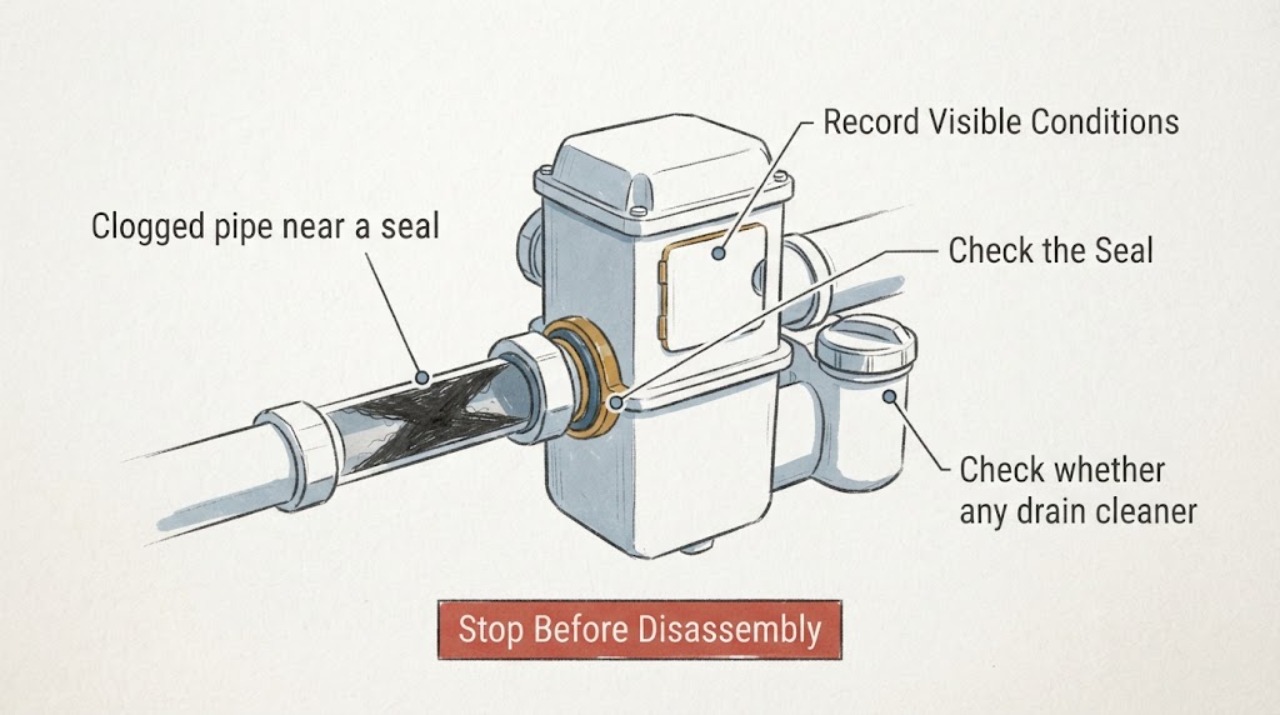
Clogged pipe near a seal: separate the blockage from the leak
A pipe that seems clogged near a seal may have two different faults: restricted flow, a leaking or deformed joint seal, or both. First establish whether flow is slow or completely stopped and whether the problem is isolated to one fixture.
-
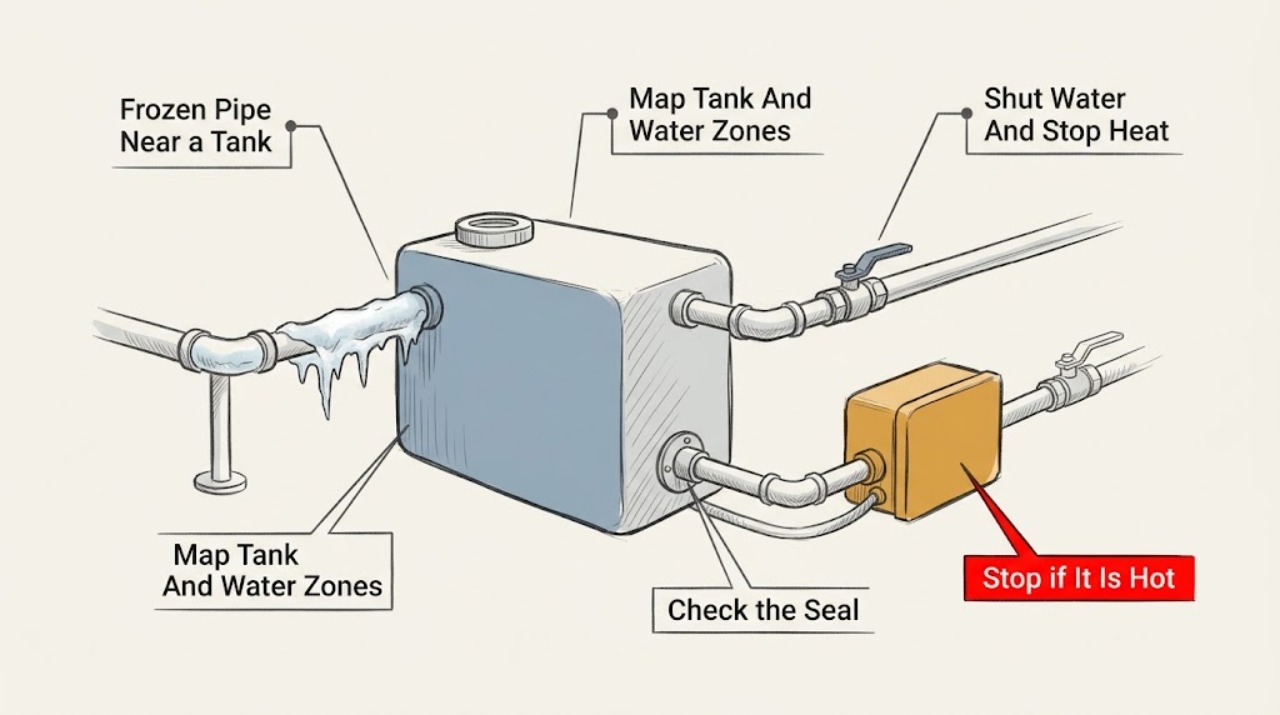
Frozen Pipe Near a Tank: Shut Off Water and Check for Hidden Damage Before Thawing
If a pipe serving or near a tank is frozen, shut off the water before attempting any thawing and keep the tank and pipe area under observation. A dry floor does not prove the pipe is intact: ice can hide a split until water begins moving again.
-
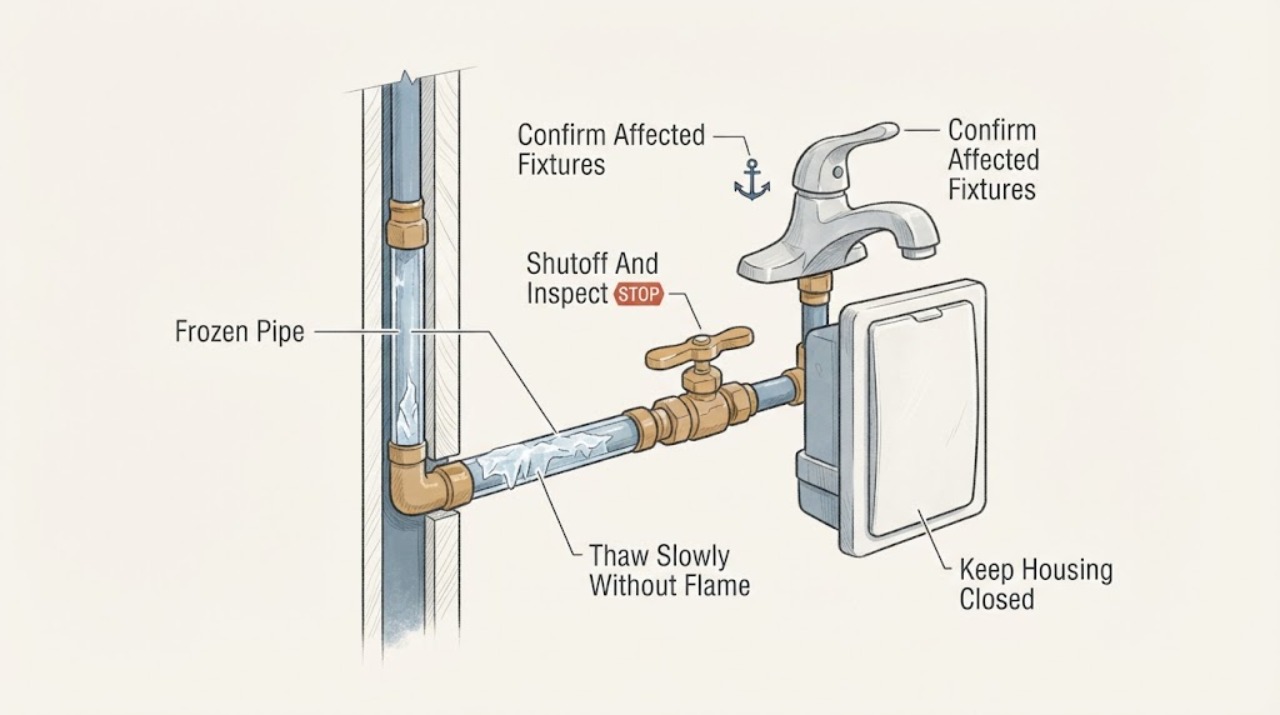
Frozen Pipe: Shut Off Water, Thaw Safely, and Check for a Burst
A faucet that gives only a trickle during freezing weather may be served by a frozen pipe. Find out whether one fixture or the whole home is affected, locate the most exposed accessible section, and know where the local and main water shutoffs are before thawing.
-
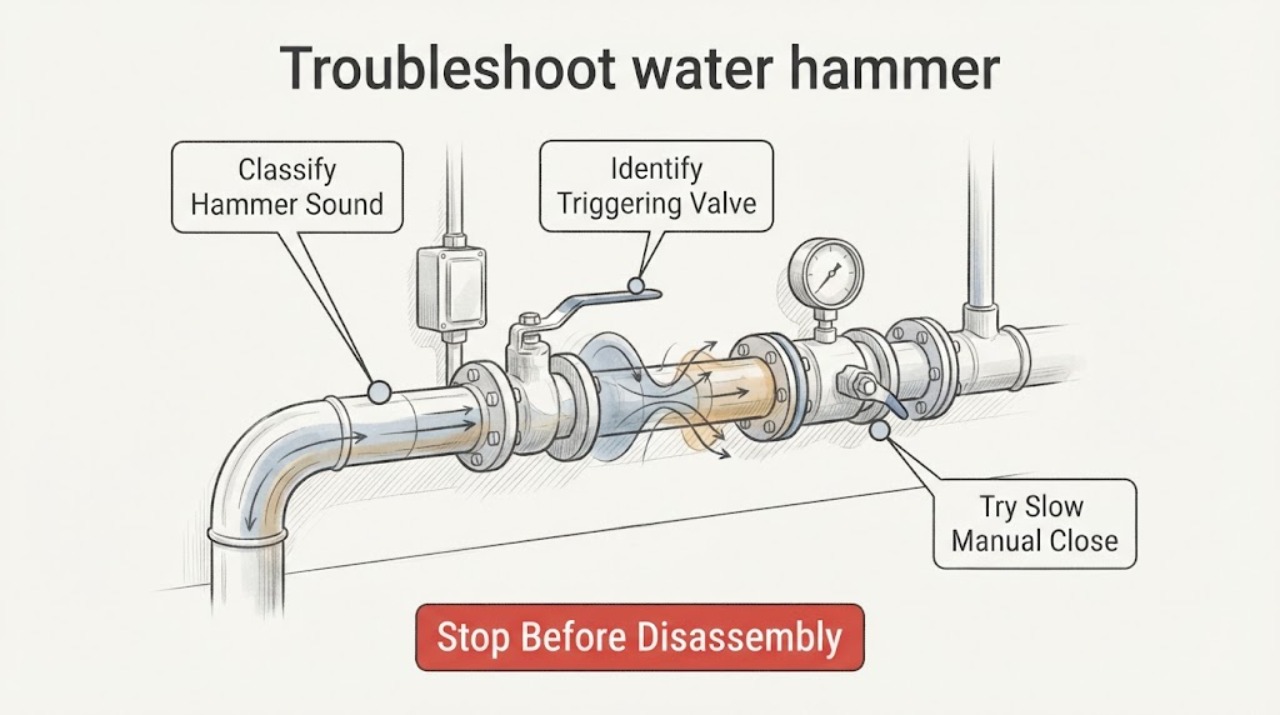
How to troubleshoot water hammer in a pipe
Water hammer is usually a sharp bang, knock, or pipe vibration when moving water stops or changes direction quickly, often as a valve closes. Note which faucet, toilet, washer, dishwasher, or automatic valve triggers it, try closing a manual valve more slowly, and inspect only accessible pipe supports and joints for movement or leaks.
-
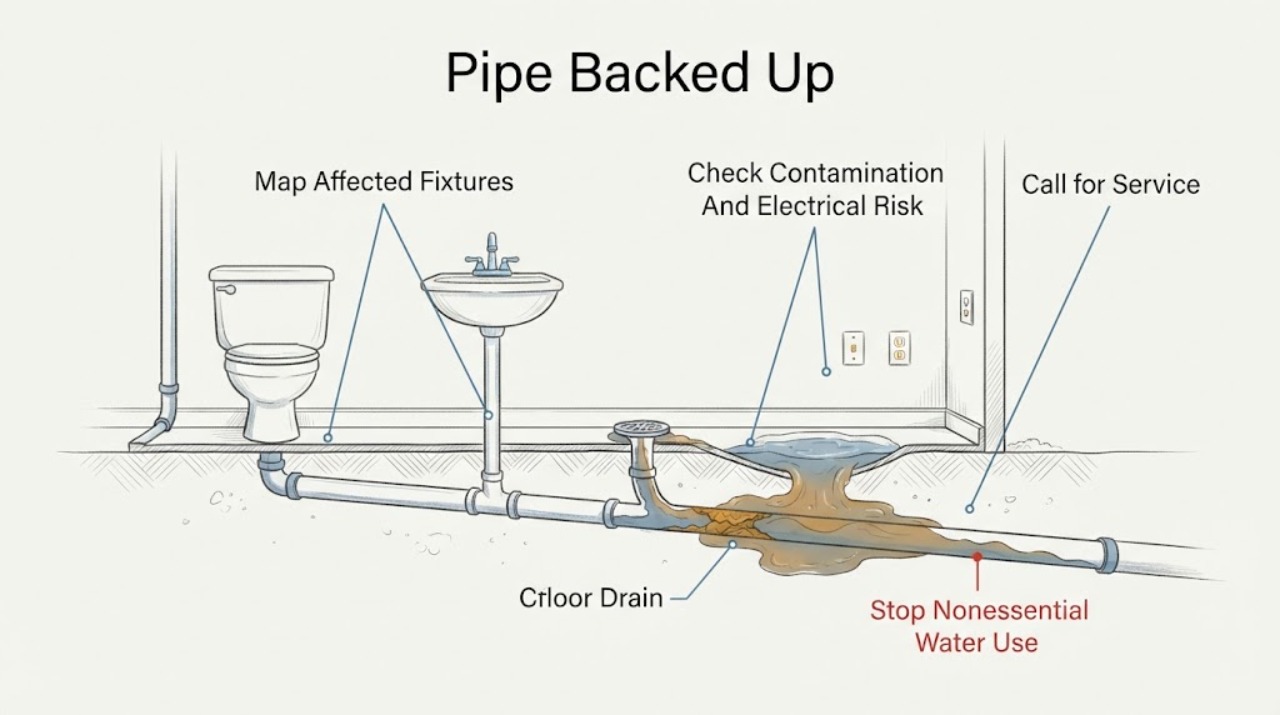
Pipe Backed Up: Reduce Water Use and Separate a Local Blockage from a Sewer Problem
When a pipe backs up, stop adding water first. Do not flush toilets, run the dishwasher or washing machine, shower, or keep filling a sink while the route is unknown.
-
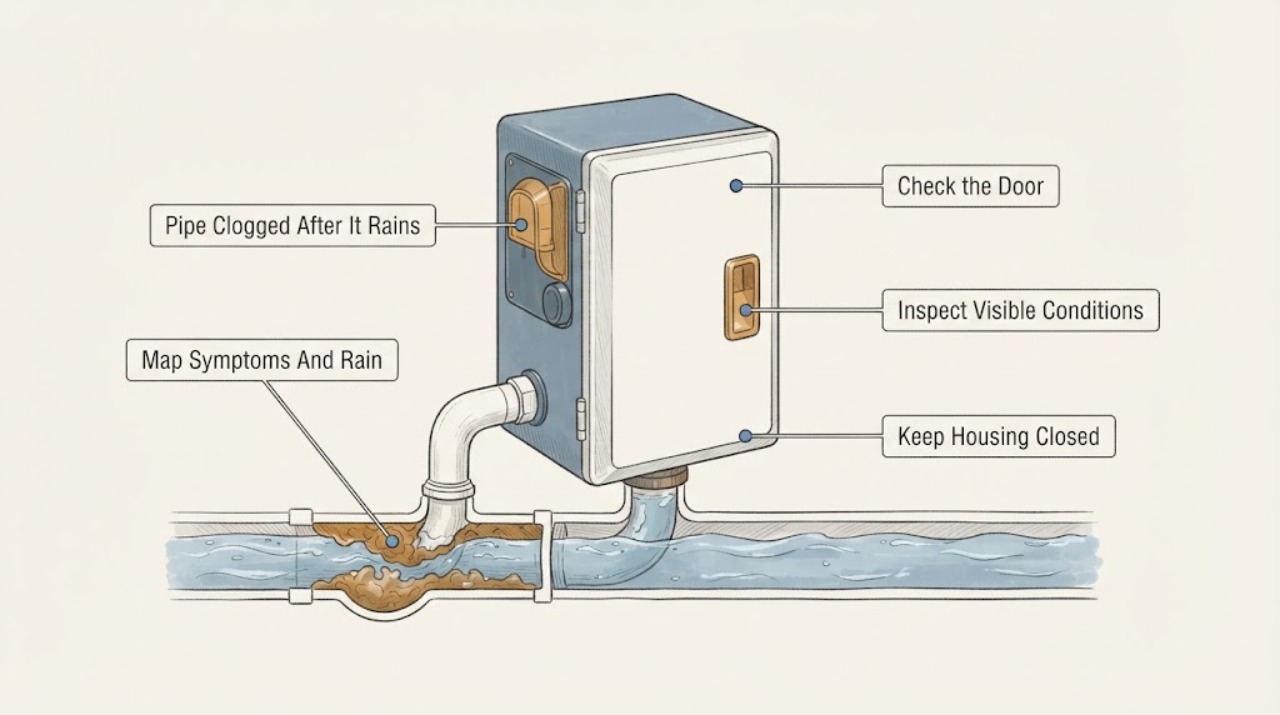
Pipe Clogged After It Rains for the Second Time: Separate a Local Blockage from Sewer Backup
A pipe that clogs again after the second rain may have a partial blockage that only becomes apparent during high flow, a private lateral or low-point restriction, or rainwater entering an overloaded or defective sewer system. First stay out of floodwater and record whether one indoor fixture, several low fixtures, the yard, or the street is affected.
-
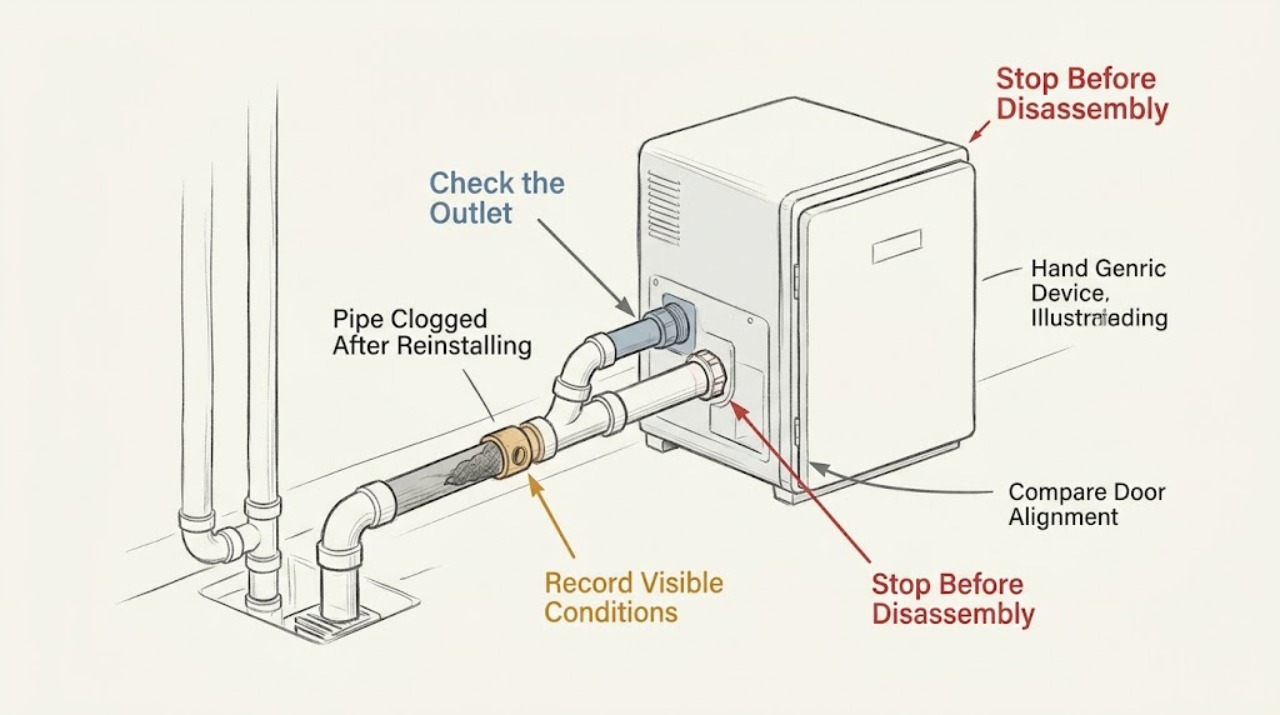
Pipe Clogged After Reinstalling the Pipes: Check the Reassembly Safely
A pipe that clogs immediately after the pipes were reinstalled should be treated first as a reassembly or geometry problem, not automatically as a deep blockage. A reversed or misaligned fitting, displaced gasket, sealant or debris in the bore, a sag or incorrect slope, a blocked vent, or a downstream obstruction can all change the result.
-
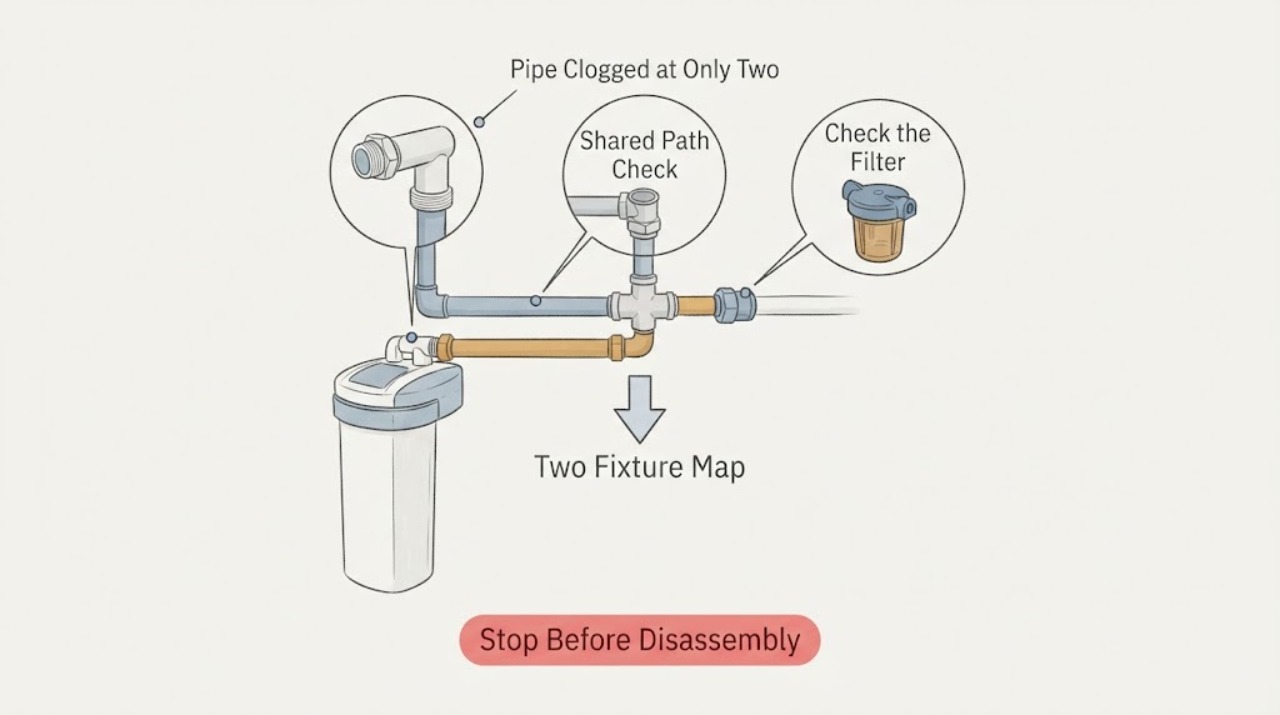
Pipe Clogged at Only Two Fixtures: Find the Shared Blockage Safely
When a clog affects exactly two fixtures, compare their locations and symptoms before opening any pipe. If the fixtures are close together or share a branch, the restriction may be in that branch or in one shared strainer, trap, or accessible filter; if other fixtures drain normally, a whole-building main blockage is less likely.
-
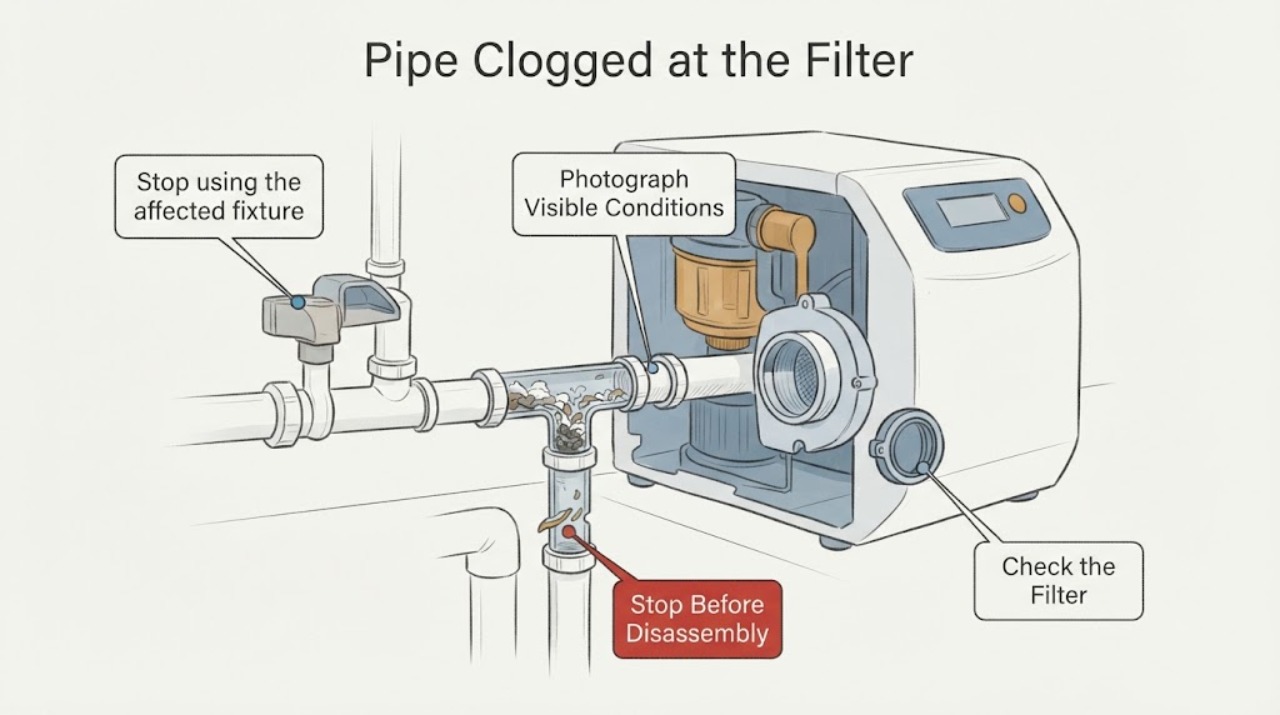
Pipe Clogged at the Filter: Safe Plumbing Triage
First establish what “filter” means: an accessible strainer or screen, a filter in an appliance or water system, or an upstream part that is not meant for homeowner removal. A single slow fixture usually points to a local restriction; several slow fixtures, gurgling, or wastewater at a low drain can indicate a larger sewer or main-line problem.
-
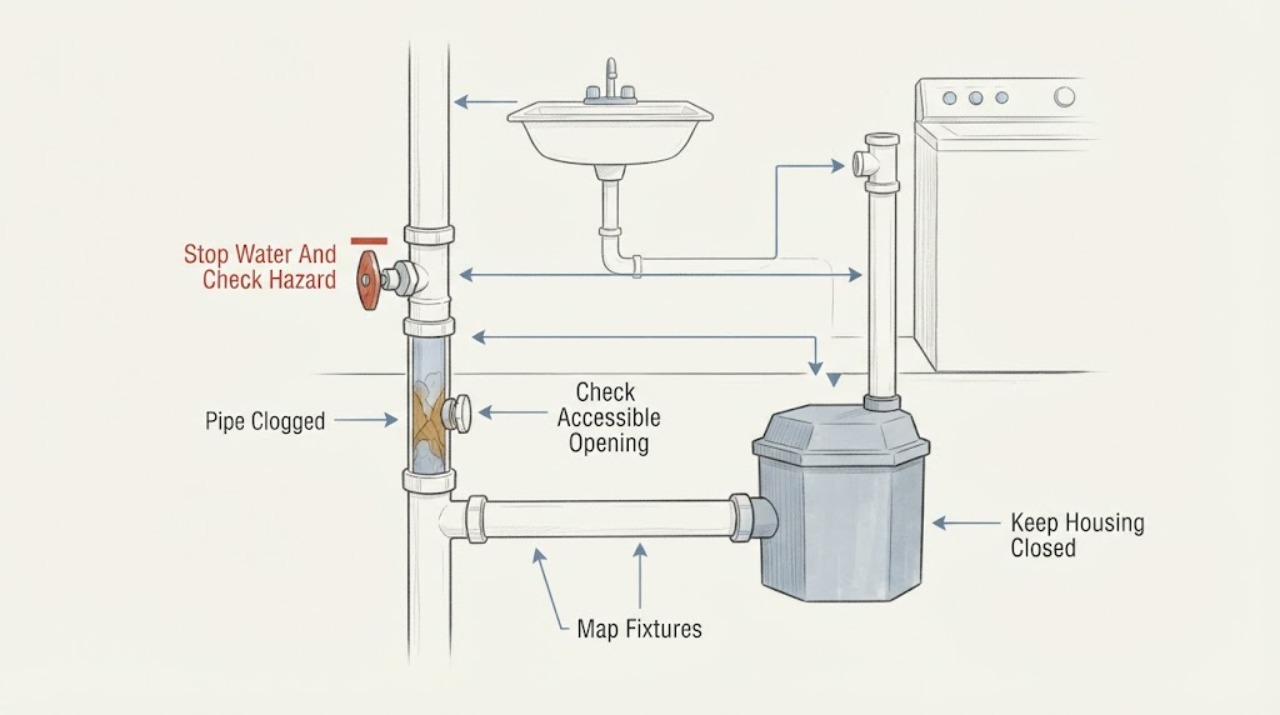
Pipe Clogged: Safe Checks and What to Do Next
If a household drain pipe is clogged, stop adding water and first determine whether one fixture is slow or several fixtures are backing up. For a single sink, tub, or utility drain with no chemical already added, remove accessible debris and use the correct plunger while covering an overflow opening.
-
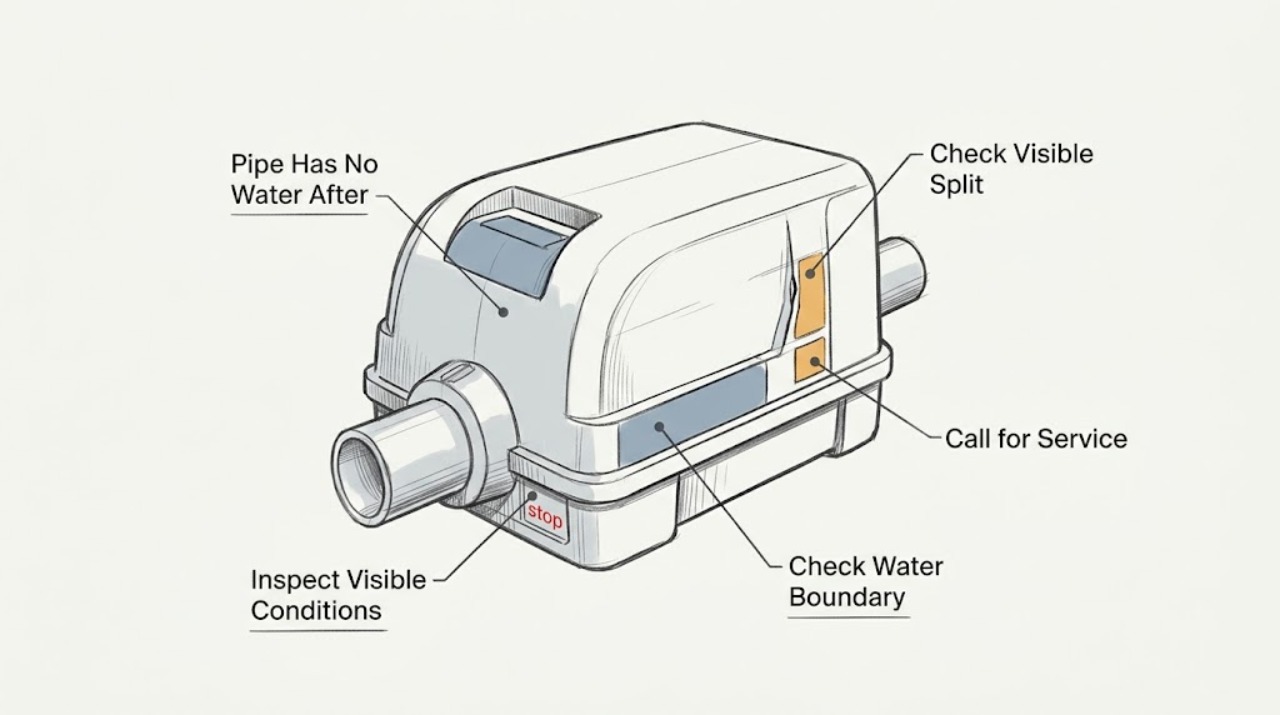
Pipe Has No Water After Applying Heat: Check for a Frozen or Split Line
If a pipe still supplies no water after heat was applied, the ice may not have cleared, the heat may not have reached the frozen section, a valve may be closed, or the pipe may have split while frozen and is now leaking as it thaws. Stop applying heat and check the nearest faucet, visible pipe, joints, walls, ceiling, and floor from a dry, safe position.
-
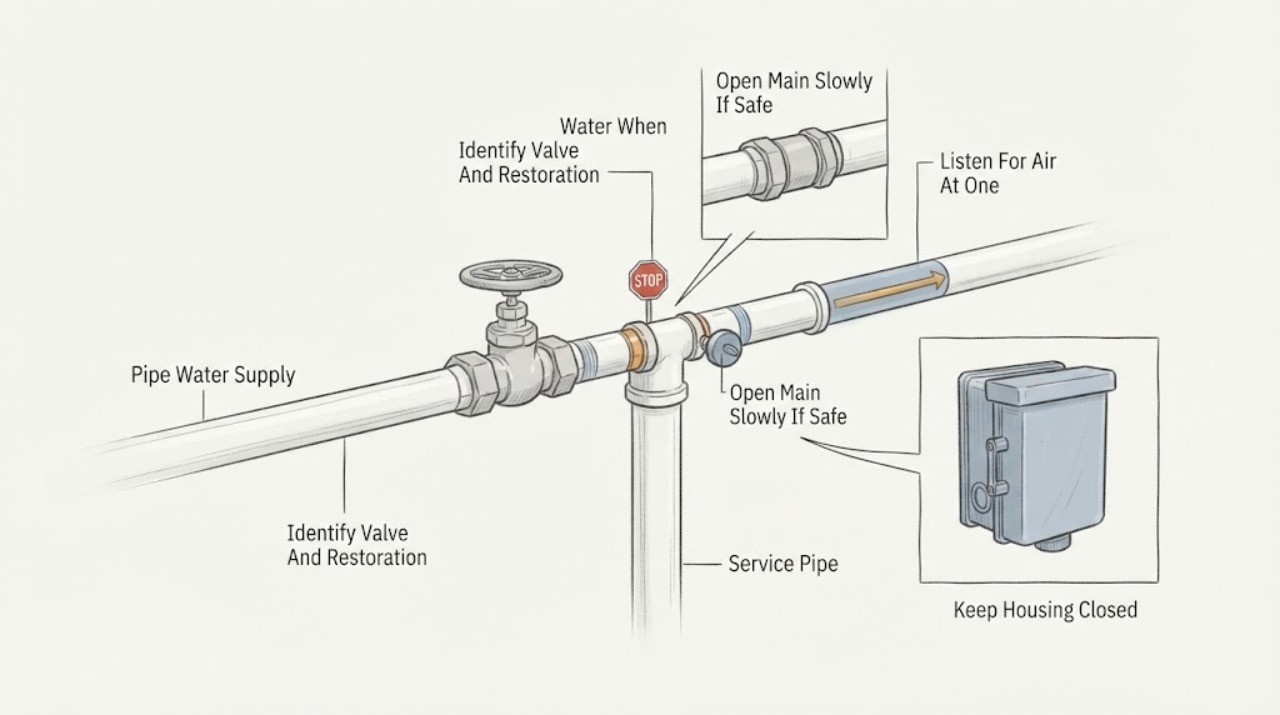
Pipe Has No Water When Turning the Main Back On
If a pipe or the house has no water when the main is turned back on, first confirm that the correct house valve is actually open and that the water company or building has restored service. Open one safe faucet slowly and listen for rushing air, but do not force the main valve, operate a meter or curb-stop valve, or repeatedly cycle the supply.
-
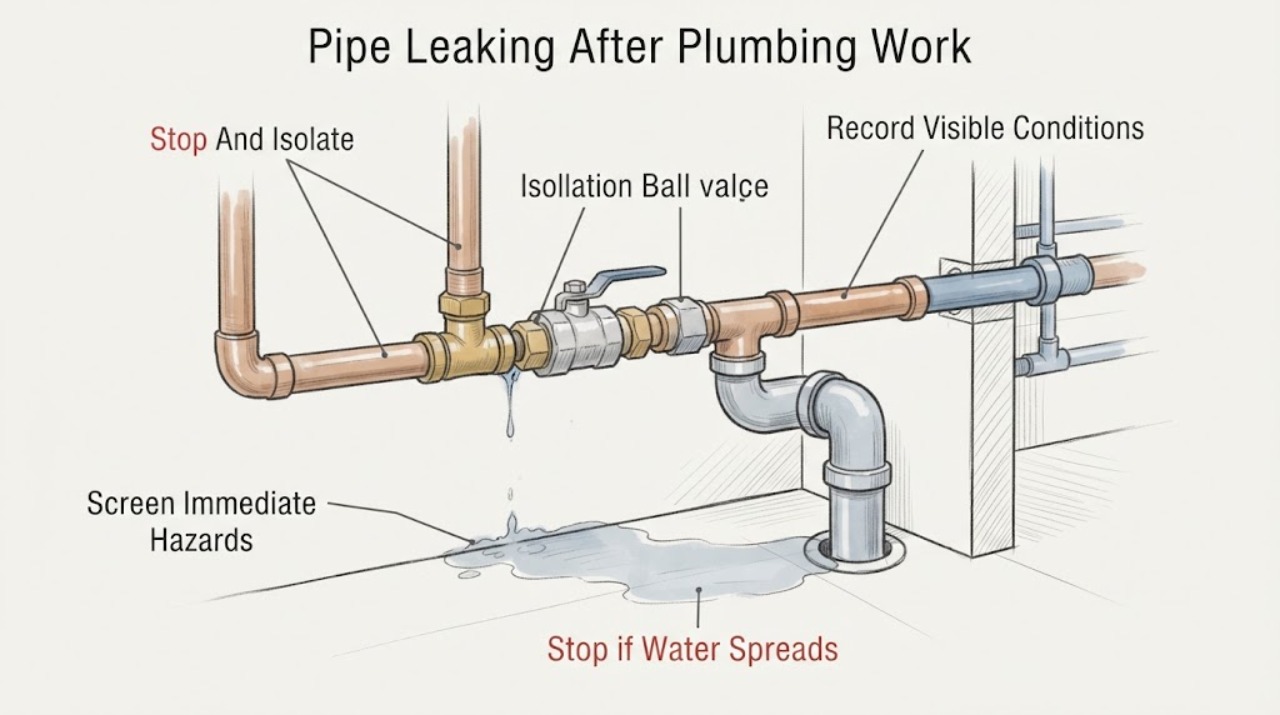
Pipe Leaking After Plumbing Work: Isolate the Water and Trace the First Wet Point
A pipe that leaks after plumbing work should be treated as an active repair-site leak until the water source is isolated. Stop using the affected fixture, close the nearest safe shut-off or the main house valve if needed, and keep water away from electrical equipment.
-
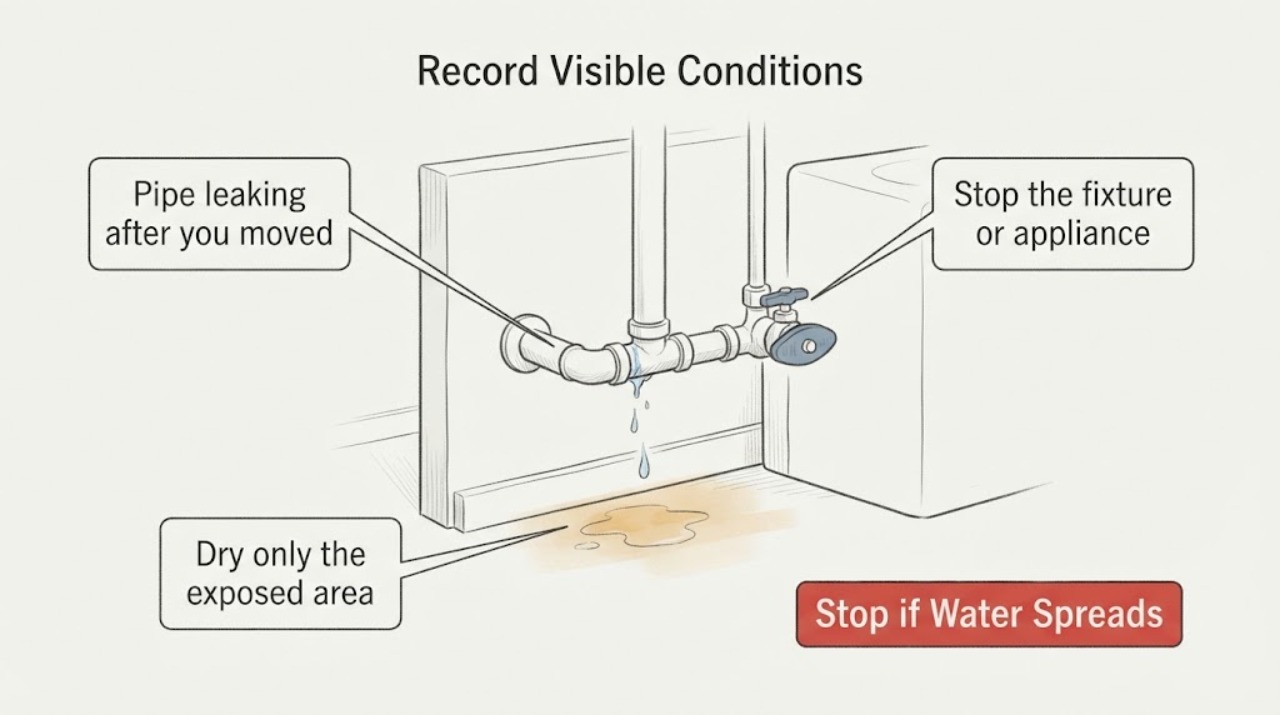
Pipe leaking after you moved it: safe repair options
Stop using the affected pipe, close the nearest safe shutoff or the main water valve if needed, and keep the area away from wet electrics. Dry the accessible area and find the first wet point: a shifted coupling, stressed supply joint, drain connection that leaks only during use, or water emerging from a wall or floor.
-
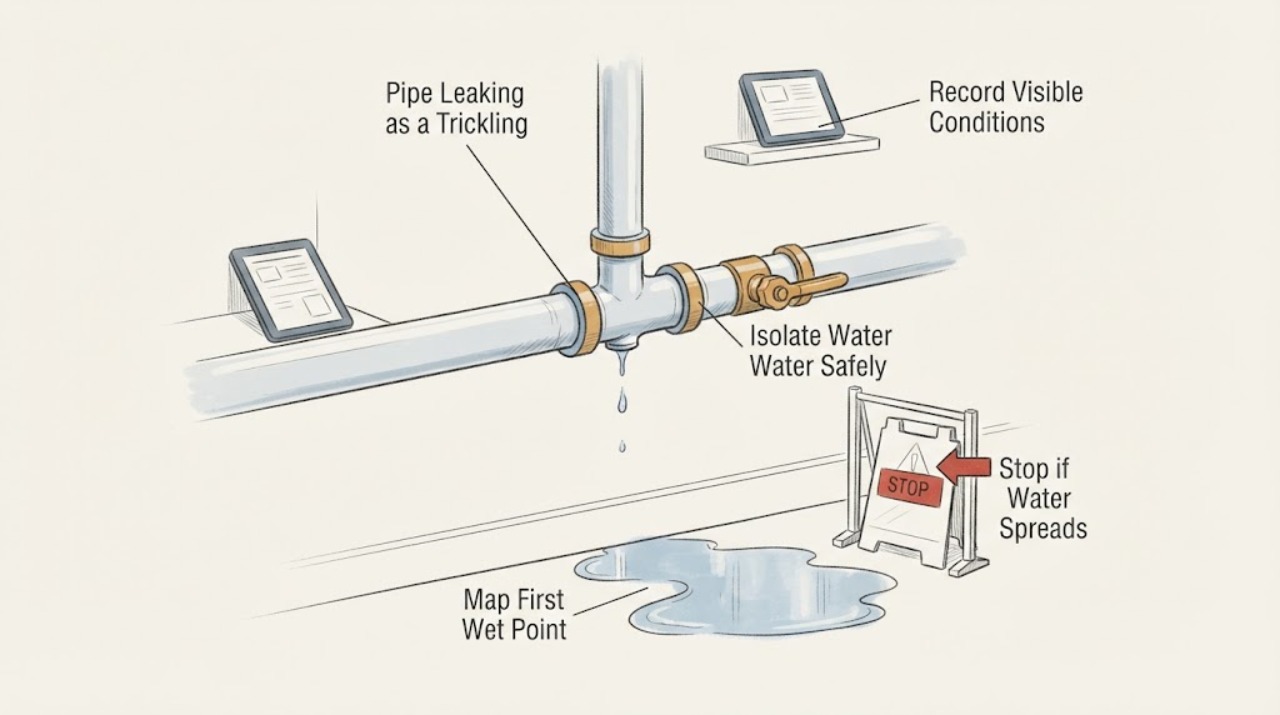
Pipe Leaking as a Trickling Drip: Find the Source Before It Grows
A slow trickle is still an active leak, not proof that the problem is harmless. First avoid using the nearby fixture and watch the first wet point from a dry, safe position.
-
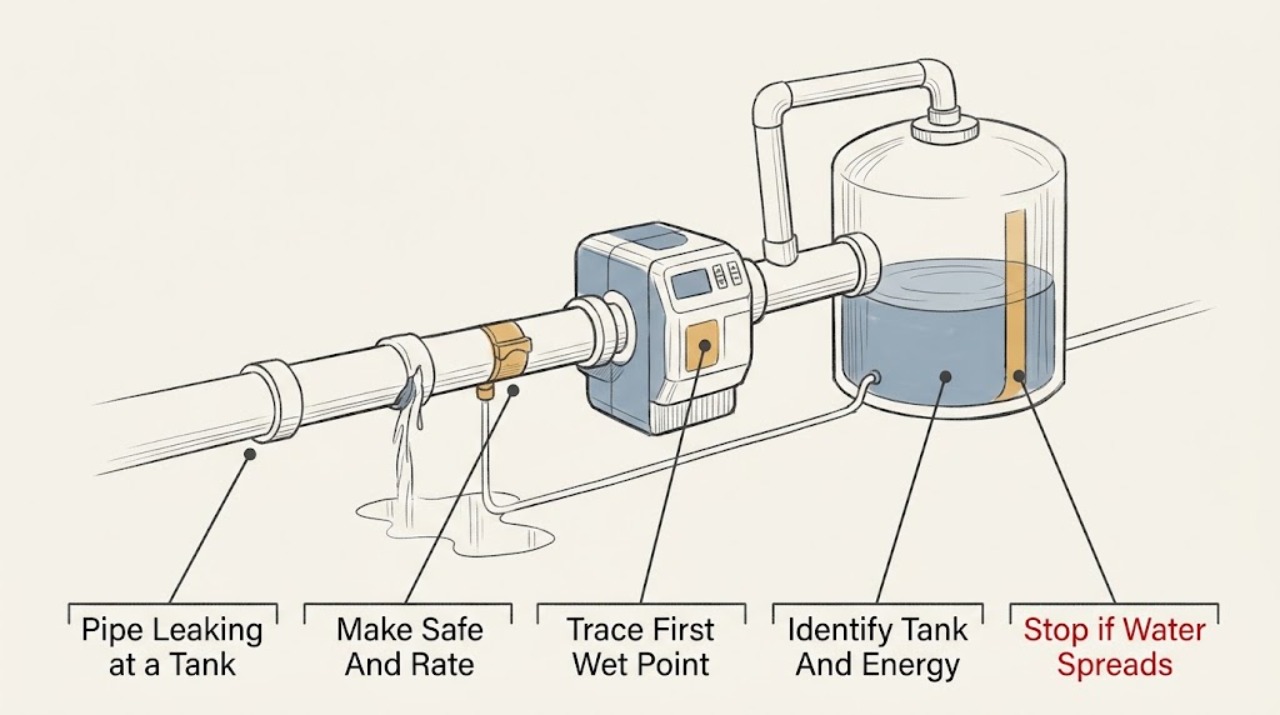
Pipe Leaking at a Tank: Trace the First Wet Point Safely
A leak reported at a tank may come from the tank wall or base, an inlet or outlet connection, a drain or overflow path, a temperature-and-pressure relief discharge, condensation, or water running down from above. If water is hot, flowing quickly, reaching electrical equipment, or accompanied by a gas odor, smoke, or a carbon-monoxide alarm, stop and use the appropriate emergency path.
-
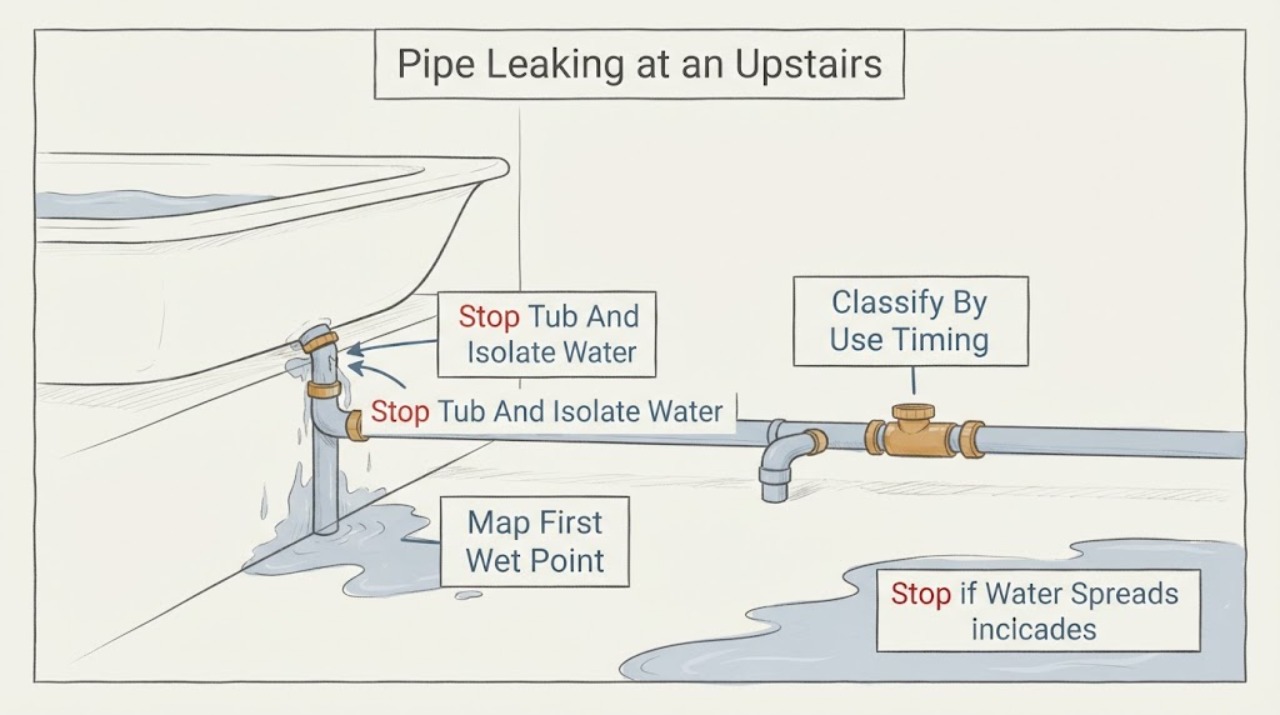
Pipe Leaking at an Upstairs Tub: Find the First Wet Point Safely
Stop using the upstairs tub first. A leak that appears below the tub can come from the pressurized supply while the faucet or shower is running, the tub waste or overflow only when water drains, the overflow opening when the tub is too full, or the tub enclosure, door, curtain, or seal letting spray reach the floor.
-
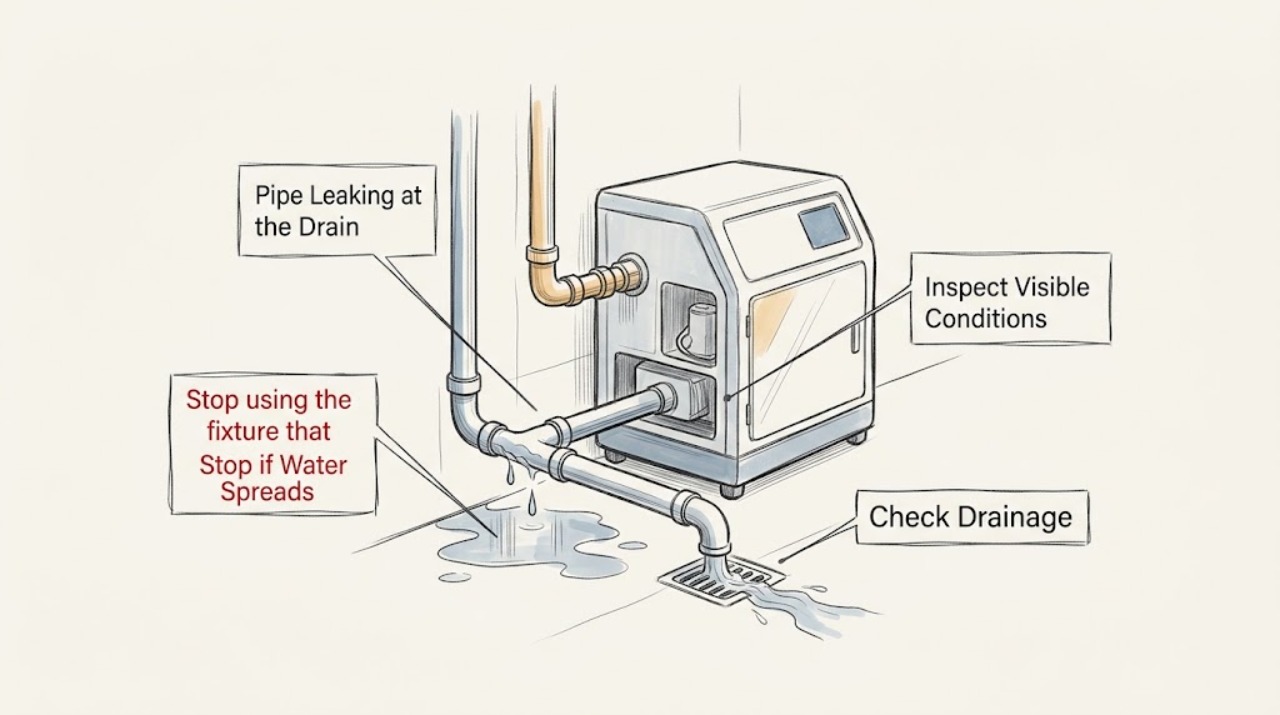
Pipe Leaking at the Drain Line: Find the First Wet Point Safely
Stop using the fixture served by the leaking drain line and identify the first wet point before tightening or replacing anything. A joint or trap that leaks only while water discharges is different from a supply-side leak, a continuous leak, an upstream fixture, or wastewater backing up through the line.
-
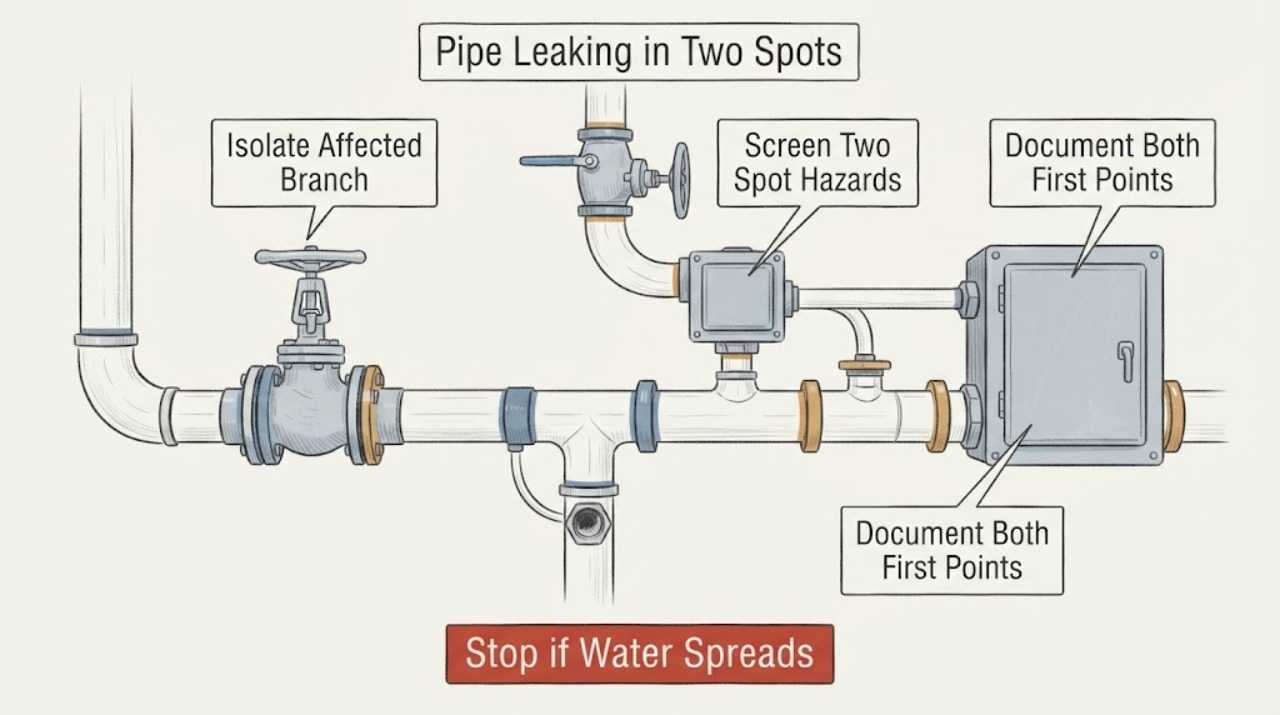
Pipe Leaking in Two Spots After Repair: Isolate Both Points Before Retesting
Two wet spots after a pipe repair are not proof of two unrelated faults: water can travel from one pressurized joint, or the repair may involve two leaking connections. Stop using the affected branch, close the nearest safe shut-off or the house main if needed, and keep water away from electrical equipment.
-
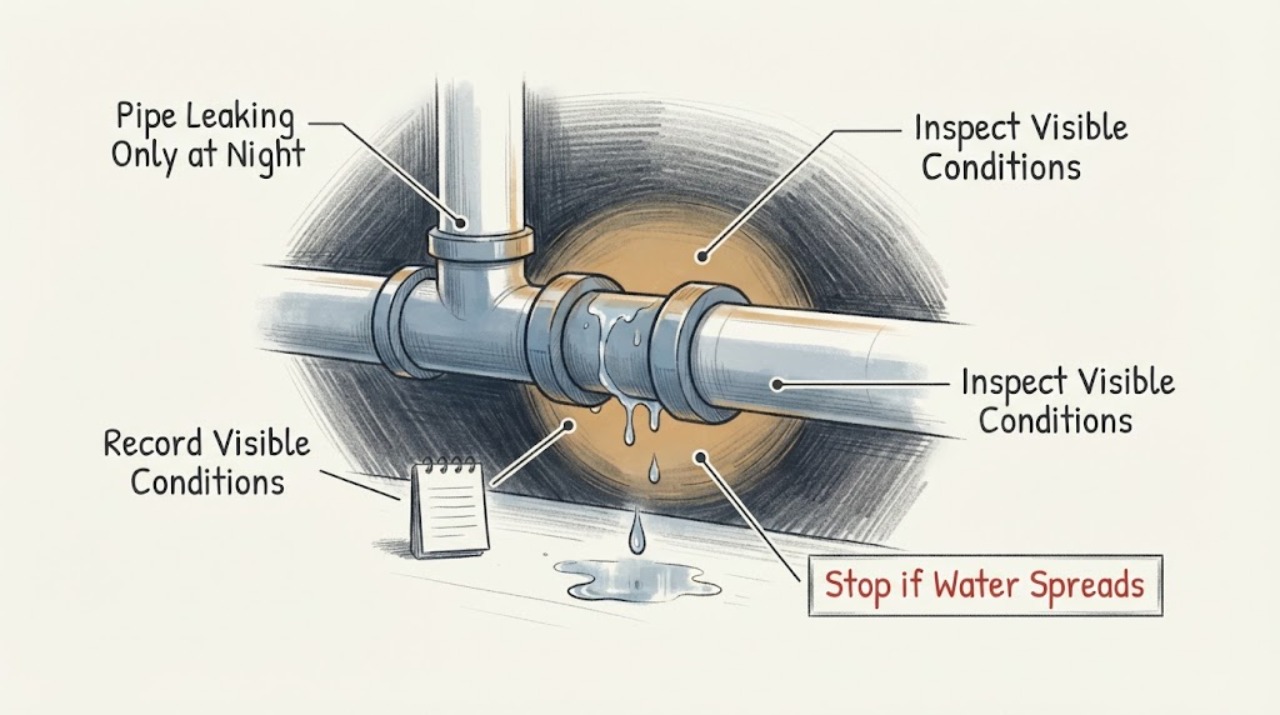
Pipe Leaking Only at Night: About Five Drops of Water
Five drops at night still deserve a controlled diagnosis because the water may be a pressurized pipe leak, condensation, a drain or appliance event after evening use, or a slow leak hidden behind a wall. Do not loosen a fitting or open a pipe under pressure.
-
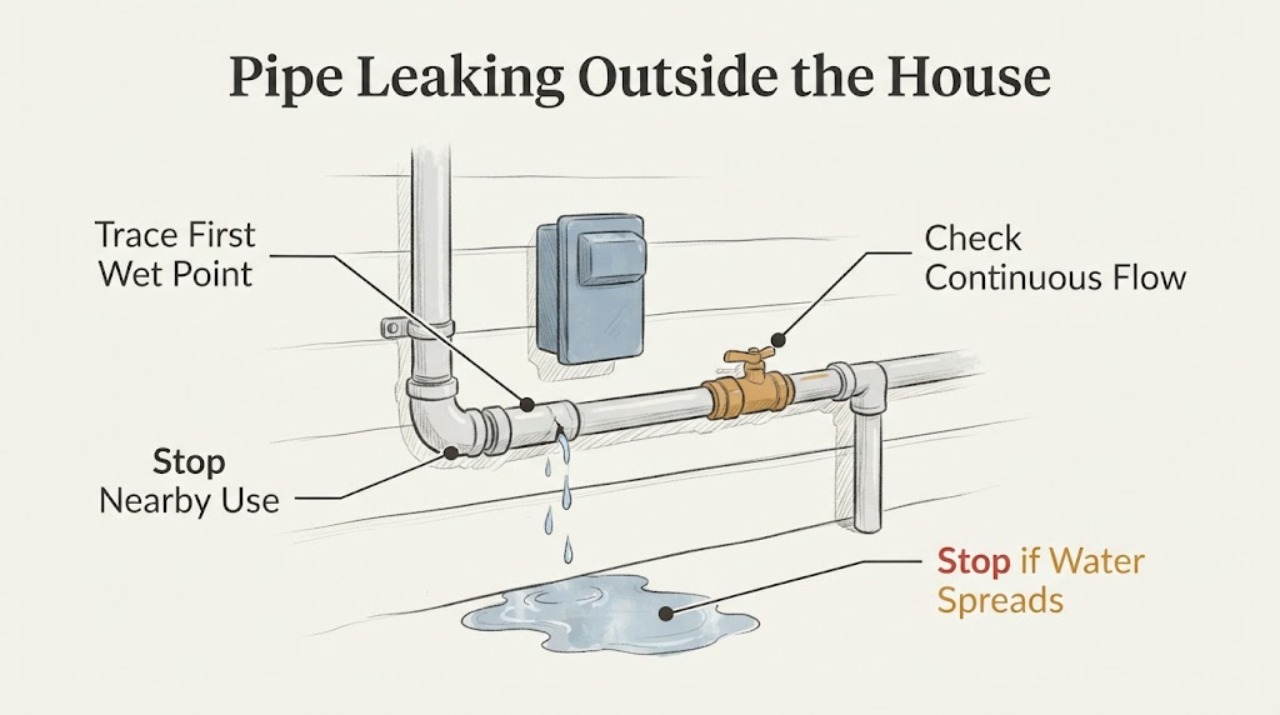
Pipe Leaking Outside the House: Identify the Source Without Digging Blind
An outdoor pipe leak may be a pressurized water service line, an irrigation or hose-bib connection, a drain that leaks only when a fixture is used, rainwater, groundwater, or a public-utility problem. First stop the nearby fixture or irrigation run and observe the water from a safe, stable, dry position.
-
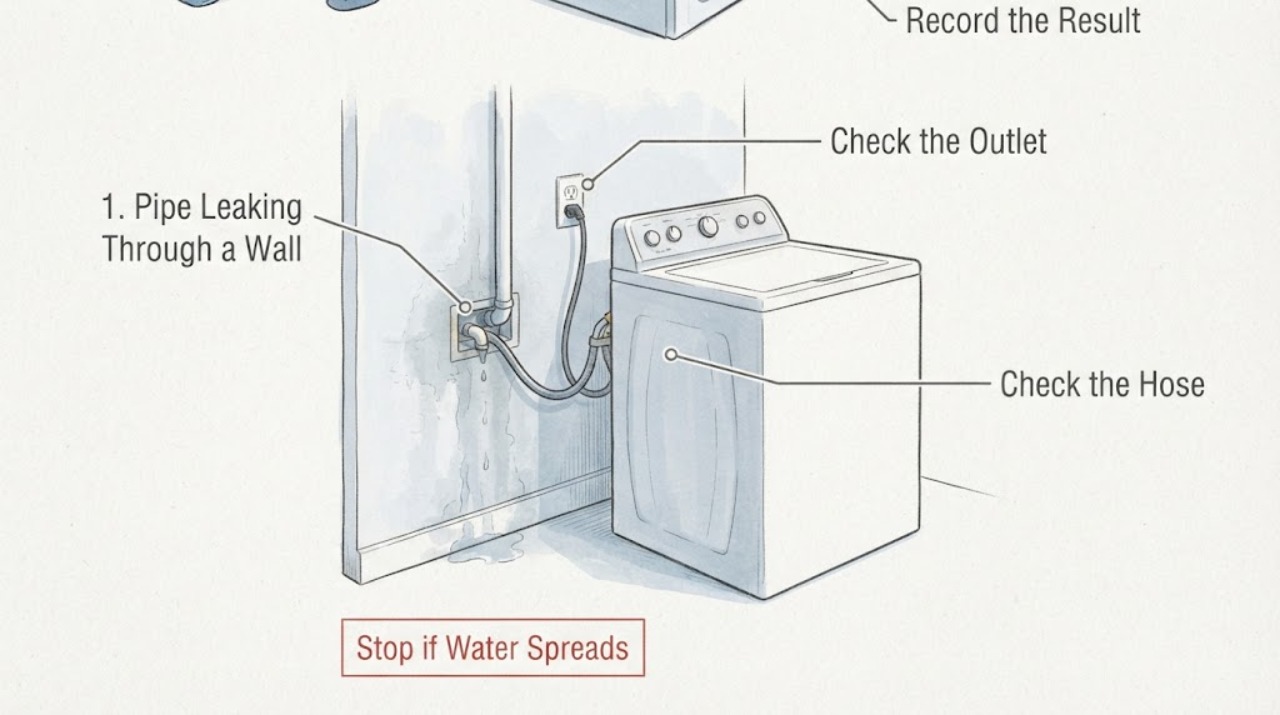
Pipe Leaking Through a Wall When a Downstairs Washer Drains
Stop the downstairs washer immediately and do not run another drain test. Close the washer's water supply valves if they are dry and safely reachable, and keep people away from wet electrical areas.
-
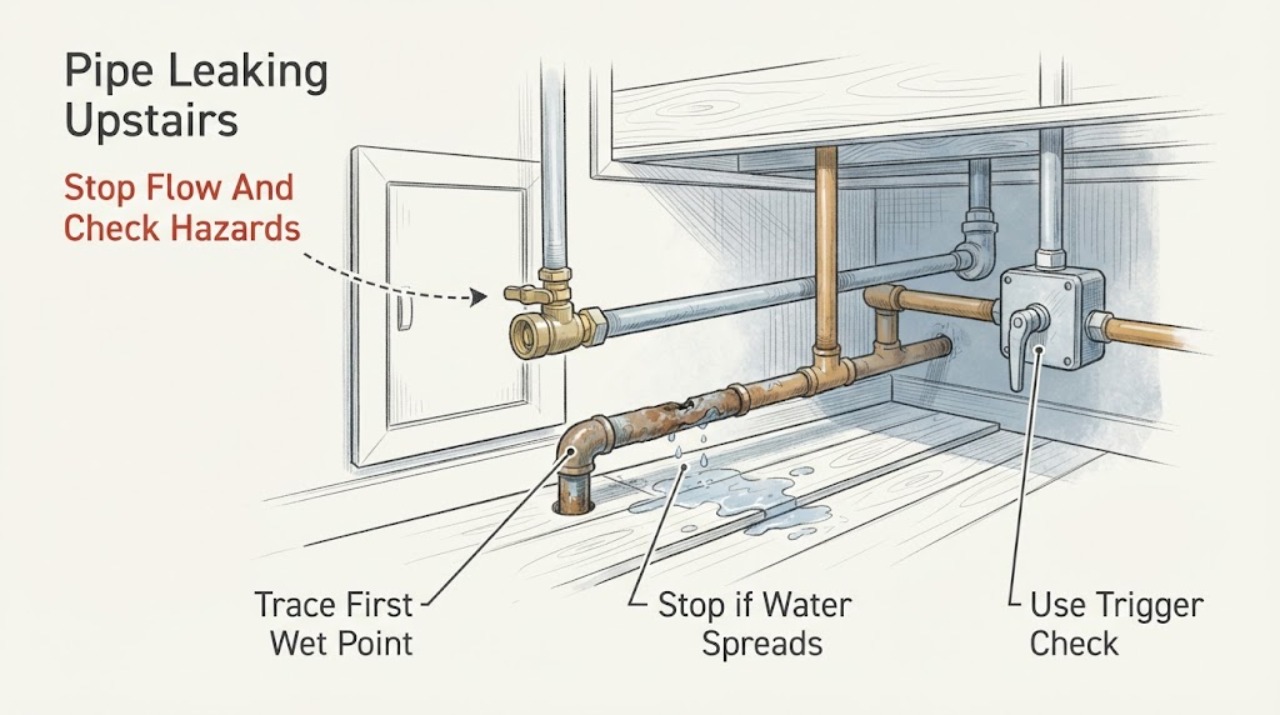
Pipe Leaking Upstairs in an Old House: Find the First Wet Point Safely
An upstairs leak in an old house may be a pressurized supply pipe that leaks continuously, a drain that leaks only when a fixture runs, a bathroom or heating line, a roof or wall leak, or water traveling from another level. Stop using the affected fixture and close the nearest clearly labeled water shutoff from a dry, safe position if the flow is active.
-
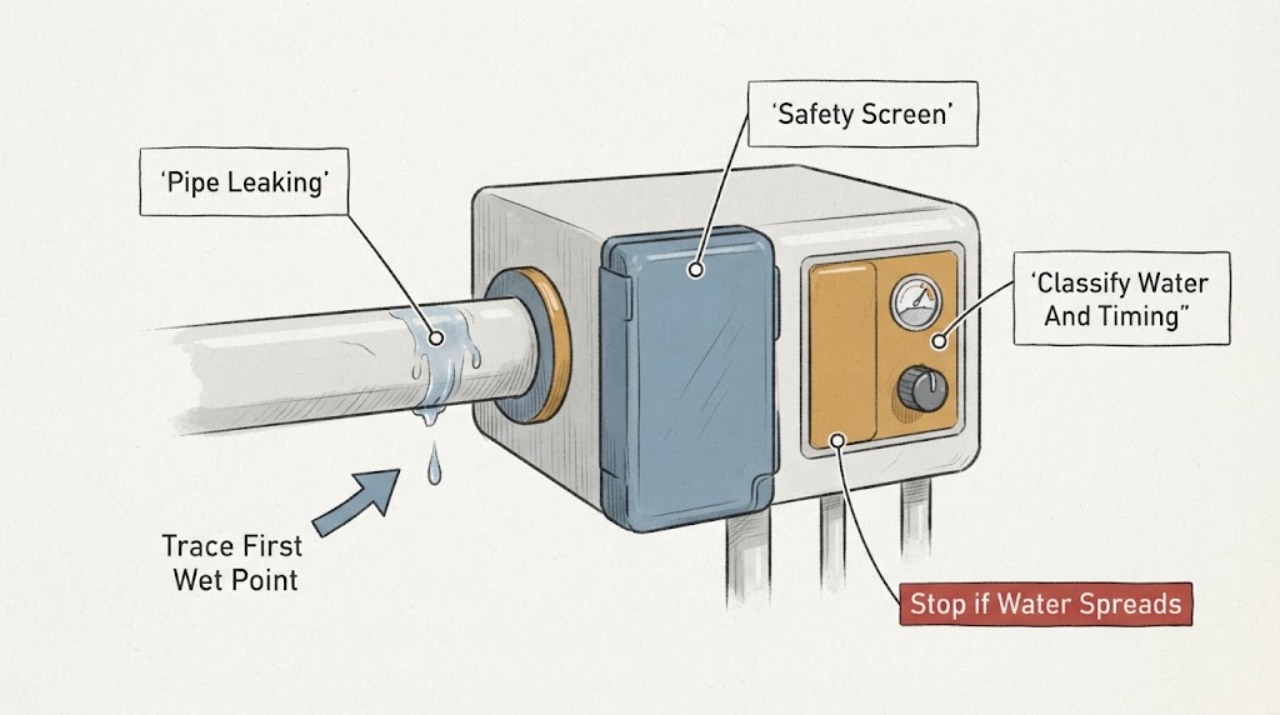
Pipe Leaking
A leaking pipe seal is not identified by the seal alone: first find the highest or first wet point, stop the water source, and determine whether the pipe carries pressurized supply water, drain water, or a nearby source. Close the nearest safe shutoff, or the main valve if the leak is active or the local valve is inaccessible.
-
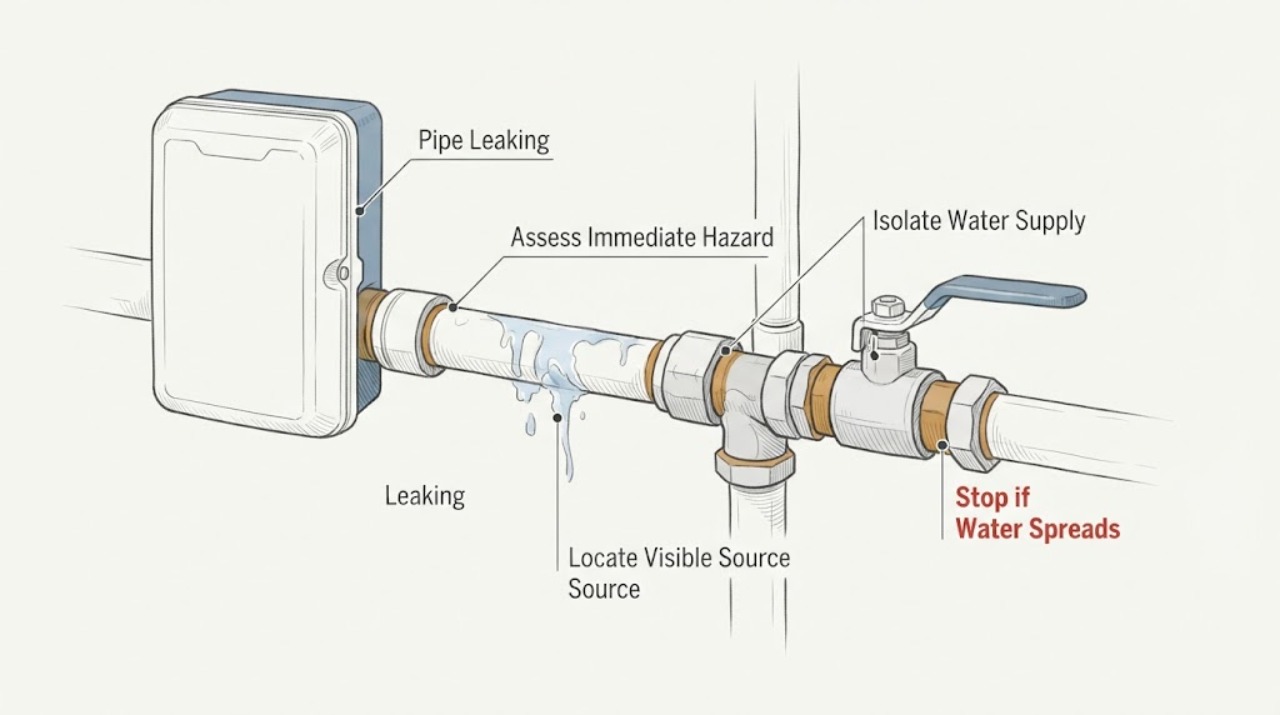
Pipe Leaking: Safe Checks and What to Do Next
For a leaking household pipe, first stop using nearby fixtures and determine whether water is actively spraying, pooling near electricity, coming from a hot-water line, or carrying sewage. If the valve is clearly accessible and turns by hand, close the local or main water shutoff slowly; do not force a corroded valve or open a wall.
-
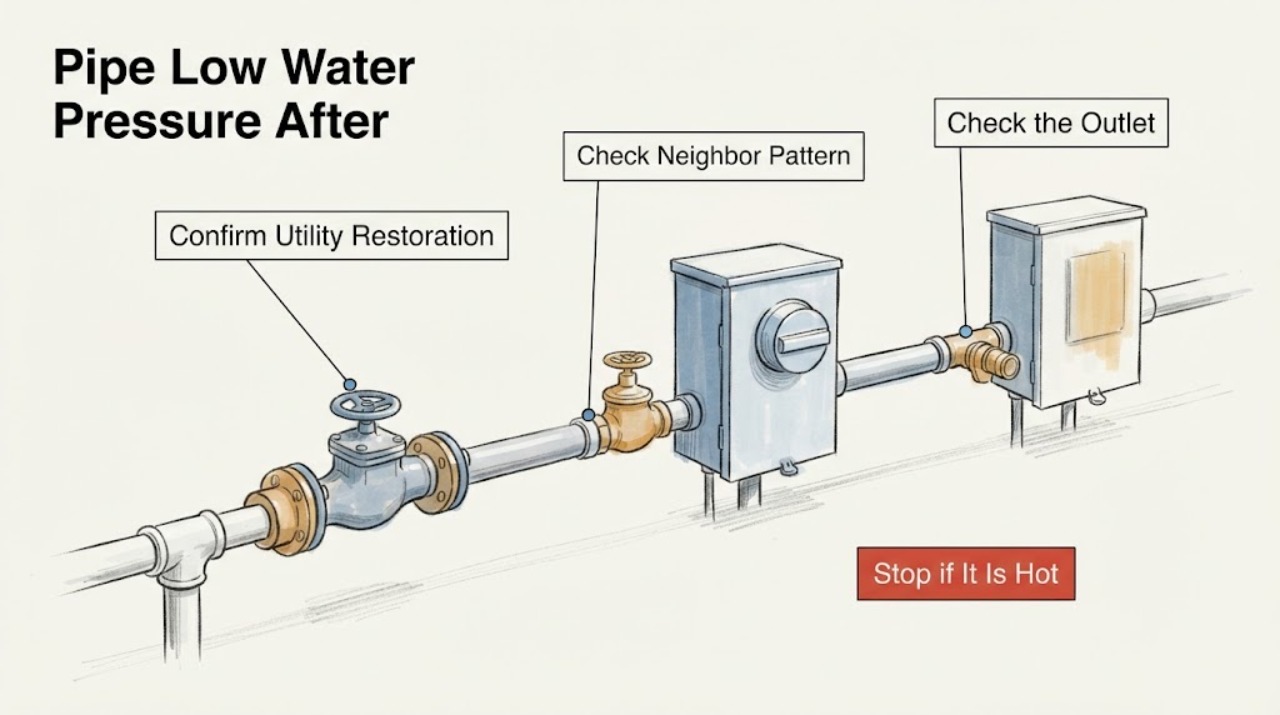
Pipe Low Water Pressure After a Water-Main Burst
Low pressure after the water company repaired a pipe burst can be a temporary distribution-system condition, air or sediment released during restoration, a still-active utility restriction, or a private valve, leak, filter, regulator, or pipe problem. First confirm the utility has declared service restored and compare cold and hot flow at several indoor fixtures, an outside hose connection if safe, and nearby properties.
-
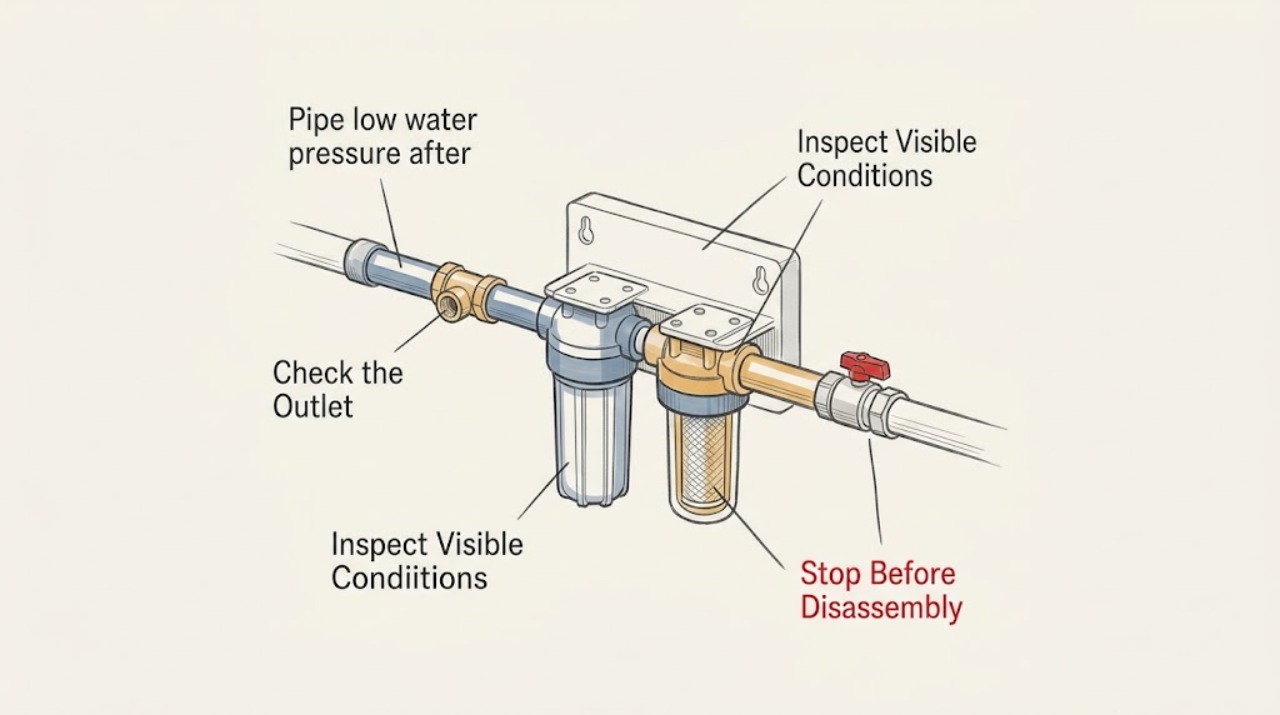
Pipe low water pressure after repair: safe checks
Low water pressure immediately after pipe repair is often a flow restriction or valve that was not fully restored, but it can also be a leak, sediment in a fixture screen or filter, a failed pressure regulator, or a problem that affects the public supply. Compare cold and hot flow at several fixtures, including an outside spigot if available, and note whether the change is throughout the home or only at one outlet.
-
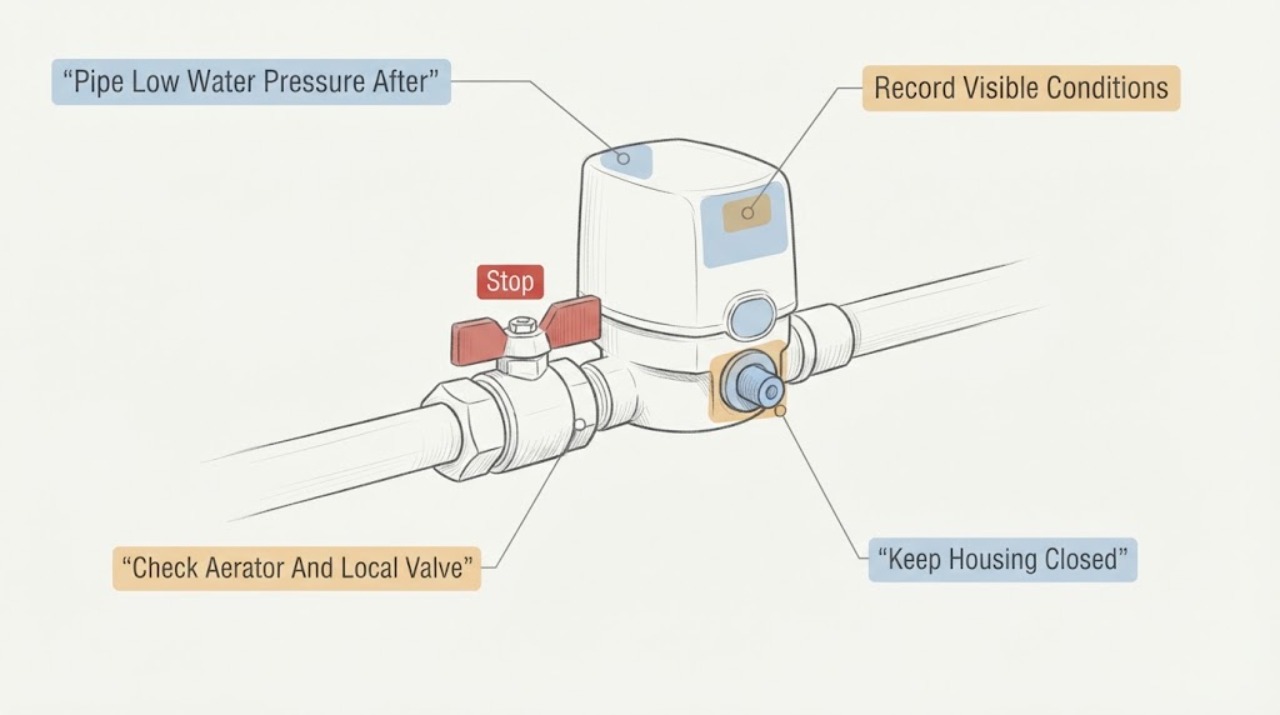
Pipe Low Water Pressure After the Main Valve Was Shut Off
Low water pressure after the main valve was shut off is often a valve-position, trapped-air, sediment, restriction, leak, or water-service issue; do not assume the pipe itself has failed. From a dry, safe position, confirm that the main shutoff valve is intended to be open and has not been left partly closed, but do not force a stiff valve or use tools on it.
-
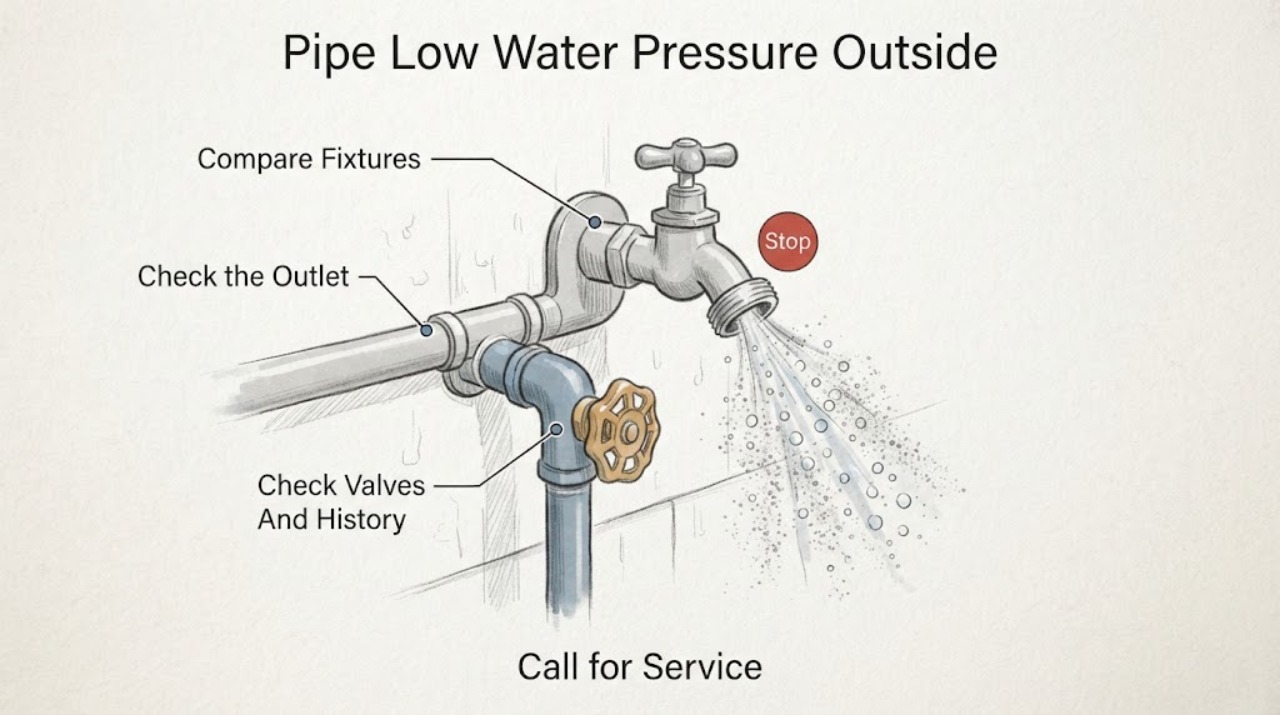
Pipe Low Water Pressure Outside: Why a Spigot Sputters When Fully Open
An outside spigot that sputters and has weak flow can be restricted at the outlet, hose, valve, or branch pipe, or it can reflect air entering a leaking or interrupted supply line. First remove any hose or nozzle only if the connection is cool, dry, and safe to handle, then compare the spigot with indoor and other outdoor fixtures.
-
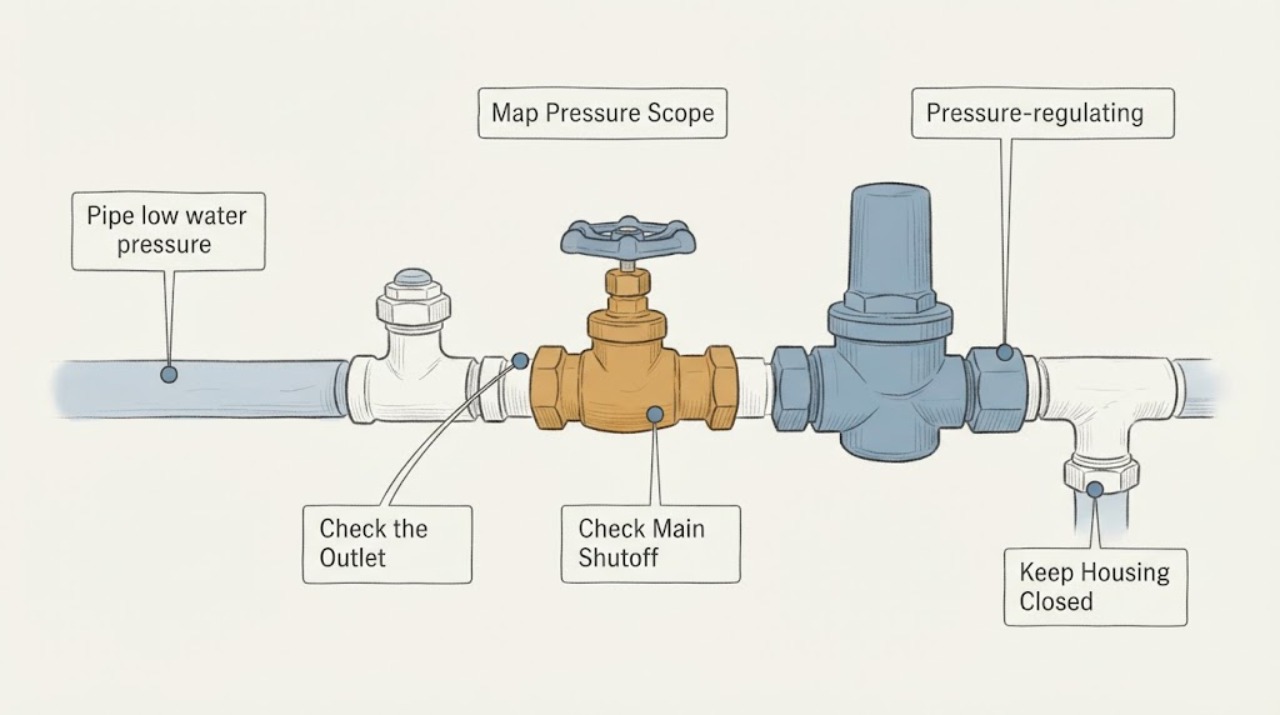
Pipe low water pressure: tell a local restriction from a whole-home supply problem
Low water pressure at a pipe or fixture is not enough to identify a failed pipe. First compare several fixtures and record whether the problem affects one outlet, hot water only, cold water only, the whole home, or only multiple fixtures running at once.
-
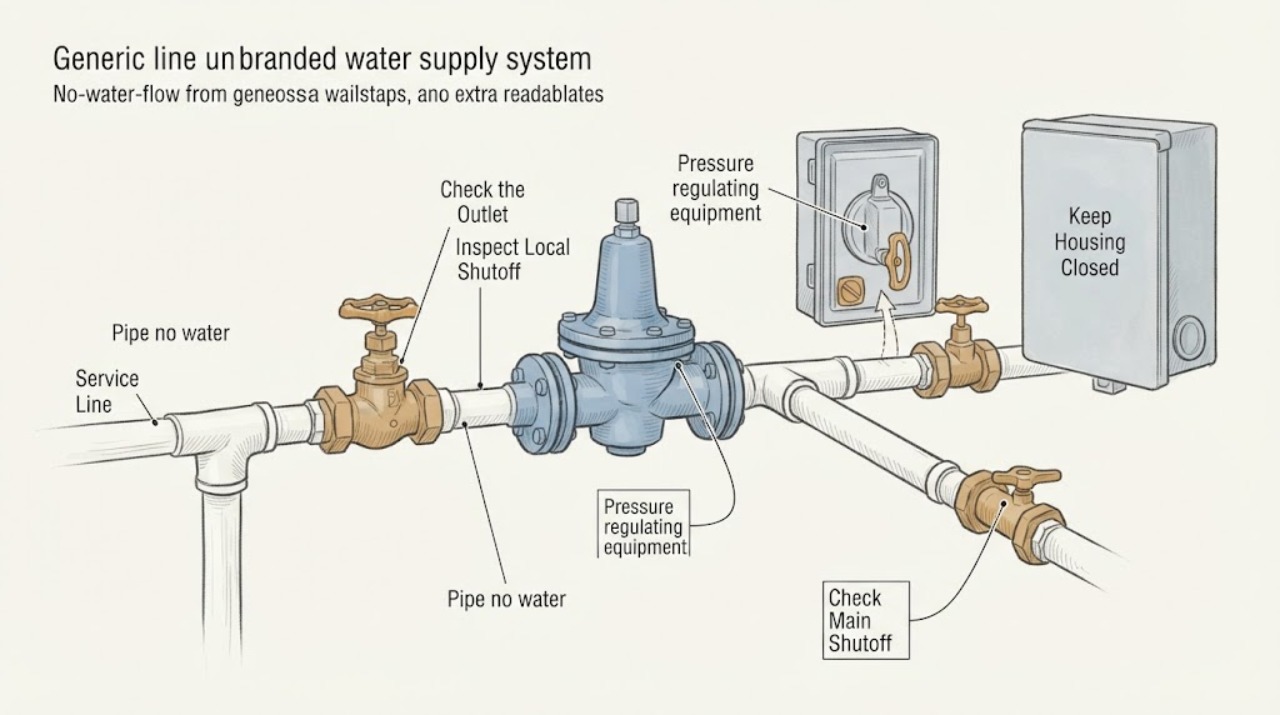
Pipe no water: determine whether the shutoff, supply, leak, or branch is stopping flow
No water from a pipe or fixture does not identify one failed part. First compare several fixtures and separate a whole-home outage from one branch, one faucet, or hot water only.
-
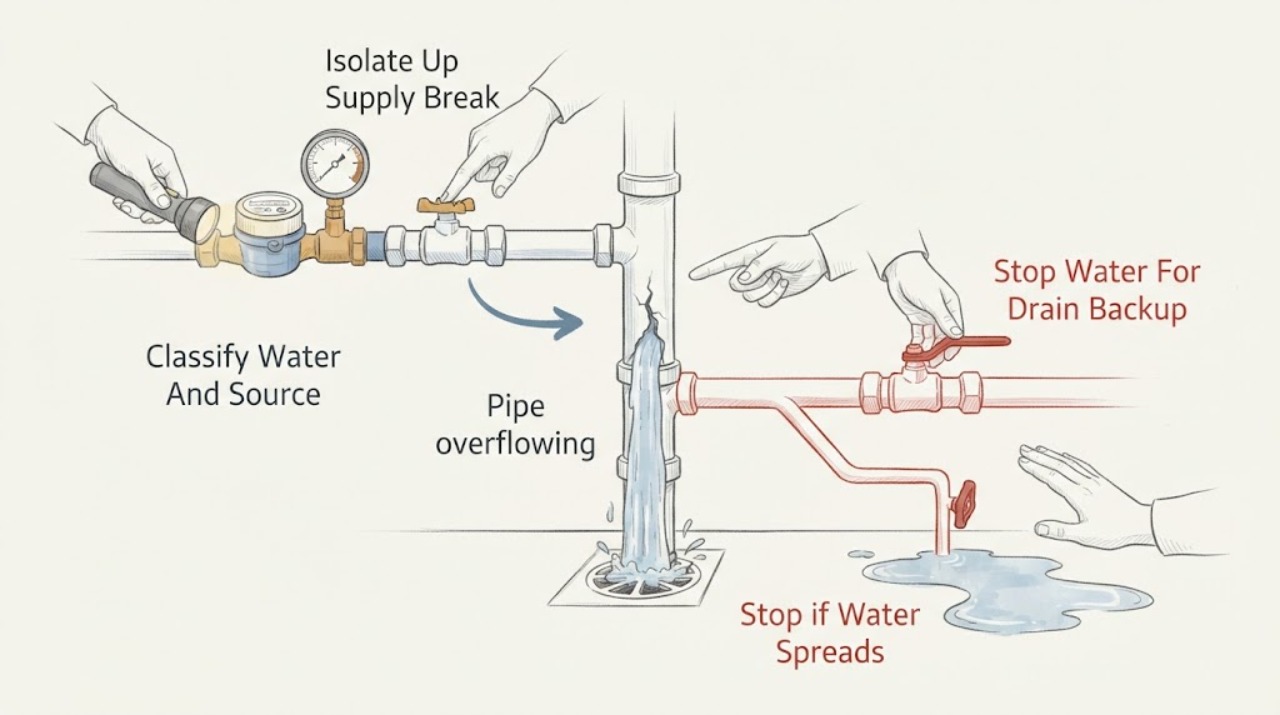
Pipe overflowing: identify a supply break versus a drain or sewer backup
An overflowing pipe needs to be classified before you touch it: clear water actively spraying or flowing from a pressurized supply pipe calls for the accessible fixture or main water shutoff, while dirty, odorous, or rising water from a drain, cleanout, toilet, or floor drain means stop using all water and treat it as a possible sewer backup.
-
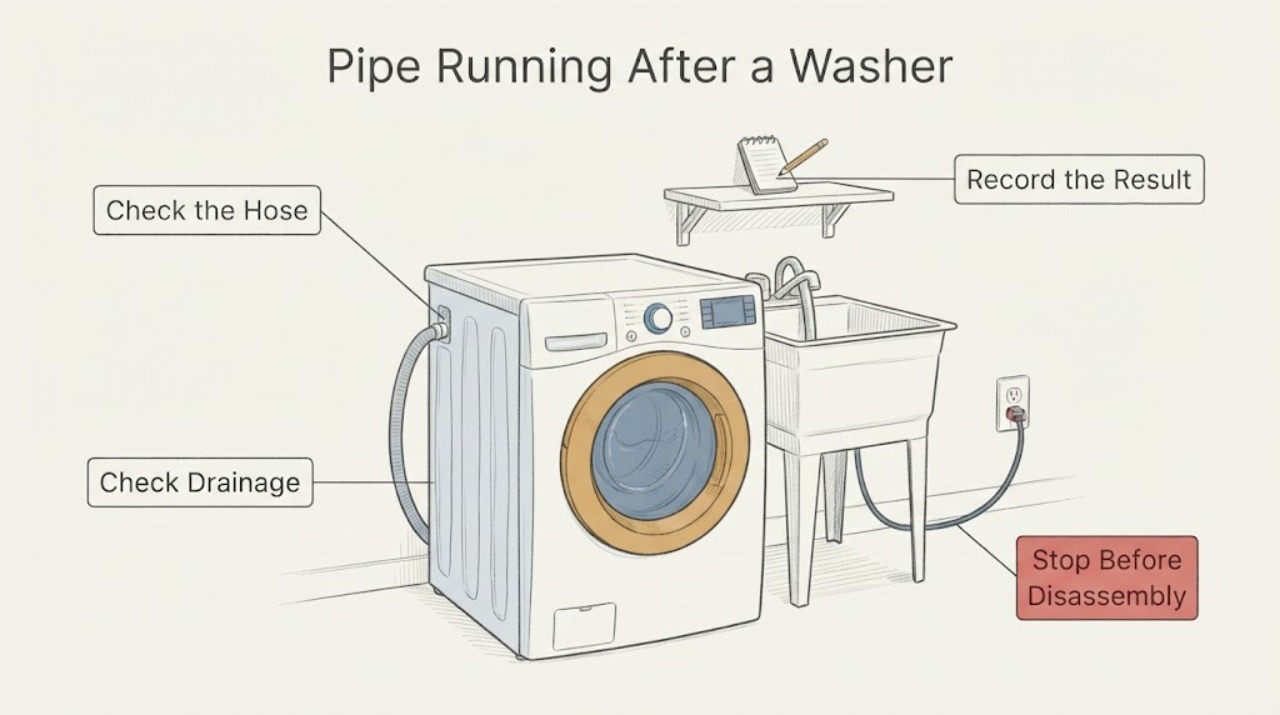
Pipe Running After a Washer Drains: Normal Pump Sound or Drain Problem?
If a pipe sounds as though it is still running after the washer drains, first establish whether the sound is the washer pump finishing a routine, water being pulled through the washer hose, or a drain that is slow, backing up, or continuing to flow. Watch the standpipe or laundry tub without opening the plumbing, note whether the washer pump has stopped, and inspect the visible hose routing only after the area is dry.
-
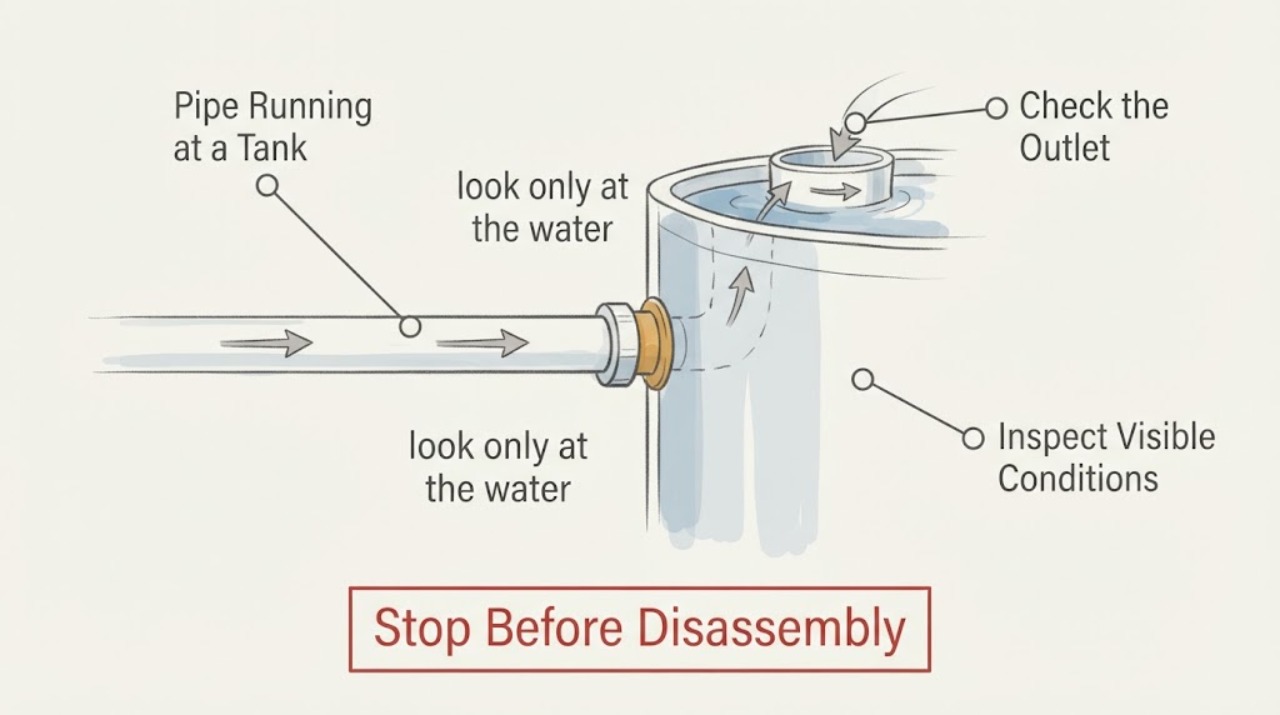
Pipe Running at a Tank: Find Continuous Flow Without Causing a Leak
A pipe that seems to be running at a tank usually means water is still being supplied, refilling, overflowing, or escaping through a downstream leak; the sound alone does not identify which one. First determine whether the flow is at a toilet or cistern tank, a storage or pressure tank, an appliance tank, or an exposed pipe.
-
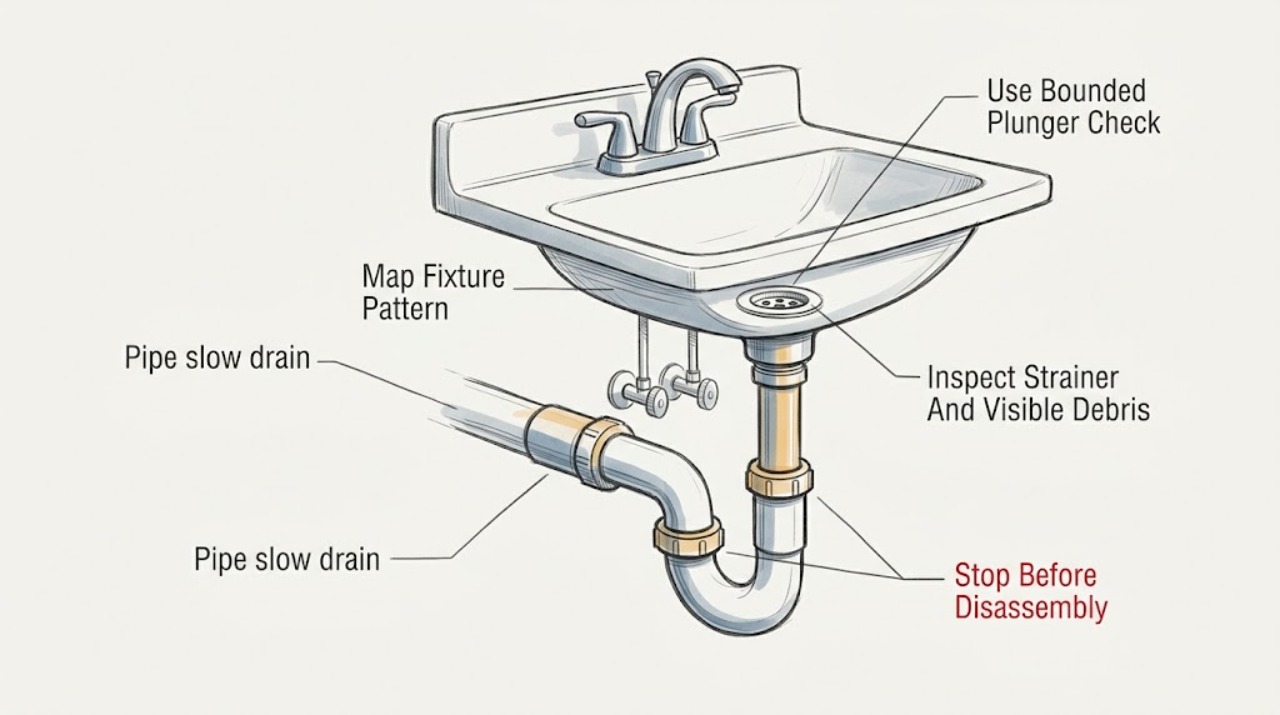
Pipe slow drain: find whether the blockage is local or farther down the line
A slow drain is usually a developing restriction, not a reason to pour in more chemicals: first note whether one fixture is slow or several fixtures share the problem, then inspect the visible strainer and use a plunger only when the fixture and water are safe to handle. Keep grease, wipes, food solids, and household chemicals out of drains, and avoid chemical drain openers—especially with a septic system.
-
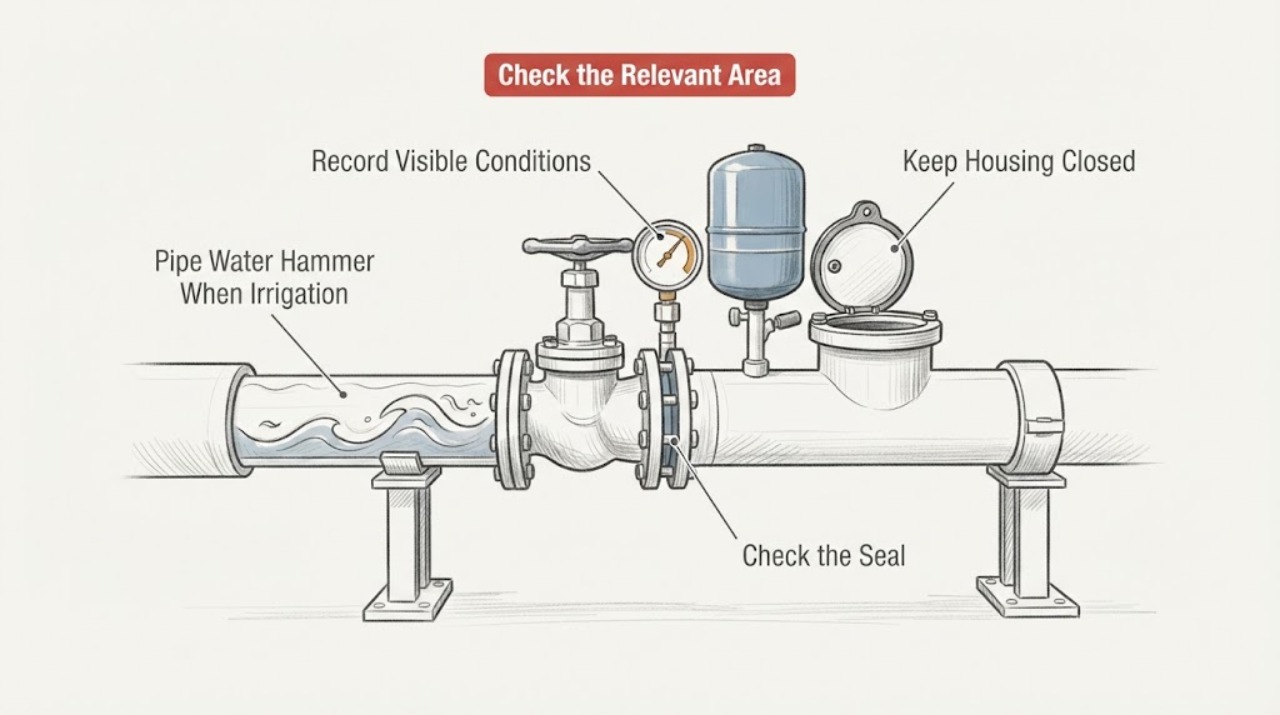
Pipe Water Hammer When Irrigation Shuts Off: Safe Checks and Valve Control
A bang, thump, or pipe movement exactly when an irrigation zone or pump stops is usually a water-hammer or surge event: moving water is stopped or changes speed too quickly, creating a pressure wave. From a dry, safe location, note which zone, valve, or pump action triggers it, where the sound is loudest, whether pipes move or leak, and whether the event occurs at every shutoff or only one zone.
-
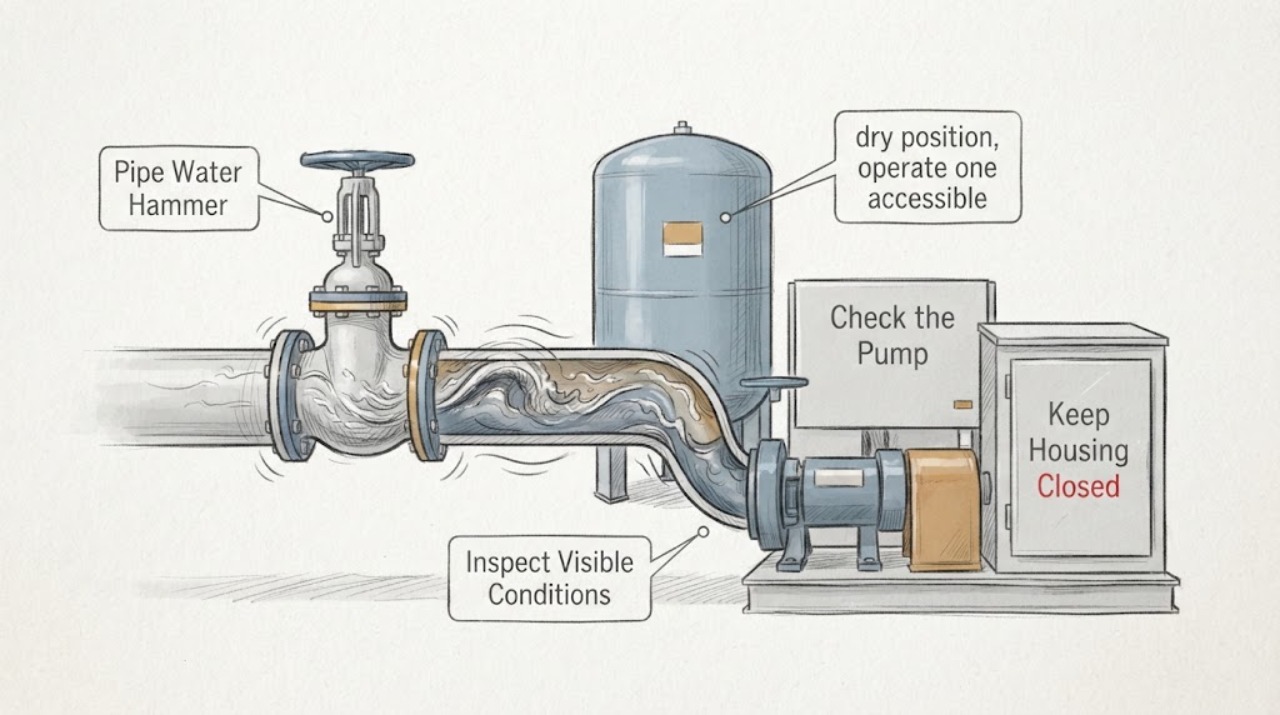
Pipe Water Hammer: Pressure Valve and Tank Checks
A bang or thump when a faucet, appliance valve, or toilet valve closes is usually a pressure surge caused by fast-changing water flow. First identify the exact valve and whether the sound is on cold water, hot water, or both.
-
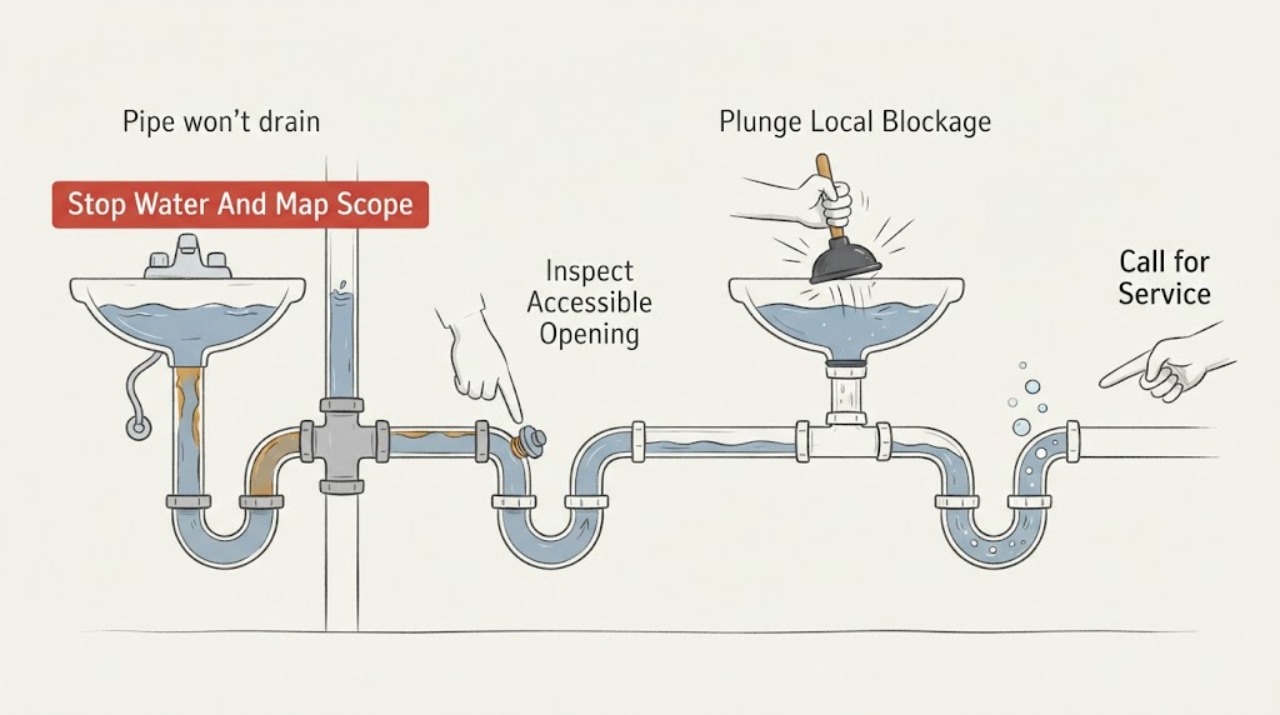
Pipe won't drain: safe checks before calling a plumber
Stop adding water and first determine whether one sink, tub, or floor drain is affected or several fixtures are slow or backing up. For one fixture with no sewage overflow, remove only the accessible strainer or stopper, clear visible debris, and try a properly seated hand plunger; a short hand drain snake is an option only when no chemical cleaner has been used and the tool can be used without force.
-
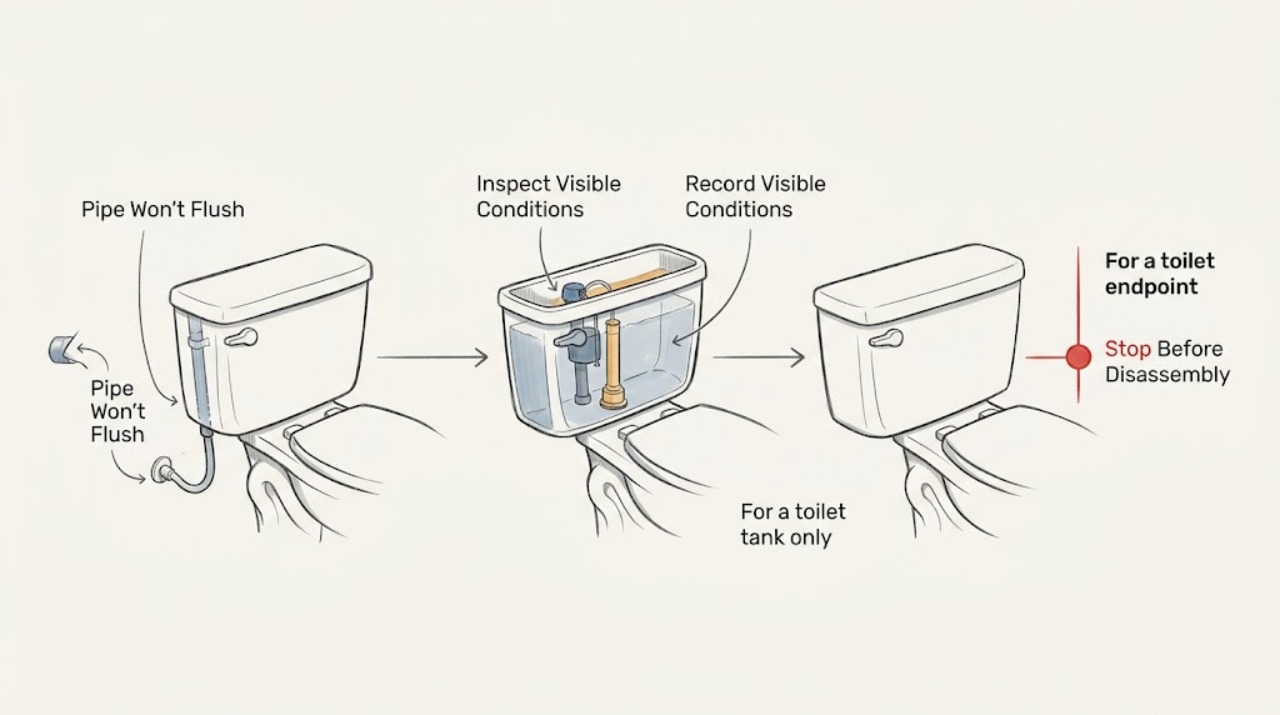
Pipe Won't Flush: Check the Tank, Flow Path, and Blockage Safely
First identify what tank the pipe serves. A toilet tank may not release enough water because its fill level, fill valve, or flapper is wrong; a pipe may also be blocked or unable to carry flow.
-
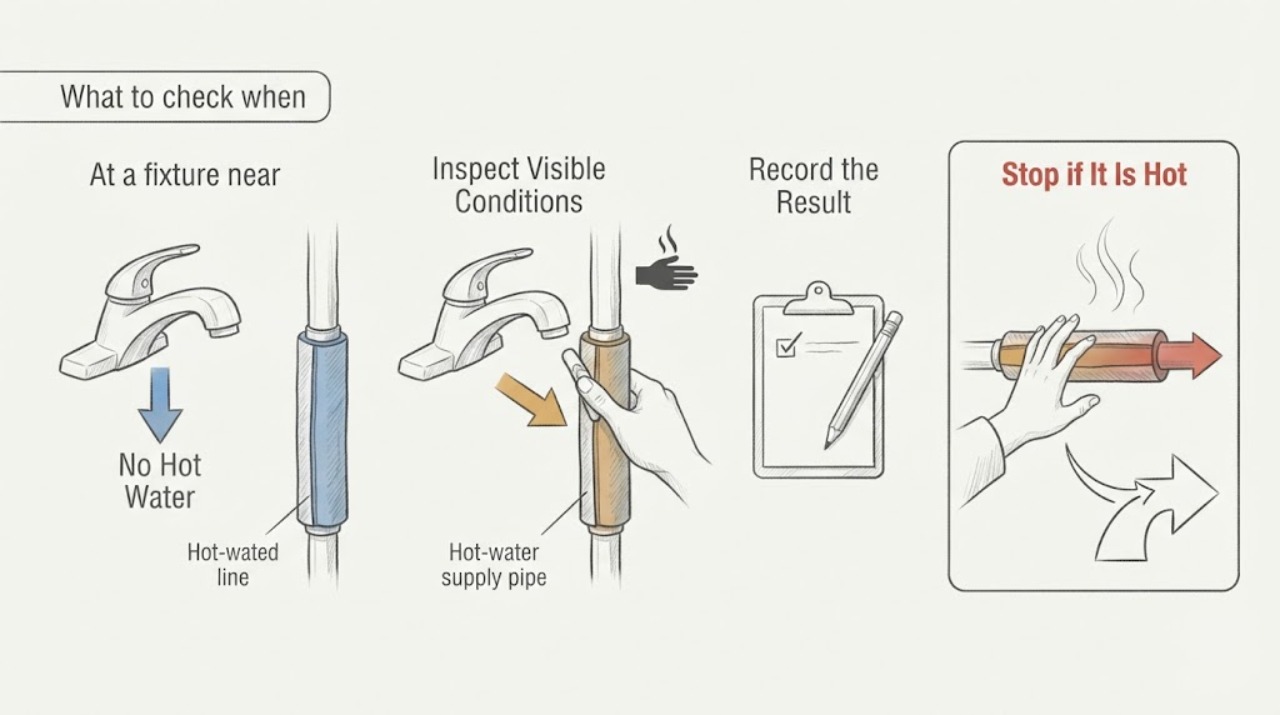
What to check when a hot-water pipe has no hot water
Start by comparing hot-water flow and temperature at more than one fixture. If cold water flows normally but every hot tap is cold, the problem is more likely at the water heater, its heat source, a control, or a mixing arrangement than in one pipe.
-
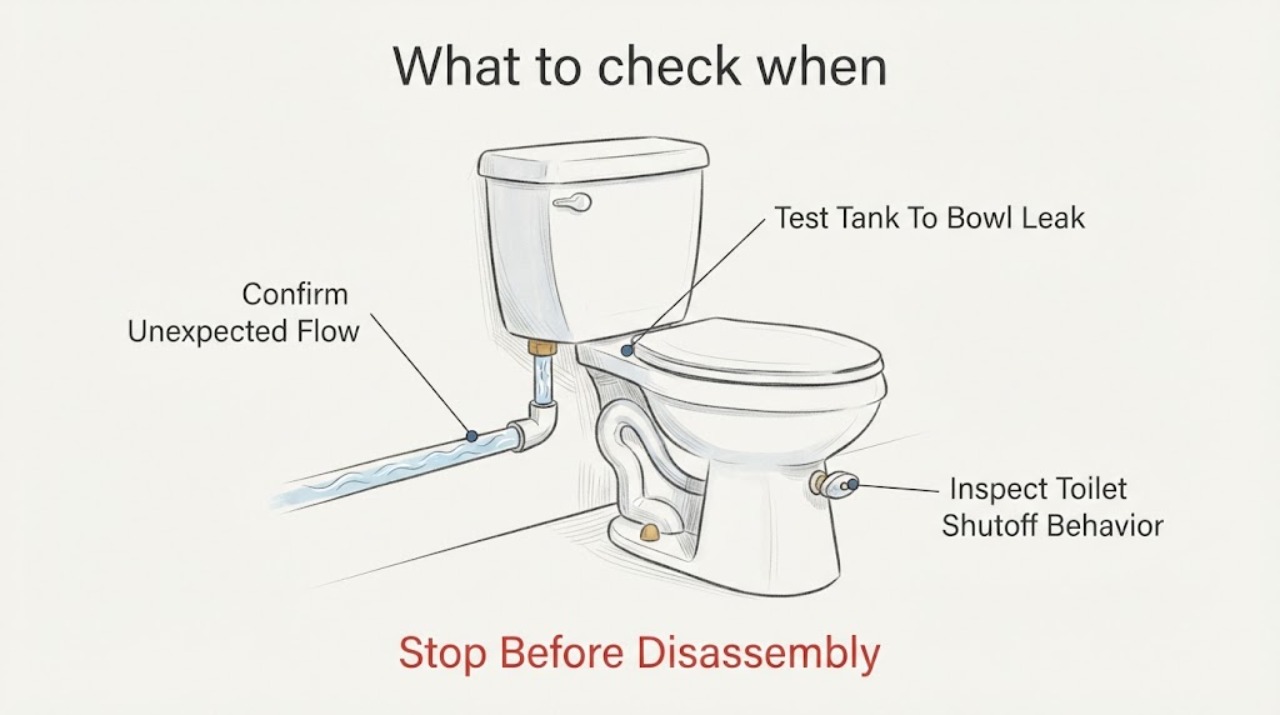
What to check when a pipe keeps running
If you hear water running when no fixture is in use, first identify whether the sound comes from a running toilet, an open or leaking fixture, irrigation, or a pressurized supply pipe. Turn off accessible fixtures, inspect only visible connections and wet areas, and use a dye test for a tank toilet.