
On this page
Start here
Quick answer
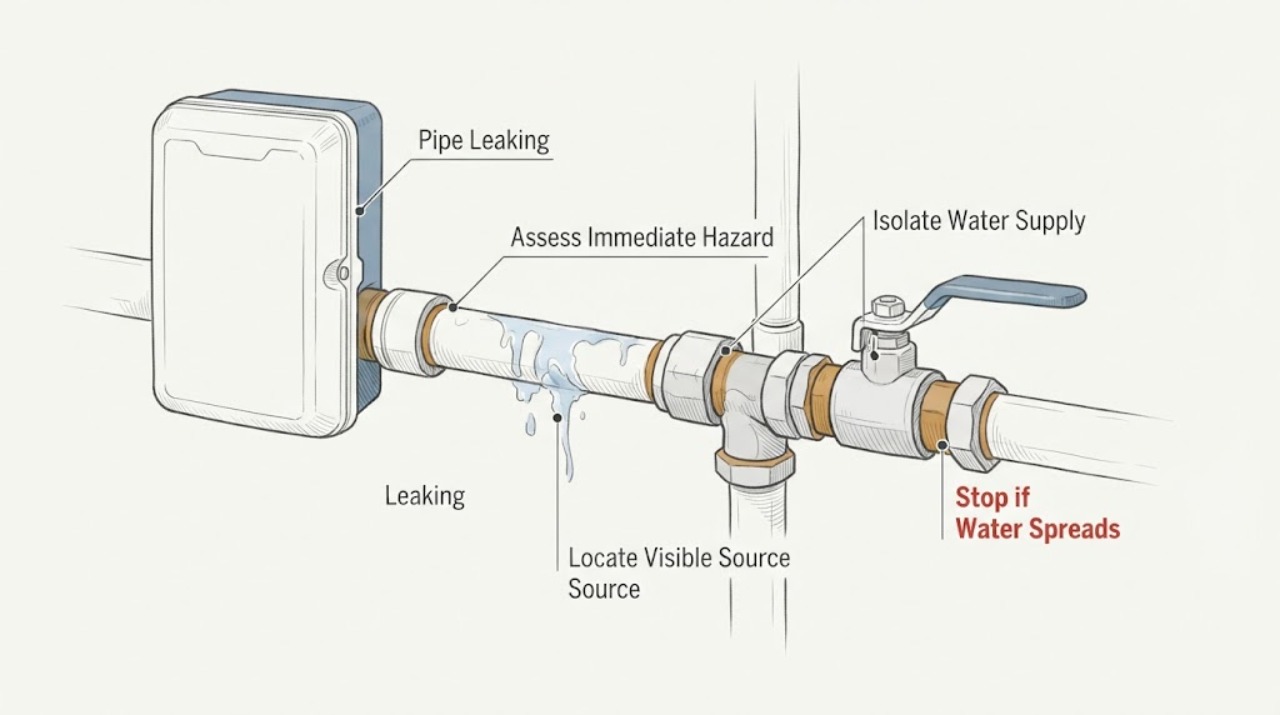
For a leaking household pipe, first stop using nearby fixtures and determine whether water is actively spraying, pooling near electricity, coming from a hot-water line, or carrying sewage. If the valve is clearly accessible and turns by hand, close the local or main water shutoff slowly; do not force a corroded valve or open a wall. Check the water meter with all water use stopped to confirm ongoing flow, and inspect only exposed pipe joints, valves, and nearby surfaces. A leak that continues after the house shutoff, is underground, recurs, damages the structure, or cannot be isolated needs qualified plumbing service; do not treat tape, sealant, or a temporary clamp as a concealed-pipe repair.
Work through in order
Diagnostic checks
Use only checks that match the exact appliance or system and its official guide.
-
Check 1
Stop water use near the leak and observe from a dry, stable position for active spray, rapidly spreading water, sewage, a hot-water discharge, a ceiling bulge, or water near electrical equipment. Do not touch a wet electrical device or step into unknown standing water.
Expected result: The leak is controlled and clean; water is spreading or pressurized; sewage or other contamination is present; or electricity, heat, or structural damage is involved.
Next step: For a hazard, keep people away, shut off water only if the valve is safe and accessible, and arrange emergency or qualified plumbing help. If no hazard is present, place a container only when it can be done without contact or electrical risk and continue documenting.
Stop if: Stop immediately for electrical contact, uncontrolled spray, sewage, steam or hot-water burn risk, ceiling movement, or unsafe access.
Why this matters
Why: A pressurized, contaminated, hot, electrical, or structural condition can cause injury or extensive damage and is not a routine visual repair. A small clean drip with no nearby hazard allows only the external checks that follow.
-
Check 2
Without opening a wall or ceiling, trace the visible water path from the highest accessible wet point and inspect exposed pipe joints, valves, fixture connections, and nearby surfaces. Keep the pipe intact and do not use a tool on a wet or corroded fitting.
Expected result: Water is visible at a pipe joint or valve; it appears to come from a fixture or appliance connection; the wet area has no visible source; or the leak appears only when water is used.
Next step: Photograph the highest wet point and note whether the leak changes when a specific fixture runs. Do not remove trim or open the structure to chase the source; use the service branch if it remains uncertain.
Why this matters
Why: A visible surface leak may be local, but water can travel along framing and emerge away from the break. A hidden or use-dependent leak increases the chance of concealed piping or a pressurized connection problem.
-
Check 3
If the local fixture valve or the main house shutoff is plainly identified, dry, and operable by hand, close it slowly and observe the leak from a safe position. Do not force a stuck valve, move heavy equipment, or work on the street-side meter.
Expected result: The leak slows or stops; water continues at the same rate; the valve will not turn; or the valve position is uncertain.
Next step: Leave a stopped supply off and arrange repair. If water continues, the valve fails, or the valve cannot be identified, stop using water and request qualified plumbing or utility assistance rather than dismantling the line.
Stop if: Do not force a corroded valve, loosen a union, remove a meter, or enter a flooded space to reach a shutoff.
Why this matters
Why: A stopped leak supports a downstream household leak, while continued flow can mean the wrong valve was used, the valve failed, or the leak is upstream or on a separate branch. A stuck or uncertain valve is not safe to force.
-
Check 4
After turning off every indoor and outdoor water use, observe the accessible water-meter leak indicator or dial without disturbing the meter box. If the main house valve was safely closed, compare the meter again only from a safe position.
Expected result: The indicator or dial is still moving; it stops after the house shutoff; or it remains still after all water use is stopped.
Next step: Record the result and provide it to a plumber or water utility. Do not open underground service lines or excavate based on the meter result alone.
Why this matters
Why: Movement with all fixtures off supports ongoing water flow. If movement continues after the house shutoff, the leak may be between the meter and shutoff or otherwise outside the house; if it stops, the leak is more likely within the home plumbing. A still meter does not rule out a slow or intermittent leak.
-
Check 5
From accessible areas, inspect for wet flooring, swelling or staining, a ceiling mark, moldy or soft material, unexplained outdoor pooling, a drop in pressure, or a recurring water-use increase. Do not probe walls, ceilings, flooring, or soil to find a concealed pipe.
Expected result: Damage is confined to a small exposed connection; moisture is hidden or spreading; outdoor ground is wet or sinking; or no secondary damage is visible.
Next step: Keep the affected supply isolated if safe, protect belongings without touching contaminated water, and arrange qualified leak detection or plumbing service for hidden, underground, or structural conditions.
Why this matters
Why: Spreading or concealed moisture can continue damaging the structure even if the visible drip is small. Outdoor pooling, soft ground, or a pressure change can indicate an underground or service-line leak that needs specialized assessment.
-
Check 6
With the suspected supply safely isolated, observe the area for a short period without adding water or removing finishes. Note whether dripping, dampness, meter movement, or damage continues; do not reopen the valve just to test an unresolved leak.
Expected result: The area dries and no further flow is visible; water continues despite isolation; or the leak returns when the supply is restored by a professional or after a safe repair.
Next step: Keep the line out of use and provide the timeline and photos to a qualified plumber. Do not hide the area with paint, flooring, or sealant before the source and moisture damage are assessed.
Why this matters
Why: Drying after isolation supports a controlled household supply leak, but it does not identify the failed fitting or prove the structure is dry. Continued or recurring moisture suggests another branch, a failed valve, a drain leak, or concealed damage.
-
Check 7
Prepare a service description containing the pipe location, leak rate or timing, clean-versus-contaminated water, fixture and meter observations, shutoff result, visible material or corrosion, and any recent freeze, installation, or remodeling event. Do not select replacement pipe or fittings from appearance alone.
Expected result: The source and isolation result are clear; the source is hidden or disputed; or the pipe has been chemically, thermally, or structurally damaged.
Next step: Give the record and photographs to a qualified plumbing professional; involve the water utility when the meter or public-side service line may be involved.
Why this matters
Why: Clear observations help scope the repair, while uncertain location or damaged material requires professional testing and access planning. Appearance alone cannot establish pipe material, hidden extent, or safe repair method.
Use your observations
Decision map
Find the observation that best matches what you see, then follow the next safe action.
-
PATH 01Next step
What you see
Water is uncontrolled, contaminated, hot, near electricity, damaging a ceiling or floor, or entering an unsafe area.
Do this next
Keep people away, isolate water only if safe, protect against electrical contact, and arrange emergency or qualified plumbing help; do not open the structure.
-
PATH 02Next step
What you see
A visible household connection leak slows or stops when its safe local valve or main house shutoff is closed.
Do this next
Leave the supply isolated and arrange qualified repair; document the fitting and damage without dismantling it.
-
PATH 03Next step
What you see
The meter moves with all water use stopped, or it continues moving after the house shutoff.
Do this next
Treat the result as an ongoing or possibly service-line leak and request qualified leak detection or utility assessment rather than excavating or opening pipework.
-
PATH 04Next step
What you see
No exposed source is visible, moisture spreads through a wall or floor, outdoor pooling appears, or pressure changes accompany the leak.
Do this next
Keep water isolated if safe and arrange qualified plumbing or leak-detection service for concealed or underground piping.
-
PATH 05Next step
What you see
The shutoff is stuck, corroded, unknown, inaccessible, or requires force or entry into a flooded area.
Do this next
Do not force or dismantle the valve; stop water use and obtain qualified plumbing or water-utility assistance.
-
PATH 06Next step
What you see
The leak returns after isolation or a temporary improvement, or the area remains damp after flow should have stopped.
Do this next
Stop treating the symptom as repaired and arrange a professional assessment for another branch, concealed damage, or an unresolved source.
Helpful context
Understand the symptom
Start by separating the leak types
A drip at an exposed fitting, a pressurized spray, a wet wall or ceiling, and water appearing at a floor drain do not have the same urgency or repair path. A supply-pipe leak is different from a drain leak because shutting a fixture valve may not stop water that is under pressure. The observations below are for a household water leak and are not a substitute for opening walls, excavating a service line, or repairing a gas or heating system.
Control water without creating a new hazard
Keep people away from slippery or contaminated water and do not touch a wet electrical outlet, appliance, or panel. Close a clearly identified valve only if it turns by hand without force; an old valve can break or fail to shut. Do not cut the pipe, remove a fitting, enter a flooded or confined area, or rely on a temporary patch when the leak is concealed.
What to record for service
Record the pipe location, whether the water is clean or contaminated, whether the leak changes when a fixture runs, the meter movement, the shutoff position and result, visible material or corrosion, recent freezing or remodeling, and any damage to walls, floors, ceilings, or cabinets. Photos from a dry position help a plumber decide whether the next step is fixture, interior-pipe, or service-line work.
Safety boundary
Stop conditions
- Do not force shutoff valves, cut or puncture a pipe, remove a meter or fitting, open a wall or ceiling, enter contaminated or flooded areas, or touch wet electrical equipment.
- Stop immediately for uncontrolled flow, sewage, hot water or steam, structural movement, outdoor sinkholes, or any situation where the water source cannot be isolated safely.
When checks do not resolve it
Need a professional?
Use qualified plumbing service when the pipe leak is active, concealed, recurring, underground, contaminated, structurally damaging, or not safely isolated with an accessible hand-operated valve.
Have this ready
- Provide the pipe and fixture location, clean-versus-contaminated water, visible leak pattern, meter movement, shutoff result, pressure or outdoor pooling changes, photos, and recent freezing, installation, remodeling, or appliance events.
Common questions
FAQ
Should I shut off the main water when a pipe is leaking?
If the main valve is clearly identified, dry, accessible, and turns by hand, closing it slowly can limit damage. Do not force a corroded or unknown valve; obtain plumbing or utility help if it will not close or the leak continues.
How can I tell if a pipe leak is hidden?
Turn off all water use and observe the meter, then look for spreading dampness, staining, soft material, unexplained outdoor pooling, pressure change, or continued meter movement after the house shutoff. These observations locate the next assessment scope but do not justify opening a wall or digging.
Can I repair a leaking pipe with tape or sealant?
A temporary external measure may not stop a pressurized or concealed leak and should not be treated as a completed repair. Isolate the water if safe, document the condition, and have a qualified plumber assess the pipe, fitting, and any water damage.
What if water is leaking near an outlet or electrical appliance?
Do not touch the wet electrical equipment or stand in the water. Keep people away, isolate water only if that can be done without approaching the hazard, and use qualified emergency or plumbing help for the water and electrical safety assessment.
Read the exact guide
Official sources
- Fix a Leak WeekU.S. Environmental Protection Agency WaterSense · EPA household leak detection and surface pipe-fitting observation guidance
- Managing Water Around the HouseCity of Toronto · Municipal household water and pipe leak prevention guidance, including main shutoff location and leak indicators
- Home MaintenanceU.S. Environmental Protection Agency WaterSense · EPA household leak observation and water-system maintenance guidance
- How to check for leaksCity of Portland Water · Municipal guidance on meter leak detection, house shutoff isolation, underground leak indicators, and professional assessment
- Prepare for flooding: Protect your propertyGOV.UK · UK government household flooding and utility shutoff safety guidance; used for general water-isolation safety, not local plumbing ownership rules
Community feedback
Share a repair observation
Share a plain-text repair observation. Accepted observations are published automatically; this page may take a moment to update.