
On this page
Start here
Quick answer
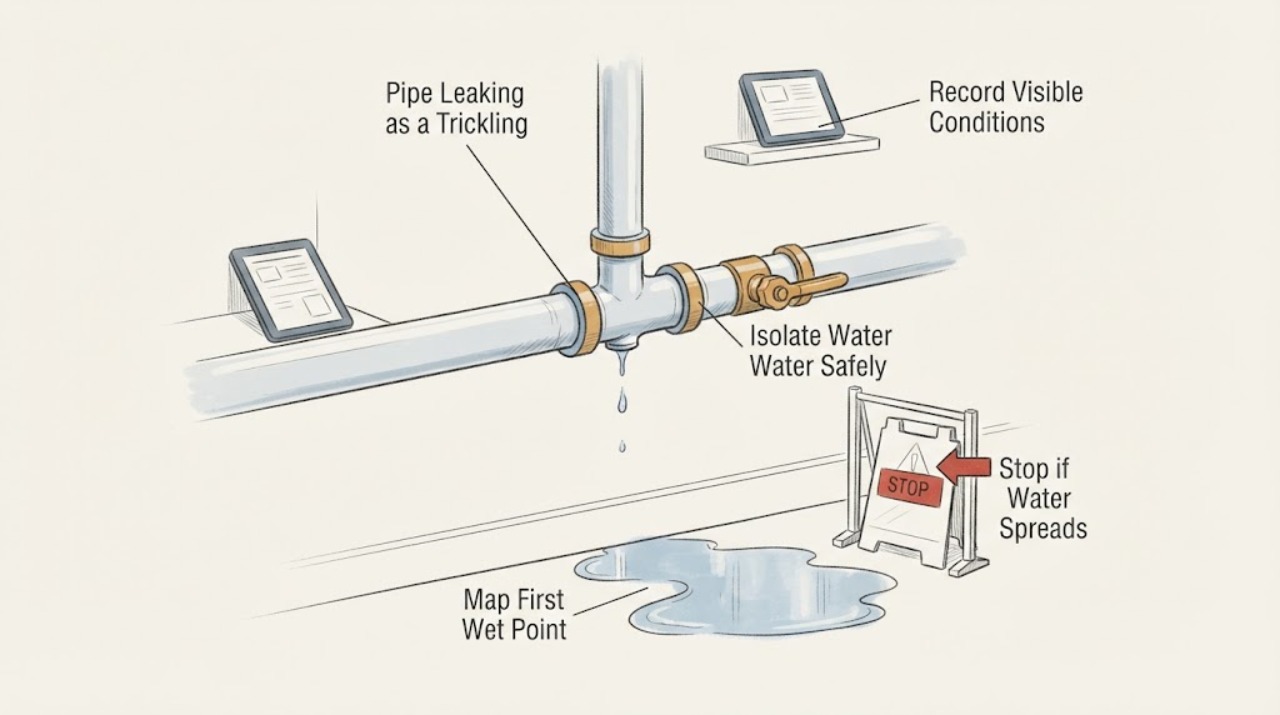
A slow trickle is still an active leak, not proof that the problem is harmless. First avoid using the nearby fixture and watch the first wet point from a dry, safe position. Note whether the drip continues when no water is being used, starts only when a fixture is opened, or appears only while a drain is flowing. A continuous trickle favors a pressurized supply or valve; a use-only trickle can be a fixture connection, drain, or overflow; moisture that changes with humidity or cold surfaces may be condensation rather than a pipe break. Close an accessible local shutoff or the home's main water valve if it can be reached safely, but do not remove insulation, open a wall, loosen a fitting, or test a pressurized line. Call a plumber if the source is hidden, the rate increases, the leak reaches a ceiling or electrical equipment, or it remains after isolation. A small leak can still damage building materials and support mold, so dry and document safe exposed surfaces promptly.
Work through in order
Diagnostic checks
Use only checks that match the exact appliance or system and its official guide.
-
Check 1
Stop using the nearby fixture and observe the trickle from a dry, stable position. Record where the first drop forms, whether it is steady or intermittent, whether the rate changes, and whether any water is reaching a floor, ceiling, wall, outlet, light, or appliance.
Expected result: The drip continues with all fixtures idle; it stops when the nearby fixture is not used; it increases; or it is only surface moisture on a cold pipe or wall.
Next step: Keep the fixture out of use and move to the safe isolation check. If the rate increases or water reaches building or electrical materials, stop observing and call a plumber or emergency building contact.
Stop if: Stop immediately for a rapidly increasing flow, standing water, a wet electrical area, an unstable ceiling, sewage or foul water, smoke, sparks, or a burning odor.
Why this matters
Why: A drip that continues while idle favors a pressurized supply, valve, or hidden line. A use-dependent drip favors the fixture, connection, drain, or overflow. An increasing rate is no longer a minor observation. Surface moisture may be condensation, but active plumbing use must be excluded before relying on that explanation.
-
Check 2
From a dry, accessible location, close the obvious local fixture shutoff or the home's main water shutoff if the valve is known and moves normally. Do not cross standing water, force a stuck valve, loosen a fitting, or open a wall, ceiling, or pipe covering.
Expected result: The trickle stops or slows; it continues unchanged; the valve cannot be found or reached safely; or the valve, pipe, or nearby surface is damaged.
Next step: Leave the water isolated and call a plumber if the trickle continues, the valve is uncertain, or a repair is needed. If the source is a shared or rented building system, notify building maintenance as well.
Stop if: Do not enter water to reach a valve, operate equipment near a suspected electrical fault, cut into construction, or manipulate a pressurized connection.
Why this matters
Why: A change after isolation supports a pressurized supply or fixture branch. No change can mean the wrong valve, a drain or stored-water source, another fixture, or a hidden leak. A damaged or inaccessible shutoff needs professional isolation rather than force.
-
Check 3
Photograph and map the first wet point on exposed, dry surfaces, tracing only what is visible from the outside. Compare the location with nearby supply joints, valves, fixtures, drain connections, ceilings, and walls without removing trim, insulation, drywall, or access covers.
Expected result: The first wet point is at a visible supply or valve; at a drain or fixture connection; on a wall or ceiling away from exposed piping; or cannot be localized.
Next step: Keep the source isolated and give the photos and room relationship to the plumber. Do not open construction or cover the area with caulk, tape, or paint before the leak is traced.
Stop if: Stop for a saturated or moving ceiling, soft wall, exposed wiring, wet outlet or light, active flooding, or any need to climb, crawl, or remove construction.
Why this matters
Why: Water can travel along framing or finishes, so the stain or lowest drip is not necessarily the source. A visible wet joint is a clue, not permission to tighten a pressurized fitting. A concealed or uncertain first point needs leak tracing by a plumber.
-
Check 4
Use the history you already observed to classify when the trickle occurs: while water is supplied, only while a drain is flowing, after the fixture is shut off, or continuously while no water is in use. Do not run more water to reproduce the leak if materials are wet or the source is hidden.
Expected result: The trickle follows water delivery; follows draining; appears after use; or continues with no fixture use.
Next step: Tell the plumber the timing and keep the suspected fixture or branch isolated. Do not infer a pipe failure from timing alone or dismantle a drain to confirm it.
Stop if: Stop for a change from trickle to flow, contaminated water, a ceiling or wall that softens or bulges, or any electrical contact.
Why this matters
Why: Delivery timing favors a supply line, valve, hose, or fixture connection. Drain timing favors a waste connection, trap, branch, or overflow. A delayed drip may be water retained in a cavity or finish. A continuous trickle favors a pressurized supply or another upstream source.
-
Check 5
Only when the surface is safely accessible and no active plumbing use is occurring, compare the moisture pattern with a cold pipe or wall surface and note indoor humidity, ventilation, and whether moisture returns after drying. Do not remove insulation or rely on a dry surface to clear a hidden pipe leak.
Expected result: Moisture beads broadly on a cold surface and varies with humidity; one joint forms a repeatable drip; moisture returns while the water is isolated; or the source remains unclear.
Next step: Reduce moisture only with safe ventilation and keep monitoring from outside; if the source is not clearly condensation, keep the water isolated and request a plumber. Do not seal over damp material.
Stop if: Stop for mold disturbance, saturated insulation, a wet electrical device, a soft or damaged wall or ceiling, or any need to open a cavity.
Why this matters
Why: Broad surface beads can be condensation, while a repeatable point drip or moisture that persists after surface drying supports an active leak. A hidden leak can coexist with condensation, so an uncertain result stays a plumbing service clue.
-
Check 6
From outside the wet area, check whether water has reached outlets, lights, cords, appliances, a service panel, or a ceiling or floor that is bulging, cracking, soft, or unstable. Do not touch wet electrical equipment or stand in water.
Expected result: Only a small exposed dry spot is damp; building materials remain wet; standing water is present; electrical equipment is wet; or the ceiling or wall is changing shape.
Next step: Keep people away and call a plumber for the water source. Have an electrician isolate wet electrical equipment from a safe location and seek building or emergency assistance for an unstable ceiling or rapidly worsening leak.
Stop if: Stop immediately for standing water, sparks, smoke, burning odor, exposed wiring, an energized wet area, a bulging or cracking ceiling, or falling material.
Why this matters
Why: Even a trickle can migrate into concealed materials and increase mold or structural damage. Wet electrical equipment can shock or ignite, while saturated ceiling materials can fall.
-
Check 7
Prepare the service handoff without further testing: record the first wet point, trickle rate and changes, timing relative to water use, shutoff result, clean versus contaminated water, room locations, visible damage, and safe photos. Keep the affected fixture or branch out of service.
Expected result: A plumber can plan tracing and access without the homeowner opening a wall, ceiling, pipe covering, drain assembly, or water-damaged electrical area.
Next step: Request a qualified plumber for persistent or concealed leaks. Request water-damage assessment when materials stay wet, and electrical inspection before re-energizing any wet circuit or equipment.
Stop if: Stop documenting and leave if flow accelerates, contaminated water appears, the building moves, the ceiling changes, or smoke, sparks, or a burning odor develops.
Why this matters
Why: A clear sequence distinguishes a supply leak from a drain or fixture leak and prevents a surface stain, condensation, or downstream drip from being mistaken for the source.
Use your observations
Decision map
Find the observation that best matches what you see, then follow the next safe action.
-
PATH 01Next step
What you see
The trickle continues while all fixtures are idle and changes or stops when a local or main water shutoff is closed.
Do this next
Keep the water isolated and have a plumber locate the pressurized supply, valve, fixture connection, or concealed branch. Do not tighten or open the fitting yourself.
-
PATH 02Next step
What you see
The trickle begins when water is delivered through one fixture or appears shortly after that fixture is used.
Do this next
Keep that fixture out of service and have a plumber inspect its supply, valve, hose, or wall connection. Do not repeat a water test if the leak reaches finishes or electricity.
-
PATH 03Next step
What you see
The trickle occurs only while a drain flows, after a fixture empties, or when an overflow or waste path is used.
Do this next
Stop using the fixture and request plumbing inspection of the drain, trap, overflow, and branch. Do not remove the drain or overflow assembly or use chemical cleaner as a diagnostic.
-
PATH 04Next step
What you see
Moisture beads broadly on a cold surface and varies with humidity, but no repeatable plumbing drip has been established.
Do this next
Dry and ventilate only from a safe, dry position while monitoring. If moisture returns, persists after isolation, or the source is uncertain, have a plumber check for a concealed leak before sealing or insulating.
-
PATH 05Next step
What you see
The first wet point is behind a wall, ceiling, insulation, flooring, or another inaccessible surface.
Do this next
Do not open construction. Keep the water isolated, photograph the visible evidence, and arrange qualified leak tracing and any required access.
-
PATH 06Next step
What you see
The trickle reaches electrical equipment, standing water, a bulging or cracking ceiling, sewage or contaminated materials, smoke, sparks, or a burning odor.
Do this next
Keep people away and leave the hazard area. Have an electrician isolate wet electrical equipment from a safe location and obtain urgent plumbing, building, restoration, or emergency assistance as appropriate.
Helpful context
Understand the symptom
A trickle needs a source and timing, not a guess
A slow drip can come from a pressurized supply joint, fixture valve, drain connection, or a hidden line. Begin with the water off and map the first wet point on accessible, dry surfaces. If the drip continues when every fixture is idle, a supply leak or another water source is more likely. If it appears only while water is delivered or drained, the timing narrows the fixture or waste path. Water that appears on a cold pipe or wall and changes with humidity may be condensation; do not assume condensation until active plumbing use and the water path have been excluded.
Isolate without turning a small leak into a flood
If the trickle is active, stop using the nearby fixture and close an obvious local shutoff or the home's main water valve only from a dry, stable position. Do not force a stuck valve, loosen a connection, remove a pipe covering, or use a wrench on a pressurized fitting. If the valve is inaccessible or the flow does not change, call a plumber or building maintenance rather than opening a wall or ceiling. EPA WaterSense recommends prompt attention to leaks because hidden flow can waste water and damage a home even when it appears minor.
Protect the building and electrical system
A trickle that reaches drywall, flooring, insulation, or a ceiling can remain hidden and support mold or material damage. Photograph the area and dry only exposed surfaces when there is no electrical or structural hazard. Keep away from standing water, wet outlets, lights, cords, and appliances. CDC guidance says not to use electrical tools or operate a main switch while standing in water and not to restore wet equipment until a qualified electrician has inspected it. A bulging or cracking ceiling is a falling-material hazard; do not puncture it to drain the water.
Safety boundary
Stop conditions
- Stop immediately for increasing flow, standing water, sewage or contaminated water, a bulging, cracking, soft, or falling ceiling, or any structural movement; leave the area and seek urgent assistance.
- Do not touch wet outlets, lights, wiring, appliances, or panels, and do not stand in water while using electrical tools or operating a main switch. Have an electrician isolate and inspect wet equipment.
- Do not open walls or ceilings, remove insulation or trim, cut drywall, pull a fixture, remove drain or overflow fittings, loosen a pressurized connection, or force a shutoff valve.
- Do not seal, caulk, paint, or insulate over damp material or use chemical drain cleaner to diagnose a slow pipe leak. Stop for smoke, sparks, a burning odor, or any electrical contact.
When checks do not resolve it
Need a professional?
Request a qualified plumber for any persistent trickle, concealed supply or waste leak, fixture or drain connection leak, uncertain condensation-versus-leak result, or leak that returns after a shutoff. Request an electrician for wet electrical equipment or a recurring electrical fault, and a restoration or mold professional when building materials are saturated or contaminated.
Have this ready
- Provide the first wet point, steady or intermittent rate, when the trickle occurs, what happens after the local or main shutoff, water appearance and odor, room and floor locations, ceiling or wall condition, safe photos, and nearby fixtures or recent plumbing work.
Common questions
FAQ
Is a slow trickle from a pipe safe to ignore?
No. A trickle is still active water that can migrate into walls, ceilings, floors, or insulation and support damage or mold. Stop using the nearby fixture, isolate the water if it is safe, document the first wet point, and call a plumber if it persists or is hidden.
How can I tell whether a trickle is a supply leak or a drain leak?
A trickle that continues while all fixtures are idle favors a pressurized supply or valve. One that starts only when water is delivered favors that fixture or its supply; one that appears only while water drains favors the waste, trap, or branch. Do not repeat a water test when building materials or electrical areas are wet.
Could condensation look like a small pipe leak?
Yes. Moisture can bead on a cold pipe or wall and vary with humidity, but an active plumbing leak can also be hidden behind insulation or finishes. Dry and observe only from a safe position; if moisture returns, persists after the water is isolated, or the source is uncertain, have a plumber trace it before sealing the surface.
Should I tighten the fitting to stop a slow pipe trickle?
Do not tighten or dismantle a pressurized fitting as a generic test. Close an accessible shutoff if it moves normally and can be reached without water or electrical danger, then have a plumber inspect the connection and choose the repair. A visible wet joint may not be the true source.
What if a small pipe leak reaches an outlet or ceiling?
Keep people away from standing water, wet electrical equipment, and a bulging or cracking ceiling. Do not operate a switch while standing in water or restore wet equipment yourself; have an electrician isolate and inspect the electrical system and arrange urgent plumbing or building assistance for the leak.
Read the exact guide
Official sources
- Leak Detection and Flow Monitoring DevicesU.S. Environmental Protection Agency WaterSense · Official EPA WaterSense guidance for residential leaks; exact pipe and fixture construction varies.
- A Brief Guide to Mold, Moisture and Your HomeU.S. Environmental Protection Agency · Official EPA residential mold and moisture guidance applied to persistent pipe leaks.
- Home MaintenanceU.S. Environmental Protection Agency WaterSense · Official EPA WaterSense home-maintenance guidance used for safe visual leak awareness.
- What to Do to Protect Yourself From Electrical HazardsCenters for Disease Control and Prevention · Official CDC household electrical-safety guidance applied to water intrusion from a pipe leak.
- State Or Lease Building Water Impact ResponseState of Nevada Risk Management · Official building water-impact safety guidance applied to a persistent pipe leak; building and emergency procedures vary by location.
- Leak and Moisture Control Standard ProcedureNew York City Housing Authority · Official NYCHA maintenance procedure used for general diagnostic distinctions; its trained-staff workflow is not a homeowner instruction to open construction.
Community feedback
Share a repair observation
Share a plain-text repair observation. Accepted observations are published automatically; this page may take a moment to update.