
On this page
Start here
Quick answer
If you hear water running when no fixture is in use, first identify whether the sound comes from a running toilet, an open or leaking fixture, irrigation, or a pressurized supply pipe. Turn off accessible fixtures, inspect only visible connections and wet areas, and use a dye test for a tank toilet. Close the home's main water shutoff for a fast active leak if it is safely accessible; persistent flow, a hidden leak, a service-line problem, or water damage needs a licensed plumber.
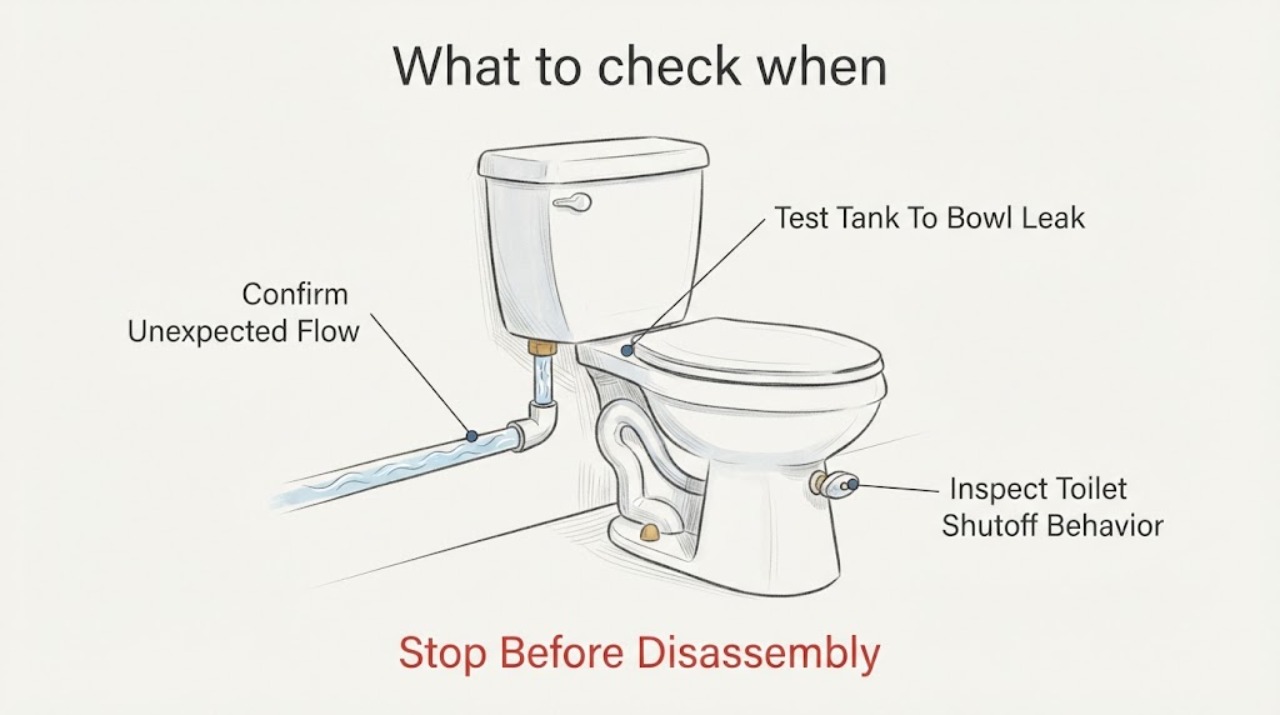
Work through in order
Diagnostic checks
Use only checks that match the exact appliance or system and its official guide.
-
Check 1
Turn off faucets, showers, toilets, appliances, and irrigation that are intentionally using water, then listen from safe, dry locations for several minutes and note where the sound is strongest.
Expected result: The sound stops when one fixture is shut off, continues with all known fixtures idle, or is accompanied by a wet spot, dripping joint, ponding, or a sudden water-use increase.
Next step: Keep the suspected branch off or unused and continue with the matching visible check. For fast flow or spreading water, close the main shutoff if safely accessible and call a plumber.
Stop if: Stop if water is near electrical equipment, the floor or ceiling is unsafe, or the leak is too fast to contain without entering a hazardous area.
Why this matters
Why: A sound that follows one fixture points to that fixture or its valve; continued flow with fixtures idle raises concern for a leaking toilet, hidden supply leak, irrigation line, or service line.
-
Check 2
If the sound is near a tank toilet, lift the tank lid, add a few drops of food coloring without flushing, wait about 10 to 15 minutes, and look in the bowl.
Expected result: Colored water appears in the bowl, or the bowl remains clear during the test.
Next step: If color appears, close the toilet's accessible inlet valve when practical and arrange repair; if the bowl stays clear, inspect the fill behavior and other nearby fixtures.
Stop if: Do not flush during the test, force a stuck shutoff, or remove pressurized plumbing parts.
Why this matters
Why: Color in the bowl confirms water is leaking from the tank into the bowl, commonly through the flapper or flush-valve seal. A clear bowl makes that tank-to-bowl path less likely but does not rule out a fill-valve or other plumbing leak.
-
Check 3
With the toilet idle, observe whether the handle needs to be jiggled, the chain holds the flapper open, water rises toward the overflow, or the fill valve continues running after the tank refills.
Expected result: The handle or chain interferes with the flapper, water passes into the overflow, the fill valve keeps running, or the tank shuts off normally.
Next step: Use the toilet's model-specific guidance for an accessible adjustment or replacement, or call a plumber if the cause is not obvious. Keep the inlet closed if the toilet continues to run and the valve operates normally.
Stop if: Stop if the shutoff leaks, will not turn, or the tank, bowl, floor, or supply connection is cracked or wet.
Why this matters
Why: A handle, chain, flapper, fill-valve, or water-level problem can keep a toilet refilling and make the nearby pipe sound continuously active. Normal toilet behavior shifts attention to another fixture or supply branch.
-
Check 4
Inspect accessible supply connections and fixtures under sinks, at appliances, near the water heater, and around outdoor irrigation for drips, dampness, corrosion, cracked hoses, or water collecting below a joint.
Expected result: A visible connection is wet or dripping, an irrigation area is muddy or ponding, or all accessible plumbing is dry.
Next step: For a small, reachable fixture leak, close its local shutoff if it operates safely and arrange repair. For a hose, valve, appliance, water-heater, or irrigation leak that is not clearly isolated, close the main if needed and call a plumber.
Stop if: Do not loosen pressurized fittings, enter standing water, or access a water meter as a repair step.
Why this matters
Why: A wet connection or muddy irrigation area identifies a likely local leak; dry visible plumbing does not exclude a hidden wall, slab, underground, or service-line leak.
-
Check 5
Look for ceiling or wall stains, damp flooring, unexplained musty moisture, hissing behind a wall, or a persistently wet or muddy area along the buried service or irrigation route without opening the structure.
Expected result: A hidden moisture sign or outdoor wet area is present, or the building and surrounding ground remain dry while water use still appears continuous.
Next step: Close the main water shutoff for active interior flow if safe, protect belongings from further damage, and call a licensed plumber or appropriate water utility for the affected service-line boundary.
Stop if: Stop before opening walls, digging, entering a wet electrical area, or attempting to repair a buried or pressurized line.
Why this matters
Why: A hidden or underground sign can indicate a supply, service-line, or irrigation leak that will not be corrected by a toilet adjustment. A dry visual inspection does not prove that the pipe is sound.
Use your observations
Decision map
Find the observation that best matches what you see, then follow the next safe action.
-
PATH 01Next step
What you see
The sound stops when one faucet, appliance, toilet, or irrigation branch is shut off.
Do this next
Keep that fixture or branch off and inspect only its accessible parts; call a plumber if the local valve does not stop the flow or the source is not clear.
-
PATH 02Next step
What you see
Dye appears in the toilet bowl during the no-flush test.
Do this next
Treat the toilet as leaking from tank to bowl, close its inlet valve when practical, and arrange repair of the flapper or related flush-valve parts.
-
PATH 03Next step
What you see
The toilet handle, chain, flapper, fill valve, or overflow behavior is abnormal.
Do this next
Use model-specific toilet guidance for a safe accessible adjustment or call a plumber; do not force a stuck shutoff or remove pressurized parts.
-
PATH 04Next step
What you see
A visible joint, hose, appliance connection, irrigation valve, or outdoor area is wet.
Do this next
Close the nearest safe shutoff if it works normally and arrange plumbing service; use the main shutoff for active or spreading flow.
-
PATH 05Next step
What you see
Water is hidden in a wall or floor, underground, or along a service line.
Do this next
Stop investigating, limit water damage with the main shutoff if safe, and call a licensed plumber or the responsible water utility for the service-line portion.
-
PATH 06Next step
What you see
No visible source is found but water continues running with all fixtures idle.
Do this next
Leave unnecessary fixtures off and arrange professional leak detection or plumbing diagnosis; do not open the structure or access the meter yourself.
Helpful context
Understand the symptom
What a continuously running pipe may indicate
A pipe does not run by itself, so treat the sound as evidence that water is moving through a fixture, drain, irrigation branch, service line, or an unseen leak. A toilet can refill intermittently when its flapper, handle, chain, or fill valve does not shut off; a supply leak may instead leave a joint, wall, floor, or outdoor area wet. Find the first safe, visible point of flow before attempting any repair.
Limit the check to accessible plumbing
Do not open walls or floors, disconnect pressurized supply lines, excavate a service line, or use a water meter as a repair point. If water is escaping quickly, reaching electrical equipment, staining a ceiling, or threatening property damage, use the home's main shutoff only if you can reach it safely, keep people clear, and call a licensed plumber. The safe goal is to stop damage and identify the branch, not to force a hidden repair.
When checks do not resolve it
Need a professional?
Close the main water shutoff if it is safely accessible and call a licensed plumber for a rapid leak, water damage, a hidden or underground leak, a service-line concern, a failed shutoff, a water-heater or appliance connection leak, or running water that persists after accessible fixture checks.
Common questions
FAQ
How can I tell if the running water is from my toilet?
Listen near the toilet when all fixtures are idle and perform a no-flush dye test in a tank toilet. If color appears in the bowl, water is leaking from the tank into the bowl; inspect the handle, chain, flapper, and fill behavior or call a plumber.
What if the pipe still sounds like water is running after I check the toilet?
Inspect only accessible fixtures, supply connections, appliances, water-heater surroundings, irrigation, and wet areas. If flow continues with all fixtures idle and no source is visible, leave unnecessary water use off and arrange professional leak diagnosis.
Should I shut off the main water when a pipe is running?
For fast or spreading water, water damage, or a hidden supply leak, close the home's main shutoff if it is safely accessible and call a licensed plumber. Do not enter standing water, force a failed valve, open walls, or access a water meter as a repair step.
Read the exact guide
Official sources
- How to find and fix a toilet leakCity of Portland Water Bureau · Municipal guidance on identifying running toilet water, dye testing, flappers, handles, fill valves, and when to call a plumber
- Leak Alerts: Find and Fix LeaksSan Francisco Public Utilities Commission · Municipal guidance on continuous water use, toilet, fixture, irrigation, and service-line leak checks and professional escalation
- Toilet Leak DetectionNew York City Department of Environmental Protection · Municipal guidance on tank-to-bowl dye tests and common running-toilet causes including flappers and fill valves
Community feedback
Share a repair observation
Share a plain-text repair observation. Accepted observations are published automatically; this page may take a moment to update.