
Repair problem
Running Troubleshooting Guides
Published FixGraph guidance for diagnosing and responding to running.
Matching published guides
Choose a guide that matches the service, equipment, and conditions you are seeing.
-
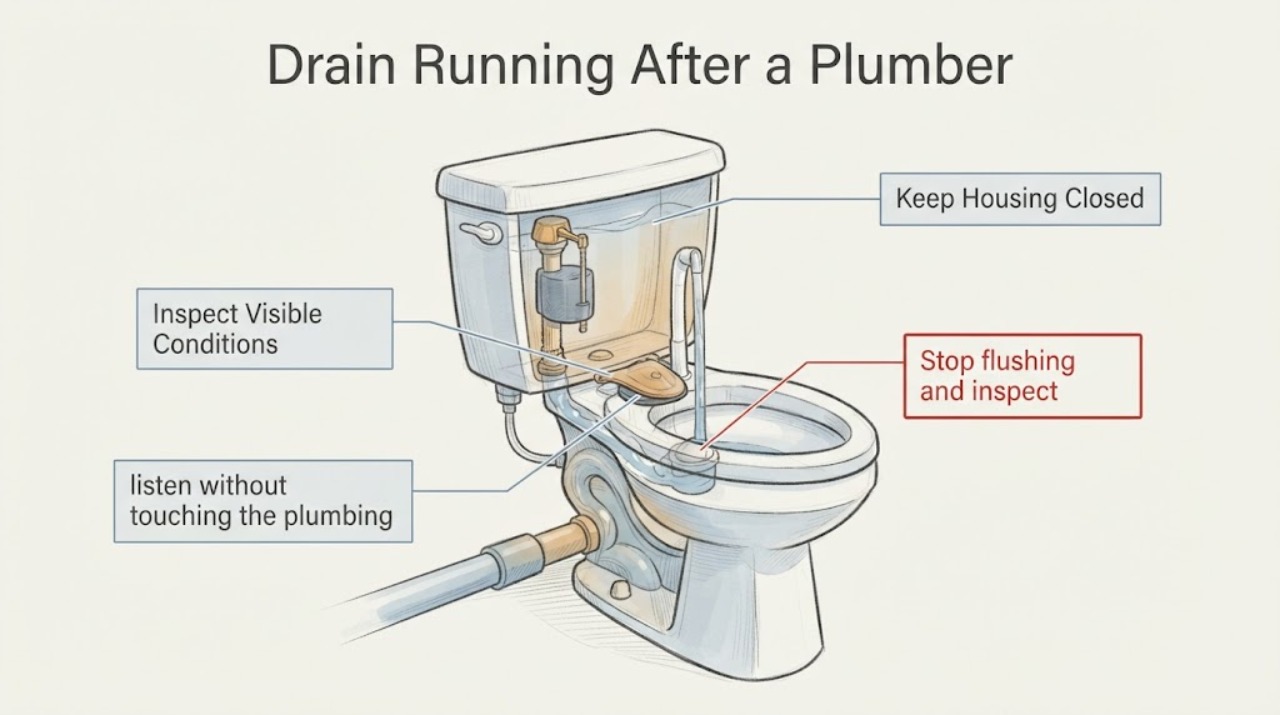
Drain Running After a Plumber Visit for the Toilet: What to Check Next
A toilet that is still running after a plumber visit does not prove that the earlier work failed or that the same part is at fault. First separate a tank that keeps refilling from water silently passing into the bowl, a drain or pump-like sound, and a leak outside the toilet.
-
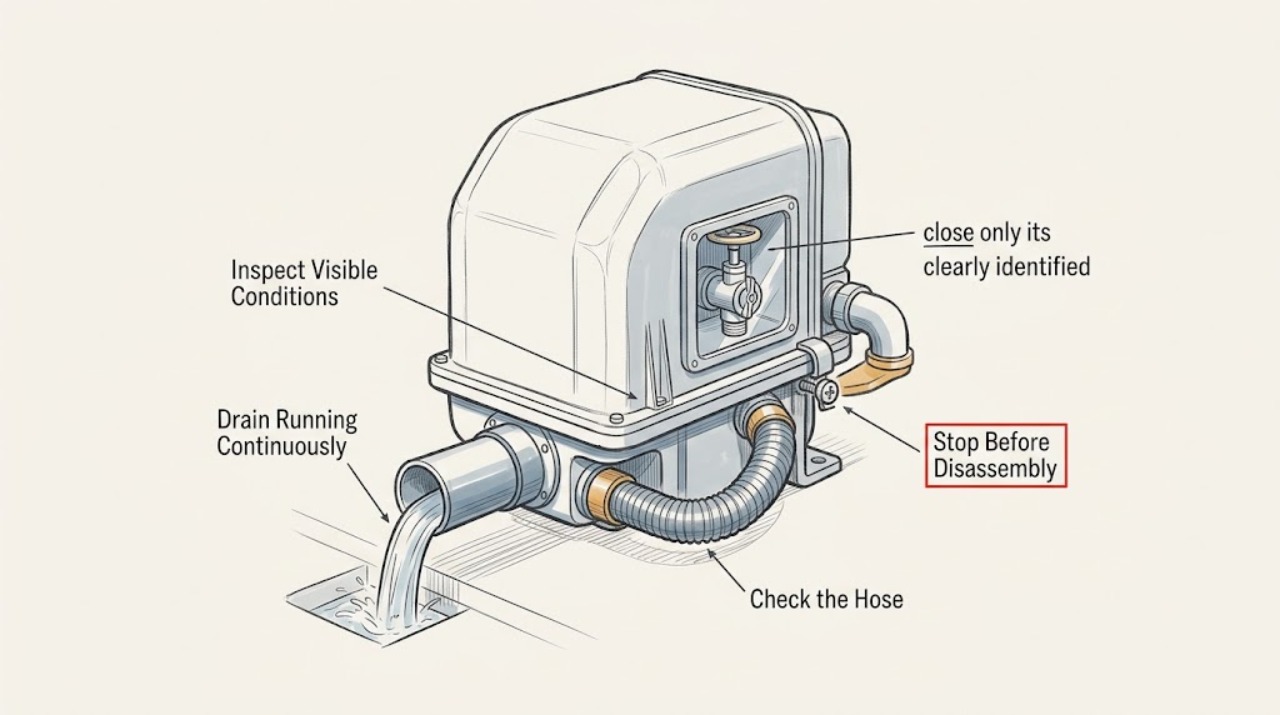
Drain Running Continuously: Find the Water Source Before Replacing a Drain Part
A drain does not create water by itself, so continuous flow usually means a fixture, appliance discharge, overflow line, or hidden plumbing leak is feeding it. Turn off unnecessary water use, verify whether the water meter still shows flow, and trace the source without opening concealed or pressurized plumbing.
-
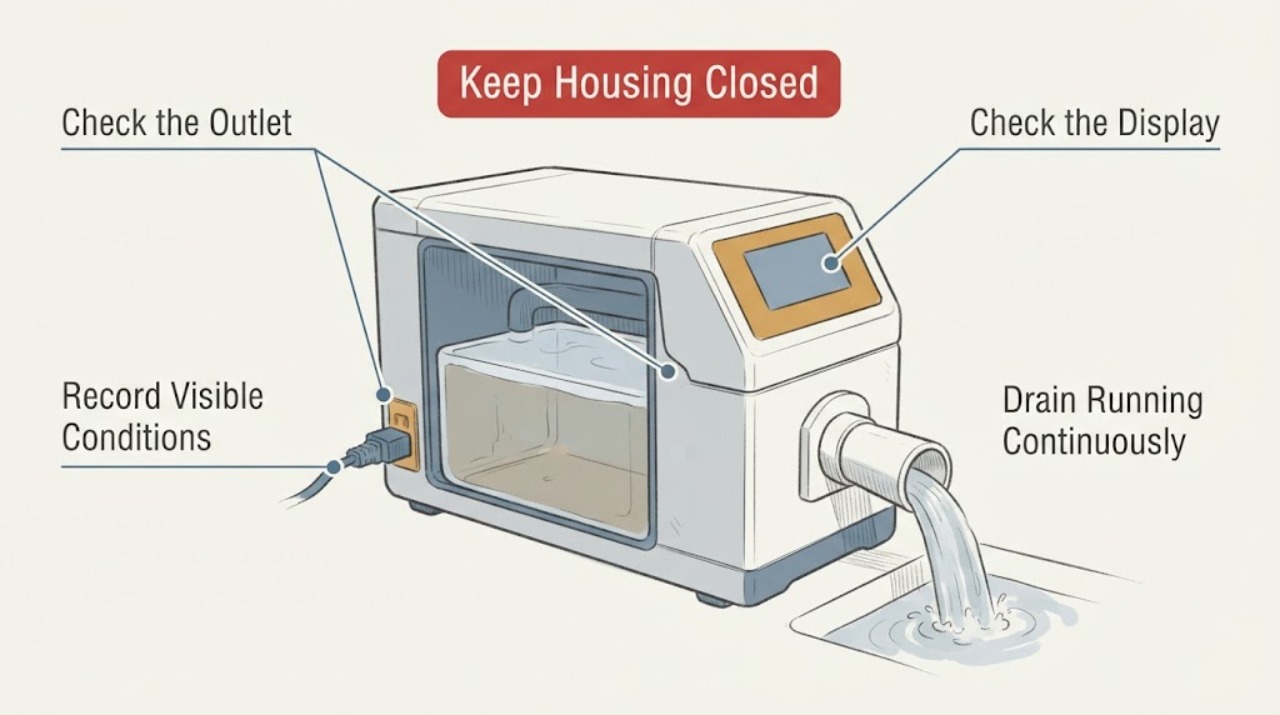
Drain Running Continuously: Separate Tank Filling, Discharge, and Leaks Safely
First identify what is actually running: water may be continuously entering the tank, flowing from the tank into the drain, leaking around the tank or drain, or a pump may be operating. Without overflow, sewage, chemical, pressure, or electrical danger, record the tank level and trace the visible water path, then close an accessible supply valve only if it is safe to reach.
-
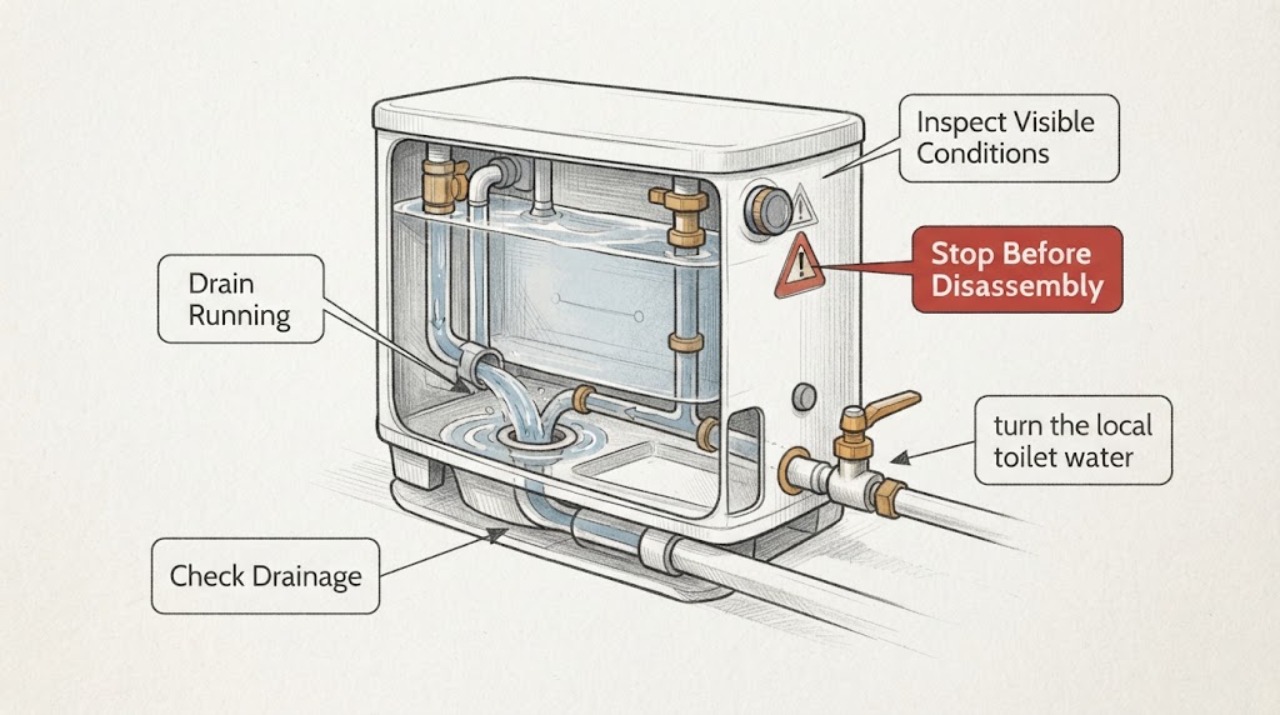
Drain Running: Check Whether a Toilet Tank Seal Is Causing Continuous Flow
The wording drain running most often describes water continuously passing through a toilet from the tank to the bowl, commonly because the tank seal or flapper does not close. Confirm the source before changing a part: listen and look for flow in the toilet tank, a water stream over the overflow tube, or a dye trail from the tank into the bowl.
-
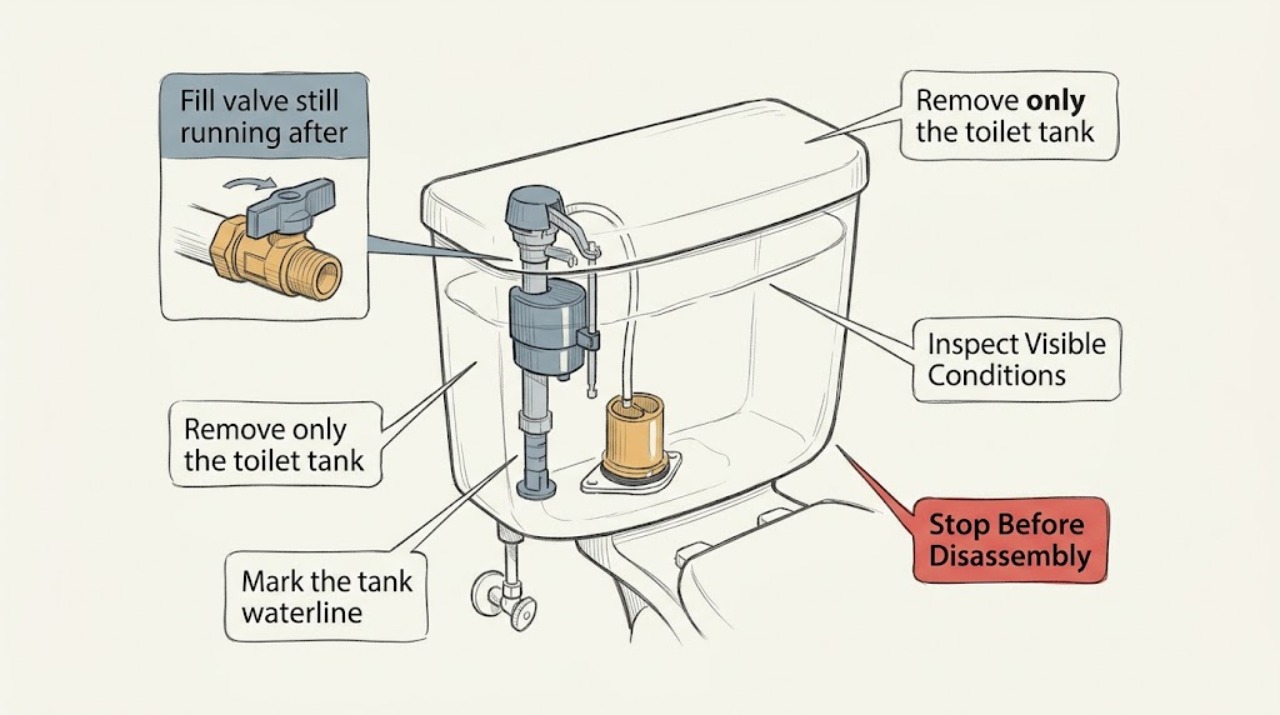
Fill valve still running after replacing the seal: what to check
If a toilet fill valve keeps running after its seal was replaced, first determine whether the fill valve is actually failing to shut off or is refilling because water is escaping through the flush valve seal, flapper, or overflow.
-
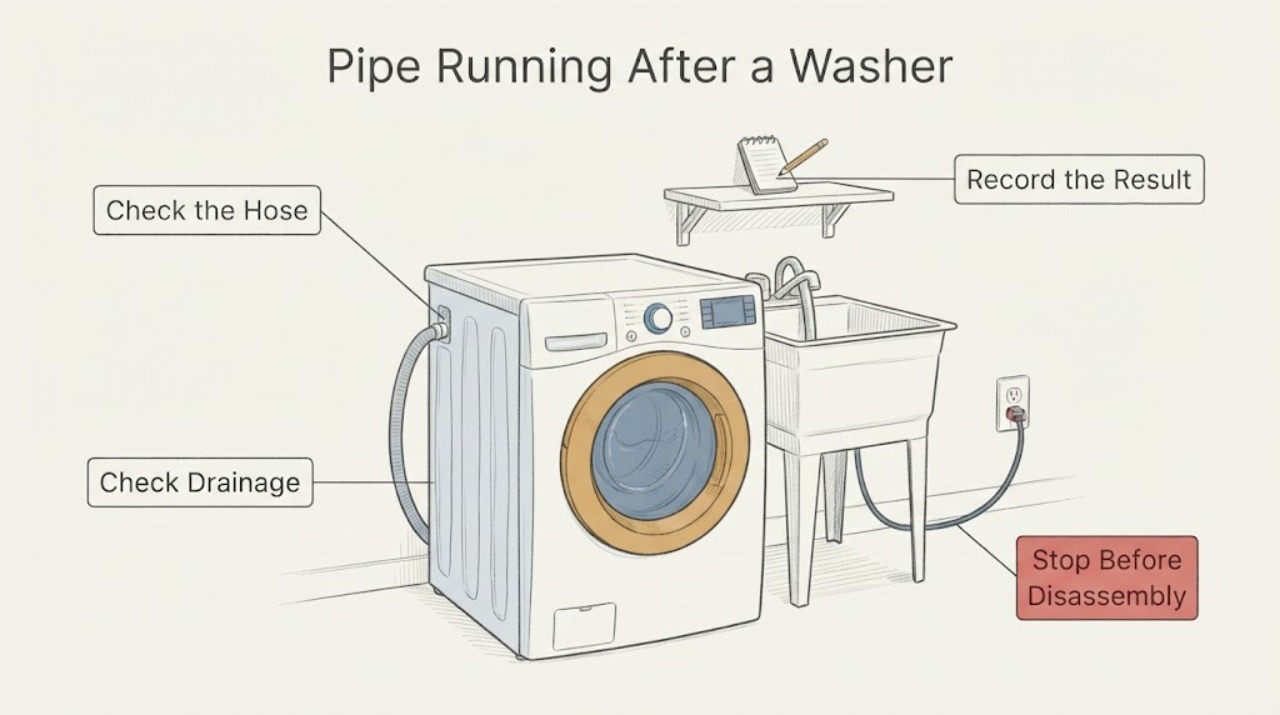
Pipe Running After a Washer Drains: Normal Pump Sound or Drain Problem?
If a pipe sounds as though it is still running after the washer drains, first establish whether the sound is the washer pump finishing a routine, water being pulled through the washer hose, or a drain that is slow, backing up, or continuing to flow. Watch the standpipe or laundry tub without opening the plumbing, note whether the washer pump has stopped, and inspect the visible hose routing only after the area is dry.
-
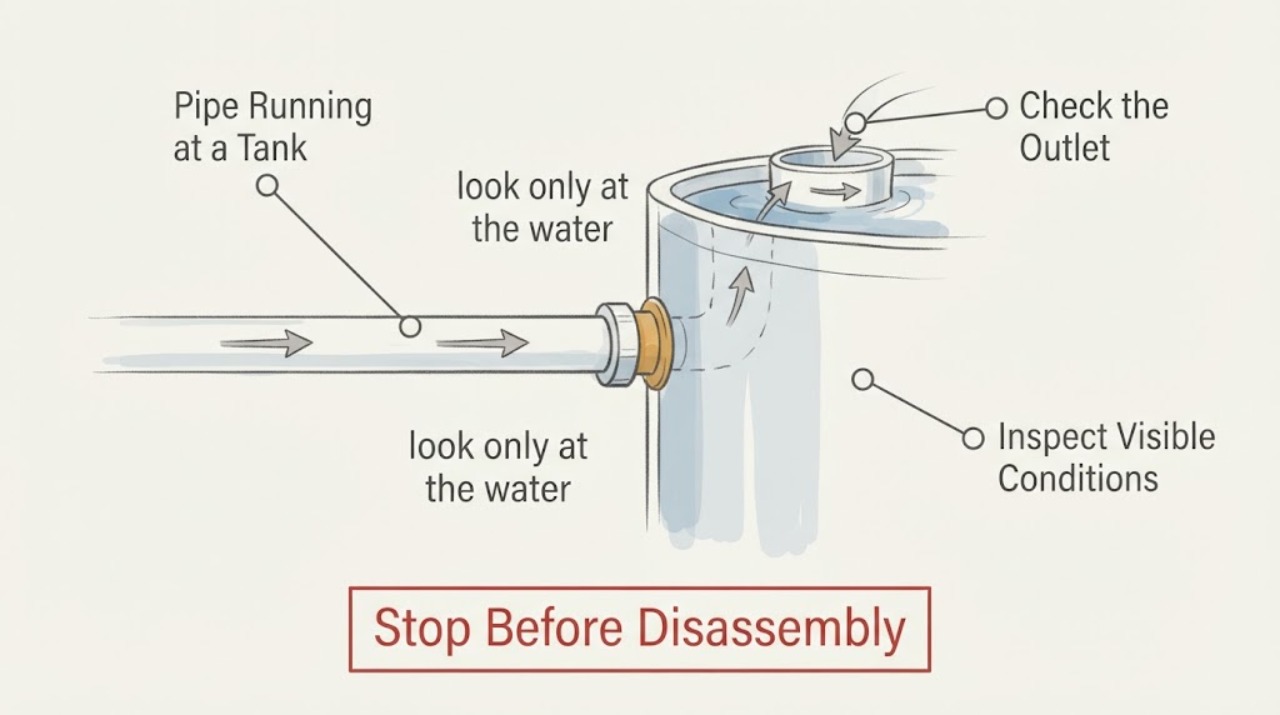
Pipe Running at a Tank: Find Continuous Flow Without Causing a Leak
A pipe that seems to be running at a tank usually means water is still being supplied, refilling, overflowing, or escaping through a downstream leak; the sound alone does not identify which one. First determine whether the flow is at a toilet or cistern tank, a storage or pressure tank, an appliance tank, or an exposed pipe.
-
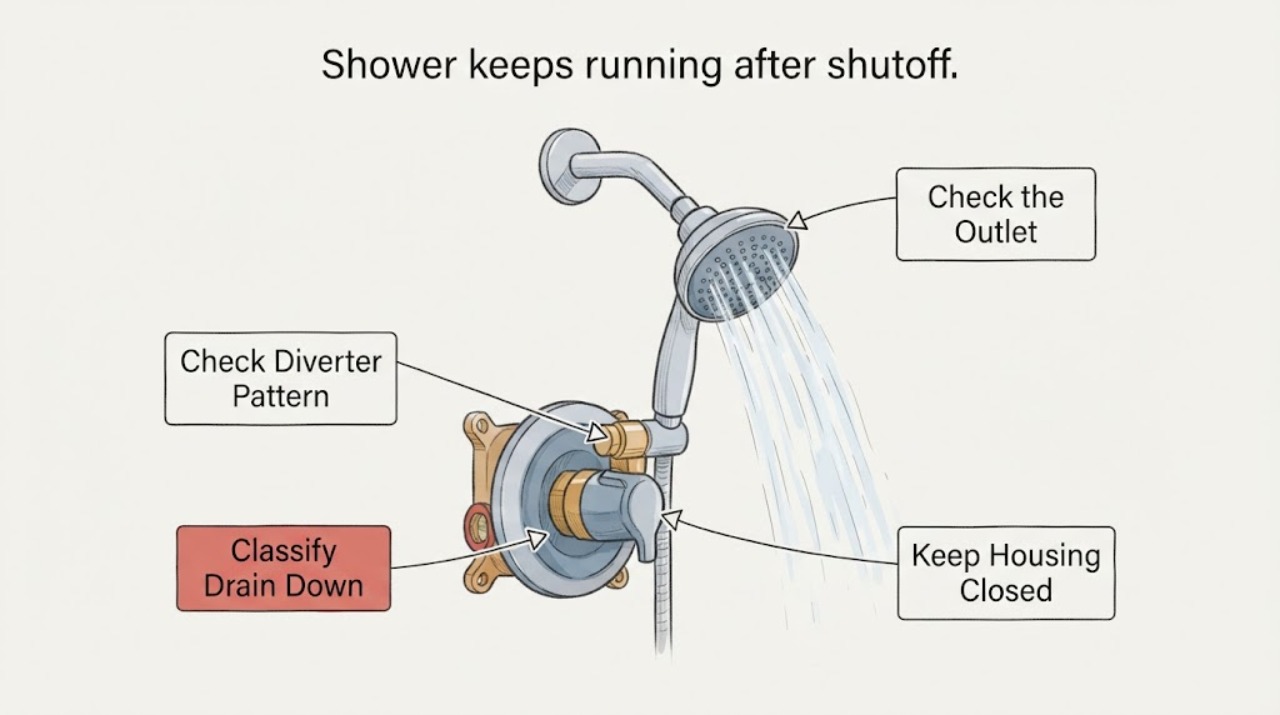
Shower keeps running after shutoff: find out whether it is normal drain-down or a valve leak
A few drips from a showerhead immediately after shutoff can be water draining from the head, but a continuing stream or water that keeps running long after shutoff is a leak. First note whether water comes from the showerhead, tub spout, handle, or wall and whether it continues with the control fully off.
-
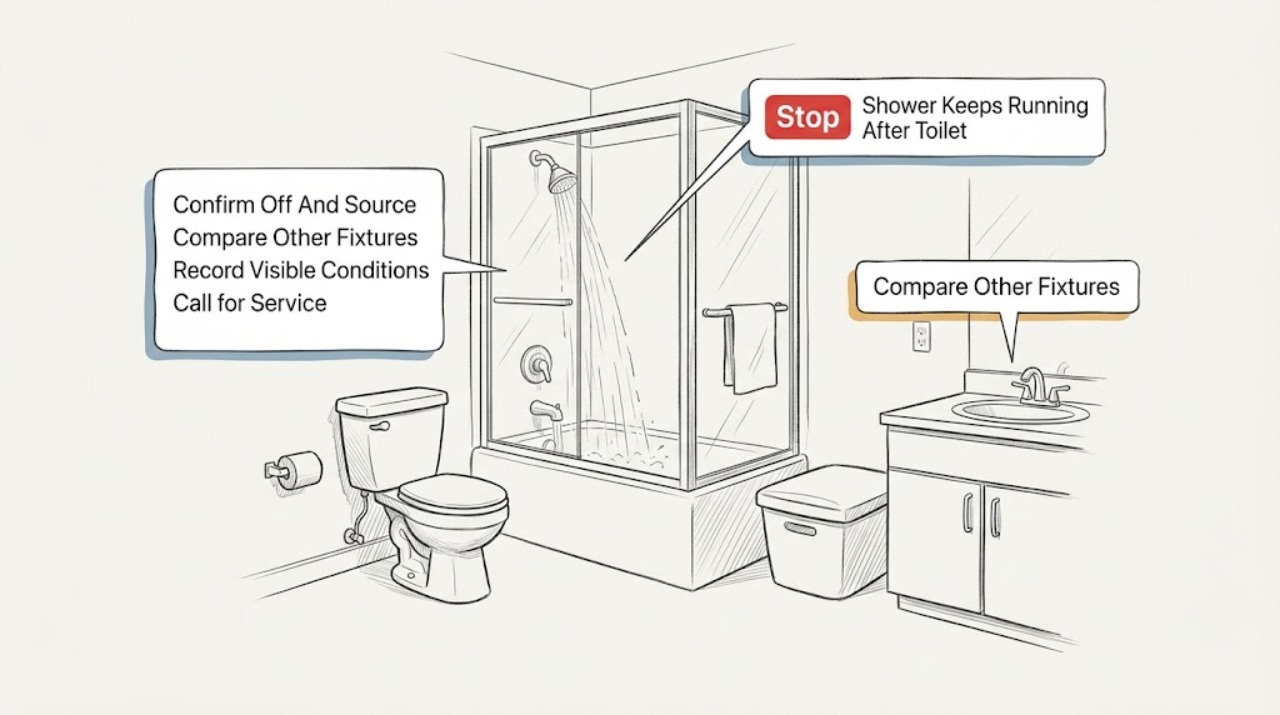
Shower Keeps Running After Toilet Repair: Isolate the Shower Valve and Supply
A shower that continues to run after the handle is in its normal off position is usually a shower-valve sealing, cartridge, handle-calibration, or concealed-leak problem; the earlier toilet visit may be related only if a shared shutoff, supply, or pressure condition changed, and timing alone does not prove the plumber caused it.
-
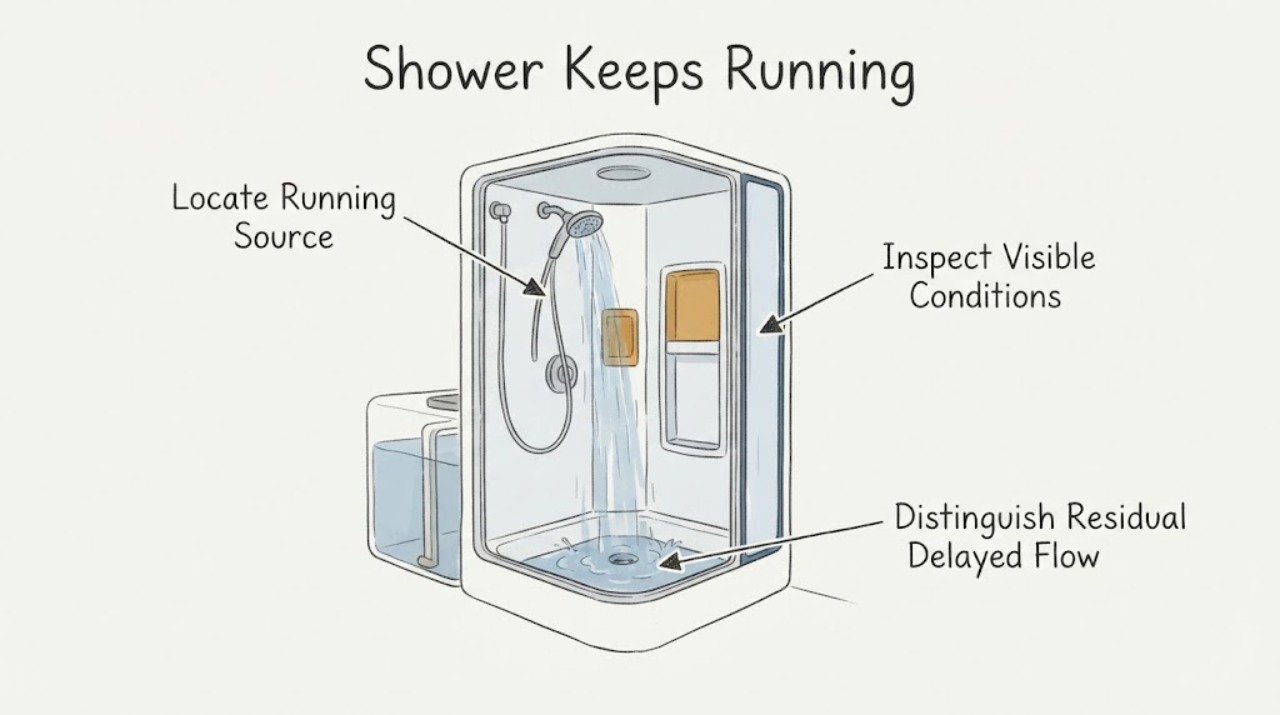
Shower Keeps Running: Separate the Valve, Tank, and Drain Causes
A shower that is described as running can mean water continues from the showerhead after the handle is off, the shower keeps flowing because a valve or local supply stop is not closing, or the sound is actually a water-heater tank refilling, a relief discharge, or a drain. First identify where water or noise is coming from and whether it stops when the shower control and, only if safely accessible, the local or main water shutoff are closed.
-
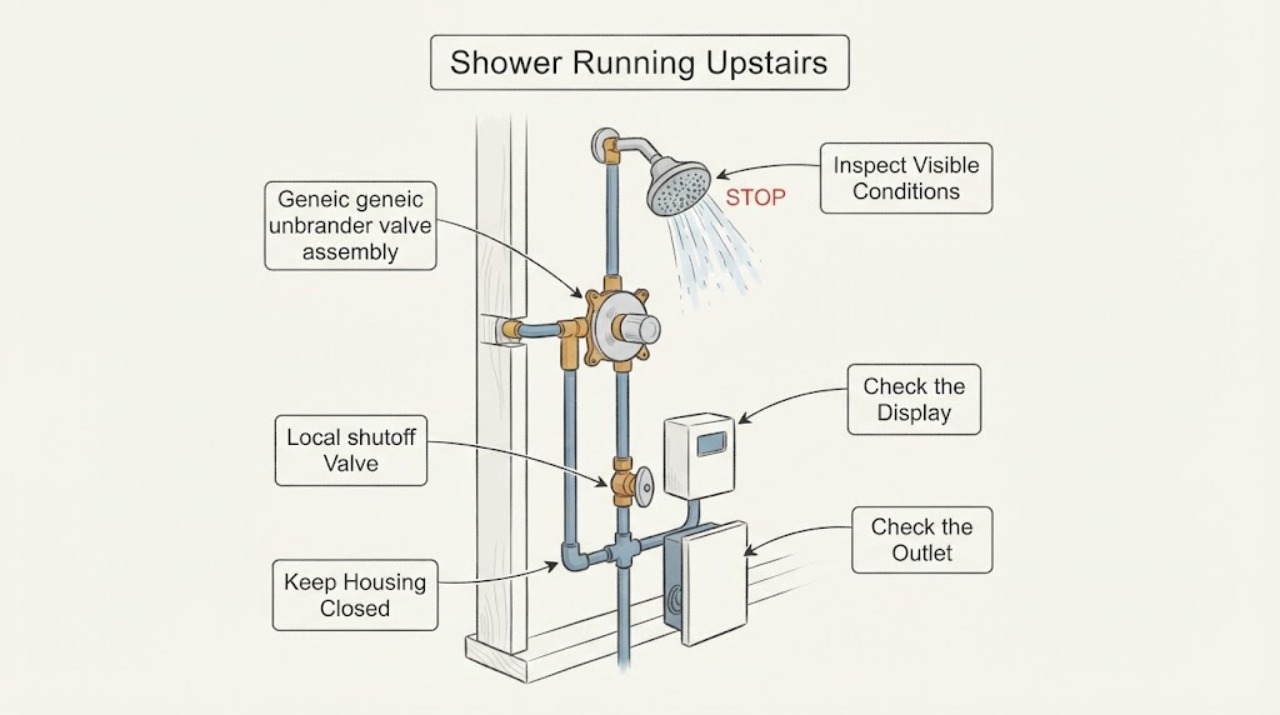
Shower Running Upstairs: No Water at Both Fixtures and Water Won't Stop
Treat this report as two separate observations that may have a common cause: both upstairs shower fixtures have no usable flow, while water is still escaping from an outlet, valve area, wall, ceiling below, or another part of the plumbing. Do not keep turning a stuck handle or remove trim to find the valve.
-
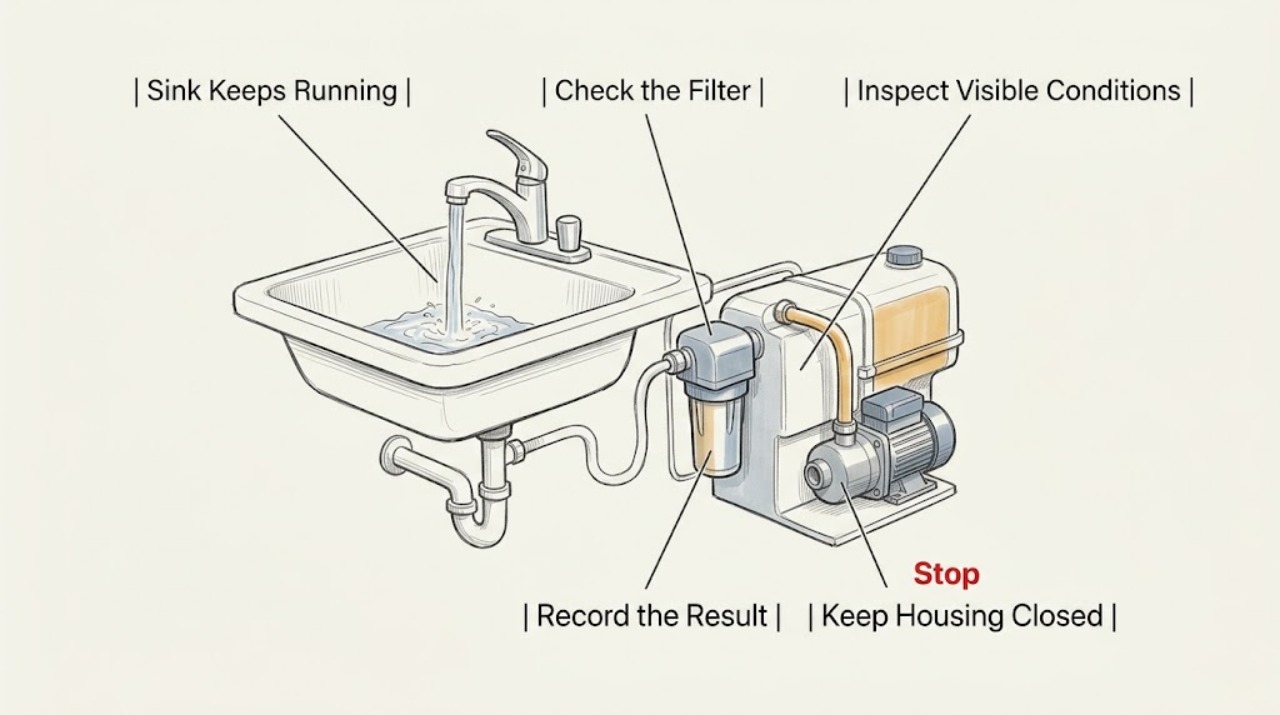
Sink Keeps Running: Separate Faucet Flow, Leaks, and Tank Refill
A sink that is “running” can mean water still comes from the spout after the handle is off, a continuous sound or stream comes from the cabinet, or an under-sink filter, reverse-osmosis unit, storage tank, or hot-water device is repeatedly filling or sending water to a drain. First identify the exact source and timing without opening or disconnecting anything.
-
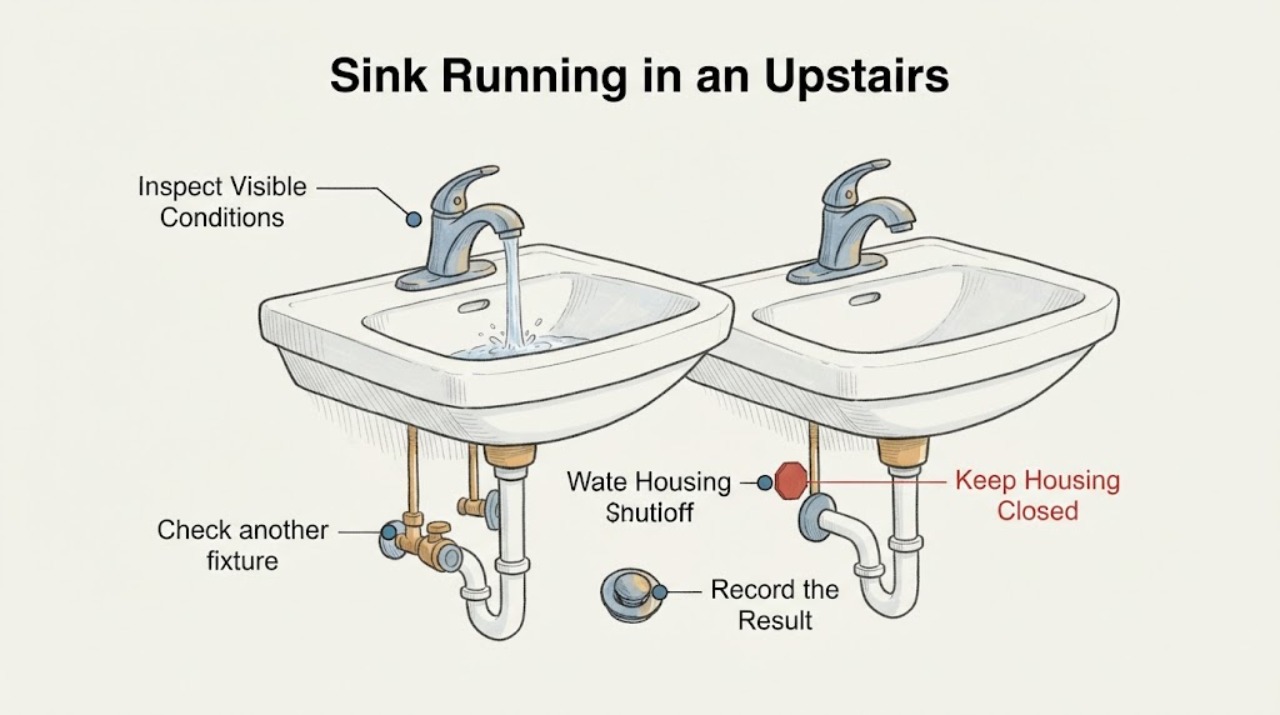
Sink Running in an Upstairs Bathroom: Separate No Flow from Water That Will Not Stop
The phrase “both not running and not stopping water” describes two different states that must be separated: no water comes from the sink, or water continues to flow after the handle or control is closed. First check the upstairs bathroom and another fixture to determine whether the problem is local or affects the supply.
-
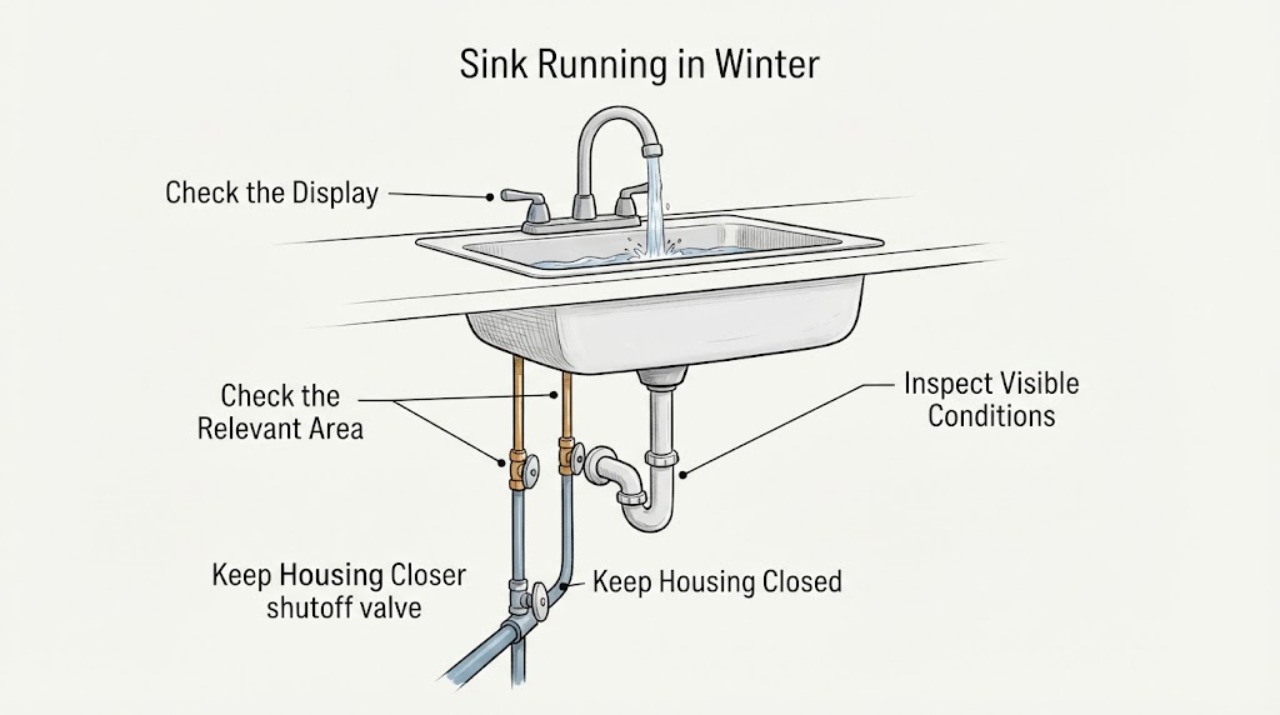
Sink Running in Winter: Separate a Safe Anti-Freeze Drip from a Leak
A sink that is running in winter may be intentionally dripping to protect a vulnerable pipe, or it may have a faucet valve that is not closing, a frozen or restricted supply, or a pipe that has cracked and started leaking. First note whether the water stops when the faucet control is fully off, whether the flow is cold or warm, and whether another fixture is affected.
-
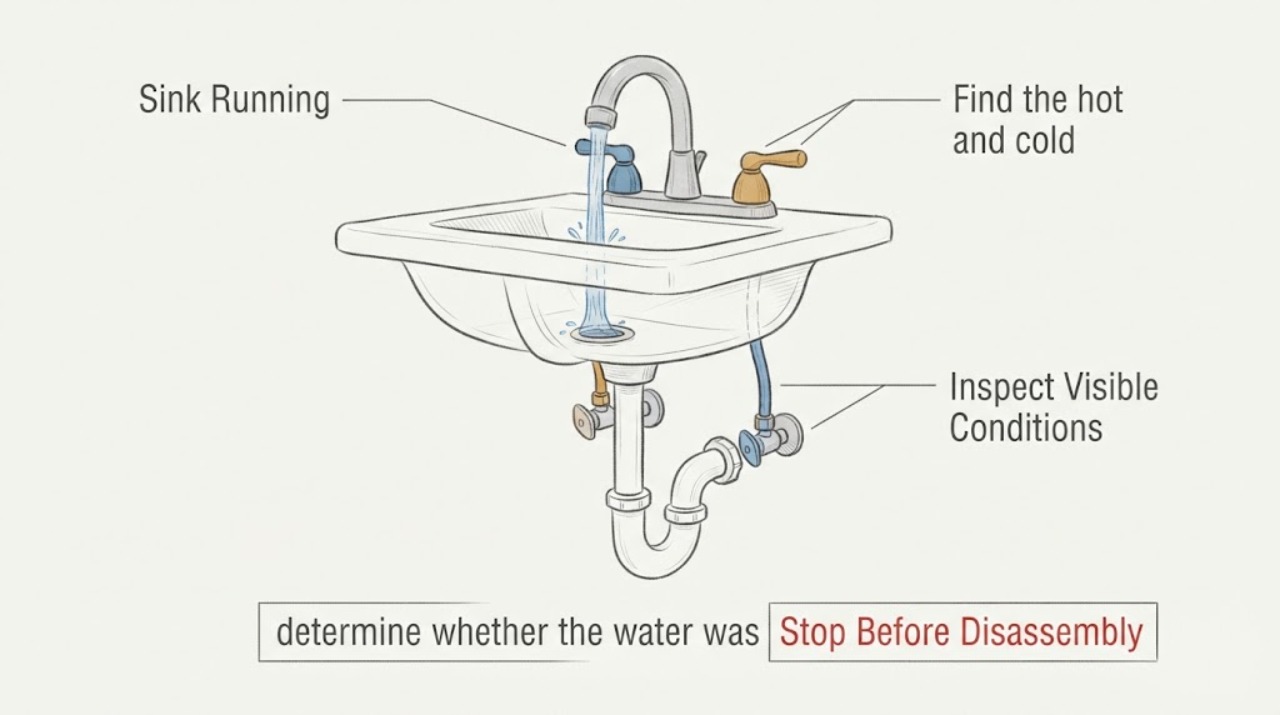
Sink Running: Find the Water Path, Isolate the Supply, and Stop the Leak Safely
If a sink keeps running after the faucet handle is closed, first identify whether water is coming from the spout, around the handle or base, a supply connection under the sink, or a drain or overflow. Close the handle normally, then turn the accessible hot and cold shutoff valves under the sink clockwise without forcing them; if they do not stop the flow, use the home's main shutoff if you know it and can reach it safely.
-
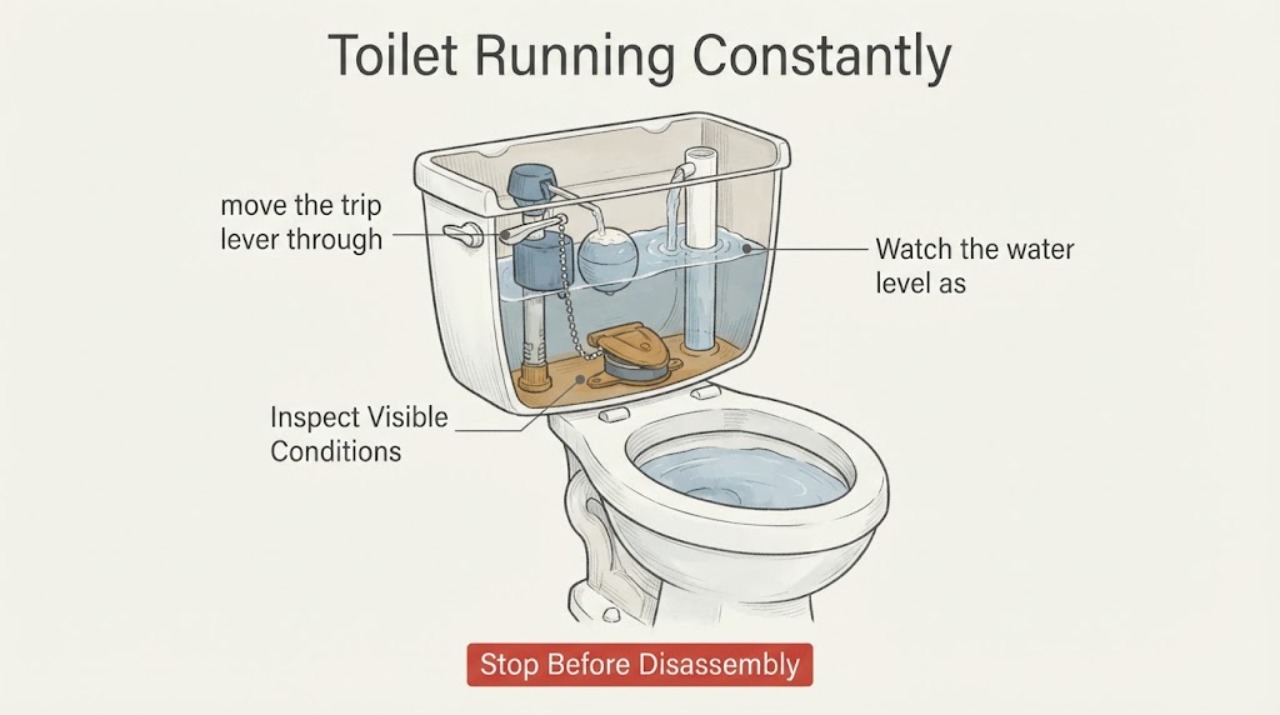
Toilet Running Constantly: Find the Leak and Restore the Shutoff
A toilet that keeps running is usually sending water from the tank into the bowl, or the tank level is high enough to spill into the overflow. Remove the tank lid and watch the water path: a ripple in the bowl with a stable tank level points toward the flush valve or flapper seal; water at the overflow points toward a fill valve, float, or level problem; a lever or chain that does not return can hold the flush valve open.
-
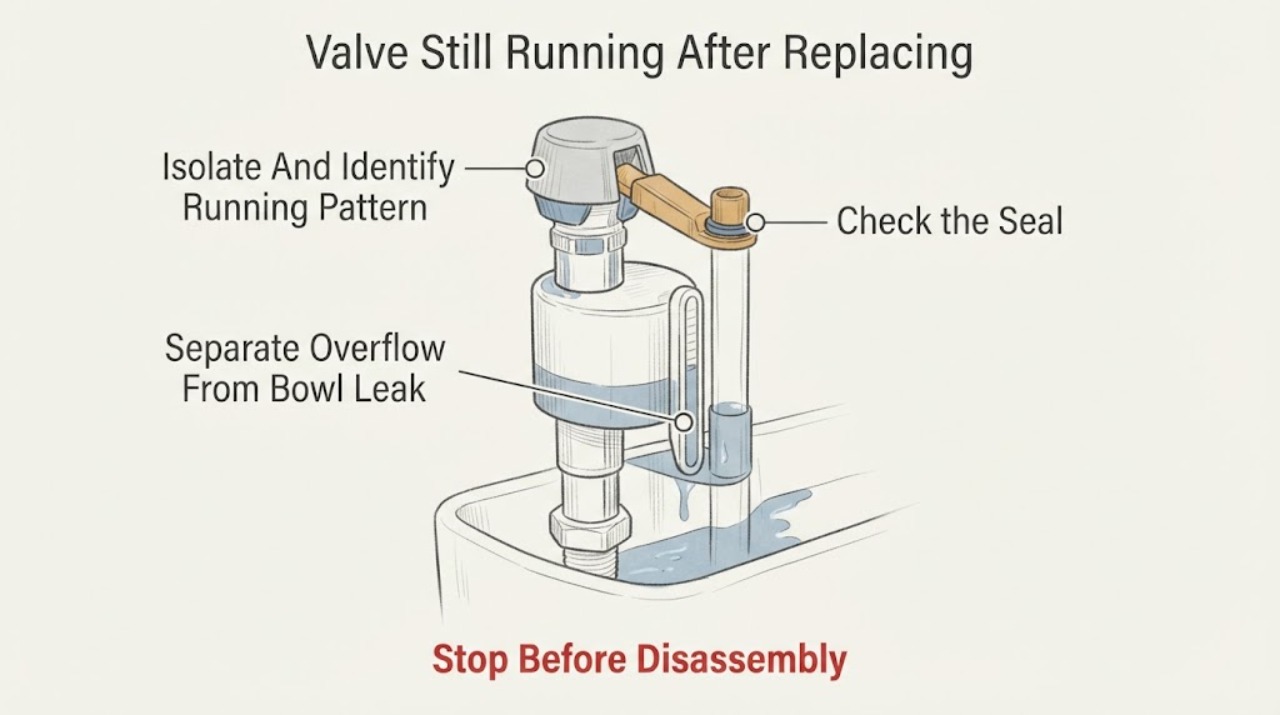
Valve Still Running After Replacing the Fill Valve Seal
If a toilet fill valve still runs after a seal replacement, first determine whether the tank is actually overflowing or whether a flush-valve seal is letting water escape into the bowl. Close the toilet supply before removing a cap or touching a seal.
-
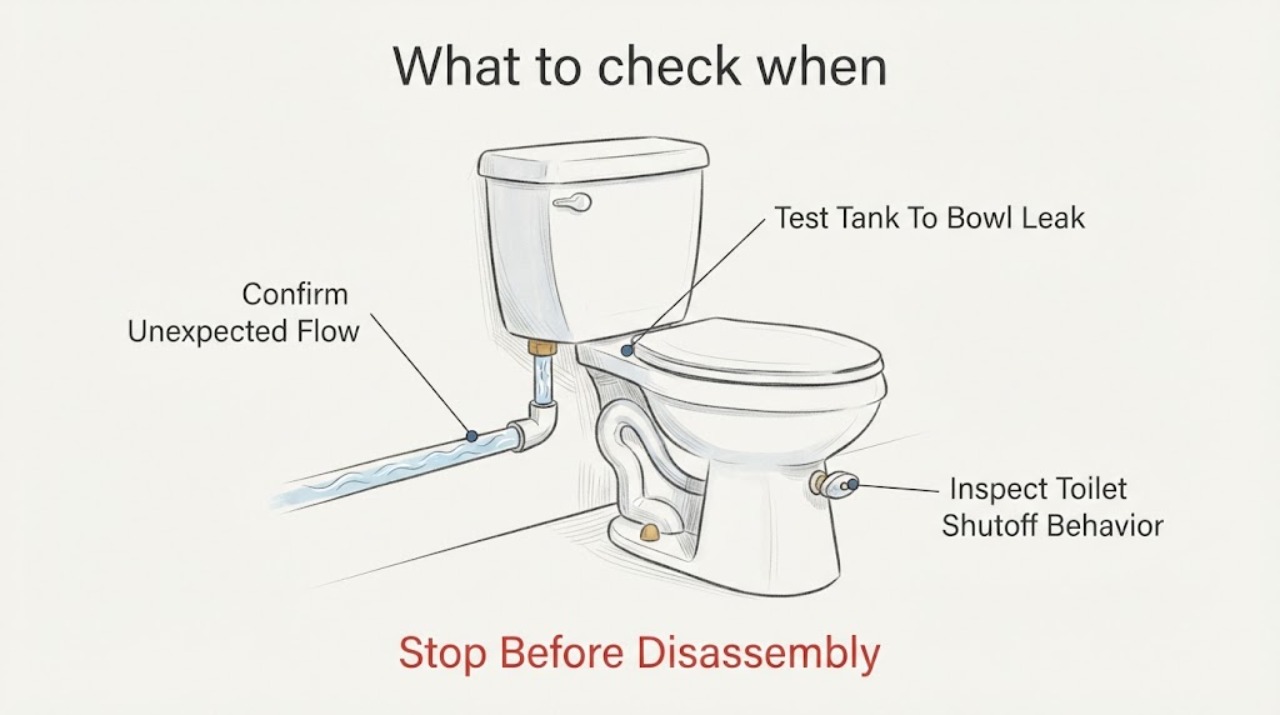
What to check when a pipe keeps running
If you hear water running when no fixture is in use, first identify whether the sound comes from a running toilet, an open or leaking fixture, irrigation, or a pressurized supply pipe. Turn off accessible fixtures, inspect only visible connections and wet areas, and use a dye test for a tank toilet.