
On this page
Start here
Quick answer
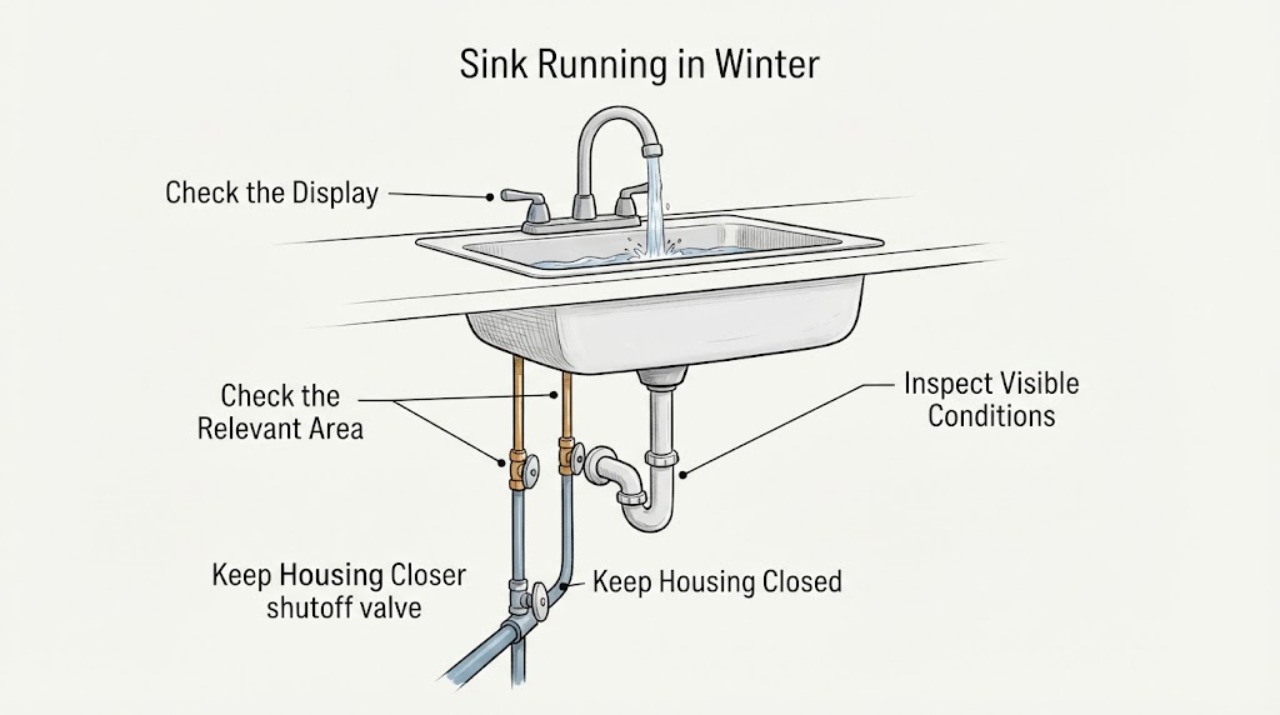
A sink that is running in winter may be intentionally dripping to protect a vulnerable pipe, or it may have a faucet valve that is not closing, a frozen or restricted supply, or a pipe that has cracked and started leaking. First note whether the water stops when the faucet control is fully off, whether the flow is cold or warm, and whether another fixture is affected. If the faucet is on an exterior wall and the home is freezing, a small controlled drip and warm cabinet air may be an approved precaution; if water continues with the control off, appears under the sink or in a wall, or suddenly increases, close a normally operating local or main valve from a dry position and call a plumber. Never use a torch or open flame to thaw a pipe, and never use electrical equipment in standing water.
Work through in order
Diagnostic checks
Use only checks that match the exact appliance or system and its official guide.
-
Check 1
Stand in a dry position and move the sink's faucet control fully to off, without forcing it. Note whether the stream stops, continues as a drip, or increases; also note whether the water is cold, warm, or mixed.
Expected result: The flow stops, continues with the control off, or cannot be stopped by a normally operating control.
Next step: If it is a deliberate winter drip, continue to the freeze-risk check. If it continues when off or the control is abnormal, use a safe local shutoff if it turns normally and arrange plumbing service.
Why this matters
Why: Flow that stops may be an intentional drip or a cold-weather supply symptom. Flow that continues with the control off points to a faucet valve or supply leak, while a control that resists is not safe to force.
-
Check 2
Compare this sink with another cold fixture and, at the same sink, compare cold and warm controls. Keep the test brief and watch the cabinet and floor rather than leaving water running unattended.
Expected result: Only this sink is affected, both hot and cold are affected here, or several cold fixtures have weak flow or no flow.
Next step: Record which fixtures and temperatures are affected, then follow the local or whole-home branch. Do not disconnect a supply hose to compare pressure.
Why this matters
Why: A single-sink problem is more likely local to the faucet, supply, or exposed pipe. A wider cold-water change suggests a main valve, service interruption, shared frozen section, or a leak rather than one faucet fault.
-
Check 3
With the faucet off, place a dry towel or tissue under the visible cold supply, shutoff, faucet base, and cabinet floor. Look for frost, dampness, a spreading mark, or water entering from the wall; do not open a wall or floor.
Expected result: The visible area stays dry, a connection wets, frost is present, or moisture comes from a concealed direction.
Next step: If water is present, stop the flow at a safe shutoff and call a plumber. If frost is present but the area is dry, continue only with gentle, safe warming and keep watching for a leak.
Why this matters
Why: Dry visible plumbing supports a controlled drip or a restriction. A wet connection can be a leak, while frost or a concealed wet mark raises concern for a frozen or damaged line and possible water release during thawing.
-
Check 4
If the sink is on an exterior wall or the line passes through a cold cabinet, keep the cabinet open and the room heated. If a small drip is being used deliberately, confirm that it is controlled, directed into the sink, and not wetting the cabinet or floor.
Expected result: The flow is a small stable drip with no moisture outside the bowl, or it is a growing stream, splashing, or wetting the cabinet.
Next step: Keep a deliberate drip only while local guidance and the pipe risk justify it. Close a safe local valve and call a plumber if the flow is not controlled or water leaves the bowl.
Why this matters
Why: A controlled drip may be a winter precaution for a vulnerable line. A growing or misdirected flow is water damage risk and should not be left running as a supposed freeze remedy.
-
Check 5
If flow is only a trickle or stops during freezing weather, leave the affected faucet open for observation and warm the accessible pipe gradually with household warm air from a safe, dry location. Work from the faucet toward the colder section only if the pipe is visible and accessible.
Expected result: Flow returns gradually, no flow returns, or water begins leaking as the line warms.
Next step: Stop warming and close the main valve if a leak appears. Never use a torch, open flame, or electrical appliance in standing water; call a plumber if flow does not return safely.
Why this matters
Why: Gradual return supports a frozen restriction. No return, an inaccessible frozen section, or a leak during thawing needs professional help because the pipe may be damaged or still frozen elsewhere.
-
Check 6
After the temperature rises or the flow returns, keep all fixtures off briefly and observe the accessible water meter leak indicator from a dry location. Recheck the cabinet, wall, floor, and nearby ceiling for moisture without removing panels.
Expected result: The meter remains still and the plumbing is dry, or the meter moves or a new wet mark appears with fixtures off.
Next step: Restore normal faucet use gradually if everything stays dry. If the meter moves or moisture appears, close a safe main valve and call a plumber or water utility.
Why this matters
Why: A still meter and dry area make an intentional drip or resolved restriction more likely. Unexpected meter movement or new moisture can indicate a concealed or thaw-related pipe leak.
-
Check 7
Record the weather, whether the sink is against an exterior wall, the exact time the flow changes, whether heating or plumbing work recently changed, and the first location that became wet. Give these observations to the plumber or utility instead of attempting an internal repair.
Expected result: The pattern repeats during cold periods, follows a thaw, affects one line, or affects multiple fixtures and the main supply.
Next step: Arrange service for a vulnerable or damaged line and follow local winter guidance. Do not leave an uncontrolled sink running while waiting for help.
Why this matters
Why: A repeatable cold-location pattern helps identify freeze exposure; a post-thaw leak or multi-fixture pattern changes the priority to pipe, service-line, or utility assessment.
Use your observations
Decision map
Find the observation that best matches what you see, then follow the next safe action.
-
PATH 01Next step
What you see
The faucet stops fully when off, the bowl and cabinet stay dry, and a small drip is deliberately used because the sink serves a cold exterior-wall line.
Do this next
Keep the flow small and directed only while freezing risk and local guidance justify it; keep the cabinet warm and monitor for water damage.
Why this path and its safety boundary
Why it matters: This is consistent with a controlled anti-freeze precaution rather than a faucet leak.
-
PATH 02Next step
What you see
The faucet continues running with its control fully off, or the handle will not operate normally.
Do this next
Close a local shutoff only if it turns normally from a dry position, then call a plumber; do not force the handle or open the faucet body.
Why this path and its safety boundary
Why it matters: The faucet valve or an associated supply path may be failing; winter conditions do not make uncontrolled flow safe.
-
PATH 03Next step
What you see
Only this sink has weak cold flow while another cold fixture and the warm control remain normal.
Do this next
Inspect only visible dry areas, keep the cabinet warm, and arrange model-specific plumbing service if the screen, valve, hose, or pipe needs opening.
Why this path and its safety boundary
Why it matters: The restriction or freezing risk is likely local to this faucet, its cold supply, or the exposed pipe serving it.
-
PATH 04Next step
What you see
Several cold fixtures have weak flow or no flow during freezing weather.
Do this next
Check utility notices and the main valve visually from a safe location; call the water utility or a plumber if the condition persists or the line is inaccessible.
Why this path and its safety boundary
Why it matters: A shared frozen section, main-valve issue, service interruption, or wider supply problem is more likely than one sink control.
-
PATH 05Next step
What you see
Frost is visible, little or no water comes out, and the line is accessible and the area is dry.
Do this next
Leave the faucet open, warm gradually with safe non-flame methods, and watch continuously for a leak; call a plumber if flow does not return.
Why this path and its safety boundary
Why it matters: A frozen line is possible, but thawing can reveal a split that was hidden by ice.
-
PATH 06Next step
What you see
Water appears under the sink, in a wall or floor, or increases as the line warms.
Do this next
Shut off the main water supply if it is reachable without entering water, keep away from wet electrical equipment, and call a plumber urgently.
Why this path and its safety boundary
Why it matters: Treat this as a possible burst or thaw-related leak, not as a harmless winter drip.
-
PATH 07Next step
What you see
The flow changes with all fixtures off and the accessible meter leak indicator moves, or a new wet mark appears after a thaw.
Do this next
Stop repeated tests, isolate the water only from a safe dry position, and contact a plumber or the water utility.
Why this path and its safety boundary
Why it matters: A concealed or thaw-related plumbing leak is possible even if the sink itself looks dry.
Helpful context
Understand the symptom
First decide whether the flow is intentional
A controlled winter drip is sometimes used at a sink on an exterior wall or near an uninsulated line. That is different from water that keeps running after the faucet is closed. Set the controls fully off only long enough to observe; if the stream does not stop, treat it as a faucet or supply problem rather than assuming the weather caused it.
A trickle can be a warning of freezing
If a cold-weather faucet produces little or no water, a pipe near an exterior wall, under the sink, in a garage, attic, or other cold space may be frozen. A partially blocked line can leave pressure in the rest of the home while this sink appears to be running poorly. Keep the faucet open for observation, protect the area from water, and use only gentle warming methods that the local guidance and the pipe location make safe.
Protect the pipe without creating a second hazard
Open the cabinet to let household heat reach an exposed line, keep the home adequately heated, and move cleaners away from children and pets. Do not apply a torch, open flame, or improvised high heat. If water is already on the floor, keep electrical equipment away and do not use a hair dryer or other appliance in standing water.
Thawing is not the end of the check
Frozen water expands and can damage a pipe before the leak becomes visible. When flow returns, inspect the cabinet, supply line, shutoff, wall, floor, and nearby ceiling for new moisture while restoring normal use slowly. A wet area, a new sound of running water, or a meter that moves with all fixtures off needs plumbing attention rather than repeated testing.
Safety boundary
Stop conditions
- Stop immediately if a pipe, hose, valve, wall, floor, or cabinet is leaking, swelling, spraying, or becoming wetter; use the main shutoff only from a safe dry position and call a plumber.
- Never use a torch, open flame, propane heater, boiling water, or improvised high heat to thaw a pipe. Stop if the frozen section is inaccessible or flow does not return safely.
- Do not use a hair dryer, heater, lamp, or other electrical appliance in standing water or near wet electrical equipment; keep clear and arrange safe help.
- Stop using an uncontrolled running sink as a freeze precaution if water leaves the bowl, damage is possible, the shutoff will not operate normally, or the meter indicates flow with all fixtures off.
Only after diagnosis
Potential parts
- faucet cartridge or valve assembly
Consider this only if the faucet continues to run with its control off and the model-specific diagnosis identifies an internal valve fault.
Confirm the faucet brand, model, handle configuration, and manufacturer fit information before selecting a part. - cold-water supply pipe insulation
Consider this only after the pipe route and local winter guidance show an exposed, accessible line that needs freeze protection.
Use material approved for the location and follow local code and manufacturer instructions; insulation does not repair a leaking or damaged pipe. - cold shutoff valve or supply line
Consider this only when a plumber confirms that the visible valve or supply line is leaking, restricted, or damaged after safe isolation.
Connection type, size, pipe condition, and local code must be confirmed at the job site; do not choose a replacement from appearance alone.
When checks do not resolve it
Need a professional?
Call a plumber urgently for a burst or thaw-related leak, hidden moisture, an inaccessible frozen line, a valve that will not operate normally, or flow that remains abnormal after safe warming., Contact the water utility or property manager when several fixtures changed at once, a neighborhood service event is possible, or the main supply pattern is abnormal., Request plumbing help when the faucet will not shut off, the flow is uncontrolled, or the winter drip cannot be kept inside the bowl without water damage.
Have this ready
- Give the sink location, whether it is on an exterior wall, cold and warm flow comparison, whether the faucet stops when off, visible frost or moisture, the timing relative to freezing and thawing, other affected fixtures, and any recent plumbing work.
Common questions
FAQ
Is a sink running in winter always a plumbing leak?
No. A small controlled drip may be intentional freeze protection for a vulnerable line, but water that continues after the faucet is fully off, leaves the bowl, or wets the cabinet is not a safe anti-freeze drip. Check the stop behavior and the first wet point.
Why would a sink produce only a trickle during a freeze?
A pipe near an exterior wall, under a sink, or in another cold area may be partly frozen. Leave the faucet open for observation, warm the accessible area gradually with safe methods, and call a plumber if the section is inaccessible, no flow returns, or a leak appears.
Can I use a torch to thaw the line faster?
No. Official winter guidance warns against torches and open flames. Do not use electrical appliances in standing water either; keep the area safe and obtain professional help when the pipe cannot be warmed safely.
What should I do if the faucet will not stop running?
Do not force the handle or open the faucet body. If the area is dry and the local shutoff turns normally, isolate that supply; otherwise use the main shutoff only from a safe dry position and call a plumber. A running stream is not automatically freeze protection.
What should I check after a frozen pipe thaws?
Restore use gradually while watching the cabinet, visible pipe, wall, floor, and nearby ceiling. Look for new moisture and listen for unexpected running water. A meter that moves with all fixtures off or any wet area needs prompt plumbing service.
Read the exact guide
Official sources
- Winter Weather and Indoor Air QualityU.S. Environmental Protection Agency · Winter pipe-freeze prevention, controlled indoor tap dripping, shutoff guidance, and safe thawing boundaries
- Essential Tasks After it Warms UpNational Weather Service · Recognizing frozen household pipes, gradual safe warming, and professional escalation
- Preventing Frozen PipesState of Michigan MIREADY · Frozen-pipe prevention, main shutoff, safe thawing, and electrical safety around standing water
Community feedback
Share a repair observation
Share a plain-text repair observation. Accepted observations are published automatically; this page may take a moment to update.