
On this page
Start here
Quick answer
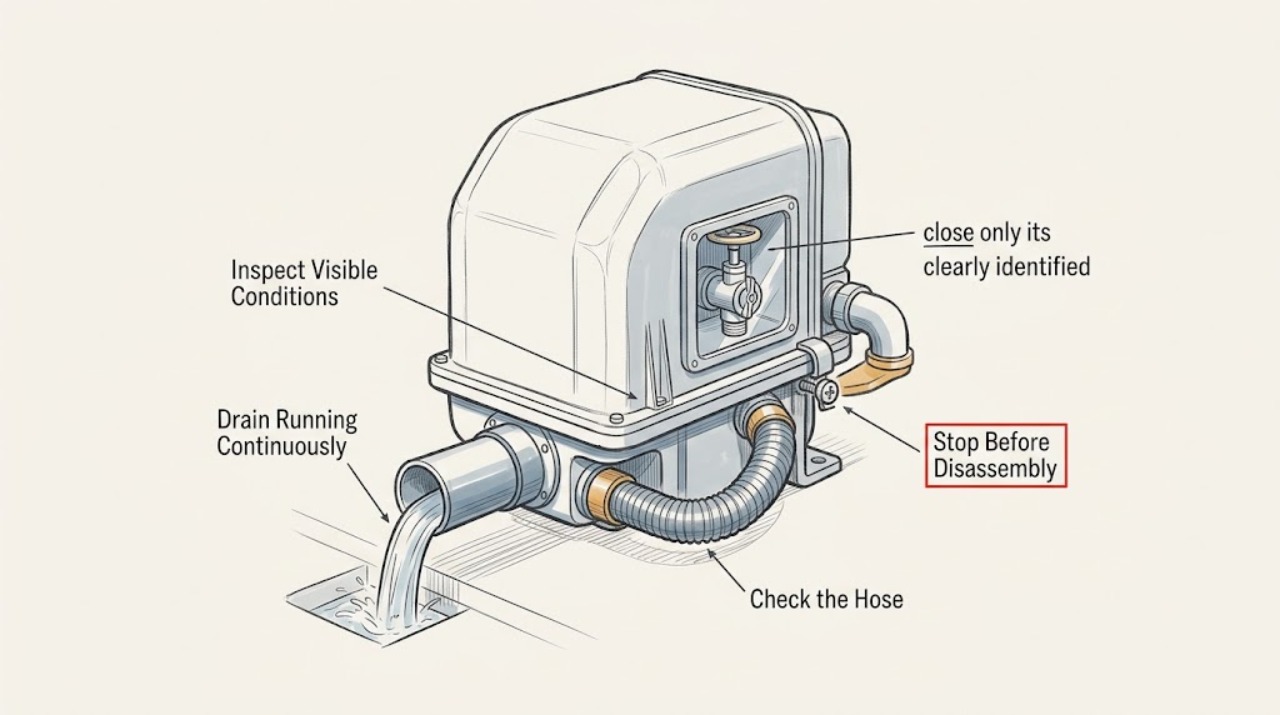
A drain does not create water by itself, so continuous flow usually means a fixture, appliance discharge, overflow line, or hidden plumbing leak is feeding it. Turn off unnecessary water use, verify whether the water meter still shows flow, and trace the source without opening concealed or pressurized plumbing. A toilet valve or flapper, water heater relief discharge, water softener, HVAC condensate, or supply-line leak each needs a different next step; if the source cannot be isolated safely, call a qualified plumber.
Work through in order
Diagnostic checks
Use only checks that match the exact appliance or system and its official guide.
-
Check 1
Stop faucets, toilets, appliances, and irrigation that can be safely paused, then look at the home's water-meter leak indicator while no one is using water.
Expected result: The meter indicator stops or only moves slightly, or it spins continuously despite all normal water use being off.
Next step: If the meter keeps moving, trace accessible fixtures and valves one at a time; if you cannot identify the source, call a qualified plumber rather than opening concealed plumbing.
Why this matters
Why: No continuing meter flow suggests the drain may be receiving an intentional or intermittent discharge; continuous meter flow confirms water is being used or lost somewhere in the plumbing system.
-
Check 2
Listen to and visually check accessible toilets, faucets, exposed pipes, water-heater connections, water-softener discharge, HVAC drain lines, and exterior hose connections for sound, drips, or a discharge stream.
Expected result: The sound or water is clearly coming from one fixture or discharge line, or no accessible source is active.
Next step: Document the source and use only an identified local shutoff if it operates normally; stop and arrange professional service if the source is hidden, pressurized, or cannot be isolated.
Why this matters
Why: A confirmed source narrows the next step to that fixture or appliance; no accessible source with continuing flow raises the likelihood of a concealed pipe, valve, or underground service-line leak.
-
Check 3
If a toilet is the suspected source, close only its clearly identified local supply valve if it turns normally, then watch the bowl and the water meter without flushing.
Expected result: The continuous drain sound or meter movement stops after the toilet is isolated, or it continues unchanged.
Next step: Leave the isolated toilet unused and arrange a plumber or replace only the confirmed compatible valve or flapper; do not force the valve or remove the tank hardware if it is corroded.
Why this matters
Why: A stop after isolation points to the toilet's fill valve, flush valve, or flapper path; continued flow means the toilet was not the source or another leak is also present.
-
Check 4
Check whether the flow coincides with a water-softener cycle, HVAC operation, water-heater discharge, or another appliance cycle, and inspect the accessible end of its drain tube for a steady stream or leak.
Expected result: The drain runs only during an expected cycle, runs while the equipment is idle, or the discharge line is wet at a connection or valve.
Next step: Record the equipment state and timing; use the appliance's identified isolation or bypass only as directed by its instructions, and call a qualified technician or plumber if flow is continuous or the source is uncertain.
Why this matters
Why: Cycle-limited flow may be intentional, while continuous or idle flow can indicate a stuck valve, failed control, relief discharge, or appliance plumbing fault that needs the equipment's service guidance.
-
Check 5
Inspect accessible basement, crawl-space, cabinet, and floor areas near the drain for wet spots, staining, damaged materials, or water near electrical equipment, without entering unsafe standing water.
Expected result: The surrounding area is dry, has a localized drip or stain, or contains spreading water, sewage, mold, or wet electrical equipment.
Next step: Photograph the area and call a qualified plumber; leave the area and avoid wet electrical equipment or contaminated water until it is made safe.
Why this matters
Why: A localized dry or damp point can help map a concealed leak, while spreading or contaminated water indicates a property and health hazard beyond a simple continuously running fixture.
Use your observations
Decision map
Find the observation that best matches what you see, then follow the next safe action.
-
PATH 01Next step
What you see
The meter stops and the drain flows only during a known appliance or equipment cycle.
Do this next
Treat the flow as potentially intentional, compare it with the appliance instructions, and arrange service if the amount, timing, or discharge changes or continues while the equipment is idle.
-
PATH 02Next step
What you see
The meter keeps moving and isolating an identified toilet or fixture stops the drain flow.
Do this next
Leave that fixture isolated if safe and have its fill valve, flush valve, flapper, faucet, or supply connection repaired with a compatible component; do not replace unrelated drain parts.
-
PATH 03Next step
What you see
The meter keeps moving after accessible fixtures are checked, or water is found behind a wall, under a floor, or in a crawl space.
Do this next
Treat it as a concealed or service-line leak and call a qualified plumber; use the main shutoff only if it is clearly identified and can be operated safely.
-
PATH 04Next step
What you see
The flow is sewage, the area is flooded, water is near electrical equipment, or the source cannot be isolated without opening a pressurized fitting.
Do this next
Leave the affected area, keep people and pets away, avoid wet electrical equipment, stop water use, and obtain urgent qualified plumbing and safe-cleanup help.
Helpful context
Understand the symptom
What continuous drain flow tells you
If water is visibly or audibly entering a drain when no one is using a fixture, the first question is where that water originates. A toilet tank can quietly leak into its bowl, a water softener can send discharge to a drain, a relief or condensate line can be flowing as designed or because of a fault, and a supply leak can run into an inaccessible drain or floor area. The drain is often only the place where the symptom becomes visible.
Start with isolation, not a replacement part
Stop optional water use and check whether the home's water meter still registers flow. Then inspect accessible fixtures and exposed pipes one at a time. A local shutoff that stops the meter or the drain flow identifies a useful branch, but do not force an unknown valve, open a pressure-relief fitting, or dismantle a drain to chase the sound.
When the drain is carrying intentional discharge
Some equipment is designed to send water to a drain during a cycle, so note whether flow starts only during a water-softener regeneration, HVAC condensate event, or another appliance operation. Flow that never stops, occurs when the appliance is idle, or is accompanied by a leak, overflow, or unusual noise needs the appliance or plumbing inspected rather than assumed to be normal.
Protect against hidden damage
Look for damp flooring, staining, dripping exposed pipes, wet crawl-space or basement areas, and an unexpectedly moving meter. Water can travel away from the original leak and develop behind walls or under floors. If the flow is large, the water is contaminated, or electrical equipment is wet, leave the area and obtain prompt professional help.
Only after diagnosis
Potential parts
- toilet fill valve or flush flapper
Consider this only when isolating a clearly identified toilet stops the continuous drain flow and inspection confirms a valve or flapper leak; it is not a general drain repair part.
Match the toilet's make, model, valve arrangement, and installation instructions before ordering; do not force a corroded shutoff or tank fitting.
When checks do not resolve it
Need a professional?
Call when flow is continuous or unexplained, returns after a local isolation, reaches hidden building areas, or involves sewage, electrical hazards, or a difficult fitting.
Have this ready
- Provide the meter behavior, suspected source, fixture isolation results, cycle timing, drain location, photographs of wet areas, water type, and any property or electrical damage.
Common questions
FAQ
Why is water running into a drain when no faucet is on?
The drain may be receiving flow from a leaking toilet valve or flapper, a water softener or HVAC discharge, a water-heater relief line, or a hidden plumbing leak. Check the meter and accessible fixtures first; the drain itself is usually only the visible destination.
How do I know whether the flow is an appliance cycle or a leak?
Record whether flow starts and stops with the equipment's normal cycle. Flow only during a known cycle may be intentional; flow while the equipment is idle, continuous flow, or a wet connection needs appliance or plumbing diagnosis.
When should I stop checking and call a plumber?
Call when the meter keeps moving with all fixtures off, the source is concealed, water is spreading or contaminated, a relief or pressurized fitting is involved, or water is near electrical equipment. Do not force shutoffs or dismantle plumbing to find the sound.
Read the exact guide
Official sources
- Leak Detection and Water UseCity of Greensboro Water Resources · Homes with unexplained water use, damp areas, or continuous appliance and plumbing discharge
- How do I check for leaks in my home?Town of Wilmington, Massachusetts Water & Sewer Division · Residential plumbing leaks that may be visible, intermittent, or hidden behind walls
- Sanitary Sewer Overflows (SSOs)U.S. Environmental Protection Agency · Sewage or wastewater overflowing into homes or the environment
- Leak InvestigationCity of Oak Harbor, Washington · Homes with unexplained continuous water flow or a moving water-meter leak detector
- Prevent Blocked DrainsCity of Tampa Wastewater Department · Residential drain blockages, backups, and overflows
- Sewer Smarts and Plumbing BasicsCity of Superior, Wisconsin · Residential plumbing systems where a drain or fixture appears to run continuously
Community feedback
Share a repair observation
Share a plain-text repair observation. Accepted observations are published automatically; this page may take a moment to update.