
On this page
Start here
Quick answer
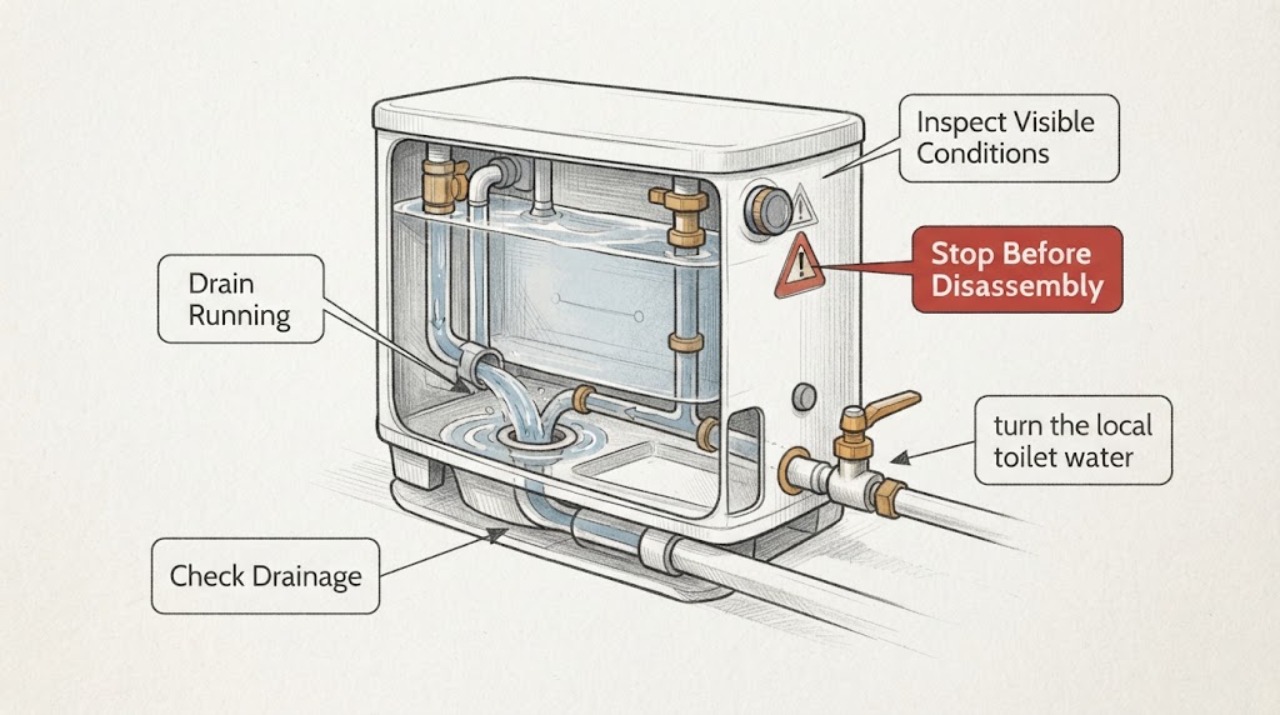
The wording drain running most often describes water continuously passing through a toilet from the tank to the bowl, commonly because the tank seal or flapper does not close. Confirm the source before changing a part: listen and look for flow in the toilet tank, a water stream over the overflow tube, or a dye trail from the tank into the bowl. Turn off the toilet's local water valve if the bowl is rising or the flow cannot be controlled, and never force a stuck valve. If the water is coming from a buried drain, a pipe joint, a cleanout, or sewage backup rather than a toilet tank, this is a different plumbing fault and needs a plumber. A worn seal, damaged seat, fill valve, chain, or overflow setting may require model-specific repair.
Work through in order
Diagnostic checks
Use only checks that match the exact appliance or system and its official guide.
-
Check 1
Locate the sound and visible water without touching contaminated water: check whether the flow is inside one toilet tank and bowl, at an exposed supply connection, at a floor or cleanout, or from a buried or outdoor drain path.
Expected result: Only one toilet makes a refill sound or shows water entering its bowl, or water is instead appearing at a pipe, cleanout, floor drain, yard, or more than one fixture.
Next step: For a toilet-only pattern, continue with the tank checks. For any external, sewage, buried-line, or multi-fixture pattern, reduce water use, keep away from contaminated water, and call a licensed plumber.
Why this matters
Why: A one-toilet refill pattern fits a tank seal or fill-control problem. A pipe, cleanout, sewage, or multi-fixture pattern is not established as a tank-seal issue.
-
Check 2
If the bowl is rising or the toilet cannot stop filling, turn the local toilet water valve clockwise only until flow stops if it moves normally; do not force a seized valve. Keep the floor dry and do not use the toilet until the cause is identified.
Expected result: The valve stops the refill and the tank remains stable, or the valve will not turn, the connection leaks, or water continues despite the valve being closed.
Next step: If the valve cannot safely stop water, close the home's main water shutoff only if it is safely accessible and arrange a plumber. Do not use tools to force a valve or reach through sewage.
Why this matters
Why: A working local shutoff can limit water damage while a toilet issue is investigated. A seized valve, leaking connection, or uncontrolled flow needs professional attention rather than force.
-
Check 3
With the water supply controlled and the tank area dry, lift the tank lid and observe the water level, the overflow tube, the flush-valve seal or flapper, and the chain or handle linkage without pulling parts apart.
Expected result: Water is visibly flowing over the overflow tube, the flapper is not seated, the chain is tangled or too tight, the handle is held down, or the tank water is quiet but a refill sound returns periodically.
Next step: Correct only a plainly loose or tangled external linkage if it moves freely and the exact toilet instructions allow it. Do not bend an unknown float or dismantle the flush valve; continue with the dye test or call a plumber if the cause is unclear.
Why this matters
Why: Overflow points toward fill-valve, float, or water-level control. A seal that does not seat or a chain that holds it open points toward the tank seal or linkage. Periodic refilling with no visible overflow is consistent with a quiet seal leak.
-
Check 4
For a quiet or periodic leak, place a few drops of food coloring or a dye tablet in the toilet tank and wait without flushing, following the EPA WaterSense test interval; then inspect the bowl for color and flush afterward.
Expected result: Color appears in the bowl, or no color appears while the tank still overflows or the fixture continues refilling.
Next step: If color appears, turn off the local supply and have the correct seal or flapper replaced according to the toilet's model information. If there is no color but overflow continues, have a plumber inspect the fill control and overflow setting. Flush after the test to avoid staining.
Why this matters
Why: Color in the bowl confirms water is crossing the tank seal or flush valve. No color makes a tank-to-bowl seal leak less likely and shifts attention toward the fill valve, overflow level, handle, or another water source.
-
Check 5
Compare the old seal or flush-valve assembly with the toilet model information only after the water is off and the tank is empty enough for safe work; check for a deteriorated seal, mineral buildup, damaged seat, or a chain that prevents closure without scraping or forcing the valve.
Expected result: The seal is cracked, hardened, warped, mineral-coated, or the seat is damaged; alternatively the seal looks intact but the fill valve or overflow remains the source of flow.
Next step: Use the toilet model and the old part to identify a compatible seal, or have a plumber replace the seal, seat, flush valve, or fill valve. Do not rely on an unverified universal part or alter the water level beyond the manufacturer's guidance.
Why this matters
Why: A worn seal can cause continuous or silent leakage, but not every running toilet uses the same flapper or flush-valve design. A failed fill control requires a different part and adjustment.
-
Check 6
After one model-appropriate seal or linkage correction, observe one refill and verify that the bowl is not receiving a continuous stream and that no water is escaping onto the floor or into a hidden drain path.
Expected result: The refill stops normally and the bowl remains quiet, or the toilet continues running, leaks at the tank or supply connection, backs up, or the original sound came from outside the toilet.
Next step: For continued or external symptoms, leave the local water supply off when safe and call a licensed plumber. Request inspection of the toilet, branch drain, building drain, or sewer connection as the observations require.
Why this matters
Why: A stable post-repair refill supports a resolved tank-seal or linkage problem. Continued running, external leakage, backup, or a different source means the first diagnosis was incomplete or another plumbing defect is present.
Use your observations
Decision map
Find the observation that best matches what you see, then follow the next safe action.
-
PATH 01Next step
What you see
Water is rising in the bowl, the tank is overflowing, or water is escaping onto the floor
Do this next
Close the local water valve if it turns safely, stop using the fixture, keep clear of contaminated water, and call a licensed plumber if flow cannot be controlled.
Why this path and its safety boundary
Why it matters: Immediate water-damage or contamination control is needed
-
PATH 02Next step
What you see
Only one toilet periodically refills and dye from the tank reaches the bowl
Do this next
Use the toilet model information to identify the seal or have a plumber replace and verify it; do not assume every toilet uses the same part.
Why this path and its safety boundary
Why it matters: A leaking tank seal or flush-valve seal is likely
-
PATH 03Next step
What you see
The tank water rises into the overflow tube and dye does not reach the bowl
Do this next
Stop the supply when safe and arrange a plumber or follow only the exact toilet manufacturer's adjustment instructions.
Why this path and its safety boundary
Why it matters: Fill valve, float, water-level setting, or overflow control is more likely than the tank seal
-
PATH 04Next step
What you see
Water or odor appears at a drain, cleanout, floor, yard, buried pipe, or several fixtures
Do this next
Reduce water use, avoid sewage or contaminated water, do not open the cleanout or dig, and call a licensed plumber or local wastewater utility as appropriate.
Why this path and its safety boundary
Why it matters: This does not match a simple toilet tank-seal leak
-
PATH 05Next step
What you see
The valve is seized, the tank or bowl is cracked, a supply connection leaks, or the leak returns after a seal correction
Do this next
Keep the supply isolated when safe and have a licensed plumber inspect and repair the fixture or line.
Why this path and its safety boundary
Why it matters: A fixture, connection, or plumbing repair exceeds a simple observation
Helpful context
Understand the symptom
First confirm what is actually running
A toilet that keeps refilling is different from wastewater moving through a drain, a leaking supply connection, or a buried sewer line. Start with the sound and the source: open the toilet tank lid only if the area is dry and safe, and look for water entering the bowl or overflow tube. If the water is sewage, appears at a cleanout, or comes from a hidden pipe, stop treating it as a tank-seal problem.
A tank seal leak and a fill-valve problem look different
A worn or misaligned flapper lets tank water escape into the bowl, causing the fill valve to run again. A fill valve or float problem can instead keep adding water until it reaches the overflow tube. The observation that changes the next step is whether water is crossing the flush-valve seal into the bowl or rising too high in the tank.
Use a dye test for a quiet leak
When there is no obvious stream, a few drops of food coloring or a dye tablet in the tank can reveal a seal leak. Do not flush during the test. Color appearing in the bowl means water crossed the tank-to-bowl seal; flush afterward so the dye does not stain the fixture.
Do not turn a simple leak into a water or sewage incident
Close the local toilet valve when flow is uncontrolled, the bowl is rising, or a tank component has broken. Do not force a stuck valve, use chemical drain cleaner, remove a pressurized cleanout, or enter contaminated water. A leak outside the toilet or any sewage backup belongs with a licensed plumber.
Safety boundary
Stop conditions
- Close the local toilet water valve and stop using the fixture if the bowl rises, the tank overflows, or water reaches the floor; do not force a seized valve.
- Keep away from sewage, contaminated water, unstable flooring, and any wet area near electrical equipment.
- Do not open a pressurized cleanout, pour chemical drain cleaner into the fixture, dig, enter an excavation, or dismantle a buried or shared drain line.
- Stop if the tank, bowl, supply connection, or shutoff valve is cracked, damaged, hot, or leaking uncontrollably.
- Stop the DIY path when the source is outside one toilet, several fixtures are affected, or running continues after one model-appropriate seal or linkage correction; call a licensed plumber.
Only after diagnosis
Potential parts
- toilet tank flapper or flush-valve seal
Relevant only when the dye test or direct observation confirms water crossing the tank-to-bowl seal and the correct toilet design is identified.
Confirm the toilet model, seal shape and size, chain or float arrangement, and manufacturer fit information before selecting a replacement. - toilet fill valve or float assembly
Relevant only when water rises into the overflow tube or a qualified inspection identifies the fill-control system as the source of continuous flow.
Use the toilet model and manufacturer instructions; water-level adjustment and replacement must not defeat overflow protection. - flush-valve seat or overflow-tube assembly
Consider only if a new correctly identified seal does not stop a confirmed tank-to-bowl leak and inspection finds a worn seat or assembly.
This may require fixture-specific work; have a plumber confirm fit, tank design, and safe replacement method.
When checks do not resolve it
Need a professional?
Call a licensed plumber when the running water is not clearly coming from one toilet tank, when sewage backs up or appears at a drain or cleanout, when multiple fixtures are affected, when the local shutoff is seized or leaking, when the tank or bowl is damaged, or when the toilet continues running after one model-appropriate seal or linkage correction.
Common questions
FAQ
Does drain running usually mean a toilet tank seal is leaking?
It can, if one toilet keeps refilling or water quietly moves from its tank to the bowl. Confirm the source first; a cleanout, buried pipe, sewage backup, or multiple fixtures indicates a different plumbing problem.
How can I tell whether a toilet flapper is leaking?
Add dye to the tank without flushing and inspect the bowl after the EPA WaterSense test interval. Color in the bowl confirms water crossed the tank-to-bowl seal. Flush afterward to avoid staining.
What if water is flowing over the overflow tube?
That points more toward a fill valve, float, or water-level problem than a tank seal. Turn off the local supply if safe and follow the exact fixture instructions or call a plumber.
Should I use a universal toilet seal?
Do not assume compatibility. Use the toilet model and the old seal or have a plumber identify the correct flush-valve design, size, chain, and float arrangement.
What if the running water comes from a drain or cleanout?
That is not a simple toilet tank-seal diagnosis. Reduce water use, keep away from sewage or contaminated water, do not open the cleanout or dig, and call a licensed plumber or local wastewater utility.
When is a running toilet an urgent plumbing issue?
Treat a rising bowl, overflowing tank, uncontrolled water, cracked fixture, sewage backup, water near electrical equipment, or a seized shutoff as urgent. Isolate water only when safe and obtain qualified help.
Read the exact guide
Official sources
- Septic Systems - What to Do after the FloodU.S. Environmental Protection Agency · Official EPA guidance used only for sewage, flooded electrical equipment, contaminated water, and non-household drain-system safety boundaries; it is not a toilet-tank diagnosis.
- WaterSense Labeled Homes Technical Sheet: Free of Water LeaksU.S. Environmental Protection Agency WaterSense · Official EPA technical sheet used for the tank dye-test sequence and interpretation; household repairs still require model and local plumbing judgment.
- Residential ToiletsU.S. Environmental Protection Agency WaterSense · Official EPA product and maintenance information used to explain the role of the flapper or valve seal and the need for model-specific fit.
- Fix a Leak WeekU.S. Environmental Protection Agency WaterSense · Official EPA guidance used for tank dye testing, flapper or valve-seal leakage, model-fit caution, and plumber escalation.
- Water Efficiency Management Guide Bathroom SuiteU.S. Environmental Protection Agency WaterSense · Official EPA guide used for distinguishing overflow, fill-valve, flapper, and flush-valve-seat causes; exact fixture instructions take precedence.
- Home MaintenanceU.S. Environmental Protection Agency WaterSense · Official EPA guidance used for overflow observation, dye testing, seal leakage, and contacting a local plumber for unresolved running toilets.
Community feedback
Share a repair observation
Share a plain-text repair observation. Accepted observations are published automatically; this page may take a moment to update.