
On this page
Start here
Quick answer
If a drain is clogged and the home uses a septic tank, first determine whether one fixture is affected or several drains are slow or backing up. Reduce water use and keep people and pets away from sewage. Do not open the septic tank, enter a tank, walk on a saturated drainfield, pour caustic drain opener into the system, or try to force a whole-house blockage through the plumbing. Several slow fixtures, gurgling, sewage odors, standing water near the tank or drainfield, or a recent missed pump-out point to septic service rather than a quick sink fix. EPA recommends professional septic inspection and pumping on a maintenance schedule, with the exact interval depending on the system and household.
Work through in order
Diagnostic checks
Use only checks that match the exact appliance or system and its official guide.
-
Check 1
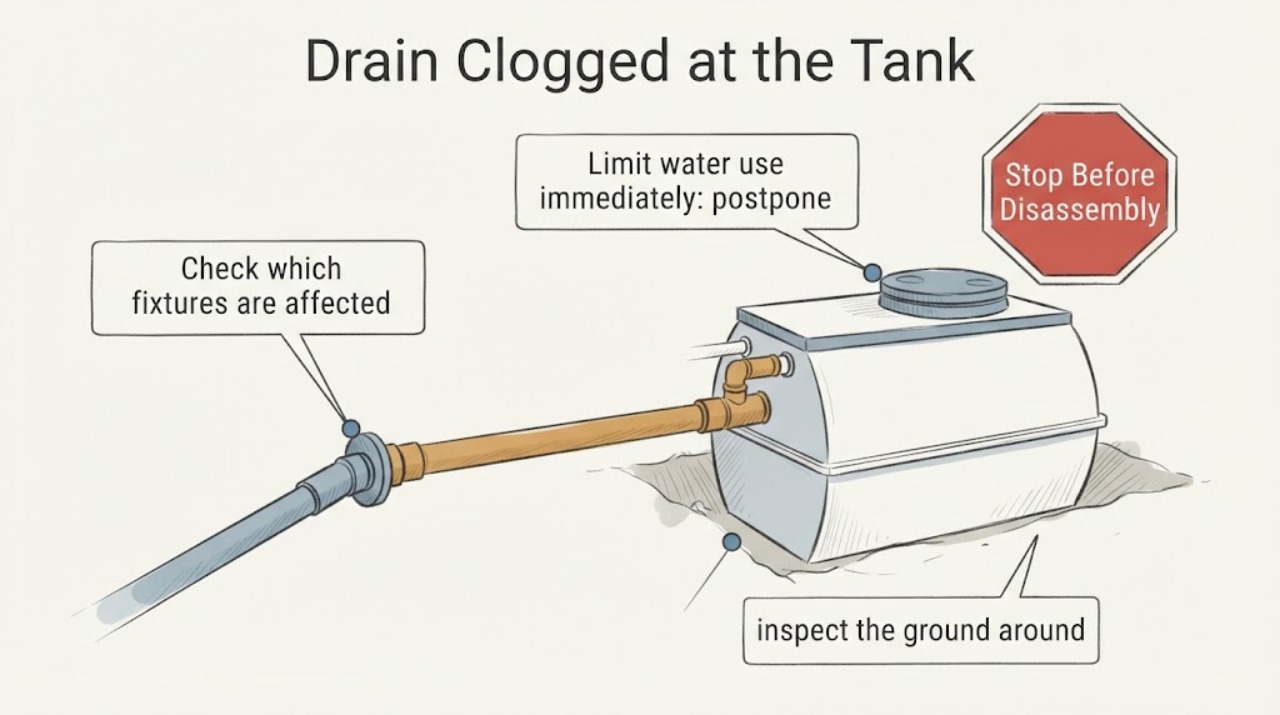
Check which fixtures are affected without repeatedly flushing or running water: one sink or shower, a toilet, or several drains and toilets. Note gurgling, water rising in another fixture, or wastewater returning through a floor drain.
Expected result: Only one fixture is slow; or multiple fixtures are slow, gurgling, or backing up together.
Next step: Stop adding water for a multi-fixture backup and arrange plumbing or septic service. For one fixture with no sewage exposure, use only a safe, fixture-appropriate check permitted by local guidance; escalate if it does not clear promptly.
Why this matters
Why: A single-fixture pattern can be local to that fixture or branch line. A whole-house pattern suggests a downstream building drain, septic tank outlet, pump, or drainfield problem and should not be treated as a simple sink clog.
-
Check 2
Limit water use immediately: postpone laundry, showers, dishwasher cycles, and unnecessary flushing. Keep all affected fixtures closed or unused and place a visible warning so nobody adds more wastewater by mistake.
Expected result: The backup stops when water use stops; or wastewater continues rising or reappears without new water use.
Next step: Keep the system out of service and call a qualified plumber or septic professional. Do not try to dilute, flush through, or pressure-wash the blockage from inside the home.
Why this matters
Why: A tank or drainfield with limited capacity can worsen when more water enters. Continued rise without new use may indicate a severe blockage, surcharge, or structural issue that needs urgent professional attention.
-
Check 3
From a safe distance, inspect the ground around the septic tank and drainfield for standing water, damp or spongy patches, sewage odor, unusually green growth, or an exposed discharge. Do not open a lid, probe the soil, walk across saturated ground, or touch wastewater.
Expected result: The area is dry and shows no sewage sign; or wet ground, odor, surfacing wastewater, or unusually lush growth is present.
Next step: Keep people and pets away from any affected area and arrange septic inspection. If wastewater is surfacing or has entered the home, contact the local health or environmental authority for cleanup guidance.
Why this matters
Why: Wet or odorous ground near the tank or drainfield can indicate hydraulic failure or an overloaded/blocked system. A clean-looking yard does not rule out a buried tank or pipe blockage.
-
Check 4
Review the septic maintenance record without opening the tank: find the last professional inspection and pump-out date, household water-use changes, additions to the home, recent heavy rain, and any recent drain or plumbing work.
Expected result: The tank is overdue or maintenance history is unknown; household water use changed; or maintenance is current and the clog appeared suddenly.
Next step: Give the records and timing to a septic professional. Do not choose a tank additive or chemical cleaner as a substitute for inspection and pumping.
Why this matters
Why: Solids can migrate from an inadequately maintained tank into the drainfield and clog the system. A current tank can still have a blocked pipe, pump, outlet, or drainfield, so a recent pump-out does not prove the system is clear.
-
Check 5
Stop and inventory anything recently poured or flushed: grease, wipes, paper towels, chemicals, paint, solvents, pharmaceuticals, or a large amount of food waste. Do not add a caustic drain opener to a septic-connected drain.
Expected result: Prohibited or heavy waste entered the system; a drain chemical was already used; or only normal wastewater and toilet paper were used.
Next step: Tell the plumber or septic professional exactly what entered the drain and keep the product container available. Do not mix or neutralize chemicals yourself; follow the product label and professional safety instructions.
Why this matters
Why: Non-decomposing solids can clog pipes and drainfields, while harsh chemicals can harm the biological treatment process and create a hazard for anyone opening the system later.
-
Check 6
Prepare the service report with the affected fixtures, time of onset, standing-water or odor observations, water-use and weather changes, maintenance history, and any chemical or foreign material that may have entered the drain. Include whether the property has a pump tank or alarm.
Expected result: The pattern is localized and dry, or the issue involves several fixtures, a septic alarm, surfacing wastewater, or an indoor backup.
Next step: Use a licensed or otherwise qualified local plumbing/septic professional and follow local permitting or health-department requirements. Keep the system unused until the cause and safe operating condition are confirmed.
Why this matters
Why: These details help separate an indoor branch blockage from a tank, pump, outlet, or drainfield malfunction and help the professional plan safe containment.
Use your observations
Decision map
Find the observation that best matches what you see, then follow the next safe action.
-
PATH 01Next step
What you see
Only one sink or fixture is slow, with no sewage odor, floor-drain backup, or effect on other fixtures.
Do this next
Treat it as a possible local fixture or branch-line clog and use only a safe, fixture-appropriate method. Call a plumber if it does not clear or if another fixture becomes affected.
-
PATH 02Next step
What you see
Several drains, toilets, or tubs are slow, gurgling, or backing up together.
Do this next
Stop water use and arrange qualified plumbing/septic service. Do not keep flushing or pour chemical opener into the system.
-
PATH 03Next step
What you see
Standing water, damp or spongy soil, sewage odor, or surfacing wastewater appears near the tank or drainfield.
Do this next
Keep people and pets away, avoid contact, reduce water use, and arrange professional septic inspection. Contact the local health or environmental authority if sewage has surfaced or entered the home.
-
PATH 04Next step
What you see
The tank has not been inspected or pumped on a known schedule, or solids may have migrated toward the drainfield.
Do this next
Arrange a septic professional to inspect and determine whether pumping, outlet work, or drainfield evaluation is needed. Do not open or enter the tank yourself.
-
PATH 05Next step
What you see
A caustic cleaner, solvent, grease, wipes, or other prohibited material was recently added.
Do this next
Stop adding products, keep the area ventilated only if safe, retain the product information, and tell the professional before any work. Never mix cleaners or attempt a chemical neutralization.
Helpful context
Understand the symptom
One fixture or the septic system?
A single slow sink can be a local trap or branch-line obstruction. When toilets, tubs, showers, or several sinks are slow at once, the restriction may be farther downstream or at the septic tank, outlet, distribution area, or drainfield. The pattern matters more than the nearest puddle. Avoid sending more water into a system that may already be overloaded.
Sewage is a health hazard
Backed-up wastewater can contain harmful pathogens. Keep children and pets away, avoid skin or splash contact, and stop cleanup if sewage has reached living areas or electrical equipment. A septic professional or local health authority can specify safe containment and cleanup for the site.
Safety boundary
Stop conditions
- Stop using affected fixtures for sewage backing up into the home, wastewater surfacing outdoors, a septic alarm, or multiple fixtures backing up together.
- Do not touch sewage, enter or open a septic tank, lean over an opening, walk on saturated drainfield soil, or attempt a DIY tank or drainfield excavation.
- Do not pour caustic drain opener, solvents, grease, or unapproved additives into a septic-connected drain, and never mix cleaning products.
Only after diagnosis
Potential parts
- septic tank effluent filter
Consider only after a qualified septic professional confirms that an installed filter is blocked or damaged and is the cause of the downstream restriction.
Tank and filter designs vary. Confirm the tank system, local requirements, and professional diagnosis before ordering or accessing any component. - septic pump or float-control component
Consider only when a professional confirms that a pump-tank system is not transferring effluent because of a failed pump, float, or control.
Electrical and wastewater equipment require qualified service; do not open the tank or test wiring from a clogged-drain symptom alone. - building drain or septic outlet pipe section
Consider only if inspection or camera evidence confirms a collapsed, displaced, or blocked pipe section rather than a fixture clog or full tank.
Pipe materials, access, permits, and local codes must be confirmed by the plumbing or septic professional.
When checks do not resolve it
Need a professional?
Call a qualified plumber or septic professional when multiple fixtures are affected, a tank or drainfield sign appears, the blockage returns, the maintenance history is overdue or unknown, an alarm is active, or wastewater has entered the home or surfaced outdoors.
Common questions
FAQ
How can I tell if a clogged drain is a septic tank problem?
Several slow or backing-up fixtures, gurgling, sewage odor, standing water, or damp soil near the tank or drainfield point toward a broader septic issue. One isolated sink is more likely to be local, but it still needs service if it persists.
Should I use chemical drain opener when I have a septic tank?
Do not pour caustic drain opener, solvents, grease, or unapproved additives into a septic-connected drain. Tell the professional if a product was already used and do not mix cleaners.
What should I do if sewage backs up into the house?
Stop water use, keep people and pets away, avoid contact with wastewater, and call a qualified professional. Contact the local health or environmental authority for cleanup guidance when sewage has entered living areas.
Can I open the septic tank to clear the clog?
No. Do not open or enter the tank or lean over an opening. Tank inspection, pumping, outlet checks, and drainfield evaluation belong to qualified septic professionals.
Read the exact guide
Official sources
- Resolving Septic System MalfunctionsU.S. Environmental Protection Agency · Septic malfunction signs, sewage-backup safety, inspections, pumping, and professional response
- How to Care for Your Septic SystemU.S. Environmental Protection Agency · Septic tank inspection/pumping, water-use, waste-disposal, drain-opener, and drainfield-care guidance
Community feedback
Share a repair observation
Share a plain-text repair observation. Accepted observations are published automatically; this page may take a moment to update.