
On this page
Start here
Quick answer
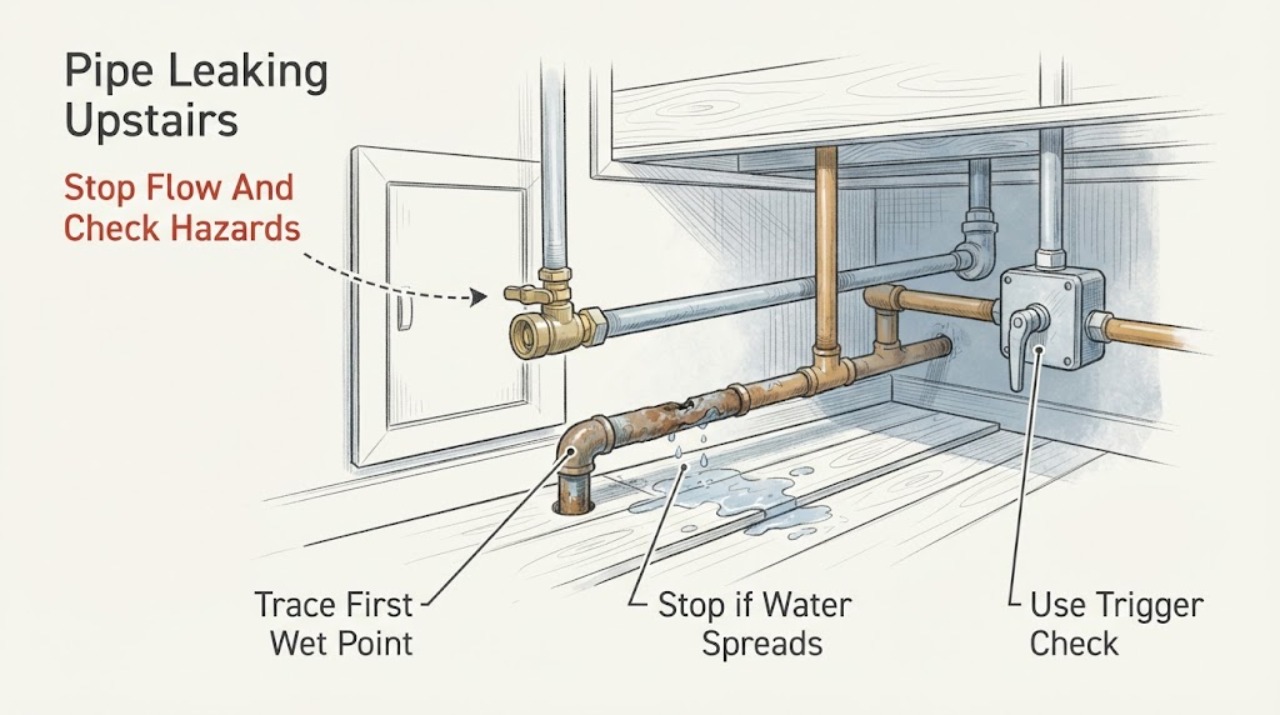
An upstairs leak in an old house may be a pressurized supply pipe that leaks continuously, a drain that leaks only when a fixture runs, a bathroom or heating line, a roof or wall leak, or water traveling from another level. Stop using the affected fixture and close the nearest clearly labeled water shutoff from a dry, safe position if the flow is active. Do not open a wall or ceiling, walk on a soft floor, loosen a pipe under pressure, or use electrical equipment in a wet area. If water is near wiring, a ceiling is bulging, the floor is soft, the water is hot or dirty, or gas or carbon-monoxide symptoms are present, leave the area and use qualified emergency help. In an old house, record visible pipe material and corrosion without disturbing it; a plumber should trace the first wet point before any repair.
Work through in order
Diagnostic checks
Use only checks that match the exact appliance or system and its official guide.
-
Check 1
Stop using the upstairs fixture and any connected water appliance. From a dry position, note whether the water is cool, hot, clear, or dirty and whether it is a drip, steady stream, or rapid flow. Look for water near lights, outlets, appliances, or a gas-fired appliance without touching them.
Expected result: The flow is rapid or hot, the water is dirty, a ceiling or floor is swelling or soft, or water is near electrical or fuel equipment; or the area remains dry and stable.
Next step: If the correct water shutoff is clearly labeled and reachable without crossing water, close it. Otherwise keep out of the area and call qualified emergency help from a safe location.
Why this matters
Why: Rapid, hot, dirty, structural, electrical, or fuel-related signs can turn a plumbing diagnosis into an emergency. A small cool leak in a stable dry area permits only limited external observation.
-
Check 2
After the affected fixture is idle and no water is being added, note whether the drip continues. Record which event preceded it: no use, a shower or bath, a toilet flush, a sink discharge, heating operation, or rain. Do not deliberately run water to reproduce an active leak.
Expected result: The leak continues with no water use, appears only after a particular fixture drains, follows heating operation, or follows rainfall.
Next step: Keep the triggering fixture out of service and give the timing to the plumber. Arrange a roofing or heating professional as well when the evidence points outside ordinary plumbing.
Why this matters
Why: A continuous leak favors a pressurized supply line or stored-water source. A use-triggered leak favors a drain, trap, fixture connection, or appliance discharge. A rain-triggered leak favors the roof, wall, or flashing rather than the pipe itself.
-
Check 3
From stable flooring and without opening the wall or ceiling, inspect visible supply joints, shutoff valves, fixture connections, drain edges, exposed pipe, and the area directly above the drip. Use a dry tissue held at an accessible joint only if the surface is cool and safe; follow the first point that becomes wet.
Expected result: The first wet point is a supply joint, a drain or fixture connection, a visible pipe along the ceiling or wall, a roof or heating route, or cannot be seen.
Next step: Photograph the route and mark the first wet point without removing covers, insulation, trim, or pipe supports. Have a plumber trace hidden sections when the source is not visible.
Why this matters
Why: A supply joint can leak under pressure; a drain connection can leak during use; an unseen source may be behind a finished surface or at another level. The lowest drip is not proof of the failed part.
-
Check 4
From outside the pipe, record visible material and condition such as copper, plastic, galvanized-looking metal, lead-like dull metal, green or white deposits, rust, a pinhole, or a repaired coupling. Photograph markings and joints; do not scrape, sand, cut, heat, solder, or loosen the pipe.
Expected result: The pipe is visibly corroded, patched, discolored, damp at a joint, or its material cannot be identified without disturbing it.
Next step: Tell the plumber the house age if known, the visible material, the first wet point, and whether drinking-water use may be affected. Use an approved water-quality process if lead exposure is a concern.
Why this matters
Why: Corrosion and old piping can contribute to leaks, and disturbing older plumbing can spread debris or create a larger failure. Material uncertainty is a reason for professional assessment, not a reason to choose a generic fitting.
-
Check 5
If a clearly labeled water shutoff is reachable from a dry, stable position, close it and note whether the flow slows. Keep electrical equipment off if it was wet, and do not reopen the supply, remove a ceiling, enter the wall, or use a tool to test the line.
Expected result: The leak slows, stops, or continues after isolation; or the valve is stuck, missing, or not clearly associated with the leaking line.
Next step: Keep the safe isolation in place and call a plumber. Provide the timing, first wet point, pipe material, valve state, photos, and any water, electrical, roof, heating, or fuel clues.
Why this matters
Why: A response supports a pressurized water source but does not identify whether the pipe, fitting, fixture, or hidden branch failed. Continued flow can be stored water, another supply, or a separate source.
Use your observations
Decision map
Find the observation that best matches what you see, then follow the next safe action.
-
PATH 01Next step
What you see
The leak continues while all upstairs fixtures are idle and it slows after a safe water shutoff.
Do this next
Treat a pressurized supply pipe, valve, or hidden branch as likely. Keep water isolated and have a plumber trace the route; do not open the wall or loosen a fitting under pressure.
-
PATH 02Next step
What you see
The leak appears only after a shower, bath, toilet flush, sink discharge, or another fixture drains.
Do this next
Keep that fixture out of service and request plumbing diagnosis of the drain, trap, waste connection, or supply transition. Do not run more water to prove the pattern.
-
PATH 03Next step
What you see
The leak follows rain, heating operation, another upstairs room, or a source above the visible drip.
Do this next
Do not assume the visible pipe is the cause. Keep the affected area dry and stable and coordinate the appropriate plumber, roofing professional, or heating professional.
-
PATH 04Next step
What you see
The visible pipe is old, corroded, patched, lead-like, or too hidden to identify safely.
Do this next
Do not scrape, cut, heat, solder, or select a replacement from appearance alone. Photograph the pipe and have a qualified plumber plan isolation and repair; ask about drinking-water testing when relevant.
-
PATH 05Next step
What you see
The ceiling bulges, the floor is soft, water reaches electrical equipment, hot or dirty water is present, or gas, smoke, flame, or carbon-monoxide symptoms occur.
Do this next
Leave the unstable or contaminated area, keep people away, and use emergency electrical, gas, fire, medical, or plumbing help from a safe location. Do not enter standing water or attempt a ceiling or utility repair.
Helpful context
Understand the symptom
Why an upstairs drip can be misleading
Water often travels along framing, a pipe exterior, insulation, or a ceiling surface before it drips. A supply leak usually continues when no fixture is being used, while a drain or fixture connection often appears only during a shower, bath, toilet flush, or other discharge. Roof water, heating-system water, and a leak from the level above can mimic a plumbing leak. Identify the first wet point from a safe, visible location rather than opening the finished surface.
Old-house materials need a light touch
Older homes may contain corroded metal pipe, lead solder, or other plumbing materials that should not be cut, sanded, heated, or disturbed during a casual inspection. EPA notes that lead can enter drinking water when lead-containing plumbing materials corrode and that older homes are more likely to have lead service materials. Photograph the material and markings and let a qualified plumber plan the repair.
Protect the room below
Water from an upstairs pipe can damage a ceiling, light, insulation, and floor structure before the leak looks large. Keep people away from a sagging or softened surface, and do not puncture a bulge or climb above it to find the source. Contain only a small safe drip from a stable position while the water source is isolated and service is arranged.
Safety boundary
Stop conditions
- Stop and leave the area for a bulging or cracking ceiling, soft floor, unstable plaster, or rapid uncontrolled flow.
- Do not enter standing water or touch wet electrical equipment; keep power off until a qualified electrician inspects it.
- Stop for hot water or steam, sewage or dirty water, gas odor, smoke, flame, or a carbon-monoxide alarm.
- Do not open walls or ceilings, loosen pressurized fittings, scrape old pipe, or disturb suspected lead solder or insulation.
- Do not use electrical tools in the wet area or climb above a leak to inspect it.
Only after diagnosis
Potential parts
- water supply shutoff valve
Consider this category only if inspection confirms that the external isolation valve itself leaks or cannot isolate the affected branch.
Match pipe material, connection type, pressure and temperature rating, access, and local requirements; do not select from the symptom alone. - pipe coupling or repair section
Consider this category only after a qualified plumber identifies a localized pipe failure and confirms that a repair section is suitable for the material and access.
Old pipe material, corrosion, drinking-water use, and hidden access can change the approved repair method; confirm the exact system before any part is chosen.
When checks do not resolve it
Need a professional?
Call a plumber for any upstairs leak whose first wet point is unclear, any continuous supply leak, drain-triggered leak, corroded or old pipe, hidden branch, stuck shutoff, or recurring dampness. Add a roofing or heating professional when rain or heating operation is the trigger. Use emergency electrical, gas, fire, medical, or plumbing help for wet electrical equipment, structural damage, hot or dirty water, rapid flooding, gas odor, smoke, flame, or a carbon-monoxide alarm.
Have this ready
- Report that the leak is upstairs in an old house; state whether it continues with no water use, which fixture or weather event preceded it, the first wet point, flow rate, water temperature and color, visible pipe material or corrosion, valve position, and any ceiling, floor, electrical, heating, or gas clues.
Common questions
FAQ
Why does an upstairs pipe leak show up on the ceiling below?
Water can travel along framing, pipe exteriors, insulation, or a finished ceiling before dripping. The lowest drip may not be the failed part. Trace only visible, stable areas and have a plumber locate hidden sections rather than opening the ceiling yourself.
How can I tell a supply leak from a drain leak?
A supply leak often continues while no fixture is being used; a drain or fixture connection often appears after a shower, bath, toilet flush, or other discharge. Do not run water to reproduce an active leak. Record the timing and let a plumber confirm the source.
Should I repair old pipe myself?
Do not cut, sand, heat, solder, or loosen old pipe during a casual inspection. Older plumbing may be corroded or contain lead solder or other materials that need controlled handling. Photograph the material and have a qualified plumber choose the repair method.
Read the exact guide
Official sources
- Home MaintenanceU.S. Environmental Protection Agency WaterSense · home leak inspection, water-heater leak checks, hot-water safety, and plumber escalation
- What to Do to Protect Yourself From Electrical HazardsCenters for Disease Control and Prevention · wet electrical equipment, standing water, power shutoff, and qualified inspection
- How can lead get into my drinking water?U.S. Environmental Protection Agency · lead in drinking water from older or corroded plumbing materials
- Leak Detection and Flow Monitoring DevicesU.S. Environmental Protection Agency WaterSense · household leak causes, old piping, corrosion, moisture detection, and prompt leak response
Community feedback
Share a repair observation
Share a plain-text repair observation. Accepted observations are published automatically; this page may take a moment to update.