
On this page
Start here
Quick answer
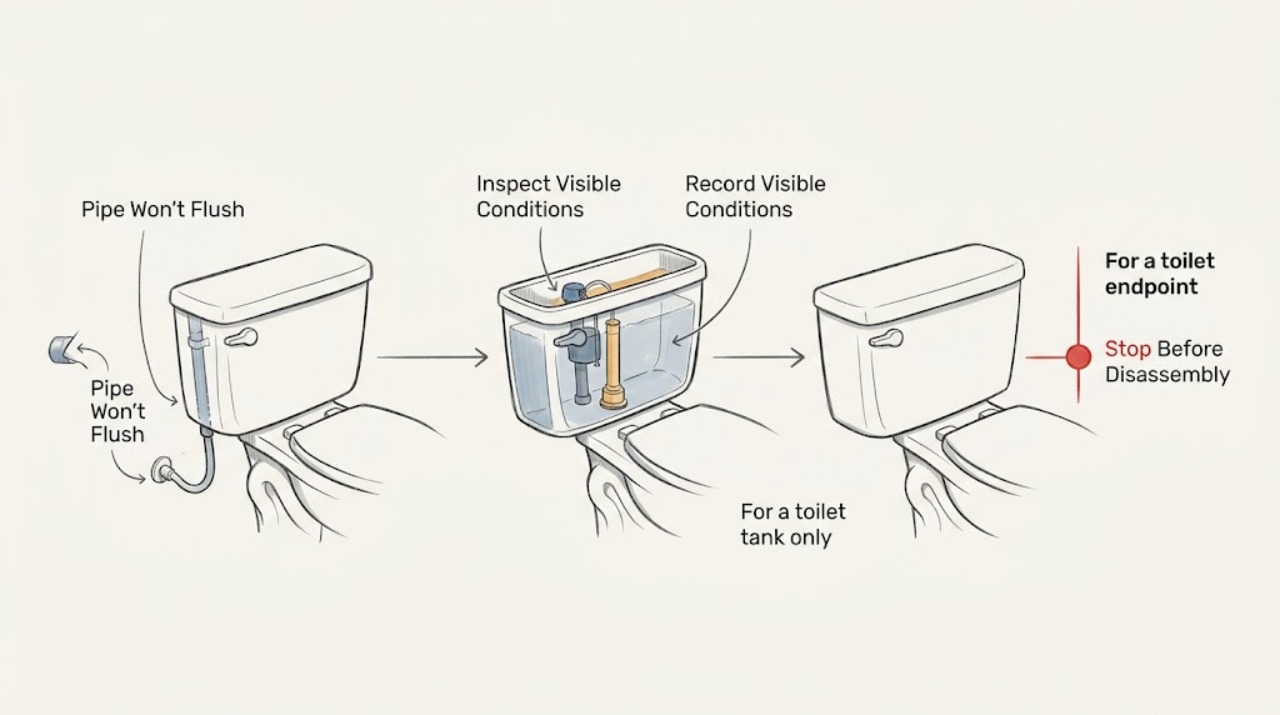
First identify what tank the pipe serves. A toilet tank may not release enough water because its fill level, fill valve, or flapper is wrong; a pipe may also be blocked or unable to carry flow. A septic or holding tank is a different system and should not be opened as a homeowner test. Check the visible tank and fixture state, watch for slow flow or backup at other fixtures, and avoid chemical drain openers. Stop flushing or using water when the bowl or pipe rises, sewage appears, a tank or line is leaking, or water reaches electrical equipment; call a plumber or septic professional for a persistent or wider blockage.
Work through in order
Diagnostic checks
Use only checks that match the exact appliance or system and its official guide.
-
Check 1
Identify the tank and fixture without opening any buried, septic, holding, or pressurized tank. Record whether this is a toilet cistern, a tank serving another fixture, or a storage or septic tank, and describe whether water will not enter, will not leave, or backs up.
Expected result: A toilet tank has a visible lid and flush mechanism; a septic or holding tank is usually outside or below ground and is not a homeowner inspection point. A pipe that will not carry flow is a different problem from a tank that will not refill.
Next step: Follow the toilet-tank branch only if the fixture is a toilet. If the tank is septic, holding, pressurized, or otherwise uncertain, stop at external observations and arrange plumbing or septic service.
Why this matters
Why: Tank type determines the mechanism and safe boundary. DOE describes tank toilets using a flapper and fill valve, while EPA treats septic tank, outlet, drainfield, and backup symptoms as a system-level concern.
-
Check 2
For a toilet tank only, lift the lid when the area is dry and inspect the water level, handle or button movement, visible chain or linkage, flapper position, and whether the fill valve keeps running. Do not force a stuck handle, reach into a pressurized vessel, or remove a valve assembly.
Expected result: A low tank, a flapper that does not lift or reseat, a disconnected linkage, or a fill valve that never shuts off can explain a weak or incomplete flush. A normal tank level with a bowl that rises points away from the tank and toward the trap or drain path.
Next step: Use only the exact toilet instructions for a simple external adjustment. If the tank is normal but the bowl or pipe will not clear, stop flushing and follow the blockage branch.
Why this matters
Why: DOE explains that tank water enters the bowl through a flapper and that the fill valve restores the tank after a flush. A visible tank-side symptom is useful, but it does not prove which replacement part is needed.
-
Check 3
Observe one controlled flow event only if the fixture is not near overflow and no wastewater is present. Watch the bowl, visible drain opening, cleanout area, or receiving fixture from a dry, stable position; note whether water rises, drains slowly, gurgles, returns, or stays at its normal level.
Expected result: A single fixture that rises or drains slowly suggests a local trap or branch restriction. A lower fixture, floor drain, sink, or toilet reacting at the same time suggests a wider drain or main-line issue. No visible backup with a tank that does not refill points back to the fixture mechanism.
Next step: Stop using the affected fixture if water rises or returns. If several fixtures react, stop unnecessary water use and arrange prompt plumbing or septic service rather than adding more water to test the line.
Why this matters
Why: EPA lists slow fixtures, gurgling, sewage backup, damp areas, and odors as signs that a septic or drainage system may be malfunctioning. One clear fixture does not rule out a deeper restriction, but multiple reacting fixtures change the service priority.
-
Check 4
Inspect only accessible, dry pipe connections and the visible fixture area for a loose cap, a kinked flexible line, a leaking joint, a cleanout overflow, or residue that identifies the first wet point. Do not loosen a cleanout, remove a trap, open a tank, or use a tool if wastewater or chemical cleaner may be present.
Expected result: A first wet point before the tank or fixture, at a joint, or at a cleanout changes the likely fault location. A dry exterior with a rising bowl or gurgling branch still supports a hidden restriction or vent problem.
Next step: Keep the line out of service and call a plumber when the first wet point is hidden, the cleanout is full, or the problem returns after a simple external check.
Why this matters
Why: The visible first wet point is more useful than guessing from the tank label. EPA notes that a professional inspection may need to assess tank inlet and outlet pipes, pumps, controls, wiring, and solid pipes for blockage or collapse.
-
Check 5
Review what entered the fixture or drain and whether anyone has already used a cleaner, auger, or high-pressure method. Do not add another chemical, mix products, or flush non-flushable material to see if the pipe clears.
Expected result: Wipes, paper products, grease, solids, household chemicals, or a previous failed clearing attempt raise the chance of a physical blockage or exposure hazard. No such history does not rule out roots, collapsed piping, a full tank, or a vent restriction.
Next step: Stop water use if flow is poor or returning. Tell the plumber exactly what product or tool was used and where; do not handle the line until its contents and pressure are known.
Why this matters
Why: EPA and local wastewater guidance warn that inappropriate items and chemical drain products can harm septic or sewer systems and contribute to blockages. The history tells the plumber what hazards and methods to avoid.
Use your observations
Decision map
Find the observation that best matches what you see, then follow the next safe action.
-
PATH 01Next step
What you see
The fixture is a gravity or pressure-assisted toilet and the tank is low, empty, or does not release water correctly.
Do this next
Use the exact toilet guide to check only the visible fill and flush mechanism. If the water level, flapper, linkage, or fill valve cannot be corrected without disassembly, arrange plumbing service.
-
PATH 02Next step
What you see
The tank level is normal, but the bowl or pipe rises, drains slowly, gurgles, or returns water.
Do this next
Stop flushing and keep the fixture out of service. Do not add chemical drain opener or open a water-filled connection; call a plumber for a local trap, branch, vent, or main-line diagnosis.
-
PATH 03Next step
What you see
Several fixtures react when this pipe is flushed, or the lowest drain backs up.
Do this next
Treat the condition as a wider drain or sewer restriction. Stop unnecessary water use and arrange prompt plumbing service; sewage spread or a threatened living area needs urgent assistance.
-
PATH 04Next step
What you see
The pipe serves a septic or holding tank, and there is an odor, standing water, damp soil, a wet tank area, or suspected outlet restriction.
Do this next
Do not open the tank or enter the area. Reduce water use and request septic or plumbing service to inspect the tank, outlet, pump, solid piping, and drainfield safely.
-
PATH 05Next step
What you see
The tank type is uncertain, the pipe is pressurized, or the problem involves a water heater or another specialized tank.
Do this next
Do not drain, open, cap, or disassemble the tank based on a general toilet procedure. Record the equipment label and visible symptoms, then use its exact manual or call a qualified plumber.
-
PATH 06Next step
What you see
Water or sewage overflows, chemical residue is present, water reaches electrical equipment, the floor or structure is becoming wet, or anyone cannot isolate the area safely.
Do this next
Stop flushing and keep people away. Do not stand in water to unplug equipment or open a drain. Isolate water only from a dry safe position and arrange plumbing, septic, electrical, or emergency help as the hazard requires.
Helpful context
Understand the symptom
Clarify which tank and which flow
The phrase pipe won't flush can describe a toilet tank that does not release or refill water, a toilet bowl or waste pipe that will not clear, or a pipe connected to a septic, holding, or other storage tank. A gravity toilet sends tank water into the bowl through a flapper, while a pressure-assisted toilet uses a pressurized vessel inside the tank. Do not assume those mechanisms are interchangeable.
Use the symptom to separate the paths
A low or empty toilet tank with a normal bowl points toward the tank fill or flush mechanism. A full bowl, slow drawdown, gurgling, or water returning through another fixture points toward a restriction in the fixture or drain system. Multiple slow fixtures, sewage, damp ground near a septic system, or odors need professional assessment rather than more flushing.
Avoid chemical and tank-entry shortcuts
The EPA advises avoiding chemical drain openers for clogged drains and limiting toxic materials entering septic systems. Do not open a septic or holding tank, remove a pressurized tank cover, mix cleaners, or force a tool into an unknown pipe. A plumber or septic professional can identify whether the restriction is at the fixture, branch, main line, tank outlet, pump, or drainfield.
Safety boundary
Stop conditions
- Stop flushing or adding water when the bowl, pipe, cleanout, or floor drain rises, spills, or sends water back.
- Stop for sewage, strong wastewater odor, chemical residue, standing water, damp structural materials, or a septic or holding tank area that is unsafe to approach.
- Do not mix drain chemicals, open a tank, loosen a cleanout, remove a trap, enter a tank, or force a tool into an unknown or pressurized line.
- Do not stand in water to unplug equipment or operate electrical controls. Keep the area out of service until a qualified professional makes it safe.
Only after diagnosis
Potential parts
- toilet fill valve or flapper
Consider this category only if the fixture is a toilet and a visible tank-side diagnosis confirms that the fill or flush seal is the cause.
Tank mechanisms vary by fixture. Confirm the exact model and instructions before selecting or fitting any part. - drain cleanout or tank outlet component
Consider this category only after a plumber identifies a damaged, blocked, or incorrectly configured outlet or cleanout.
Drain and tank components must match the existing system and local requirements. A no-flush symptom alone does not identify a replacement.
When checks do not resolve it
Need a professional?
Request plumbing diagnosis for a pipe that will not carry flush flow after the visible tank checks, any recurring blockage, a full or inaccessible tank, or a backup affecting more than one fixture.
Common questions
FAQ
Why will my pipe not flush even though the tank is full?
A full toilet tank with a rising or slow bowl points toward a trap, branch, vent, or main drain restriction rather than the tank fill mechanism. Stop flushing when water rises and call a plumber; do not add chemical drain opener.
Can a tank valve cause a weak or incomplete flush?
Yes, for a toilet tank, a low water level, fill valve problem, flapper issue, or disconnected linkage can limit the water released into the bowl. Check only the visible mechanism and use the exact fixture guide before selecting any part.
What if the pipe connects to a septic tank?
Do not open or enter the septic tank. Slow drains, gurgling, sewage backup, odors, standing water, or damp soil require reduced water use and septic or plumbing service to assess the tank outlet, piping, pump, and drainfield safely.
Read the exact guide
Official sources
- Resolving Septic System MalfunctionsU.S. Environmental Protection Agency · EPA signs of septic and drain malfunctions, backups, gurgling, odors, damp areas, and professional inspection scope
- Best Management Practice #6: Toilets and UrinalsU.S. Department of Energy · Federal Energy Management Program guidance on tank toilets, flappers, fill valves, and flush mechanisms
- How to Care for Your Septic SystemU.S. Environmental Protection Agency · EPA homeowner guidance on septic tanks, drain use, backups, chemical drain openers, and wastewater loading
- Preventing Backups and OverflowsFairfax County Public Works and Environmental Services · Municipal wastewater guidance on sewer blockages, non-flushable material, backups, and multi-fixture response
Community feedback
Share a repair observation
Share a plain-text repair observation. Accepted observations are published automatically; this page may take a moment to update.