
On this page
Start here
Quick answer
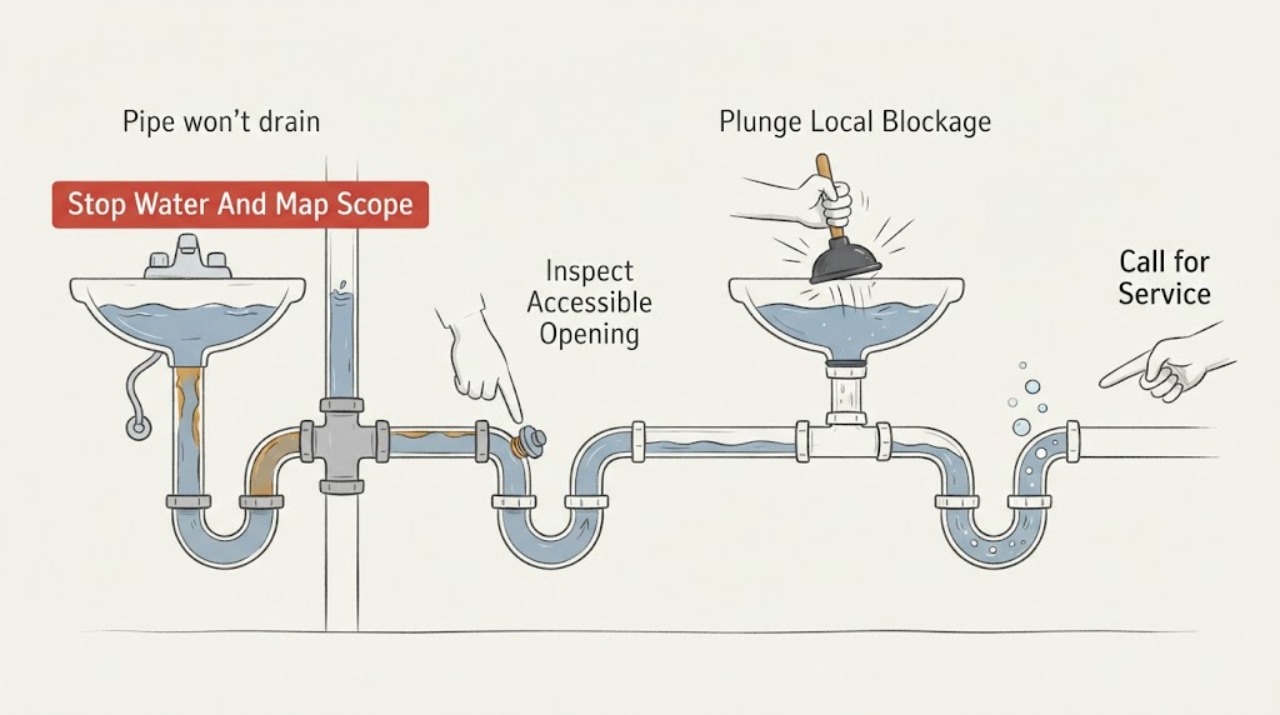
Stop adding water and first determine whether one sink, tub, or floor drain is affected or several fixtures are slow or backing up. For one fixture with no sewage overflow, remove only the accessible strainer or stopper, clear visible debris, and try a properly seated hand plunger; a short hand drain snake is an option only when no chemical cleaner has been used and the tool can be used without force. Do not mix or add drain chemicals to standing water, and do not keep flushing a blocked toilet or running a washer. If several fixtures back up, wastewater rises from a floor drain, a cleanout contains standing water, the blockage returns, sewage is present, or clearing it requires opening buried, pressurized, contaminated, or gas-adjacent piping, stop and arrange qualified plumbing or utility help.
Before you begin
Safety first
- User checks are limited to reducing water use, accessible visual inspection, visible debris removal, a careful hand plunger, and at most a gentle manual tool on a single drain with no chemical exposure; contaminated, buried, pressurized, electrical-adjacent, structural, and sewer-line work requires qualified service.
Work through in order
Diagnostic checks
Use only checks that match the exact appliance or system and its official guide.
-
Check 1
Stop running water into the affected line, do not flush a slow or rising toilet, and pause washing-machine or dishwasher use. Note the fixture, water level, whether the water is clear or wastewater, and whether another fixture causes the level to rise; check only from a safe, dry position.
Expected result: Only one fixture is slow; two or more fixtures are slow; water rises from a floor drain; a toilet backs up when another fixture runs; or wastewater is already on the floor.
Next step: For one fixture with no sewage, continue to the visible-opening and plunger checks. For multiple fixtures, a floor-drain rise, or wastewater, stop adding water and arrange qualified plumbing or utility assessment.
Stop if: Stop immediately for sewage, contaminated standing water, rapid overflow, electrical equipment near water, or an unsafe floor.
Why this matters
Why: A single fixture suggests a local opening, trap, or branch obstruction. Multiple fixtures or cross-fixture reactions point farther downstream, while wastewater on the floor is a contamination and overflow condition rather than a normal DIY clearing task.
-
Check 2
At a single affected sink, tub, or shower, remove only the accessible strainer or stopper without forcing it and look at the drain opening. With gloves, remove visible hair, food, grease, or other debris at the opening; do not push objects deeper, probe unknown piping, or open a trap if chemical cleaner may be present.
Expected result: Debris is visibly blocking the opening and the water level falls after it is removed; the opening is clear but the pipe still holds water; the stopper or strainer is stuck; or chemical cleaner was used earlier.
Next step: If the opening is clear and no chemical has been used, try one properly seated hand-plunger check. If a fitting is stuck or cleaner was used, stop and tell the plumber exactly what product and when it was used.
Stop if: Do not reach into contaminated water, force a fitting, or use a tool after drain chemicals have been added.
Why this matters
Why: A visible obstruction is a local, reversible explanation. A clear opening with standing water moves the likely obstruction below the opening, while a stuck fitting or residual chemical creates a damage and exposure risk.
-
Check 3
For a single fixture with no chemical residue, place the correct plunger cup fully over the drain opening, add only enough clean water for the cup to seal if the fixture is nearly dry, and use controlled strokes without splashing. On a sink with an overflow, block the overflow opening with a damp cloth so pressure acts at the drain; do not plunge a fixture connected to a line that is already backing up elsewhere.
Expected result: The water level drops and the fixture drains; it moves briefly and then slows again; there is no movement; or water appears at another fixture or connection.
Next step: If it drains normally, flush only a small amount of clean water and monitor. If it does not improve, recurs, or affects another fixture, stop and arrange plumbing service rather than adding chemicals or increasing force.
Stop if: Stop if plunging causes a leak, splashing contamination, a fixture to overflow, or water to rise elsewhere.
Why this matters
Why: A drop after plunging supports a nearby, movable obstruction but does not prove the branch is clear. Brief improvement suggests a deeper or recurring blockage. No movement or cross-fixture water indicates the plunger is not an appropriate next step.
-
Check 4
Only for a single local drain that has not received chemical cleaner, consider a short manual hand snake or auger through the accessible opening, following that tool's instructions and using gentle resistance. Withdraw it if it catches hard, meets a solid stop, or requires force; do not use a powered cable or send a tool into an unknown cleanout, toilet, buried line, or gas-adjacent route.
Expected result: The hand tool encounters soft resistance and returns debris; it passes without clearing the drain; it catches hard; or water begins leaking from a joint or appearing at another fixture.
Next step: Stop after one careful attempt if the pipe does not clear. Arrange a plumber with the fixture pattern and tool result; do not escalate to chemicals, powered equipment, or disassembly to overcome resistance.
Stop if: Do not use a hand snake after chemical cleaner, force it past resistance, use powered equipment as a household workaround, or continue if the pipe leaks.
Why this matters
Why: Soft debris near an accessible opening may be a minor local obstruction. A hard stop, no improvement, leakage, or cross-fixture reaction indicates a deeper, structural, or misrouted problem that a simple hand tool cannot diagnose safely.
-
Check 5
If the property has a clearly identified, safely accessible cleanout, inspect only the outside of its cap and surrounding area for standing water, overflow, or ground saturation; do not loosen a cap under pressure or enter a pit. Note whether the affected fixture is indoors, outdoors, or near a septic or sewer connection.
Expected result: The cleanout area is dry; water is visible in or around the cleanout; several fixtures are affected; or the route is buried, flooded, or inaccessible.
Next step: Keep all water use reduced. Give the cleanout observation to a plumber or, where appropriate, the responsible utility; do not open, rod, or excavate the line yourself.
Stop if: Stop for sewage, a pressurized or damaged cleanout, flooding, unstable ground, buried utility risk, or any need to excavate.
Why this matters
Why: A dry cleanout is consistent with a blockage inside the house branch, while standing water at a downstream cleanout makes the line toward the main connection more likely. Inaccessible or pressurized cleanouts need professional equipment and judgment.
-
Check 6
After a local drain appears clear, record whether flow remains normal during a small, controlled use and whether the blockage returns. Keep grease, oil, food solids, coffee grounds, hair, wipes, paper towels, and other non-drainable items out of the line; use a strainer where appropriate and do not rely on a chemical opener as routine maintenance.
Expected result: The pipe drains normally and stays clear; it slows again after a short interval; or the same obstruction appears at multiple fixtures or after ordinary water use.
Next step: Monitor a stable, isolated result and change the disposal habit. For recurrence, multiple fixtures, sewage, or an unresolved slow drain, arrange a plumbing inspection and provide the timeline and prior methods used.
Stop if: Stop using the line if it backs up again, wastewater appears, or clearing it would require chemicals, excavation, or powered equipment.
Why this matters
Why: Stable flow after removing visible debris supports a local blockage. Rapid recurrence or multiple-fixture symptoms suggests a deeper obstruction, root/structural issue, or sewer/septic capacity problem that prevention alone will not resolve.
Use your observations
Decision map
Find the observation that best matches what you see, then follow the next safe action.
-
PATH 01Next step
What you see
Wastewater or sewage is rising from a floor drain, toilet, tub, or other opening, or the area is already contaminated.
Do this next
Stop all nonessential water use, keep people and pets away, avoid electrical equipment in water, and arrange qualified plumbing or utility help. Do not try to stop sewage flow by opening or forcing a buried line.
Why this path and its safety boundary
Why it matters: The blockage may be downstream and the immediate risk is contamination and property damage, not just a slow fixture.
-
PATH 02Next step
What you see
Only one fixture is affected, there is no wastewater overflow, and visible debris or a plunger check changes the water level.
Do this next
Complete one careful accessible cleanout or plunger attempt, avoid chemical products, and monitor for recurrence. Arrange service if flow remains slow or returns.
Why this path and its safety boundary
Why it matters: A local opening, stopper, trap, or nearby branch obstruction is plausible, but a temporary drop does not prove the line is fully clear.
-
PATH 03Next step
What you see
The opening is clear, plunging or a careful hand tool does not restore flow, the blockage returns, or a hard obstruction is encountered.
Do this next
Stop escalating the DIY attempt and arrange a plumber with the fixture, timing, cleanout observations, and any chemical exposure disclosed.
Why this path and its safety boundary
Why it matters: The obstruction may be deeper, structural, rooted, or in a branch line beyond safe user access.
-
PATH 04Next step
What you see
Several fixtures are slow, one fixture backs up when another is used, or a cleanout contains standing water.
Do this next
Discontinue water use and request qualified plumbing or the responsible utility to locate the boundary. Do not keep flushing, run appliances, open a pressured cleanout, or excavate.
Why this path and its safety boundary
Why it matters: The problem is more likely in a shared branch, building sewer, septic system, or public connection than at one drain opening.
-
PATH 05Next step
What you see
Any drain cleaner, solvent, acid, or other chemical has already been poured into the pipe, especially while water is standing.
Do this next
Do not add another product, plunge, snake, or open the pipe. Keep people away, preserve the product name and label information, and tell the plumber before any work begins.
Why this path and its safety boundary
Why it matters: A later plunger, snake, trap opening, or chemical can create splash, fume, burn, or incompatible-reaction hazards.
-
PATH 06Next step
What you see
One fixture drains normally after visible debris removal or a careful plunger attempt, with no leak, sewage, or recurrence.
Do this next
Use a strainer where suitable, keep grease, hair, wipes, food solids, and other clogging material out of the pipe, and monitor. Call a plumber if the flow slows again.
Why this path and its safety boundary
Why it matters: The result is consistent with a local, movable obstruction; it does not rule out a developing branch blockage.
Helpful context
Understand the symptom
Start with the pattern, not a chemical bottle
A single slow sink or tub often has a local obstruction at the strainer, stopper, or trap. Several fixtures that are slow together, a toilet that rises when another fixture runs, or water at a floor drain points farther downstream toward a branch drain, building sewer, or public connection. The first useful observation is where water stops and whether additional water makes the backup worse.
Keep a blocked pipe from becoming a spill or chemical hazard
Stop using the affected fixture and nearby water appliances while the route is unclear. Do not combine drain products, add cleaner to standing water, use electrical equipment in sewage or standing water, or keep plunging after a chemical product has been poured. Wear eye and hand protection for dirty water and wash up after contact; leave contaminated cleanup and buried or pressurized pipe work to a professional.
What the result means
A localized blockage that clears with a plunger or careful hand tool can be monitored while keeping grease, hair, wipes, food solids, and other non-drainable material out of the pipe. A blockage that does not clear, returns quickly, spreads to multiple fixtures, or causes wastewater backup is a service diagnosis, not a reason to use a stronger chemical or force a cable farther into an unknown line.
Safety boundary
Stop conditions
- Stop all water use for sewage, wastewater on the floor, rapid overflow, several affected fixtures, or water rising from a floor drain or cleanout.
- Do not mix or add drain chemicals to standing water, and do not plunge, snake, or open a trap after chemical cleaner has been used; disclose the product to the plumber.
- Do not open a pressurized cleanout, excavate, use powered drain equipment, enter a pit, work near buried utilities, or use electrical equipment in standing or contaminated water.
- Arrange qualified plumbing or utility service when the blockage is deep, recurrent, hard to clear, associated with leaks or roots, or does not improve after one careful local check.
When checks do not resolve it
Need a professional?
Call promptly for sewage or wastewater backup, multiple slow fixtures, a floor-drain rise, standing water at a cleanout, a recurring or deep blockage, leaks, suspected roots or structural damage, chemical exposure, or any need for powered equipment or excavation.
Safety scope: User checks are limited to reducing water use, accessible visual inspection, visible debris removal, a careful hand plunger, and at most a gentle manual tool on a single drain with no chemical exposure; contaminated, buried, pressurized, electrical-adjacent, structural, and sewer-line work requires qualified service.
Have this ready
- Provide the affected fixtures, when the problem began, whether water was added afterward, the water or wastewater level, cleanout observations, visible debris, plunger or hand-tool result, any chemical product used, and photographs from a dry safe position.
Common questions
FAQ
Why won't one pipe or drain in my home drain?
A local obstruction at the strainer, stopper, trap, or nearby branch is plausible when only one fixture is affected. Stop adding water, remove visible debris without forcing anything, and try one properly seated hand plunger if no chemical cleaner was used. Persistent or recurring blockage needs a plumber.
What should I do if several drains are slow at the same time?
Stop using water and do not keep flushing toilets or running appliances. Several affected fixtures or water rising elsewhere points toward a shared branch, building sewer, septic system, or public connection rather than one drain opening; arrange qualified plumbing or utility assessment.
Should I use chemical drain cleaner when a pipe won't drain?
Do not add chemical drain opener to standing water or mix products. EPA advises avoiding chemical openers for clogged drains. If a cleaner was already used, stop plunging, snaking, or opening the trap and tell the plumber the product name and timing.
Can I check a cleanout when a pipe is blocked?
Only inspect a clearly identified cleanout from a safe, dry position. Do not loosen a cap that may be pressurized, open a cleanout in sewage or flooding, excavate, or enter a pit. Standing water at a downstream cleanout is a reason to arrange qualified service.
When is a blocked pipe an emergency?
Treat sewage or wastewater backup, rapid overflow, water near electrical equipment, several fixtures backing up, a floor-drain rise, chemical exposure, or an unsafe contaminated area as a stop condition. Reduce water use, keep people away, and arrange the appropriate qualified plumbing or utility help.
Read the exact guide
Official sources
- Prevent Blocked DrainsCity of Tampa · Single-fixture versus line-level blockage patterns, reducing water during a stubborn blockage, plunger use, cleanout observations, and public/private sewer boundary decisions.
- THIS WAY TO A BETTER HOMEU.S. Department of Housing and Urban Development · Accessible sink-drain observation, strainer/stopper and trap distinction, plunger use, manual auger caution, and when major plumbing repairs need an expert.
- How to Care for Your Septic SystemU.S. Environmental Protection Agency · Household drain blockages, water-use reduction, prohibited materials, chemical drain-opener avoidance, and hand-tool alternatives, especially where a septic system is present.
Community feedback
Share a repair observation
Share a plain-text repair observation. Accepted observations are published automatically; this page may take a moment to update.