
Repair problem
Won T Drain Troubleshooting Guides
Published FixGraph guidance for diagnosing and responding to won t drain.
Matching published guides
Choose a guide that matches the service, equipment, and conditions you are seeing.
-
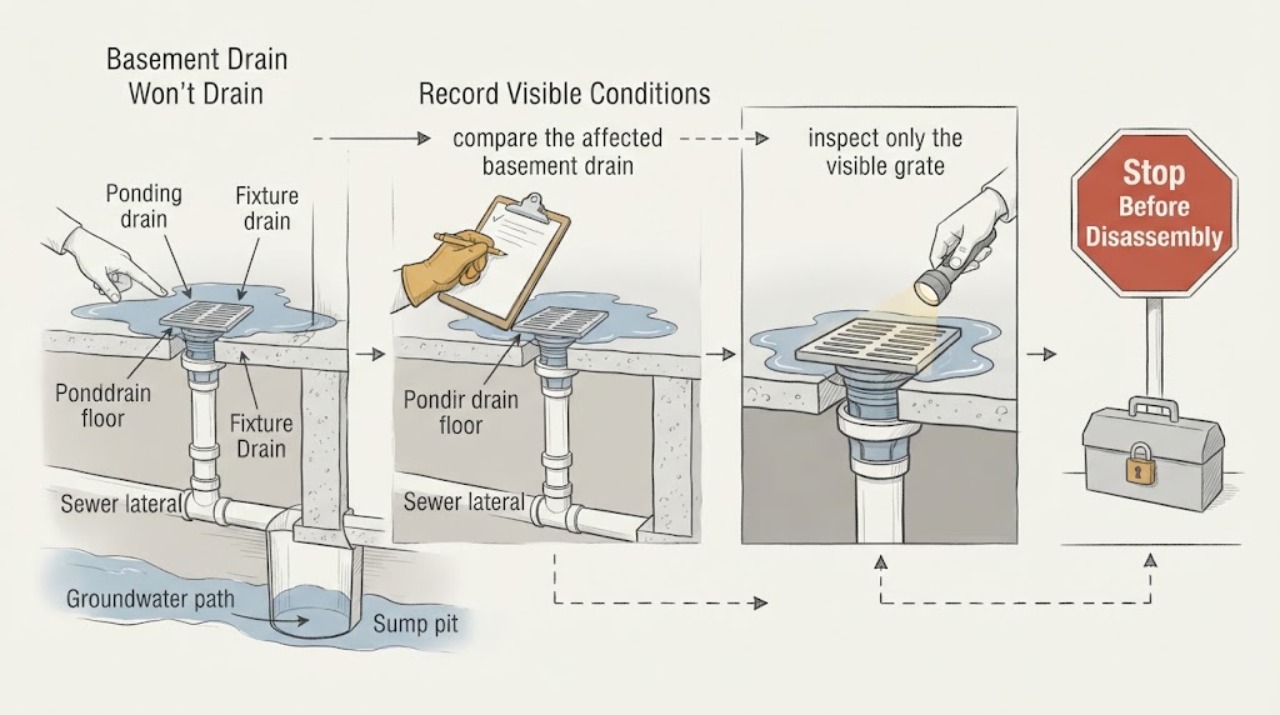
Basement Drain Won't Drain: Separate a Local Clog from a Sewer Backup
In a basement, a drain that will not drain may be a local floor or fixture clog, a blockage in the private sewer lateral, a municipal sewer backup, a septic or lift-pump condition, or groundwater entering through a separate path. First stop using water and identify whether one fixture is affected or multiple basement and upper-level fixtures are slow or backing up.
-
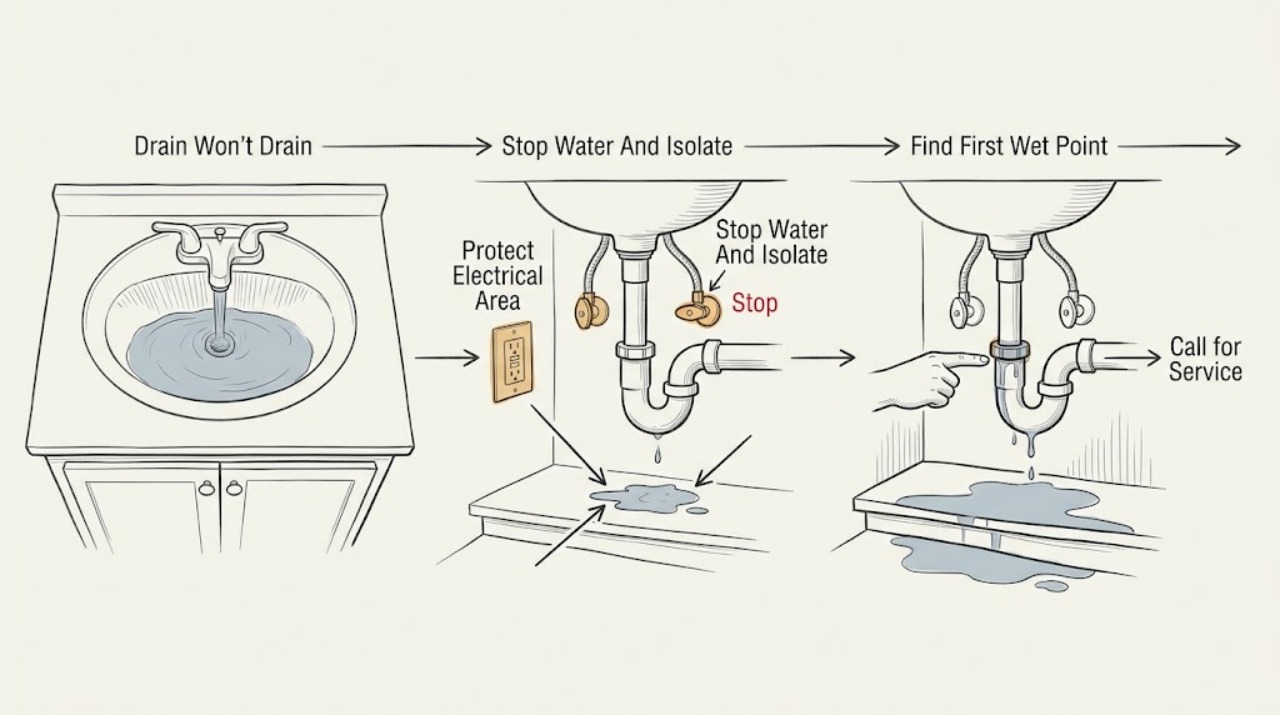
Drain Won't Drain in a Bathroom With a Clean-Water Leak: Safe Next Steps
When a bathroom drain will not drain and clean water is also leaking, stop adding water and identify the first wet point before trying to clear anything. Close the nearest fixture shutoff or the home's water supply if the leak is on the supply side; keep water away from electrical equipment and do not stand in it to reach a switch.
-
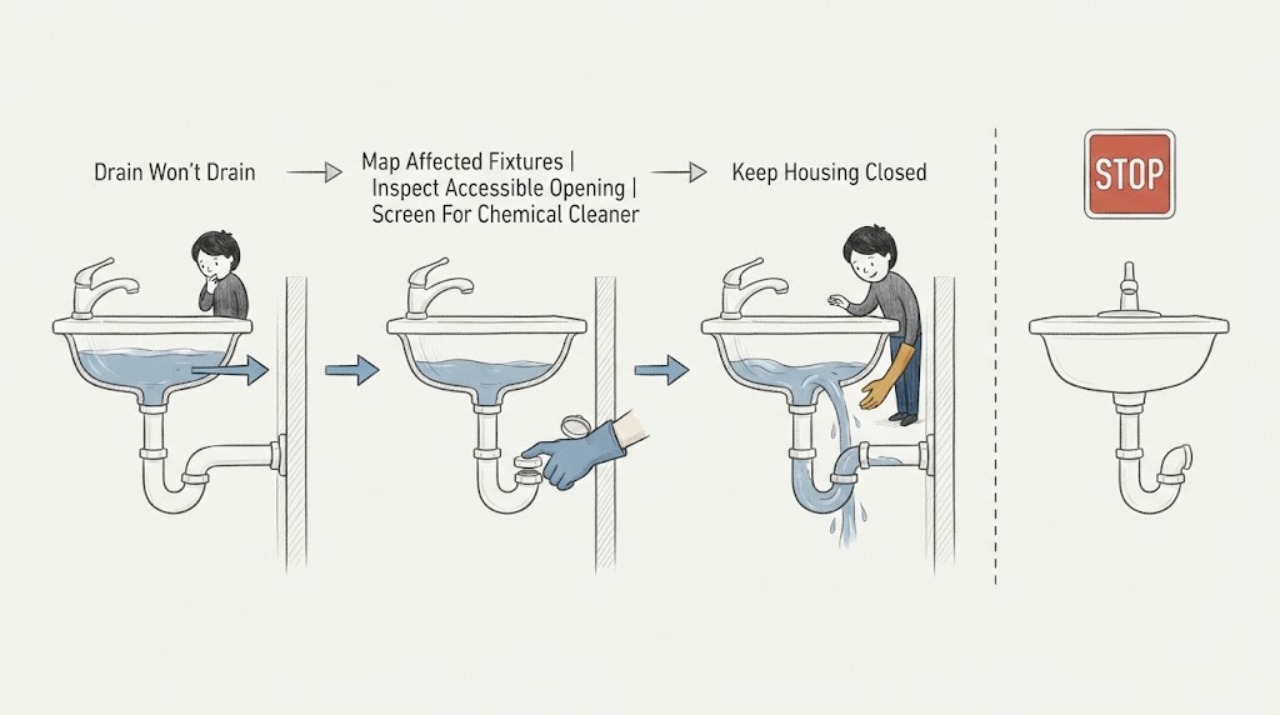
Drain Won't Drain: Safe Checks Before Calling a Plumber
When a drain will not drain, first determine whether the problem is limited to one fixture or affects several drains. A single sink, tub, or shower often points to a local stopper, trap, or branch blockage; slow or backed-up fixtures throughout the home can indicate a larger private sewer line or main-line problem.
-
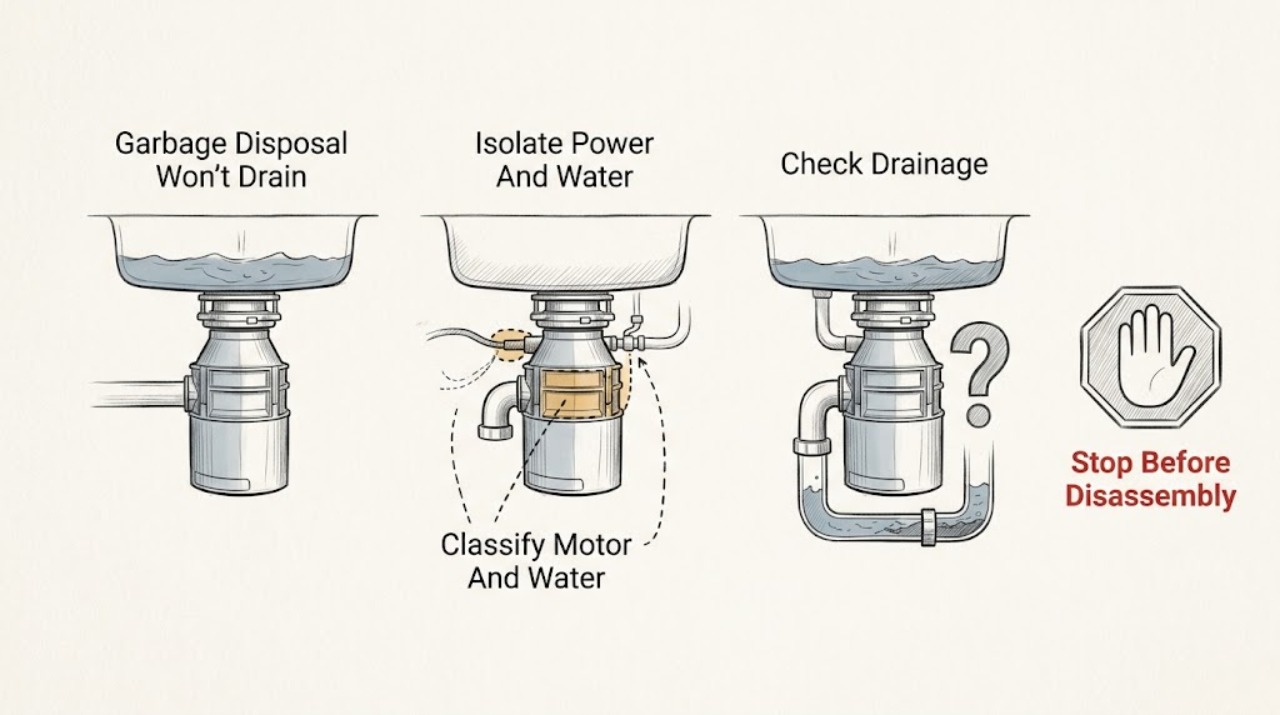
Garbage Disposal Won't Drain: Clear the Drain Line Safely
Start by turning the wall switch OFF and disconnecting power at the accessible plug or service switch; never put a hand into a disposal. If the disposal runs and the sink water swirls but does not leave, the likely focus is the drain line, P-trap, wall connection, or a shared double-sink path.
-
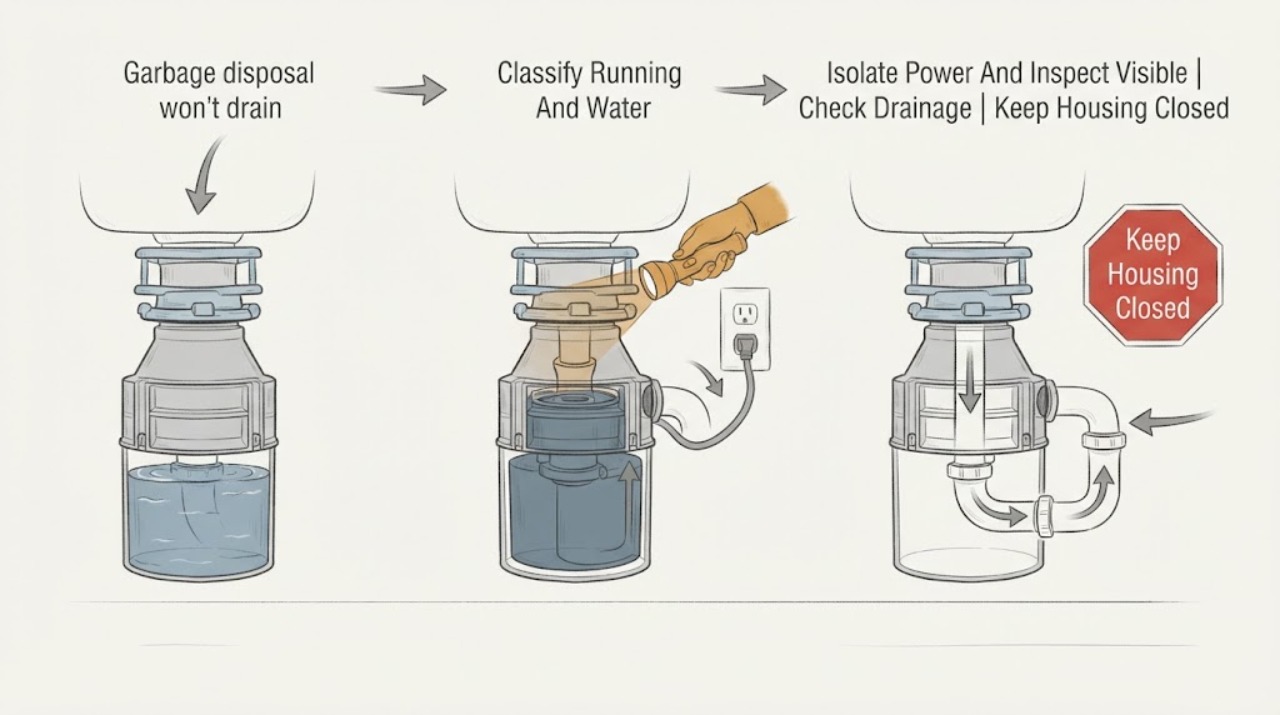
Garbage disposal won't drain: identify a drain clog before treating a jam
A garbage disposal that will not drain can have a clogged drain path, a jam that prevents the motor from moving the grinding plate, or an electrical fault that means the disposal is not actually running. First observe whether the motor runs and whether water swirls, then shut off power completely before looking for visible objects.
-
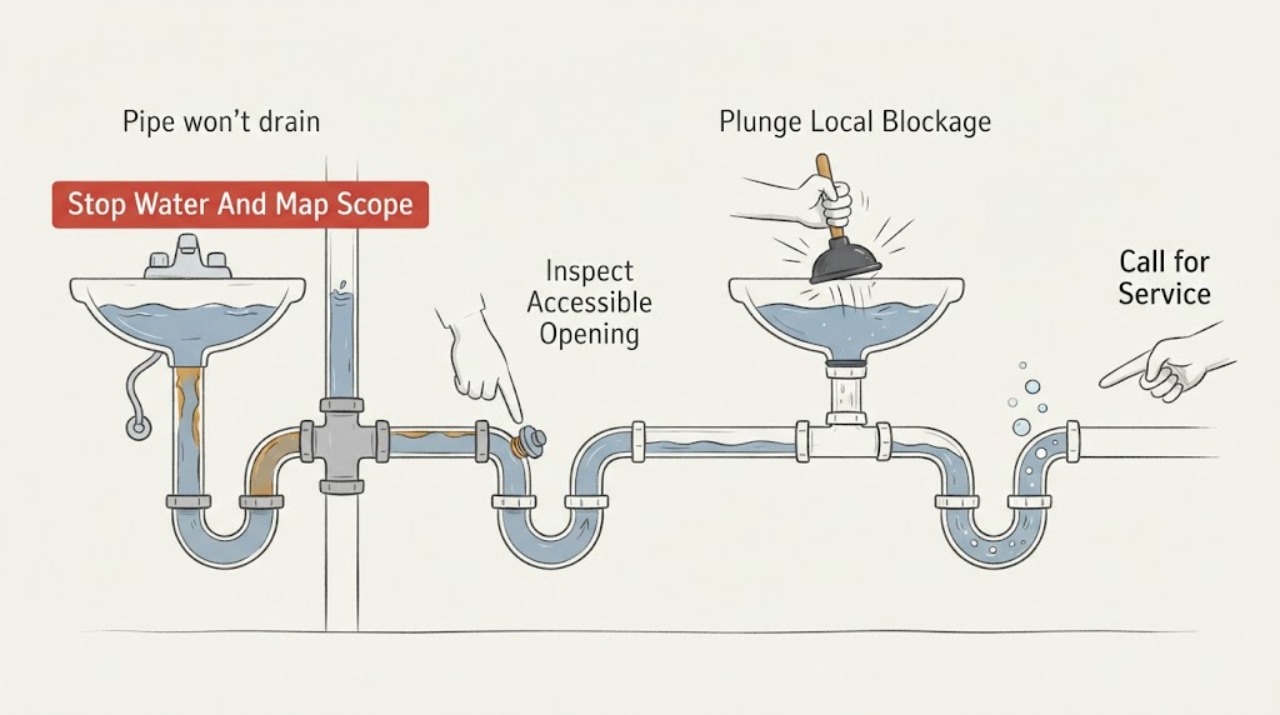
Pipe won't drain: safe checks before calling a plumber
Stop adding water and first determine whether one sink, tub, or floor drain is affected or several fixtures are slow or backing up. For one fixture with no sewage overflow, remove only the accessible strainer or stopper, clear visible debris, and try a properly seated hand plunger; a short hand drain snake is an option only when no chemical cleaner has been used and the tool can be used without force.
-
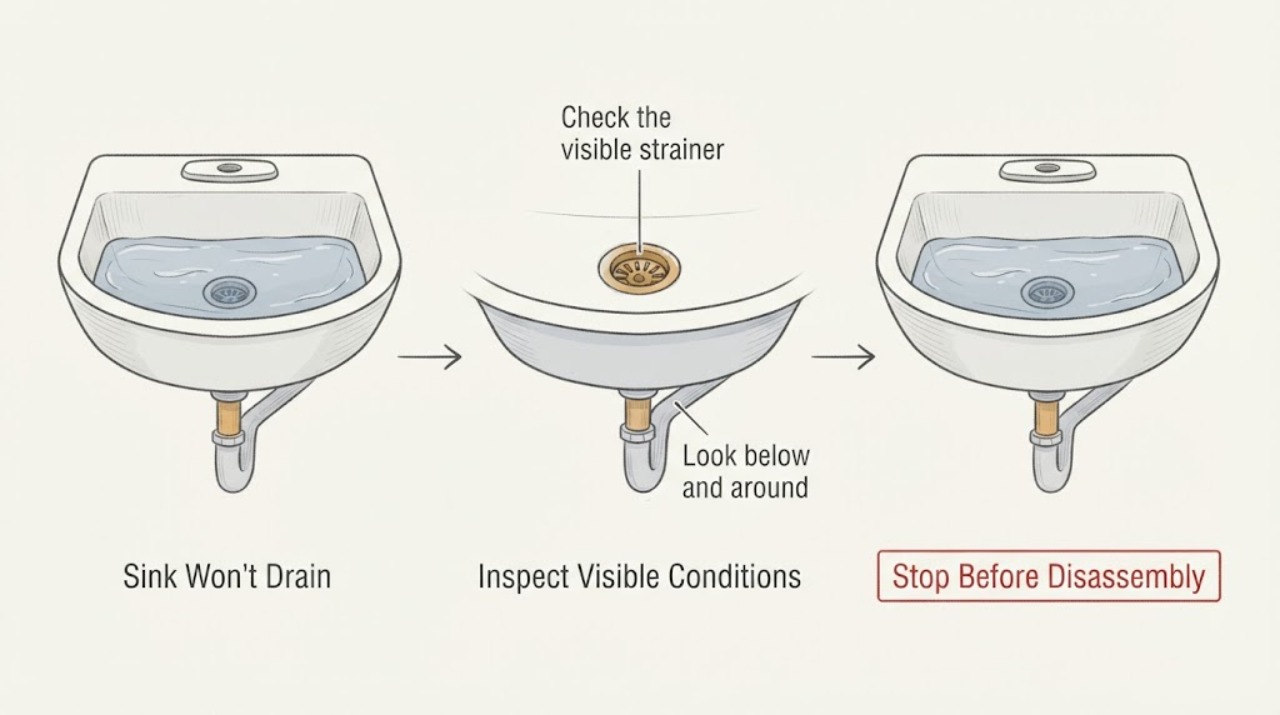
Sink Won't Drain: Safe Drain-Line Checks
A sink that will not drain usually has a blockage at the strainer or stopper, in the trap or branch drain, or farther along a shared line. First note whether one basin or several fixtures are affected, and whether the water is clean, foul, or returning from another drain.
-
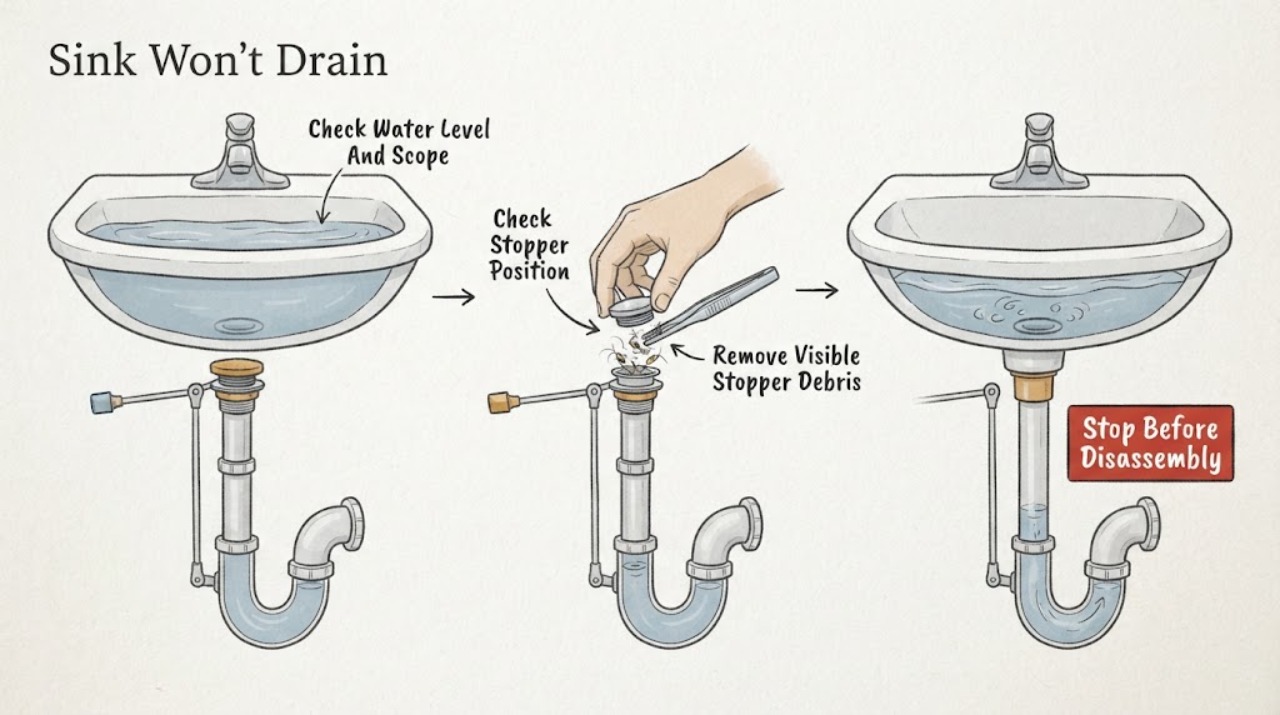
Sink Won't Drain: Check the Stopper, Visible Debris, and Trap Safely
When a sink will not drain, stop adding water and first determine whether the stopper is closed, the drain opening has reachable hair or debris, or water is leaking under the sink. Use only the installed drain's instructions to open or remove a user-serviceable stopper, clear visible debris, and check the exposed trap and connections for leaks.