
On this page
Start here
Quick answer
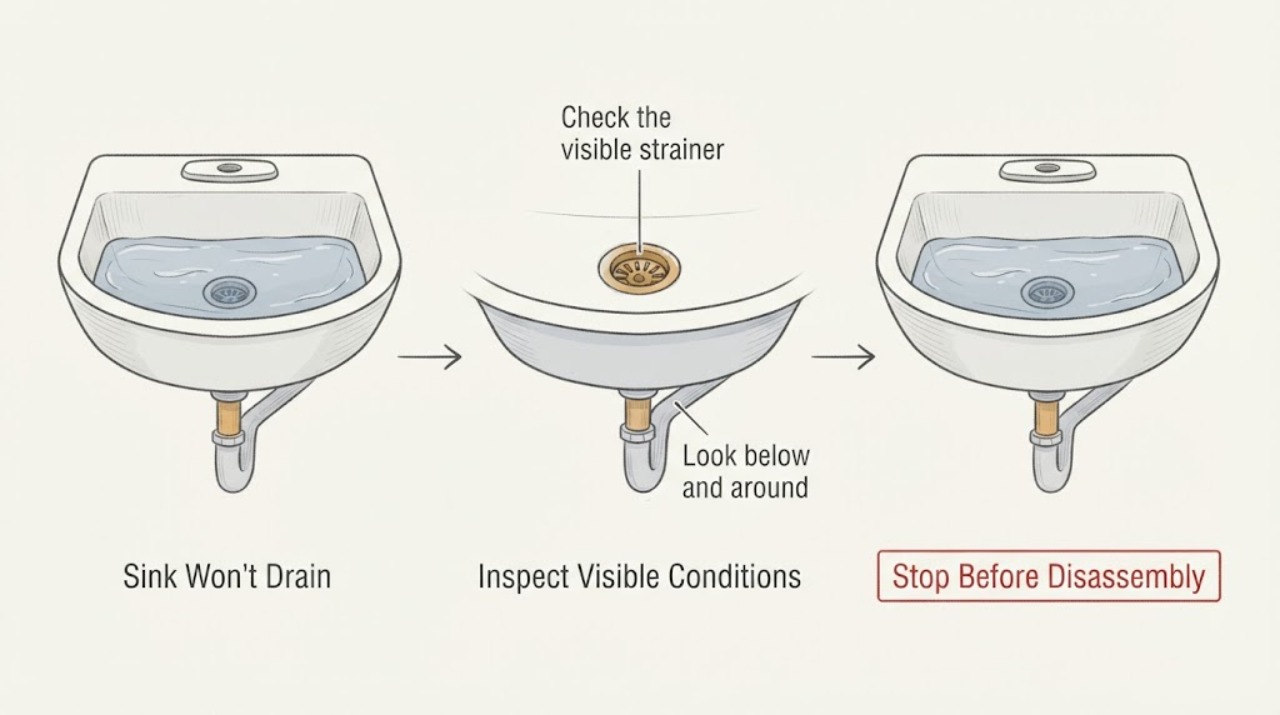
A sink that will not drain usually has a blockage at the strainer or stopper, in the trap or branch drain, or farther along a shared line. First note whether one basin or several fixtures are affected, and whether the water is clean, foul, or returning from another drain. Stop using the sink and nearby fixtures if water is rising or sewage may be present. If the basin, floor, and nearby electrical equipment are dry and no drain chemical has been used, a manufacturer-approved plunger attempt may be reasonable. Do not mix chemicals, feed tools into hidden pipework, loosen a trap containing chemical residue, or dismantle a concealed drain. A plumber should handle a persistent blockage, multi-fixture backup, wastewater overflow, leaking hidden pipe, or any uncertain condition.
Work through in order
Diagnostic checks
Use only checks that match the exact appliance or system and its official guide.
-
Check 1
Stop adding water and observe the sink from a safe position. Note whether the basin is full, draining slowly, empty but gurgling, or filling from another fixture.
Expected result: Record the water level, clarity, odor, visible solids, and whether the level changes when another fixture is used. Do not put hands into foul or chemically treated water.
Next step: Stop using affected fixtures. If wastewater is returning, overflowing, or chemically contaminated, keep clear and call a plumber rather than trying to force flow.
Why this matters
Why: A local standing basin suggests an upstream restriction near this sink; rising or returning water with another fixture suggests a shared branch or downstream backup.
-
Check 2
Check the visible strainer or stopper opening without removing hidden parts. Look only for hair, food, grease, a cap, or another object that is plainly reachable without contact with contaminated water.
Expected result: Record whether the opening is visibly covered, whether the stopper is closed or mispositioned, and whether the basin changes after a safe visible obstruction is removed.
Next step: Use gloves and ordinary hygiene only for a plainly reachable, non-chemical obstruction if the water is clean and safe. Do not push debris into the pipe or remove the trap.
Why this matters
Why: A visible obstruction can explain a one-sink blockage. An open, clear-looking opening with no improvement keeps the trap or drain line in consideration.
-
Check 3
Look below and around the sink without opening cabinets containing wet electrical equipment or loosening any pipe connection.
Expected result: From a dry position, note a damp cabinet base, drip, bulged pipe, loose-looking connection, water stain, or no visible leak. Keep hands and electrical devices out of standing water.
Next step: If water is reaching electrical equipment, stop and isolate power only from a dry, safe location if that can be done without entering water; otherwise call an electrician. Arrange plumbing service for a leak or hidden pipe concern.
Why this matters
Why: A leak below the sink can accompany or cause loss of drainage, while no visible leak does not rule out a hidden blockage or concealed pipe failure.
-
Check 4
If the basin, floor, and equipment are dry, the water is clean, and no chemical opener has been used, check the fixture instructions and make one controlled plunger attempt appropriate to that sink.
Expected result: Record whether the water level drops, rises, moves only briefly, or does not change. Stop if splashing, leakage, unusual pressure, or a chemical odor appears.
Next step: Do not keep plunging a chemically treated or overflowing sink. If one safe attempt does not restore drainage, stop and request a plumber; do not feed a tool into hidden pipework.
Why this matters
Why: A sustained drop can indicate a near-sink restriction has moved; no change or rapid return suggests a deeper trap, branch-line, vent, or shared drain problem.
-
Check 5
Compare nearby fixtures without deliberately adding substantial water: observe whether another sink, shower, toilet, or floor drain is also slow, gurgling, or backing up.
Expected result: Record one sink affected, multiple fixtures on one side of the home affected, or wastewater appearing at a lower drain.
Next step: Limit water use and call a plumber or appropriate wastewater professional. Do not pour chemicals or repeatedly flush fixtures to test the line.
Why this matters
Why: A multi-fixture pattern points away from the visible sink opening and toward a shared branch, main drain, vent, or septic system; CDC lists slow sinks and toilets and overflowing floor drains as warning signs of septic trouble.
-
Check 6
Review what has already gone down the sink and whether any drain opener, bleach, acid, solvent, grease, or other cleaner was used.
Expected result: Record product names if known, approximate timing, fumes, heat, discoloration, and whether different products may have been combined. Do not add another product to neutralize it.
Next step: Tell the plumber exactly what was used and keep the area ventilated without creating sparks. If fumes, burns, or a reaction are present, leave the area and seek appropriate emergency guidance.
Why this matters
Why: Chemical history changes the hazard and can make contact with standing water or trap contents unsafe; grease and unsuitable waste can contribute to blockage.
-
Check 7
Prepare a service note with the first affected fixture, water level and odor, visible strainer state, under-sink observations, nearby-fixture pattern, chemical history, and what changed after the single safe check.
Expected result: A clear timeline distinguishes a local opening or stopper issue from a trap, branch-line, main-drain, septic, leak, or contamination concern.
Next step: Keep water use low and request plumber service; keep people and pets away from sewage or chemical residue until it is assessed.
Why this matters
Why: The next useful step for persistent or multi-fixture blockage is targeted plumbing inspection, not hidden-pipe disassembly or repeated chemical treatment.
Use your observations
Decision map
Find the observation that best matches what you see, then follow the next safe action.
-
PATH 01Safety boundary
What you see
Do this next
Inspect the visible strainer or stopper and, if the fixture instructions permit, make one controlled plunger attempt. Stop if there is no improvement and arrange plumbing service rather than opening hidden pipework.
Why this path and its safety boundary
Safety stop: Use the multi-fixture, wastewater, leak, or chemical-safety branches below.
-
PATH 02Safety boundary
What you see
Do this next
Stop adding water, limit fixture use, and call a plumber for a shared branch, main drain, vent, or septic assessment. Do not pour chemicals into the system.
Why this path and its safety boundary
Safety stop: A local sink restriction remains possible; continue only with safe visible observations.
-
PATH 03Safety boundary
What you see
Do this next
Keep people and pets away, avoid contact, reduce water use, and call a plumber or wastewater professional. Treat nearby standing water as a health and electrical hazard.
Why this path and its safety boundary
Safety stop: Clean water still requires plumbing service if the blockage persists, but ordinary low-risk observations may continue while the area stays dry.
-
PATH 04Safety boundary
What you see
Do this next
Do not plunge, add another product, loosen the trap, or touch the liquid. Keep clear, ventilate without creating sparks, tell the plumber what was used, and seek emergency guidance for fumes, burns, or a reaction.
Why this path and its safety boundary
Safety stop: Do not use chemical opener as a first response; use only a safe fixture-approved mechanical check or request plumbing service.
-
PATH 05Safety boundary
What you see
Do this next
Do not touch electrical equipment while standing in water. Isolate power only from a dry, safe location if possible; otherwise leave the area and call an electrician, then arrange plumbing service.
Why this path and its safety boundary
Safety stop: Continue only if the floor, sink area, and equipment remain dry and stable.
Helpful context
Understand the symptom
Use the pattern of the backup to locate the decision point
One sink with clear water that simply sits still is more consistent with a local strainer, stopper, trap, or branch restriction. If another sink, shower, toilet, or floor drain also slows or receives returning water, the problem may be farther downstream or in a shared wastewater system. A foul or cloudy return should be treated as wastewater, not as a routine sink-cleaning task.
Do not turn a blockage into a chemical or water-damage emergency
Do not combine a commercial drain opener with bleach, vinegar, another cleaner, or a second drain product. Do not use a plunger or open a trap when you know corrosive product is standing in the line. Keep electrical equipment away from standing water and stop before hidden-pipe disassembly.
Safety boundary
Stop conditions
- Stop for foul or sewage-contaminated water, overflow, a rapidly rising level, chemical odor, fumes, burns, a reaction, or any uncertainty about the liquid.
- Do not mix drain chemicals, pour bleach or another cleaner into the line, or use a chemical opener after another product has been used.
- Do not loosen or remove a trap, feed tools into concealed pipework, force a blocked connection, or use a power tool on the drain without appropriate professional control.
- Stop around standing water near outlets, appliances, or wiring. Never touch electrical equipment while standing in water; keep clear and obtain electrical help if power cannot be isolated safely from a dry location.
- Stop if a single safe mechanical check does not restore drainage, if several fixtures are affected, or if water leaks from a concealed location; request a plumber.
When checks do not resolve it
Need a professional?
Call a plumber when the sink remains blocked after a safe visible check, a single controlled plunger attempt fails, the trap or drain line is suspected, a hidden leak is visible, or more than one fixture is affected. Seek urgent help for sewage overflow, chemical exposure, a rapidly rising level, or electrical equipment in water.
Common questions
FAQ
Why won't my sink drain?
The restriction may be at the visible strainer or stopper, in the trap or branch drain, or farther downstream. If other fixtures are also slow or backing up, treat it as a shared wastewater problem and call a plumber.
Should I pour drain cleaner into a sink that will not drain?
Do not use chemical opener as a first response, and never mix it with bleach, vinegar, another cleaner, or a second product. EPA identifies mechanical options such as a plunger or drain snake; if chemicals were already used, keep clear and tell the plumber.
When is a blocked sink an emergency?
Seek urgent help for sewage overflow, a rapidly rising level, chemical fumes or burns, or water near electrical equipment. Do not touch electrical equipment while standing in water; isolate power only from a dry safe location if possible.
Can I remove the trap to clear the drain line?
Not when the water may contain sewage or chemical residue, and not if the task would expose a hidden line or electrical hazard. For a persistent blockage, concealed leak, or multi-fixture backup, have a plumber handle the drain-line work.
Read the exact guide
Official sources
- Guidelines for Septic and Onsite Wastewater SystemsCenters for Disease Control and Prevention · Slow sinks, multi-fixture wastewater symptoms, sewage exposure, and professional septic or wastewater service.
- Safety Guidelines: Reentering Your Flooded HomeCenters for Disease Control and Prevention · Standing-water electrical safety, dry-location power isolation, sewage contamination, and safe return of electrical equipment.
- What Do You Do With Household Chemicals?U.S. Environmental Protection Agency · Household chemical disposal, drain-cleaner alternatives, and chemical mixing or reaction warnings.
- How to Care for Your Septic SystemU.S. Environmental Protection Agency · Sink drain care, avoiding chemical drain openers, mechanical alternatives, unsuitable waste, and broader wastewater clues.
Community feedback
Share a repair observation
Share a plain-text repair observation. Accepted observations are published automatically; this page may take a moment to update.