
On this page
Start here
Quick answer
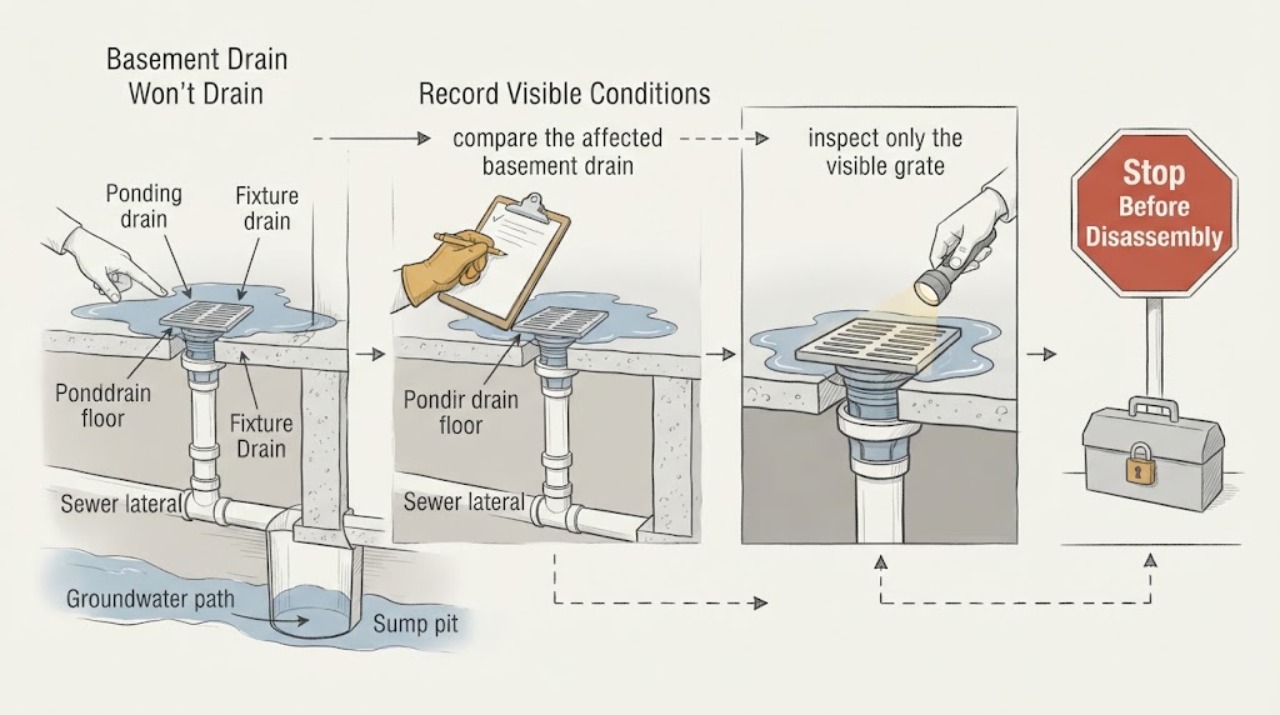
In a basement, a drain that will not drain may be a local floor or fixture clog, a blockage in the private sewer lateral, a municipal sewer backup, a septic or lift-pump condition, or groundwater entering through a separate path. First stop using water and identify whether one fixture is affected or multiple basement and upper-level fixtures are slow or backing up. From a dry position, keep away from sewage and standing water, and do not use electrical equipment or force a plug into a floor drain. If sewage is rising, several fixtures are affected, the lowest drain is overflowing, a sump or sewage pump is involved, gas appliances are near the water, or the basement has electrical or structural hazards, leave the area and contact the sewer authority, a qualified plumber, or emergency help. Do not mix drain chemicals, enter a contaminated area, or open a cleanout when pressure or sewage flow may be present.
Work through in order
Diagnostic checks
Use only checks that match the exact appliance or system and its official guide.
-
Check 1
Stop flushing toilets and using sinks, showers, washing machines, and other water fixtures. From a dry and safe position, record where water or sewage first appears, whether the basement floor drain, laundry sink, toilet, or another fixture is affected, and whether the level is rising.
Expected result: Only one drain may be slow, several basement fixtures may back up together, an upper-level fixture may trigger basement flow, or water may enter without anyone using plumbing.
Next step: Keep household water use stopped and follow the matching branch. Do not test by running more water, and do not step into the affected area to inspect a lower drain.
Stop if: Leave immediately for rising sewage, strong gas odor, electrical arcing, submerged equipment, unsafe stairs, structural movement, or symptoms such as dizziness or breathing irritation.
Why this matters
Why: One isolated fixture is more consistent with a local branch restriction. Multiple fixtures or a lowest-point overflow can indicate a private lateral or main sewer problem; water appearing during rain may also involve groundwater or stormwater.
-
Check 2
From outside the wet area, compare the affected basement drain with nearby sinks, toilets, and floor drains without opening covers or using a tool. Ask whether neighbors or nearby properties report a similar sewer problem, and note whether the issue follows rainfall, snowmelt, or a local water-use event.
Expected result: A single drain may be slow while other fixtures remain normal; multiple fixtures may show the same water level; neighbors may have similar backups; or only the basement may be wet during rain.
Next step: For a shared or multi-fixture backup, contact the local sewer authority or emergency sewer service and a plumber as directed locally. For rain-related water without sanitary signs, stop plumbing tests and arrange qualified basement drainage or waterproofing assessment.
Stop if: Do not enter standing water, handle submerged wiring, operate a sump or sewage pump that may be damaged, or approach a gas appliance in the wet area.
Why this matters
Why: A shared pattern or multiple fixtures raises the likelihood of a main sewer or building lateral issue. A rain-only basement wetting pattern may be stormwater, foundation seepage, or a sump condition rather than a sanitary clog.
-
Check 3
If one fixture is affected and the floor is dry, inspect only the visible grate, trap opening, or cleanout cover for a plainly visible object or buildup. Do not remove a cover when water is pressing upward, do not push material deeper, and do not pour a chemical product into a drain with an unknown history.
Expected result: A visible hair, lint, sediment, or foreign object may be at the opening; the drain may be full below the cover; or there may be no visible obstruction.
Next step: Remove only a loose surface object without entering the wet area, then stop. If the drain remains blocked, arrange a plumber to identify the branch and use the correct method; do not escalate to improvised rodding or chemical treatment.
Stop if: Stop for sewage, chemical odor, pressure, splashback, a sealed or difficult cover, contaminated water, or any need to enter the basement or use electrical equipment.
Why this matters
Why: A reachable surface obstruction can explain one local slow drain, while a full line below the opening or no visible cause requires a different tool and access plan. Mixed chemicals can create toxic fumes or corrosive splash hazards for anyone who later opens the line.
-
Check 4
From a safe dry location, identify whether the basement has a sump pit, sewage ejector, lift pump, or alarm and whether it is visibly flooded or silent. Do not lift a pit cover, reach into water, reset an alarm repeatedly, or operate a pump that has been submerged or damaged.
Expected result: The sump or pump may be running continuously, show an alarm, have no power, be surrounded by groundwater, or be unrelated while sanitary water rises through a floor drain.
Next step: Keep water use stopped and arrange qualified pump or plumbing service. If the pump or electrical connection is wet, leave it isolated and do not restore power until a qualified person confirms it is safe.
Stop if: Stop for a submerged pump or outlet, a damaged cover, sewage exposure, gas equipment nearby, electrical odor, smoke, or rising water.
Why this matters
Why: A pump or groundwater path can explain rain-related water without a local drain clog. A sanitary backup can also overload or contaminate a pit; the distinction affects whether a plumber, pump specialist, sewer authority, or emergency service is needed.
-
Check 5
If there is a cleanout or service access outside the wet area, locate it visually and record whether the cap is intact, displaced, or surrounded by sewage. Do not loosen or remove a cleanout cap when the line may be pressurized, the ground is unstable, or wastewater could discharge toward you.
Expected result: A displaced or overflowing access point may indicate a downstream blockage, a full private lateral, or a municipal surcharge; a dry access point does not rule out a blockage elsewhere.
Next step: Give the location and visible condition to the plumber or sewer authority. Keep all fixtures unused until the responsible professional confirms that flow is restored and the basement is safe.
Stop if: Stop for pressure, active discharge, sewage, chemical residue, unstable ground, nearby gas lines, or any need to use powered equipment in the basement.
Why this matters
Why: The access-point location can help a plumber or sewer authority separate the building lateral from the public main, but opening a full line can release contaminated water unexpectedly and create a physical hazard.
-
Check 6
After a qualified person has confirmed that the blockage or pump issue is resolved and the area is safe, document the first wet point, affected fixtures, rainfall or water-use timing, and any cleanup or material damage before normal use resumes. Do not restart household water use while sewage, mold, electrical damage, or structural wetness remains.
Expected result: Flow may return for one fixture but fail again when other fixtures are used, a sewer odor may remain, wet materials may not dry, or electrical and heating equipment may still show damage.
Next step: Have the responsible plumber, sewer authority, remediation professional, and electrician or heating specialist address the remaining condition as applicable. Resume use only after the relevant professional clears it.
Stop if: Stop for renewed backup, sewage contact, visible mold, electrical damage, gas odor, structural damage, or illness symptoms.
Why this matters
Why: Temporary flow does not prove that the lateral, main, pump, or contaminated building materials are safe. Recurrence or persistent odor and damage need follow-up rather than more drain chemicals.
Use your observations
Decision map
Find the observation that best matches what you see, then follow the next safe action.
-
PATH 01Next step
What you see
Only one drain is affected, no water is rising elsewhere, and the area is dry and free of hazards.
Do this next
Inspect only the visible opening for a loose surface obstruction and stop. A persistent blockage needs a plumber to identify the branch; do not mix chemicals or force a tool into an unknown line.
-
PATH 02Next step
What you see
The basement floor drain, toilet, sink, or more than one fixture backs up, especially when another fixture is used.
Do this next
Stop all water use and contact the sewer authority and a qualified plumber. Treat the water as potentially sewage-contaminated; do not try to stop the flow with a plug or enter standing water.
-
PATH 03Next step
What you see
Nearby properties report similar symptoms or the backup coincides with a wider sewer event.
Do this next
Report the backup to the local sewer authority and keep household water use stopped. The authority can determine whether the public main or private lateral is responsible; do not assume either one.
-
PATH 04Next step
What you see
Water enters during rain or high groundwater without a sanitary fixture pattern, or a sump or lift pump alarms or is flooded.
Do this next
Stop plumbing tests and arrange qualified basement drainage, pump, or septic assessment. Keep electrical and mechanical devices isolated until a professional confirms they are safe.
-
PATH 05Next step
What you see
There is sewage exposure, standing water near power, a submerged appliance, gas equipment nearby, strong odor, smoke, arcing, unsafe structure, or rising water.
Do this next
Leave the area if needed and contact emergency assistance, the utility or sewer authority, and qualified remediation or trade professionals from a safe location. Do not clean, pump, reset, or restore power until the hazard is assessed.
Helpful context
Understand the symptom
The basement location changes the first question
A basement drain is often the lowest opening in a building, so a main sewer or private lateral backup may appear there before an upstairs fixture shows a problem. A single floor drain that is slow while other fixtures work normally points more toward a local branch. Water that rises in more than one drain, follows toilet or sink use, or appears during heavy rain needs a different response. A sump or groundwater pump problem can also wet a basement without being a sanitary drain clog.
Protect people before the plumbing
Treat unknown basement water as potentially contaminated until its source is clear. Keep people and pets out, avoid contact with sewage, and do not use electrical equipment while standing in water. Do not turn on a furnace, boiler, water heater, pump, fan, or other device that may be flooded. Cleanup and re-entry may require qualified professionals when electrical, structural, gas, mold, or sewage hazards are present.
Safety boundary
Stop conditions
- Stop using all water when sewage rises through a basement drain, several fixtures back up, or water is rising at the lowest opening.
- Do not enter standing water or use electrical equipment near water. Keep away from submerged furnaces, boilers, pumps, outlets, and wiring until professionals confirm safety.
- Stop for strong gas or sewer odor, smoke, sparks, arcing, structural movement, unstable stairs, chemical fumes, or any illness symptoms; leave and contact emergency help from a safe location.
- Never mix drain chemicals, force a plug into a backing-up floor drain, open a pressured cleanout, lift a contaminated pit cover, or use a powered drain tool in an unsafe basement.
Only after diagnosis
Potential parts
- floor drain trap or grate assembly
Consider only if a qualified inspection identifies a damaged or missing local drain component rather than a downstream sewer blockage.
Verify the drain size, trap arrangement, and local plumbing requirements before replacement. - sewer cleanout cap or seal
Consider only when a professional confirms that a damaged or missing access cap is the source of leakage or odor.
Confirm pipe material, diameter, thread or fit, and local code requirements before fitting any component. - sump or sewage ejector pump
Consider only after a qualified diagnosis separates pump failure from a sanitary line blockage or groundwater entry.
Pump type, capacity, discharge arrangement, and electrical protection must be matched by a qualified installer. - backwater valve or sewer backup protection
Consider only after a plumber evaluates the building's sewer layout and confirms that backup protection is appropriate.
Installation and maintenance depend on local code and the building's service line; do not select by appearance alone.
When checks do not resolve it
Need a professional?
Call a qualified plumber or sewer authority when more than one fixture is affected, the lowest basement drain backs up, the blockage returns, a cleanout or private lateral may be involved, or a sump, septic, or ejector pump is part of the path. Use emergency assistance for rising sewage, electrical or structural danger, strong gas odor, smoke, arcing, or an unsafe basement. Provide the affected fixtures, first wet point, timing, rainfall and household water use, cleanout or pump observations, chemical history, and any electrical or gas hazard.
Have this ready
- Basement layout, affected drain and fixtures, first wet point, water level and direction, timing relative to water use or rain, whether neighbors are affected, visible cleanout or pump condition, any chemical history, and any sewage, electrical, gas, odor, smoke, or structural observation.
Common questions
FAQ
How can I tell whether a basement drain has a local clog or a sewer backup?
Stop using water and compare the pattern from a dry position. One isolated drain suggests a local branch issue; several basement or upper-level fixtures, a lowest-point overflow, or similar problems nearby raise concern for a private lateral or public main. Rain-only water may instead be groundwater or a sump path.
Should I plug a basement floor drain that is backing up?
Do not improvise a plug or try to stop active sewage flow. A plug can redirect water to another low opening or increase pressure in the line. Stop household water use and contact the sewer authority or a qualified plumber.
Is basement drain backup water dangerous?
Treat unknown water as potentially contaminated and keep people and pets away. Do not enter standing water or use electrical equipment near it. EPA guidance notes that basements can contain electrical, structural, sewage, chemical, and mold hazards that may require qualified cleanup.
When should I call a plumber or sewer emergency service?
Call when multiple fixtures back up, the lowest drain rises, the blockage returns, a private lateral, septic system, sump, or ejector pump may be involved, or a cleanout needs assessment. Use emergency assistance for rising sewage, electrical danger, gas odor, smoke, arcing, structural instability, or an unsafe basement.
Read the exact guide
Official sources
- Text Version of the Flooded HomeU.S. Environmental Protection Agency · Use for basement flood and contamination safety boundaries; it is not a diagnosis of a particular drain or building.
- Septic Systems - What to Do after the FloodU.S. Environmental Protection Agency · Use only when a basement drain or flooding event may involve a private septic, lift station, or saturated soil; municipal systems follow different procedures.
- Sewer Problems in the HomeCity of Minneapolis · Use as municipal example guidance; local sewer authority procedures and responsibility may differ by location.
Community feedback
Share a repair observation
Share a plain-text repair observation. Accepted observations are published automatically; this page may take a moment to update.