
On this page
Start here
Quick answer
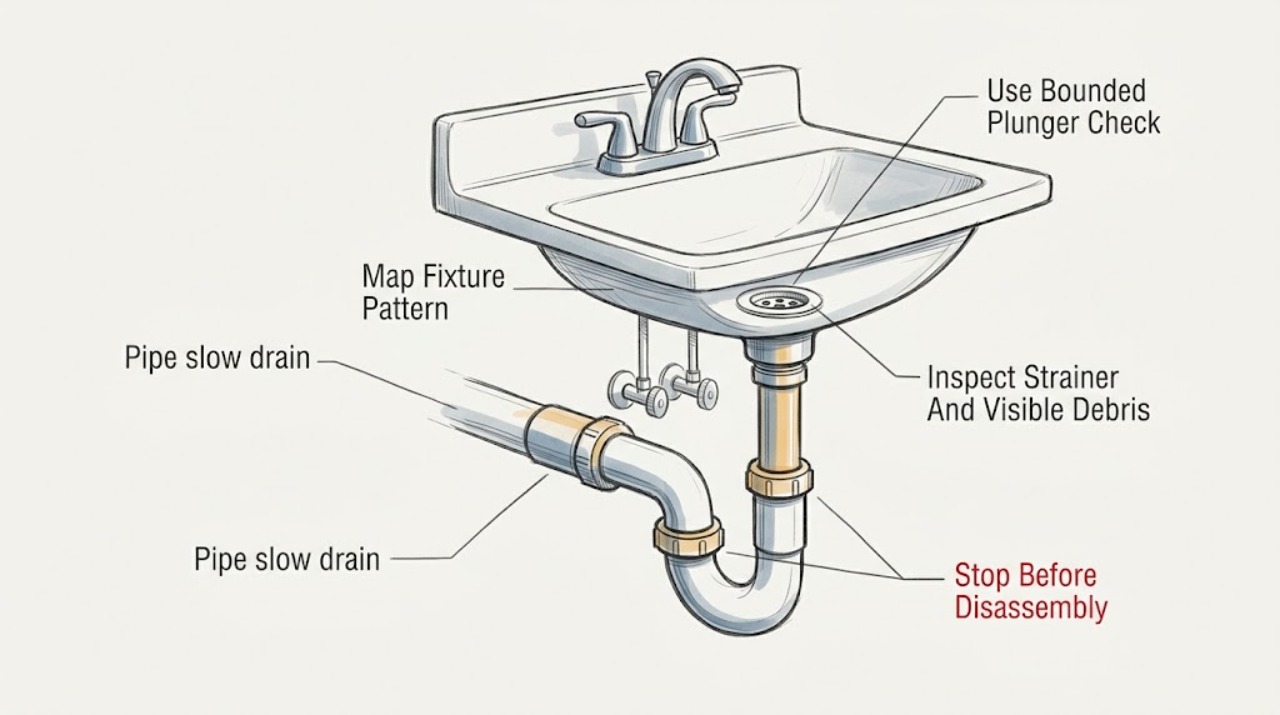
A slow drain is usually a developing restriction, not a reason to pour in more chemicals: first note whether one fixture is slow or several fixtures share the problem, then inspect the visible strainer and use a plunger only when the fixture and water are safe to handle. Keep grease, wipes, food solids, and household chemicals out of drains, and avoid chemical drain openers—especially with a septic system. Stop if water is backing up, wastewater is present, a cleanout is full, a pipe leaks, or the blockage needs trap removal, an auger beyond a safe accessible opening, or work inside a wall; a qualified plumber should locate and clear the line.
Work through in order
Diagnostic checks
Use only checks that match the exact appliance or system and its official guide.
-
Check 1
Without adding water to a fixture that is already rising, note which drain is slow, whether the water is clear or wastewater, whether other fixtures drain normally, and whether the problem changes when another fixture is used.
Expected result: One fixture is slow, several fixtures are slow, water rises from a low drain, or wastewater backs up when another fixture runs.
Next step: Use the matching single-fixture, multi-fixture, septic, or sewer-backup branch. Stop all water use if wastewater rises or the problem spreads.
Stop if: Stop for sewage, overflow, contaminated water, a full cleanout, water near electrical equipment, or any need to enter standing water.
Why this matters
Why: One fixture favors a local strainer, trap, or branch restriction; several fixtures or a low drain point toward a building drain, lateral, septic, or public sewer issue. A change caused by another fixture indicates shared downstream piping.
-
Check 2
For a single sink, tub, or shower that is not overflowing, remove only the accessible strainer or stopper as designed and lift out visible hair or solids. Keep the removed material out of the drain and do not push tools into a pipe that contains standing water or chemical cleaner.
Expected result: Debris is visible at the strainer, the opening is clear but drainage remains slow, or the fixture contains chemical cleaner or wastewater.
Next step: If the opening is clear and the fixture is safe, use one controlled plunger attempt. If chemical or wastewater is present, stop and tell the plumber exactly what is in the fixture.
Stop if: Stop for a rising level, chemical odor, skin or eye exposure, a broken strainer, a damaged fixture, or any need to remove a fixed fitting.
Why this matters
Why: A visible surface obstruction can explain a local slow drain; a clear opening with continued slowness moves the likely restriction into the trap or branch. Chemical or contaminated water creates a splash and exposure hazard.
-
Check 3
If only one fixture is slow, the water is not contaminated, and no chemical drain product has been used, cover any overflow opening as appropriate and use a correctly sized plunger with controlled strokes. Do not plunge a fixture connected to another open drain or one that is already overflowing.
Expected result: The fixture drains better, remains slow, worsens, or water appears at another fixture or connection.
Next step: Stop after a bounded attempt, remove only loosened surface material, and monitor one normal drain cycle. If it remains slow, recurs, or affects another fixture, call a plumber rather than escalating to chemicals or force.
Stop if: Stop for splashing, chemical exposure, sewage, a cracked fixture, a loose trap, or any need to use powered equipment or dismantle plumbing.
Why this matters
Why: Improvement suggests a local, movable restriction but does not prove the branch is clear; no improvement or movement at another fixture suggests a deeper or shared blockage. Worsening or cross-fixture movement raises backup risk.
-
Check 4
Record recent drain use and materials: grease or oil, food waste, wipes, hair, paper products, household chemicals, or unusually heavy water use. If the property has a septic system, note whether multiple fixtures are slow, the drainfield is wet, or wastewater is surfacing outdoors; do not dig into a wet drainfield.
Expected result: A specific material or disposal habit precedes the slow drain, several fixtures are affected, septic symptoms are present, or no clear use-related trigger exists.
Next step: Stop adding the identified material and reduce water use while arranging plumbing or septic service for multi-fixture, recurring, or outdoor symptoms. Do not pour chemicals down the drain to compensate.
Stop if: Stop for sewage surfacing, foul contamination, a saturated or unstable drainfield, chemical exposure, or any need to dig, pump, or open a septic tank.
Why this matters
Why: Grease, solids, wipes, and other materials can create blockages; on septic property, excess solids or liquid can burden the tank and drainfield. No obvious trigger does not rule out a pipe defect, root intrusion, or downstream restriction.
-
Check 5
Look beneath accessible sinks and along exposed drain piping for drips, staining, corrosion, or a loose connection. If an exterior cleanout is visible, observe whether it is standing full or overflowing without removing the cap or approaching wastewater.
Expected result: A trap or exposed joint leaks, the cleanout is full, several fixtures are slow but the cleanout is dry, or visible piping is dry and intact.
Next step: Stop water use for a backup, keep the area dry and isolated, and call a plumber. Share the cleanout observation with the utility if a public sewer issue is possible; do not loosen or replace the cap during an active problem.
Stop if: Stop for sewage, a pressurized or damaged cleanout, active leakage inside a wall, water near electricity, or any need to open, cut, or tighten inaccessible piping.
Why this matters
Why: A leaking local joint can restrict or admit air but does not explain every slow drain; a full cleanout supports a downstream restriction or backup. A dry cleanout does not rule out an indoor branch or upper lateral blockage.
-
Check 6
Prepare a service record with the affected fixture, time and speed change, water appearance, cross-fixture behavior, recent materials or heavy use, plunger result, visible leak, cleanout observation, septic status, and any chemical product used. Photograph only from a dry, safe position.
Expected result: The record distinguishes a local restriction, shared drain problem, sewer backup, septic issue, or supply-side leak and identifies hazards before the plumber arrives.
Next step: Keep using the affected fixture minimally or stop all water use if the problem is shared or backing up. Arrange a qualified plumber, septic professional, or utility assessment as the pattern requires.
Stop if: Do not continue when diagnosis requires chemical treatment, trap or cleanout removal, powered augering, pipe cutting, septic-tank access, or entry into wastewater.
Why this matters
Why: A precise pattern helps the plumber choose the correct access and avoid mixing chemical, contaminated, or pressurized conditions with tools; slow drainage alone cannot establish the failed component.
Use your observations
Decision map
Find the observation that best matches what you see, then follow the next safe action.
-
PATH 01Next step
What you see
Only one sink, tub, shower, or fixture drains slowly and no wastewater is rising elsewhere.
Do this next
Check the accessible strainer and, if safe and chemical-free, make one bounded plunger attempt. If it stays slow or recurs, have a plumber inspect the trap or branch instead of using chemical opener.
-
PATH 02Next step
What you see
Several fixtures are slow, gurgle, or change when another fixture drains.
Do this next
Stop nonessential water use and call a qualified plumber for the building drain or lateral. Do not keep flushing or add chemicals while the shared restriction is present.
-
PATH 03Next step
What you see
Dirty or odorous water rises from a drain, toilet, floor drain, cleanout, or the lowest fixture.
Do this next
Stop all water use, keep people and pets away, avoid contact, and call a plumber. Contact the local sewer utility when the property-line cleanout or public main may be involved.
-
PATH 04Next step
What you see
The property uses septic and multiple fixtures are slow, the drainfield is wet or surfacing wastewater, or heavy water or solids use preceded the issue.
Do this next
Reduce water use and stop adding grease, solids, or chemicals. Arrange licensed plumber or septic-professional inspection; do not dig, pump, or open the tank or drainfield yourself.
-
PATH 05Next step
What you see
The slow drain accompanies a leaking, cracked, corroded, or inaccessible exposed pipe.
Do this next
Limit water use, protect the area without entering water, and call a plumber for pipe and drainage inspection. Do not seal over a damaged pipe or cut into a wall to reach it.
-
PATH 06Next step
What you see
Chemical drain product is present, wastewater is exposed, or a plunger or tool causes splashing or a worsening backup.
Do this next
Stop all further attempts, keep the area isolated, tell the plumber what product was used, and arrange qualified service or professional cleanup. Do not mix products or open the trap.
Helpful context
Understand the symptom
One slow fixture is different from a slow building drain
Start by comparing the affected sink, tub, shower, toilet, or appliance drain with other fixtures, without adding more water if the level is rising. One fixture that drains slowly points toward its strainer, trap, or branch; several fixtures, a low floor drain, foul wastewater, or a problem that returns after other fixtures run points farther downstream. A sewer lateral carries wastewater from toilets, sinks, and showers to the street main, so a licensed plumber may need to inspect it when the pattern is broader than one fixture.
Try only a bounded, non-chemical first check
Remove visible hair or debris from a strainer without pushing it into the pipe, and use a correctly sized plunger only when the fixture is safe and no chemical cleaner has been poured into it. EPA advises avoiding chemical drain openers for a clogged drain and keeping grease, oils, wipes, food solids, and hazardous household chemicals out of drains. If a chemical has already been used, tell the plumber and do not combine it with another product or open a trap where it could splash.
Persistent or multi-fixture restriction is professional work
A slow drain can reflect a branch clog, a building drain or lateral restriction, roots, a damaged or leaking line, or septic-system loading. Do not infer the cause from drainage speed alone. If the drain becomes a backup, stop using water; keep people and pets away from wastewater, and arrange qualified plumbing inspection. A professional can choose a safe access point, clear the confirmed restriction, inspect the line, and coordinate with the utility or septic professional when the problem is beyond the building branch.
Only after diagnosis
Potential parts
- sink or fixture drain strainer
Consider this category only when a damaged or missing accessible strainer is confirmed as the local source of solids entering the drain.
Confirm fixture type, opening dimensions, overflow arrangement, seal, and manufacturer or local plumbing requirements; a strainer will not clear a downstream restriction. - drain trap gasket or trap assembly
Consider this category only when a plumber confirms a leaking or damaged trap or gasket and identifies the pipe material and connection type.
Confirm pipe size, material, trap configuration, access, seals, and local requirements; do not open a trap after chemical cleaner has been used. - sewer cleanout cap or backwater valve
Consider this category only after a qualified plumber or utility confirms a damaged cleanout component or recurring backup risk and determines the correct remedy.
Confirm private-lateral layout, flow direction, access, maintenance, pipe size, and local code; these parts do not replace clearing or repairing the confirmed blockage.
When checks do not resolve it
Need a professional?
More than one fixture is slow, wastewater rises, or a low drain or cleanout is affected., The slow drain recurs after a bounded surface check or is accompanied by gurgling, odors, leakage, or wet ground., The property uses septic and there are multiple slow fixtures, drainfield symptoms, or heavy solids or water concerns., Chemical drain product has been used, a trap or cleanout needs opening, or an auger must pass beyond a safe accessible opening., The line is inside a wall, ceiling, slab, or other inaccessible area, or water is near electrical equipment.
Common questions
FAQ
Why is only one drain slow?
A single slow fixture often points toward its strainer, trap, or branch rather than the whole sewer line, but drainage speed alone cannot prove the location. Remove only visible surface debris and make one safe, chemical-free plunger attempt; call a plumber if the problem remains or returns.
What does it mean when several drains are slow?
Several slow fixtures, gurgling, or wastewater at a low drain suggests a shared building drain, sewer lateral, septic, or public sewer problem. Stop nonessential water use and arrange qualified plumbing inspection rather than treating each fixture with chemicals.
Should I use chemical drain opener for a slow pipe?
Avoid it. EPA specifically advises avoiding chemical drain openers for clogged drains, and chemicals can create exposure hazards for anyone who later opens the trap or line. Tell the plumber if any product has already been used and do not mix products.
Can grease or wipes cause a slow drain?
Yes. Grease, oils, wipes, food solids, hair, and other unsuitable materials can contribute to restrictions in household or sewer piping. Stop adding them and use the appropriate disposal method; a persistent slow drain still needs diagnosis rather than an assumption about the material.
When is a slow drain an emergency?
Treat it urgently when wastewater backs up, multiple fixtures are affected, a cleanout is full, water is leaking inside a wall or near electricity, sewage surfaces outdoors, or the property has septic-system failure signs. Stop water use, keep away from contaminated water, and call a plumber or utility as appropriate.
Read the exact guide
Official sources
- What to Do if Your Sewer Backs UpCity of Lincoln, California · Property-line cleanout observation and sewer-backup response
- SepticSmartU.S. Environmental Protection Agency · Septic-system water-use and drain-protection context
- Sanitary Sewer Overflow (SSO) Frequent QuestionsU.S. Environmental Protection Agency · Sewer-overflow causes, contamination, and line-failure context
- Home MaintenanceU.S. Environmental Protection Agency, WaterSense · Visible household plumbing leak checks and plumber escalation
- How to Care for Your Septic SystemU.S. Environmental Protection Agency · Septic-system drain practices and chemical drain-opener guidance
- How to Take Care of Your Sewer LateralSan Francisco Public Utilities Commission · Sewer-lateral structure, multi-fixture backups, and licensed-plumber boundary
Community feedback
Share a repair observation
Share a plain-text repair observation. Accepted observations are published automatically; this page may take a moment to update.