
Repair problem
Slow Drain Troubleshooting Guides
Published FixGraph guidance for diagnosing and responding to slow drain.
Matching published guides
Choose a guide that matches the service, equipment, and conditions you are seeing.
-
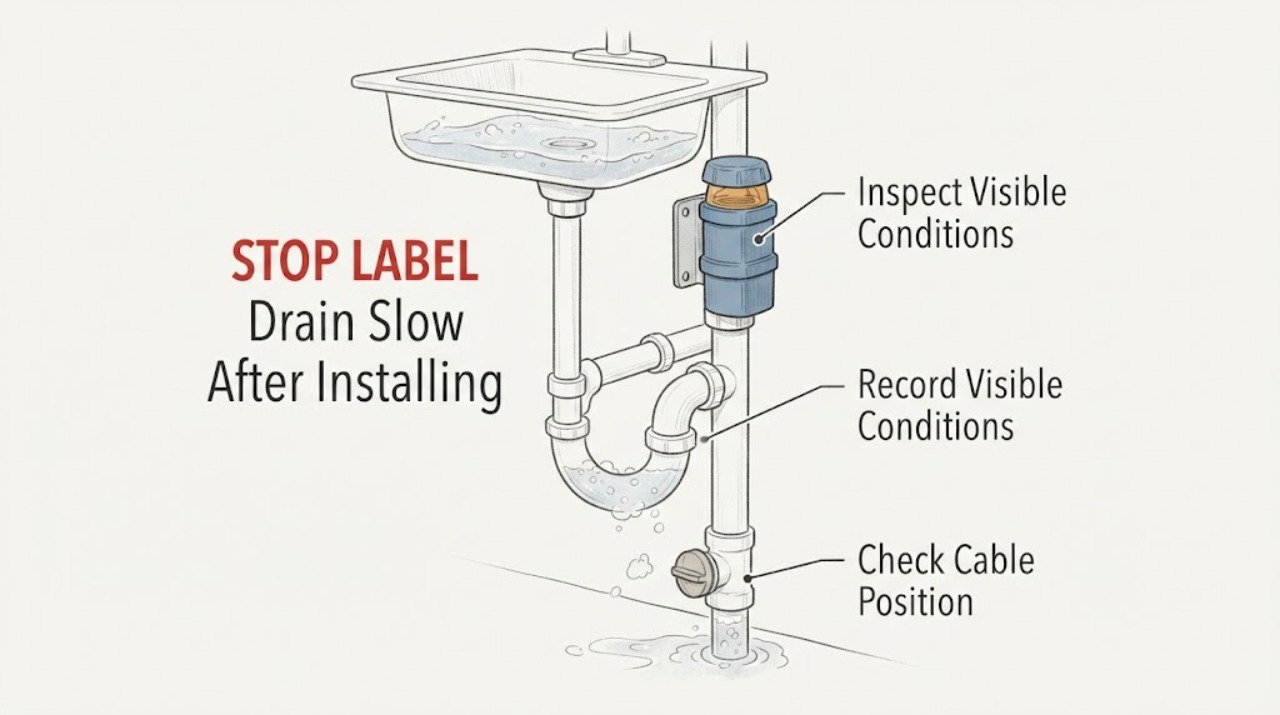
Drain Slow After Installing an AAV: Check Venting, Layout, and Blockage
Because the slow drain started after the AAV was installed, first separate an AAV/venting change from a blockage or pipe-layout problem. With no sewage, overflow, chemical, pressure, or electrical hazard, record whether the symptom began immediately, whether one fixture or several are slow, and whether there is gurgling or sewer odor.
-
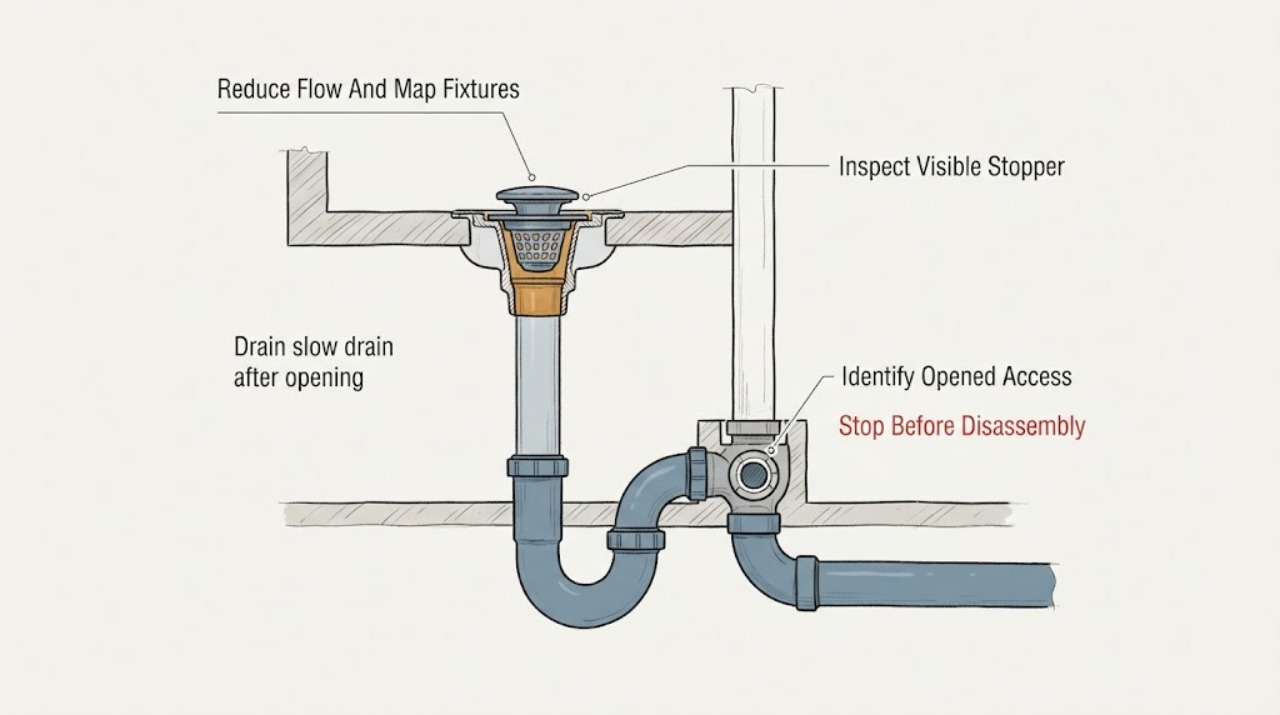
Drain slow drain after opening: find the blockage safely
If a drain is still slow after you opened a stopper, strainer, cleanout, or other accessible opening, first identify exactly what was opened and whether the symptom is limited to one fixture. A visible hair or soap obstruction at a stopper or strainer can sometimes be removed from ordinary safe access, but a slow drain after the opening is clear can be farther down the branch, related to the trap, vent, or main drain.
-
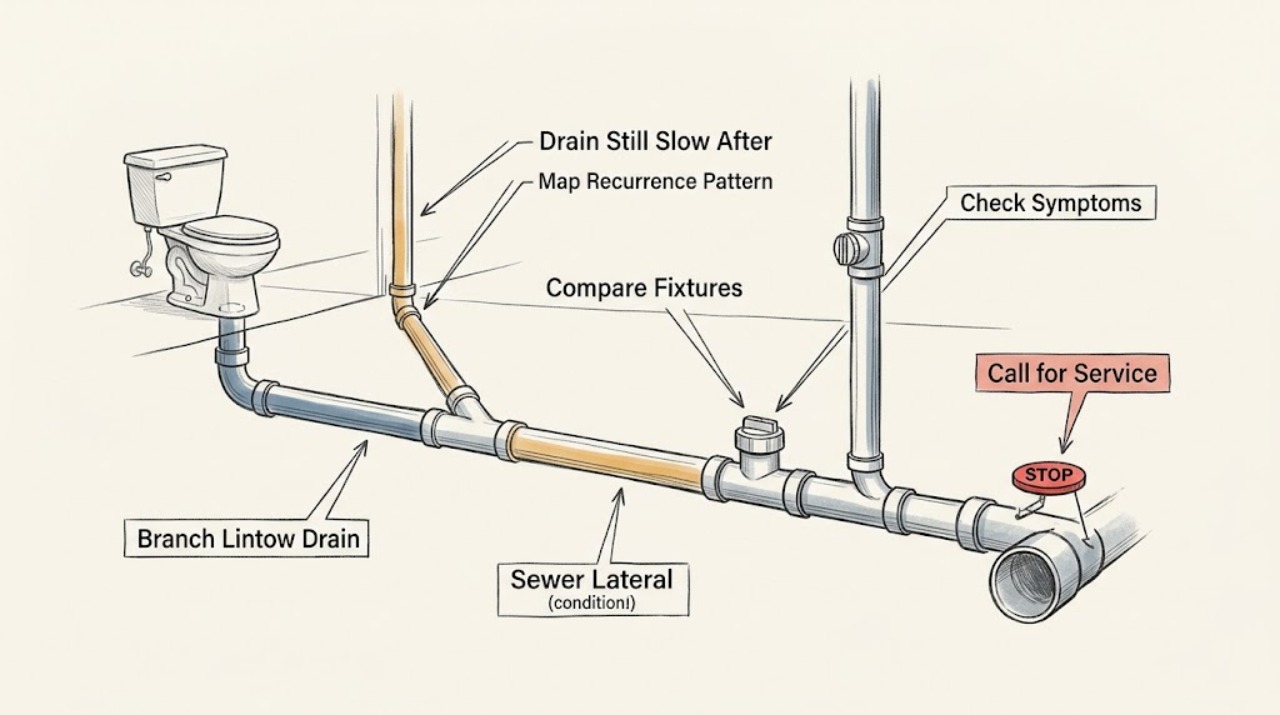
Drain Still Slow After a Plumber Snaked It: What to Check Next
If a drain is still slow after a plumber snaked it, do not assume the first obstruction was completely removed or that the same section is the cause. Record whether the problem is one fixture or several, whether it returned immediately or after days, and whether you hear gurgling, smell sewage, or see water backing up.
-
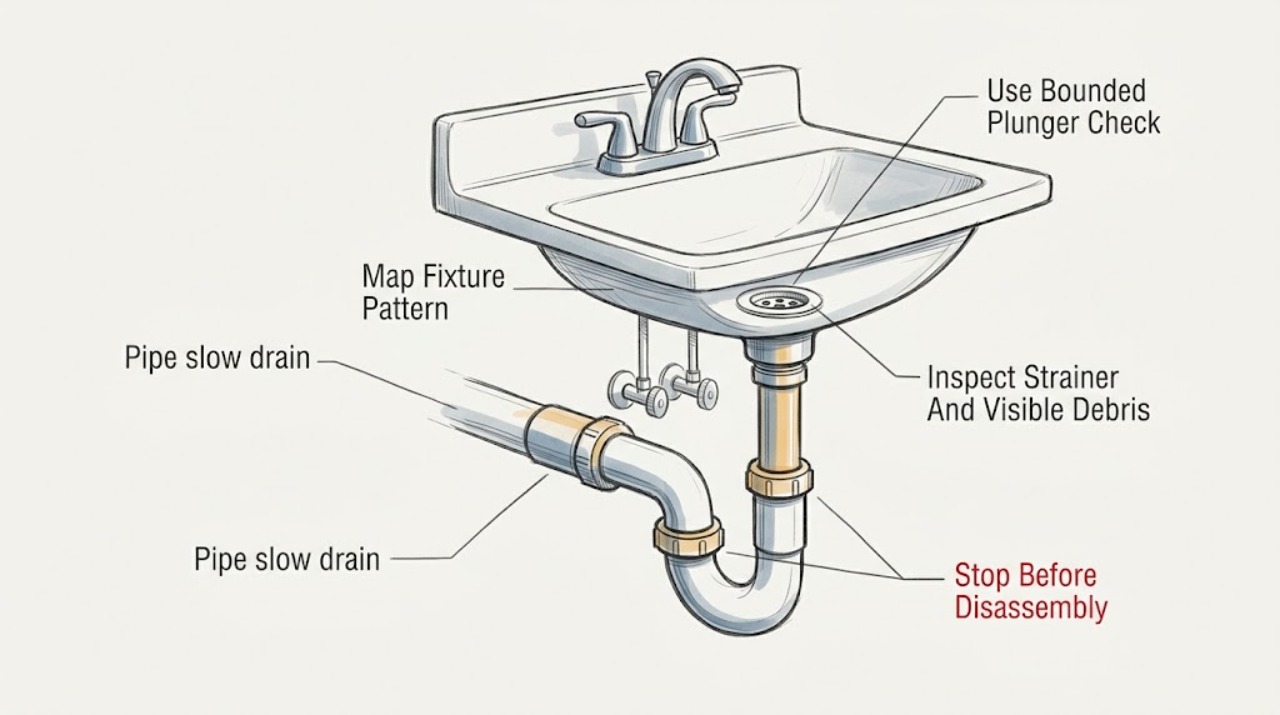
Pipe slow drain: find whether the blockage is local or farther down the line
A slow drain is usually a developing restriction, not a reason to pour in more chemicals: first note whether one fixture is slow or several fixtures share the problem, then inspect the visible strainer and use a plunger only when the fixture and water are safe to handle. Keep grease, wipes, food solids, and household chemicals out of drains, and avoid chemical drain openers—especially with a septic system.
-
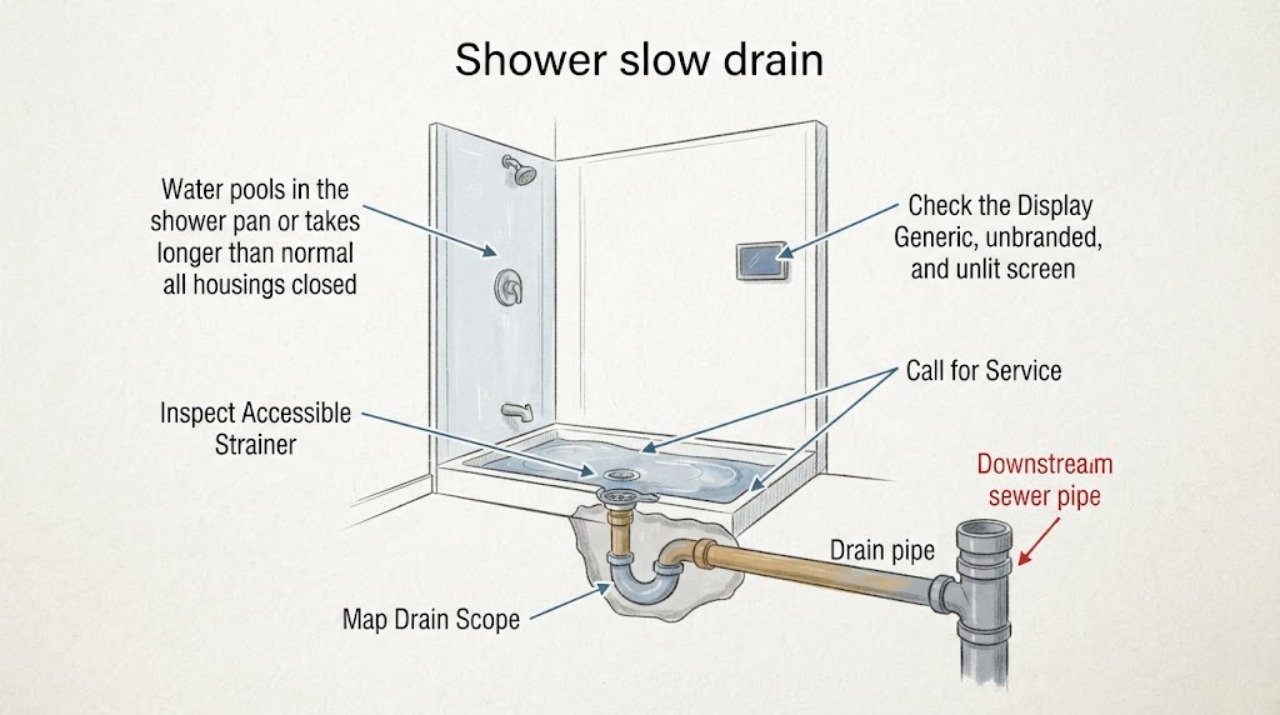
Shower slow drain: safe checks before calling a plumber
Stop adding water while the shower is pooling, then determine whether the symptom is limited to this shower or whether a sink, toilet, or washing machine also drains slowly or sends water toward the shower. With gloves and the water off, remove only the accessible strainer and visible hair or debris; do not remove a fixed fitting or put a hand into contaminated water.
-
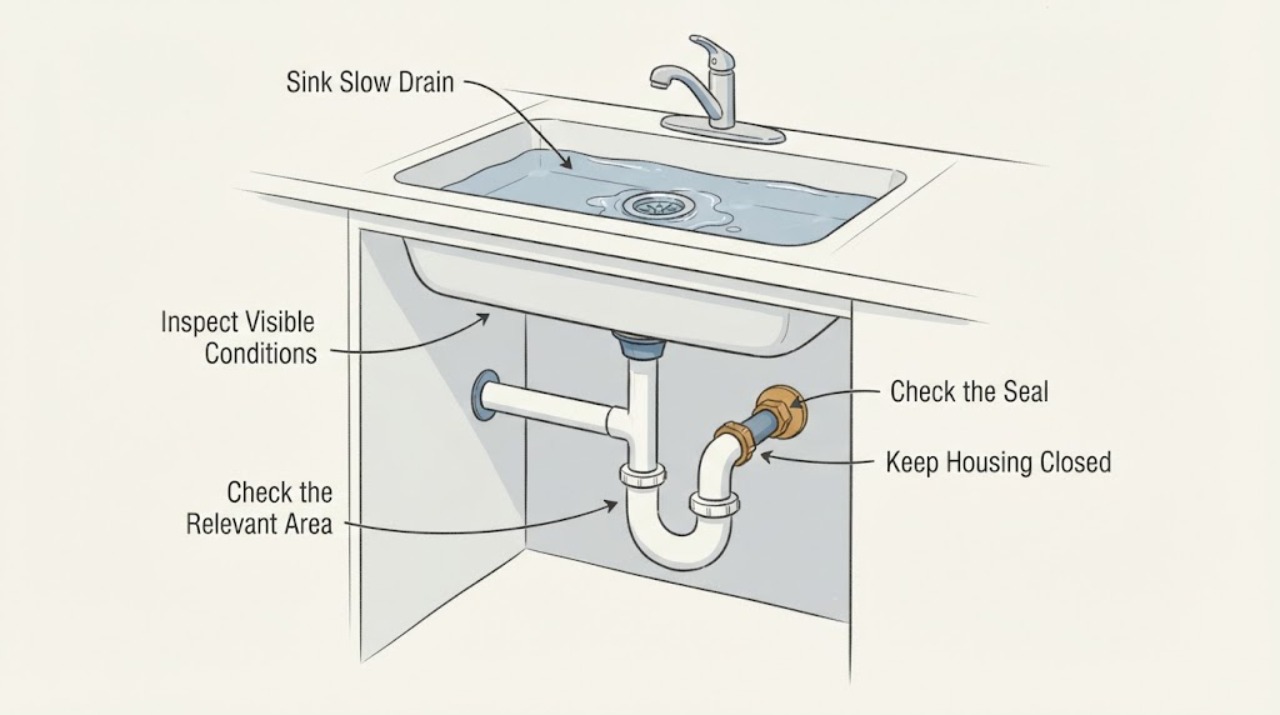
Sink Slow Drain: Check the Strainer, Trap, and Branch Line Safely
A sink that drains slowly usually has restriction near the visible strainer or stopper, in the trap below the sink, or farther along a branch drain. First note whether the water level falls slowly, stops completely, backs up into another fixture, or leaks under the sink.
-
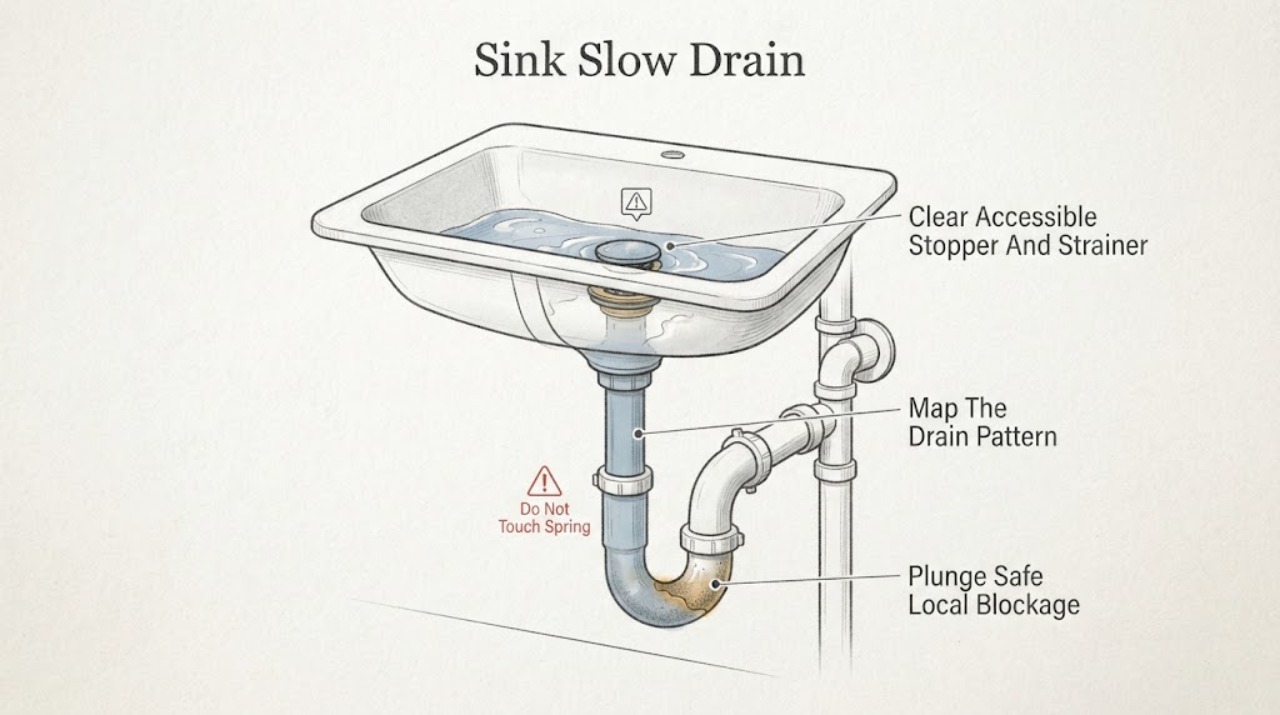
Sink Slow Drain: Isolate the Blockage Safely
A sink that drains slowly usually needs the blockage localized before anything is removed. First note whether only this sink is slow, whether water rises or backs up, and whether the problem follows a stopper, strainer, or food-and-grease use pattern.
-
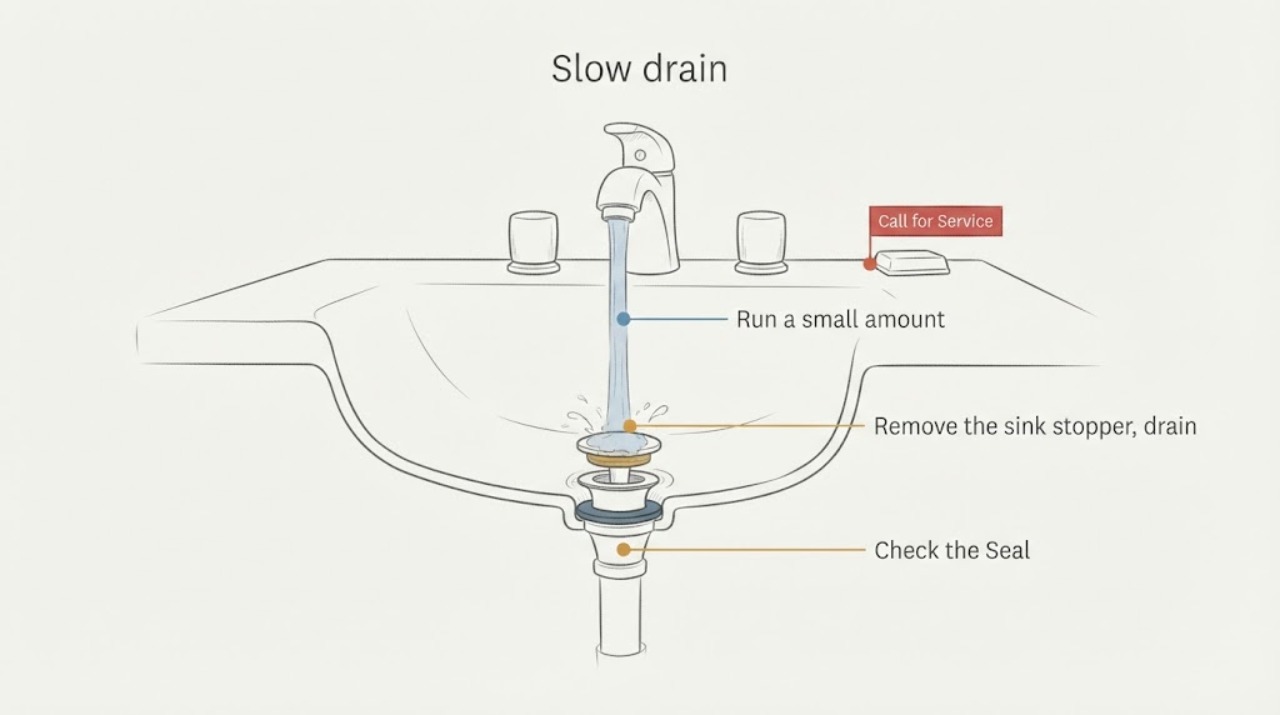
Slow drain: find a local blockage before it becomes a backup
First check whether one fixture is slow or several fixtures are slow. For one sink, remove the stopper or strainer, clear only visible debris, and try a properly sealed manual plunger.
-
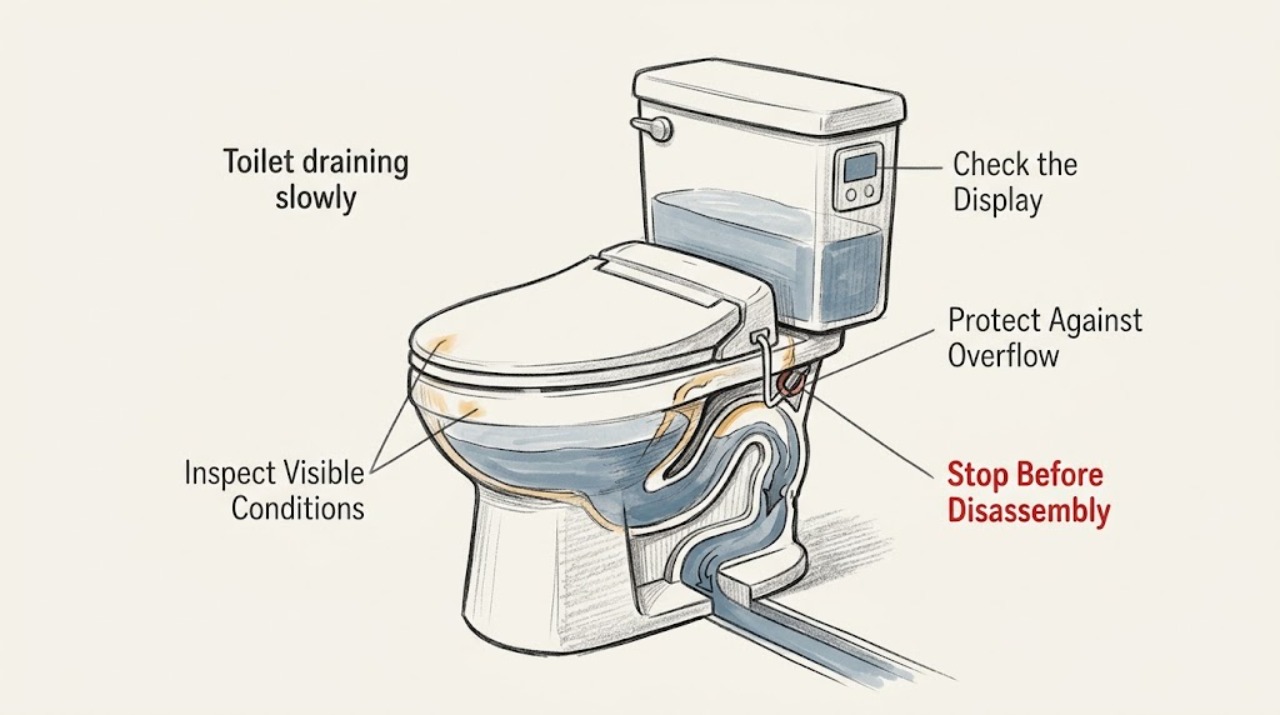
Toilet draining slowly: test the bowl and trapway before calling for deeper drain work
A slow-draining toilet usually needs its bowl, trapway, or connected drain path distinguished before parts are replaced. Keep the bowl from overflowing, check whether the water level falls normally after a flush, and—only when the bowl is at a safe level—use a small controlled water-pour observation.
-
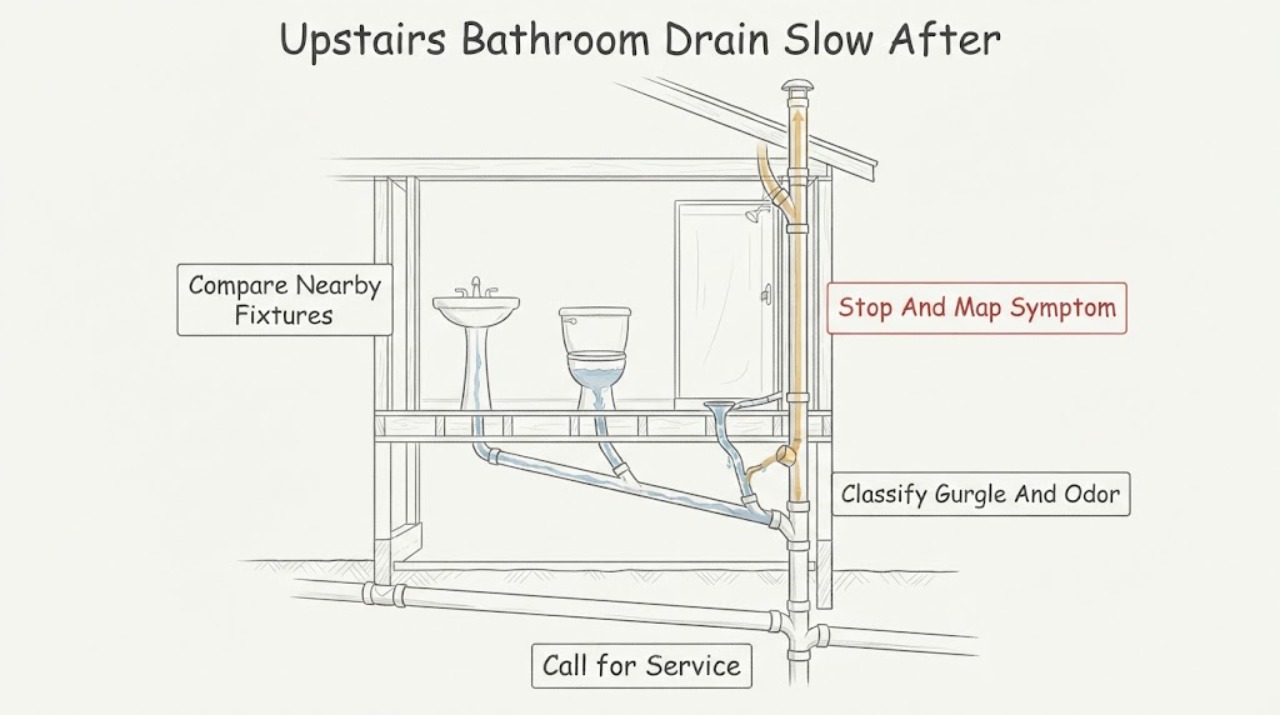
Upstairs Bathroom Drain Slow After Flushing: Branch, Main, or Vent?
If an upstairs bathroom drain becomes slow right after a toilet flush, first treat the timing as a clue rather than proof that the toilet caused the restriction. One sink or tub that is slow with no sound or rise points more toward its stopper, trap, or local branch.