
On this page
Start here
Quick answer
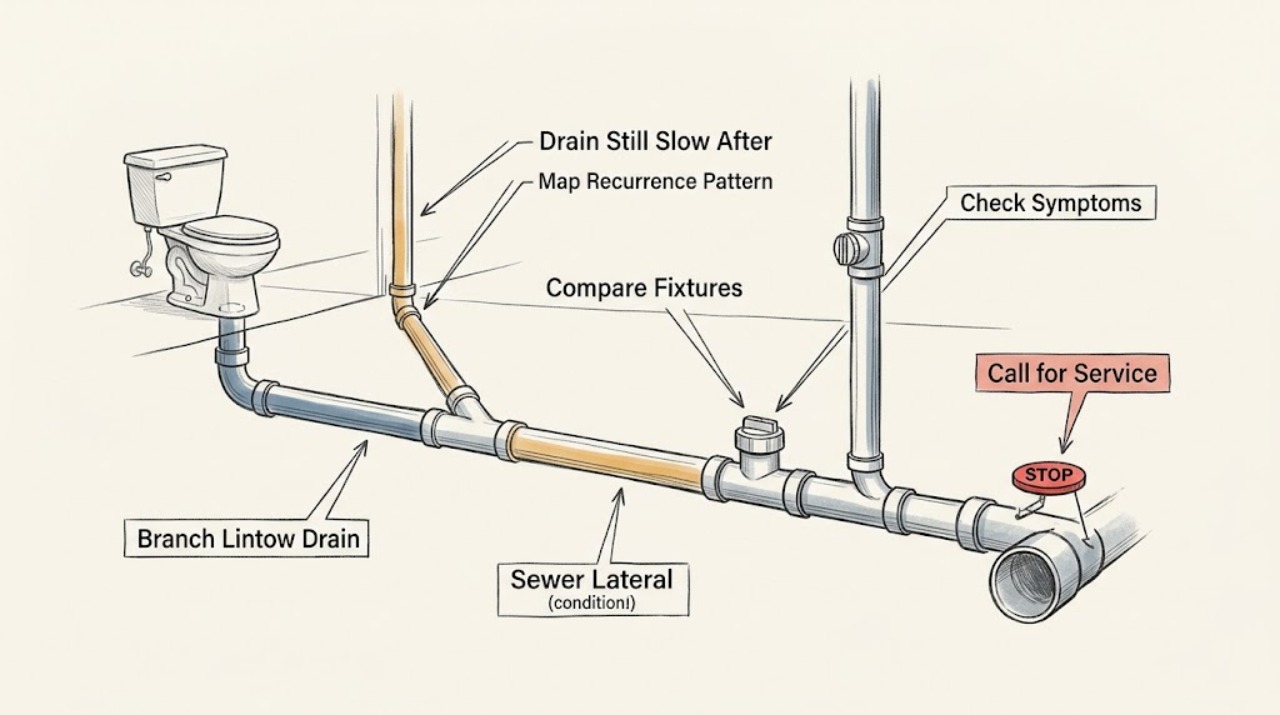
If a drain is still slow after a plumber snaked it, do not assume the first obstruction was completely removed or that the same section is the cause. Record whether the problem is one fixture or several, whether it returned immediately or after days, and whether you hear gurgling, smell sewage, or see water backing up. Keep water use low if multiple fixtures are affected, and stop using the affected area if sewage returns. Ask the plumber to identify the cleaned reach, what was removed, whether flow was tested, and whether a camera inspection or cleanout check is appropriate. A recurring slow drain can reflect remaining grease or debris, roots, a sag or damaged lateral, a vent issue, or a downstream or public-sewer restriction. Do not mix drain chemicals or open a pressurized or contaminated cleanout yourself.
Work through in order
Diagnostic checks
Use only checks that match the exact appliance or system and its official guide.
-
Check 1
Record the affected fixture, whether it is a sink, shower, toilet, floor drain, or another outlet, and whether the drain was never clear after snaking or became slow again later; avoid running large volumes of water just to test it.
Expected result: The same fixture stayed slow, flow improved and then declined, or the symptom appears only after a particular discharge such as laundry or a toilet flush.
Next step: Give the timeline to the original plumber and ask where the cable was inserted, how far it traveled, what material was removed, and how the result was verified.
Stop if: Stop water use in the affected area if the level rises, wastewater returns, or the drain emits a strong sewage odor.
Why this matters
Why: No improvement can indicate an unreached or incompletely cleared restriction. Delayed recurrence suggests residual buildup, roots, a pipe defect, or a restriction that was temporarily opened. A trigger from another fixture can place the problem downstream of the local trap.
-
Check 2
Without creating a large discharge, compare the symptom at nearby fixtures and note whether a toilet, shower, floor drain, or another sink changes when one fixture is used; ask a neighbor only whether they have a similar issue, not for a shared repair procedure.
Expected result: Only one outlet is slow, several outlets are slow, lower fixtures back up, or neighboring properties report similar drainage trouble.
Next step: For a single outlet, request local follow-up. For several outlets or a neighbor pattern, reduce water use and contact the responsible sewer utility, septic professional, property manager, or plumber for system-level assessment.
Stop if: Do not use toilets, washing machines, tubs, or other high-flow fixtures while wastewater is backing up or the affected area may overflow.
Why this matters
Why: A single outlet favors a local trap or branch restriction. Several outlets, lower-level backup, or a neighbor pattern points toward a building lateral, septic system, or public sewer rather than the one fixture that was snaked.
-
Check 3
From a dry, safe position, note gurgling, bubbling, sewage odor, water marks, wet soil, or water returning through a lower drain; do not put hands into wastewater or remove a drain cover that is holding back contaminated water.
Expected result: There is only slow flow, or slow flow is accompanied by gurgling, foul odor, visible backup, standing wastewater, or a wet area outside near a septic tank or lateral.
Next step: For backup, sewage, or a suspected septic issue, keep people and pets away, minimize water use, and contact the relevant utility, septic professional, or plumber. Do not diagnose the exact cause from odor alone.
Stop if: Stop immediately for sewage contact, rising water, an unsafe floor, strong persistent odor in an enclosed area, or water near electrical equipment.
Why this matters
Why: Gurgling, odors, backup, and wet areas increase concern for a downstream restriction, sewer lateral or septic malfunction, or overflow risk. A slow drain without those signs can still need follow-up, but may permit a controlled professional inspection rather than emergency containment.
-
Check 4
Ask the plumber for the service record: access point, approximate reach, material removed, whether the cable reached the lateral or only the branch, whether water flow was observed afterward, and whether a cleanout was available; do not infer these facts from the invoice wording alone.
Expected result: The record shows a local clearing only, a recurring root or grease finding, an incomplete reach, no flow verification, or no documented finding.
Next step: Request a targeted return visit and ask whether a cleanout inspection, full-reach cleaning, or camera inspection is justified by the pattern. Keep the cleanout cap closed unless the professional is servicing it.
Stop if: Do not open a cleanout that may be under pressure, flooded, contaminated, or located near electrical equipment; do not operate powered drain equipment yourself after chemical use.
Why this matters
Why: A local clearing may leave a downstream restriction untouched, and a cable result without a structural view cannot distinguish recurring buildup from a sag, crack, root intrusion, or collapse. Missing service evidence is a reason to request clarification, not permission to repeat blind snaking.
-
Check 5
Only when there is no backup, no chemical residue, and the fixture is safe to access, inspect the visible strainer, stopper, and trap area for hair, food, or debris without dismantling a concealed or pressurized line; remove only material that is plainly accessible and safe to handle.
Expected result: The visible opening has debris, the local area is clear but the drain remains slow, or the line contains liquid that may be contaminated or chemically treated.
Next step: Use ordinary cleaning only as permitted for the fixture and disclose any prior drain product to the professional. For a clear local opening or uncertain liquid, stop DIY work and request service.
Stop if: Do not mix products, add another chemical, use a flame or heat, plunge against a blocked overflow without knowing the contents, or contact unknown wastewater with bare hands.
Why this matters
Why: A visible local obstruction may explain one fixture, while a clear opening with persistent slow flow shifts the issue deeper into the branch or sewer path. Unknown chemical residue creates a splash and exposure hazard and should be disclosed to the plumber.
-
Check 6
Tell the plumber whether a cleanout is visible and whether the symptom is near the building, at a lower level, outdoors, or after heavy rain; leave excavation, cleanout opening, cable work, and camera work to the professional.
Expected result: The recurrence is near a cleanout, follows rain, affects a lower drain, occurs in a septic property, or has no clear location.
Next step: Request a system-level assessment, including camera inspection when the professional considers it appropriate. Contact the public utility when the main sewer may be involved and a septic professional for an onsite system.
Stop if: Do not dig, remove a cleanout cap, enter a pit, stand over a suspected sewage discharge, or use powered equipment around standing water.
Why this matters
Why: A cleanout gives a professional an access point to locate the restriction. Rain-linked symptoms can involve stormwater or groundwater entering a sewer system; a lower-drain or septic pattern can indicate a larger capacity or onsite-wastewater problem.
-
Check 7
After professional flow is restored, record the confirmed cause and use only the provider's maintenance guidance; keep grease, wipes, and other unsuitable materials out of the drain and do not treat a recurring symptom with repeated blind chemical dosing.
Expected result: The plumber identifies grease or debris, roots, a structural defect, a vent or fixture issue, a septic concern, or no confirmed cause.
Next step: Follow the documented cleaning, inspection, repair, or septic-maintenance plan and keep the service record for the next recurrence. Escalate promptly if the drain slows again soon.
Stop if: Stop discharge if flow worsens, wastewater returns, an odor becomes strong, or a repaired area leaks or settles.
Why this matters
Why: Grease and debris can rebuild, roots can recur in compromised pipe, and a structural or septic cause will not be solved by a surface treatment. No confirmed cause means the symptom still needs evidence rather than a guessed part or product.
Use your observations
Decision map
Find the observation that best matches what you see, then follow the next safe action.
-
PATH 01Next step
What you see
Sewage or wastewater is rising, returning through a lower drain, or overflowing after the snaking visit.
Do this next
Stop using water throughout the affected building, keep people and pets away from contaminated water, and contact the responsible sewer utility, property manager, septic professional, or plumber for urgent assessment. Do not open a pressurized cleanout.
-
PATH 02Next step
What you see
Only one fixture remains slow and other fixtures drain normally.
Do this next
Ask the original plumber to reassess the local trap or branch and confirm the cable reach and flow test. Do not assume the entire sewer lateral is clear or keep adding chemicals.
-
PATH 03Next step
What you see
Several fixtures are slow, a toilet affects another outlet, or a lower drain backs up.
Do this next
Minimize all water use and request branch, building lateral, septic, or public-sewer assessment rather than another isolated fixture treatment.
-
PATH 04Next step
What you see
The drain improved briefly after snaking and slowed again soon afterward.
Do this next
Request the service record and a targeted return visit. Ask whether residual buildup, roots, a pipe sag, a crack, or an unreached downstream section warrants full-reach cleaning or camera inspection.
-
PATH 05Next step
What you see
The drain was never noticeably better after the plumber's visit.
Do this next
Do not repeat blind snaking. Ask where the cable reached, what was removed, how flow was verified, and whether the restriction may be beyond the cleaned section or structural.
-
PATH 06Next step
What you see
Slow flow is accompanied by gurgling, sewage odor, wet soil, or standing water near an onsite wastewater system.
Do this next
Reduce water use and contact a septic professional or plumber. Do not infer the exact cause from odor alone and avoid contact with wastewater.
-
PATH 07Next step
What you see
A drain opener or other chemical was used before or after snaking, or the liquid in the line is unknown.
Do this next
Stop adding products, keep people away from splashes or fumes, tell the plumber exactly what was used and when, and let the professional choose a safe next step.
-
PATH 08Next step
What you see
Neighbors have similar symptoms or the issue appears to involve the public main rather than only the property.
Do this next
Contact the local sewer utility for assessment while minimizing water use. Keep the plumber's service record available so private-lateral and public-main responsibility can be separated.
Helpful context
Understand the symptom
The timing after snaking is diagnostic
A drain that never improved suggests the restriction may be beyond the reach cleaned, the cable may have made only a narrow path, or a connected issue is limiting flow. A drain that improved and then slowed again points more toward recurring debris, grease, roots, a pipe defect, or a downstream restriction. Ask what the plumber observed and where the cable reached; the answer changes whether follow-up is cleaning, inspection, or repair.
Separate one fixture from the building sewer
Test no more water than is needed to observe the symptom. One slow fixture can be local, while several slow fixtures, a toilet that changes when another fixture runs, or water returning through a lower drain suggests a branch, lateral, septic, or public-sewer issue. Minneapolis notes that several drainage points and neighbors with similar symptoms can indicate a wider sewer problem.
Use inspection evidence when the symptom recurs
A repeat blockage is not proof that a specific pipe or part failed. A plumber may need to inspect a cleanout, verify the full reach, or use a camera to distinguish residual buildup from roots, a sag, a crack, or collapse. Keep the cleanout cap closed except during professional service and do not pour chemicals into a line that may contain an unknown treatment.
Only after diagnosis
Potential parts
- drain trap or branch-drain fitting
Consider only if qualified inspection identifies a damaged, incorrectly configured, or obstructed local fitting after the visible fixture area is assessed.
Confirm the fixture, pipe material, dimensions, access, and local plumbing requirements before any replacement; slow flow alone does not identify a fitting. - sewer cleanout cap or access fitting
Consider only if a qualified plumber finds a missing, damaged, or unsafe cleanout access component while diagnosing the recurring restriction.
Match the existing pipe system and local requirements. A cleanout is an access point, not a reason for an untrained person to open a pressurized or contaminated line. - backwater or backflow protection device
Consider only after a qualified professional confirms that site-specific backup risk and plumbing configuration justify this protective device.
Sizing, placement, access, and maintenance depend on the building and local code; do not select a device from the slow-drain symptom alone.
When checks do not resolve it
Need a professional?
Request the original plumber's follow-up when the drain never improved, improved only briefly, or became slow again; ask for the cleaned reach, material removed, flow verification, and whether camera inspection or a cleanout assessment is warranted. Contact the sewer utility for a suspected public-main issue and a septic professional for onsite wastewater symptoms.
Have this ready
- Provide the affected fixture, recurrence timeline, one-versus-many fixture pattern, gurgling or odor, backup or wet-soil observations, recent rain, the exact snaking access point and reach if known, the service record, and any drain product used.
Common questions
FAQ
Why is my drain still slow after a plumber snaked it?
The cable may have cleared only a local section, left residual buildup, or opened a narrow path through grease or roots. A downstream restriction, sag, crack, vent issue, or septic problem may also be involved. Ask for the cable reach, material removed, flow test, and whether camera inspection is appropriate.
Should I have the drain snaked again right away?
Do not repeat blind snaking without reviewing what the first visit reached and whether flow was verified. If the drain never improved or slowed again soon, request a targeted return visit and ask whether full-reach cleaning, a cleanout assessment, or camera inspection would answer the question.
What does it mean if several drains become slow after one drain was cleared?
Several slow fixtures, a lower drain backing up, or a toilet affecting another outlet points beyond one local fixture. Minimize water use and request branch, lateral, septic, or public-sewer assessment; do not keep using high-flow fixtures while wastewater may return.
Can I use drain cleaner after snaking?
Do not add or mix products when the line contents are unknown or a plumber may return. Tell the plumber exactly what was used and when. Chemical residue can create splash and fume hazards during later work, and repeated product use does not establish why the restriction recurred.
When is a slow drain an emergency?
Treat sewage backup, overflow, water near electrical equipment, a strong persistent odor in an enclosed area, an unsafe flooded floor, or unknown chemical residue as a stop condition. Minimize water use, keep people and pets away, and contact the relevant utility, septic professional, or plumber.
Read the exact guide
Official sources
- Side Sewer Defects & IssuesSeattle Public Utilities · General sewer-lateral evidence; local ownership and repair rules vary by jurisdiction.
- Sanitary Sewer OverflowsAustin Water · Municipal wastewater safety guidance; emergency contacts and ownership rules vary by location.
- Resolving Septic System MalfunctionsU.S. Environmental Protection Agency · Relevant when the property uses septic or onsite wastewater; municipal sewer users should use local utility guidance.
- Sewer Lateral InformationCounty of San Diego Department of Public Works · County guidance used for general decision logic; property responsibility and permit rules vary locally.
- Sewer Problems in the HomeCity of Minneapolis Public Works · Municipal example of one-versus-many fixture and private-versus-public sewer triage; local procedures vary.
Community feedback
Share a repair observation
Share a plain-text repair observation. Accepted observations are published automatically; this page may take a moment to update.