
On this page
Start here
Quick answer
First check whether one fixture is slow or several fixtures are slow. For one sink, remove the stopper or strainer, clear only visible debris, and try a properly sealed manual plunger. If the drain remains slow, a visible trap cleanout can be checked with a bucket only when no chemical cleaner is present and the fittings are accessible. Stop using water and call a qualified plumber for sewage backup, strong sewer odor, wet ground, several slow fixtures, or a blockage that keeps returning.
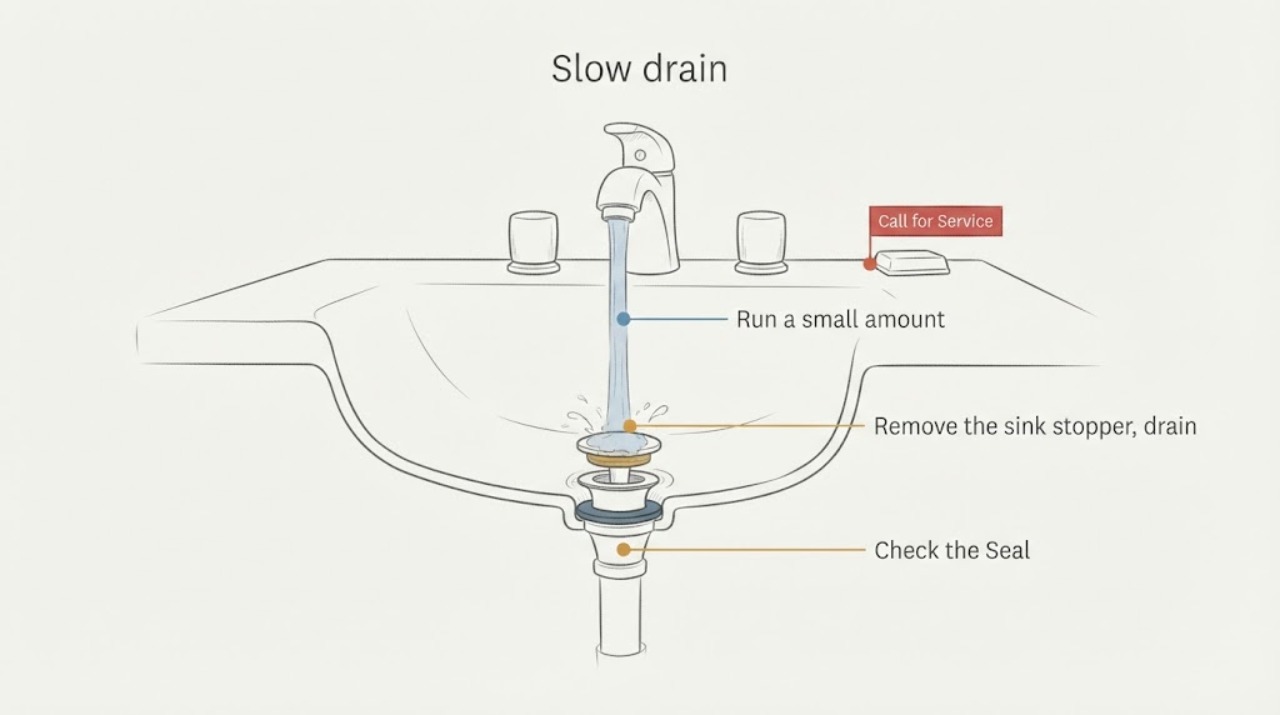
Work through in order
Diagnostic checks
Use only checks that match the exact appliance or system and its official guide.
-
Check 1
Run a small amount of water at the affected fixture while observing the drain, then ask whether another sink, toilet, shower, or floor drain is also slow or gurgling; stop adding water if it rises or backs up.
Expected result: Only one fixture drains slowly, or several fixtures are slow, gurgle, smell of sewage, or show wastewater backup.
Next step: Use the local-fixture checks only for an isolated slow drain. For multiple fixtures, backup, or sewage symptoms, reduce water use and call a qualified plumber or septic professional.
Why this matters
Why: One isolated fixture points first to a local stopper, trap, or branch obstruction. Several fixtures or backup symptoms can indicate a blockage farther downstream or a septic-system warning and are not a good DIY plunging target.
-
Check 2
Remove the sink stopper, drain plate, or crumb strainer without forcing it, and look just below the opening for hair, food, grease, or another reachable obstruction; remove only what is visible and accessible.
Expected result: Debris is visible at the opening and flow improves after it is removed, or the opening is clear and the drain remains slow.
Next step: Rinse the fixture with a modest amount of water and monitor it. If it stays slow, use a manual plunger; do not push an object deeper or use a sharp tool where it could damage the drain.
Why this matters
Why: An obstruction immediately below the opening can explain an isolated slow drain. A clear opening means the restriction may be in the trap or farther down the branch line.
-
Check 3
For an isolated sink with no drain chemical present, add enough water to cover a manual plunger cup, seal the cup over the drain, cover the overflow opening with a wet cloth if present, and make several controlled plunges.
Expected result: The water level drops quickly and the fixture drains normally, or it remains slow, rises, or returns to slow flow after a brief improvement.
Next step: Flush with clean water only if flow is normal. If the drain still rises or backs up, stop using the fixture and arrange plumbing service; do not add another chemical product.
Why this matters
Why: A sustained improvement suggests a nearby soft blockage was displaced. No improvement or a recurring slowdown suggests a deeper obstruction, vent issue, or shared drainage problem rather than a one-step fix.
-
Check 4
If the slow fixture is a sink and its under-sink trap has a clearly accessible cleanout or removable connection, place a bucket below it and inspect or clean it only when the pipe is not glued, corroded, pressurized, or contaminated by drain chemicals.
Expected result: The trap contains debris and flow improves after it is safely cleared, or the cleanout is inaccessible, damaged, chemically contaminated, or the drain remains slow.
Next step: Refit every joint without forcing it and check for drips with a small amount of clean water. Stop and call a plumber if a joint leaks, the fitting will not reseal, or the restriction is beyond the trap.
Why this matters
Why: The U-shaped trap can hold a local obstruction. An inaccessible or damaged trap, or continued slow flow after it is clear, shifts the likely blockage into the branch or building drain.
-
Check 5
Check the surrounding area for a sewage odor, damp soil or flooring, a wet basement or drainfield area, or wastewater returning through another fixture; do not open a buried cleanout or septic tank.
Expected result: There is sewage backup, persistent odor, damp or soggy ground, or more than one fixture is affected; alternatively, the area is dry and only one fixture is slow.
Next step: Stop using water and request prompt plumbing or septic evaluation for any backup, odor, wet ground, or multiple-fixture symptom.
Why this matters
Why: These are warning signs of a downstream, sewer, vent, or septic problem that a local plunger cannot reliably diagnose. A dry area with one slow fixture supports continuing the limited local checks.
-
Check 6
After flow is restored, inspect what enters the fixture and change the habit that matches the drain: keep grease, oils, food scraps, hair, and foreign objects out, and use a strainer where appropriate.
Expected result: The slow drain followed grease, food, hair, or repeated heavy water use, or it returns despite careful use and a clear local trap.
Next step: Continue ordinary prevention only when the drain is fully free. Arrange a professional inspection when the slowdown returns or cannot be cleared without aggressive tools or chemicals.
Why this matters
Why: Material entering the drain can build a recurring local obstruction. A recurring problem despite sensible use points to a deeper line, vent, pipe, or septic condition rather than a maintenance habit alone.
Use your observations
Decision map
Find the observation that best matches what you see, then follow the next safe action.
-
PATH 01Next step
What you see
Only one sink is slow and no chemical cleaner has been used.
Do this next
Clear the stopper or strainer, then try a properly sealed manual plunger; if it remains slow, inspect an accessible trap or call a plumber.
-
PATH 02Next step
What you see
The drain improves briefly but becomes slow again.
Do this next
Treat the recurrence as evidence of a deeper or persistent obstruction and arrange a plumbing inspection instead of repeating chemical treatments.
-
PATH 03Next step
What you see
Several fixtures are slow, gurgling, or backing up.
Do this next
Stop adding water and call a qualified plumber; if the property uses septic, request a septic-system evaluation as well.
-
PATH 04Next step
What you see
A trap or drain contains chemical cleaner, is glued/corroded, or leaks after an inspection.
Do this next
Do not plunge, open, or force the fitting; tell the plumber what is present and arrange professional service.
-
PATH 05Next step
What you see
Flow is normal after clearing visible debris or a local trap and no warning symptoms return.
Do this next
Use a strainer and keep grease, oils, food scraps, hair, and foreign objects out of the drain; monitor for recurrence.
Helpful context
Understand the symptom
One fixture or the whole drainage system?
A single slow sink with no other symptoms is more consistent with a local obstruction near that fixture. Slow toilets, showers, and sinks together, gurgling, sewage odors, or wastewater coming back up indicate a wider drainage or septic problem. That distinction changes the next step: a local plunger check may be reasonable, but do not keep adding water to a system that is backing up.
Avoid chemical uncertainty
Do not mix drain products, and do not plunge or open a trap if a caustic or acidic cleaner has already been poured into the drain. Tell the plumber what product was used. Mechanical checks are easier to interpret when the drain contains only water and ordinary debris.
When checks do not resolve it
Need a professional?
Use professional plumbing or septic service for persistent, shared, backed-up, chemically contaminated, concealed, or leaking drainage problems.
Common questions
FAQ
Is a slow drain always a blocked pipe?
No. A local stopper, trap, or branch obstruction is common for one fixture, but several slow fixtures, gurgling, odors, wet ground, or backup can indicate a farther-downstream, vent, sewer, or septic problem. The number of affected fixtures is an important clue.
Can I plunge a drain after using drain cleaner?
Do not plunge or open the trap when chemical cleaner may still be present. Avoid mixing products and tell the plumber exactly what was used; chemical exposure changes the safe way to handle the blockage.
When should I clean the P-trap?
Only consider an accessible sink trap when one fixture is slow, no chemical cleaner is present, the fittings are not glued or corroded, and you can catch the water safely. Stop if a joint will not reseal or the blockage is farther downstream.
What should I do if several drains are slow at once?
Stop adding water and call a qualified plumber. If the property has a septic system, persistent slow drains can warrant a septic-system investigation rather than repeated fixture-level plunging.
Read the exact guide
Official sources
- THIS WAY TO A BETTER HOMEU.S. Department of Housing and Urban Development · Residential sink and household drain maintenance
- SepticSmartU.S. Environmental Protection Agency · Residential septic systems and household drain use
- Septic System 101 - Homeowners ManualMohave County · Homes served by onsite septic systems and household drainage symptoms
Community feedback
Share a repair observation
Share a plain-text repair observation. Accepted observations are published automatically; this page may take a moment to update.