
On this page
Start here
Quick answer
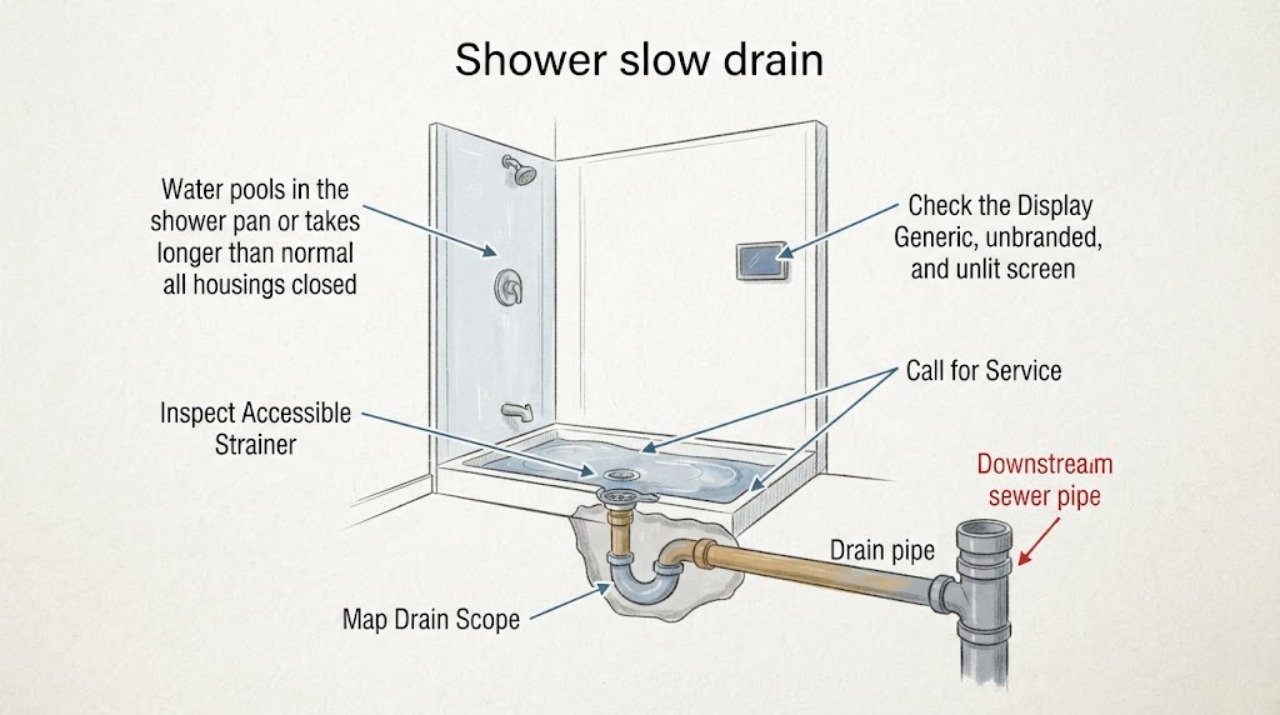
Stop adding water while the shower is pooling, then determine whether the symptom is limited to this shower or whether a sink, toilet, or washing machine also drains slowly or sends water toward the shower. With gloves and the water off, remove only the accessible strainer and visible hair or debris; do not remove a fixed fitting or put a hand into contaminated water. If the drain is clear and no chemical cleaner has been used, a correctly sized plunger may clear a minor blockage near the opening. Do not add chemical drain opener, mix products, or keep running water to force a slow line. If several fixtures are affected, wastewater backs up or smells foul, the problem returns, water is already standing in a cleanout, or the obstruction is deeper than the accessible opening, stop and arrange qualified plumbing or building service.
Before you begin
Safety first
- User checks are limited to reducing water use, safe fixture comparison, gloves-on removal of visible strainer debris, and a cautious plunger attempt only without chemical exposure or sewage. Traps, cleanouts, hidden piping, contaminated water, powered tools, and deeper line diagnosis require qualified service.
Work through in order
Diagnostic checks
Use only checks that match the exact appliance or system and its official guide.
-
Check 1
Stop the shower and briefly observe a nearby sink, toilet, and any safely accessible fixture while no one is adding water. Note whether only this shower is slow, whether another fixture makes water rise in the shower, and whether there is gurgling, foul wastewater, or a recent overflow.
Expected result: Only the shower drains slowly; several fixtures are slow; water rises when a toilet or washing machine runs; or wastewater is backing up or foul-smelling.
Next step: For a shower-only, clear-water symptom, continue with the accessible strainer check. For several affected fixtures, cross-backup, or foul wastewater, reduce water use and arrange qualified plumbing or building service.
Stop if: Stop immediately for wastewater backup, rapid overflow, or an unsafe contaminated floor.
Why this matters
Why: A shower-only pattern makes the strainer or nearby shower branch more relevant. Several affected fixtures or cross-backup suggests a downstream house or sewer line issue, and contaminated backup is not a routine cleaning branch.
-
Check 2
With the shower off and the area safe, wear gloves and remove only an accessible strainer or cover that lifts out normally. Pull out visible hair and debris, place it in the trash, and wipe the opening without pushing material farther down; do not remove a fixed drain fitting or reach into standing wastewater.
Expected result: A hair or debris mat is visible; the opening is clear; the cover is damaged or stuck; or the water is contaminated or too deep to inspect safely.
Next step: Refit an intact cover and run only a small amount of clear water to observe drainage. If the opening is clear but the shower remains slow, or the cover cannot be removed without force, stop at the visible inspection and arrange service.
Stop if: Do not force a cover, remove fixed plumbing, or handle contaminated water.
Why this matters
Why: Visible hair at the opening can explain a gradual local restriction. A clear opening, a damaged cover, or contaminated standing water means the cause is not safely identified by this check alone.
-
Check 3
Only if no chemical drain product has been used and there is no sewage backup, add enough clean water to form a seal around a shower drain plunger. Use gentle, controlled strokes for a short attempt, keeping the plunger centered; stop if water splashes, the seal cannot be made, or the level rises toward the threshold.
Expected result: The water level drops and drainage improves; the level does not change; the plunger cannot seal; or dirty water rises from another fixture.
Next step: Rinse-test with a small amount of clear water only after improvement. If there is no improvement, cross-backup, or any prior chemical exposure, stop using the drain and arrange qualified plumbing service.
Stop if: Do not plunge after chemical cleaner was used, during sewage backup, or when water could contact electrical equipment.
Why this matters
Why: Improvement is consistent with a minor obstruction near the opening. No change or a failed seal leaves a deeper or different restriction possible. Cross-fixture movement or dirty water indicates a wider blockage and raises the sanitation risk.
-
Check 4
After visible debris removal or a successful plunger check, pour a small, controlled amount of clean water into the shower and watch the drain and nearby fixtures. Do not run a full shower, washing machine, or large volume to test a line that is still slow.
Expected result: The water clears promptly and remains clear; it drains but begins pooling again; it gurgles; or water appears at another drain or backs up.
Next step: Use the shower cautiously only if drainage stays normal and there is no leak. For recurrence, gurgling, cross-backup, or any wastewater, reduce water use and arrange service rather than repeating forceful clearing.
Stop if: Stop the test for rising water, wastewater, overflow, foul odor, or a leak at the floor or wall.
Why this matters
Why: Stable clear drainage supports a local obstruction that was relieved, but a recurring pool or gurgle suggests residual or deeper restriction. Water appearing elsewhere indicates the problem is not isolated to the shower opening.
-
Check 5
Check whether anyone has already poured a chemical drain opener, bleach mixture, or other drain product into this shower. If yes or uncertain, do not add another product, do not plunge or open the drain, keep people away from splashes, and record the product and approximate time for the plumber.
Expected result: No chemical was used; a product was used and the drain remains slow; the product is unknown; or fumes, heat, skin irritation, or splashing is present.
Next step: For any chemical exposure, stop DIY clearing, ventilate only from a safe position, keep children and pets away, and arrange qualified service with the product information. Seek local emergency or poison guidance for exposure symptoms.
Stop if: Never mix drain products or proceed with a plunger, drain tool, or trap opening after chemical exposure.
Why this matters
Why: No chemical exposure leaves ordinary visible inspection and a cautious plunger check as possible. A known or uncertain chemical exposure creates a handling hazard and can injure someone opening or plunging the line; fumes or irritation require immediate safety action.
-
Check 6
Document whether the shower alone is affected, the water level and drainage pattern, visible hair or debris, plunger result, any gurgling or cross-backup, chemical use, recent plumbing work, and whether the problem returns after a small clear-water test. Do not choose a trap, drain section, or other replacement part from the symptom alone.
Expected result: Drainage stays normal; the slow drain returns quickly; several fixtures remain affected; or the line needs access beyond the visible shower opening.
Next step: Use a hair trap and keep solids, grease, wipes, and chemicals out of the drain. For recurrence, a wider pattern, or inaccessible work, give the record to a qualified plumber or building manager instead of repeating increasingly forceful clearing.
Stop if: Stop and arrange service when slow drainage persists, returns, affects multiple fixtures, or requires a hidden line, cleanout, trap, or powered tool.
Why this matters
Why: Stable recovery supports a nearby obstruction that was relieved, while rapid recurrence or a wider pattern points to residual buildup, a branch/main line restriction, vent or structural issue, or another condition requiring diagnosis.
Use your observations
Decision map
Find the observation that best matches what you see, then follow the next safe action.
-
PATH 01Next step
What you see
Wastewater rises in the shower, another fixture backs up, the floor may overflow, or the water smells foul.
Do this next
Stop using fixtures and reduce incoming water. Keep people and pets away from the water and arrange qualified plumbing, building, or wastewater service; do not continue plunging or open a contaminated cleanout.
Why this path and its safety boundary
Why it matters: This may be a downstream house or sewer blockage and presents contamination and property-damage risk.
-
PATH 02Next step
What you see
Only the shower is slow and hair or debris is visible at the accessible strainer.
Do this next
Remove only the visible material with gloves, refit the intact cover, and perform a small clear-water test. Arrange service if drainage does not improve or returns quickly.
Why this path and its safety boundary
Why it matters: A local opening restriction is plausible.
-
PATH 03Next step
What you see
No chemical was used, there is no sewage backup, and a gentle plunger attempt improves drainage.
Do this next
Rinse with a small amount of clear water and monitor for recurrence. Use a hair trap and arrange service if the slow drain returns.
Why this path and its safety boundary
Why it matters: A minor obstruction near the opening may have shifted or cleared, but the branch is not proven clear.
-
PATH 04Next step
What you see
The strainer is clear and a safe, gentle plunger attempt produces no change or cannot seal.
Do this next
Stop adding water and arrange qualified plumbing service for diagnosis. Do not escalate to chemicals, force, powered tools, or hidden-pipe disassembly.
Why this path and its safety boundary
Why it matters: The obstruction may be deeper, the restriction may not respond to a plunger, or a branch/vent condition may be involved.
-
PATH 05Next step
What you see
Sinks, toilets, or a washing machine are also slow, or running another fixture makes the shower pool.
Do this next
Reduce water use and arrange qualified plumbing or building/wastewater assessment. Keep the shower out of service if water can overflow.
Why this path and its safety boundary
Why it matters: The restriction is more likely downstream of the shower opening in the house branch or sewer connection.
-
PATH 06Next step
What you see
A drain product was used, the product is unknown, or fumes, heat, irritation, or splashing is present.
Do this next
Stop DIY clearing, keep people and pets away, provide the product information to qualified service, and seek local emergency or poison guidance for symptoms or exposure.
Why this path and its safety boundary
Why it matters: The drain may contain a corrosive or reactive substance; plunging or opening the line can expose the user or plumber.
-
PATH 07Next step
What you see
The shower drains normally after visible debris removal or a gentle plunger check and stays normal during a small clear-water test.
Do this next
Monitor without overloading the line, install a hair trap if appropriate, and arrange service if slow drainage, gurgling, odor, or cross-backup returns.
Why this path and its safety boundary
Why it matters: A nearby obstruction is plausible, but recurrence would change the diagnosis.
Helpful context
Understand the symptom
A slow shower drain can be local or downstream
Hair and debris at the strainer or just below the shower opening commonly produce a gradual pool. A blockage farther down the branch drain can affect a shower and other fixtures, especially when a toilet or washing machine discharges. The pattern matters: one shower with otherwise normal drainage supports a local check, while gurgling, several slow fixtures, or water rising in the shower when another fixture runs calls for a wider plumbing assessment.
Keep the work to safe, visible access
Wear gloves and avoid contact with standing wastewater. Do not mix drain products, add chemical opener after a previous product, use a powered auger, remove a trap or cleanout cap that may release contaminated water, or open a wall. If a product was already poured into the drain, stop using a plunger or hand tools and tell the plumber exactly what was used.
Interpret the result before buying a part
A clear strainer followed by a stable improvement after a gentle plunger check supports a nearby obstruction, but it does not prove the whole branch is clear. No improvement, rapid recurrence, or a change in several fixtures points deeper in the line. A hair trap can reduce repeat buildup, but it cannot correct a damaged, collapsed, root-affected, or otherwise inaccessible drain.
Safety boundary
Stop conditions
- Stop immediately for wastewater backup, rapid overflow, foul odor, contaminated standing water, unsafe flooring, or water entering a wall or electrical area.
- Do not use chemical drain opener, mix products, or plunge/open the line after a chemical product was used or may be present.
- Do not remove fixed drain fittings, trap or cleanout caps, wall panels, or hidden piping; do not use a powered auger or force a tool into an unknown obstruction.
- Arrange qualified plumbing, building-management, or wastewater service when several fixtures are affected, the slow drain persists or returns, standing water is present in an accessible cleanout, or the needed work is deeper than the visible opening.
Only after diagnosis
Potential parts
- shower drain hair trap
Consider this only after the strainer area is accessible and the drain recovers, when recurring hair at the opening is the observed cause.
Confirm that the trap fits the existing drain opening and does not restrict flow or create a trip hazard; it will not repair a deeper or structural blockage.
When checks do not resolve it
Need a professional?
Call promptly for wastewater backup, rapid overflow, foul odor, chemical exposure, several affected fixtures, a recurring slow drain, water in a cleanout, or any need to access a trap, hidden line, wall, or powered drain tool.
Safety scope: User checks are limited to reducing water use, safe fixture comparison, gloves-on removal of visible strainer debris, and a cautious plunger attempt only without chemical exposure or sewage. Traps, cleanouts, hidden piping, contaminated water, powered tools, and deeper line diagnosis require qualified service.
Have this ready
- Provide the shower-only versus multiple-fixture pattern, water level and backup observations, visible debris, plunger result, chemical-product details if any, recent plumbing work, recurrence timing, and photos taken from a dry safe position.
Common questions
FAQ
Why is my shower draining slowly but the sink is normal?
A shower-only pattern makes hair or debris at the strainer or nearby shower branch more likely, but it does not prove the obstruction is right at the opening. Remove only visible debris safely, make a cautious plunger check if no chemical or sewage is involved, and arrange service if the drain stays slow or quickly recurs.
Should I use chemical drain cleaner in a slow shower drain?
Avoid chemical drain openers and never mix drain products. If one was already used or the product is unknown, do not plunge or open the drain; keep people away from splashes, record what was used, and arrange qualified service.
Can a plunger clear a slow shower drain?
A correctly sealed plunger may help with a minor blockage near the opening when there is no chemical exposure or sewage backup. Use only a short, gentle attempt. If the level does not change, rises elsewhere, or the problem returns, stop and arrange plumbing service.
When does a slow shower drain indicate a bigger plumbing problem?
Several slow fixtures, water rising in the shower when another fixture runs, gurgling, foul wastewater, overflow, rapid recurrence, or standing water in a cleanout points beyond a simple strainer check. Reduce water use and arrange qualified plumbing or wastewater assessment.
How can I prevent hair from slowing the shower drain again?
Use a hair trap that fits the accessible drain opening and remove collected hair regularly. Keep grease, wipes, solids, and household chemicals out of drains. A hair trap helps prevent local buildup but cannot correct a deeper or structural blockage.
Read the exact guide
Official sources
- How to Care for Your Septic SystemU.S. Environmental Protection Agency · EPA guidance on avoiding chemical drain openers and keeping grease, wipes, oils, and household chemicals out of drains, especially for homes connected to septic systems.
- Prevent Blocked DrainsCity of Tampa · Municipal guidance for minor blockages near an opening, reducing water use, multi-fixture backup, and distinguishing house-plumbing versus downstream sewer concerns.
- Safer Alternatives for the BathroomCobb County Government · Government bathroom guidance recommending a hair trap and directing residents with clogs or slow drains to safe drain-cleaning guidance.
Community feedback
Share a repair observation
Share a plain-text repair observation. Accepted observations are published automatically; this page may take a moment to update.