
Plumbing guides
Showers Repair Guides
Troubleshooting for shower flow, temperature, drains, valves, and leaks.
Published showers guides
Choose the guide that best matches the equipment and symptom you are seeing.
-
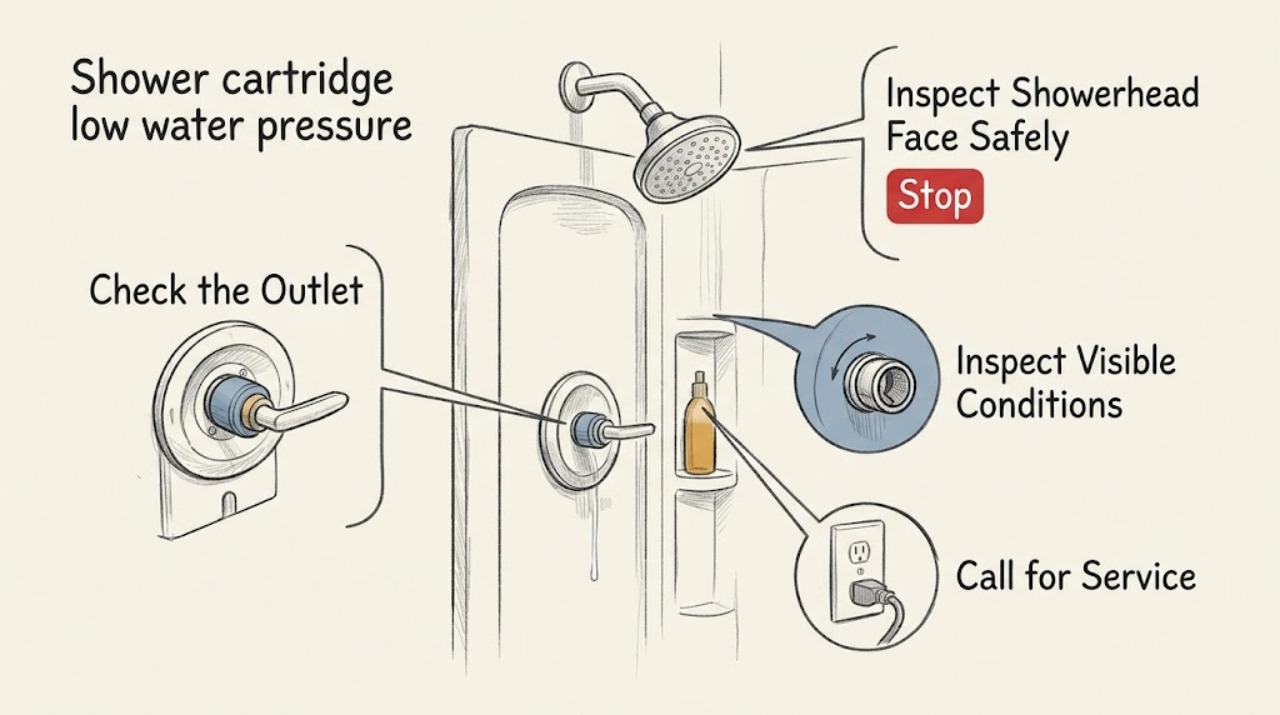
American standard shower cartridge low water pressure: What to Check and What to Do Next
Low pressure at an American Standard shower is not automatically a cartridge failure. First compare the shower with another outlet and note whether the weakness affects only the showerhead, only hot or cold water, every outlet, or the whole home.
-
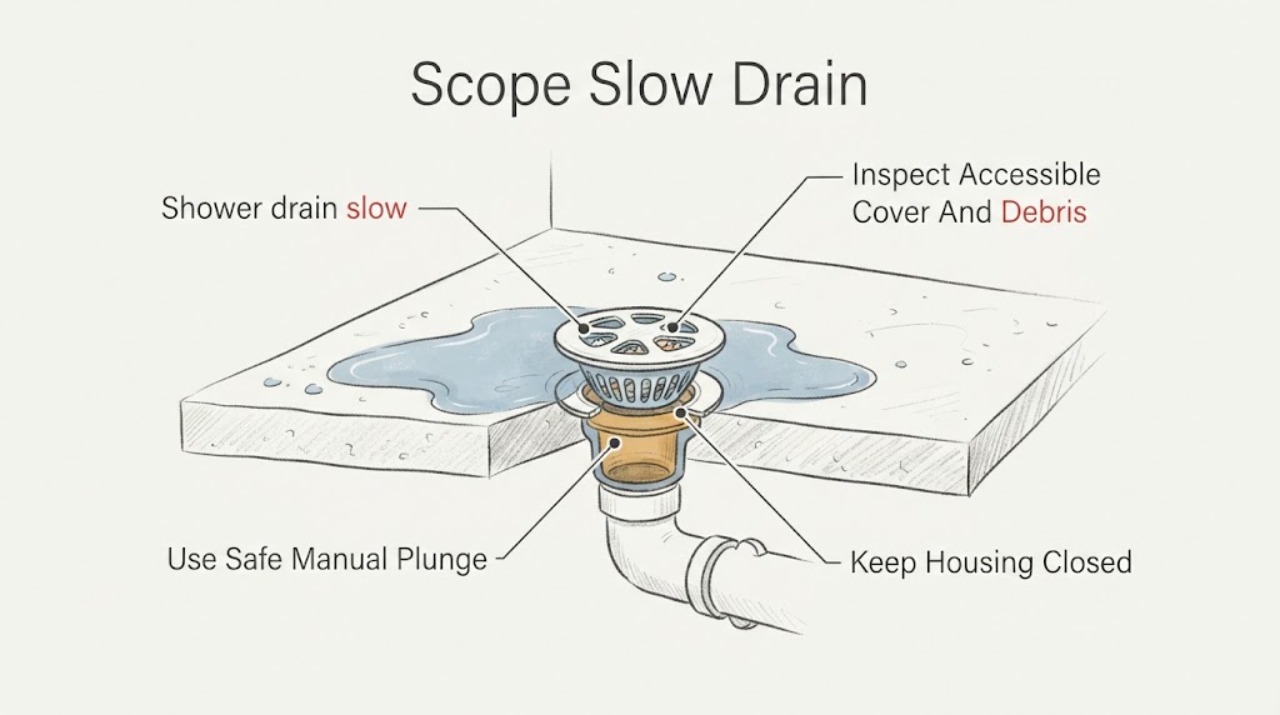
American standard shower drain slow: What to Check and What to Do Next
Start by determining whether only this shower drains slowly or several fixtures do, and whether water merely pools briefly or rises, backs up, smells like sewage, or returns after another fixture runs. Remove only an accessible drain cover or strainer and lift out visible hair or debris with gloves; do not pry a fixed cover, reach into an unknown opening, or disturb a sealed drain.
-
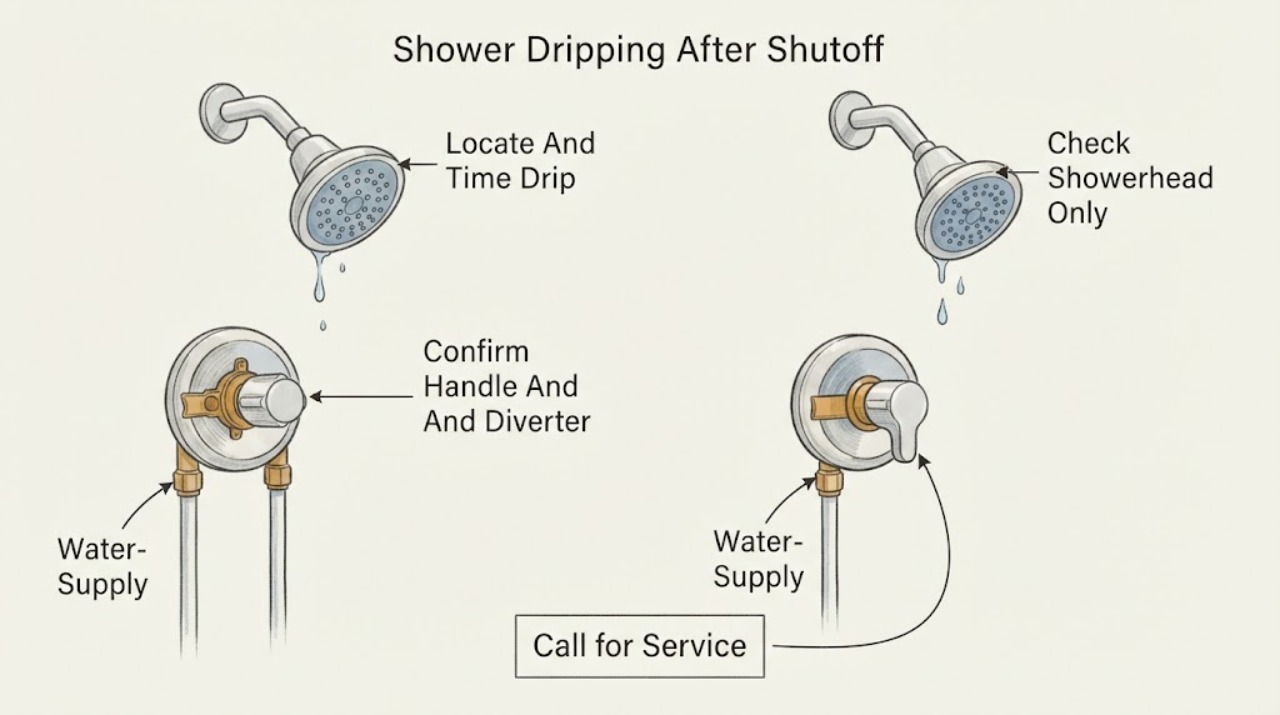
American Standard Shower Dripping After Shutoff: What to Check and What to Do Next
A small amount of water may drain from a showerhead or tub spout after shutoff, but a drip that continues, returns after the outlet is dry, or appears around the handle or wall points toward a valve or connection leak. First identify where the water comes from and whether it stops after the outlet drains.
-
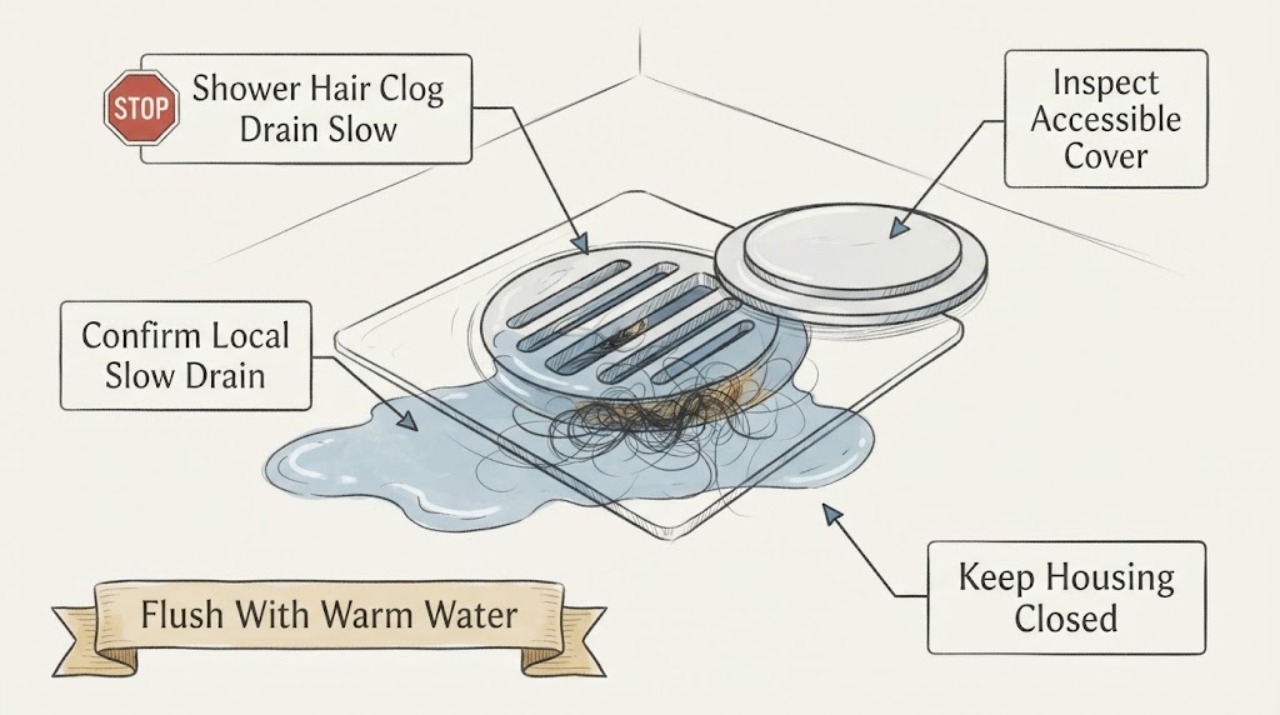
American Standard Shower Hair Clog Drain Slow: What to Check and What to Do Next
A slow American Standard shower drain with a hair-clog pattern is usually addressed at the accessible drain cover or strainer first, but the shower base model determines what can be removed safely. Stop using the shower if water is pooling deeply, backing up with dirty water, or approaching an electrical fixture.
-
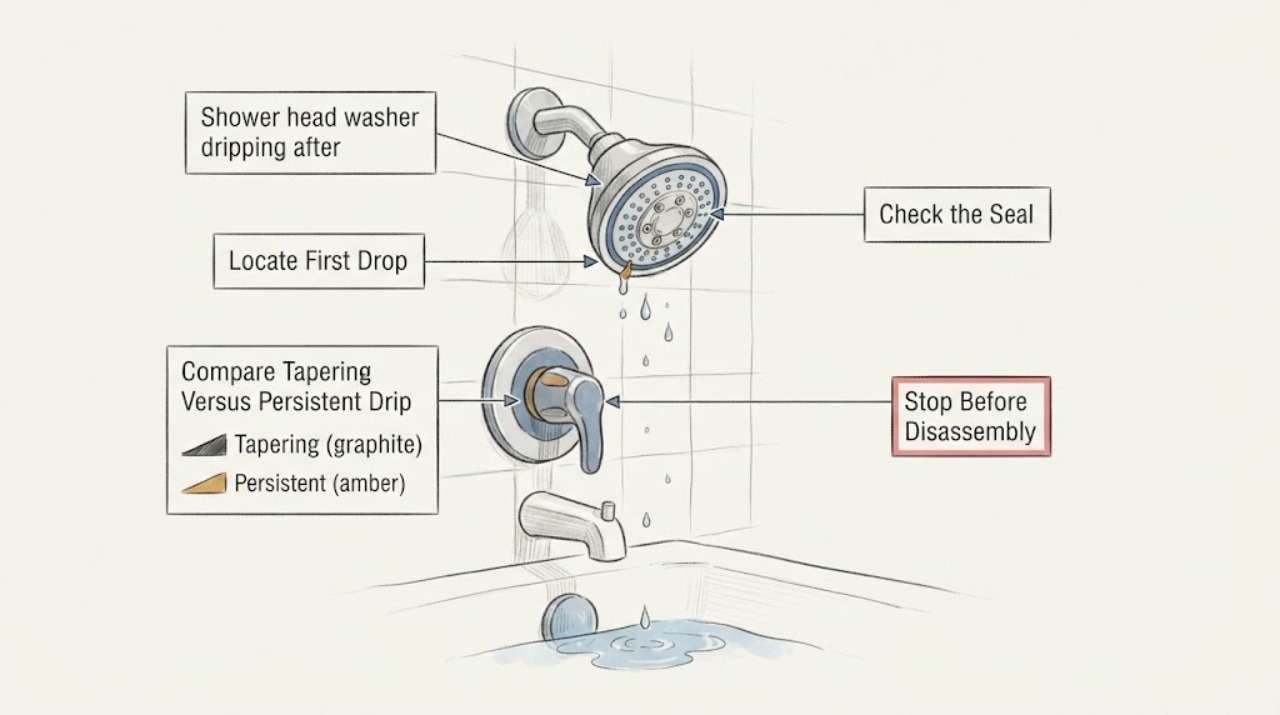
American Standard shower head washer dripping after shutoff: What to Check and What to Do Next
A few drops from an American Standard shower head immediately after shutoff can be water draining from the head, but a drip that continues or becomes a steady thread is not automatically a washer problem. First identify where the water starts: from the spray nozzles, the shower-head-to-arm joint, the shower arm or wall escutcheon, or another outlet.
-
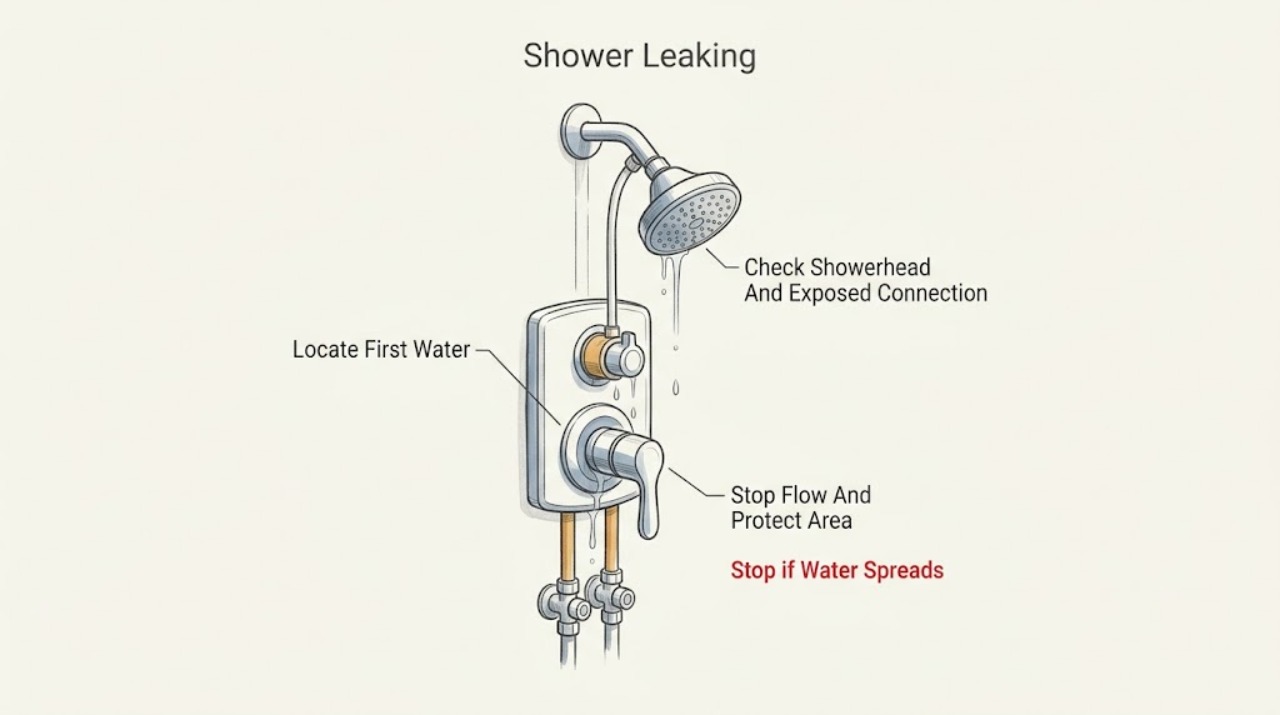
American Standard Shower Leaking: What to Check and What to Do Next
For a leaking American Standard shower, first identify whether water comes from the showerhead, handle or trim, tub spout or diverter, a visible connection, or behind the wall. Turn the shower off and use the accessible local or main water shutoff if water is continuing to escape; protect the floor and do not remove the trim to search for a leak.
-
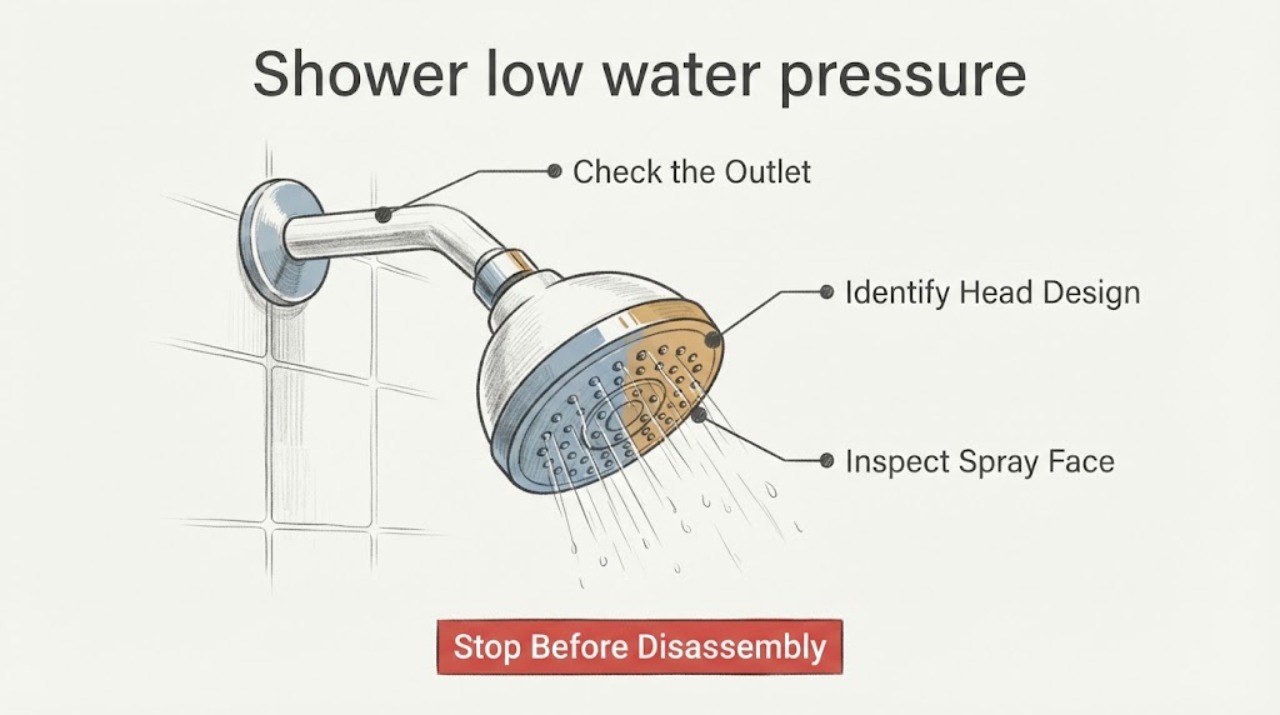
American Standard shower low water pressure: What to Check and What to Do Next
Low pressure from an American Standard shower can come from mineral scale or debris at the spray face or inlet, a pressure-compensating flow-control device, a shower valve or supply restriction, or low pressure affecting several fixtures. First compare the shower with another nearby outlet and determine whether the weakness is only at one American Standard head or affects the bathroom or house.
-
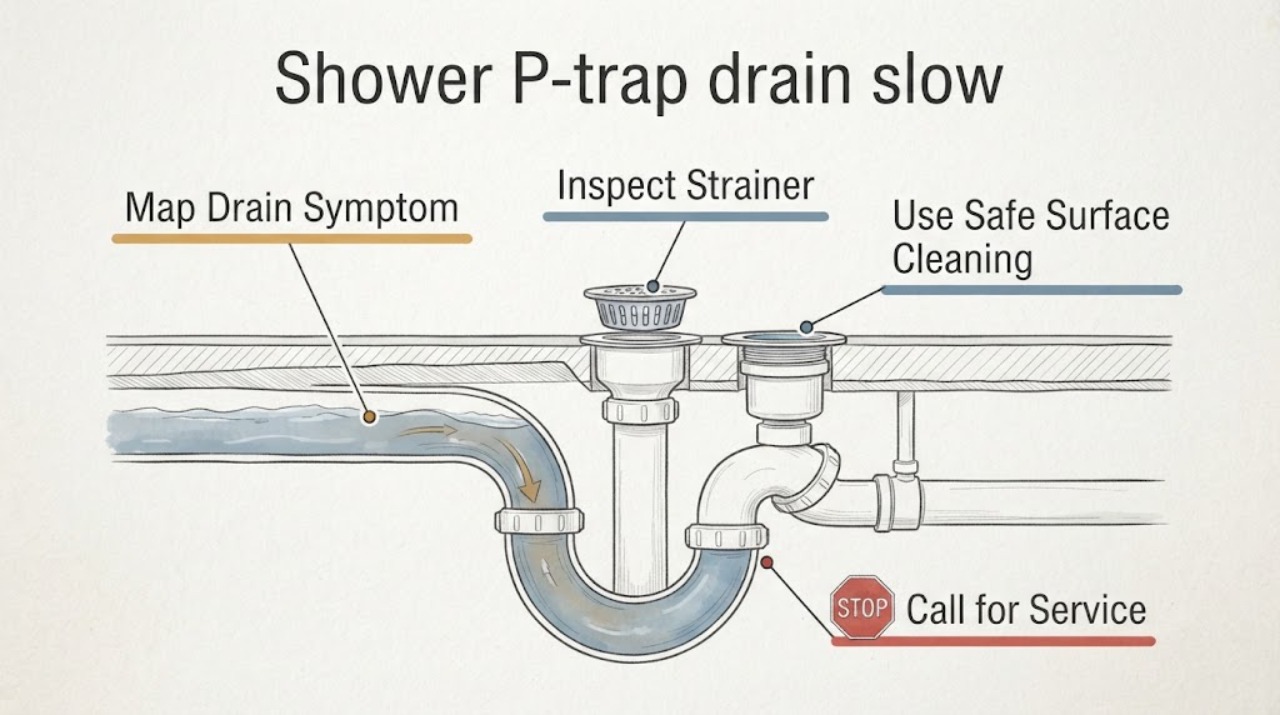
American Standard shower P-trap drain slow: What to Check and What to Do Next
A slow American Standard shower drain is often caused by hair or soap buildup at the strainer or in the nearby drain path, but the P-trap, vent, branch line, or main drain can also be involved. Start by observing whether only this shower is slow, whether water rises or gurgles, and whether other fixtures are affected.
-
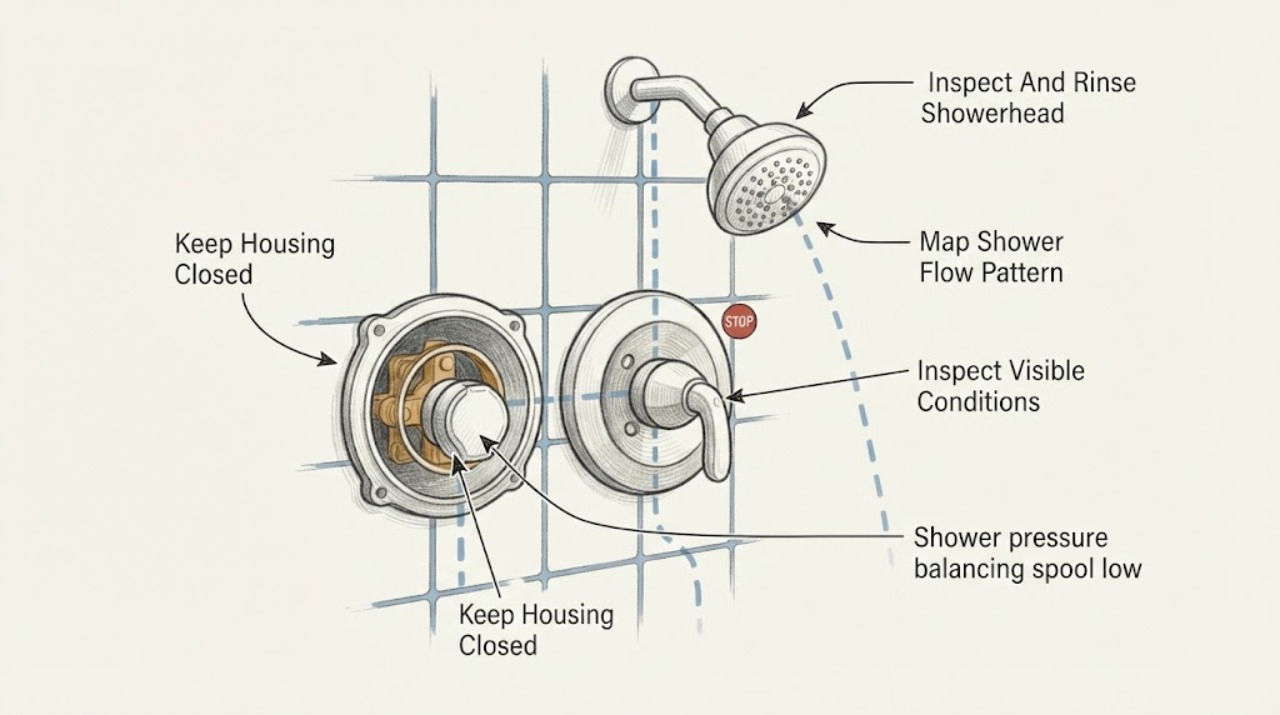
American standard shower pressure balancing spool low water: What to Check and What to Do Next
An American Standard pressure-balancing spool is primarily a temperature-safety component: American Standard describes it as responding to changes in relative hot and cold supply pressure to help maintain a steady outlet temperature. Low shower flow alone does not prove that the spool is blocked or failed.
-
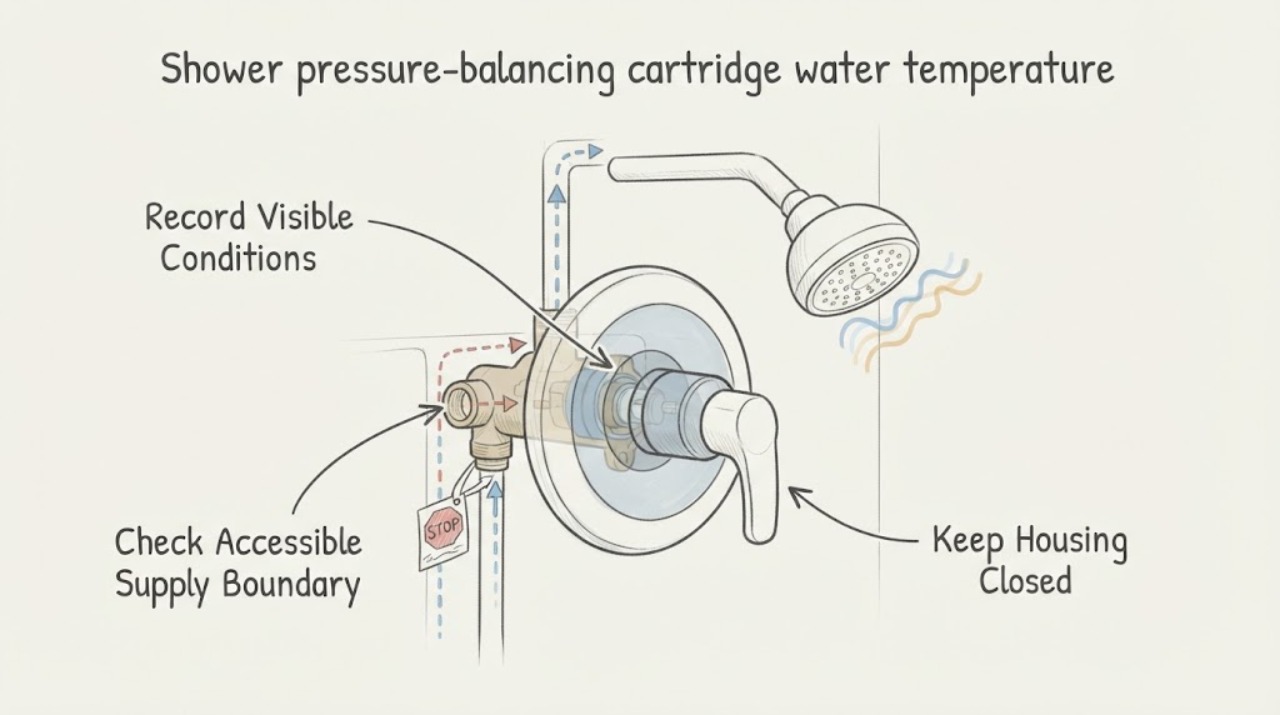
American Standard shower pressure-balancing cartridge water temperature fluctuates: What to Check and What to Do Next
A fluctuating American Standard shower temperature can mean that the pressure-balancing cartridge or its check-valve system is not responding correctly, but the same symptom can come from a changing hot or cold supply, another fixture drawing water, a restricted inlet, the water heater, or a different shower-valve component. First compare the shower with other hot-water fixtures and note whether the temperature changes when another tap or toilet operates.
-
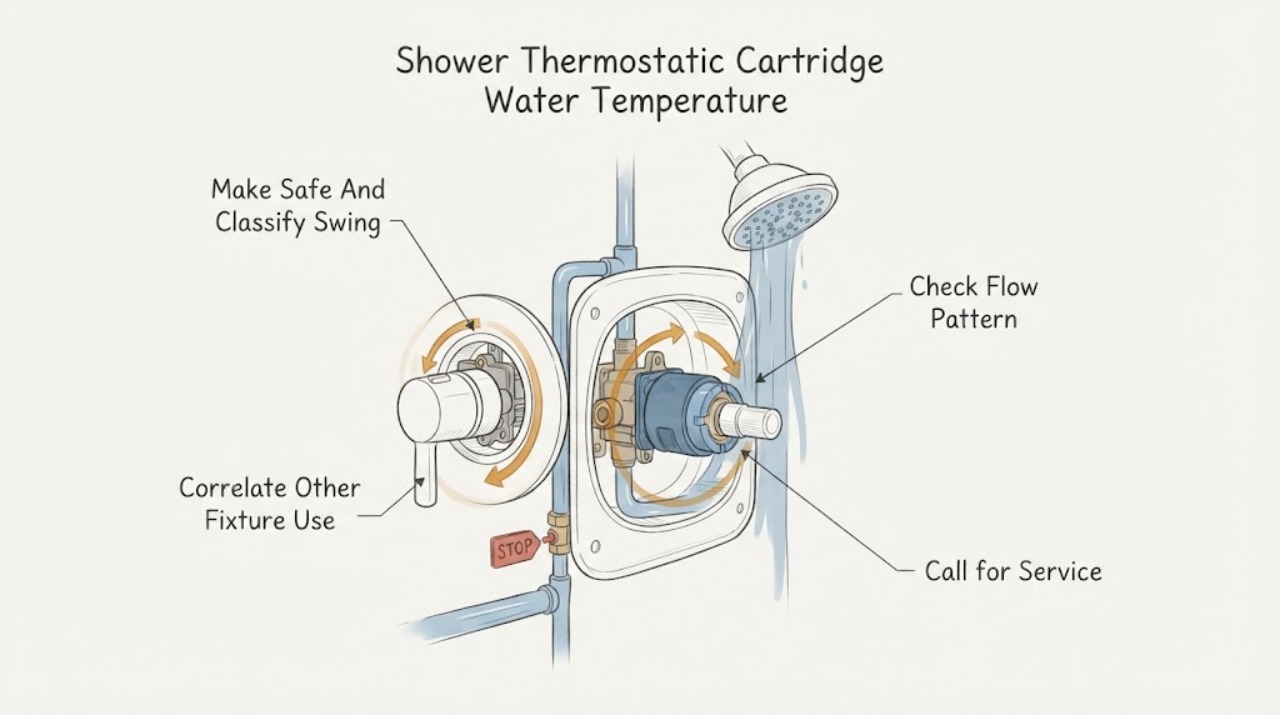
American Standard Shower Thermostatic Cartridge Water Temperature Fluctuates: What to Check and What to Do Next
A temperature swing at an American Standard shower is not enough to prove that the thermostatic cartridge has failed. First make the shower safe, then note whether the change happens when another fixture runs, at a particular flow rate, or continuously at steady flow.
-
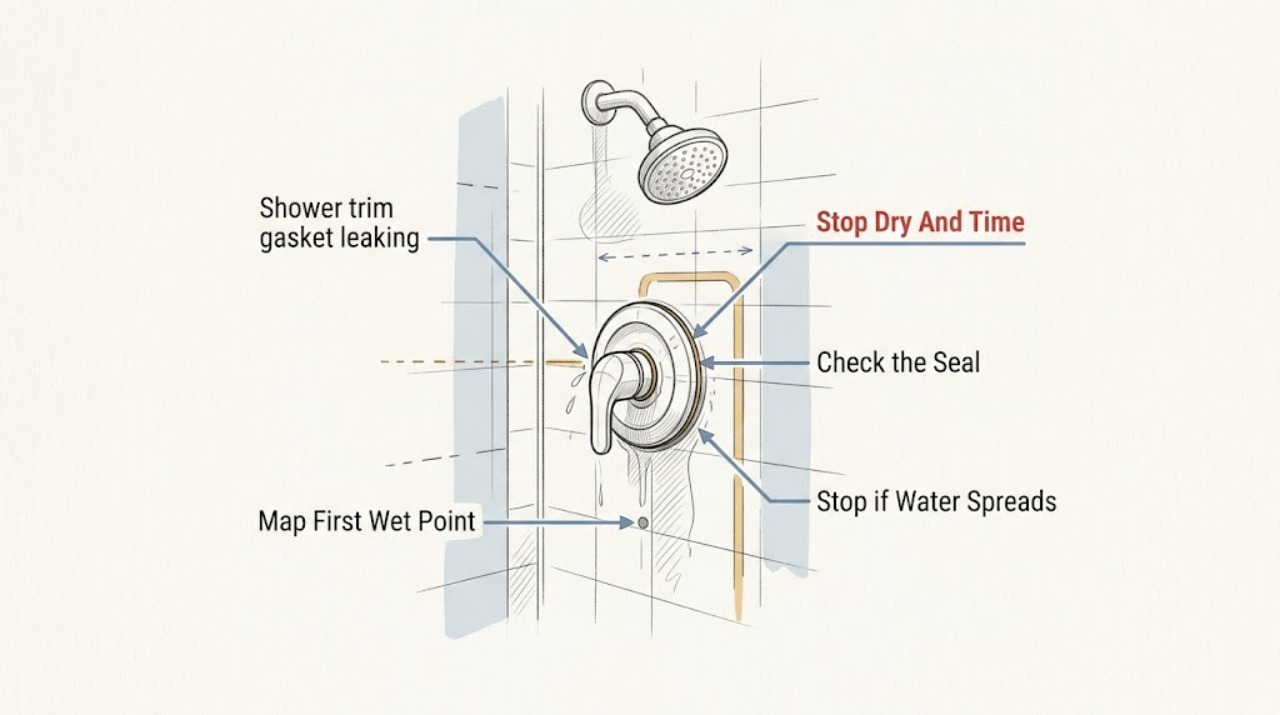
American Standard shower trim gasket leaking: What to Check and What to Do Next
If an American Standard shower trim gasket appears to leak, first stop the shower, dry the trim and wall, and identify whether water is coming from the outer escutcheon edge only while the shower runs or from the handle, center opening, shower arm, or wall opening.
-
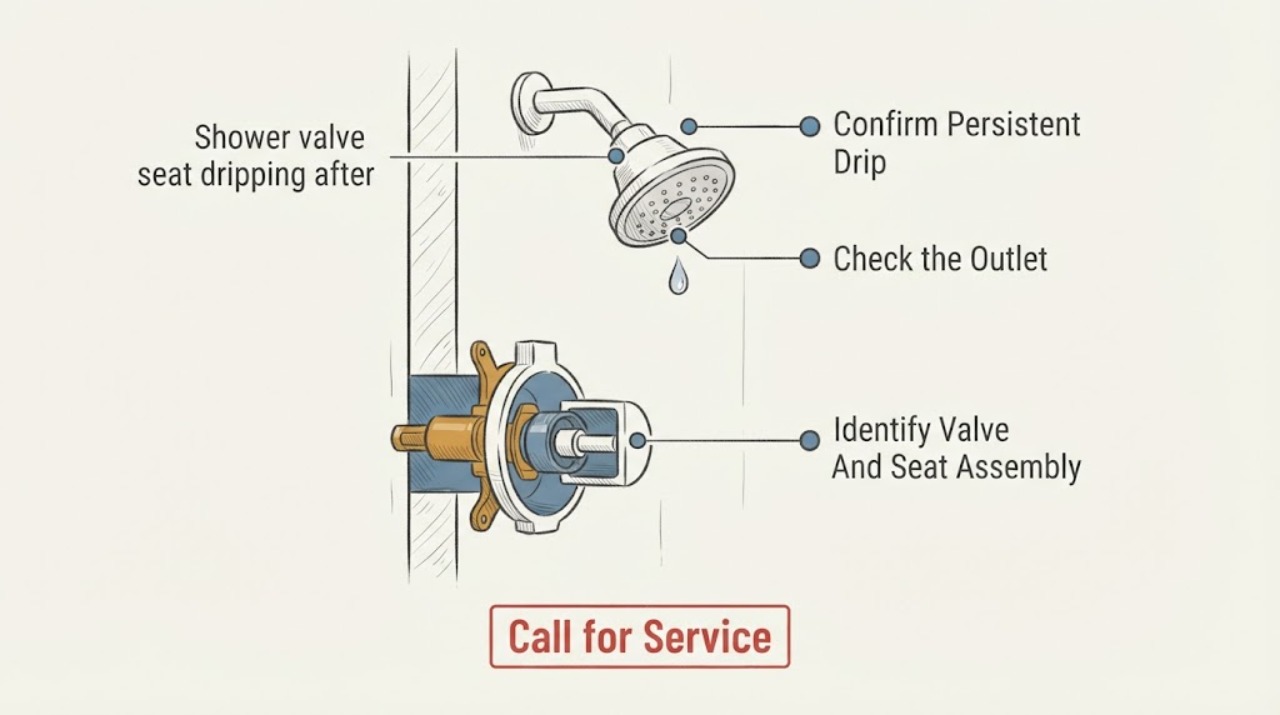
American standard shower valve seat dripping after shutoff: What to Check and What to Do Next
A few drops from an American Standard showerhead immediately after shutoff can be water draining from the shower arm or head; a drip that keeps returning after the line has drained points toward a valve that is not sealing, such as a worn cartridge, valve-seat surface, debris, or a diverter path. First verify that the drip is continuous rather than residual, and note whether it comes from the showerhead, tub spout, or a wall-side trim opening.
-
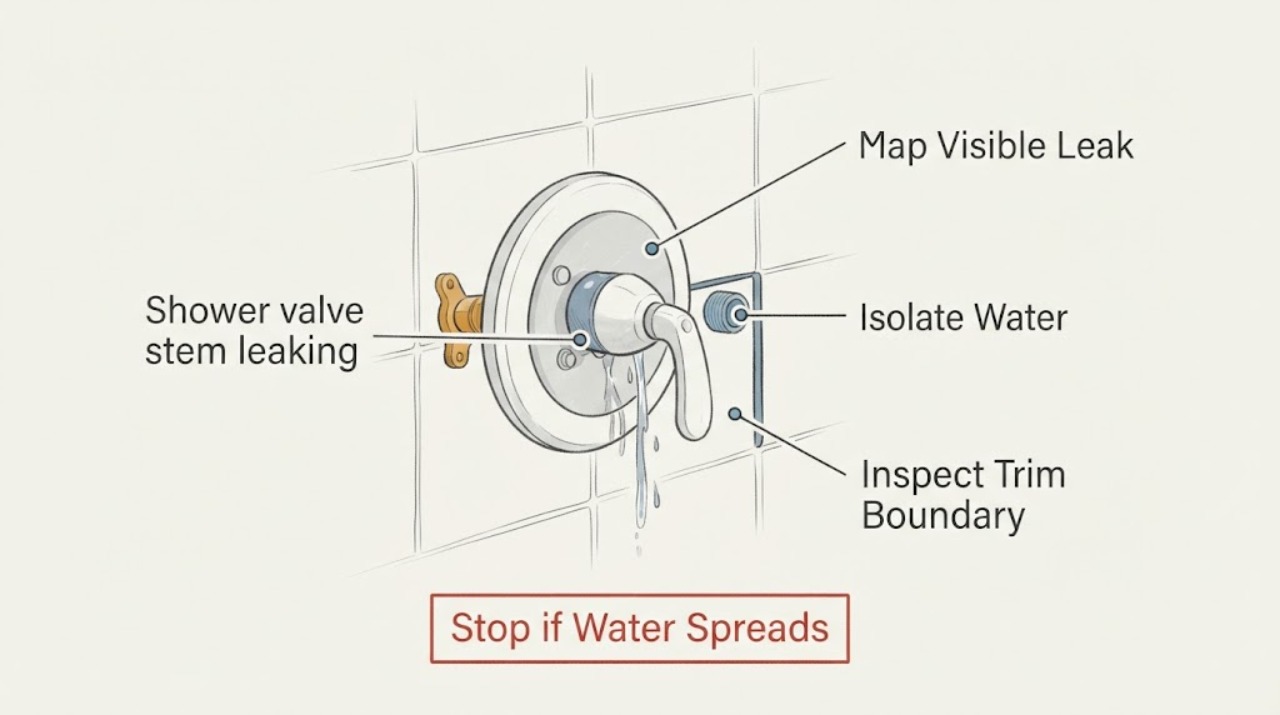
American Standard shower valve stem leaking: What to Check and What to Do Next
A leak that appears around an American Standard shower handle or valve stem can come from a worn stem seal or cartridge, a loose or damaged trim seal, a connection that leaks only while the shower runs, or a leak behind the wall. Turn the shower off, contain the water, and identify whether the leak is at the handle, the escutcheon, the shower arm, or the wall before removing anything.
-
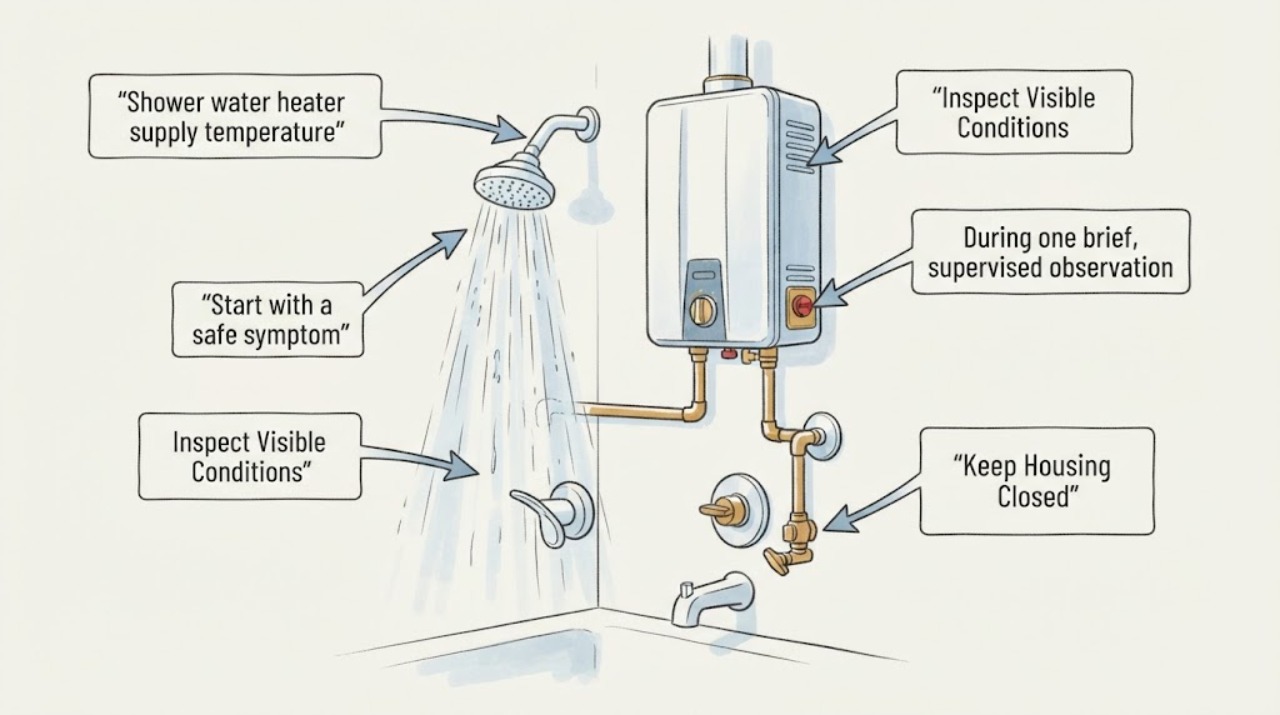
American standard shower water heater supply temperature fluctuates: What to Check and What to Do Next
A fluctuating American Standard shower temperature is not automatically a water-heater failure. First note whether the change happens only when another fixture uses water, throughout the home, or only at this shower.
-
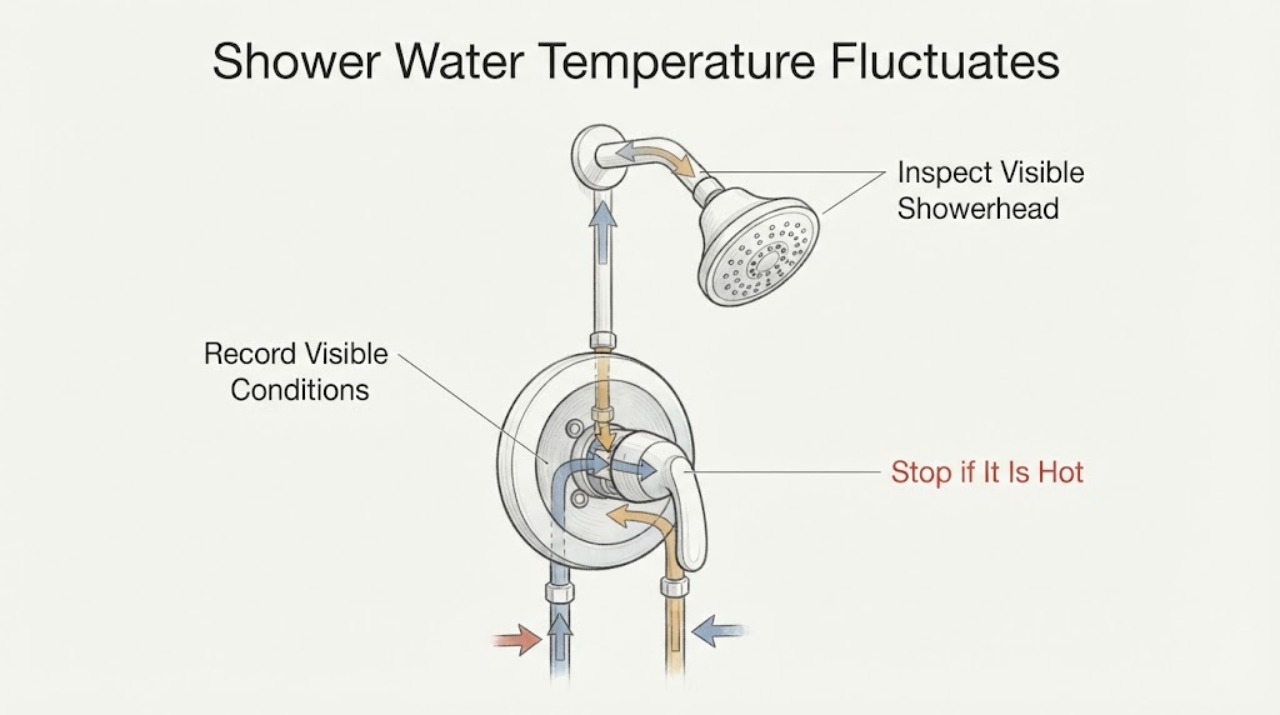
American Standard Shower Water Temperature Fluctuates: What to Check and What to Do Next
Start by noting whether the American Standard shower swings hot and cold when another fixture runs, only when flow changes, or even with no other demand. American Standard explains that pressure-balancing valves are designed to reduce temperature changes caused by hot or cold pressure fluctuations, while thermostatic valves use a wax element to maintain a selected temperature.
-
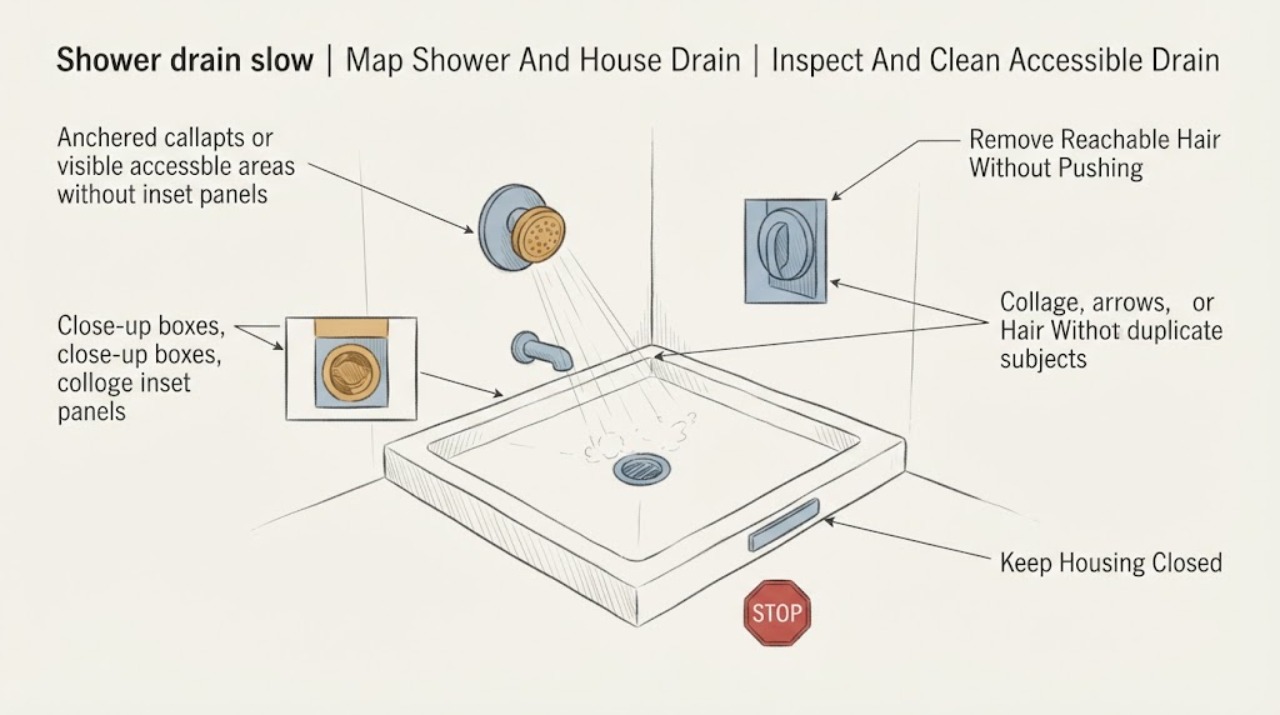
Delta shower drain slow: What to Check and What to Do Next
A slow Delta shower drain is commonly a partial blockage of hair, soap, or cleaning-product residue at the drain cover or just below it, but a deeper branch-line, trap, vent, or shared plumbing problem can look the same. First note whether only the shower is slow, whether water rises during a normal shower, and whether other fixtures gurgle or drain slowly.
-
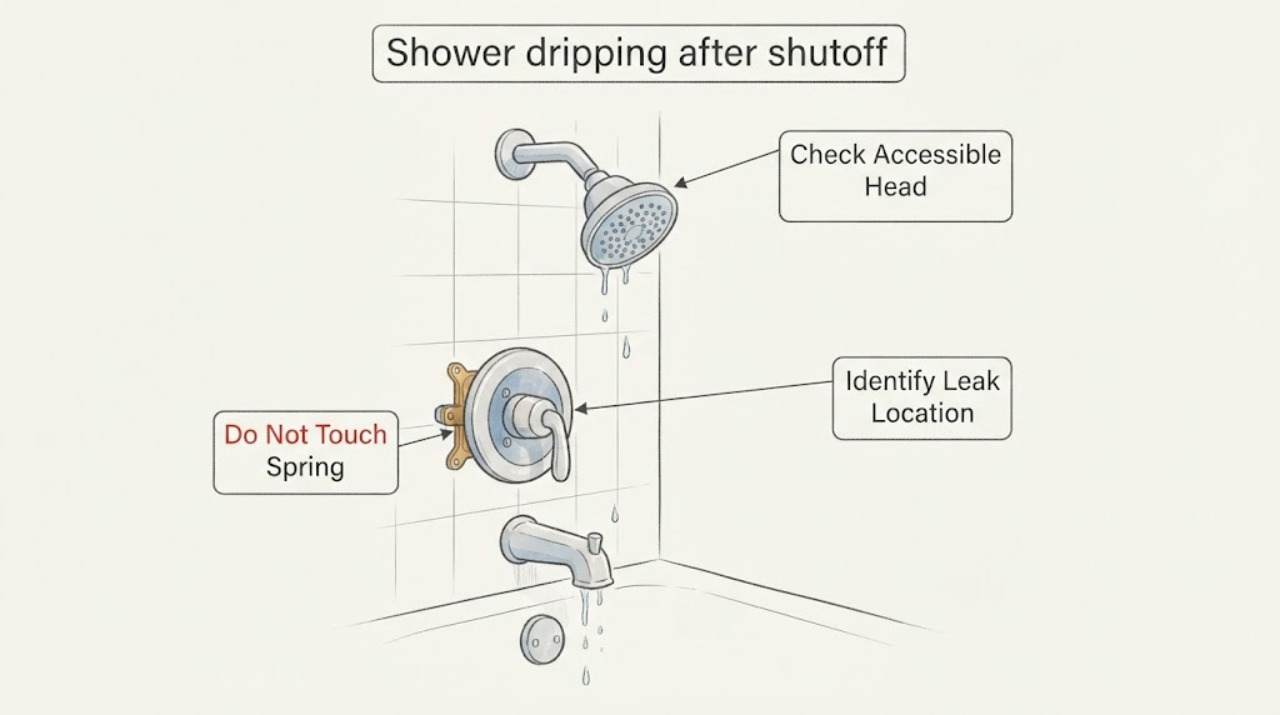
Delta shower dripping after shutoff: What to Check and What to Do Next
First separate a brief showerhead dribble from a persistent leak. Delta says a little water remaining in the shower line can drip after shutoff, but a showerhead that keeps dripping or a leak from the handle, tub spout, or another location needs diagnosis.
-
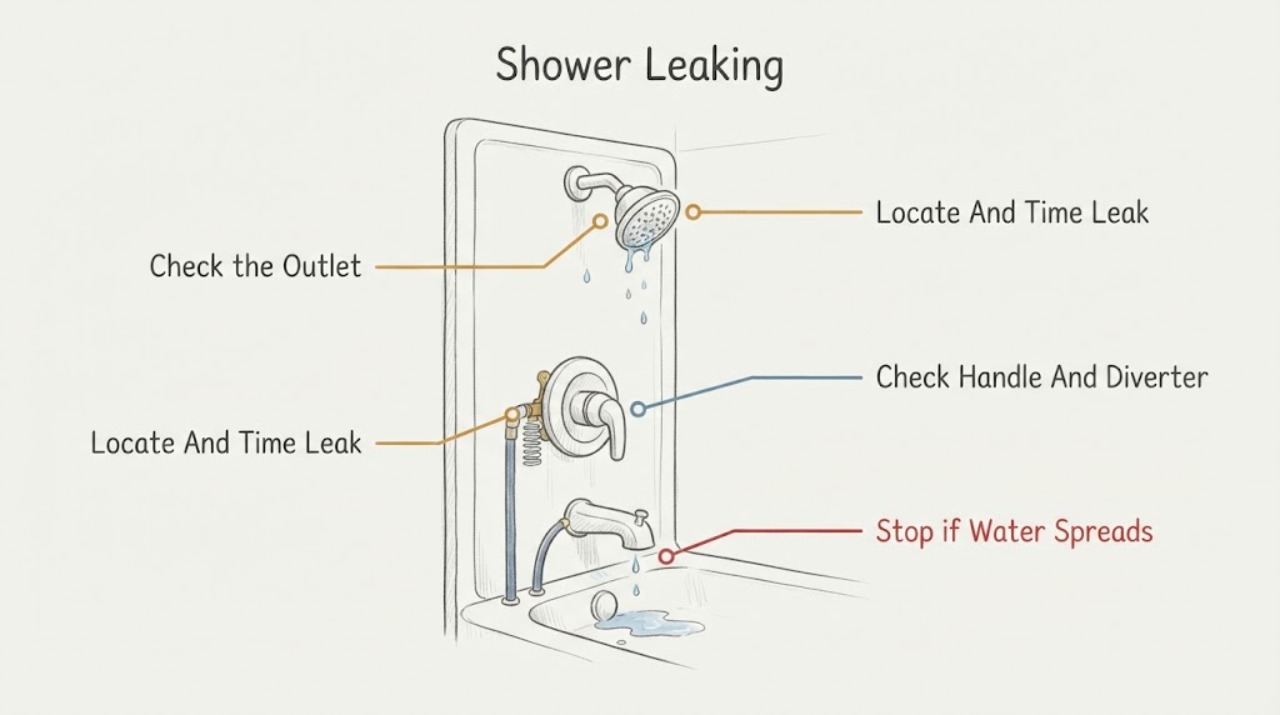
Delta Shower Leaking: What to Check and What to Do Next
First locate where the Delta shower leaks and whether it leaks only briefly after shutoff, while water is running, or continuously with the control off. A short drip from the showerhead can be the head emptying; a leak that continues long after shutoff or appears at the handle or tub spout points toward the valve cartridge or related seals.
-
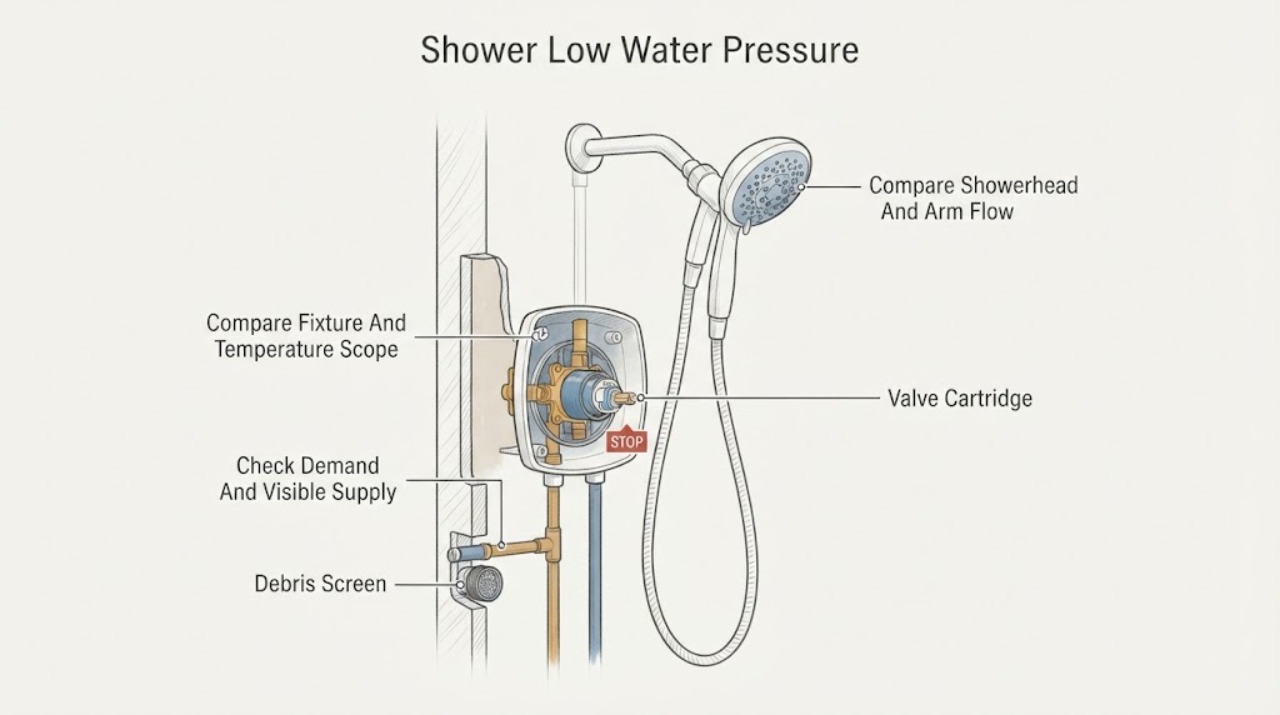
Delta Shower Low Water Pressure: What to Check and What to Do Next
For a Delta shower with low water pressure, first determine whether the restriction affects only the shower, only hot or cold water, or the whole home. Compare the flow with the showerhead removed only if the connection can be handled safely: good flow from the shower arm points toward the head, screen, flow path, or hose, while low flow before the head points toward the valve, cartridge screens, supply, or building plumbing.
-
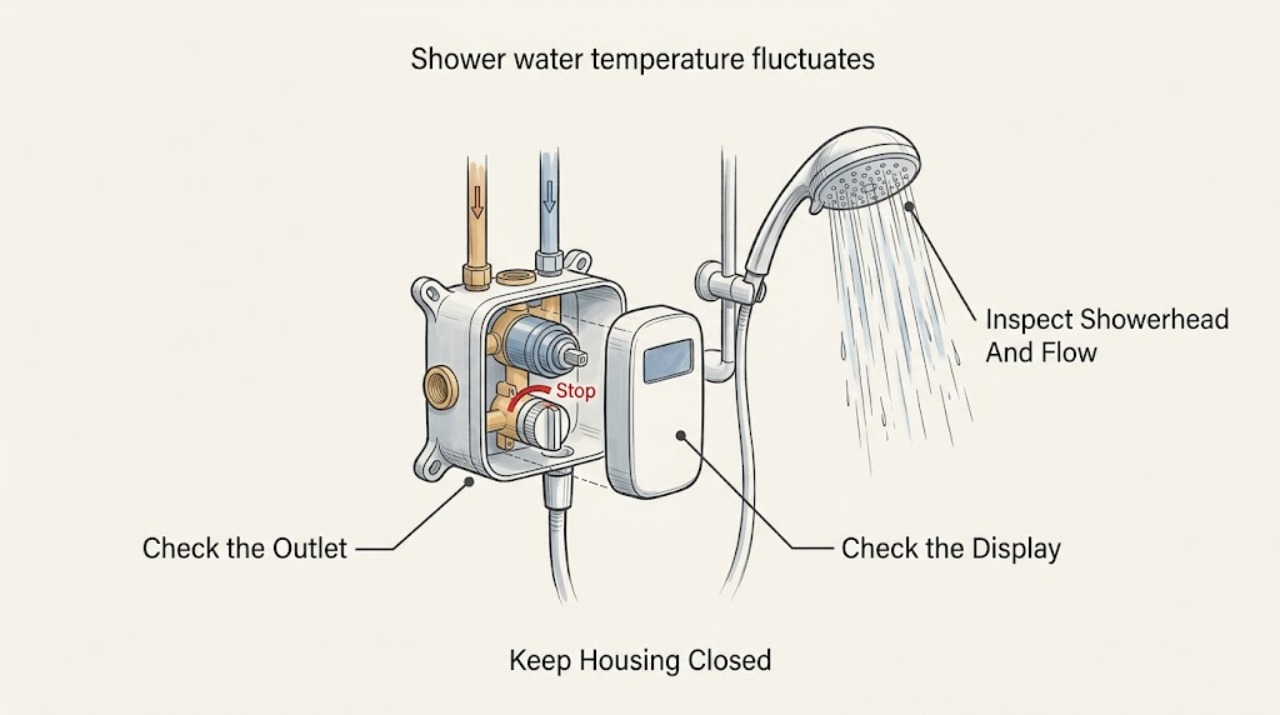
Delta shower water temperature fluctuates: What to Check and What to Do Next
If a Delta shower's flow is steady but the water turns noticeably hotter and colder, first determine whether the change also affects another faucet or happens when a toilet, washer, or other fixture uses water. A whole-home change points to the hot-water supply, pressure, or plumbing; a shower-only change makes the Delta mixing valve, pressure-balance or thermostatic cartridge, mineral buildup, or temperature setting more likely.
-
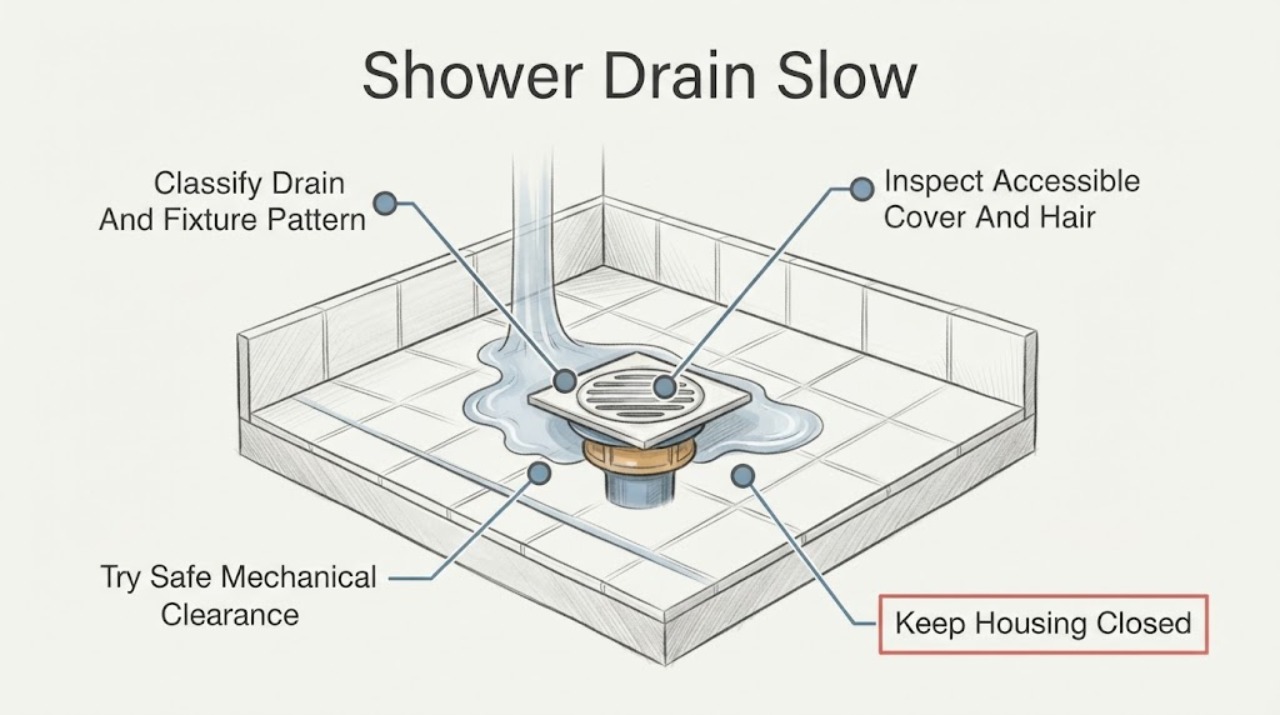
Grohe Shower Drain Slow: What to Check and What to Do Next
A slow GROHE shower drain is usually a restriction at the drain cover, hair trap, trap, or nearby branch pipe, but the GROHE shower fitting itself may not be the blocked part. Stop adding water while the base is pooling, remove only an accessible cover or strainer if the exact installation allows it, and clear visible hair or soap buildup mechanically.
-
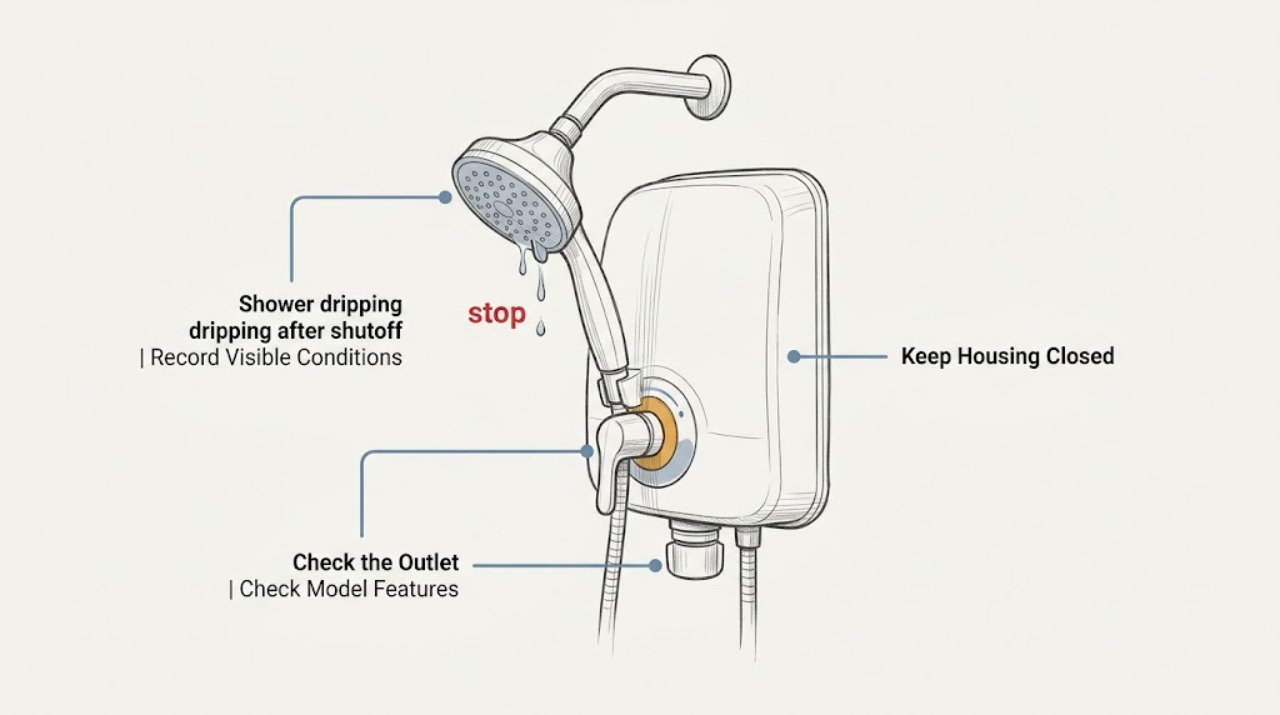
Grohe shower dripping after shutoff: What to Check and What to Do Next
A Grohe shower that releases a short tail of water after shutoff may simply be draining water retained in the showerhead or hose, and some Grohe showerheads have a model-specific DripStop feature intended to reduce that behavior.
-
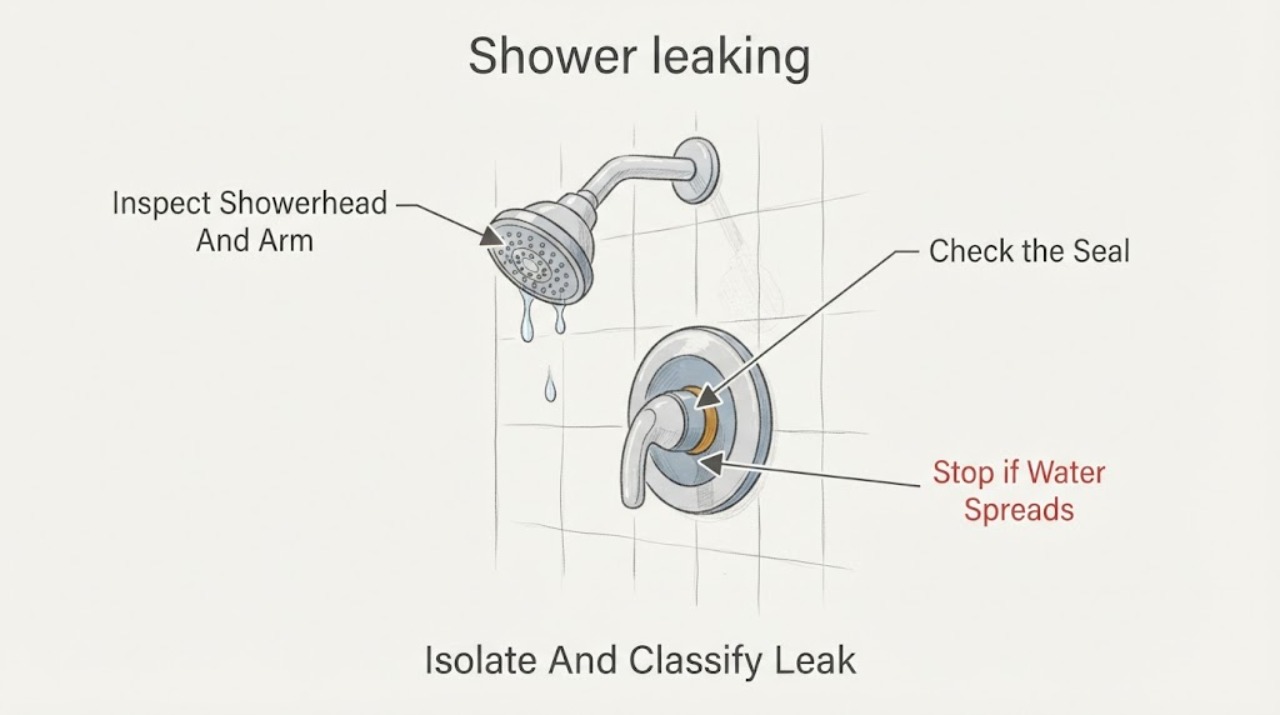
GROHE shower leaking: What to Check and What to Do Next
A leaking GROHE shower can be coming from the showerhead outlet, hose seals, threaded connection, hand-shower connection, mixer or handle, tub diverter, or a concealed connection behind the wall. First stop the water and identify whether it leaks with the water off, only while the shower is running, at the hose ends, from the showerhead, or behind the trim.
-
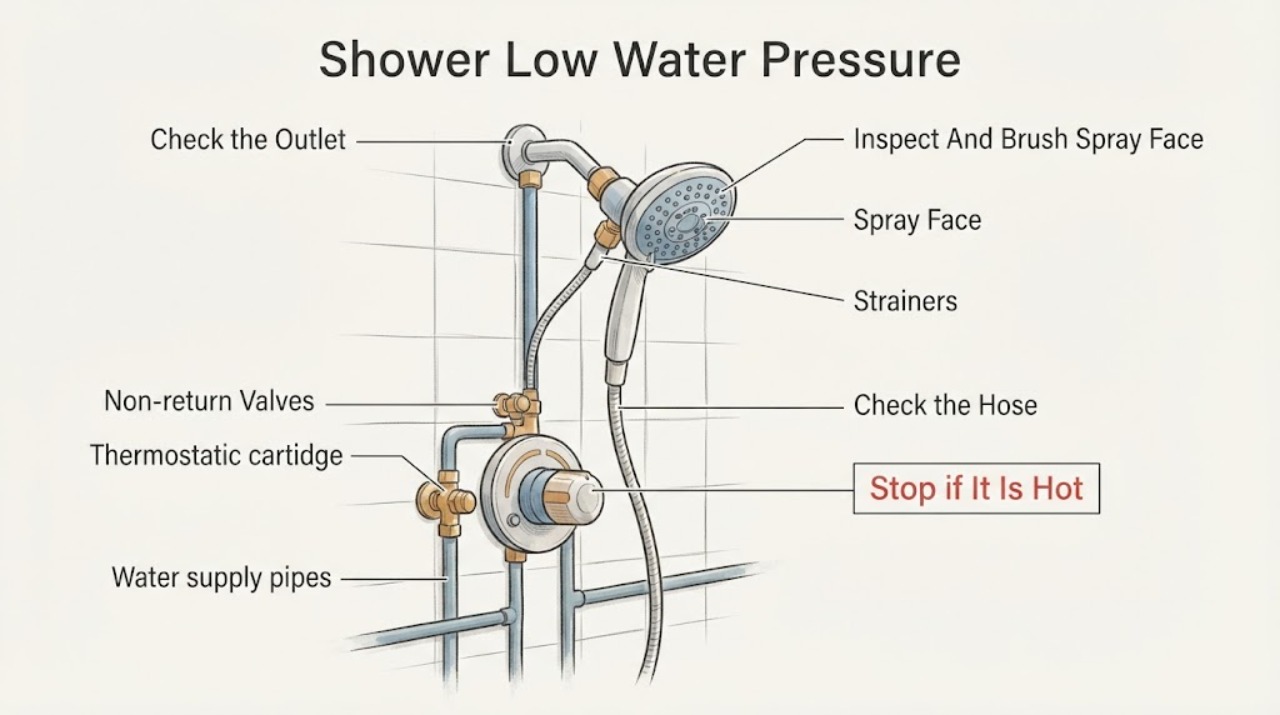
GROHE Shower Low Water Pressure: What to Check and What to Do Next
First compare the GROHE shower with another shower outlet and a nearby faucet, then compare hot and cold flow separately. If only the shower is weak or its spray pattern changed, an obstructed spray face, strainer, hose, or model-specific flow limiter is more likely.
-
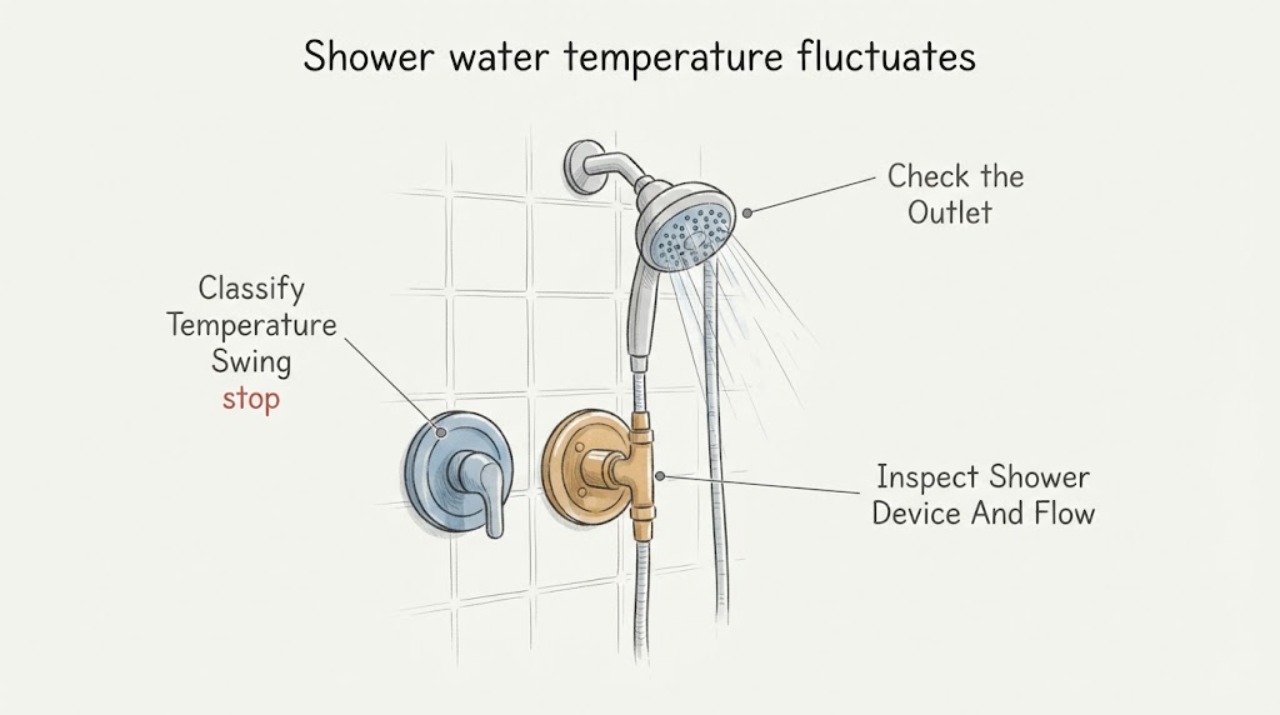
GROHE shower water temperature fluctuates: What to Check and What to Do Next
Temperature that swings hot and cold in a GROHE shower is usually a change in hot or cold supply pressure, a valve or thermostat that is dirty, miscalibrated, or failing, a restricted shower device, or an upstream hot-water problem. First note whether the change happens when a toilet, washer, or faucet runs, whether only one shower outlet is affected, and whether the water is unstable from the first moment or after it warms.
-
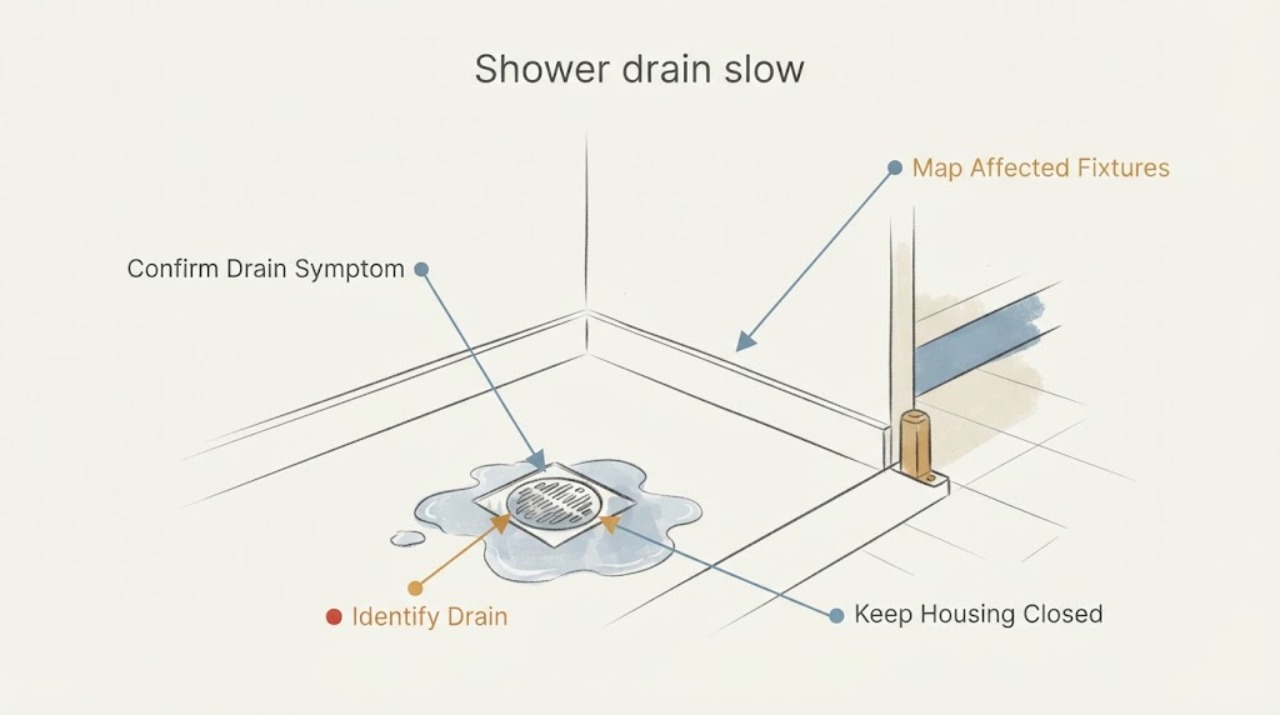
Kohler shower drain slow: What to Check and What to Do Next
A slow Kohler shower drain is usually a restriction at the accessible cover or grate, hair and soap in the drain path, a deeper trap or branch-line blockage, or a shared wastewater problem. First confirm that the shower is draining slowly rather than delivering low water flow, then identify whether the Kohler drain is round, linear, tile-in, or part of a shower base.
-
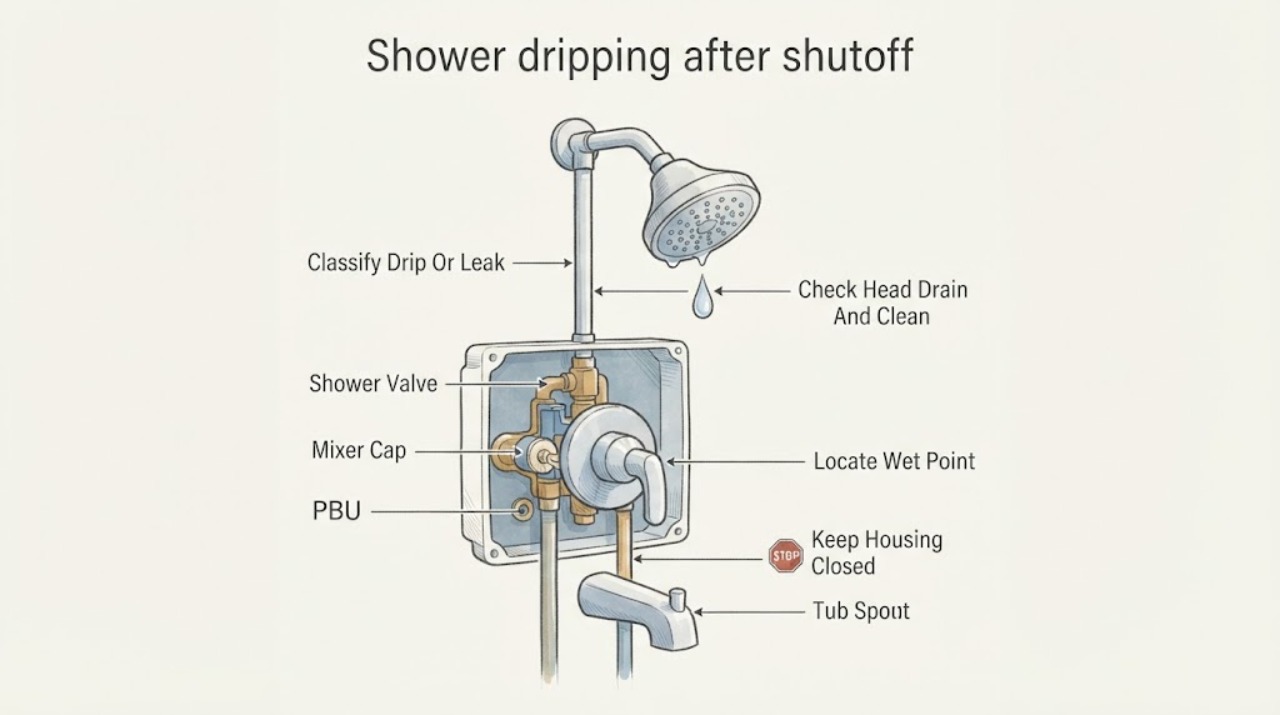
Kohler shower dripping after shutoff: What to Check and What to Do Next
First distinguish a short drain-down from a continuing leak. Kohler says water retained in a showerhead may drip after a Rite-Temp valve is turned off, and changes in household water pressure can briefly add drips; a continuous flow or a drip that does not settle points to a different problem.
-
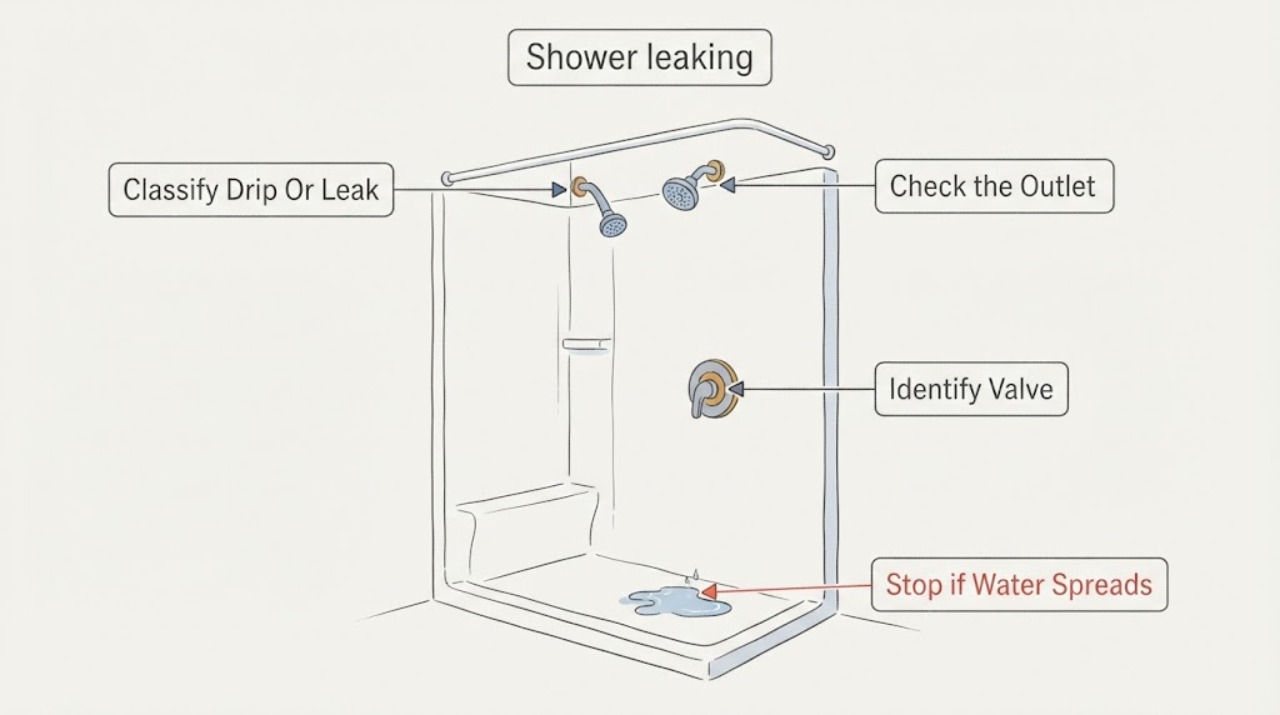
Kohler shower leaking: What to Check and What to Do Next
A leaking Kohler shower needs a source-and-pattern check before any part is replaced. Water that tapers off briefly from the showerhead after use can be residual water, while a continuous flow with the control closed points more toward a valve seal, pressure-balancing unit, diverter, or another internal component.
-
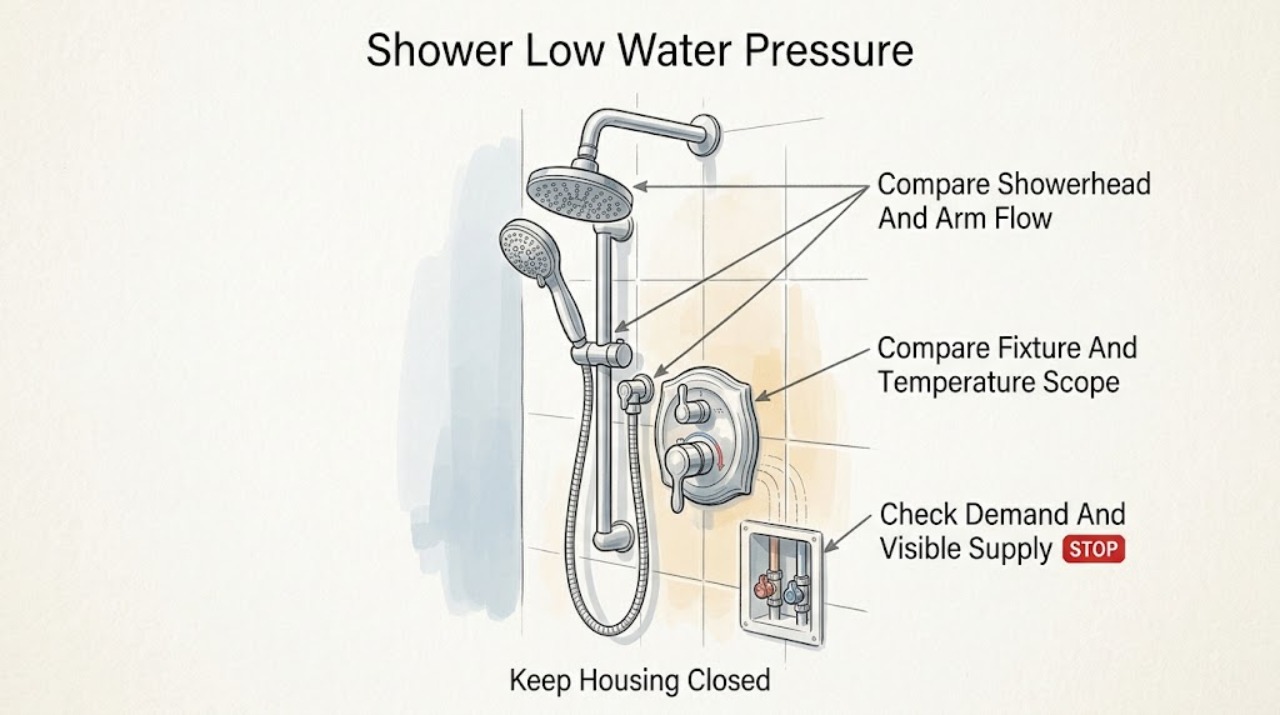
Kohler Shower Low Water Pressure: What to Check and What to Do Next
For a Kohler shower with low water pressure, first determine whether the weak flow affects only the shower, one temperature, or the whole home. Compare the showerhead stream with the shower arm only when the head can be removed safely: a normal arm stream points toward the head, screen, aerator, or hose, while weak flow at the arm points toward the valve, cartridge screens, supply stops, or building plumbing.
-
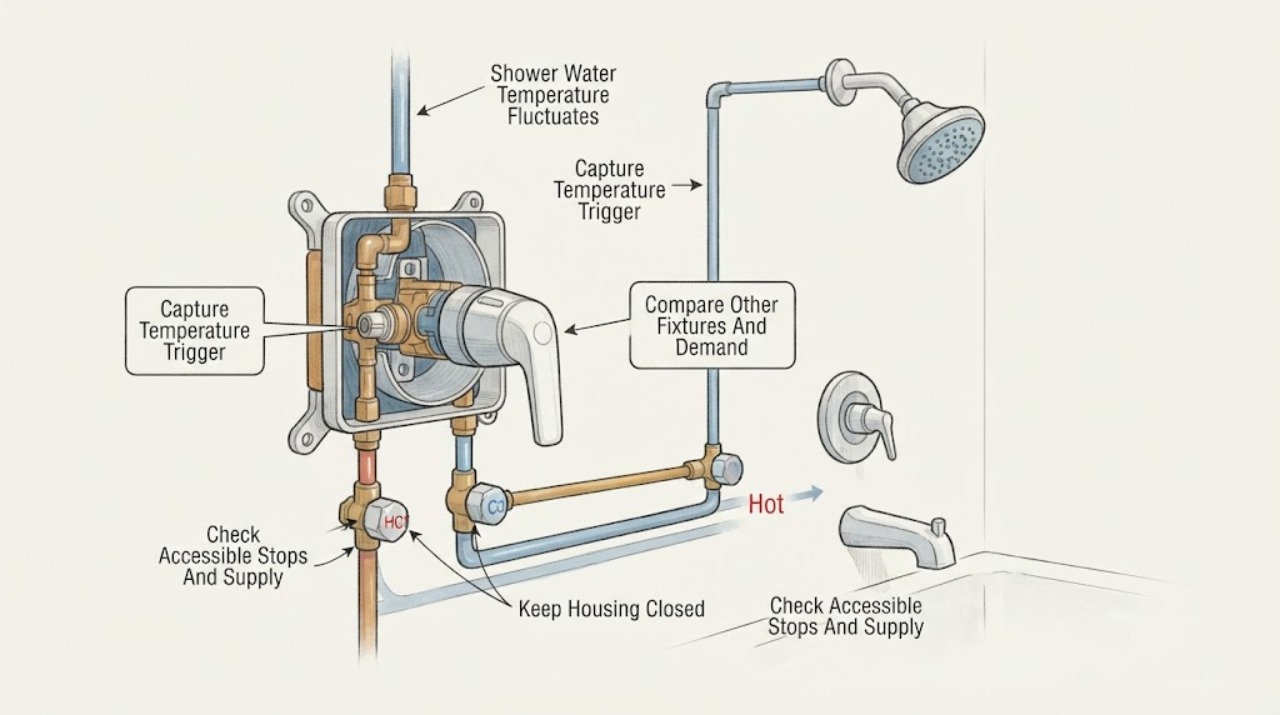
Kohler Shower Water Temperature Fluctuates: What to Check and What to Do Next
When a Kohler shower temperature swings hot and cold, first note whether the change occurs when another fixture runs, only after a long shower, only on one supply, or continuously with no other demand. Kohler explains that a pressure-balancing valve reacts to the hot and cold inlet pressures; unequal or changing supply pressure can make the outlet temperature fluctuate.
-
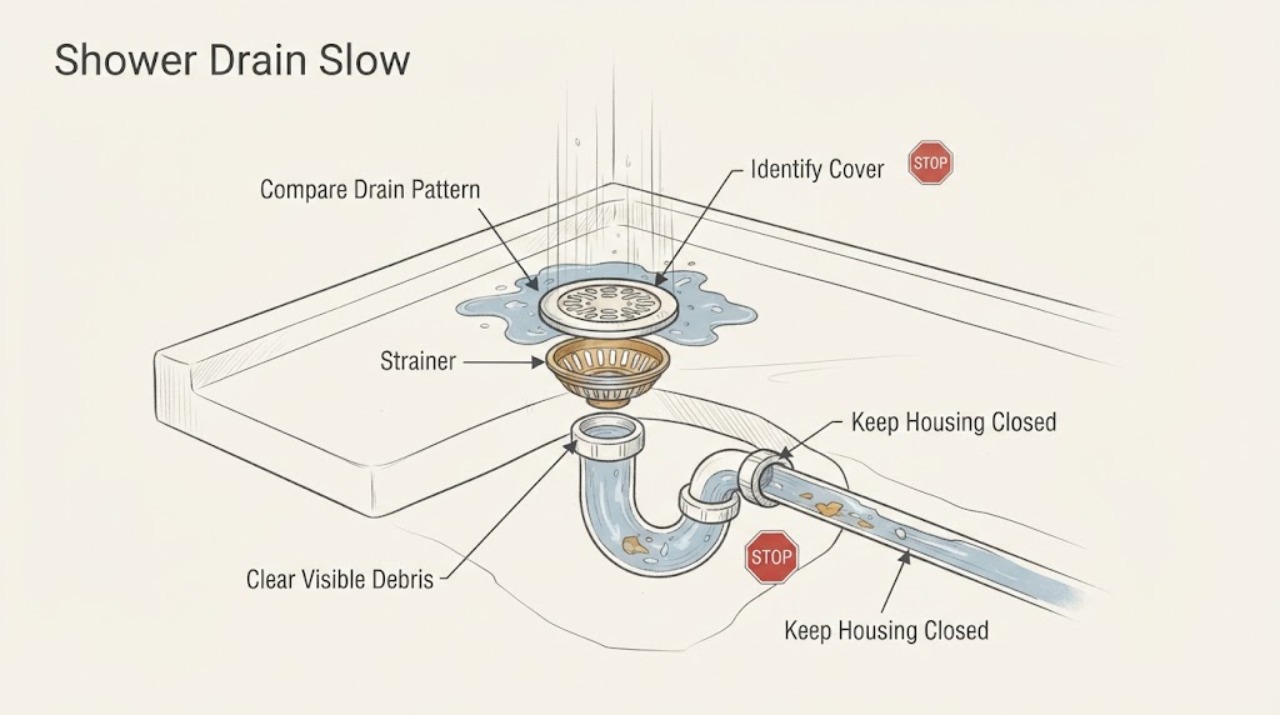
Moen Shower Drain Slow: What to Check and What to Do Next
A slow Moen shower drain is most often a restriction at the drain cover or strainer, where hair and soap residue can collect, but a deeper trap or branch-line blockage is possible when more than one fixture drains slowly. Start by comparing the shower with nearby fixtures, then inspect the visible Moen drain cover and remove only accessible hair or debris using the model's instructions.
-
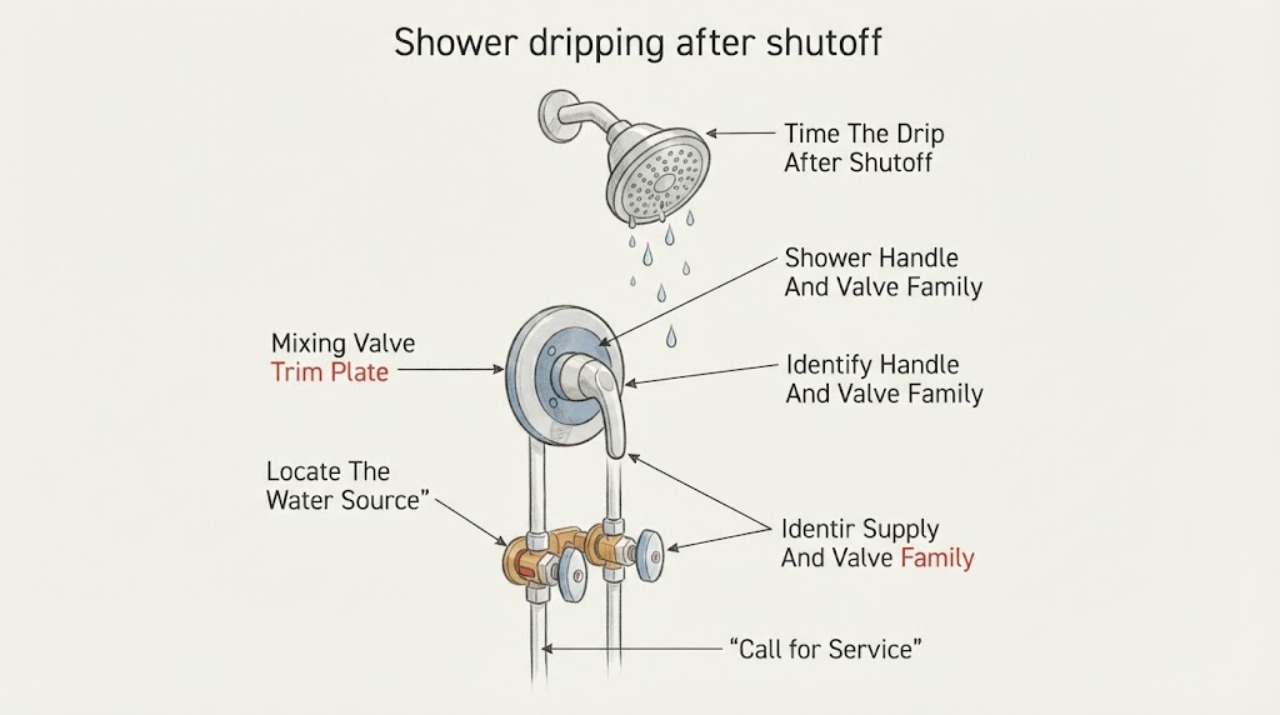
Moen shower dripping after shutoff: What to Check and What to Do Next
A Moen showerhead can release a small amount of residual water after shutoff, especially while the shower arm and head drain. The key distinction is whether the drip stops after the trapped water drains or continues for hours, returns continuously, or appears from the handle, escutcheon, wall, tub spout, or a second shower device.
-
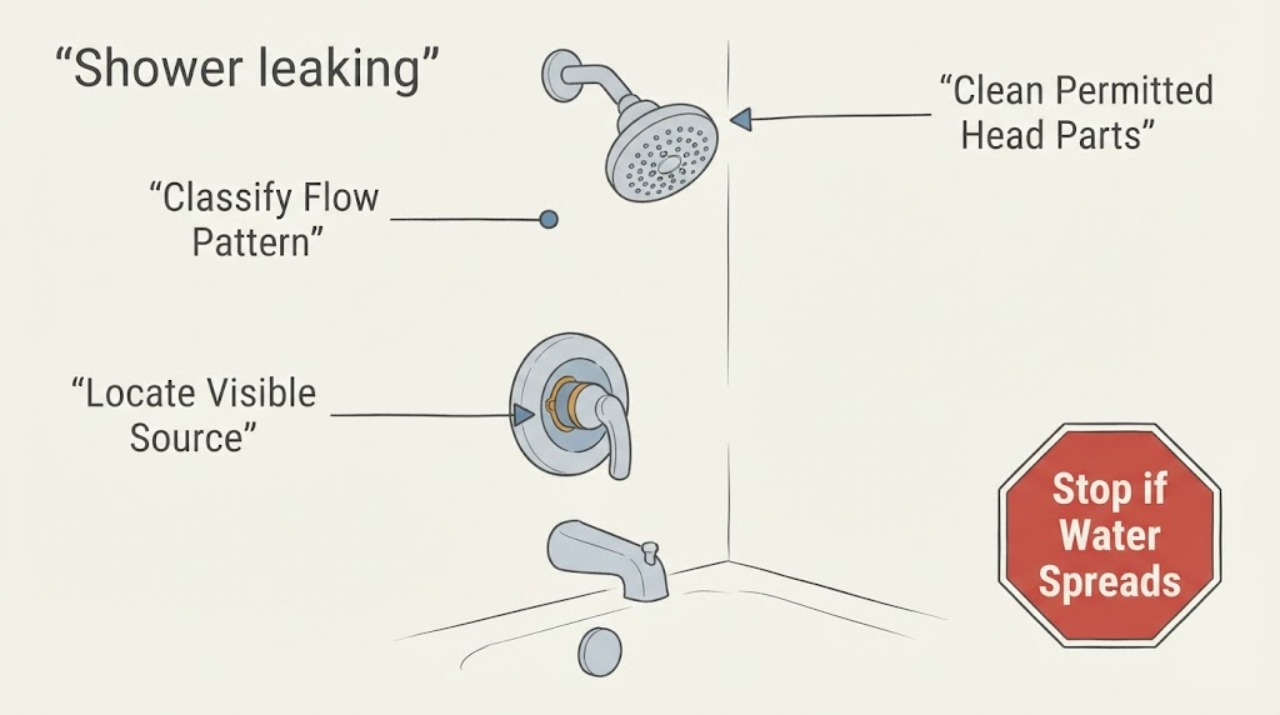
Moen shower leaking: What to Check and What to Do Next
First locate the leak and distinguish separated residual drops from continuous flow. With the shower control off, dry and watch the showerhead, head-to-arm joint, handle or escutcheon, tub spout, and visible wall or ceiling.
-
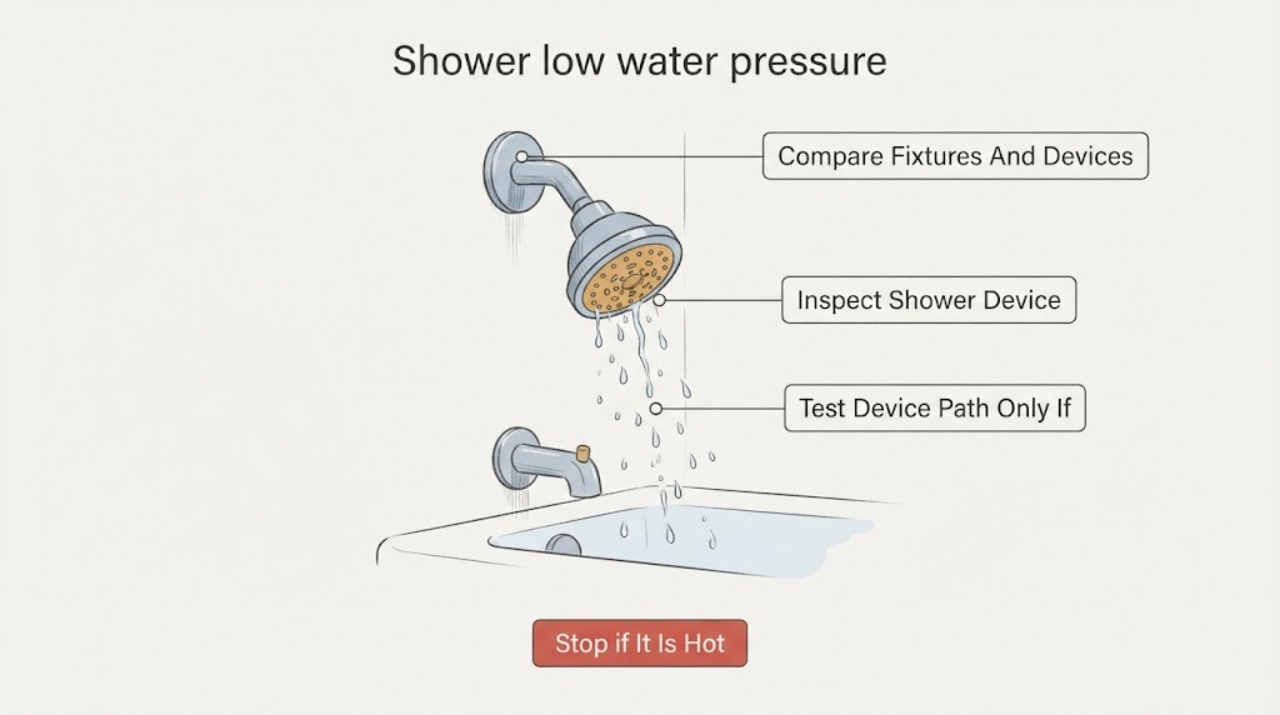
Moen shower low water pressure: What to Check and What to Do Next
Low pressure at a Moen shower can come from a blocked showerhead or hand shower, a clogged screen, a transfer or diverter valve, a mixing-valve cartridge, a partly closed service stop, or a home water-supply problem. First compare the shower with another fixture and determine whether only one shower device is weak, only hot or cold flow is weak, or every shower device is affected.
-
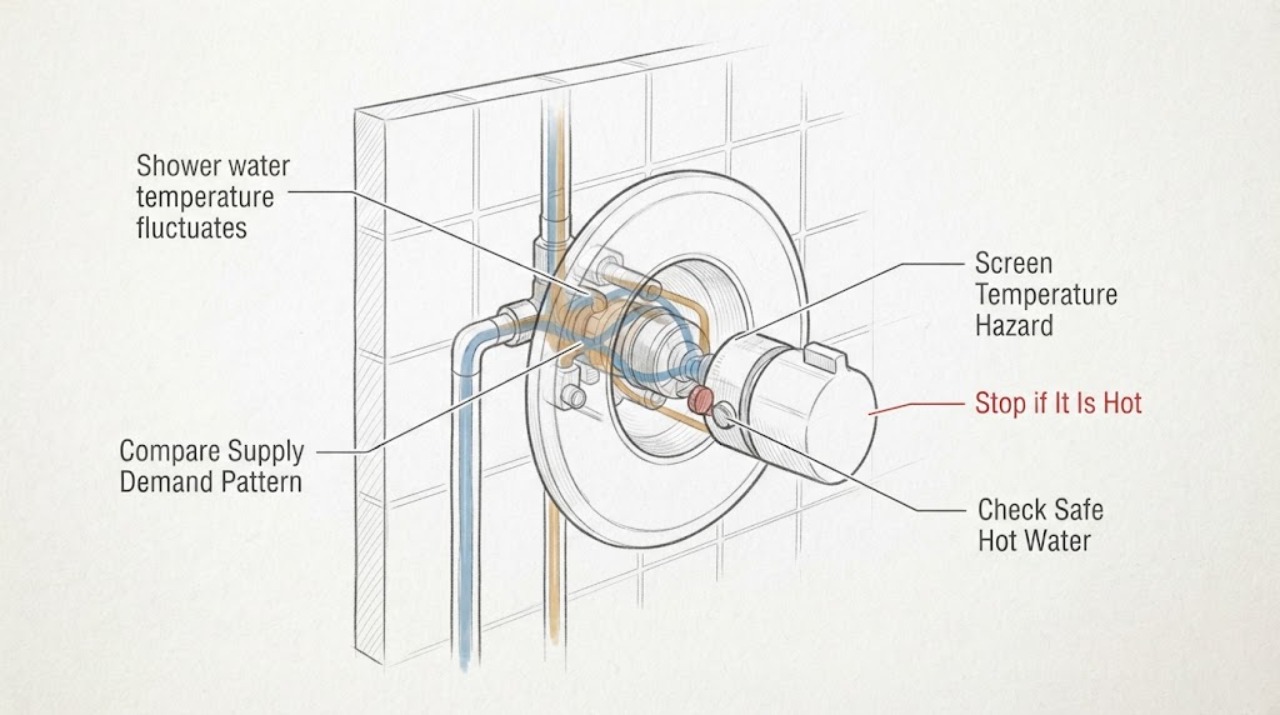
Moen shower water temperature fluctuates: What to Check and What to Do Next
Treat an abrupt hot-to-cold change as a scalding risk until the cause is known. Note whether the change occurs when another fixture runs, whether flow changes at the same time, whether both hot and cold are affected, and whether the symptom began after installation or service.
-
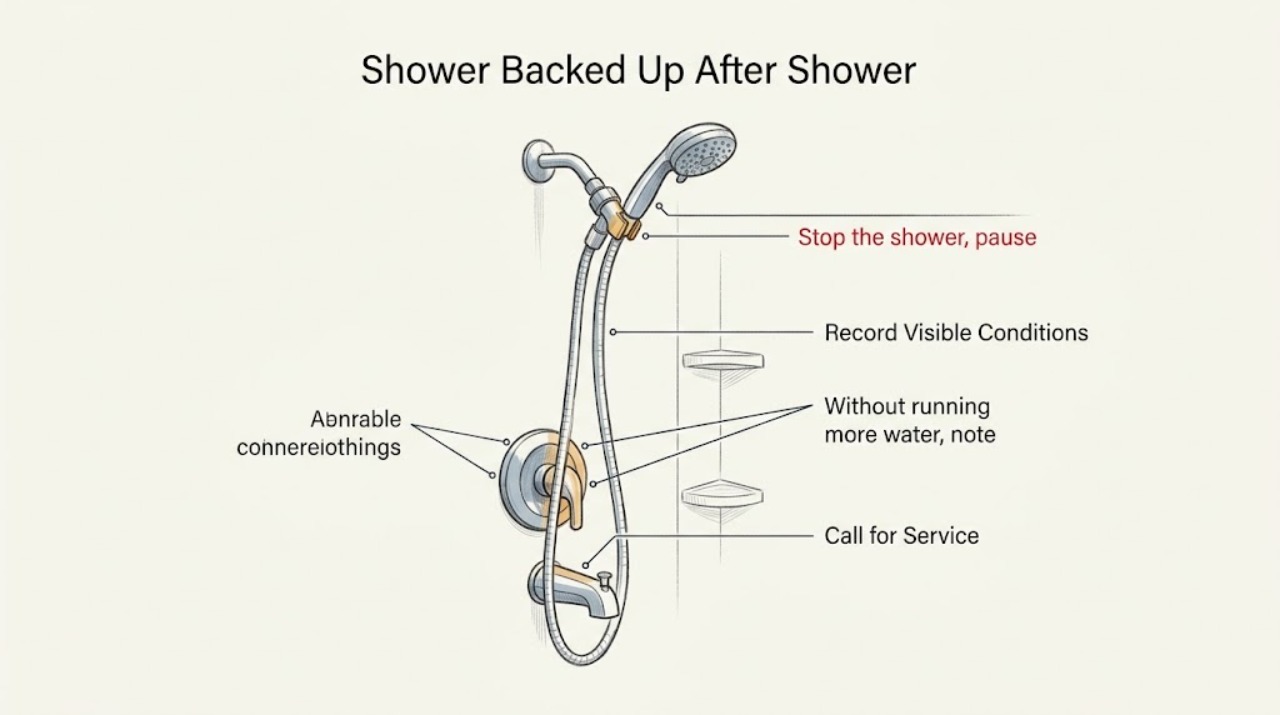
Shower Backed Up After Shower and Laundry Ran Together
A shower that backs up after the shower and washing machine discharge at the same time usually means the drainage path cannot accept that combined flow somewhere downstream of the shower, but the exact point may be a shower trap, a shared bathroom or laundry branch, the building drain, or the sewer connection. Stop both water uses and do not add more water to test it.
-
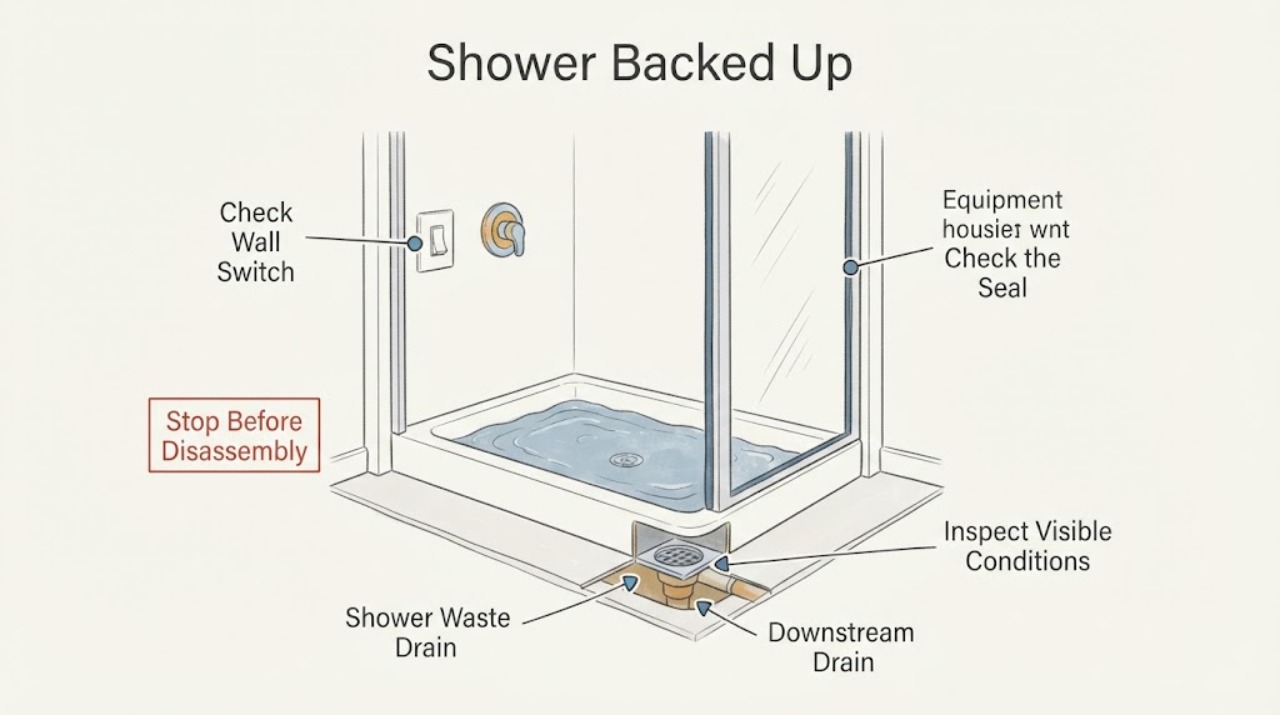
Shower Backed Up: Clear the Waste Safely and Tell a Local Blockage from a Shared Drain
Stop using the shower so the tray does not overflow, then determine whether only the shower is affected. Remove the drain cover and pull out hair or debris that is plainly accessible, use a correctly sized plunger with enough water to seal around it, and test the drain in short, controlled attempts.
-
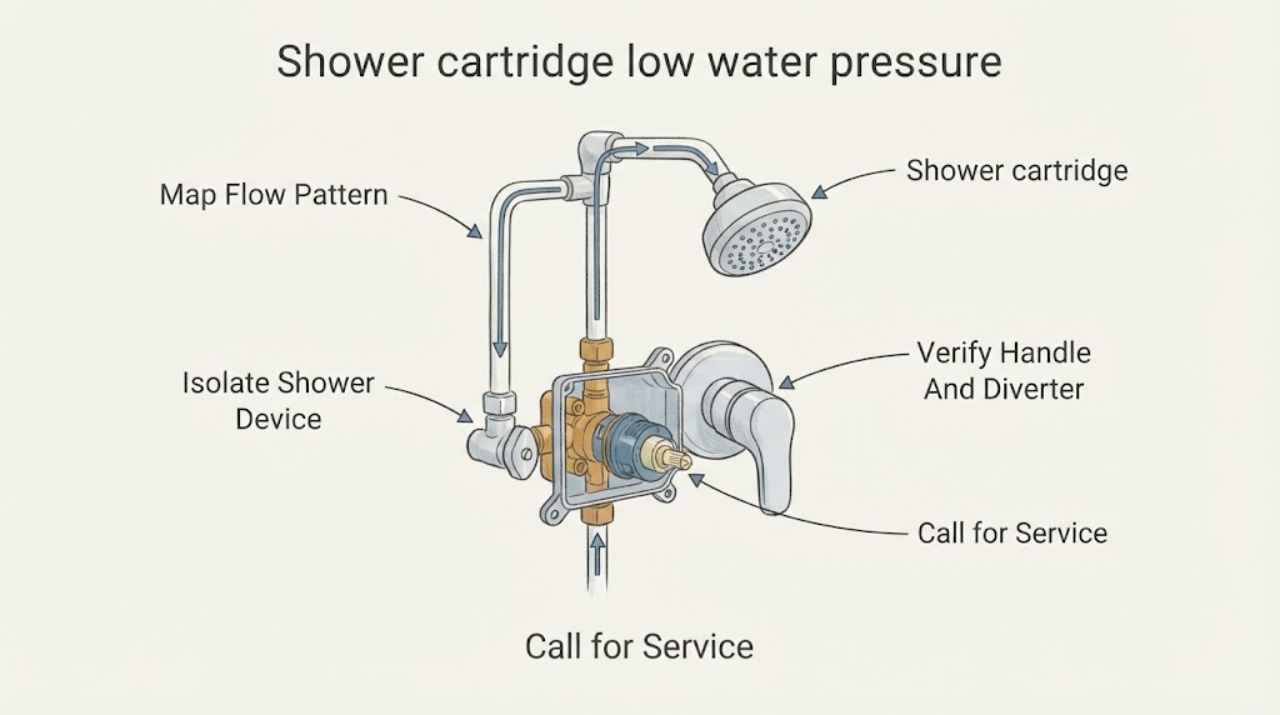
Shower cartridge low water pressure: What to Check and What to Do Next
A shower cartridge can restrict flow or create a hot-or-cold imbalance, but low pressure at the shower does not prove the cartridge is bad. First compare the affected shower with another fixture, then check whether the loss is at the showerhead or already present at the shower arm.
-
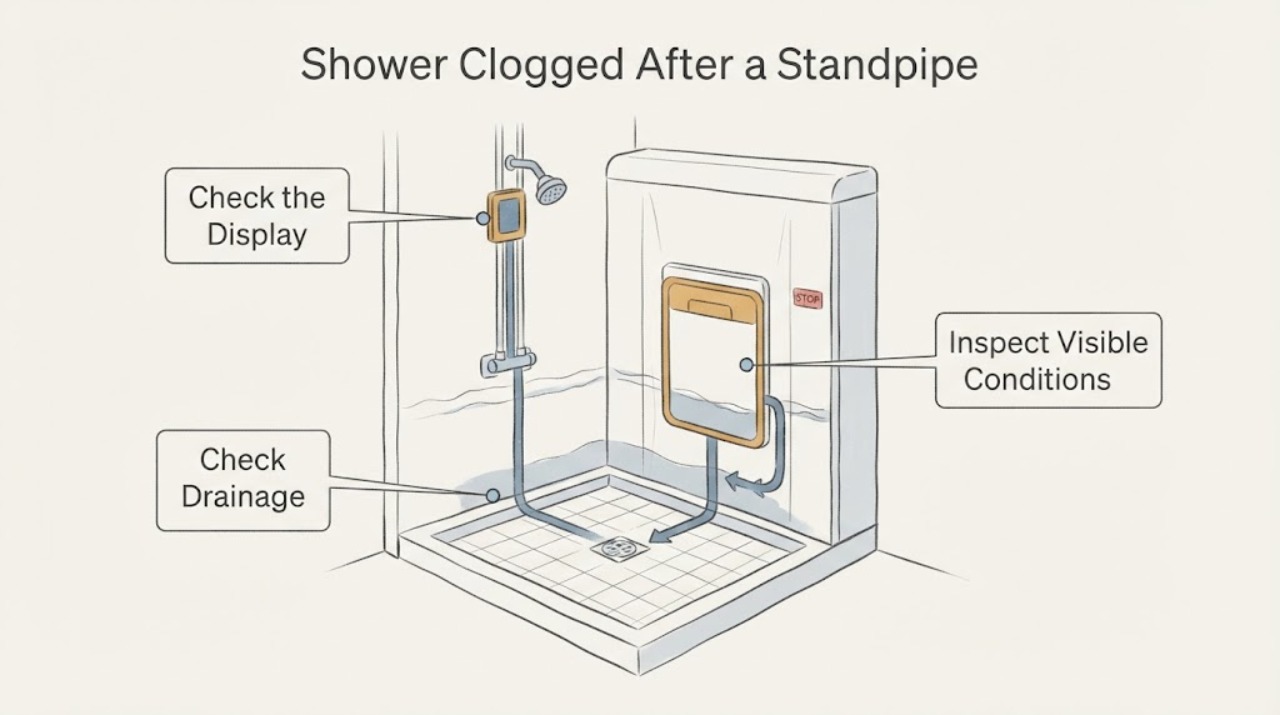
Shower Clogged After a Standpipe Overflow: What an Upstairs Toilet Flush Reveals
A standpipe overflow that eventually drains, followed by slow shower drainage or a rise when an upstairs toilet is flushed, points beyond a simple shower-hair clog: the fixtures may share a restricted branch, building drain, venting problem, private sewer lateral, or a municipal main. Stop flushing, showering, washing, and sending other water down the drains until the line is assessed; another flush can recreate the overflow.
-
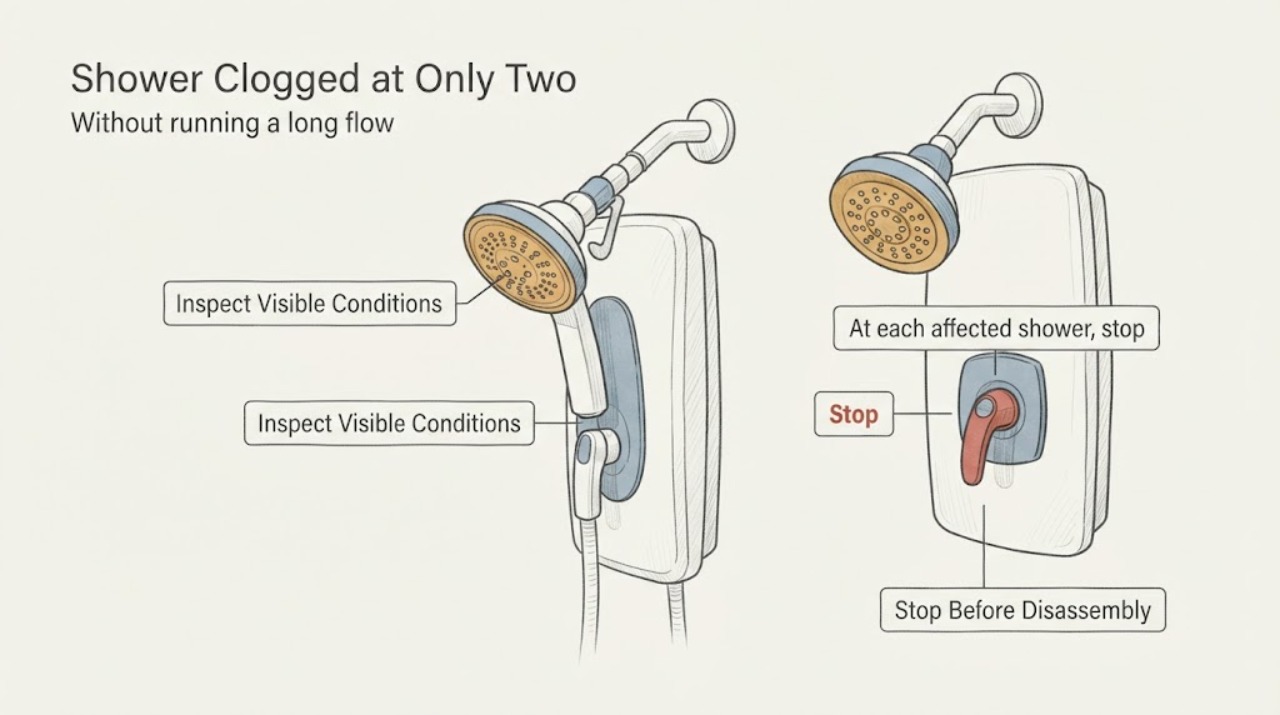
Shower Clogged at Only Two Fixtures: Find the Shared Drain Blockage
When clogging affects only two shower fixtures, first confirm that both have standing water or slow drainage rather than a weak shower spray. Two affected fixtures with normal drainage elsewhere often share a branch drain or vent, while a backup or gurgling across several areas points farther downstream toward a building drain or sewer line.
-
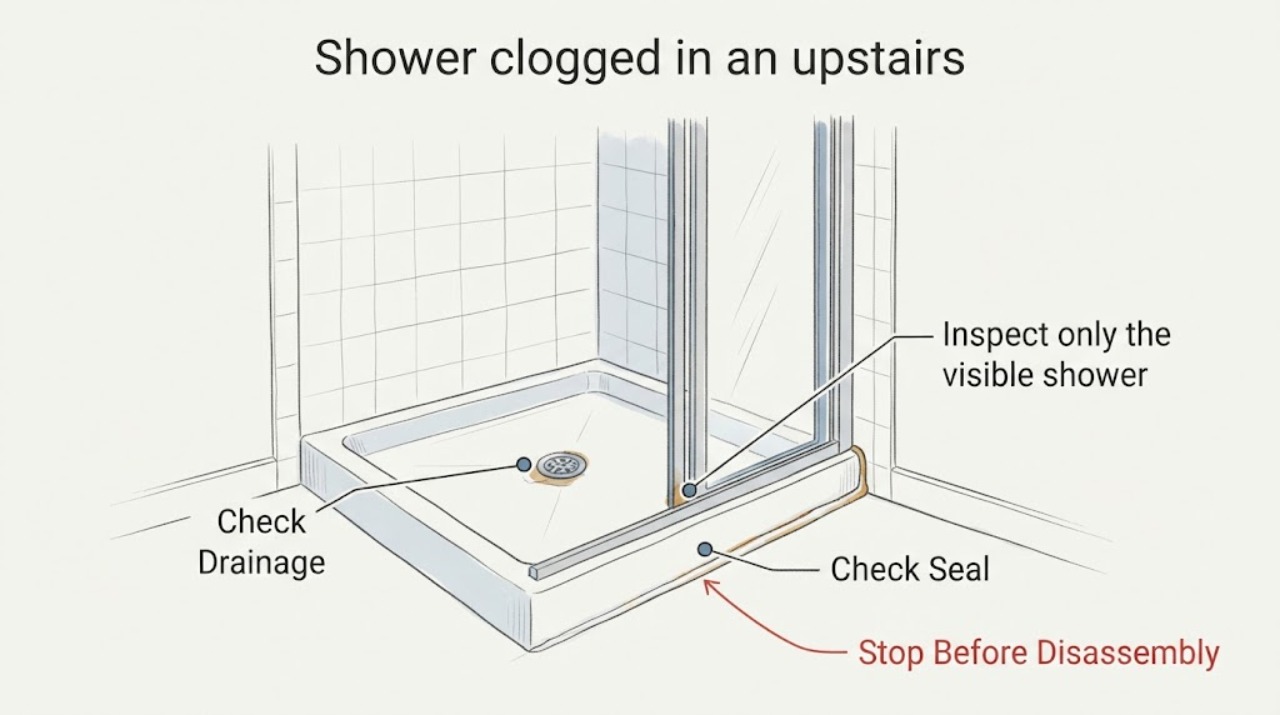
Shower clogged in an upstairs bathroom: safe checks
Stop adding water to the upstairs shower and determine whether only the shower is slow or whether the sink, tub, toilet, or another drain is also backing up. A single shower commonly points to the strainer, trap, or branch; several fixtures, gurgling, sewage odor, or water rising elsewhere points toward a shared branch, vent, stack, or sewer restriction.
-
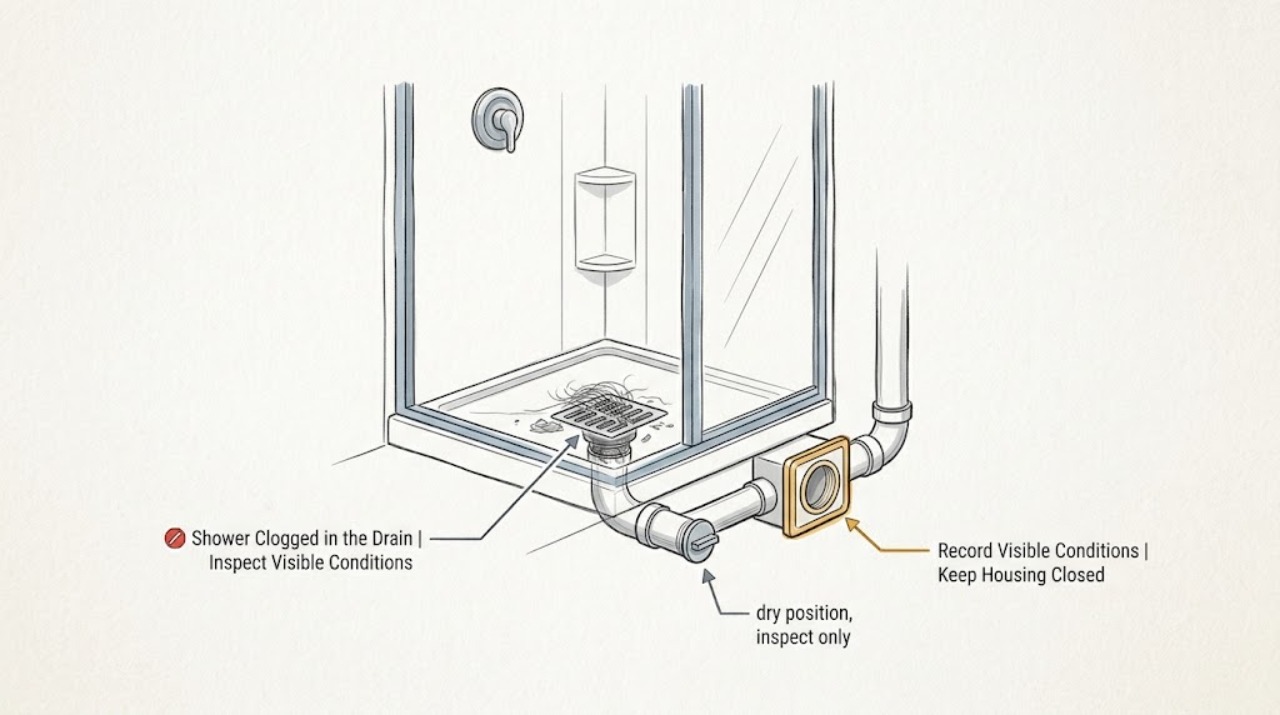
Shower Clogged in the Drain: Start at the Strainer, Then Rule Out a Shared Line
If water is slow only at the shower, start with the visible strainer and hair or soap at the drain opening, but do not assume that is the whole blockage. If the shower backs up when another fixture drains, several fixtures are slow, a toilet gurgles, or wastewater appears at a lower drain, the restriction may be in the shower trap, a shared branch, the building drain, the private sewer lateral, or the public main.
-
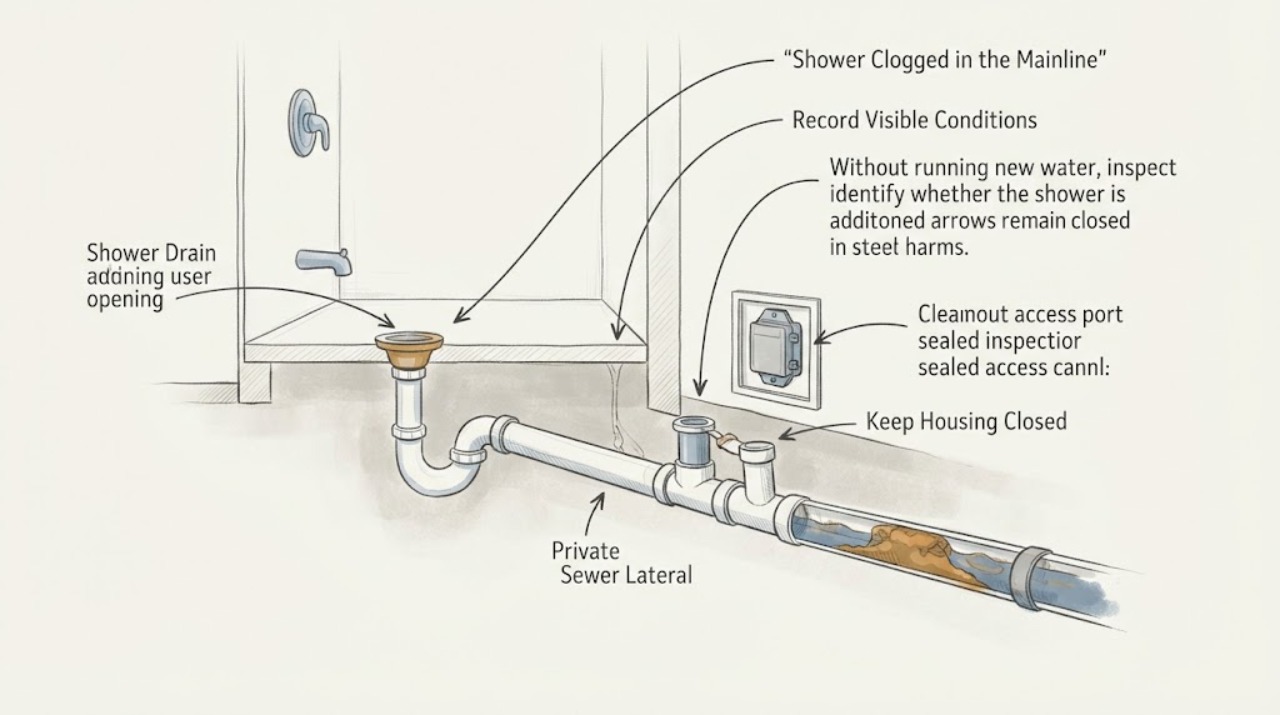
Shower Clogged in the Mainline: Recognize a Sewer Blockage Safely
A shower that backs up because of a suspected mainline clog is a whole-drainage problem, not just hair at the shower grate. Stop using water, note whether toilets, sinks, laundry, or other low fixtures are also slow or backing up, and keep people and pets away from wastewater.
-
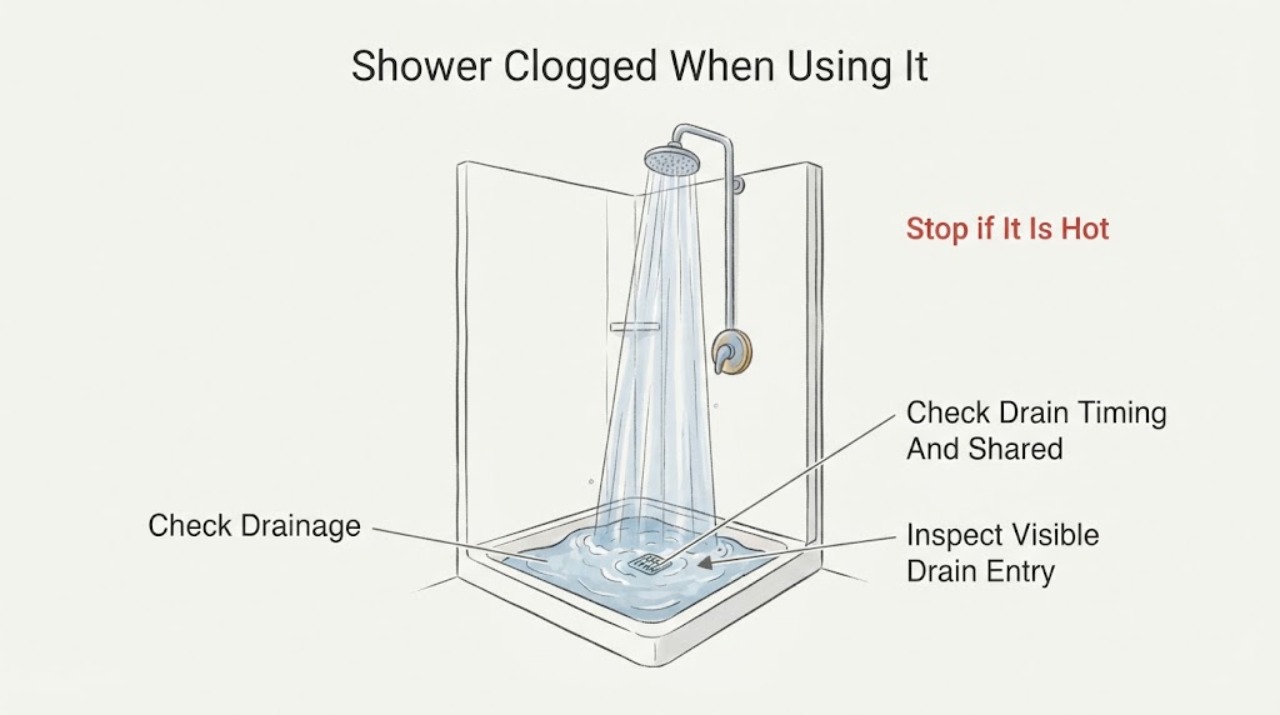
Shower Clogged When Using It: Separate Spray Flow From Drain Blockage
If the shower seems clogged only when it is running, first decide whether water cannot leave the shower or cannot arrive at the showerhead. Weak or uneven spray with little pooling points to showerhead scale, an inlet screen, diverter, valve, or supply problem.
-
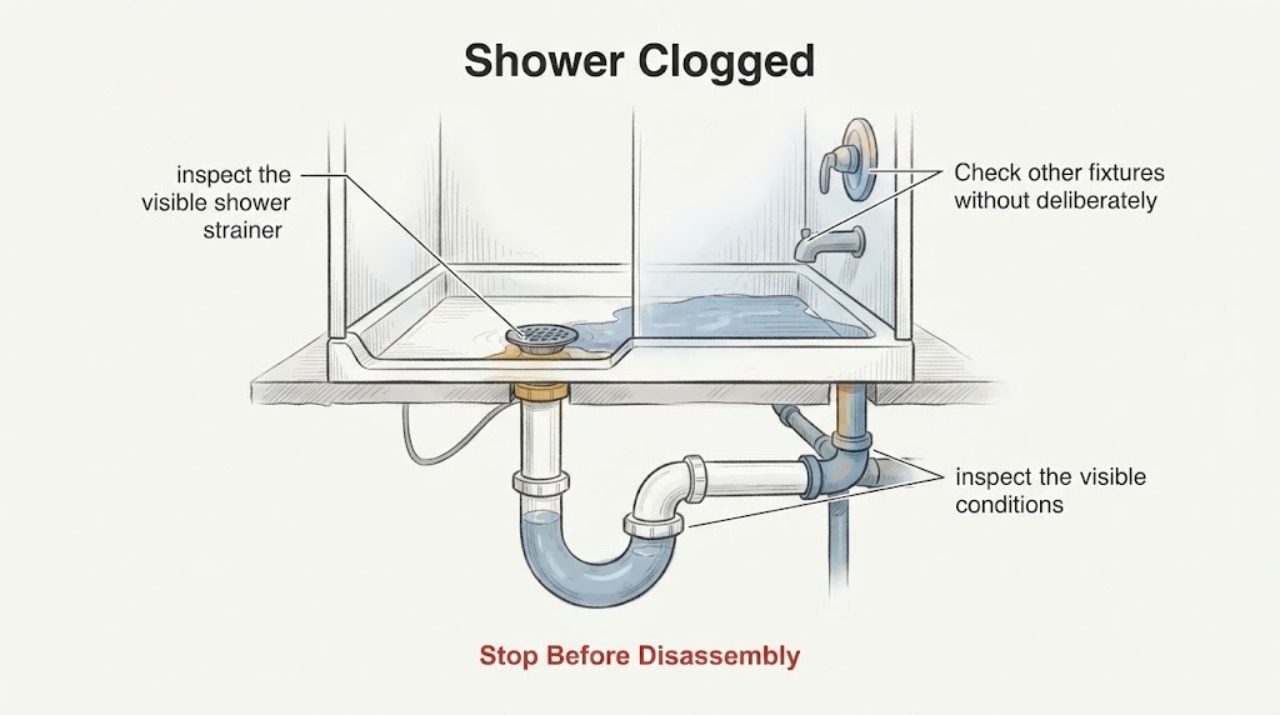
Shower Clogged: Check the Strainer, P-Trap, and Branch Safely
A clogged shower is often near the drain strainer or the short trap/branch serving that fixture, but the symptom does not prove that the P-trap is the blockage. Stop adding water, remove only visible hair or soap from an accessible strainer, and check whether other fixtures drain normally.
-
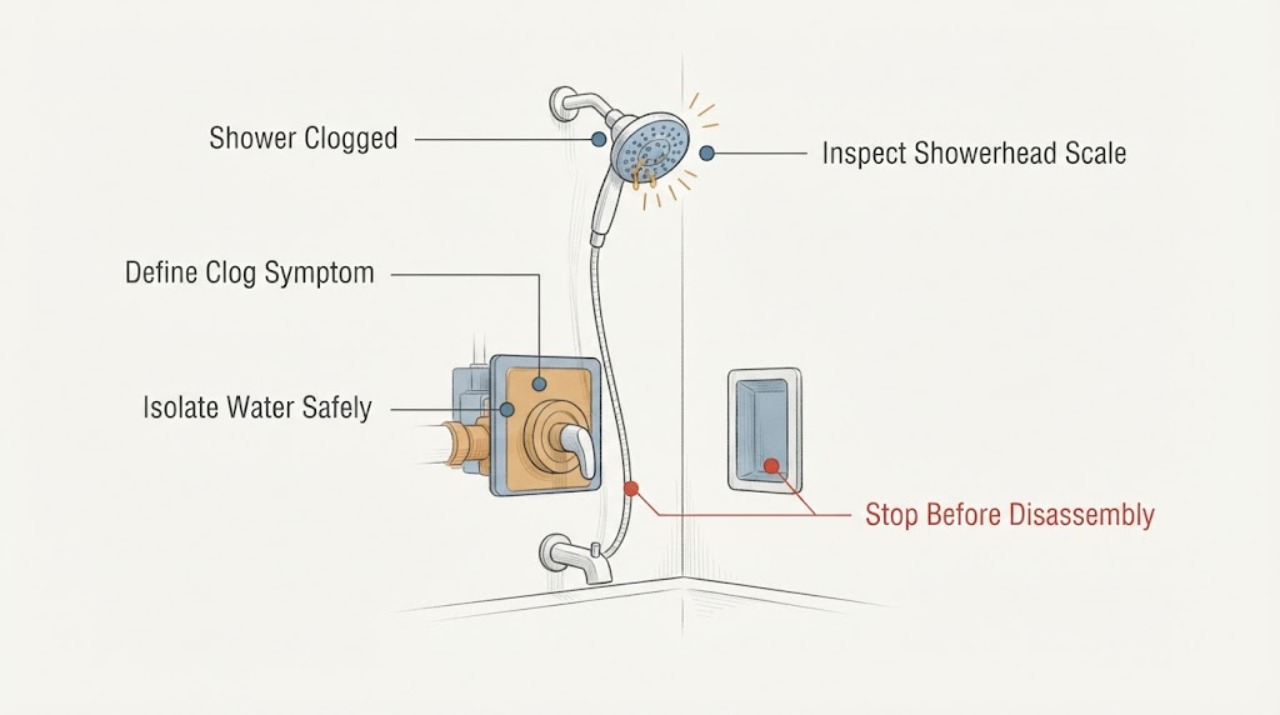
Shower Clogged: Check the Showerhead, Drain, and Upstream Tank Safely
A shower can seem clogged because the showerhead is scaled, the tub or shower drain is blocked, the diverter is not routing water correctly, or an upstream tank or water-heater supply issue is reducing hot-side flow. “Tank” is not a standard part inside every shower: treat it as an upstream storage or water-heater component only when the symptoms affect the hot side or several fixtures.
-
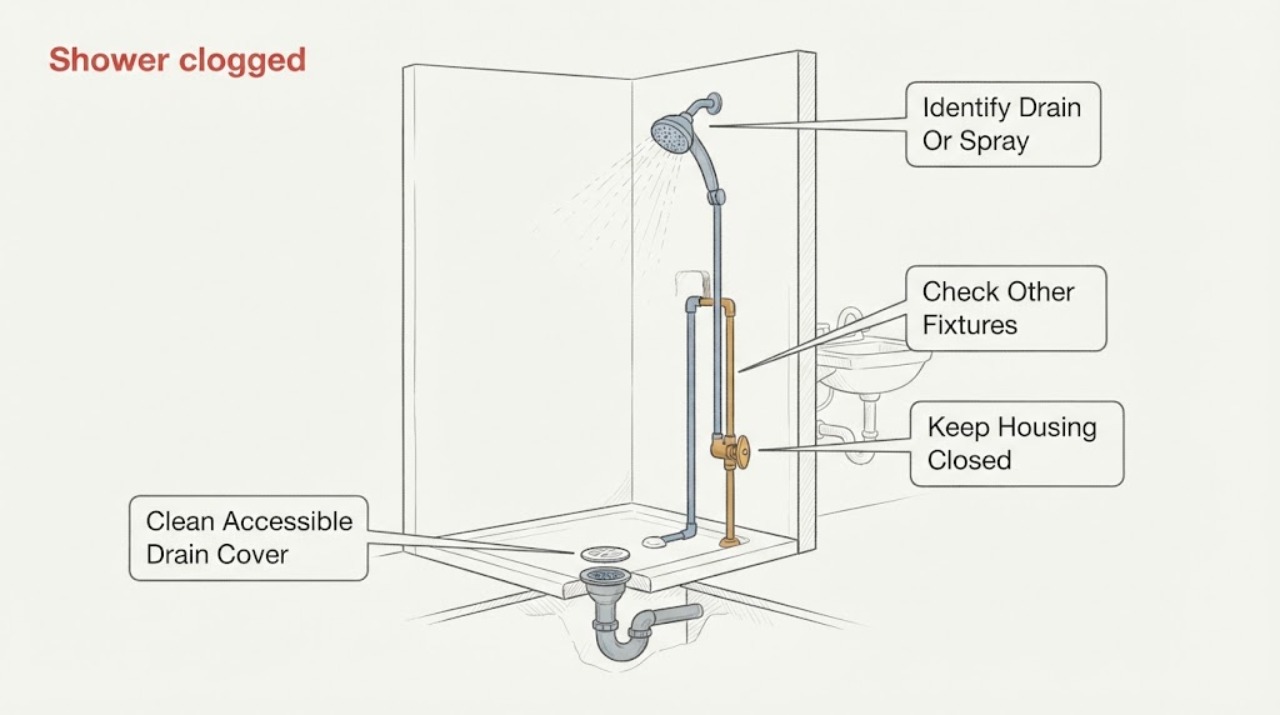
Shower clogged: Tell a blocked drain from a clogged showerhead
First decide whether the shower floor is filling with water or the showerhead is spraying weakly. A slow or standing shower drain is commonly a hair-and-soap blockage at the strainer or nearby drain path: safely remove and clean an accessible cover, lift out visible debris without pushing it deeper, and retest with a small amount of water.