
On this page
Start here
Quick answer
Stop using the shower so the tray does not overflow, then determine whether only the shower is affected. Remove the drain cover and pull out hair or debris that is plainly accessible, use a correctly sized plunger with enough water to seal around it, and test the drain in short, controlled attempts. Do not mix drain chemicals or add a new product if a chemical is already in the standing water. If sinks, toilets, or a neighboring property are also backing up, if sewage returns, or if water is near electrical equipment, stop and isolate the hazard or arrange a plumber. A local blockage that remains after safe surface cleaning and plunging needs professional drain clearance rather than force or repeated chemicals.
Before you begin
Safety first
- Keep the shower out of use for persistent backup or wastewater. Do not mix chemicals, plunge unknown chemical contents, force tools, or dismantle sealed fittings.
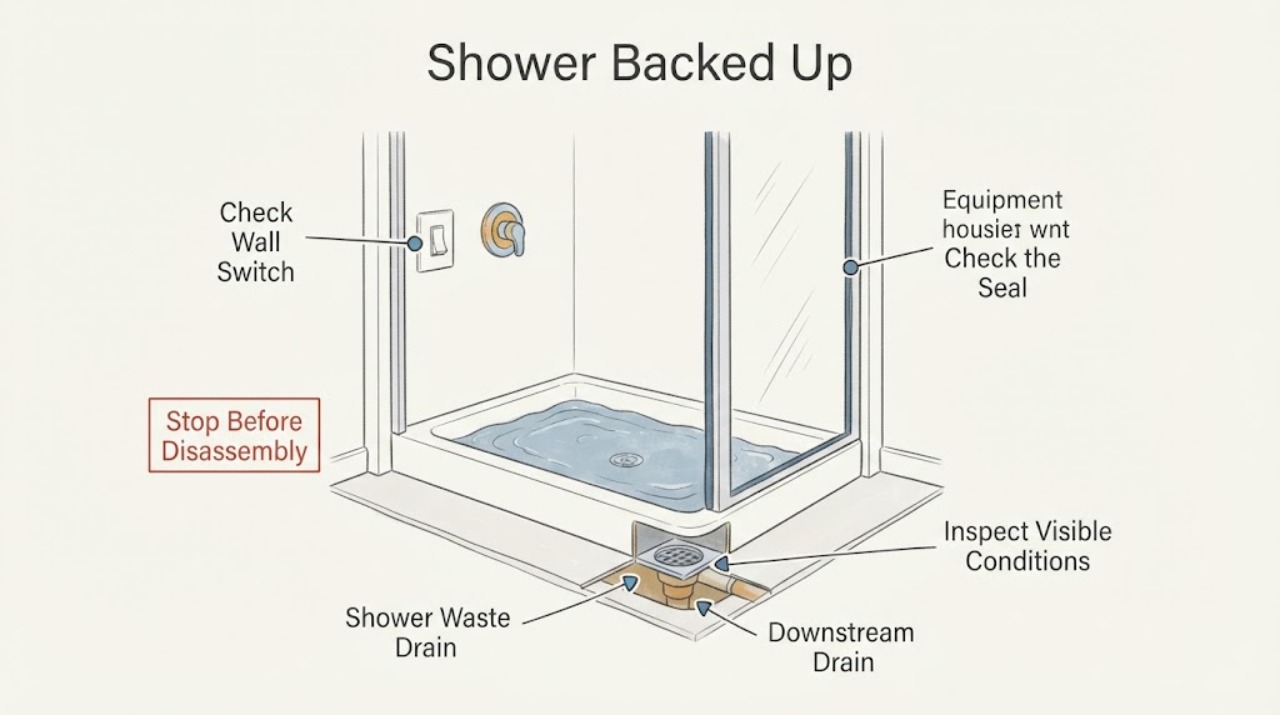
Work through in order
Diagnostic checks
Use only checks that match the exact appliance or system and its official guide.
-
Check 1
Stop the shower and remove anything that could add water to the backed-up tray. Keep people away from standing water, especially if a powered shower, outlet, switch, or appliance is nearby. If water is flowing quickly or has reached electrical equipment, isolate water and electricity only from a safe user-accessible point and seek urgent help.
Expected result: Note the water depth and whether it is clear, soapy, foul-smelling, or visibly contaminated. Check whether the shower is the only affected fixture and whether water is leaking through a ceiling, wall, or floor.
Next step: If the area is safe and the problem is limited to the shower waste, continue to the accessible drain inspection. If there is an electrical or active-leak hazard, stop and arrange qualified assistance.
Stop if: Do not stand in pooled water near powered equipment or keep adding water to test a blocked tray.
Why this matters
Why: A contained shower-only backup is a different branch from sewage-like water, an active leak, or backup at several fixtures. Water near electricity creates a shock risk and takes priority over clearing the drain.
-
Check 2
Put on suitable gloves, remove the drain cover or strainer only if it is designed for user removal, and lift out hair or debris that is plainly visible at the opening. Do not push the material farther down and do not remove a sealed trap or fitting just to inspect it.
Expected result: The drain opening may clear and begin draining, remain slow, or remain completely full. Record whether the blockage was hair or surface debris and whether the cover, grate, or waste fitting is cracked or loose.
Next step: Replace the cover securely and, if the standing water is safe and no chemical has been used, proceed to one controlled plunger attempt. Arrange repair for a cracked or loose waste fitting.
Stop if: Stop if the cover is fixed in place, the fitting moves, sharp edges are exposed, or the water may contain drain chemicals.
Why this matters
Why: Hair at a shower grate is a plausible local restriction; clearing it can restore flow without proving that the downstream pipe is clear. A damaged waste fitting or no change after surface cleaning keeps a deeper blockage or plumbing fault in the branch.
-
Check 3
If no chemical has been poured and the water is safe to handle, place a correctly sized plunger over the shower waste so it seals. Use controlled strokes without splashing, then lift the plunger and observe the drain. Stop if the seal cannot be made or the water rises toward an overflow.
Expected result: The water may drop during plunging, drain only after the plunger is lifted, remain unchanged, or rise in another fixture. Note whether flow improves briefly and then slows again.
Next step: Rinse with a small amount of clean water only if flow has returned and no leak appears. If the blockage remains after a short attempt or shifts to another fixture, stop and escalate to drain service.
Stop if: Never plunge a drain containing an unknown chemical product, and do not use force that could dislodge a shower waste or seal.
Why this matters
Why: A drop at the shower waste supports a movable local obstruction, but temporary improvement does not prove the line is clear. Water moving into another fixture suggests a downstream or shared drainage problem rather than a grate-level hair plug.
-
Check 4
Review what has already been put down the drain before choosing any further method. If no chemical is present and the waste opening is intended to accept a manual drain snake, a plumber's snake can be used gently from the accessible opening; follow the tool instructions and do not force it past a fitting.
Expected result: Record whether a tool reaches a soft obstruction, stops immediately at a fitting, brings back debris, or cannot be inserted safely. Note any chemical label or product already used and whether the blockage returns after a brief improvement.
Next step: Stop at the accessible user boundary and give the plumber the drain layout, water pattern, tool result, and any chemical product information. Do not add another cleaner to chase the blockage.
Stop if: Do not dismantle a trap, drill a fitting, force an auger, or combine products in the waste line.
Why this matters
Why: A tool may reach a deeper obstruction, but resistance is not proof of its location or of a broken pipe. Chemicals, unknown contents, recurring blockages, and inaccessible traps make improvised probing or disassembly unsafe.
-
Check 5
Map the extent of the backup before closing the job. Run no more water than needed to observe a safe, cleared drain and check nearby sinks, toilets, floor drains, and—if applicable—another unit only through normal observation. Inspect for new dampness below the shower or around the waste fitting.
Expected result: The shower may be the only fixture affected, several fixtures may drain slowly or gurgle, or water may back up from a floor drain or leak below. Note whether the problem returns after one normal shower use.
Next step: Keep affected fixtures out of use and contact a qualified plumber or the responsible building/utility repair channel for a wider or recurring blockage. Give them the observed pattern and any chemical exposure.
Stop if: Stop testing when wastewater rises, a leak appears below, sewage odor or contamination is present, or another property is affected.
Why this matters
Why: A single shower waste points toward a local obstruction. Multiple fixtures, a shared property effect, sewage backup, or a leak suggests a branch, stack, or building drainage problem that a surface plunger will not safely resolve.
Use your observations
Decision map
Find the observation that best matches what you see, then follow the next safe action.
-
PATH 01Next step
What you see
Only the shower tray is slow or backed up and no chemical has been used.
Do this next
Clean visible debris and try one controlled plunger attempt; stop if it does not clear.
Why this path and its safety boundary
Why it matters: A local hair or surface-debris restriction remains plausible.
-
PATH 02Next step
What you see
The drain cover is clear but the tray remains full, or the blockage returns quickly.
Do this next
Arrange professional drain clearance and avoid repeated force or chemical treatments.
Why this path and its safety boundary
Why it matters: A deeper waste-pipe obstruction, damaged fitting, or recurring drainage fault is possible.
-
PATH 03Next step
What you see
A plunger lowers the water but backup appears in a sink, toilet, floor drain, or another unit.
Do this next
Stop adding water and report the wider drainage pattern to a plumber, landlord, building manager, or responsible utility.
Why this path and its safety boundary
Why it matters: The obstruction may be downstream or in a shared drain rather than at the shower grate.
-
PATH 04Next step
What you see
Drain cleaner or another unknown chemical is already in the standing water.
Do this next
Do not add another product, plunge, or dismantle the trap; follow the product label and tell the professional exactly what was used.
Why this path and its safety boundary
Why it matters: Splash, corrosive exposure, and chemical reaction risks change the safe procedure.
-
PATH 05Next step
What you see
Water is near electrical equipment, leaking through a ceiling or wall, rising rapidly, or visibly contaminated.
Do this next
Stop using the shower, isolate water or electricity only if safely accessible, and obtain urgent qualified help.
Why this path and its safety boundary
Why it matters: The immediate problem is water/electrical, property, or hygiene safety rather than routine drain clearing.
-
PATH 06Next step
What you see
The shower clears but the same backup returns after normal use.
Do this next
Request a plumber to inspect and clear the recurring restriction and check the waste connection.
Why this path and its safety boundary
Why it matters: Temporary flow does not establish that the downstream pipe is clear.
Helpful context
Understand the symptom
What the water pattern tells you
A shower tray that drains slowly or not at all, while every other fixture drains normally, usually keeps the first check near the shower waste. A toilet that gurgles, a sink that rises when the shower runs, or backup at more than one fixture points farther downstream. If a neighbor or another unit is affected, the shared line or building drainage becomes more likely than a piece of hair at the grate.
Chemicals change the safety boundary
A plunger or drain snake is a mechanical approach, but a chemical product left in the trap can splash during plunging or disassembly. The EPA advises reading labels, not mixing household hazardous products, and managing leftovers according to local directions. If you do not know what was poured into the drain, tell the plumber and do not add another product.
Safety boundary
Stop conditions
- Stop and seek urgent help for water near electrical equipment, rapid leakage, sewage contamination, ceiling damage, or an unsafe shower fitting.
- Do not mix drain chemicals, add a second product, or use a plunger or snake when an unknown chemical is present.
- Do not force a plunger or auger, dismantle a sealed waste fitting, or drill into the drain path.
- Stop after visible-debris removal and one controlled mechanical attempt if the blockage remains or quickly returns.
Only after diagnosis
Potential parts
- shower drain cover or hair catcher
A missing, damaged, or poorly fitted cover can allow hair and debris into the waste, but it does not prove the existing blockage is at the grate.
Match the waste opening and fitting dimensions; do not force an insert into a sealed or damaged drain. - shower waste or trap assembly
A cracked, loose, or persistently blocked waste may require replacement after a plumber confirms the fitting is the cause.
Confirm the tray, waste outlet, access direction, and local plumbing requirements before selecting a part. - waste-pipe section or seal
A leak below the shower or a recurring obstruction can prompt inspection of the pipe and seals, but backup alone does not identify a failed seal.
Use a qualified plumber to identify the accessible section and compatible seal or pipe configuration.
When checks do not resolve it
Need a professional?
The shower remains backed up after safe surface cleaning and one controlled plunger attempt., Multiple fixtures, another unit, or a floor drain is affected, or wastewater returns elsewhere., The shower waste, tray, seal, or nearby pipe is cracked, loose, leaking, or inaccessible., A chemical product was used, the blockage recurs, or water is near electrical equipment.
Safety scope: Keep the shower out of use for persistent backup or wastewater. Do not mix chemicals, plunge unknown chemical contents, force tools, or dismantle sealed fittings.
Common questions
FAQ
What should I do first when my shower is backed up?
Stop using the shower and see whether other fixtures are affected. If it is a safe, shower-only blockage, remove visible hair or debris at the drain cover and try one controlled plunger attempt. Escalate if it does not clear, recurs, or causes backup elsewhere.
Should I pour drain cleaner into a backed-up shower?
Do not add a product blindly. If a chemical is already present, do not mix it with another product, plunge it, or dismantle the trap. The EPA classifies some cleaners as hazardous and advises following product labels and managing leftover chemicals safely; tell a plumber what was used.
Why does my shower back up when the sink or toilet is used?
That pattern points beyond the shower grate toward a downstream branch, stack, or shared drain. Stop adding water and report which fixtures are affected; a surface cleaning will not establish that a wider line is clear.
When is a backed-up shower an emergency?
Treat it as urgent when water is near electrical equipment, leaking through a ceiling or wall, rising rapidly, or contaminated with wastewater. Stop using the shower and isolate water or electricity only through safe accessible controls before obtaining qualified help.
Read the exact guide
Official sources
- Problems with your water supply and leaksOxford City Council · Government household guidance for blockages, leaks, water near electrics, and escalation
- Darlington BC - Water and drainage safetyDarlington Borough Council · Government household drainage safety and prevention guidance, including bathroom plugholes
- Repairs - who does whatChesterfield Borough Council · Government housing repair guidance for blocked shower waste and the boundary for self-clearing
- Household Hazardous Waste (HHW)U.S. Environmental Protection Agency · Official hazardous-household-product handling and drain-cleaner alternatives
Community feedback
Share a repair observation
Share a plain-text repair observation. Accepted observations are published automatically; this page may take a moment to update.