
On this page
Start here
Quick answer
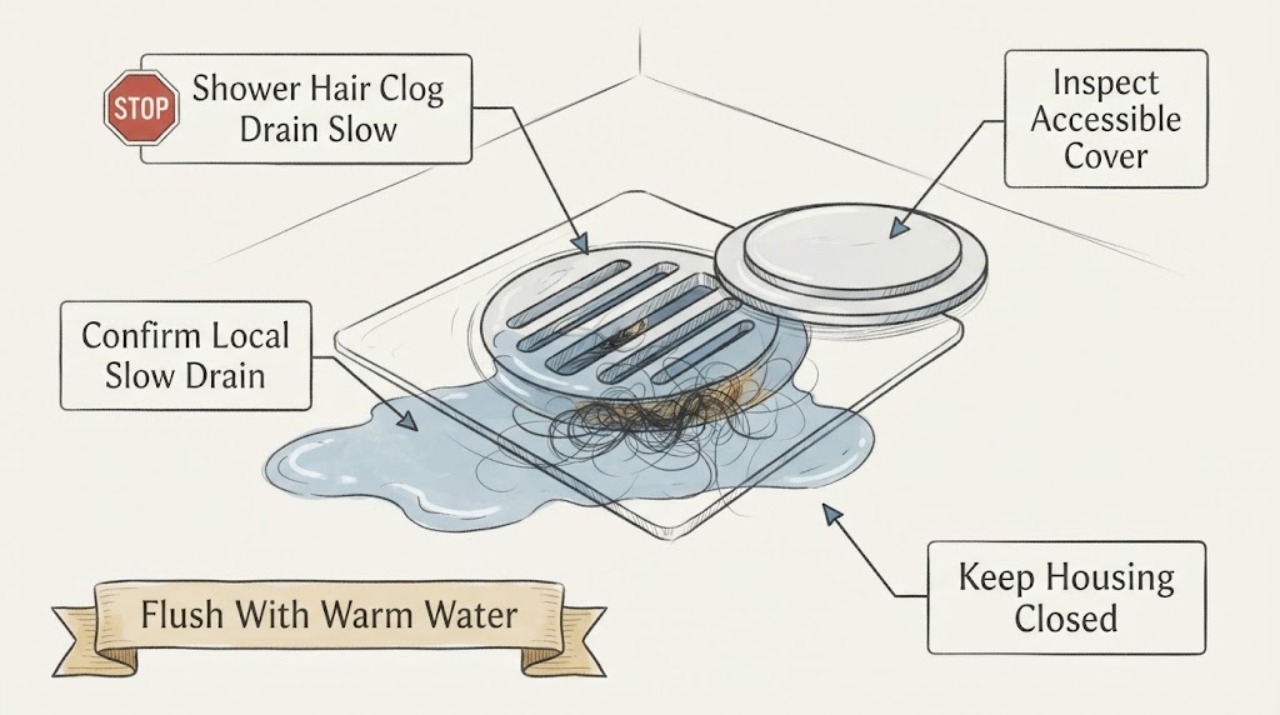
A slow American Standard shower drain with a hair-clog pattern is usually addressed at the accessible drain cover or strainer first, but the shower base model determines what can be removed safely. Stop using the shower if water is pooling deeply, backing up with dirty water, or approaching an electrical fixture. When the area is safe, note whether only this shower is slow, then inspect the visible cover and opening for hair, soap residue, or standing water. Remove only hair and debris that can be reached without prying or unscrewing a fixed drain assembly. After the visible material is removed, flush with warm water and a small amount of dish soap if the surface and plumbing are suitable. EPA guidance says to minimize hair entering shower drains, avoid chemical drain openers for a clog, and use a drain snake or warm water and dish soap instead; a hand tool must never be forced into an unknown drain. If the drain remains slow, another fixture also backs up, the trap or branch line may be involved, or the drain cover cannot be safely accessed, keep the shower out of use and arrange qualified plumbing service. American Standard shower bases can have model-specific drain plates or covers, so identify the model before replacing or removing hardware.
Before you begin
Safety first
- Do not use chemical drain opener, force a drain cover or snake, open a cleanout or septic tank, or work around wastewater or electrical equipment.
Work through in order
Diagnostic checks
Use only checks that match the exact appliance or system and its official guide.
-
Check 1
Stop the shower and observe the standing water from a safe position. Note whether only the American Standard shower is slow, whether water drains after the flow stops, and whether another nearby sink, tub, or toilet is also slow, gurgling, or backing up.
Expected result: Only this shower is slow, several fixtures show the same symptom, dirty water returns, or water is near an electrical fixture or is rising rapidly.
Next step: Keep the shower unused while checking the accessible opening. If several fixtures are affected or water is backing up, stop user troubleshooting and arrange qualified plumbing service; isolate the area and use only a known safe water shutoff if flooding requires it.
Stop if: Stop for sewage-like backup, rapid pooling, flooding, water near electrical equipment, or an unsafe wet floor.
Why this matters
Why: A single slow shower supports a local cover, hair, soap, trap, or branch restriction. Several affected fixtures, gurgling, or backup makes a downstream or main drain problem more likely than a hair mat at the shower opening. Dirty or rapidly rising water is a sanitation or flooding hazard.
-
Check 2
When the shower surface is safe, inspect the American Standard drain plate or cover and the visible opening for hair, soap film, and loose debris. Remove only surface material that lifts freely with a gloved hand or a purpose-made plastic hair-removal tool; do not pry a fixed cover or insert a sharp object.
Expected result: A hair mat or loose debris is visible and lifts freely, residue is present without visible hair, the cover is fixed or unclear, or the opening looks clear.
Next step: Dispose of removed hair in the trash, wipe accessible residue with a soft cloth, and run a brief water-flow check only if the drain is not backing up. If the cover cannot be safely accessed or the drain remains slow, arrange plumbing service.
Stop if: Do not unscrew an unknown drain plate, puncture a gasket, pry tile or acrylic, push debris into the pipe, or reach into standing dirty water.
Why this matters
Why: A visible hair mat at the opening is a plausible local restriction. Soap residue can narrow the opening but does not prove the deeper drain is clear. A fixed or unclear cover requires model-specific instructions; a clear opening shifts attention to the trap, branch line, or a deeper clog.
-
Check 3
After visible hair and loose debris are removed, flush the opening with warm—not scalding—water and a small amount of dish soap only if the shower surface, drain, and household plumbing instructions permit it. Use a controlled amount and watch the water level; do not pour chemicals into the drain.
Expected result: Water clears quickly, drains slowly but does not rise, residue floats back, or water backs up or does not move.
Next step: If flow improves, monitor the next shower and add a compatible hair catcher. If it remains slow or backs up, stop adding water and arrange qualified plumbing service.
Stop if: Do not use boiling water, chemical drain opener, bleach mixtures, or repeated flushing against standing water; stop if the base, drain, or surrounding seal leaks.
Why this matters
Why: Improved flow after surface cleaning supports a shallow hair or soap restriction. Persistent slow flow suggests material remains below the opening or the branch drain is restricted. Backflow or no movement means more flushing can worsen pooling and needs service.
-
Check 4
If the exact drain design is known and the manufacturer or plumbing instructions allow a hand drain snake, use only a short, flexible tool from the accessible opening with gentle pressure. Do not force it, drill, use a powered auger, or push through a trap or seal that you cannot see.
Expected result: The tool lifts a small hair bundle and flow improves, the tool meets hard resistance, it returns no material and flow remains slow, or the drain design is unknown.
Next step: Remove only material that comes out easily, stop using the tool if flow does not improve, and arrange a plumber for deeper inspection. Keep the drain cover and any removed loose piece together for model matching.
Stop if: Stop for hard resistance, a damaged seal, leaking below the base, dirty-water backup, or any need to remove fixed hardware or use powered equipment.
Why this matters
Why: A small hair bundle with improved flow supports a local restriction. Hard resistance, no improvement, or an unknown drain design can indicate a deeper clog, trap, drain seal, or damaged assembly; forcing the tool may damage the shower base or piping.
-
Check 5
With the shower unused, check whether nearby fixtures drain normally and whether the home has a septic system. Record gurgling, recurring backup, slow drains in more than one fixture, odors, or pooling outside only from a safe distance; do not open a cleanout or septic tank.
Expected result: Only the shower remains slow, several drains are slow or gurgle, wastewater backs up, or a septic-system warning sign is present.
Next step: Keep water use low and arrange qualified plumbing service for multiple-fixture symptoms. If a septic system is involved, contact a qualified septic professional rather than adding chemicals or opening the system.
Stop if: Do not enter wastewater, touch sewage, open a septic tank or cleanout, or continue using fixtures during active backup.
Why this matters
Why: A single shower symptom can remain local to its hair clog or trap. Multiple slow or gurgling drains suggest a shared branch or main restriction. EPA lists slow drains and gurgling as signs that a septic system may need professional attention; wastewater backup or pooling raises health and property risk.
-
Check 6
Record the American Standard shower-base or drain model from ordinary-access paperwork or labeling, the drain-plate style, first wet point, visible hair amount, cleaning result, tool result if any, and whether other fixtures are affected. Do not remove the base, trap, or hidden drain piping to identify the assembly.
Expected result: The exact model is available and the drain remains slow, the model is unknown, the cover or base is damaged, or the source is below the shower.
Next step: Leave the shower out of use and arrange qualified plumbing service. Provide the model, symptom pattern, photos of the accessible drain, and any material removed without forcing the assembly.
Stop if: Stop for a cracked base, leaking drain seal, loose drain plate, hidden water damage, or any repair requiring access below the shower or removal of fixed plumbing.
Why this matters
Why: A model record helps a technician match the drain plate, seal, or access method. Persistent slow flow after a safe surface check is not proof that a particular part is defective; hidden piping, trap, branch drain, or installation issues remain possible.
Use your observations
Decision map
Find the observation that best matches what you see, then follow the next safe action.
-
PATH 01Next step
What you see
A visible hair mat lifts freely from the accessible drain opening and flow improves afterward.
Do this next
Dispose of the hair, rinse gently with warm water if appropriate, and use a model-compatible hair catcher. Arrange service if slow flow returns quickly.
Why this path and its safety boundary
Why it matters: The restriction was likely near the cover or strainer, although a deeper partial clog can remain if the improvement is incomplete or short-lived.
-
PATH 02Next step
What you see
The visible cover and opening are clear, but the shower remains slow or water returns after gentle flushing.
Do this next
Stop DIY escalation, keep the shower unused, and arrange qualified plumbing diagnosis with the American Standard model and drain configuration available.
Why this path and its safety boundary
Why it matters: Material below the opening, a trap restriction, or a branch-drain problem is more likely than a surface hair mat. Repeated chemicals or force can damage the drain and do not identify the location.
-
PATH 03Next step
What you see
A sink, tub, toilet, or another shower is also slow, gurgles, or backs up.
Do this next
Minimize water use and call a qualified plumber or septic professional; do not open a cleanout or septic tank and do not add drain chemicals.
Why this path and its safety boundary
Why it matters: A shared branch or main drain restriction becomes more likely than an American Standard shower-cover clog. If the home uses septic, EPA treats slow drains and gurgling as reasons for professional attention.
-
PATH 04Next step
What you see
The American Standard drain plate cannot be removed safely, the model is unknown, or a tool meets hard resistance.
Do this next
Stop at visual inspection, record the model or take a safe photo, and arrange model-specific plumbing service.
Why this path and its safety boundary
Why it matters: The assembly or restriction cannot be safely identified from the surface. Forcing a cover or tool can damage the base, drain seal, or hidden piping.
-
PATH 05Safety boundary
What you see
Dirty water backs up, water pools rapidly, the shower base or drain seal leaks, or water approaches electrical equipment.
Do this next
Stop using the shower, keep people away from the affected area, isolate a known safe water source only if necessary and safe, and obtain urgent qualified help.
Why this path and its safety boundary
Why it matters: This is a sanitation, flooding, or electrical hazard rather than a routine hair-clog check.
Safety stop: Do not enter wastewater, touch electrical equipment, dismantle the drain while wet, or continue flushing against a backup.
Helpful context
Understand the symptom
Start at the visible drain opening
Hair and soap residue commonly collect at the shower drain cover or strainer. Confirm that the slow flow is local to this shower and look at the first accessible opening. American Standard shower bases can use different drain and plate configurations, so do not pry up a cover or remove hardware just because it resembles another drain.
Remove only what the model makes accessible
If hair is visible and can be lifted without force, remove it with a gloved hand or a small tool intended for surface debris, then dispose of it in the trash. Do not push hair deeper, puncture a drain seal, or force a fixed cover. EPA recommends drain covers or hair catchers to reduce future hair entry and warns against chemical drain openers for a clog.
Separate a local hair clog from a branch-line problem
If the shower improves after visible hair is removed, the restriction was likely near the opening. If it does not improve, or other fixtures are slow, gurgle, or back up, the problem may extend into the trap, branch drain, or septic system. Stop escalating DIY methods at that point; a plumber can inspect the drain without damaging the American Standard base or hidden piping.
Only after diagnosis
Potential parts
- American Standard shower drain cover or hair-catching strainer
Consider only when the existing cover is missing, damaged, or unable to retain hair after the exact shower-base and drain configuration are confirmed.
Drain covers and plates vary by shower-base and drain assembly; confirm the model and opening before selecting a replacement. - American Standard shower drain seal or gasket
Consider only when a technician confirms leakage at the drain seal or gasket rather than a hair restriction.
Seal dimensions and installation method are assembly-specific; do not remove a sealed drain to diagnose a slow flow. - Flexible hand drain snake for shower drain service
Consider only when the drain design is known, the product instructions allow it, and the restriction is consistent with a shallow hair clog.
A hand tool is not a substitute for professional clearing of a deep, shared, or damaged drain; do not force it into an unknown assembly.
When checks do not resolve it
Need a professional?
Call a qualified plumber when the shower remains slow after safe visible hair removal, the drain cover or base is damaged, a hand tool meets resistance, or more than one fixture is affected.
Safety scope: Do not use chemical drain opener, force a drain cover or snake, open a cleanout or septic tank, or work around wastewater or electrical equipment.
Common questions
FAQ
Is hair the most likely cause of a slow American Standard shower drain?
Hair at the accessible cover is a plausible local cause, especially when only this shower is slow and flow improves after safe removal. If the opening is clear or several fixtures are affected, a deeper trap, branch, main, or septic-system problem is more likely.
Can I remove the American Standard shower drain cover?
Only if the exact shower-base or drain instructions identify it as user-accessible and it lifts without force. American Standard shower bases use product-specific drain and plate configurations, so do not pry or unscrew an unknown cover.
Should I pour chemical drain opener into a hair-clogged shower drain?
Avoid it. EPA guidance recommends minimizing chemicals in drains and suggests warm water and dish soap or a drain snake for a clog, with professional help when the restriction persists. Never mix cleaners or use chemicals against standing wastewater.
What if removing visible hair does not improve the shower drain?
Stop adding water and repeated tools. A restriction below the cover, in the trap or branch drain, or in a shared line may remain. Keep the shower unused and arrange qualified plumbing service, especially if another fixture is slow or gurgles.
When is a slow shower drain urgent?
Treat sewage-like backup, rapidly rising water, flooding, a leaking drain seal, a dangerous wet floor, or water near electrical equipment as urgent. Stop using the shower and obtain qualified help rather than forcing the cover or flushing more water.
Read the exact guide
Official sources
- How to Care for Your Septic SystemU.S. Environmental Protection Agency · EPA septic-system drain-use, chemical, and multi-fixture warning guidance
- A Homeowner’s Guide to Septic Systems for Tribal CommunitiesU.S. Environmental Protection Agency · EPA guidance on shower-drain hair, chemical drain openers, drain snakes, and professional warning signs for septic contexts
- Studio 60x32 inch Single Threshold Shower base with Left-hand OutletAmerican Standard · American Standard shower-base drain and plate configuration
Community feedback
Share a repair observation
Share a plain-text repair observation. Accepted observations are published automatically; this page may take a moment to update.