
On this page
Start here
Quick answer
A slow Delta shower drain is commonly a partial blockage of hair, soap, or cleaning-product residue at the drain cover or just below it, but a deeper branch-line, trap, vent, or shared plumbing problem can look the same. First note whether only the shower is slow, whether water rises during a normal shower, and whether other fixtures gurgle or drain slowly. If the drain cover is designed for removal, take it off and clean the cover; then remove reachable hair or buildup without pushing it farther down the pipe. Refit the cover and test with a small amount of water. Do not pour chemical drain opener into an unknown or septic-connected system, force a seized Delta drain grate, dismantle concealed plumbing, or keep using the shower if water backs up, reaches the floor, smells like wastewater, or several fixtures are affected. Arrange plumbing service when the accessible debris check does not restore flow or the Delta drain assembly, trap, or downstream line may be involved.
Before you begin
Safety first
- This article covers observing the fixture pattern, removing an accessible Delta drain cover as designed, cleaning the cover, pulling reachable soft debris without pushing it down, identifying the model, and performing a small-flow check. Do not use chemical opener, force or dismantle the drain assembly, open concealed plumbing, alter waterproofing, or work in wastewater.
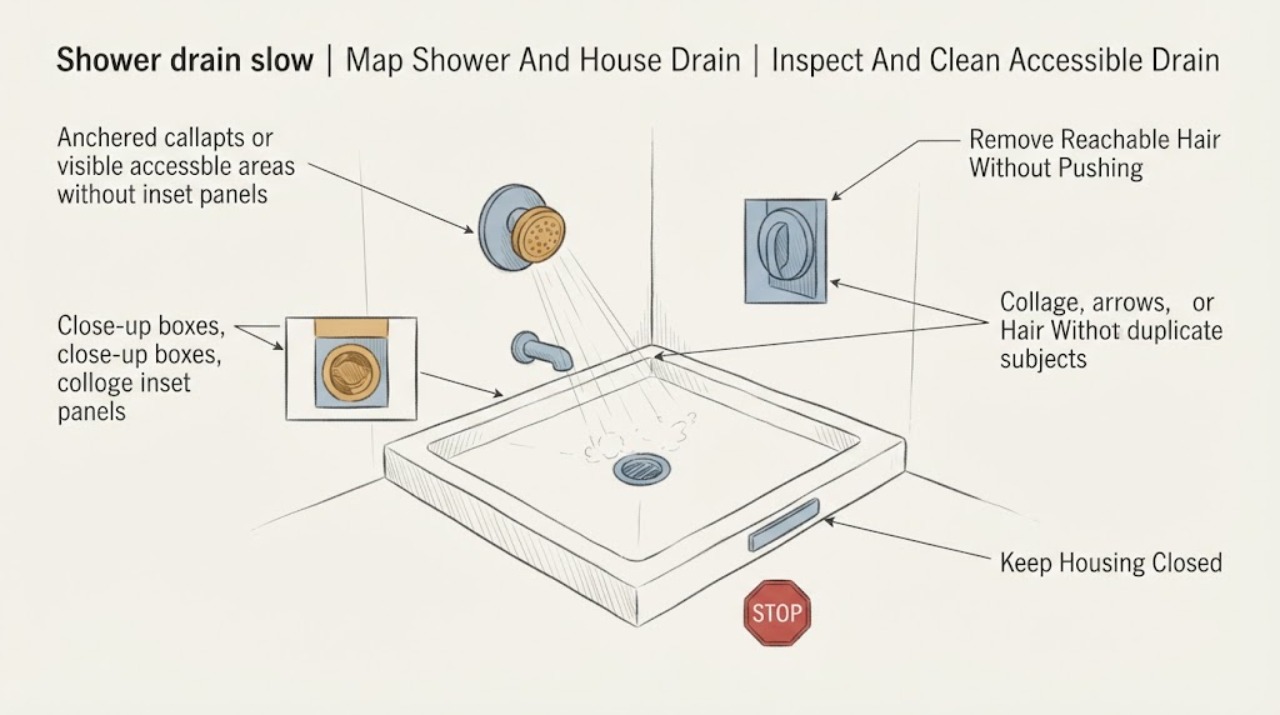
Work through in order
Diagnostic checks
Use only checks that match the exact appliance or system and its official guide.
-
Check 1
Run the shower briefly with no bath mat blocking the floor drain area and note how quickly water rises, whether it drains after the water is off, and whether a nearby sink, tub, toilet, or floor drain is also slow or gurgling.
Expected result: Record a shower-only slow drain, slow drainage at multiple fixtures, wastewater backup, or a gurgle that changes when another fixture is used.
Next step: Use the matching branch below; stop adding water and arrange plumbing service if wastewater backs up, several fixtures are affected, or the shower cannot drain safely.
Stop if: Do not keep running the shower to force a slow drain clear or step into standing wastewater.
Why this matters
Why: A shower-only symptom makes a local cover, trap, or branch blockage more likely. Multiple slow fixtures, backup, or gurgling makes a shared downstream, vent, main drain, or septic issue more likely than a Delta drain grate alone.
-
Check 2
If the Delta shower drain cover or grate is visibly intended for removal, lift or unscrew it using the model-appropriate method, place it on a clean surface, and remove hair and soap residue from the cover without damaging its finish or seal.
Expected result: Note whether the cover is packed with hair or residue, whether it lifts freely, and whether it is cracked, corroded, loose, or part of a linear or tile-in assembly with a different access method.
Next step: Reinstall the cover only when it is intact and correctly seated; arrange service for a seized or damaged cover, concealed fastener, damaged seal, or drain design that cannot be safely accessed.
Stop if: Do not pry against tile or the shower base, force a seized grate, or remove a seal, trap, or drain body as part of this check.
Why this matters
Why: A blocked cover can restrict flow before the pipe itself is obstructed. A seized, damaged, or model-specific drain grate is a part or service issue, not a reason to force the assembly.
-
Check 3
With the cover removed and the opening safely accessible, pull out only reachable hair or soft buildup using a gloved hand or a small drain hook held securely; remove the debris from the shower rather than pushing it into the pipe.
Expected result: Record whether a hair and soap mass comes out, whether the opening becomes visibly clearer, and whether the tool meets hard or unusual resistance below the opening.
Next step: Dispose of the removed debris, refit the intact cover, and perform a small-flow test; stop and arrange service if the obstruction is not reachable or resistance is unusual.
Stop if: Do not push debris farther down, use a rigid wire that can damage the drain or trap, mix chemicals, or continue against hard resistance.
Why this matters
Why: A removable hair mass supports a local partial blockage. Hard resistance, a foreign object, a deep obstruction, or no debris at all makes a deeper trap, branch-line, drain assembly, or plumbing problem more likely.
-
Check 4
After reachable debris is removed and the cover is correctly seated, run a small amount of clean water and watch whether the level stays low, falls steadily, or rises and then drains slowly; check for water escaping around the drain assembly.
Expected result: Record normal flow, a brief improvement followed by slowing, persistent standing water, overflow onto the shower floor, or seepage around the drain or base.
Next step: Keep the shower use light until the result is clear, and arrange plumbing service for persistent slow flow, standing water, overflow, or seepage.
Stop if: Do not flood-test the shower, pour harsh chemicals, or remove the drain body to chase a deeper blockage.
Why this matters
Why: A sustained improvement supports a local cover or near-opening blockage. A temporary or absent improvement points to deeper buildup or a plumbing path that the cover check cannot reach; seepage around the assembly adds a leak or installation concern.
-
Check 5
Record the complete Delta shower or drain model information, drain style, cover or grate shape, shower-base or tile installation, and any accessible plumbing access before ordering a replacement cover or requesting service.
Expected result: Note whether the drain is round, square, tile-in, prefabricated-base, or linear, and whether the visible assembly has a grate, plug, seal, or secondary drainage feature.
Next step: Give the model and configuration to a plumber or use the exact Delta documentation for any approved cover or grate replacement; do not disassemble concealed plumbing based on appearance.
Stop if: Do not order an unverified drain part, cut tile or shower base, remove waterproofing, or alter the trap or pipe slope.
Why this matters
Why: Delta's drain assemblies and installation requirements vary by configuration. A similar-looking cover, plug, gasket, or seal may not fit or preserve the intended drainage and leak protection.
-
Check 6
If the accessible cover and debris check does not restore flow, stop using the shower as needed and provide the plumber with the symptom map, model, photos, drain configuration, and any debris or resistance observed; after service, observe one normal shower for steady drainage and no seepage.
Expected result: Check whether water drains at a stable rate, no backup or gurgling occurs in related fixtures, and no water appears around the Delta drain or shower base.
Next step: Stop using the shower for a returning backup or leak and request further plumbing diagnosis rather than repeating chemical or improvised clearing attempts.
Stop if: Do not leave standing wastewater, open a concealed trap or drain body, or continue if wastewater reaches the floor, wall, or living space.
Why this matters
Why: A clear, leak-free drain after the confirmed repair supports that the blockage or assembly issue was corrected. Returning slow flow, shared-fixture symptoms, or seepage means the deeper line, vent, trap, waterproofing, or drain assembly remains unresolved.
Use your observations
Decision map
Find the observation that best matches what you see, then follow the next safe action.
-
PATH 01Safety boundary
What you see
Only the Delta shower is slow, and the drain cover is visibly packed with hair or soap that can be removed without forcing the assembly.
Do this next
Clean the accessible cover, remove reachable buildup without pushing it into the pipe, reseat the cover, and perform a small-flow check.
Why this path and its safety boundary
Why it matters: A local cover or near-opening blockage is more likely than a shared drain or vent problem.
Safety stop: Arrange service if the grate is seized or damaged, the water remains slow, or standing water or seepage appears.
-
PATH 02Safety boundary
What you see
The shower-only drain remains slow after the cover is clean, or there is no reachable hair while water still rises and drains slowly.
Do this next
Limit shower use and arrange plumbing service to access and diagnose the deeper path; provide the model and cover configuration.
Why this path and its safety boundary
Why it matters: A deeper trap or branch-line obstruction, drain assembly problem, or installation issue is more likely than a cover-only blockage.
Safety stop: Do not pour chemical opener, push a rigid tool against resistance, or dismantle a concealed Delta drain or waterproofed shower base.
-
PATH 03Safety boundary
What you see
The shower and one or more nearby fixtures are slow, gurgling, or backing up together.
Do this next
Stop adding water where backup is occurring and arrange prompt plumbing or septic service; do not keep testing by running more fixtures.
Why this path and its safety boundary
Why it matters: A shared branch, main drain, vent, or septic-system issue is more likely than a Delta shower grate blockage.
Safety stop: Do not enter wastewater, use chemical drain opener, or remove a trap when contaminated water may be present.
-
PATH 04Safety boundary
What you see
The Delta drain cover, grate, plug, seal, or visible assembly is cracked, corroded, loose, seized, leaking, or unlike a standard removable cover.
Do this next
Keep water use light or stop it, photograph the assembly and identify the exact Delta model, and have a plumber confirm the correct part and installation method.
Why this path and its safety boundary
Why it matters: The drain assembly or waterproofing interface may be involved, and forcing the part can damage the shower base, tile, seal, or leak-protection system.
Safety stop: Do not pry, cut, drill, remove waterproofing, or substitute a generic grate, gasket, plug, or sealant.
-
PATH 05Safety boundary
What you see
Water backs up onto the shower floor, seeps around the drain or base, smells like wastewater, or becomes slow again after the accessible debris is removed.
Do this next
Stop using the shower, protect the floor, and arrange prompt plumbing service; if wastewater has entered living areas, follow local cleanup and professional guidance.
Why this path and its safety boundary
Why it matters: The problem may involve a deeper blockage, trap, shared line, drain assembly, waterproofing, or septic system and should not be managed as routine hair removal.
Safety stop: Do not continue showering, add chemicals, flood-test the drain, or open concealed plumbing.
Helpful context
Understand the symptom
Start at the drain opening, then decide whether the problem is deeper
Hair and soap often collect where the shower drain cover meets the opening. That local pattern is different from a shower that remains slow after the cover and reachable debris are clear, or from several fixtures that drain slowly together. The first check should map both the drain opening and the rest of the home's drainage symptoms.
Delta drain assemblies are not one universal layout
Delta offers round, square, tile-in, prefabricated-base, and linear shower drain configurations. The cover or grate, seal, trap, pipe outlet, and access can differ. Remove only an accessible cover intended for that model, and do not treat an installation component or concealed trap as a generic do-it-yourself repair.
Keep wastewater and chemicals out of an uncertain blockage
A drain opener can leave hazardous residue for the next person who opens the grate or trap, and it can be inappropriate for septic systems. Pulling out reachable hair and arranging service for a deeper obstruction gives the technician a safer, more useful starting point.
Safety boundary
Stop conditions
- Do not push hair or debris farther into the Delta shower drain, force a seized grate, or use a rigid tool against hard resistance; stop at the accessible cover and arrange service.
- Do not pour chemical drain opener into an unknown blockage or septic-connected drain, mix cleaning products, or work on an open trap with contaminated standing water.
- Stop using the shower and arrange prompt plumbing service for wastewater backup, multiple slow or gurgling fixtures, seepage around the drain or base, persistent standing water, or a damaged drain assembly.
- Do not remove waterproofing, cut tile or a shower base, alter the trap or pipe slope, or order a generic Delta grate, gasket, plug, or seal without exact model and configuration confirmation.
Only after diagnosis
Potential parts
- Delta shower drain cover or grate
Consider this class only when the exact Delta drain model confirms that the cover or grate is cracked, corroded, missing, seized, or no longer seats correctly.
Match the exact Delta drain style, size, finish, installation type, and model information; do not substitute a similar-looking grate. - Delta shower drain plug or gasket
Consider this class only when the model-specific inspection confirms a damaged or incorrectly seated plug, gasket, or drain seal rather than a deeper blockage.
Confirm the exact Delta drain model, pipe arrangement, and seal location before ordering or disturbing the waterproofing interface. - shower drain hair catcher
Consider this class only when the exact Delta drain opening can safely accept a removable hair-catching accessory without obstructing the grate or altering drainage.
Verify dimensions and drain configuration first; a catcher is preventive and does not replace diagnosis of a slow or shared drain. - shower drain trap or branch-line service component
Consider this class only after a qualified plumber confirms that the accessible cover is clear and a deeper trap or branch-line obstruction or damage is present.
Require site- and model-specific plumbing diagnosis; do not order or replace concealed drain components from slow-flow symptoms alone.
When checks do not resolve it
Need a professional?
Arrange plumbing service when the Delta cover and reachable debris are clear but the shower remains slow, when the drain grate or assembly is seized or damaged, when water seeps around the base, when several fixtures are slow or gurgling, or when wastewater backs up. If the home uses a septic system, contact a septic professional for slow drains or backup instead of adding chemical opener.
Safety scope: This article covers observing the fixture pattern, removing an accessible Delta drain cover as designed, cleaning the cover, pulling reachable soft debris without pushing it down, identifying the model, and performing a small-flow check. Do not use chemical opener, force or dismantle the drain assembly, open concealed plumbing, alter waterproofing, or work in wastewater.
Common questions
FAQ
Why is my Delta shower drain slow but not completely clogged?
A partial mass of hair, soap, or cleaning residue at the Delta drain cover or just below it can allow some flow while still making the shower slow. Clean the accessible cover and remove reachable debris without pushing it down; persistent slow flow needs deeper diagnosis.
Can I remove the Delta shower drain cover to clear hair?
Only if the cover is designed for safe homeowner removal and you can do so without prying against the shower base or tile. Clean the cover and pull reachable hair out rather than pushing it into the pipe; stop for a seized, damaged, or model-specific assembly.
Should I pour chemical drain opener into a slow Delta shower drain?
Avoid chemical opener when the blockage and drain configuration are unknown, especially on a septic system. Pull reachable debris or arrange plumbing service; chemical residue can create a hazard during later drain or trap work.
When is a slow Delta shower drain a plumbing emergency?
Treat wastewater backup, several slow or gurgling fixtures, seepage around the drain or base, persistent standing water, a damaged grate or drain assembly, or wastewater reaching the floor or wall as a service condition. Stop using the shower and arrange prompt qualified help.
Read the exact guide
Official sources
- A Homeowner's Guide to Septic Systems for Tribal CommunitiesU.S. Environmental Protection Agency · Homes served by septic systems; use plumbing service for ordinary connected drainage and local requirements for site-specific conditions.
- Clog, Be Gone!Delta Faucet Company · Delta's general homeowner shower-drain clog article; apply only to an accessible drain cover and stop if the assembly or obstruction is not safely reachable.
- Delta Linear DrainsDelta Faucet Company · Delta linear drains and shower-floor installations described on the page; do not apply linear-drain access assumptions to round or tile-in drains.
- 113919 X00113919 4" TILE-IN SHOWER DRAINDelta Faucet Company · Delta tile-in shower drain models represented by the installation document; other Delta drain and base configurations require their own instructions.
Community feedback
Share a repair observation
Share a plain-text repair observation. Accepted observations are published automatically; this page may take a moment to update.