
Repair problem
Drain Slow Troubleshooting Guides
Published FixGraph guidance for diagnosing and responding to drain slow.
Matching published guides
Choose a guide that matches the service, equipment, and conditions you are seeing.
-
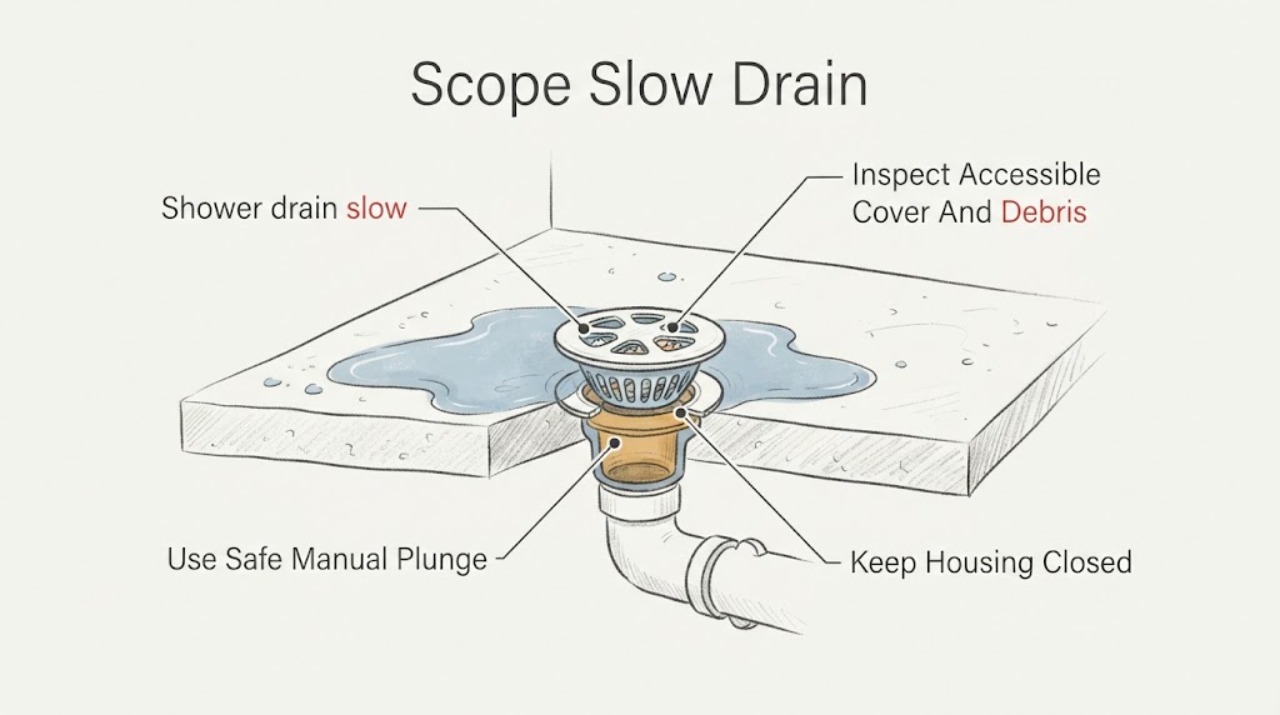
American standard shower drain slow: What to Check and What to Do Next
Start by determining whether only this shower drains slowly or several fixtures do, and whether water merely pools briefly or rises, backs up, smells like sewage, or returns after another fixture runs. Remove only an accessible drain cover or strainer and lift out visible hair or debris with gloves; do not pry a fixed cover, reach into an unknown opening, or disturb a sealed drain.
-
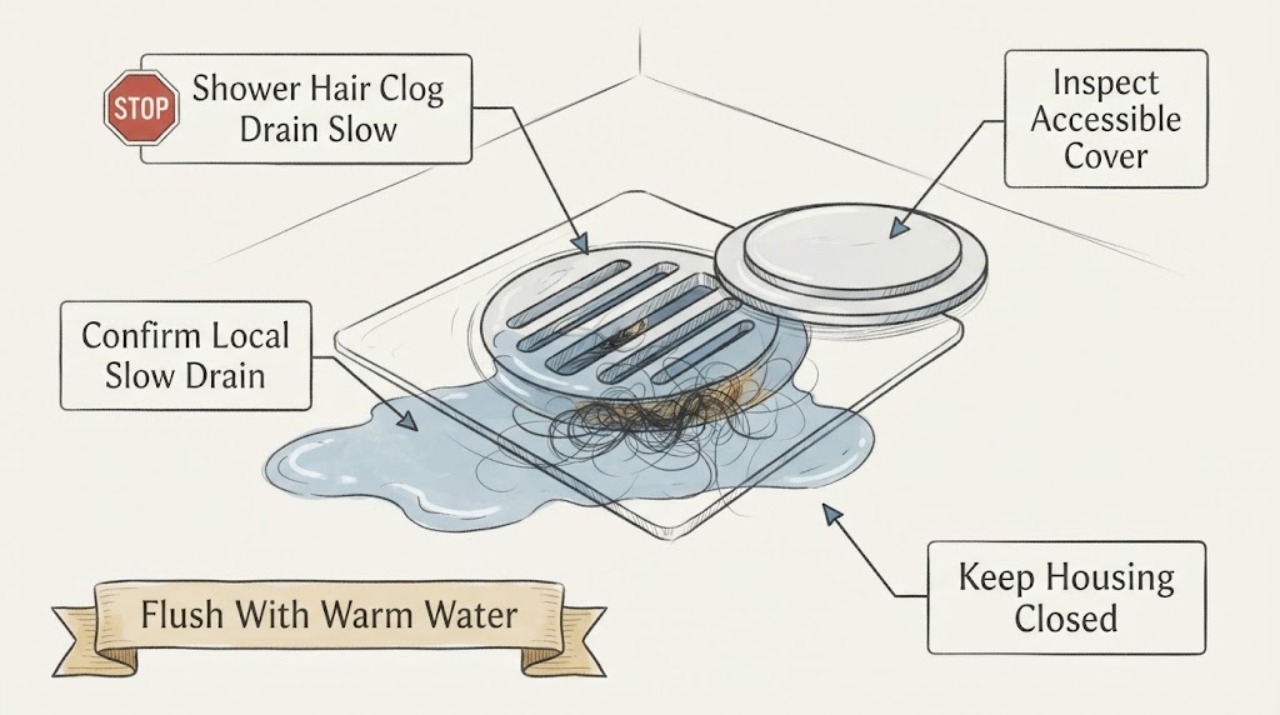
American Standard Shower Hair Clog Drain Slow: What to Check and What to Do Next
A slow American Standard shower drain with a hair-clog pattern is usually addressed at the accessible drain cover or strainer first, but the shower base model determines what can be removed safely. Stop using the shower if water is pooling deeply, backing up with dirty water, or approaching an electrical fixture.
-
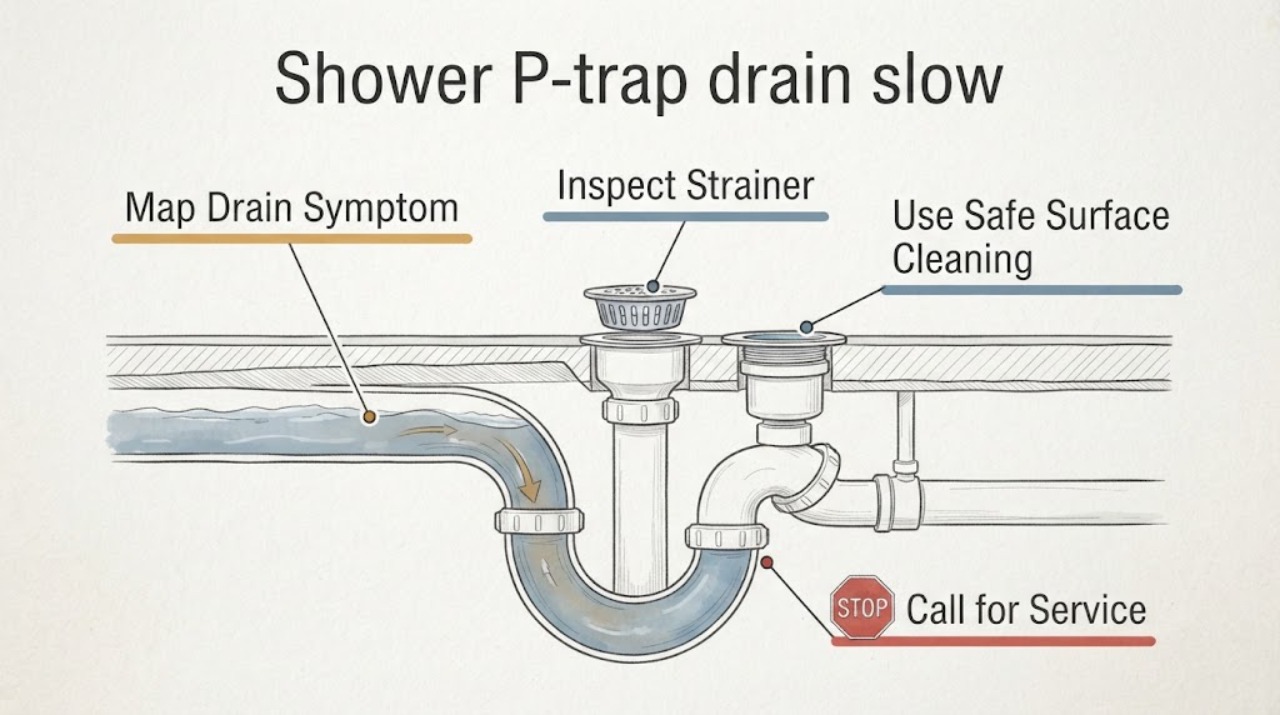
American Standard shower P-trap drain slow: What to Check and What to Do Next
A slow American Standard shower drain is often caused by hair or soap buildup at the strainer or in the nearby drain path, but the P-trap, vent, branch line, or main drain can also be involved. Start by observing whether only this shower is slow, whether water rises or gurgles, and whether other fixtures are affected.
-
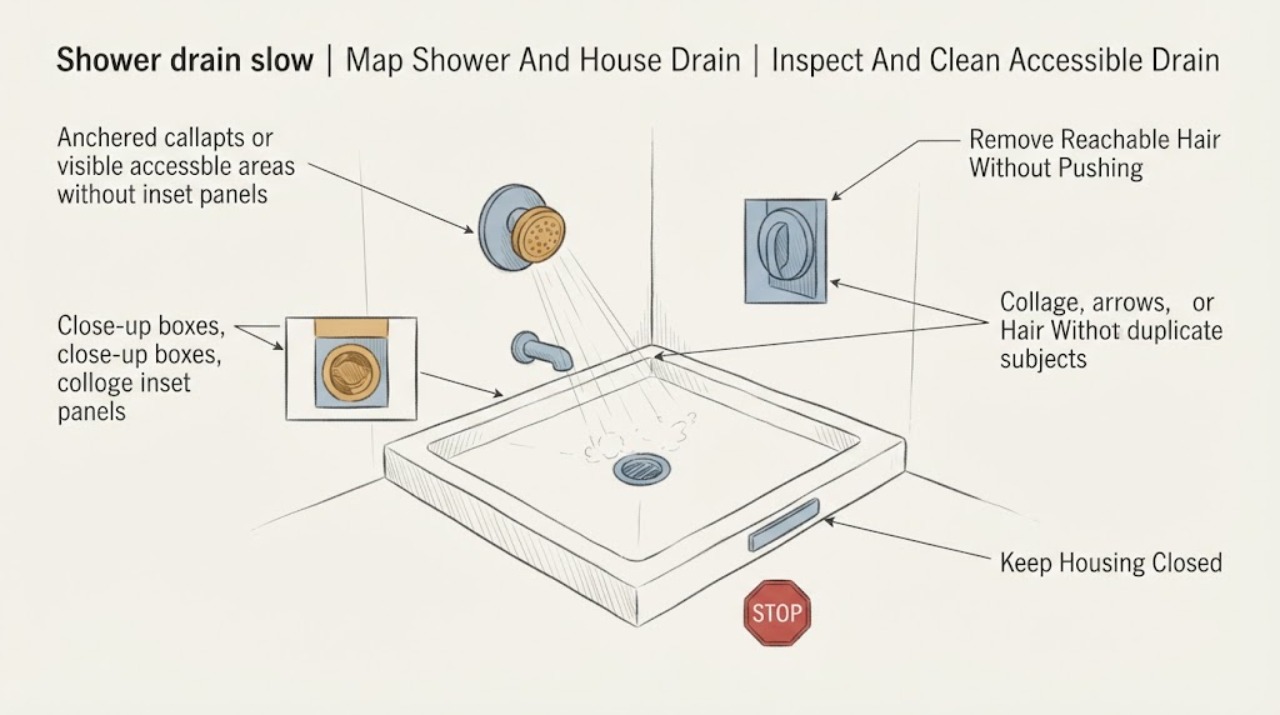
Delta shower drain slow: What to Check and What to Do Next
A slow Delta shower drain is commonly a partial blockage of hair, soap, or cleaning-product residue at the drain cover or just below it, but a deeper branch-line, trap, vent, or shared plumbing problem can look the same. First note whether only the shower is slow, whether water rises during a normal shower, and whether other fixtures gurgle or drain slowly.
-
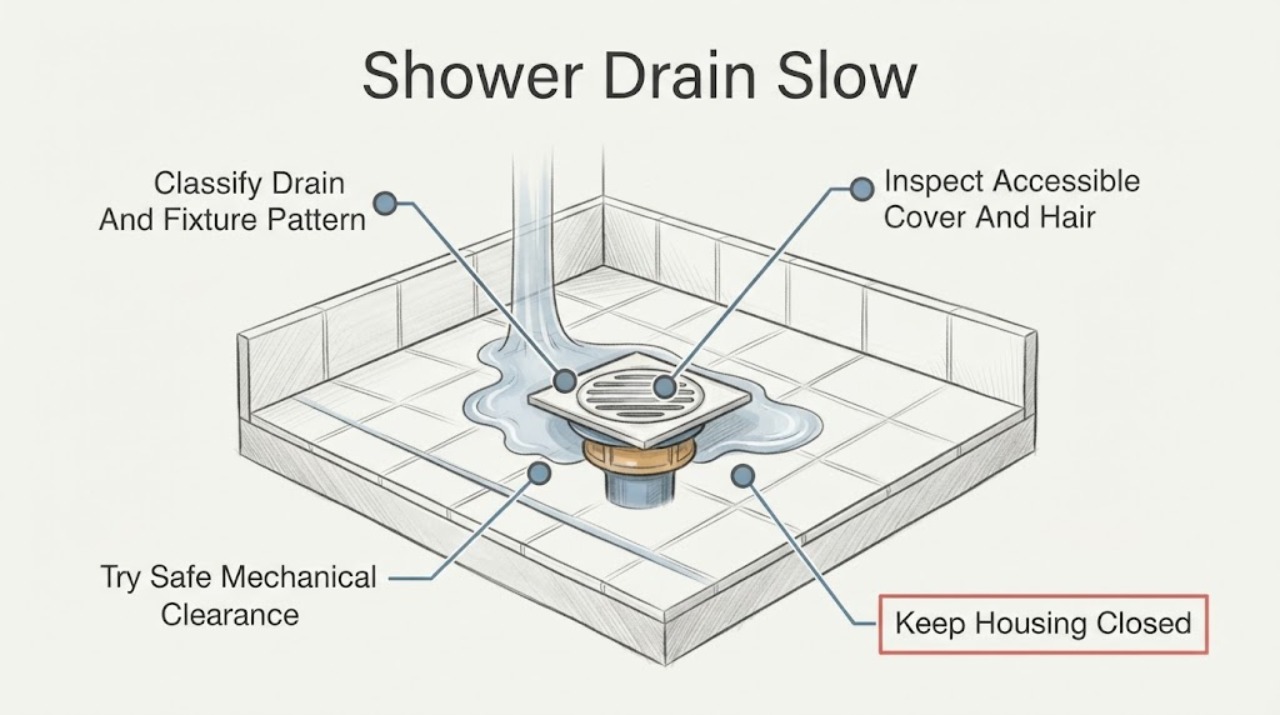
Grohe Shower Drain Slow: What to Check and What to Do Next
A slow GROHE shower drain is usually a restriction at the drain cover, hair trap, trap, or nearby branch pipe, but the GROHE shower fitting itself may not be the blocked part. Stop adding water while the base is pooling, remove only an accessible cover or strainer if the exact installation allows it, and clear visible hair or soap buildup mechanically.
-
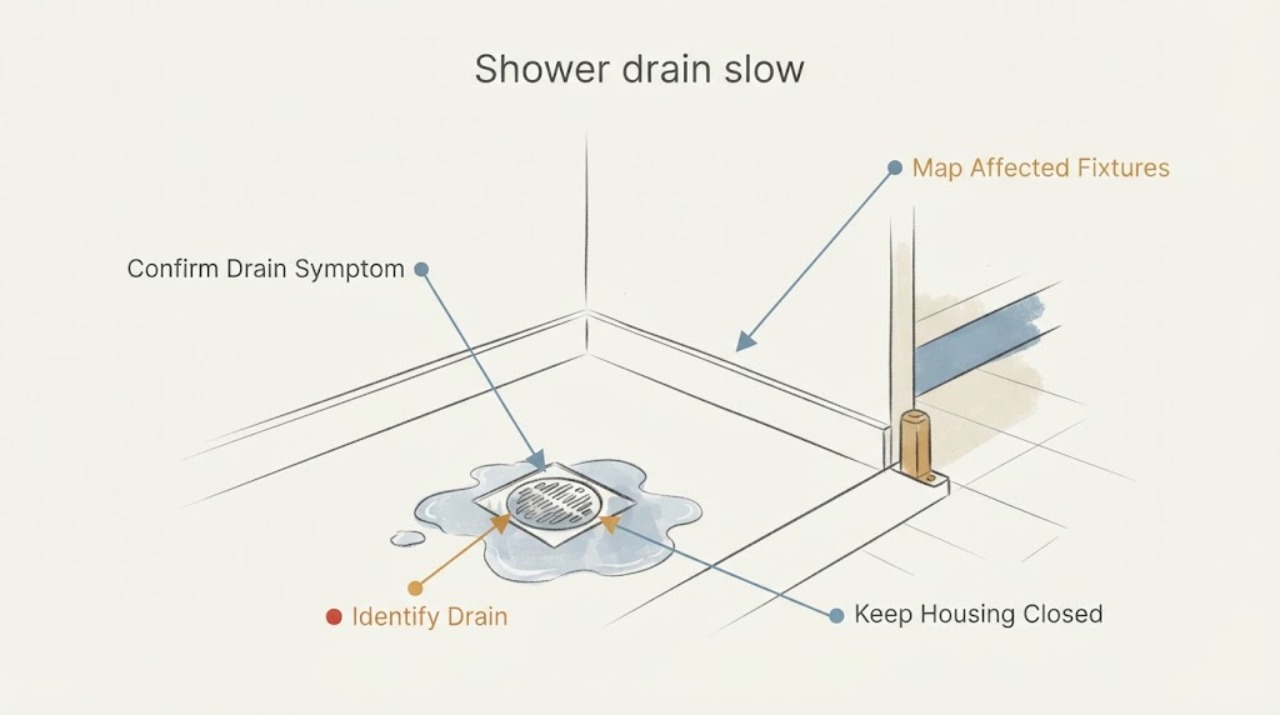
Kohler shower drain slow: What to Check and What to Do Next
A slow Kohler shower drain is usually a restriction at the accessible cover or grate, hair and soap in the drain path, a deeper trap or branch-line blockage, or a shared wastewater problem. First confirm that the shower is draining slowly rather than delivering low water flow, then identify whether the Kohler drain is round, linear, tile-in, or part of a shower base.
-
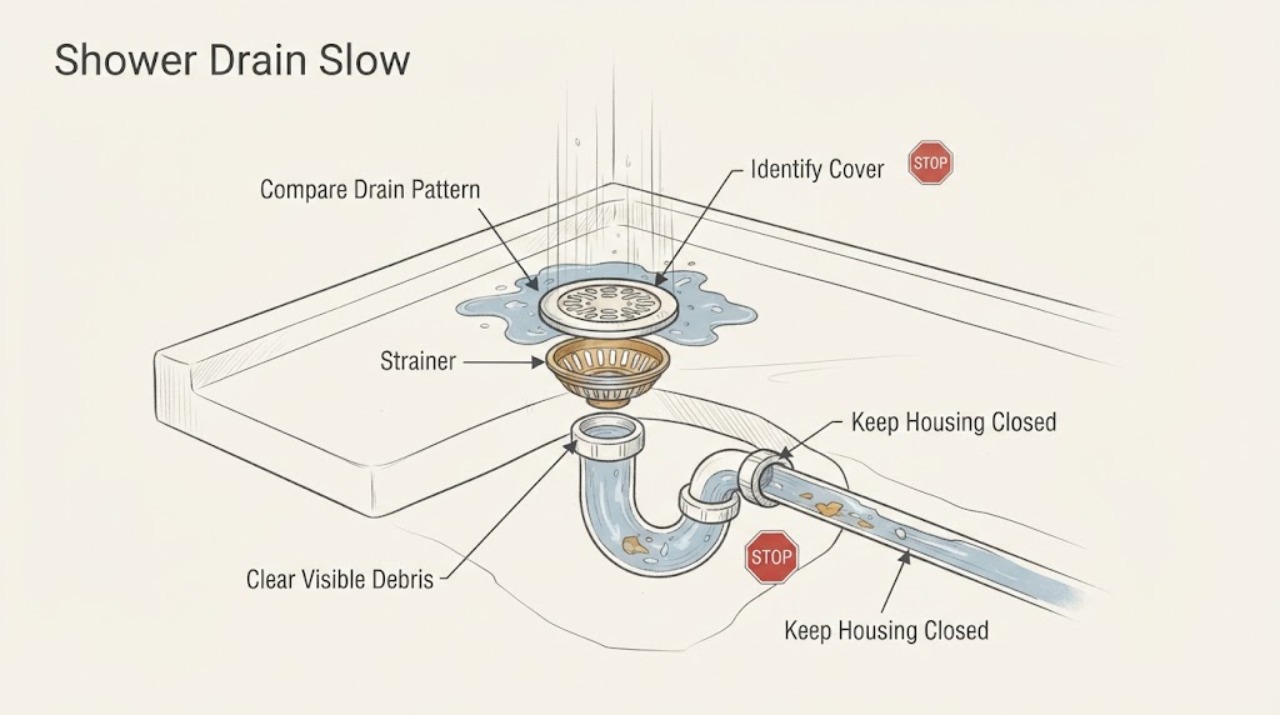
Moen Shower Drain Slow: What to Check and What to Do Next
A slow Moen shower drain is most often a restriction at the drain cover or strainer, where hair and soap residue can collect, but a deeper trap or branch-line blockage is possible when more than one fixture drains slowly. Start by comparing the shower with nearby fixtures, then inspect the visible Moen drain cover and remove only accessible hair or debris using the model's instructions.
-
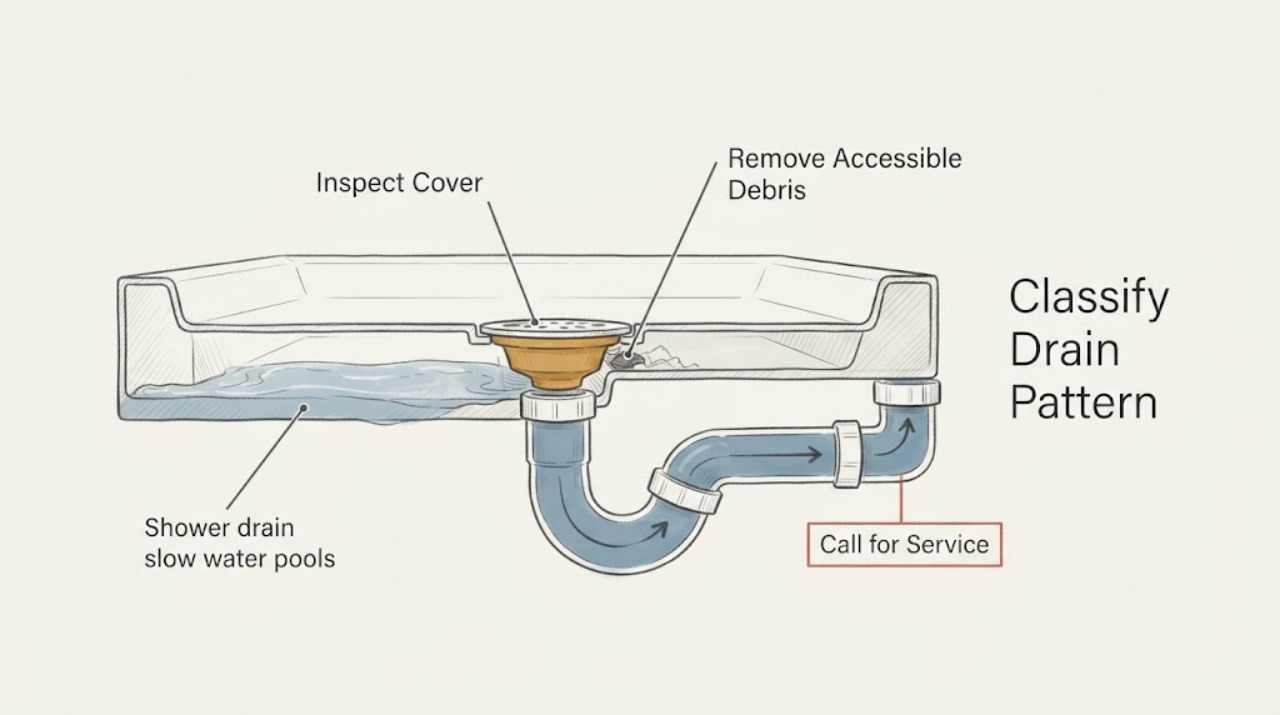
Shower drain slow water pools around feet: What to Check and What to Do Next
Water pooling around your feet while a shower runs is usually a partial restriction from hair, soap scum, skin cells, bath-product residue, or mineral deposits at the cover or nearby drain opening. First determine whether only this shower is slow, then clean the removable cover and accessible debris without pushing it deeper or mixing chemicals.
-
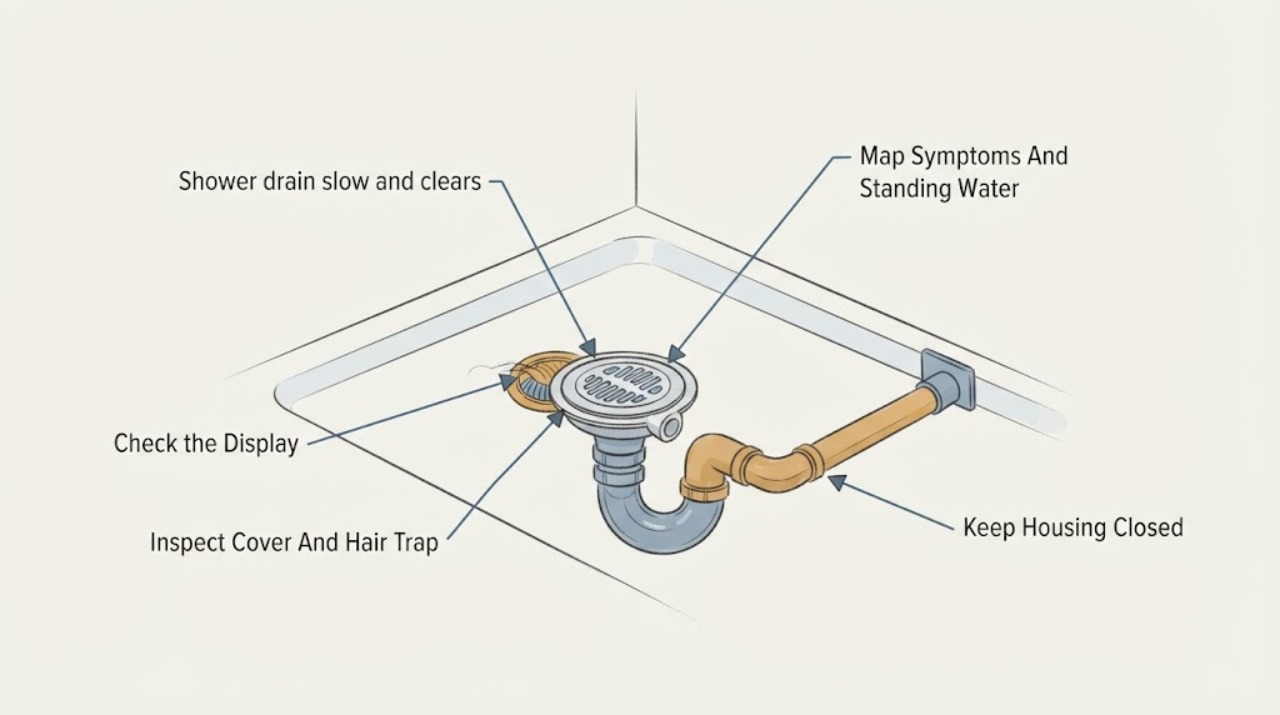
Shower drain slow and clears slowly: What to Check and What to Do Next
A shower that clears slowly usually has a partial restriction at the drain cover, hair trap, or nearby waste trap, but cleaning the visible grate does not prove the pipe is clear. First remove standing water safely, lift only a cover designed for ordinary access, and remove visible hair or soap residue without pushing it deeper.
-
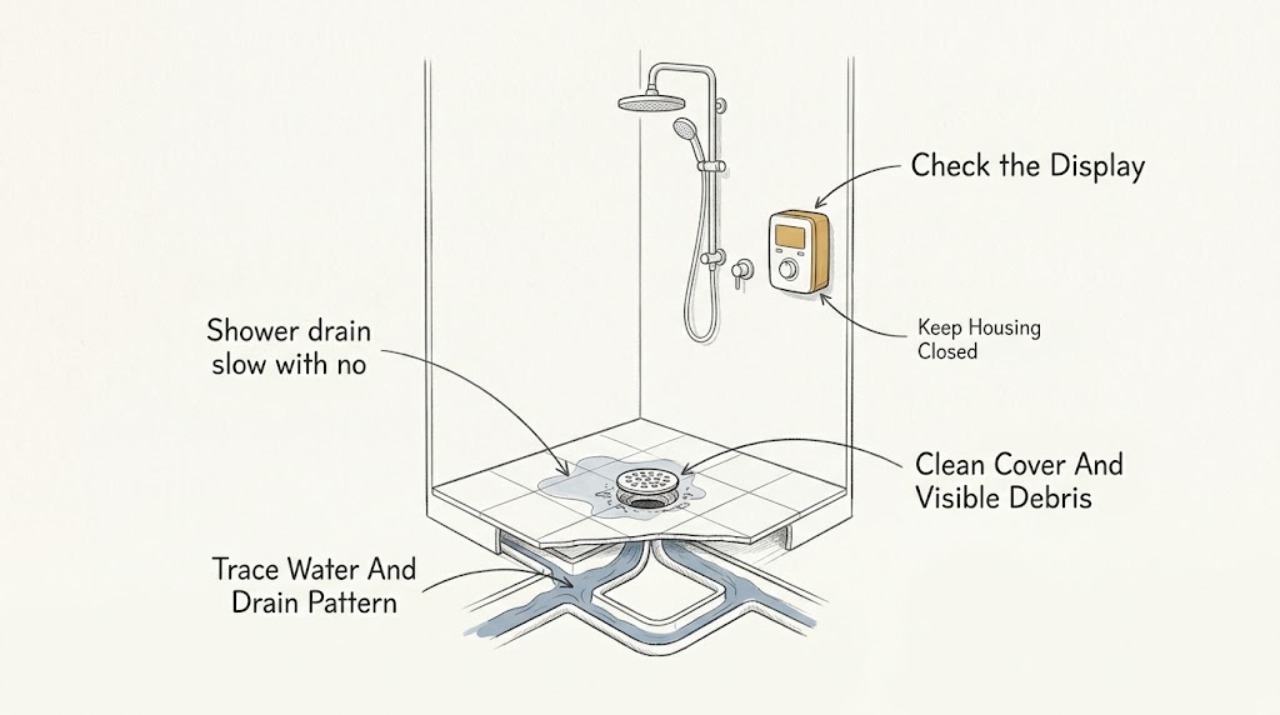
Shower drain slow with no supply leak: What to Check and What to Do Next
When a shower drains slowly but the supply pipes, valve, and showerhead are not leaking, the likely problem is a restriction at the drain opening or farther down the shower branch. Stop adding water while the basin is rising, remove and clean the drain cover or strainer if it is safely accessible, and pull out visible hair and soap buildup without pushing it deeper.
-
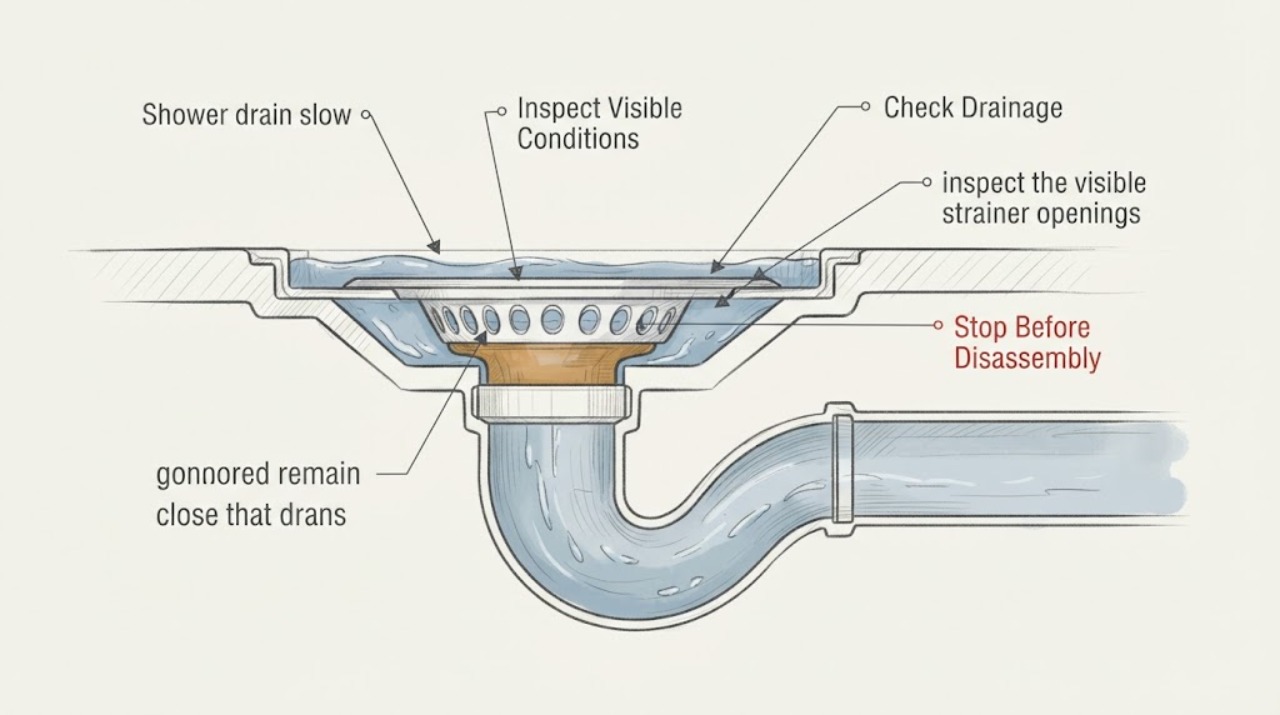
Shower drain slow: What to Check and What to Do Next
First determine whether the slow drain is limited to the shower or affects other fixtures, and when the slowdown starts during a normal shower. From a dry position, look at the visible strainer for hair or soap buildup without removing it or reaching into the drain, and note whether water pools, smells like wastewater, or rises toward the threshold.