
On this page
Start here
Quick answer
A slow GROHE shower drain is usually a restriction at the drain cover, hair trap, trap, or nearby branch pipe, but the GROHE shower fitting itself may not be the blocked part. Stop adding water while the base is pooling, remove only an accessible cover or strainer if the exact installation allows it, and clear visible hair or soap buildup mechanically. A hair trap helps prevent recurrence. Use a plunger or plumber's snake only when the fixture and pipe configuration can be handled safely, and do not mix or pour chemical drain products into a slow drain; leftover chemicals can injure anyone who later opens the line and can damage plumbing or septic systems. If several fixtures drain slowly, water backs up, the shower has sewage odor, the drain remains slow after a safe surface check, or the cover or trap cannot be removed without disturbing the GROHE fitting or waterproofing, stop and call a qualified plumber. GROHE's own shower guidance covers shower-head nozzle care, not a universal shower-drain procedure, so the exact drain assembly and installation instructions take precedence.
Before you begin
Safety first
- Keep the shower unused for overflow, sewage backup, leaks, water near electrical fixtures, chemical residue, a loose or damaged drain, or a ceiling or floor concern. Do not open sealed drains, disturb waterproofing, or mix or handle unknown chemicals.
Work through in order
Diagnostic checks
Use only checks that match the exact appliance or system and its official guide.
-
Check 1
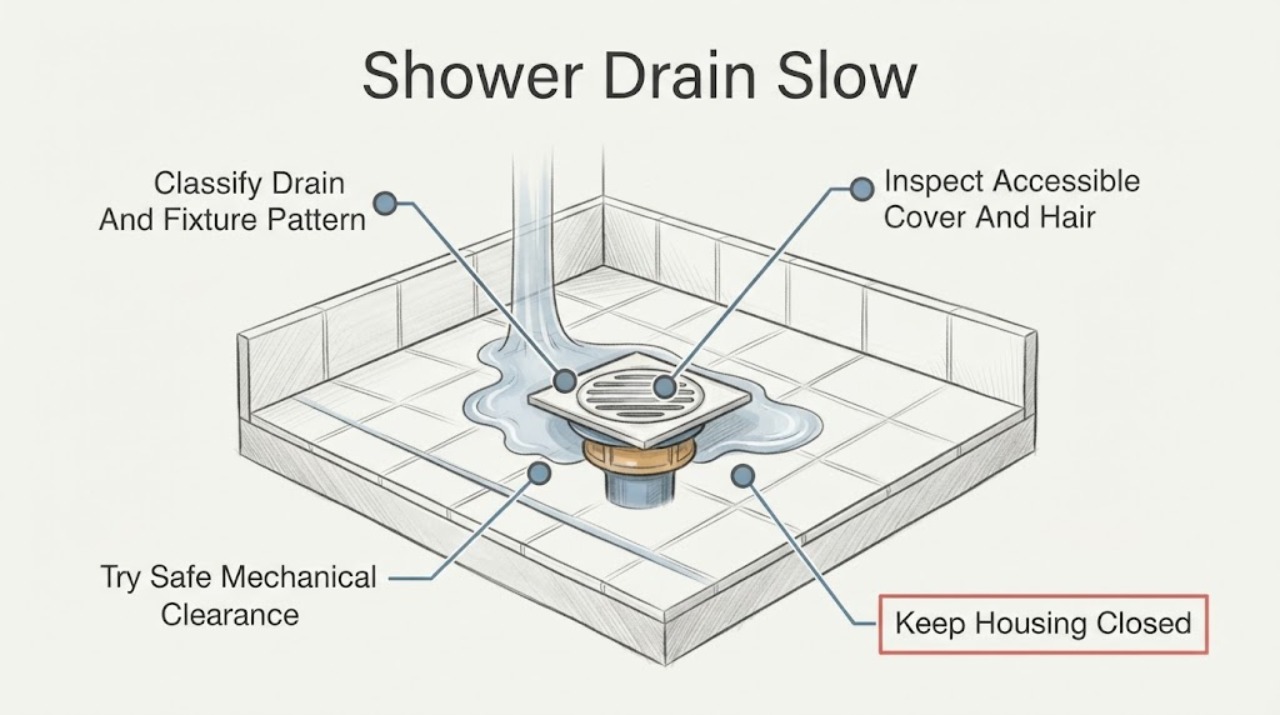
Stop the shower and observe whether water remains around the drain, how quickly the level falls, and whether a nearby sink, tub, or toilet also drains slowly or gurgles. Do not keep running water to force a test.
Expected result: Only the shower is slow, the shower backs up or overflows, several fixtures are slow, or wastewater rises in another fixture.
Next step: Keep water use low while classifying the pattern. Continue only with a safe visible drain-cover check when the issue is isolated; arrange plumbing service promptly for cross-fixture backup or overflow.
Stop if: Stop for sewage backup, contaminated water, rapid overflow, or a drain that cannot contain wastewater.
Why this matters
Why: A single shower symptom is more consistent with a local cover, trap, or branch restriction. Several affected fixtures or cross-fixture backup points farther downstream and can create a hygiene or overflow risk.
-
Check 2
If the drain cover or hair catcher is intentionally accessible, remove it only as the drain or installation instructions permit. With gloves and without reaching into an unknown pipe, remove visible hair, soap residue, and debris, rinse the part, and reinstall it without forcing it.
Expected result: Hair or buildup is wrapped around the cover, the catcher is full, the drain opening is clear, the cover is sealed or stuck, or the part is damaged or does not reseat.
Next step: Use a suitable hair trap to reduce new debris if compatible with the drain. If the cover cannot be removed without tools, seal disturbance, or force, stop and have a plumber identify the drain assembly.
Stop if: Do not pry tile or waterproofing, use sharp tools against a sealed drain, or push debris farther down the pipe.
Why this matters
Why: A surface obstruction can explain an isolated slow shower drain. A clear opening, a stuck or damaged cover, or a drain that remains slow after visible debris is removed keeps a deeper trap or branch restriction in view.
-
Check 3
When no chemical drain product is present and the drain is still partially open, use a plunger or a drain snake only if the fixture configuration and tool instructions allow it. Use controlled mechanical action and stop if the drain cover, trap, or pipe begins to move or leak; do not use a coat hanger or force a cable through a sealed installation.
Expected result: The water level falls and flow improves, the obstruction moves but the drain remains slow, the tool meets hard resistance, or water leaks around the cover or nearby fitting.
Next step: Rinse and test with a small amount of water only if the drain is contained and no leak is present. For persistent slow flow, hard resistance, or any leak, stop and arrange qualified plumbing service.
Stop if: Do not use mechanical tools after chemical treatment, apply force to a sealed or fragile drain, or continue when wastewater or a chemical splash could contact skin or eyes.
Why this matters
Why: Improvement suggests a nearby mechanical restriction, while persistent resistance or incomplete improvement can indicate deeper buildup, a trap or branch issue, or a damaged drain connection. Leakage can compromise the shower base or surrounding finishes.
-
Check 4
Do not pour chemical drain opener, bleach, acid, or a homemade chemical mixture into the slow shower drain. Check the exact GROHE shower and drain installation documentation to see whether there is an owner-accessible strainer or maintenance component; do not assume GROHE shower-head SpeedClean guidance applies to the drain.
Expected result: No chemical has been used, a chemical product was already poured, the drain assembly is not identified, or the only GROHE maintenance information concerns shower-head nozzles rather than the drain.
Next step: Keep the container and label if a chemical was used and tell the plumber exactly what and when. Otherwise use only the identified accessible drain component and the model instructions; stop if the assembly is uncertain.
Stop if: Never mix products, add a second cleaner, or open a line that may contain drain chemicals without qualified handling and disclosure.
Why this matters
Why: Mechanical obstruction removal is safer to plan when the line is untreated. Unknown chemical residue creates exposure risk for anyone opening the line, and GROHE's nozzle-cleaning guidance does not establish a universal drain procedure.
-
Check 5
Record the GROHE product or drain model if known, the drain-cover type, whether visible hair was removed, any mechanical attempt, chemical history, pooling or backup pattern, and other affected fixtures. Arrange a plumber when the drain remains slow after the safe accessible checks.
Expected result: Flow returns to normal, the shower remains slow, several fixtures are affected, wastewater backs up, there is an odor or leak, or the drain cannot be accessed without disturbing the installation.
Next step: Use a hair trap and avoid solids entering the drain if flow is normal. Otherwise keep water use low and give the plumber the recorded pattern and any chemical disclosure so the branch or main line can be diagnosed safely.
Stop if: Stop using the shower for overflow, sewage backup, a leak below the base, chemical residue, or a drain component that is loose or damaged.
Why this matters
Why: Normal flow after a visible obstruction supports a local surface clog, while recurrence, cross-fixture symptoms, odor, leakage, or inaccessible components suggests a deeper drain, vent, trap, waterproofing, or installation issue.
Use your observations
Decision map
Find the observation that best matches what you see, then follow the next safe action.
-
PATH 01Safety boundary
What you see
The shower alone is slow, visible hair or soap buildup is found at an accessible cover or catcher, and flow returns after that debris is removed.
Do this next
Reinstall the cover correctly, use a compatible hair trap, and monitor. Arrange service if the restriction quickly recurs or water begins backing up elsewhere.
Why this path and its safety boundary
Why it matters: A local surface restriction is the most likely explanation for this episode, not a proven GROHE fitting defect.
Safety stop: Do not push debris deeper or damage the drain seal while maintaining the cover.
-
PATH 02Safety boundary
What you see
The cover is sealed, stuck, damaged, or connected to a drain assembly that cannot be identified without force, tools, or disturbing tile or waterproofing.
Do this next
Keep water use low and have a plumber identify the GROHE and drain assembly and the safe access method.
Why this path and its safety boundary
Why it matters: The next step is installation-specific; forcing the part can create a leak or damage the shower base.
Safety stop: Do not pry, drill, cut sealant, or dismantle the shower fitting to reach the drain.
-
PATH 03Safety boundary
What you see
A suitable plunger or snake improves flow but does not restore normal drainage, or it meets hard resistance.
Do this next
Stop mechanical attempts and arrange plumbing service; tell the plumber what tool was used and how the flow changed.
Why this path and its safety boundary
Why it matters: The restriction may be farther into the trap or branch, or the pipe may have a configuration or defect that needs professional equipment.
Safety stop: Do not force a cable, continue after a chemical treatment, or open a leaking connection.
-
PATH 04Safety boundary
What you see
A drain opener, acid, bleach, or other chemical cleaner has already been poured into the slow drain.
Do this next
Do not add another product or use a plunger or snake. Keep people away, retain the product label, follow its safety instructions, and disclose the chemical to a qualified plumber before work.
Why this path and its safety boundary
Why it matters: The line may contain a corrosive or reactive residue that creates an exposure hazard for the next person handling the drain.
Safety stop: Never mix products or open the drain with unprotected hands after chemical treatment.
-
PATH 05Safety boundary
What you see
The shower and another fixture are slow, wastewater rises elsewhere, the drain gurgles, or sewage odor accompanies the slow flow.
Do this next
Minimize water use and arrange prompt plumbing service. Do not keep flushing or running fixtures to push the backup away.
Why this path and its safety boundary
Why it matters: A branch, vent, or main drain restriction is more likely than a GROHE shower-head or surface strainer issue.
Safety stop: Stop for overflow or contaminated wastewater; keep children and pets away and use appropriate cleanup precautions.
-
PATH 06Safety boundary
What you see
Water leaks around the drain, below the shower base, through a ceiling, or after the cover or trap was disturbed.
Do this next
Stop using the shower and arrange plumbing inspection. Do not reseal, tighten, or dismantle the drain without identifying the assembly and leak path.
Why this path and its safety boundary
Why it matters: The drain connection or waterproofing may be compromised, and continued showering can cause concealed damage.
Safety stop: Keep water away from electrical fixtures and stop immediately for ceiling sagging, active leakage, or structural damage.
Helpful context
Understand the symptom
Confirm the water is pooling at the drain
A shower can feel slow because the drain cover or strainer is holding hair and soap, the trap or branch line is restricted, or the household drain is backing up. Note how quickly water pools, whether it clears after the shower stops, and whether a sink, tub, or toilet has the same symptom. A GROHE shower head or fitting may be working normally while the drain path is blocked.
Start with a visible, accessible restriction
Do not pry up a sealed drain, disturb the GROHE fitting, or remove a trap behind a finished wall. If the cover or hair catcher is designed to lift out without tools or without disturbing waterproofing, remove only that accessible piece, clear visible hair and residue, rinse it, and reinstall it correctly. Use a hair trap afterward if the installation supports one.
Prefer mechanical methods over chemical mixtures
A plunger or suitable drain snake can address a nearby mechanical obstruction when used with the fixture's configuration and the product instructions. Do not mix drain opener with bleach, vinegar, another cleaner, or a second drain product. If a chemical product has already been used, tell the plumber before any drain is opened and follow the label for handling.
Know when the problem is beyond the shower
A drain that remains slow after the accessible cover is clear, backs up into the shower, affects several fixtures, or produces sewage odor can be farther down the branch or main line. A plumber can inspect the trap, branch, venting, and building drain without asking you to dismantle a GROHE shower system.
Safety boundary
Stop conditions
- Stop using the shower for overflow, sewage backup, a leak below or around the base, ceiling damage, or water near electrical fixtures. Keep people and pets clear and arrange qualified plumbing service.
- Do not pour or mix drain chemicals, use a plunger or snake after chemical treatment, or open a line without disclosing the product and following its label safety instructions.
- Do not pry sealed covers, disturb waterproofing, dismantle the GROHE shower fitting, force a trap or cable, or push sharp objects into the drain.
- Minimize water use when multiple fixtures are slow, wastewater backs up elsewhere, the drain has sewage odor, or the shower remains slow after an accessible debris check.
Only after diagnosis
Potential parts
- shower drain cover, strainer, or hair catcher
Consider this only when the installed drain is identified and inspection confirms a missing, damaged, or incompatible accessible cover or catcher.
Drain openings, seals, finishes, and access methods vary. Confirm the exact GROHE and drain assembly before selecting a part. - shower trap or drain-body component
Consider this only after a plumber confirms that the trap or drain body is restricted, damaged, leaking, or incompatible with the installation.
Trap and drain-body work can involve waterproofing and finished surfaces. Do not remove or replace them based on slow flow alone. - branch drain or vent component
Consider this category only when plumbing diagnosis identifies a deeper branch restriction, damaged pipe, or venting issue affecting the shower.
Building drainage components are installation-specific and may require access behind walls or floors; qualified diagnosis is required. - drain seal or waterproofing component
Consider this only when inspection links leakage to the drain seal or waterproofing interface rather than to surface splash or a separate pipe leak.
Seal and waterproofing details vary by shower base and installation. Confirm the exact assembly before opening or resealing it.
When checks do not resolve it
Need a professional?
Arrange qualified plumbing service when the GROHE shower drain remains slow after a safe accessible cover and debris check, a suitable mechanical attempt does not restore flow, the drain assembly is sealed or uncertain, several fixtures are affected, wastewater backs up, there is sewage odor, a leak appears, or chemical drain product was used. Provide the GROHE model or installation information if known, drain-cover type, flow pattern, debris and tool history, chemical disclosure, and photographs of accessible damage.
Safety scope: Keep the shower unused for overflow, sewage backup, leaks, water near electrical fixtures, chemical residue, a loose or damaged drain, or a ceiling or floor concern. Do not open sealed drains, disturb waterproofing, or mix or handle unknown chemicals.
Common questions
FAQ
Why is my GROHE shower drain slow?
The usual first distinction is a local hair or soap restriction at the accessible cover versus a deeper trap, branch, vent, or main-line problem. Check for pooling and other affected fixtures, remove only visible debris from an intentionally accessible cover, and use a compatible hair trap. Persistent slow flow, backup, odor, or leakage needs plumbing service.
Can I remove the GROHE shower drain cover to clean it?
Only if the cover or strainer is designed to be owner-accessible and the exact installation instructions allow removal without disturbing sealant, tile, the shower base, or waterproofing. If it is sealed, stuck, damaged, or uncertain, stop and have a plumber identify the assembly rather than prying it up.
Should I use chemical drain cleaner in a slow shower drain?
Do not mix drain products or use a chemical opener as the default response. EPA identifies a plunger or plumber's snake as a mechanical alternative and warns about hazardous household-product handling. If a chemical was already used, do not add another product or open the line without telling the plumber what was used.
Does GROHE SpeedClean clear a slow shower drain?
No conclusion like that should be assumed. GROHE describes SpeedClean for removing limescale from shower-head nozzles. That guidance is different from clearing a shower drain, so use the exact drain assembly instructions and address hair, residue, trap, or branch restrictions separately.
Read the exact guide
Official sources
- Drain and Toilet ClogsUniversity of Colorado Fix It · University housing guidance; it is a general safety and cause reference, not a GROHE installation manual.
- GROHE shower systemsGROHE · GROHE shower-system consumer guidance; it addresses shower nozzles rather than a universal drain-cover or trap procedure, so the exact drain installation documentation controls.
- Household Hazardous Waste (HHW)U.S. Environmental Protection Agency · U.S. EPA household hazardous-waste guidance; product labels and local disposal rules also apply.
- Safer Alternatives for the BathroomCobb County Government · Cobb County household water-education guidance; drain construction and local plumbing requirements can vary.
Community feedback
Share a repair observation
Share a plain-text repair observation. Accepted observations are published automatically; this page may take a moment to update.