
On this page
Start here
Quick answer
A slow Moen shower drain is most often a restriction at the drain cover or strainer, where hair and soap residue can collect, but a deeper trap or branch-line blockage is possible when more than one fixture drains slowly. Start by comparing the shower with nearby fixtures, then inspect the visible Moen drain cover and remove only accessible hair or debris using the model's instructions. If the drain cover or filter can be removed without force, clean and reinstall it; otherwise stop at observation. A plunger may be reasonable for a small, isolated blockage when the drain and plumbing are intact, but do not mix or pour caustic chemicals, force a cover, or keep testing a drain that backs up, leaks, smells of sewage, or affects several fixtures. Persistent, recurring, or whole-home slow drainage needs qualified plumbing diagnosis.
Before you begin
Safety first
- This article covers comparison, visible inspection, accessible debris removal, manual-approved low-risk clearing, and documentation only. Do not mix chemicals, force the drain assembly, open concealed plumbing, or use high-pressure tools as a home test.
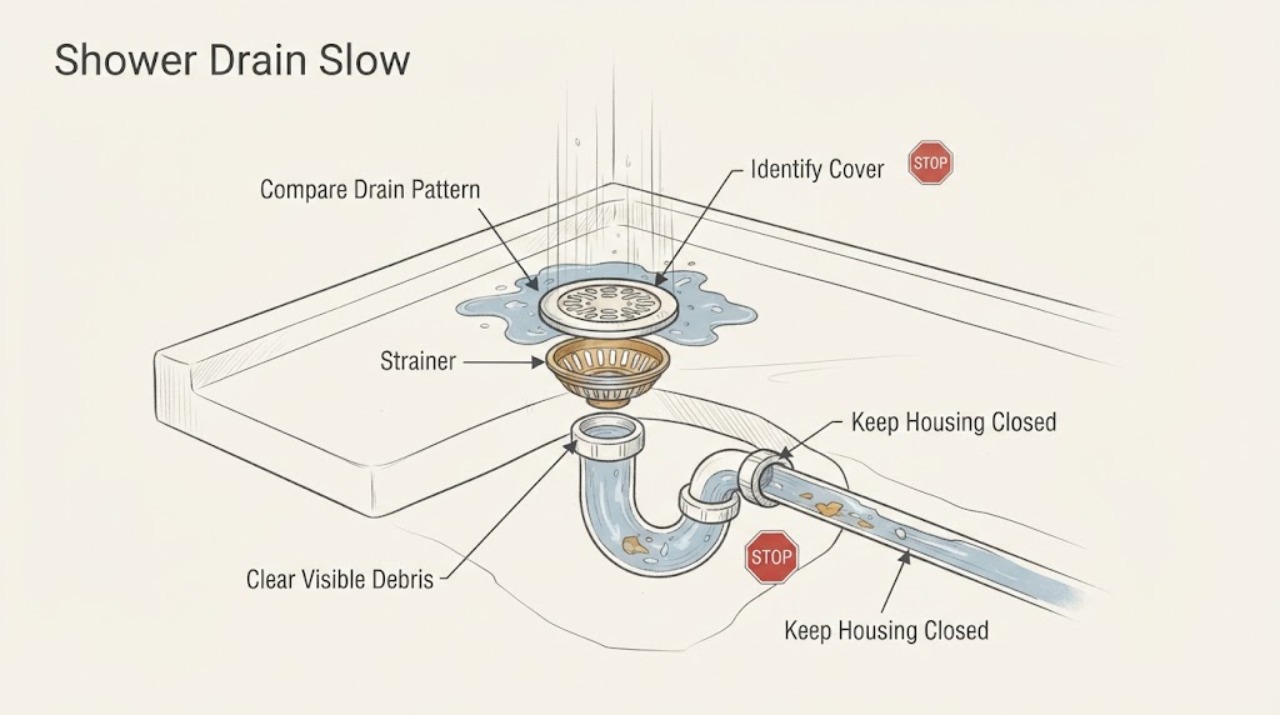
Work through in order
Diagnostic checks
Use only checks that match the exact appliance or system and its official guide.
-
Check 1
Run a normal, brief amount of shower water while watching from a stable position, then compare the nearby sink, tub, or floor drain without opening any concealed plumbing.
Expected result: Record whether only this shower pools, whether the bathroom's other fixtures are slow, whether water rises in another drain, and whether the problem changes when another fixture is used.
Next step: Continue with visible shower-drain checks only for an isolated, non-overflowing symptom; use the whole-system branch when more than one fixture is affected.
Stop if: Stop using the shower if wastewater backs up, reaches the floor outside the shower, approaches an electrical fixture, or is causing water damage.
Why this matters
Why: A shower-only symptom supports a cover, strainer, trap, or local branch restriction. Several slow fixtures, cross-fixture backup, or changing levels point toward a shared branch or building drain and require earlier professional assessment.
-
Check 2
With the shower unused, inspect the Moen drain cover from above and identify whether it is a screwed-in or snap-in style, whether a filter or strainer is visible, and whether any screw head, edge, seal, or surrounding tile is damaged.
Expected result: Classify the cover as visibly blocked, intact and clear, loose or damaged, or not removable without force or uncertain tools.
Next step: Use only the exact Moen cover or drain instructions for a removable style. If the style or fastener is uncertain, photograph it and leave it for a plumber.
Stop if: Do not pry against tile, force a stuck screw, lift a sealed drain body, or remove a cover that could damage the waterproofing or surrounding surface.
Why this matters
Why: Moen documents more than one shower-cover style, so the visible fastener and drain assembly matter. A blocked cover supports a localized restriction; a damaged or immovable cover creates a repair or access issue rather than permission to pry it out.
-
Check 3
From ordinary access and only after the cover or filter is already loose according to the Moen instructions, remove visible hair or debris without pushing it farther into the drain; place the debris in household waste and wipe the accessible screen or cover clean.
Expected result: The cover or filter is visibly coated or packed with hair and soap residue, mostly clear, or damaged and unable to reseat.
Next step: Reinstall only the parts that seat normally and test briefly. If the cover or filter will not sit correctly, leave the shower unused or protected from debris and arrange plumbing service.
Stop if: Do not push tools, wire, or debris into the drain, scrape waterproofing, remove a concealed trap, or force a filter or cover back into place.
Why this matters
Why: A packed visible screen is a plausible local cause of slow flow. A clear screen with the same symptom makes the trap, branch line, venting, or deeper obstruction more likely. A damaged or missing filter can allow debris downstream and needs compatible replacement or service.
-
Check 4
If the cover is restored, the drain is not overflowing, and no chemical cleaner is present, try one gentle, manual-approved rinse or a correctly sized plunger procedure for an isolated shower blockage; protect the surrounding area and stop if resistance is abnormal.
Expected result: Water begins draining freely, improves briefly and slows again, does not change, or rises around the plunger or nearby fixture.
Next step: If there is no clear improvement after the permitted attempt, stop repeated plunging and provide the result to a plumber. Do not escalate to chemical or high-pressure methods as a home experiment.
Stop if: Do not plunge when the drain contains an unknown chemical, when wastewater could splash onto a person, or when the drain, trap, tile, or pipe connection is leaking or damaged.
Why this matters
Why: A lasting improvement supports a small local obstruction. Brief improvement suggests material remains in the trap or branch. No change or cross-fixture movement makes a deeper or shared restriction more likely.
-
Check 5
Before any further work, record whether drain cleaner, bleach, or another product was poured into the shower, and inspect the visible drain area and nearby access space for leaks, corrosion, sewage odor, or water damage without touching unknown liquid.
Expected result: No product was used and no leak is visible, an unknown or caustic product was used, or there is a leak, corrosion, sewage odor, or damaged drain connection.
Next step: Tell the plumber exactly what product and approximate time were involved. For a leak, sewage backup, or water damage, stop using the shower and arrange prompt service.
Stop if: Do not mix products, add another cleaner, handle unknown residue, or use a flame or heat near the drain.
Why this matters
Why: An untreated, intact drain can remain in the ordinary visible-check path. Unknown chemicals create splash and material-compatibility hazards; leaks, odor, and corrosion can indicate a failed seal, trap, or connection rather than a simple hair restriction.
-
Check 6
After a visible clean and normal reseating of the cover or filter, perform one brief retest and photograph the drain pattern, cover, visible debris, and any water marks; do not disassemble the trap or branch line.
Expected result: The shower drains normally, remains slow, becomes slow again soon, or causes backup in another fixture during the retest.
Next step: Use the persistent or whole-system branch and give the plumber the photos, fixture comparison, cover style, debris description, and any chemical history.
Stop if: Do not keep repeating flushes or plunging when the water level rises, the drain leaks, or another fixture backs up.
Why this matters
Why: Normal drainage after a visible obstruction is removed supports a local cover or filter restriction. Persistent or recurring slow drainage suggests material remains deeper in the trap or line; cross-fixture backup supports a shared-line issue.
Use your observations
Decision map
Find the observation that best matches what you see, then follow the next safe action.
-
PATH 01Safety boundary
What you see
Only the Moen shower is slow, the cover or filter is visibly packed with hair or residue, and the parts can be cleaned and reseated without force.
Do this next
Clean only the accessible parts as the exact Moen instructions permit, reinstall them normally, and perform one brief retest.
Why this path and its safety boundary
Why it matters: A localized restriction at the drain cover or strainer is more likely than a shared sewer-line problem.
Safety stop: Stop if flow remains slow, the cover will not reseat, or the drain begins backing up or leaking.
-
PATH 02Safety boundary
What you see
The visible cover and filter are clear or have been cleaned, but the shower remains slow or improves only briefly.
Do this next
Stop repeated home treatments and arrange qualified plumbing diagnosis; provide the cover style, fixture comparison, and retest result.
Why this path and its safety boundary
Why it matters: The obstruction may be in the trap or shower branch, or the line may have a recurring accumulation that is not accessible from the cover.
Safety stop: Do not pour more cleaner, force an auger, remove a concealed trap, or use high-pressure equipment without professional assessment.
-
PATH 03Safety boundary
What you see
The shower and another bathroom fixture are slow, water rises in another drain, or the shower changes when another fixture runs.
Do this next
Limit water use in the affected area and contact a qualified plumber for a shared-line assessment; protect the floor from wastewater.
Why this path and its safety boundary
Why it matters: A shared branch, vent, or downstream building drain restriction is more likely than a Moen cover problem.
Safety stop: Stop all affected fixture use for active backup, sewage exposure, flooding, or water near electrical equipment.
-
PATH 04Safety boundary
What you see
The cover or filter is loose, broken, missing, corroded, or cannot be removed or reseated without force, or water leaks around the drain.
Do this next
Keep the shower out of use if water can reach the floor or structure, photograph the assembly, and arrange Moen-specific or qualified plumbing service.
Why this path and its safety boundary
Why it matters: The immediate problem may be drain assembly access, sealing, or a damaged component in addition to slow flow; forcing it can damage the shower surface or waterproofing.
Safety stop: Do not pry, drill, apply unapproved sealant, or lift the drain body to expose the pipe.
-
PATH 05Safety boundary
What you see
An unknown drain chemical was used, the drain has sewage odor or backup, or a leak or water damage is visible.
Do this next
Stop handling the drain, ventilate without approaching unsafe fumes, keep people and pets away, and contact qualified plumbing help with the product and symptom history; seek urgent assistance for exposure or immediate danger.
Why this path and its safety boundary
Why it matters: Chemical exposure, contaminated water, or a failed connection makes this unsafe for ordinary unclogging and can conceal a deeper plumbing fault.
Safety stop: Do not mix products, plunge unknown chemicals, touch contaminated liquid without appropriate protection, or continue using the fixture.
Helpful context
Understand the symptom
First separate a shower-only restriction from a line problem
If water pools only in the shower while a nearby sink or tub drains normally, the visible cover, filter, trap, or shower branch is the focused area. If several fixtures are slow, the level rises in more than one drain, or another fixture changes the shower's behavior, the restriction may be farther downstream. Do not treat a whole-bathroom or whole-home drainage pattern as a reason to keep adding cleaner.
Moen drain styles change what can be inspected safely
Moen documents multiple tub and shower drain cover styles, including screwed-in and snap-in covers. The exact cover and drain assembly determine whether a visible filter or cover is intended to come out. Identify the style first and follow the matching instructions; a cover that does not release with ordinary, light access should remain in place for a plumber rather than being pried or forced.
Keep chemical and concealed-line work outside the ordinary check
A slow drain does not identify the material or location of the obstruction. Moen's plumbing guidance says serious matters are usually best handled by a plumber and warns that caustic, acid-based drain cleaners may damage pipes. Keep hands, eyes, and skin away from unknown drain chemicals, do not combine products, and tell a plumber what has already been poured into the drain.
Safety boundary
Stop conditions
- Do not mix or pour additional drain chemicals, and do not use caustic or acid-based cleaner as a repeated experiment.
- Do not pry, drill, lift, or force a Moen cover, filter, drain body, trap, or sealed shower surface.
- Do not push hair or tools into the drain, remove a concealed trap, or use high-pressure equipment without qualified assessment.
- Stop using the shower for wastewater backup, sewage odor, leaking connections, water damage, flooding, or water near electrical equipment.
- If unknown chemical residue is present, do not plunge, touch, mix products, or continue testing; tell the plumber exactly what was used.
Only after diagnosis
Potential parts
- shower drain cover or strainer
Consider this category only if the existing Moen cover or strainer is confirmed damaged, missing, corroded, or unable to retain debris after the drain path is assessed.
Confirm the exact Moen drain style, dimensions, fastener pattern, and installation method before ordering; do not assume different cover styles interchange. - shower drain filter or debris screen
Consider this category only when the installed assembly uses a replaceable filter or screen and inspection confirms damage or loss rather than a deeper blockage.
Match the exact drain assembly and seating arrangement; a screen that does not fit can allow debris downstream or prevent proper drainage. - shower drain gasket or seal
Consider this category only when a qualified assessment finds a leaking or deteriorated drain connection or gasket after the visible blockage issue is separated from the leak.
Confirm the exact drain assembly, seal material, and installation procedure with Moen or a qualified plumber; do not add unapproved sealant. - drain trap or branch-line service component
Consider this category only when professional diagnosis locates the restriction beyond the accessible cover or filter and identifies a replaceable component rather than a cleaning-only issue.
The exact pipe arrangement, access, local requirements, and fitting compatibility must be confirmed on site before any part is selected.
When checks do not resolve it
Need a professional?
Arrange qualified plumbing service when the Moen shower remains slow after accessible debris is removed, the improvement is brief, the cover or filter is damaged or stuck, water leaks, sewage odor or backup appears, an unknown chemical was used, or another fixture is also affected. Seek prompt help for active wastewater backup, flooding, water damage, chemical exposure, or water near electrical equipment.
Safety scope: This article covers comparison, visible inspection, accessible debris removal, manual-approved low-risk clearing, and documentation only. Do not mix chemicals, force the drain assembly, open concealed plumbing, or use high-pressure tools as a home test.
Common questions
FAQ
Why is my Moen shower drain slow but not completely clogged?
A partial restriction at the cover, strainer, or trap can let water pass slowly. Hair and residue are common contributors, but a deeper branch or shared-line restriction is more likely when other fixtures are also slow or the symptom returns after visible debris is removed.
How do I know whether my Moen shower drain cover can come off?
Moen documents both screwed-in and snap-in shower-cover styles. Inspect the visible fastener and follow the exact installed model's instructions. If the style is uncertain or the cover does not release with ordinary access, do not pry it; photograph it and ask a plumber.
Can I remove hair from a slow shower drain myself?
Only remove hair or debris that is visibly accessible after a cover or filter is already loose according to the product instructions. Do not push material farther into the drain, force a cover, or open concealed plumbing.
Should I pour chemical drain cleaner into a slow Moen shower drain?
Do not use chemical cleaner as a repeated experiment or mix products. Moen warns that caustic, acid-based cleaners may damage pipes. If any unknown product was already used, stop handling the drain and tell the plumber exactly what it was and when it was used.
Why does the shower drain slowly again after I clean the cover?
The obstruction may remain in the trap or branch line, or another restriction may be downstream. A brief improvement followed by recurrence is a reason to stop repeated home treatments and arrange plumbing diagnosis.
When is a slow shower drain an urgent plumbing problem?
Stop using the shower for wastewater backup, sewage odor, leaks, flooding, water damage, water near electrical equipment, or a chemical exposure concern. Call qualified plumbing help promptly, and seek urgent assistance for active flooding, exposure, or immediate danger.
Read the exact guide
Official sources
- Tub and Shower DrainsMoen Solutions · Moen's product-support reference for distinguishing screwed-in and snap-in shower drain covers; the exact installed model controls removal and replacement.
- Sewer System Do's & Don'tsCity of Newport News, Virginia · Municipal sewer-prevention guidance used for hair and cross-fixture blockage context; it does not diagnose a specific home's shower drain.
- Plumbing 101 Quick TipsMoen Incorporated · General Moen plumbing guidance; the installed shower drain and local plumbing professional control the safe method for a particular home.
- INS11954A - Floor Drain Installation InstructionsMoen Incorporated · Moen floor-drain instructions used for the general mechanism that debris can obstruct a drain and that a cover, filter, and drain parts must be handled according to the installed model; it is not a universal shower-drain removal procedure.
Community feedback
Share a repair observation
Share a plain-text repair observation. Accepted observations are published automatically; this page may take a moment to update.