
On this page
Start here
Quick answer
A shower that clears slowly usually has a partial restriction at the drain cover, hair trap, or nearby waste trap, but cleaning the visible grate does not prove the pipe is clear. First remove standing water safely, lift only a cover designed for ordinary access, and remove visible hair or soap residue without pushing it deeper. Then test with clean water and compare another bathroom fixture. If the shower improves, fit a compatible hair-catching insert and monitor it. If it remains slow, gurgles, smells, backs up again quickly, or another fixture is also slow, the restriction may be farther down a branch, the trap may need professional access, or the drainage system may have a venting or shared-line problem. Do not pour chemical cleaner into a shower that has standing water or has already received another product, and stop using the shower if water is leaking below the tray or into a ceiling or wall.
Before you begin
Safety first
- This article covers observation, ordinary-access cover or hair-trap cleaning, and a controlled clean-water or permitted plunger check. It does not authorize chemical handling, concealed trap removal, high-pressure clearing, structural access, or drain-line repair.
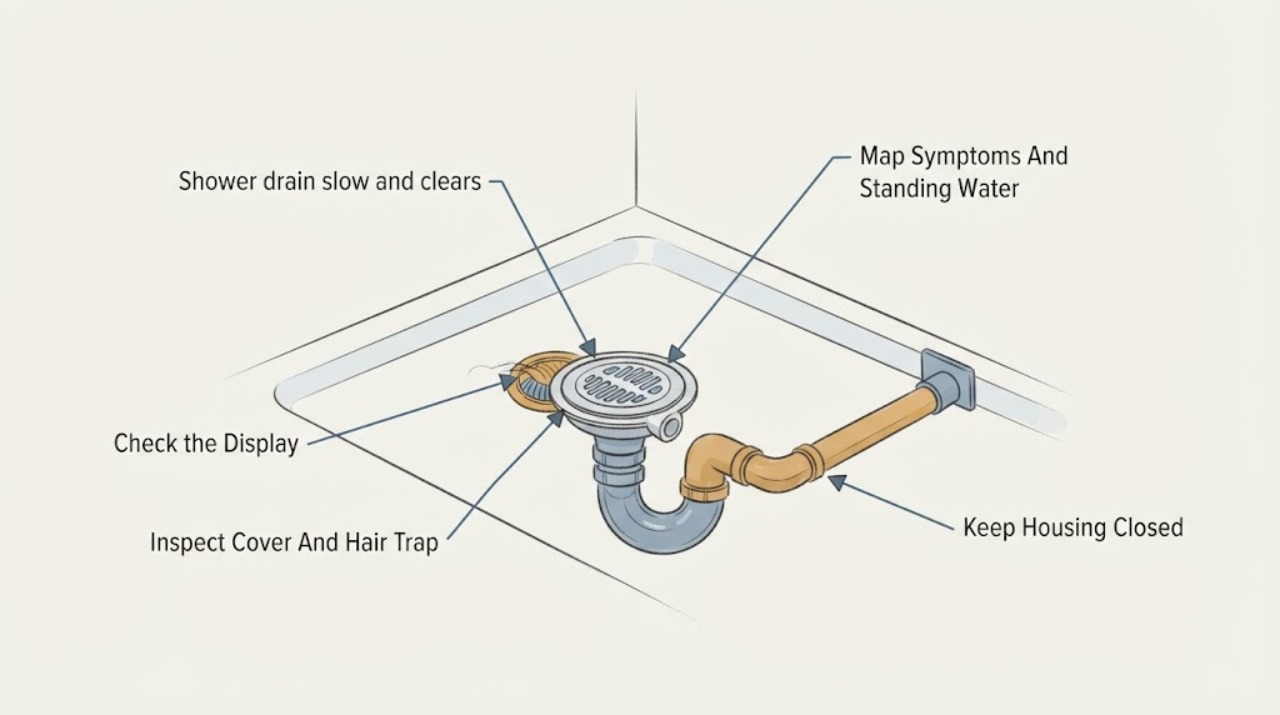
Work through in order
Diagnostic checks
Use only checks that match the exact appliance or system and its official guide.
-
Check 1
Stop adding water to the shower, remove loose bath items, and observe the drain after the existing water has had time to clear; inspect the shower floor, ceiling or cabinet below if accessible, and nearby bathroom fixtures without opening walls or floors.
Expected result: Record whether water is merely slow, standing above the grate, returning after it drains, leaking below the shower, or accompanied by gurgling or odor. Test whether the sink, tub, or toilet in the same bathroom is also slow without repeatedly flushing or flooding it.
Next step: Continue only with the visible-cover check when the shower-only path has no leak; close off the shower and arrange plumbing assessment for leakage, multiple slow fixtures, sewage odor, or rising water.
Stop if: Stop immediately for water through a ceiling or wall, an unsafe floor, sewage backup, a rapid rise in standing water, or any need to open a concealed drain assembly.
Why this matters
Why: A shower-only slowdown supports a localized cover, hair-trap, or nearby waste restriction. Multiple slow fixtures, gurgling, recurring backup, or water below the shower makes a shared branch, venting, trap, or damaged waste connection more likely.
-
Check 2
When the shower is not holding chemical product, lift or release the drain cover only by the method provided for that drain, then use gloves and ordinary hand access or a purpose-made plastic hair-removal tool to remove visible hair and soap from the cover and opening.
Expected result: Classify the opening as blocked at the underside of the cover, containing a removable hair trap with debris, visibly clear but slow, or inaccessible without removing the waste body or shower tray.
Next step: Collect and discard the debris, restore the cover and any trap insert exactly as designed, and continue to the controlled water test. If the cover or insert is damaged or cannot be restored, leave the shower unused and identify the exact drain assembly for service.
Stop if: Do not push debris deeper, drill the drain, pry a bonded grate, remove a fixed trap, or use a wire that can scratch or damage the drain assembly.
Why this matters
Why: A substantial hair or soap mass at the cover can explain a localized slow drain. A clear opening with no improvement after removal shifts suspicion to the trap or pipe beyond it; an inaccessible waste assembly is a service boundary, not an invitation to pry up the shower base.
-
Check 3
After visible debris is removed and no chemical cleaner is present, add a small, controlled amount of clean water to the shower floor; if the drain type allows a seal and the manufacturer's or building guidance permits it, use a suitable rubber plunger with steady strokes rather than high-pressure equipment.
Expected result: Note whether water begins to move freely, the drain clears only briefly, water rises around the plunger, air gurgles through a nearby fixture, or no change occurs. Do not continue if water splashes out of the tray or if the plunger cannot seal without excessive force.
Next step: Rinse with clean water only when flow is improving and there is no leak; otherwise stop and give the observed response and any prior chemical use to a qualified plumber.
Stop if: Do not plunge after chemical product was used, use a pressure bladder or compressed-air tool as a household experiment, or keep pumping against a blocked or leaking shower tray.
Why this matters
Why: A sustained improvement supports a loosened localized obstruction. Brief improvement or gurgling suggests material farther along, a shared branch, or a ventilation issue; no change with a clear opening suggests the obstruction is beyond ordinary access or the drain assembly has a structural problem.
-
Check 4
If the shower remains slow after cover cleaning, inspect only an intentionally accessible hair trap or cleaning eye with a flashlight; follow the shower base and drain manufacturer's instructions, and do not remove a concealed trap or tray.
Expected result: Record whether a designed trap insert is full, missing, incorrectly seated, or clear; whether the drain route below is visibly wet but restricted; and whether access would require removing tile, a ceiling, a panel, or the shower base.
Next step: Restore a confirmed, compatible insert and retest once; if the restriction remains or access is concealed, stop surface work and arrange drain service with the drain location and access limits documented.
Stop if: Do not dismantle the shower base, cut the ceiling, remove a trap seal, or loosen drain joints where a leak could enter the building structure.
Why this matters
Why: A full or displaced removable insert may account for the slow clearing and can be corrected only as specified. A clear insert with restricted flow, or a trap that is not accessible, makes a deeper blockage, poor slope, damaged waste, or shared-line issue more likely and needs professional tools or access.
-
Check 5
After a permitted visible clearing step, run a modest amount of clean shower water while watching the drain and the area below, then repeat a normal short shower only after the first test drains without pooling or leakage.
Expected result: Compare the drain before and after cleaning: steady flow with no backup, temporary improvement followed by slowing, gurgling or odor, water escaping below, or the same slow condition from the start.
Next step: Fit a compatible hair-catching insert only if the drain accepts one and it does not impede the cover, then monitor; for recurrence, persistent slowness, other-fixture symptoms, or leakage, leave the shower unused and call a plumber.
Stop if: Do not increase the water volume to force a test, run the shower over a leak, or continue using it when water reaches the structure below.
Why this matters
Why: Steady flow without leaks supports a localized obstruction that was removed. Temporary improvement or recurrent slowing means the restriction was not fully cleared or is being reintroduced; gurgling or multiple-fixture symptoms point beyond the shower opening. Any water below the tray indicates a drain or waste leak, not a successful unclog.
Use your observations
Decision map
Find the observation that best matches what you see, then follow the next safe action.
-
PATH 01Safety boundary
What you see
Only this shower is slow, the underside of the cover or a removable insert contains hair or soap, and flow improves and stays improved after careful removal.
Do this next
Restore the cover and any trap insert, use a compatible hair-catching insert if the drain design accepts one, and check it periodically before buildup reaches the opening.
Why this path and its safety boundary
Why it matters: The evidence favors a localized obstruction at the opening rather than a shared drain or ventilation problem.
Safety stop: Stop if the cover will not seat, water leaks below, or the drain slows again immediately.
-
PATH 02Safety boundary
What you see
The cover and reachable trap are clear, but a controlled clean-water test remains slow or the improvement is only brief.
Do this next
Stop repeated surface treatments and arrange qualified drain diagnosis, providing the access location, the before-and-after response, and any tool or product already used.
Why this path and its safety boundary
Why it matters: A restriction farther along the shower waste or branch is more likely than debris on the grate; a concealed trap or damaged waste assembly is also possible.
Safety stop: Do not remove concealed traps, cut access, or add chemical or high-pressure treatments to compensate for the unresolved location.
-
PATH 03Safety boundary
What you see
The shower is slow together with a sink, tub, or toilet, or it gurgles when another fixture drains; odors or recurring backup may also be present.
Do this next
Reduce water use on the affected branch and request qualified plumbing diagnosis of the shared drainage and ventilation path rather than repeatedly clearing the shower grate.
Why this path and its safety boundary
Why it matters: The pattern makes a shared branch, trap, venting, or larger drainage restriction more likely than a shower-cover clog.
Safety stop: Stop use of connected fixtures for backup, sewage odor, rapid standing water, or water below the shower.
-
PATH 04Safety boundary
What you see
A drain opener, disinfectant, or unknown product is standing in or has recently been poured into the shower drain.
Do this next
Keep people and pets away, follow the product label's spill and exposure directions, and tell the plumber exactly what product and amount were used. Do not add another product, plunge, or dismantle the drain.
Why this path and its safety boundary
Why it matters: The drain contents may be hazardous and the compatibility of further cleaning or plunging is unknown; the obstruction cannot be safely treated as ordinary hair.
Safety stop: Stop immediately for fumes, burns, splashes, breathing symptoms, or a spill outside the drain and seek appropriate emergency or poison-control guidance for the jurisdiction.
-
PATH 05Safety boundary
What you see
The drain is slow and water appears beneath the shower tray, on the ceiling below, at a waste joint, or around a damaged drain body.
Do this next
Stop using the shower, contain accessible water without opening the assembly, and arrange prompt plumbing inspection of the drain and surrounding structure.
Why this path and its safety boundary
Why it matters: A leaking waste connection or shower assembly may be causing structural water damage; unclogging is not the primary safe action.
Safety stop: Do not run a larger test, tighten hidden fittings, remove the tray, or use the shower until the leak path is repaired and verified.
-
PATH 06Safety boundary
What you see
The drain has a fixed or unfamiliar grate, a nonstandard trap insert, a damaged seal, or access would require tile, ceiling, floor, or wall removal.
Do this next
Document the grate, trap, drain location, and available access, then ask a qualified plumber or the shower manufacturer to identify the correct service procedure and replacement category.
Why this path and its safety boundary
Why it matters: The drain configuration and sealing function cannot be safely inferred from the symptom; forcing access could create a leak, odor path, or damaged waterproofing.
Safety stop: Do not pry, drill, remove the water seal, substitute a grate, or leave a missing or loose drain component in service.
Helpful context
Understand the symptom
A clean grate is only the first checkpoint
Hair and soap can collect on the underside of a shower grate, in a removable hair trap, or just below the opening. Remove only what is visible and reachable without dismantling the shower base. A drain that briefly improves and then slows again is evidence that material remains farther down or is being carried back to the opening; it is not a reason to keep forcing tools into the pipe.
Use symptoms outside the shower to locate the restriction
If the sink, tub, or toilet in the same bathroom drains normally, a localized shower waste restriction is more likely. If several fixtures are slow, the shower gurgles when another fixture runs, or odors return with the water, the issue may involve a shared branch, trap, or ventilation path. Those observations change the safe next step from surface cleaning to qualified drain diagnosis.
Avoid turning a slow drain into a chemical or leak hazard
Do not mix drain products, use a second product over the first, or plunge into liquid whose contents are unknown. Harsh chemicals can attack seals and materials, while excessive pressure can damage a trap or pipe. If water is leaking below the shower, the drain connection or waste assembly needs service rather than more unclogging attempts.
Safety boundary
Stop conditions
- Stop using the shower for water below the tray, a ceiling or wall stain, sewage backup, rapid standing water, or a drain connection that visibly leaks.
- Do not mix drain products, plunge unknown chemical liquid, or continue mechanical work after a chemical cleaner has been used unless a qualified person makes the area safe.
- Do not drill the drain, pry a bonded grate, remove a concealed trap, cut tile or a ceiling, or use high-pressure or compressed-air tools as a household experiment.
- Do not force a cover, hair trap, water seal, or grate that is damaged, unfamiliar, or not designed for ordinary access.
- Treat persistent slowing, gurgling, odor, or multiple slow fixtures as a possible branch, venting, or deeper drainage issue rather than repeatedly treating the shower opening.
Only after diagnosis
Potential parts
- compatible shower drain hair-catching insert
Consider this only after the drain is flowing, the existing opening accepts an insert, and the drain or cover design confirms that the insert will not obstruct the water seal or cover.
Confirm the exact grate, opening, trap arrangement, and manufacturer fit information; do not substitute a loose screen that prevents the cover from seating or changes the drain seal. - shower drain cover or grate
Consider this only when the existing cover is cracked, missing, warped, or cannot safely retain the specified insert after the blockage is removed.
Match the exact drain assembly, opening, fastening method, and waterproofing interface; a visually similar grate is not proof of a safe fit. - shower waste or trap seal component
Consider this only when a qualified inspection confirms a damaged or missing trap or waste component rather than a removable hair obstruction.
Have the drain manufacturer or qualified plumber confirm the component, seal, access method, and waterproofing requirements before replacement.
When checks do not resolve it
Need a professional?
Arrange qualified plumbing service when the visible cover and reachable hair trap are clear but the shower remains slow, improvement is temporary, another fixture is slow, gurgling or odor returns, water leaks below the shower, chemical product is present, the trap or grate is inaccessible or unfamiliar, or any clearing step would require concealed access or high-pressure equipment.
Safety scope: This article covers observation, ordinary-access cover or hair-trap cleaning, and a controlled clean-water or permitted plunger check. It does not authorize chemical handling, concealed trap removal, high-pressure clearing, structural access, or drain-line repair.
Common questions
FAQ
Why is my shower drain still slow after I cleaned the grate?
Hair or soap may remain in a removable trap or farther along the waste or branch line. If the opening is clear but flow is still slow or improves only briefly, stop repeating surface treatments and arrange qualified drain diagnosis.
Can hair cause a shower drain to clear slowly?
Yes. Hair can collect on the underside of the cover, in a hair-catching insert, or in the nearby waste trap. Remove only visible material using ordinary safe access, then retest with clean water without forcing debris deeper.
Should I use a chemical drain cleaner in a slow shower drain?
Do not add chemicals when the product is unknown, standing water is present, or another product was already used. Harsh chemicals can attack seals and materials; tell a plumber exactly what was used before any further clearing.
What does gurgling in a slow shower drain mean?
Gurgling, recurring odor, or several slow fixtures makes a shared branch, trap, or ventilation issue more plausible than a grate-only clog. Reduce water use on that branch and request qualified plumbing assessment.
Can I remove the shower trap to clear the blockage?
Only a trap or cleaning access specifically designed for ordinary service should be opened according to its instructions. Do not remove a concealed trap or shower base; professional access may be needed to protect the water seal and waterproofing.
When should I call a plumber for a slow shower drain?
Call when the visible cover and reachable insert are clear but the drain stays slow, the problem returns quickly, other fixtures are slow, gurgling or odor is present, water leaks below the shower, chemical product is present, or clearing access would require opening a concealed structure.
Read the exact guide
Official sources
- UtilitiesCadw, Welsh Government · Welsh Government home-maintenance guidance; methods must be adapted to the installed shower and local requirements.
- Approved Document H: Drainage and waste disposalUK Government · UK building-regulation guidance for sanitary pipework; it is not a diagnosis of an individual shower and local requirements may differ.
- Clean the trapGeberit UK · Geberit bathroom drainage guidance; other shower and trap designs may differ, and the installed product instructions control.
- Safer Alternatives for the BathroomCobb County Government · County water-education guidance for residential bathroom maintenance; it does not replace fixture instructions or local plumbing requirements.
Community feedback
Share a repair observation
Share a plain-text repair observation. Accepted observations are published automatically; this page may take a moment to update.