
On this page
Start here
Quick answer
A shower that backs up after the shower and washing machine discharge at the same time usually means the drainage path cannot accept that combined flow somewhere downstream of the shower, but the exact point may be a shower trap, a shared bathroom or laundry branch, the building drain, or the sewer connection. Stop both water uses and do not add more water to test it. From a safe position, note the first fixture to back up, whether the water is clean or sewage-like, and whether other fixtures are affected. Avoid drain chemicals, especially if any product is already in the line, and call a plumber when the backup is shared, recurring, contaminated, or not clearly limited to visible surface debris.
Before you begin
Safety first
- The homeowner scope ends at stopping water, safe visual observation, documenting the timing and affected fixtures, and removing only loose surface debris when the area is dry or safely accessible and chemical-free. Deep clearing, trap or cleanout access, contaminated-water cleanup, and downstream diagnosis require professional service.
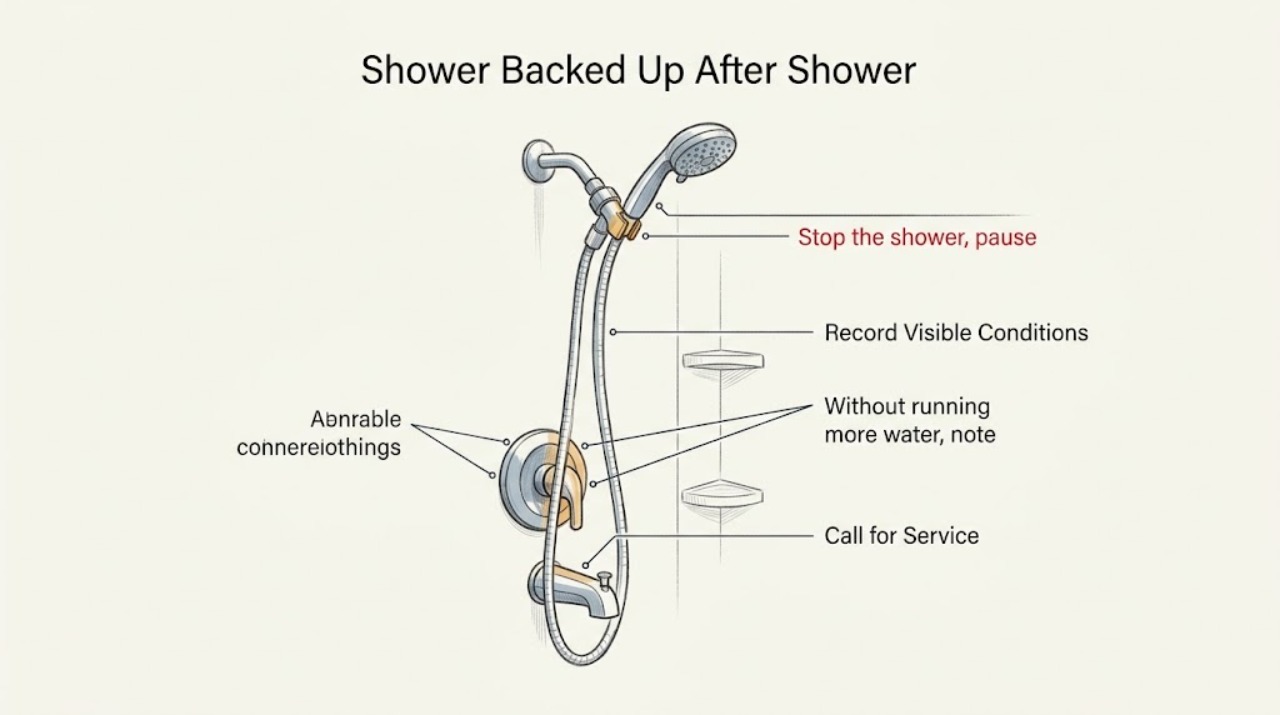
Work through in order
Diagnostic checks
Use only checks that match the exact appliance or system and its official guide.
-
Check 1
Stop the shower, pause the washing machine, and avoid using nearby fixtures while the water level is changing; keep people away from standing water and do not add water just to see whether the drain clears.
Expected result: The level stops rising, continues rising without new water, or spills beyond the shower area.
Next step: Keep water use stopped. If the water is sewage-like, rising, or near electrical equipment, keep clear and call a plumber promptly rather than attempting a clearing test.
Why this matters
Why: A continuing rise suggests retained water or downstream backflow; spread beyond the shower increases contamination, slip, and possible electrical risk.
-
Check 2
From a safe position, record which fixture showed the first symptom, whether the shower alone was draining slowly, and whether the backup appeared only after the washing machine discharged at the same time.
Expected result: The shower alone is slow, the combined discharge triggers the backup, or the backup occurs even when no water is being used.
Next step: Give the sequence to the plumber and do not repeat the simultaneous discharge to verify it.
Why this matters
Why: A shower-only symptom keeps a local trap or grate restriction in scope; a simultaneous-use trigger points toward a shared branch or downstream capacity restriction; spontaneous backup raises concern about backflow or a severe obstruction.
-
Check 3
Without running more water, note whether the backed-up water looks like clear shower or laundry water, contains lint or detergent, or smells or appears like sewage; do not touch it with bare skin.
Expected result: The water is clear, gray or detergent-laden, or dark, foul-smelling, or visibly contaminated.
Next step: Treat questionable or sewage-like water as contaminated, keep the area isolated, and arrange plumbing service. Do not clean or pump contaminated water with household equipment unless a professional gives safe instructions.
Why this matters
Why: Water quality helps the plumber distinguish a fixture discharge restriction from possible sanitary sewer backflow, but appearance alone cannot certify that water is safe.
-
Check 4
Ask whether toilets, sinks, tubs, floor drains, or a lower level show slow drainage, bubbling, odor, or backup, using observation only and not flushing or running taps to provoke another symptom.
Expected result: Only the shower is affected, the shower and laundry area are affected, or multiple fixtures and lower drains are affected.
Next step: For linked or multiple fixtures, stop using the drainage system and call a plumber for downstream assessment. Do not assume a shower-plug repair will solve a shared backup.
Why this matters
Why: One fixture favors a local restriction; linked fixtures favor a shared branch; several fixtures or a lower drain favor a main building drain or sewer-side problem.
-
Check 5
If the shower water is not contaminated, no chemical has been used, and the grate or strainer is safely accessible without entering standing water, look only at the visible surface for hair, lint, or a removable cover obstruction; do not force the grate or insert tools deeply.
Expected result: Visible debris is present at the surface, the grate is damaged or stuck, or the surface looks clear.
Next step: Remove only loose surface debris with appropriate gloves if the area is safe and no chemical history exists. If the backup returns or the grate is stuck, stop and call a plumber.
Why this matters
Why: A surface obstruction can explain a local slow drain, but a clear grate does not rule out a trap, shared branch, vent, or main-line restriction.
-
Check 6
Write down whether any drain opener, bleach, acid, solvent, or other cleaner was added, when it was added, and whether it may still be in the standing water; do not add another product or try to neutralize it.
Expected result: No chemical was used, one product was used, or products may have been mixed.
Next step: Tell the plumber exactly what product was used and keep the area ventilated without creating a splash or handling the water. For a suspected reaction or exposure, use local poison or emergency guidance.
Why this matters
Why: Chemical residue changes the safe clearing and service procedure and can injure a person or react with another product.
-
Check 7
Prepare a plumber handoff with the simultaneous shower-and-laundry timing, first wet point, affected fixtures, water appearance or odor, chemical history, property layout, and whether neighbors or shared building areas have the same problem; do not open a cleanout or disconnect a washing-machine hose.
Expected result: The evidence indicates a local shower obstruction, a shared branch restriction, a main drain or sewer backflow, or an uncertain location.
Next step: Keep water use stopped until the plumber identifies the restriction and confirms that the drainage system is safe to use.
Why this matters
Why: A clear event pattern helps choose a safe access point and prevents treating a downstream or contaminated backup as a simple shower-grate clog.
Use your observations
Decision map
Find the observation that best matches what you see, then follow the next safe action.
-
PATH 01Next step
What you see
Only the shower is slow or backs up, and the problem does not occur when the washing machine is idle.
Do this next
After stopping water use, make only a safe surface observation or remove loose visible debris if no chemicals or contaminated water are present. Call a plumber if it persists or returns.
Why this path and its safety boundary
Why it matters: A local shower grate or trap restriction is possible, but the visible grate is not the whole drain system.
-
PATH 02Next step
What you see
The shower backs up when the washing machine discharges, while nearby fixtures also drain slowly or bubble.
Do this next
Stop both water uses and arrange plumbing service for the shared drain path. Do not repeat a laundry discharge to test it.
Why this path and its safety boundary
Why it matters: A shared branch or downstream restriction is more likely than an isolated shower grate problem.
-
PATH 03Next step
What you see
Toilets, sinks, tubs, floor drains, a lower level, or more than one area backs up or shows sewage-like water.
Do this next
Stop using all fixtures, keep people and pets away, and call a plumber promptly. Treat the water as contaminated and do not attempt a household chemical or deep-clearing remedy.
Why this path and its safety boundary
Why it matters: A main building drain, sewer connection, or backflow condition may be involved.
-
PATH 04Next step
What you see
The backup is rising, spreading into living areas, or reaching an outlet, appliance, extension cord, or other electrical equipment.
Do this next
Keep clear and do not touch electrical equipment or enter water to isolate it. Use local emergency guidance for immediate danger and obtain plumbing help.
Why this path and its safety boundary
Why it matters: There is a combined contamination, slip, property, and possible electrical hazard.
-
PATH 05Next step
What you see
Drain cleaner or another hazardous household product is present, or different products may have been mixed.
Do this next
Do not plunge, add another chemical, splash, or open the trap. Keep people away, provide the product details to the plumber, and use local poison or emergency guidance for exposure.
Why this path and its safety boundary
Why it matters: The standing water and drain path may contain corrosive or reactive residue.
-
PATH 06Next step
What you see
The shower and laundry event was isolated, the water drained completely, and no other fixture shows a symptom.
Do this next
Do not recreate the event. Document it and arrange a plumber if the shower remains slow, the event recurs, or the cause is not visible at the surface.
Why this path and its safety boundary
Why it matters: A temporary flow restriction or local obstruction is possible, but a recurring simultaneous-use trigger still needs attention.
Helpful context
Understand the symptom
Why simultaneous use is an important clue
A washing machine releases water in a short, forceful discharge while a shower is sending water into the drain. If the shower backs up only after both occur together, the restriction may be downstream of their connection rather than only at the shower grate. If the shower backs up with no laundry discharge, a local shower blockage is more plausible. If toilets, sinks, or lower drains also show symptoms, the problem may be farther downstream or at the building or sewer connection.
Protect people before clearing a drain
Stop water use and keep children and pets away from standing or backed-up water. Do not mix drain products, add chemicals to a full drain, use a plunger after a chemical product has been poured unless a professional confirms it is safe, or open a trap or cleanout that may release contaminated water. Keep electrical devices and extension cords away from wet areas and call a plumber when the water is sewage-like, rising, or spreading.
Safety boundary
Stop conditions
- Stop water use and keep clear for sewage-like water, rising or spreading backup, strong odor, or contamination involving floors, fixtures, or living areas.
- Do not enter standing water near outlets, appliances, cords, or electrical equipment, and do not touch electrical equipment from a wet position.
- Do not mix drain products, add chemicals to standing water, neutralize a product, or plunge after a chemical product has been used unless a professional confirms it is safe.
- Do not force a grate, disconnect a washing-machine hose, open a trap or cleanout, or insert tools deeply when the restriction or water quality is uncertain.
- Stop do-it-yourself clearing and call a plumber for linked fixtures, recurring simultaneous-use backups, lower-level symptoms, suspected sewer backflow, or any backup that does not clearly remain local.
When checks do not resolve it
Need a professional?
Call a plumber when the shower backs up after simultaneous laundry discharge, when more than one fixture is involved, when sewage-like water or recurrence is present, when chemicals were used, or when the visible shower drain is clear but the backup remains.
Safety scope: The homeowner scope ends at stopping water, safe visual observation, documenting the timing and affected fixtures, and removing only loose surface debris when the area is dry or safely accessible and chemical-free. Deep clearing, trap or cleanout access, contaminated-water cleanup, and downstream diagnosis require professional service.
Common questions
FAQ
Why does the shower back up when the washing machine drains?
The two fixtures may share a downstream branch or building drain that cannot accept the combined discharge, although a local shower restriction is still possible. Stop both water uses and have a plumber trace the affected path.
Should I pour drain cleaner into the backed-up shower?
Do not add chemicals to standing or questionable water, and never mix drain products. Tell the plumber exactly what has already been used so the clearing method can be chosen safely.
How can I tell whether it is a sewer backup?
Sewage-like odor or appearance, backup in multiple fixtures, lower-level floor drains, or water rising without new use raises concern, but appearance is not a safety test. Stop using water, keep people away, and call a plumber.
Read the exact guide
Official sources
- Sanitary Sewer Overflow (SSO) Frequent QuestionsU.S. Environmental Protection Agency · Sanitary sewer overflow causes, blockages, wet-weather inflow, equipment failures and health risks from untreated sewage
- Plugging Home Drains to Prevent Sewage BackupNorth Dakota State University Extension · Household shower and washing-machine drain connections, sewage backup pathways, and differences among home drain layouts
- Household Hazardous Waste (HHW)U.S. Environmental Protection Agency · Safe handling and disposal of corrosive, reactive and toxic household cleaners and warnings against mixing or improper drain disposal
Community feedback
Share a repair observation
Share a plain-text repair observation. Accepted observations are published automatically; this page may take a moment to update.