
Plumbing guides
Showers Repair Guides – Page 2
Troubleshooting for shower flow, temperature, drains, valves, and leaks.
Published showers guides
Choose the guide that best matches the equipment and symptom you are seeing.
-
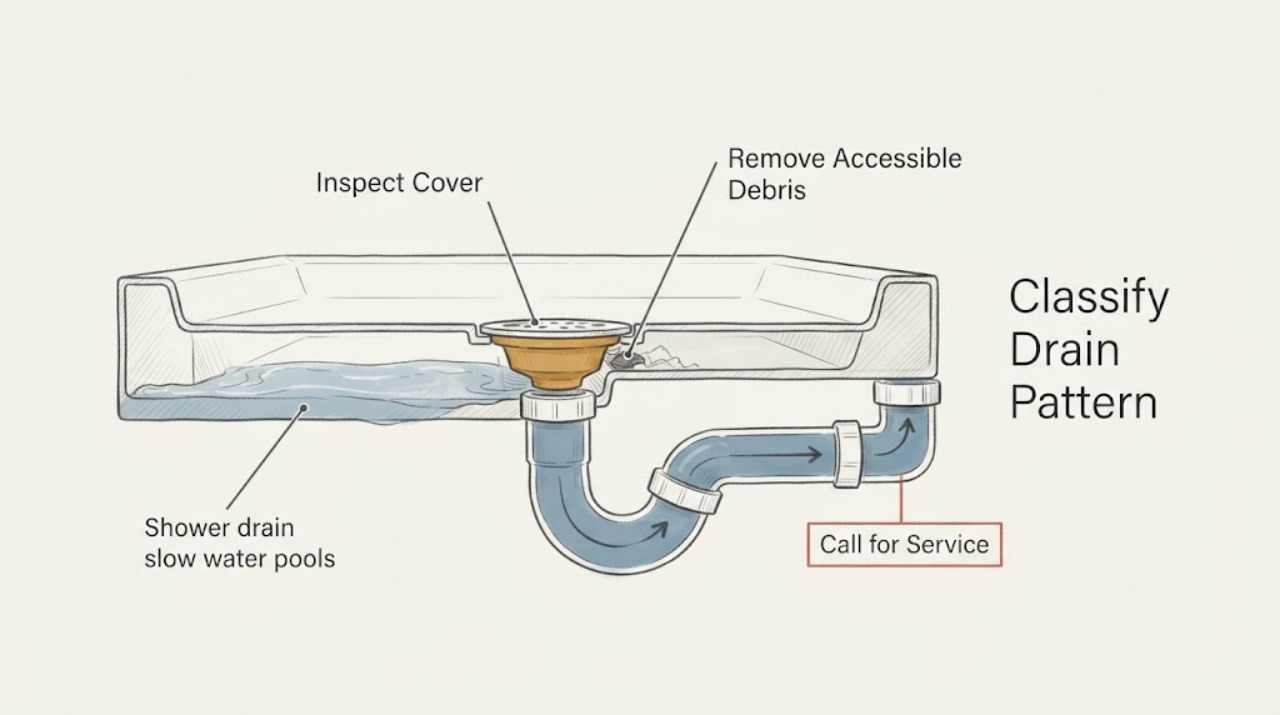
Shower drain slow water pools around feet: What to Check and What to Do Next
Water pooling around your feet while a shower runs is usually a partial restriction from hair, soap scum, skin cells, bath-product residue, or mineral deposits at the cover or nearby drain opening. First determine whether only this shower is slow, then clean the removable cover and accessible debris without pushing it deeper or mixing chemicals.
-
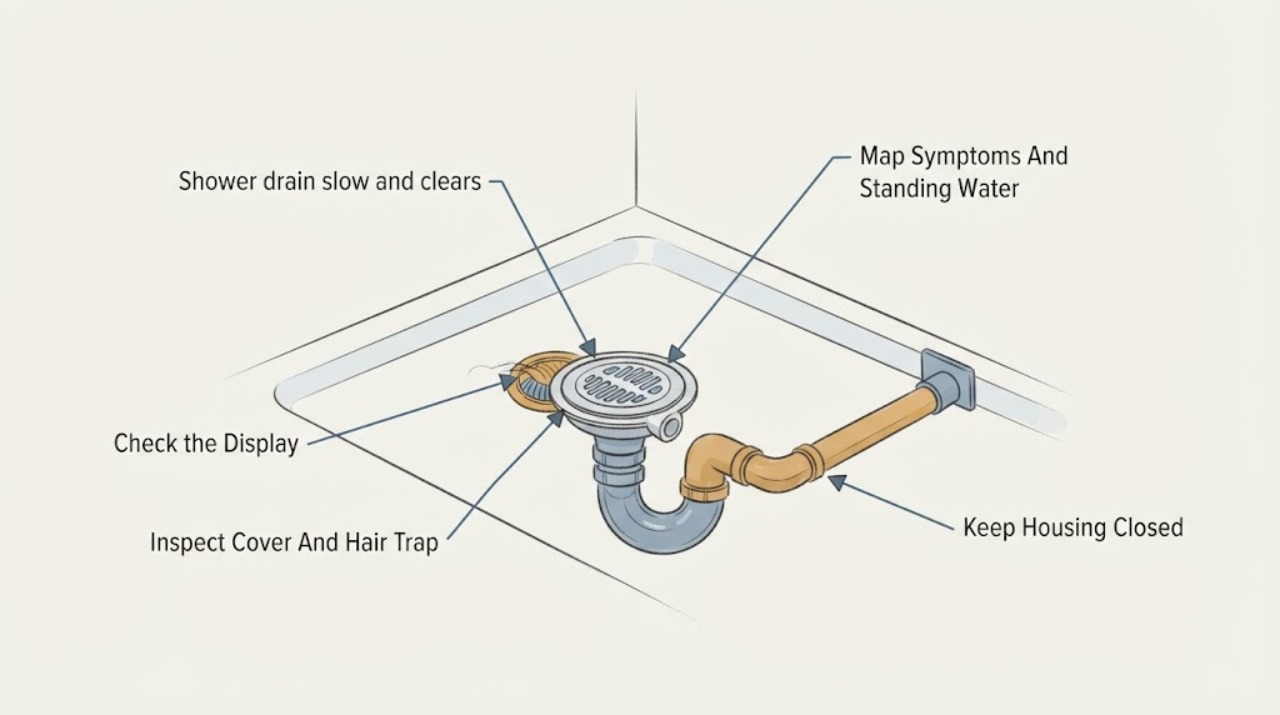
Shower drain slow and clears slowly: What to Check and What to Do Next
A shower that clears slowly usually has a partial restriction at the drain cover, hair trap, or nearby waste trap, but cleaning the visible grate does not prove the pipe is clear. First remove standing water safely, lift only a cover designed for ordinary access, and remove visible hair or soap residue without pushing it deeper.
-
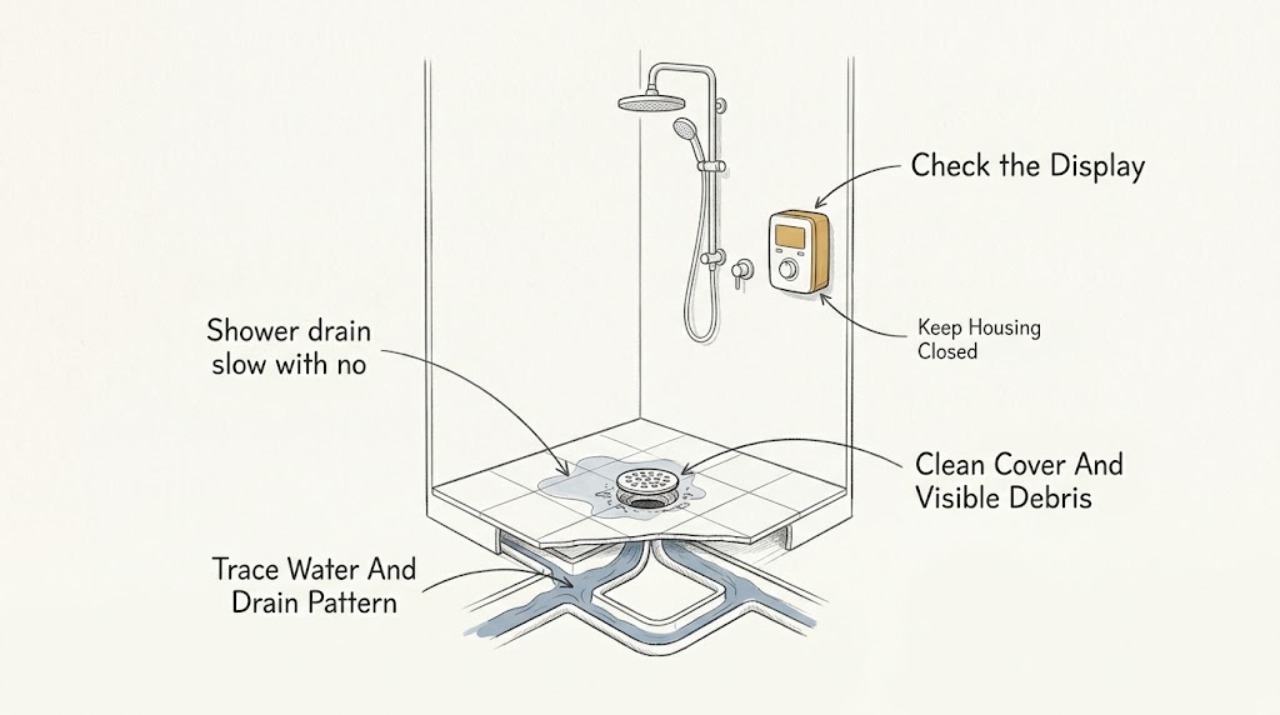
Shower drain slow with no supply leak: What to Check and What to Do Next
When a shower drains slowly but the supply pipes, valve, and showerhead are not leaking, the likely problem is a restriction at the drain opening or farther down the shower branch. Stop adding water while the basin is rising, remove and clean the drain cover or strainer if it is safely accessible, and pull out visible hair and soap buildup without pushing it deeper.
-
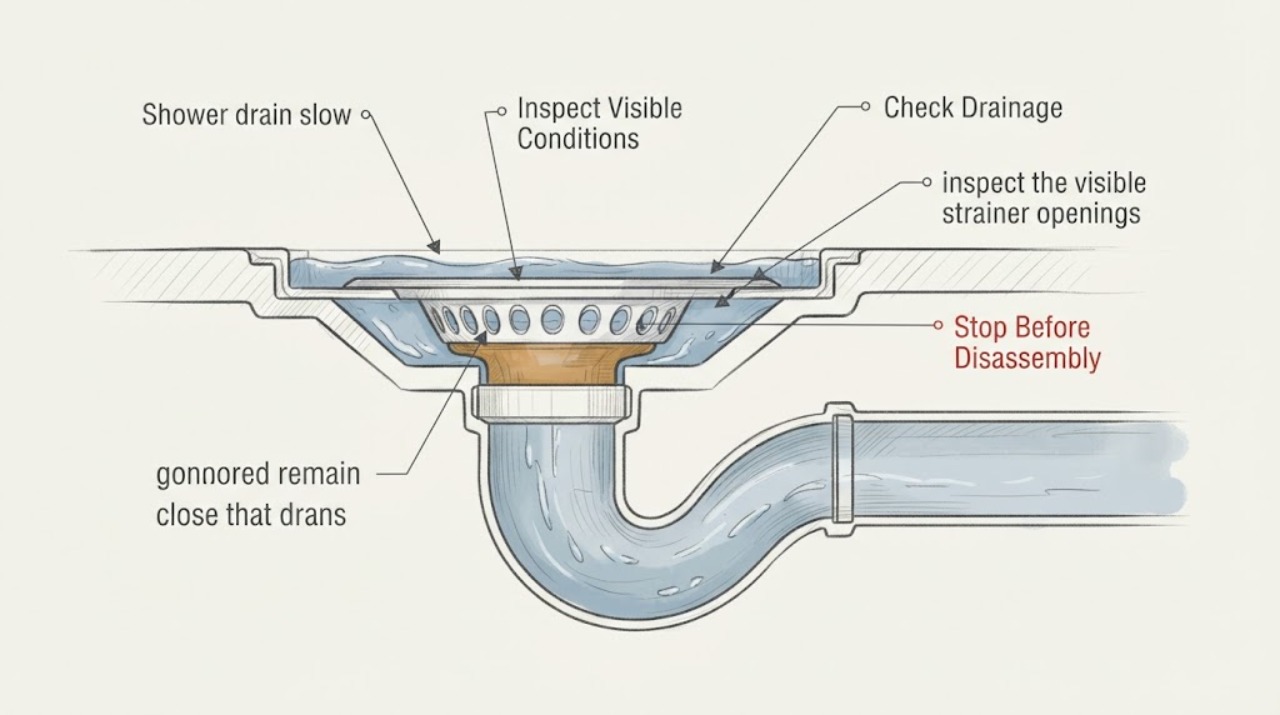
Shower drain slow: What to Check and What to Do Next
First determine whether the slow drain is limited to the shower or affects other fixtures, and when the slowdown starts during a normal shower. From a dry position, look at the visible strainer for hair or soap buildup without removing it or reaching into the drain, and note whether water pools, smells like wastewater, or rises toward the threshold.
-
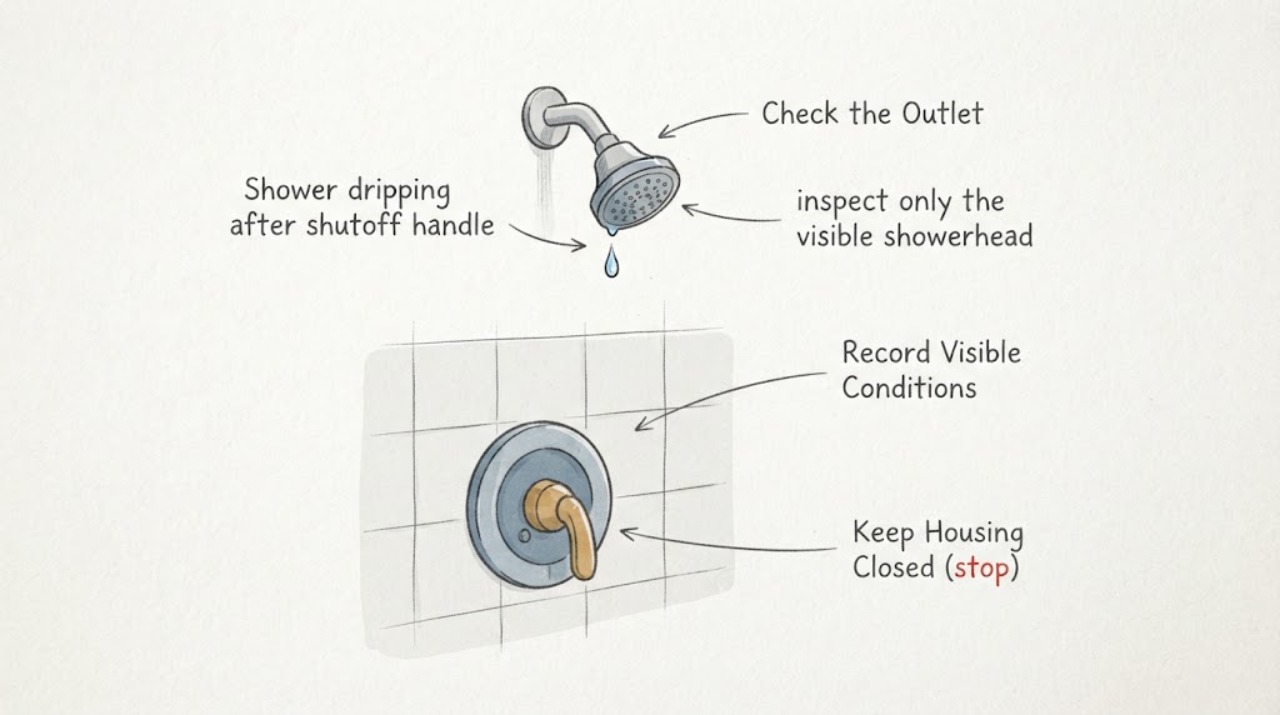
Shower dripping after shutoff handle is closed: What to Check and What to Do Next
A few drops from a showerhead immediately after the handle is closed can be water draining from the showerhead or shower arm. Dripping that continues, returns after the outlet has drained, or comes from around the handle, trim, tub spout, or wall is more consistent with a valve sealing, cartridge, installation, or concealed-leak problem.
-
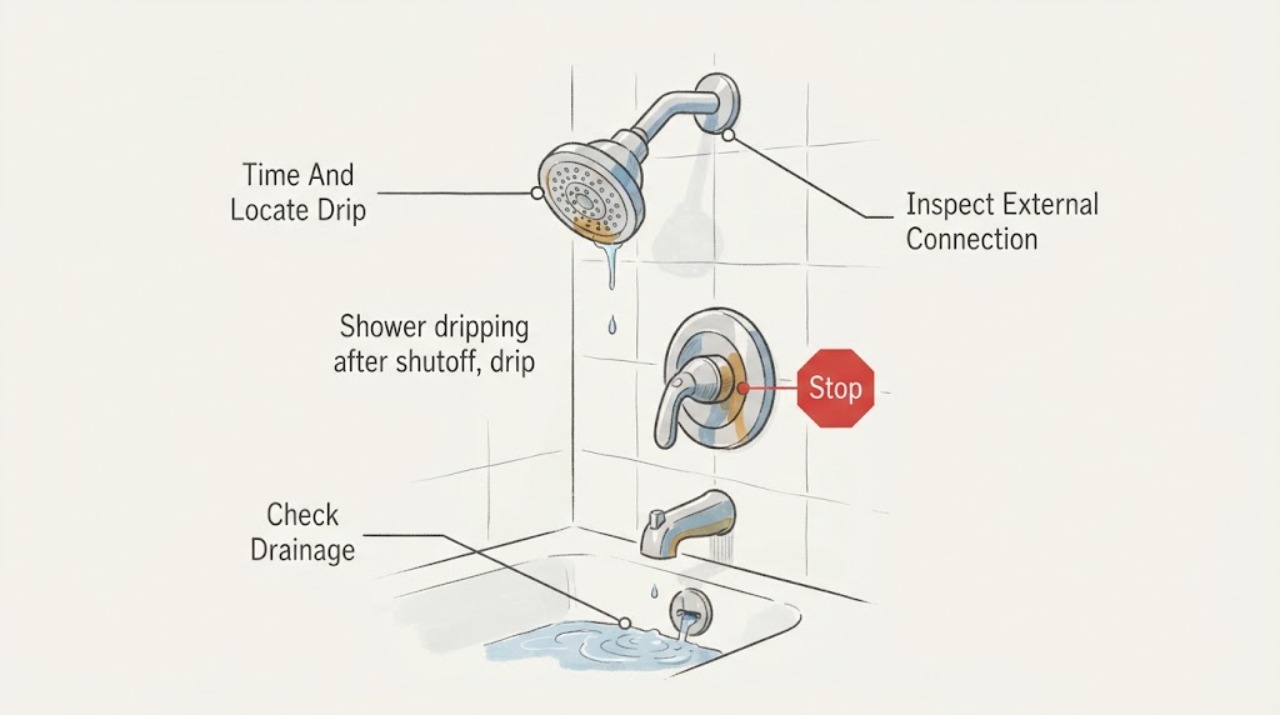
Shower dripping after shutoff, drip may stop after minutes: What to Check and What to Do Next
A few drips from the showerhead after the handle is turned off can be water draining from the head, especially when the dripping stops on its own after a short period. Delta describes this as the showerhead emptying its reservoir, and Kohler says residual water from some valves may drip for up to about 90 seconds.
-
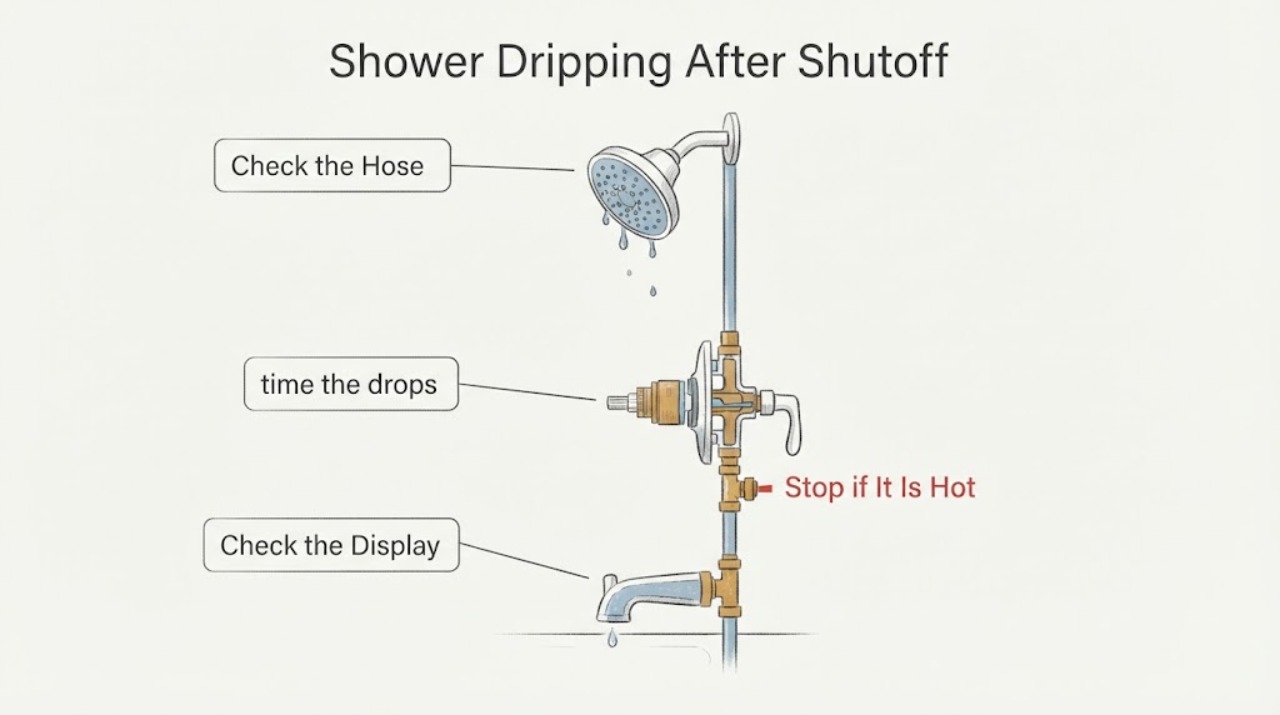
Shower Dripping After Shutoff: Drip Continues After Use—What to Check and What to Do Next
A few drops from the showerhead immediately after shutoff can be residual water draining from the head, especially when it stops after a short period. A drip that continues long after use, becomes a continuous stream, comes from the handle or wall, or appears from a non-selected outlet is a leak until proven otherwise.
-
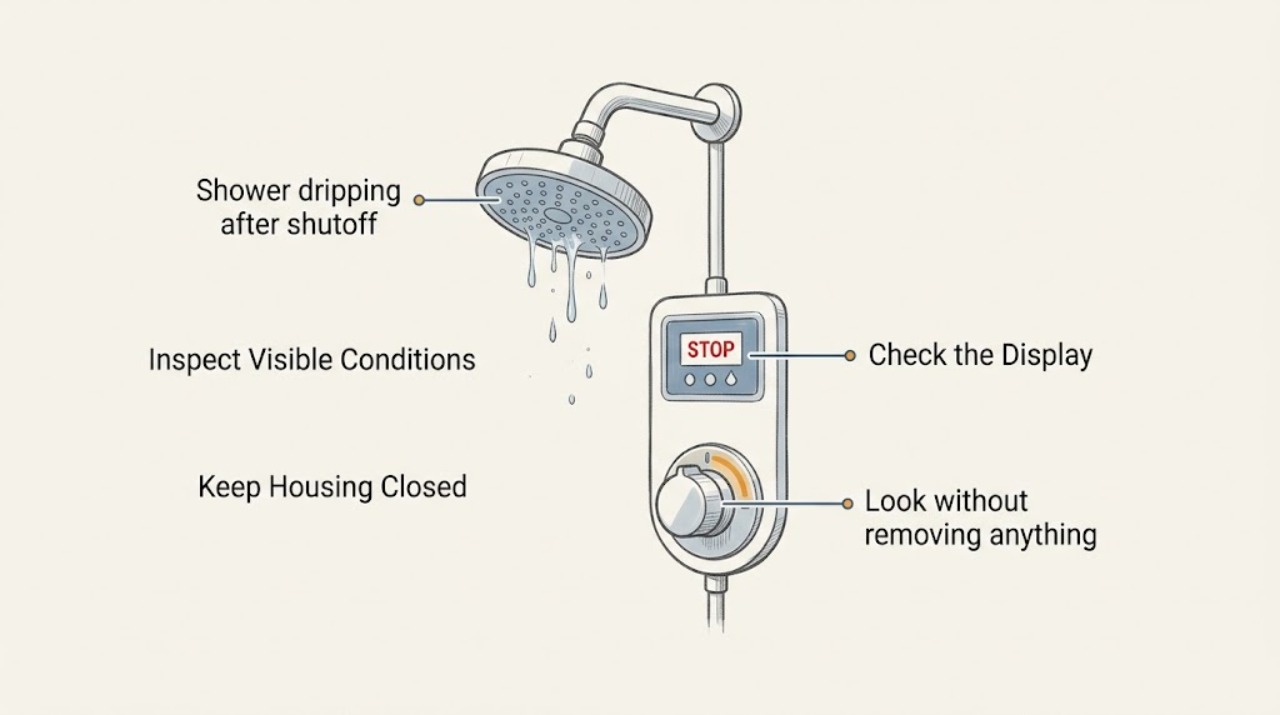
Shower dripping after shutoff: What to Check and What to Do Next
A few drops that taper off right after a shower can be normal drain-down: water is leaving the shower head and riser after the valve closes. A drip that continues, returns after the fixture has emptied, or appears around the handle, tub spout, trim, or wall is more consistent with a valve, cartridge, diverter, connection, or concealed-leak problem.
-
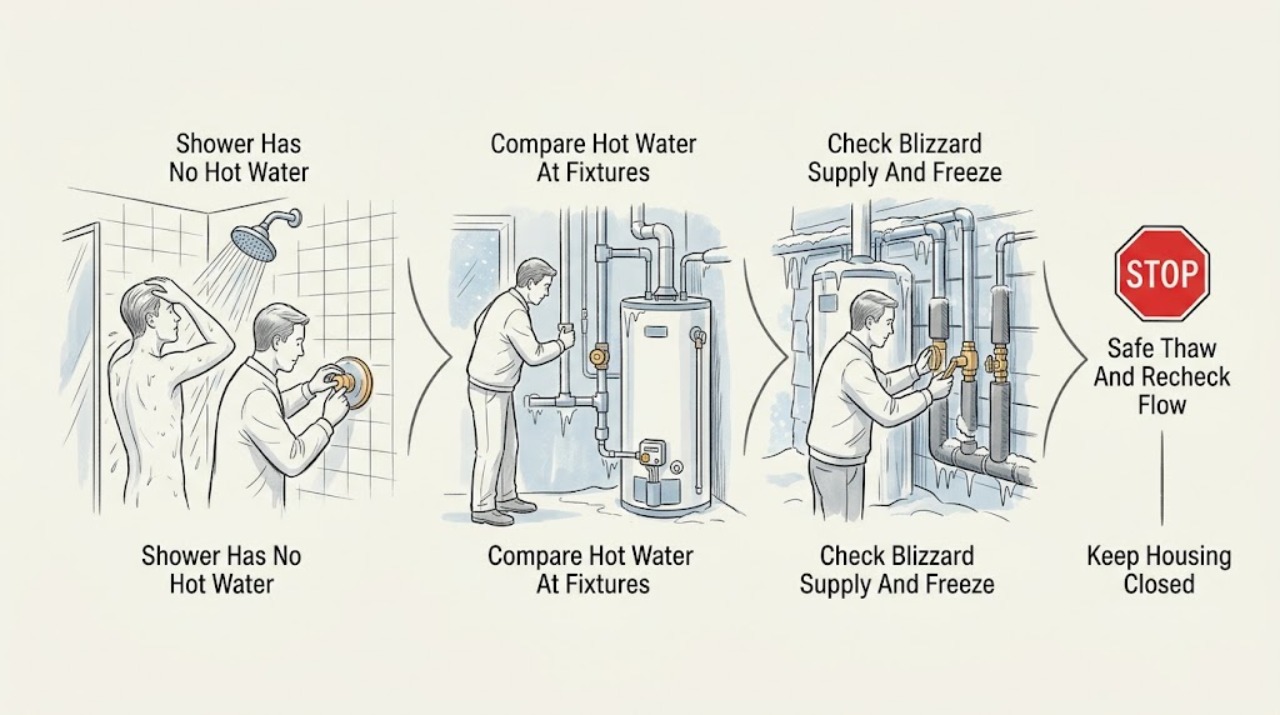
Shower Has No Hot Water After a Blizzard: Separate Frozen Pipes, Power, and Heater Faults
After a blizzard, a cold shower can come from a frozen branch serving the shower, a whole-house water or power interruption, a gas or electric water-heater shutdown, or a shower mixing valve that is limiting hot water. First ask whether hot water is also missing at a nearby sink; check only from a dry, safe location whether cold water flows and whether other fixtures are affected.
-
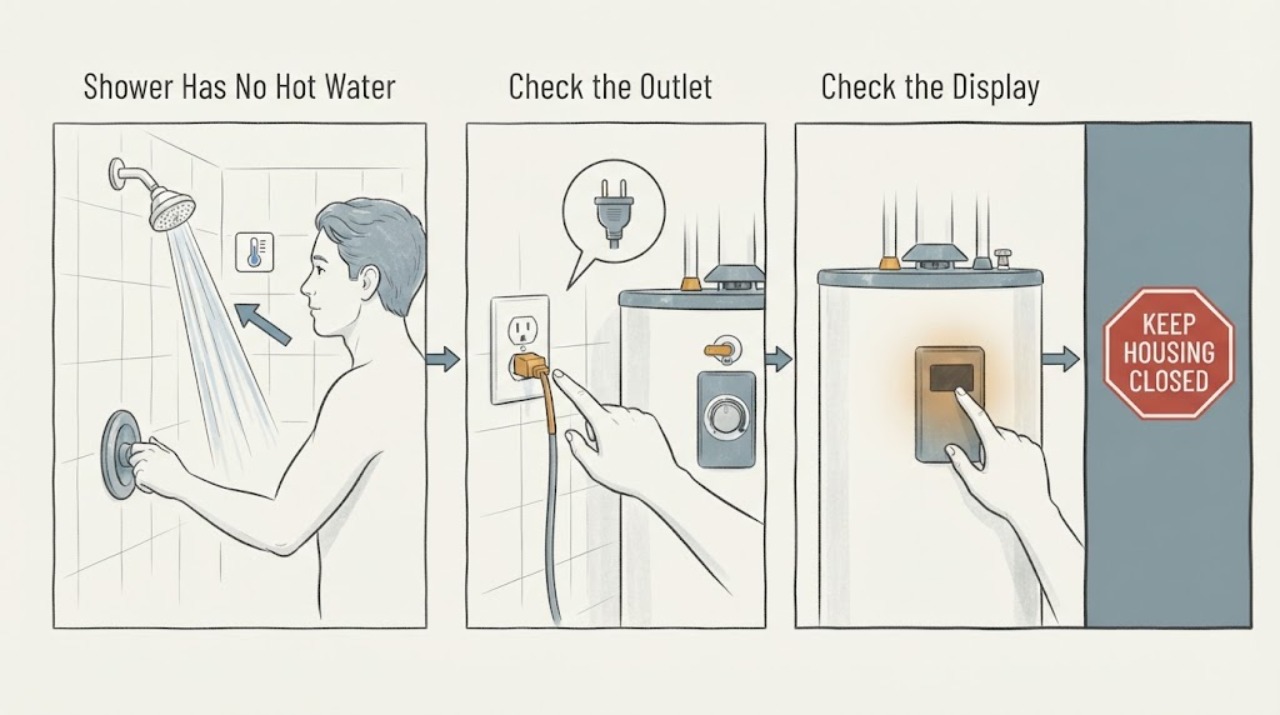
Shower Has No Hot Water: Check the Shower Valve and Storage Tank
First determine whether the shower is the only fixture without hot water. If a nearby sink or tub tap becomes hot, the storage tank is probably working and the shower's mixing or thermostatic valve, cartridge, anti-scald setting, or hot-side supply is the better target.
-
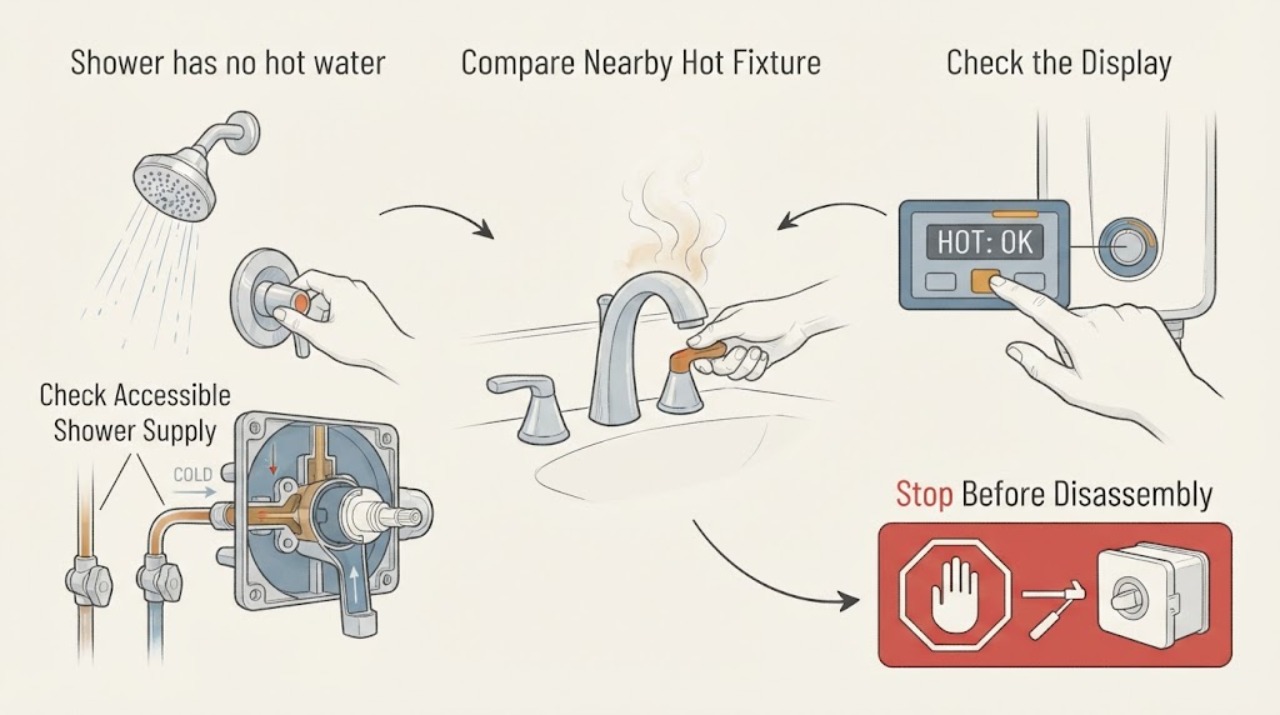
Shower has no hot water: isolate the fixture or water-heater path
First run a brief hot-water check at a nearby sink or tub. If other fixtures also stay cold, investigate the water-heater and whole-home hot-water path; if other fixtures are hot but the shower is cold, the shower mixing valve, cartridge, check stop, or supply connection is the more likely path.
-
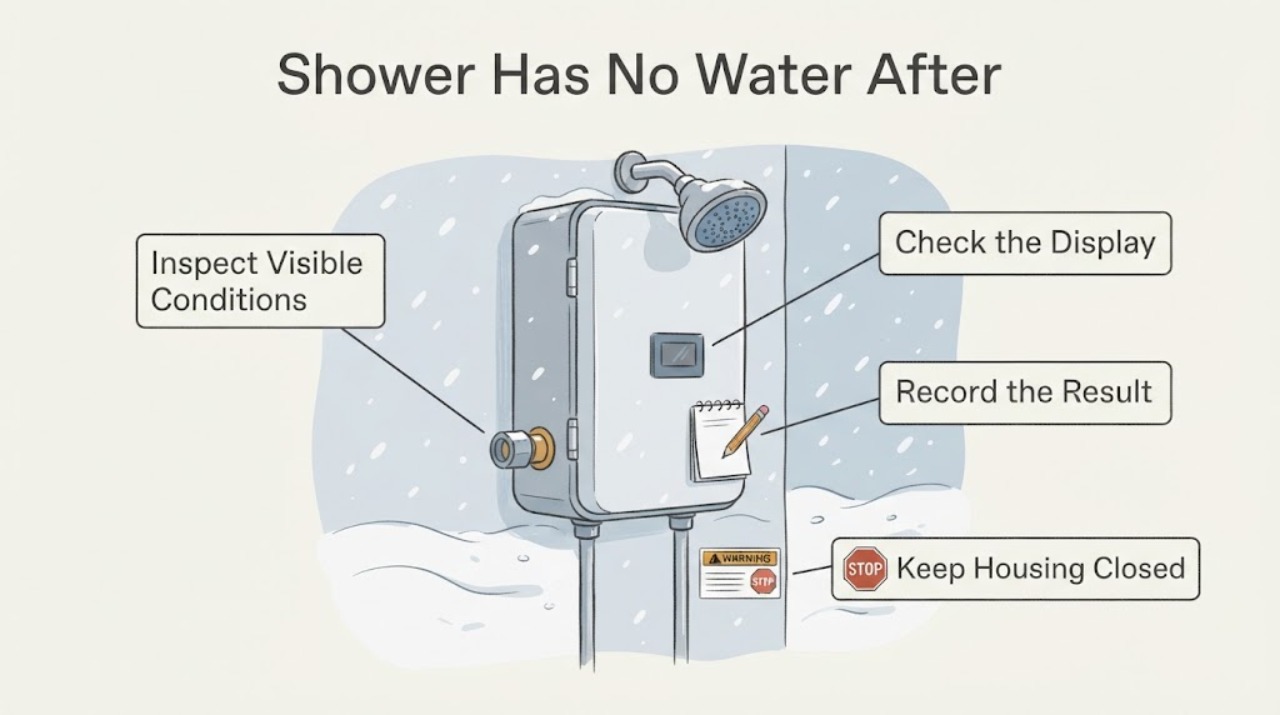
Shower Has No Water After a Blizzard: Check for Frozen Supply Safely
After a blizzard, a shower with no water may have a frozen branch pipe, a frozen or closed shower valve, a home water shutoff or utility outage, or a burst pipe that has lost pressure. First compare the shower with a nearby sink and both hot and cold sides without entering unsafe snow, ice, or flooded areas.
-
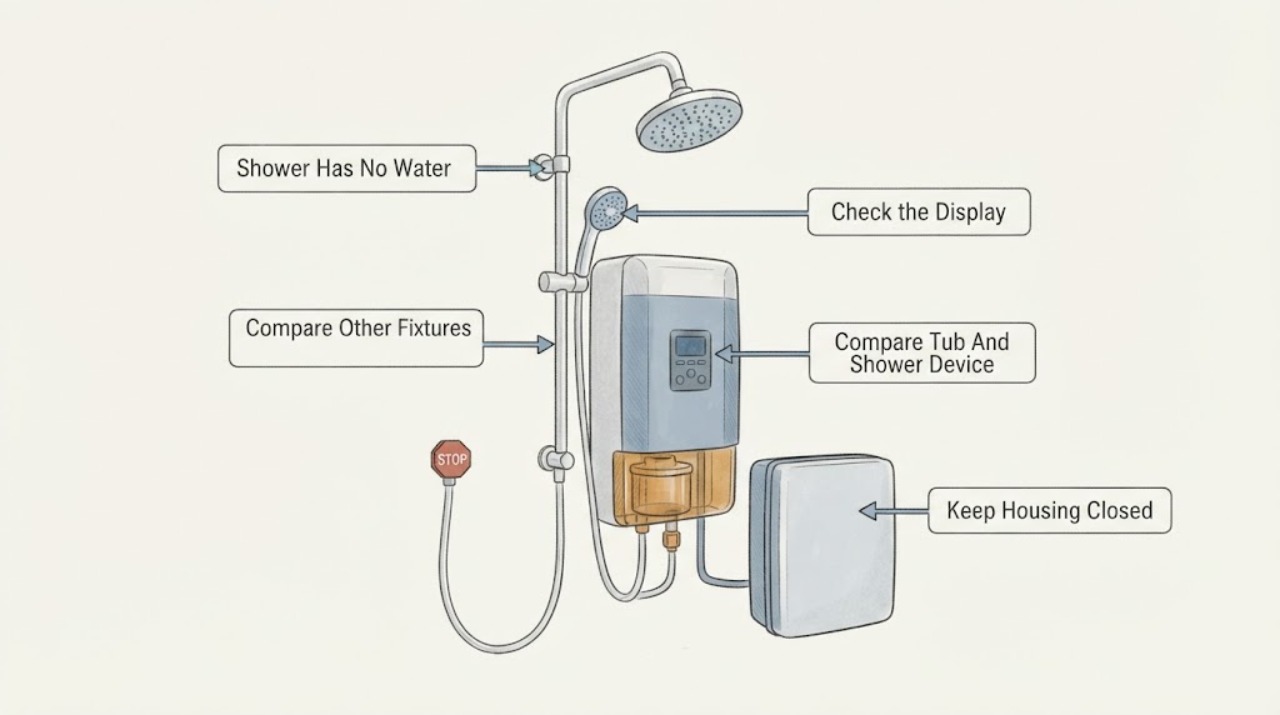
Shower Has No Water: Check the Valve, Showerhead, and Tank Supply
If a shower has no water at all, first separate a shower-only blockage or valve problem from a house-wide supply problem. Check another cold-water fixture and the tub spout if the shower shares one, then make sure the shower control is being operated in the direction required by its model and that any safely accessible supply stops are open.
-
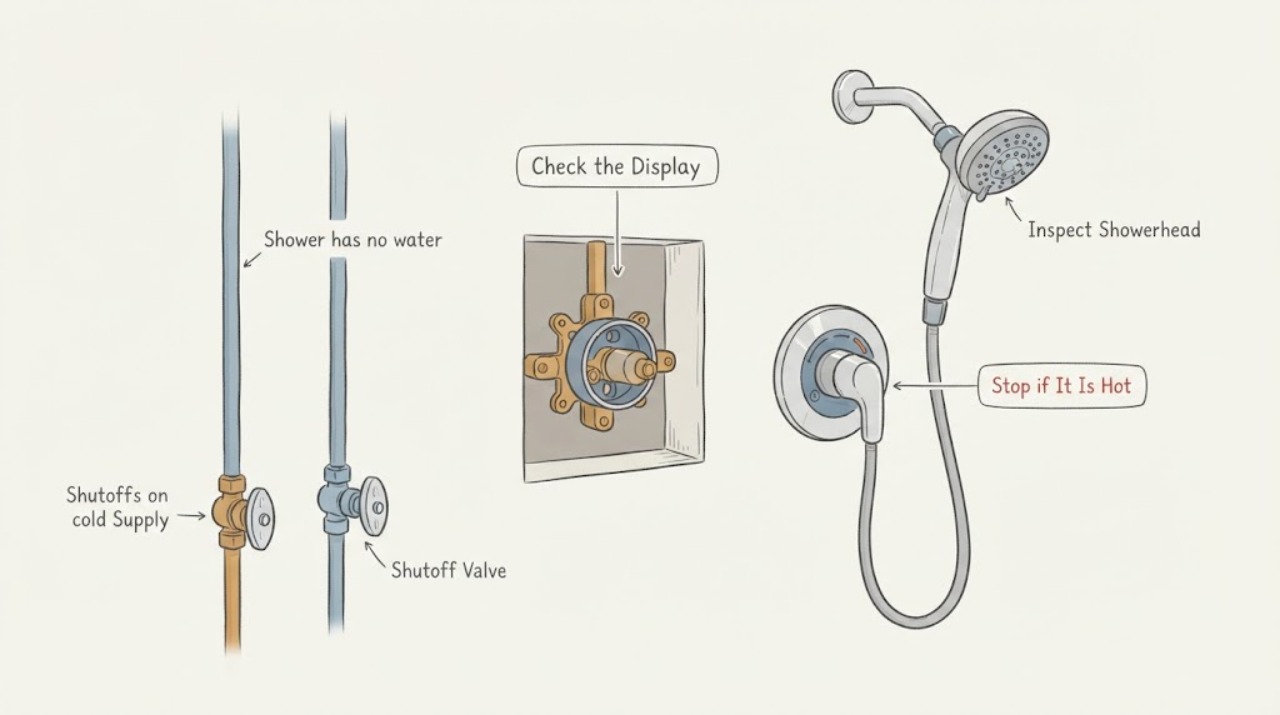
Shower has no water: safe checks before calling a plumber
First determine whether the problem is only the shower, only hot or cold water, or the whole home. Check other faucets and a lower-level fixture, compare hot and cold flow, and stop using the shower if water is leaking behind the wall, the floor is unsafe, or an electrical shower/controller is wet or damaged.
-
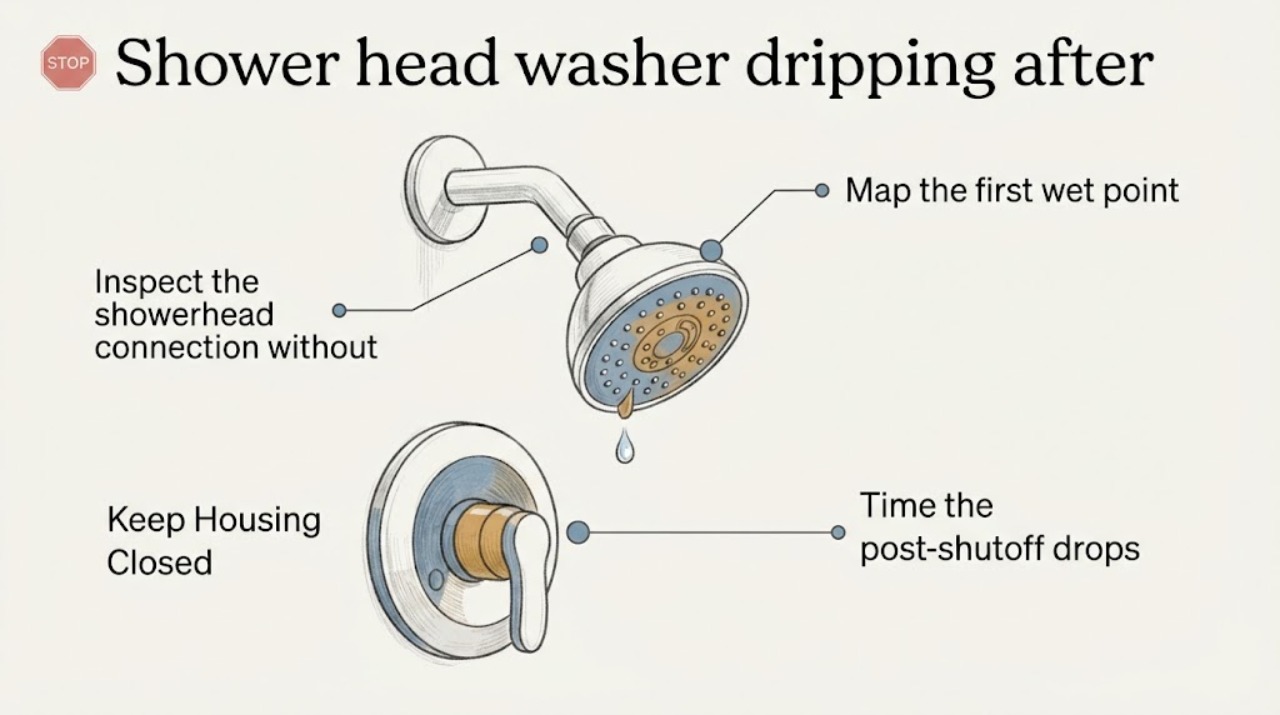
Shower head washer dripping after shutoff: What to Check and What to Do Next
First locate the water and separate a few residual drops from a continuing leak. Dry the showerhead face, the showerhead-to-arm or hose connection, the shower arm at the wall, the tub spout if present, and the floor.
-
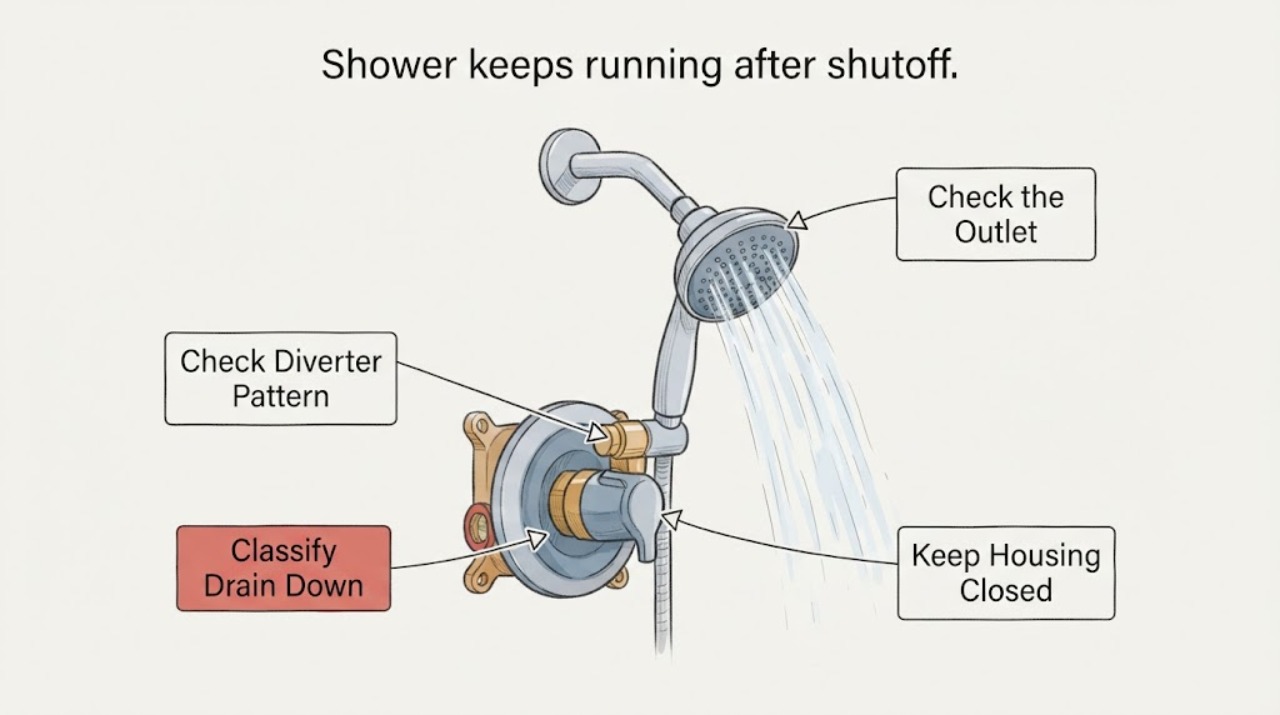
Shower keeps running after shutoff: find out whether it is normal drain-down or a valve leak
A few drips from a showerhead immediately after shutoff can be water draining from the head, but a continuing stream or water that keeps running long after shutoff is a leak. First note whether water comes from the showerhead, tub spout, handle, or wall and whether it continues with the control fully off.
-
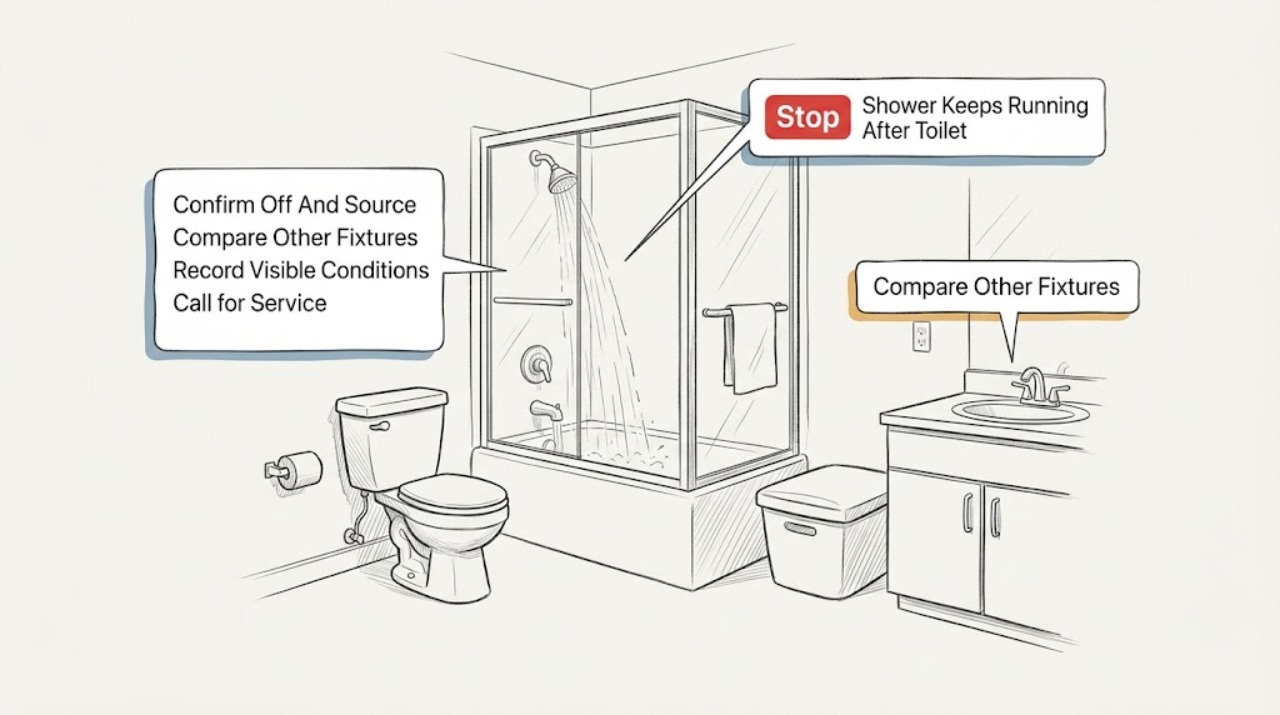
Shower Keeps Running After Toilet Repair: Isolate the Shower Valve and Supply
A shower that continues to run after the handle is in its normal off position is usually a shower-valve sealing, cartridge, handle-calibration, or concealed-leak problem; the earlier toilet visit may be related only if a shared shutoff, supply, or pressure condition changed, and timing alone does not prove the plumber caused it.
-
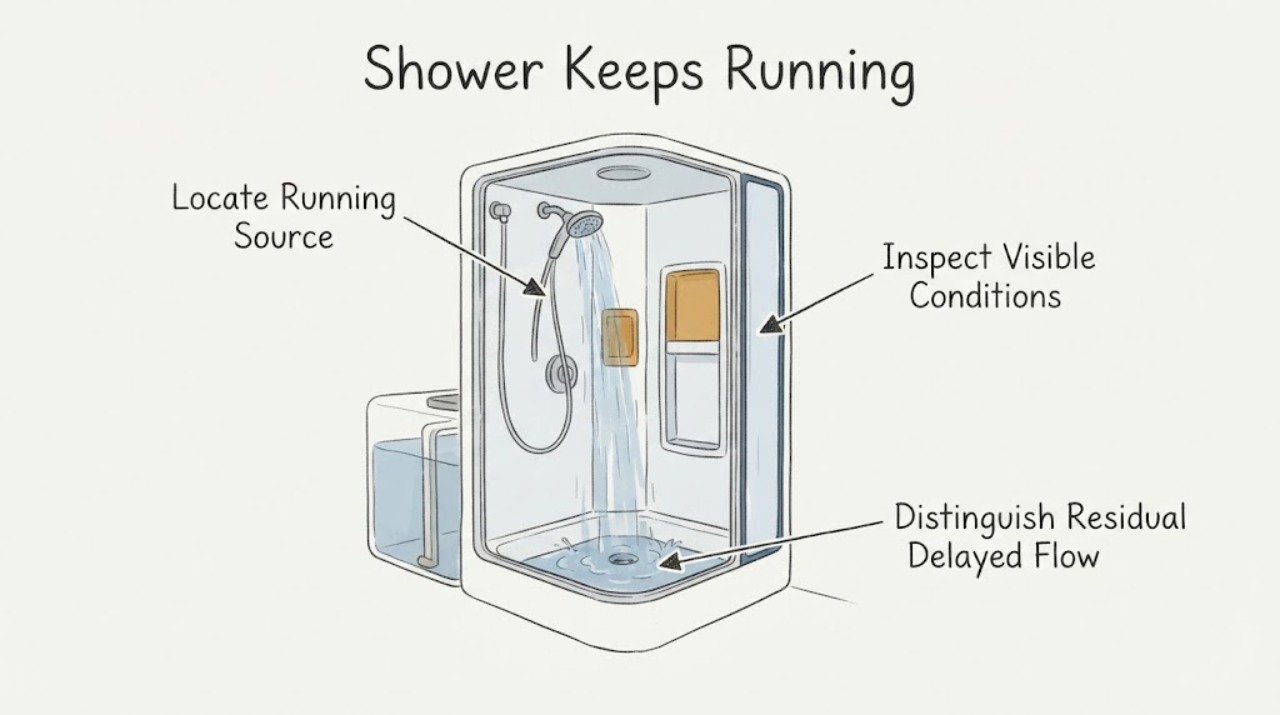
Shower Keeps Running: Separate the Valve, Tank, and Drain Causes
A shower that is described as running can mean water continues from the showerhead after the handle is off, the shower keeps flowing because a valve or local supply stop is not closing, or the sound is actually a water-heater tank refilling, a relief discharge, or a drain. First identify where water or noise is coming from and whether it stops when the shower control and, only if safely accessible, the local or main water shutoff are closed.
-
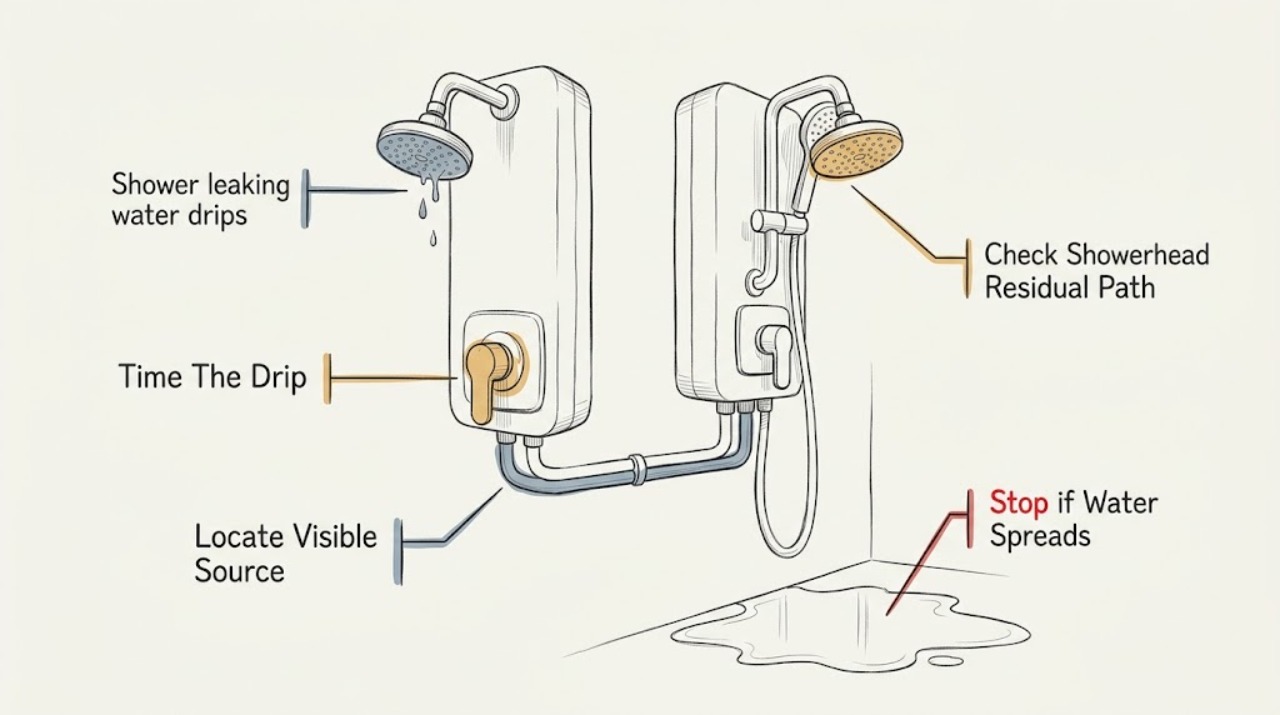
Shower leaking water drips with valve closed: What to Check and What to Do Next
A shower that keeps dripping after the valve is closed may only be draining water left in the showerhead, but a steady or recurring drip can indicate a worn cartridge, internal seal, valve, diverter, or a concealed leak. First note where the water appears and whether it stops within roughly 90 seconds.
-
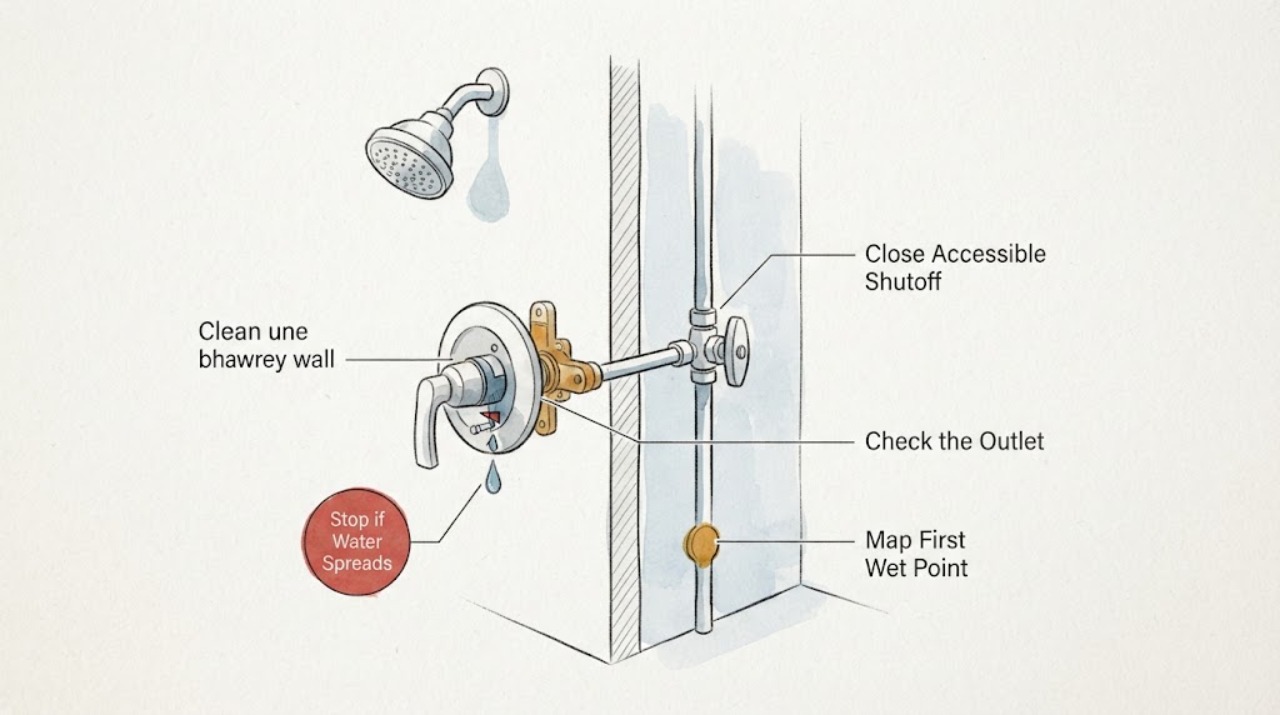
Shower leaking with an accessible shutoff: What to Check and What to Do Next
Use the accessible water shutoff first, then determine where and when the shower leaks. Close the supply stop without forcing it, briefly open the shower control to release residual pressure, and confirm whether the water stops or only slows.
-
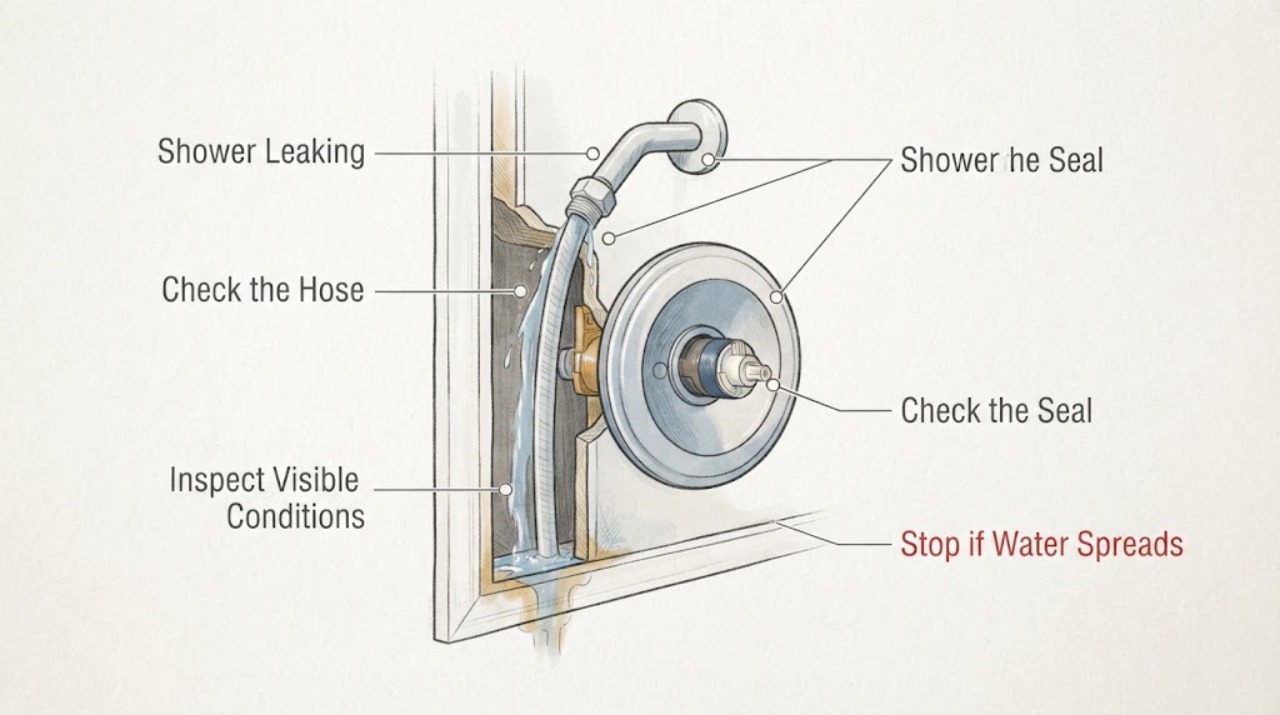
Shower Leaking: Wall or Trim Is Wet—What to Check and What to Do Next
A wet shower trim or wall does not by itself prove that the valve is leaking: water can splash onto the escutcheon, run along the handle, or condense on a cool surface. Dry the area, note exactly where moisture first returns, and test only from a safe position.
-
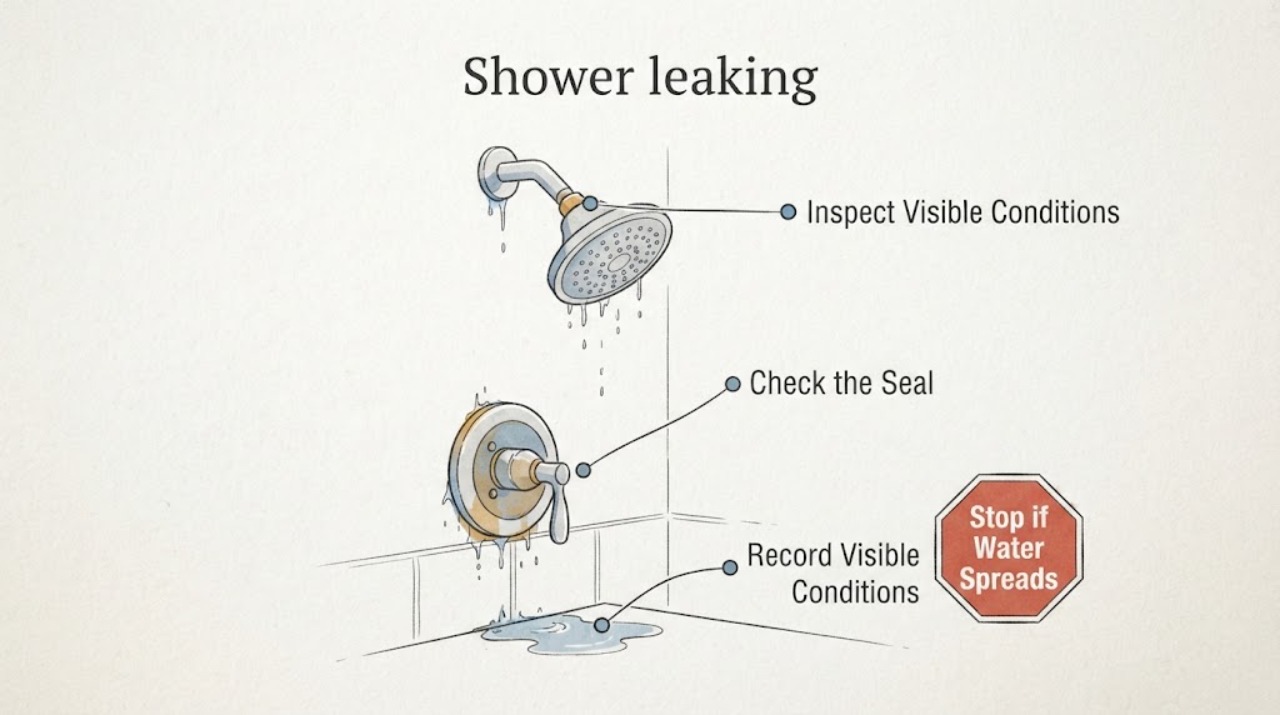
Shower leaking: What to Check and What to Do Next
First identify where and when the water appears: from the showerhead while the handle is off, around the handle or trim, from the tub spout while diverted, or behind the wall or onto the floor. A few visible drips can have a different cause from continuous flow or hidden moisture.
-
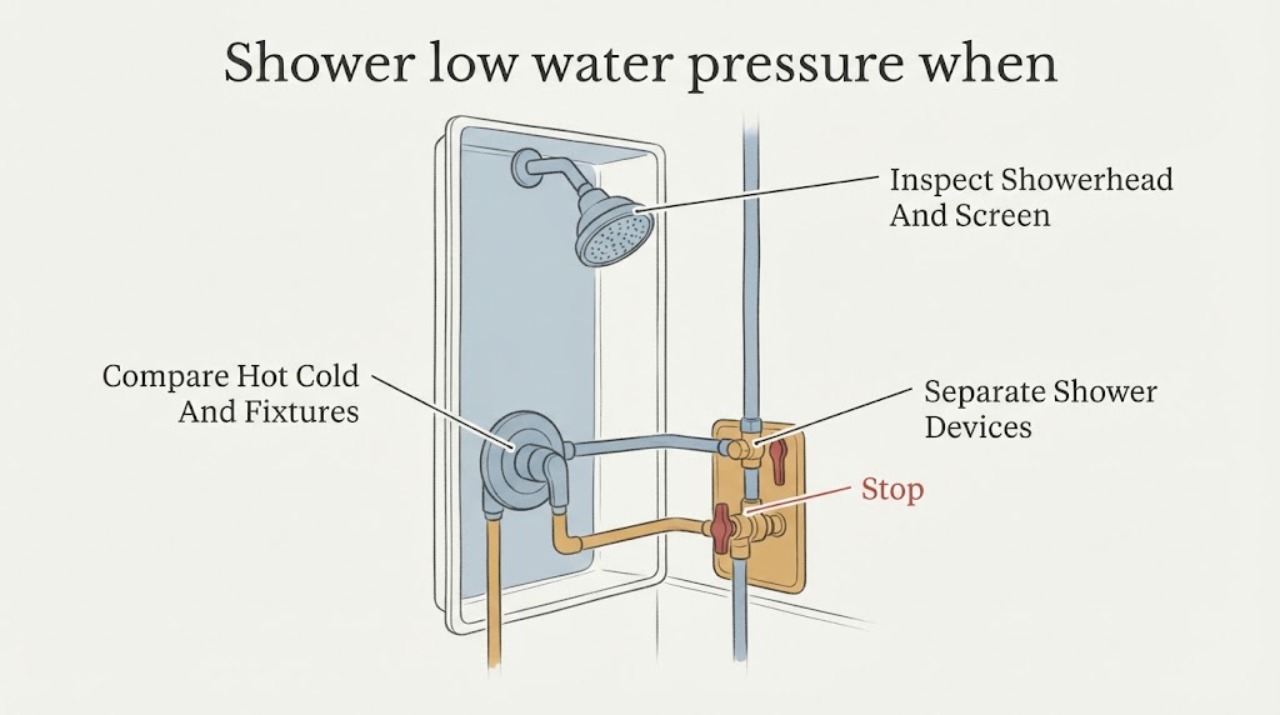
Shower low water pressure when hot and cold may differ: What to Check and What to Do Next
Compare the shower's hot and cold flow separately, then compare another shower device and another fixture before changing a part. If only hot or only cold is weak, the temperature-specific path points toward a partly closed check stop, inlet screen, balancing spool, cartridge, or supply on that side.
-
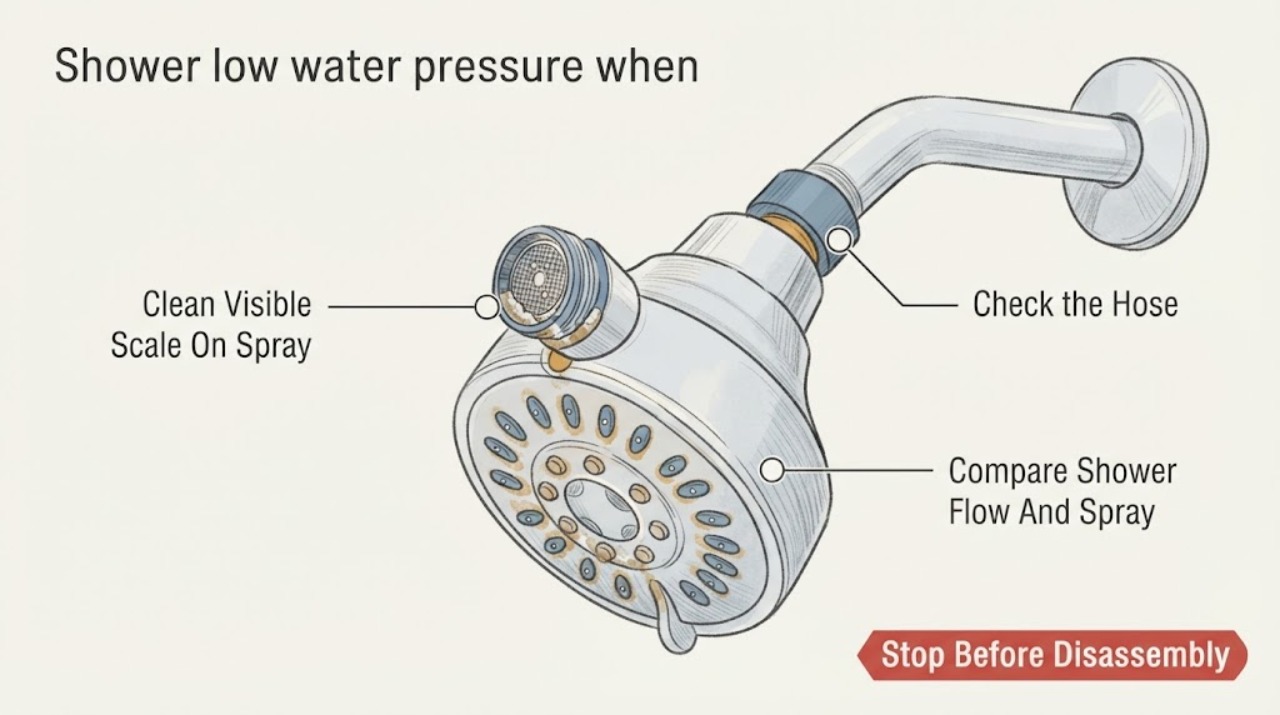
Shower low water pressure when the shower head has scale: What to Check and What to Do Next
Scale or other mineral debris can narrow the shower head spray holes, inlet screen, or flow path and make the shower feel weak. First compare this shower with another fixture and note whether every spray hole is affected or only a few.
-
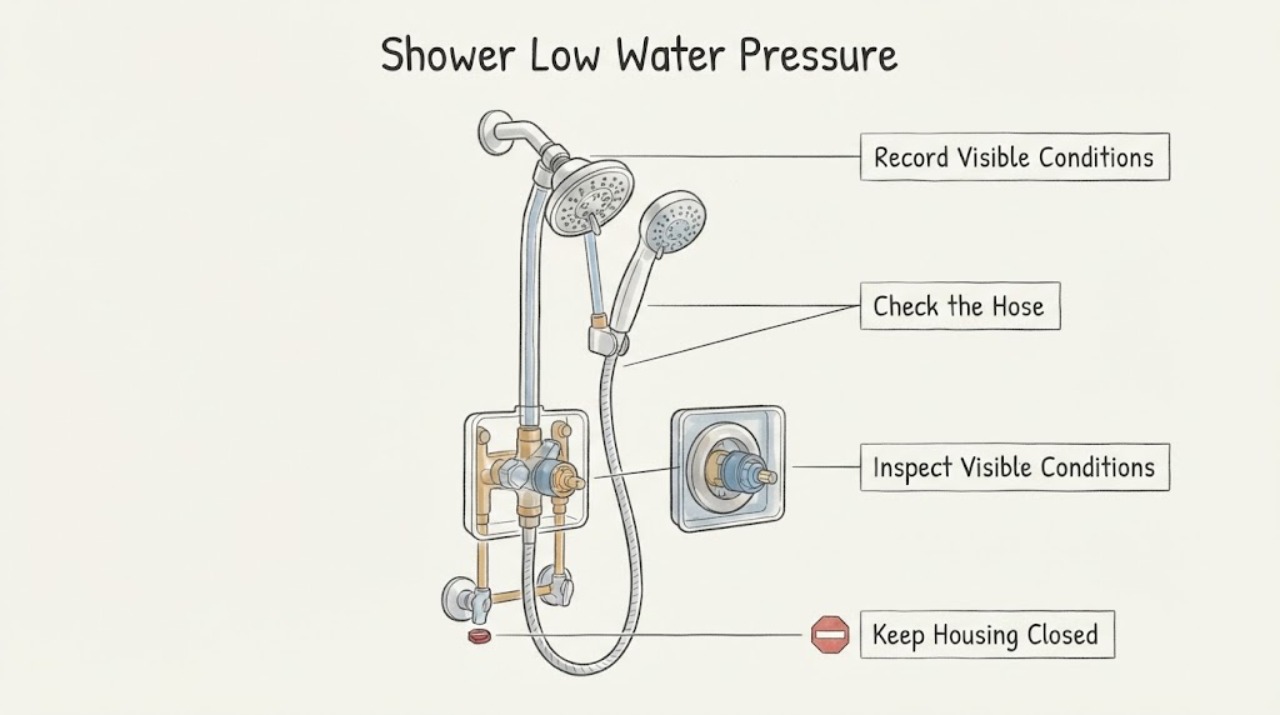
Shower Low Water Pressure: Other Fixtures May Flow Normally—What to Check and What to Do Next
If sinks and other fixtures have normal flow but the shower is weak, start at the shower device and the shower's own valve path rather than assuming the whole house has low pressure. Compare the showerhead, handheld, or body spray one at a time; inspect only accessible screens and nozzles according to the manufacturer's instructions; and, where the model instructions permit, briefly test flow with the shower device removed.
-
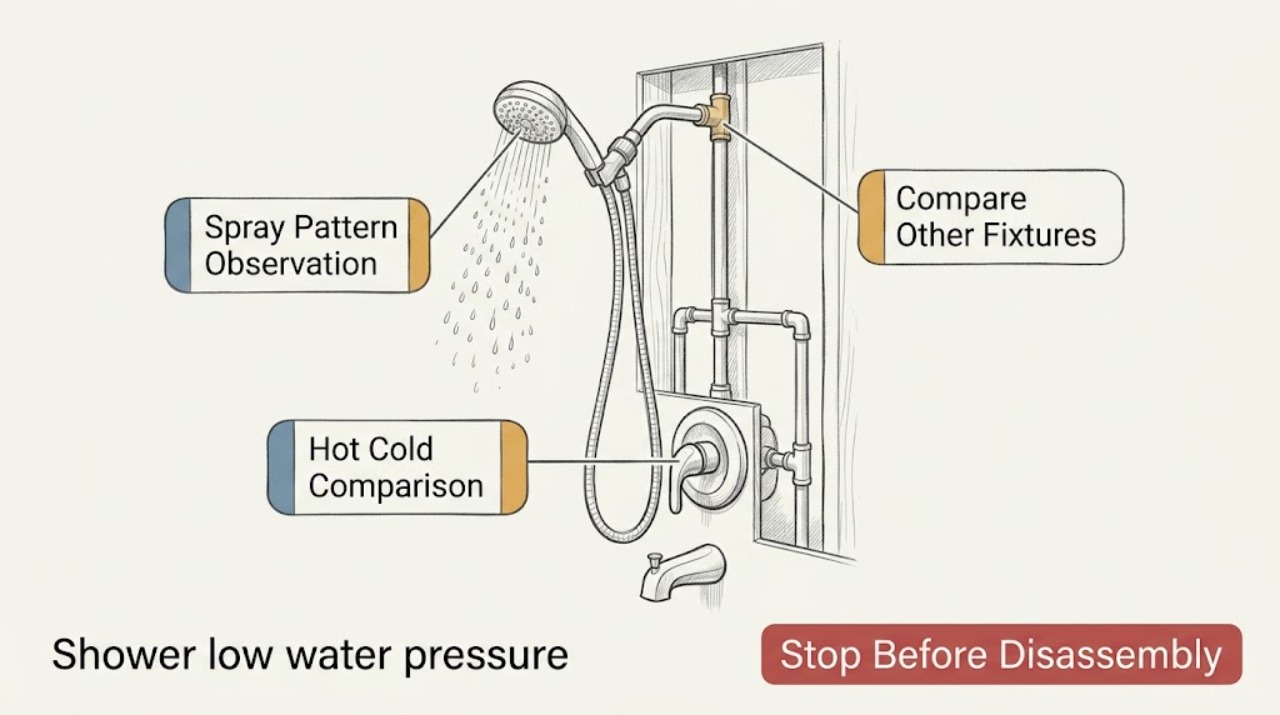
Shower low water pressure: What to Check and What to Do Next
Start by deciding whether the weak flow is limited to this shower or affects other fixtures. From a safe standing position, observe the spray pattern, compare hot and cold separately, note whether a tub spout or handheld works differently, and look for a visible kink, leak, or recent change.
-
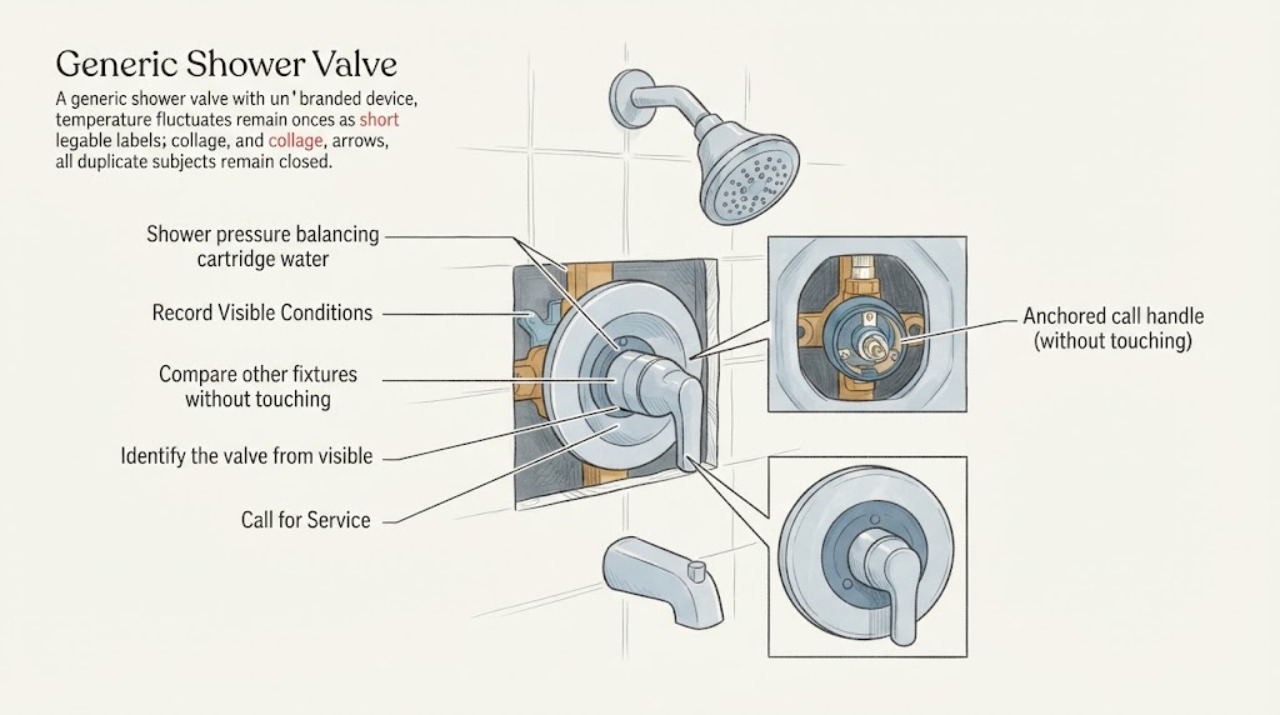
Shower pressure balancing cartridge water temperature fluctuates: What to Check and What to Do Next
If shower temperature swings hot and cold, first note whether the change occurs when another fixture runs, only at one handle position, or throughout the home. A pressure-balancing cartridge or spool may be involved, but supply pressure, a partially closed stop, a water-heater issue, or a different valve design can look similar.
-
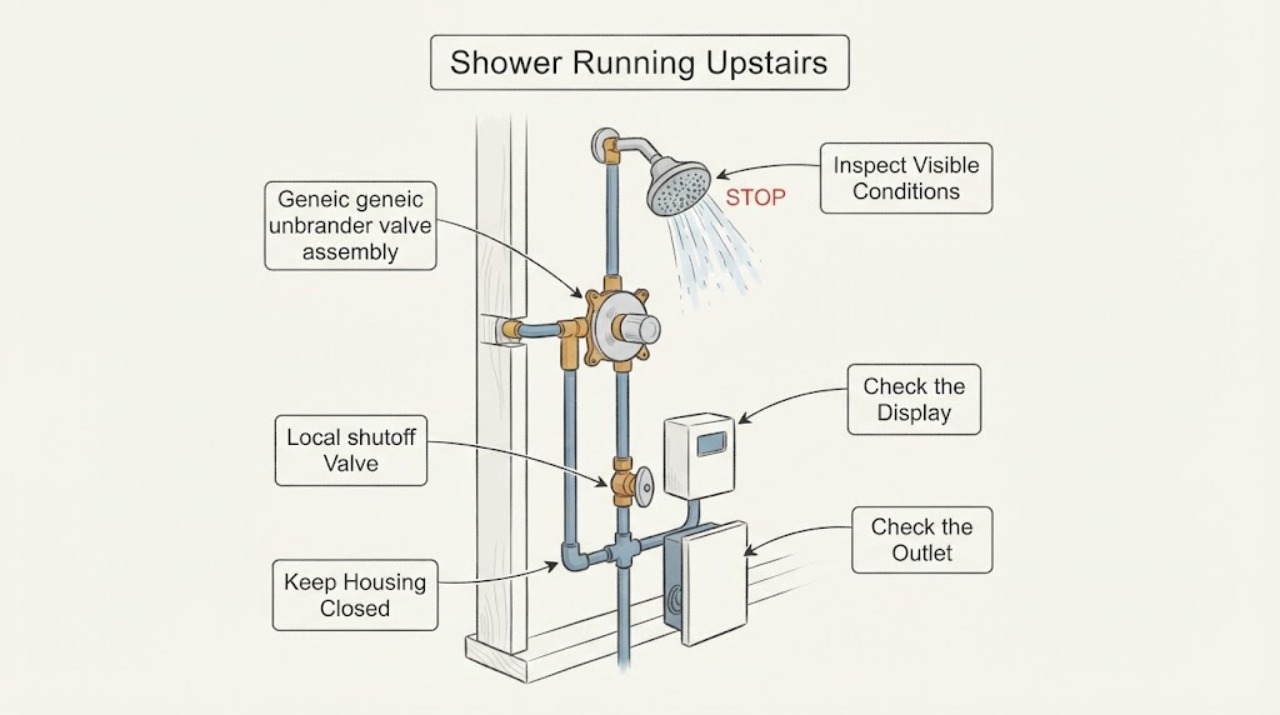
Shower Running Upstairs: No Water at Both Fixtures and Water Won't Stop
Treat this report as two separate observations that may have a common cause: both upstairs shower fixtures have no usable flow, while water is still escaping from an outlet, valve area, wall, ceiling below, or another part of the plumbing. Do not keep turning a stuck handle or remove trim to find the valve.
-
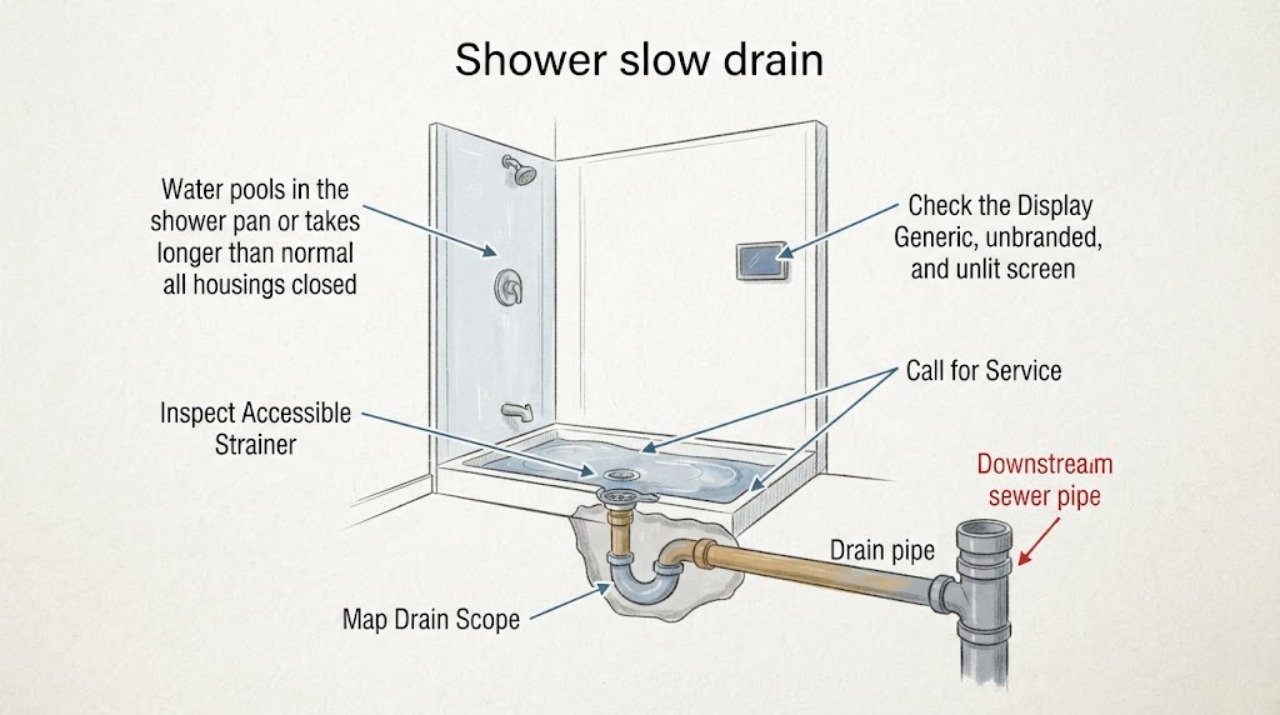
Shower slow drain: safe checks before calling a plumber
Stop adding water while the shower is pooling, then determine whether the symptom is limited to this shower or whether a sink, toilet, or washing machine also drains slowly or sends water toward the shower. With gloves and the water off, remove only the accessible strainer and visible hair or debris; do not remove a fixed fitting or put a hand into contaminated water.
-
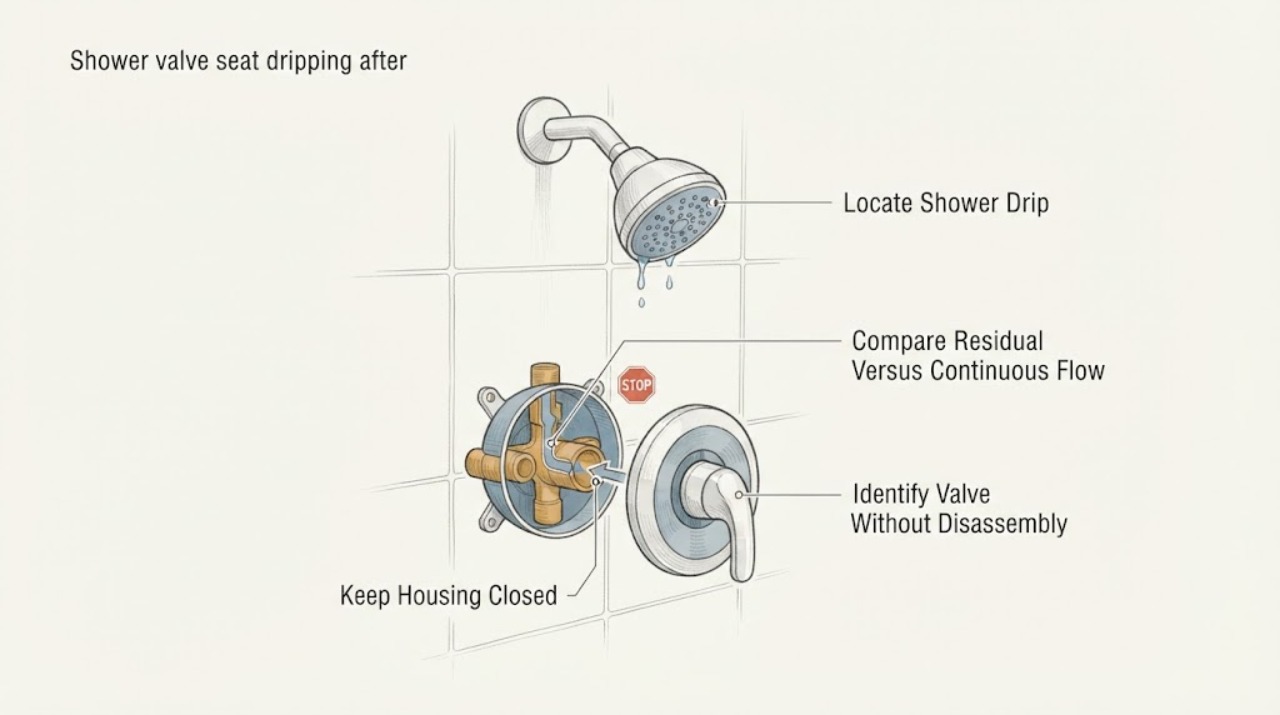
Shower valve seat dripping after shutoff: What to Check and What to Do Next
A shower that drips after shutoff usually has water passing the valve's internal sealing parts, but the visible drip does not identify the correct cartridge, seat, washer, or valve body. Confirm that the water is coming from the shower outlet rather than the handle, trim, wall, or tub diverter, note whether it is a few residual drops or a continuous stream, and identify the faucet brand and model from existing markings or paperwork.
-
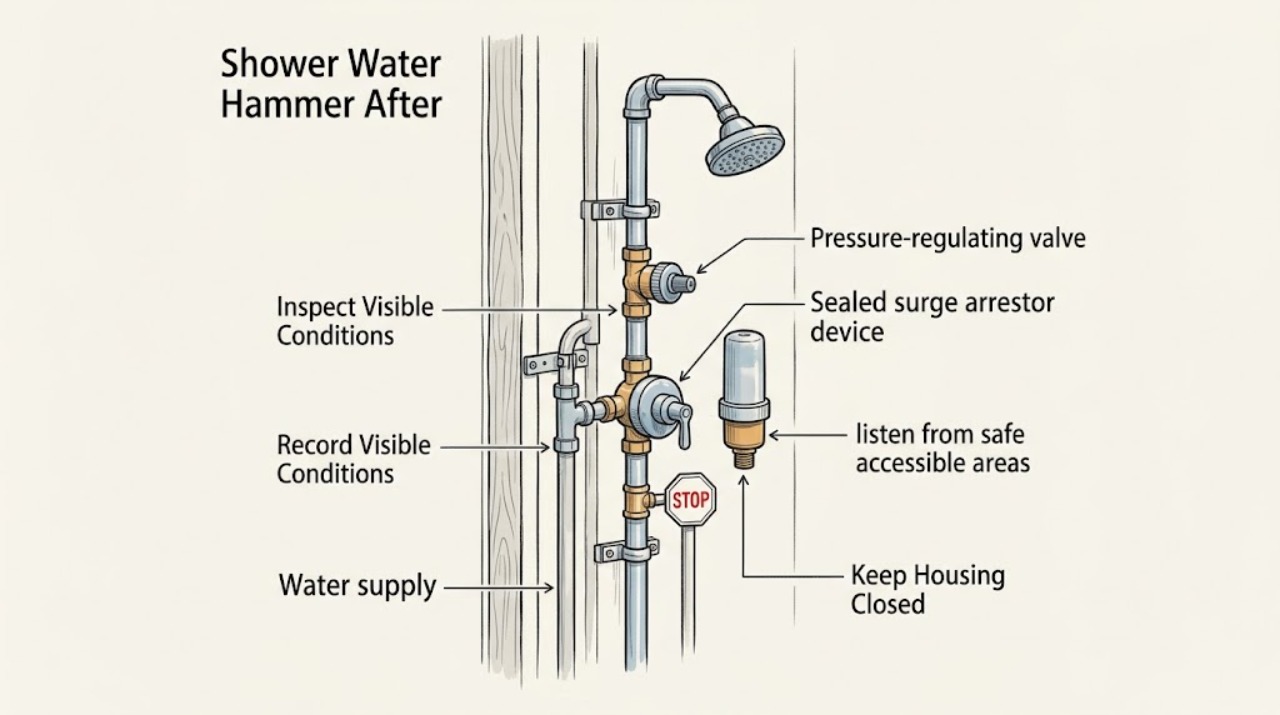
Shower Water Hammer After the Unit Above Runs Water
A bang or knock in your shower area only after the unit above finishes a shower or bathroom faucet use is often a pressure wave from a quick-closing valve, but the sound may also be pipe movement where a shared riser passes through the building. First confirm the exact timing, location, and whether your own water use can reproduce it.
-
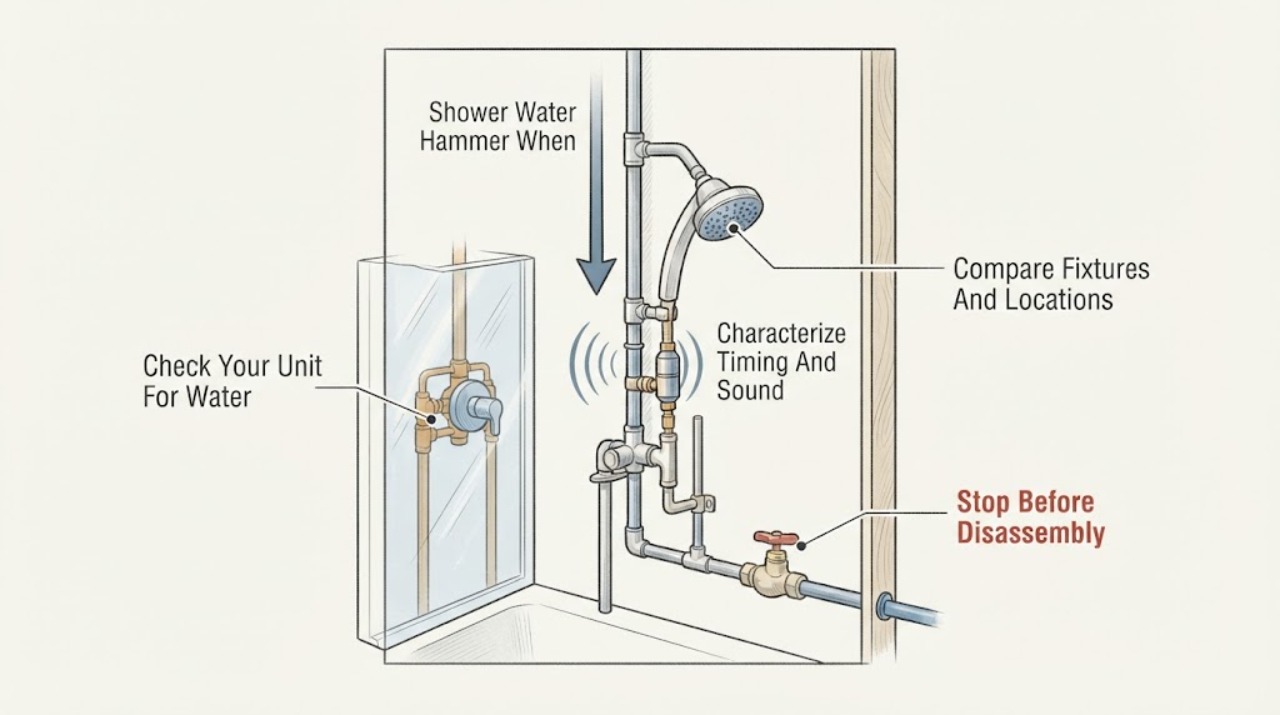
Shower Water Hammer When an Upstairs Neighbor Uses Their Shower
A bang, knock, or vibration in your ceiling or walls when an upstairs neighbor uses a shower is often a water-flow or pipe-support noise rather than an immediate emergency. Water hammer occurs when moving water changes speed abruptly, commonly as a quick-closing valve stops flow; a shared riser can transmit that pressure wave and vibration between units.
-
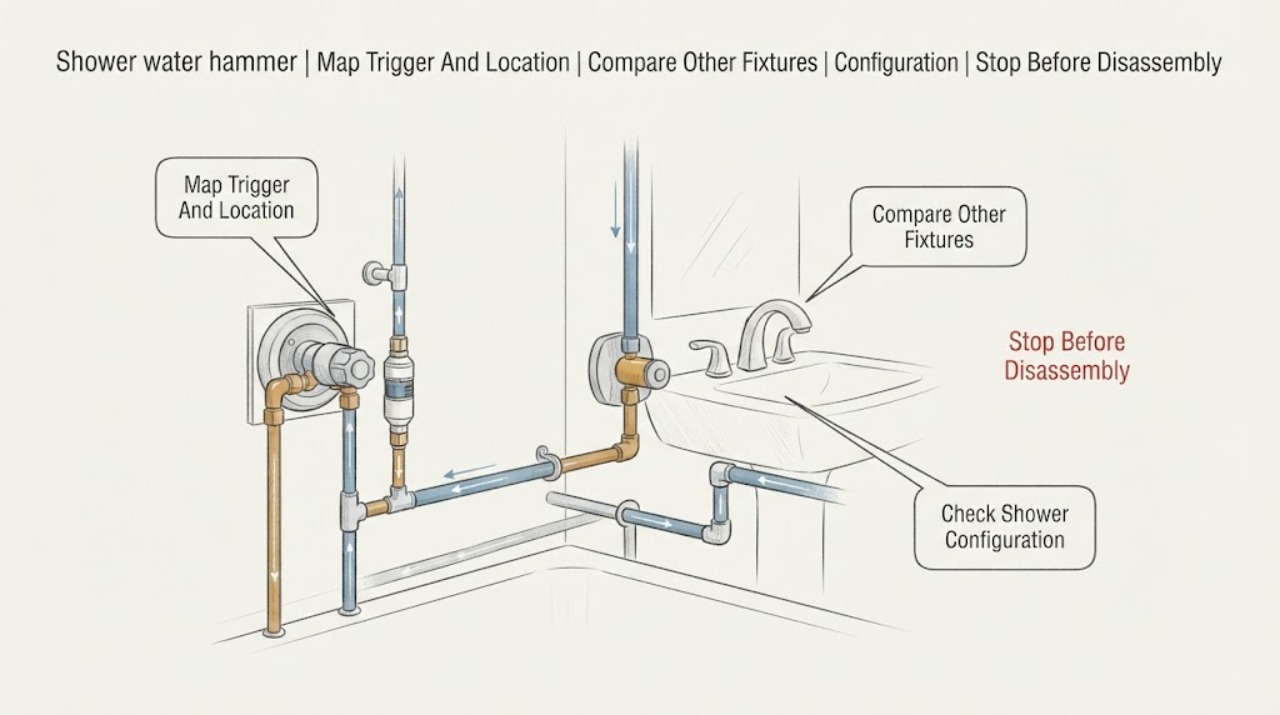
Shower water hammer: locate the shock and choose the safe next step
A bang or thump when the shower valve closes is usually a pressure shock from a sudden change in water flow, but the safe fix depends on where and when it occurs. Close the shower valve normally and note whether the sound is at the shower, in the wall, or elsewhere, whether it happens on hot, cold, or both supplies, and whether pipes move, leak, or vibrate.
-
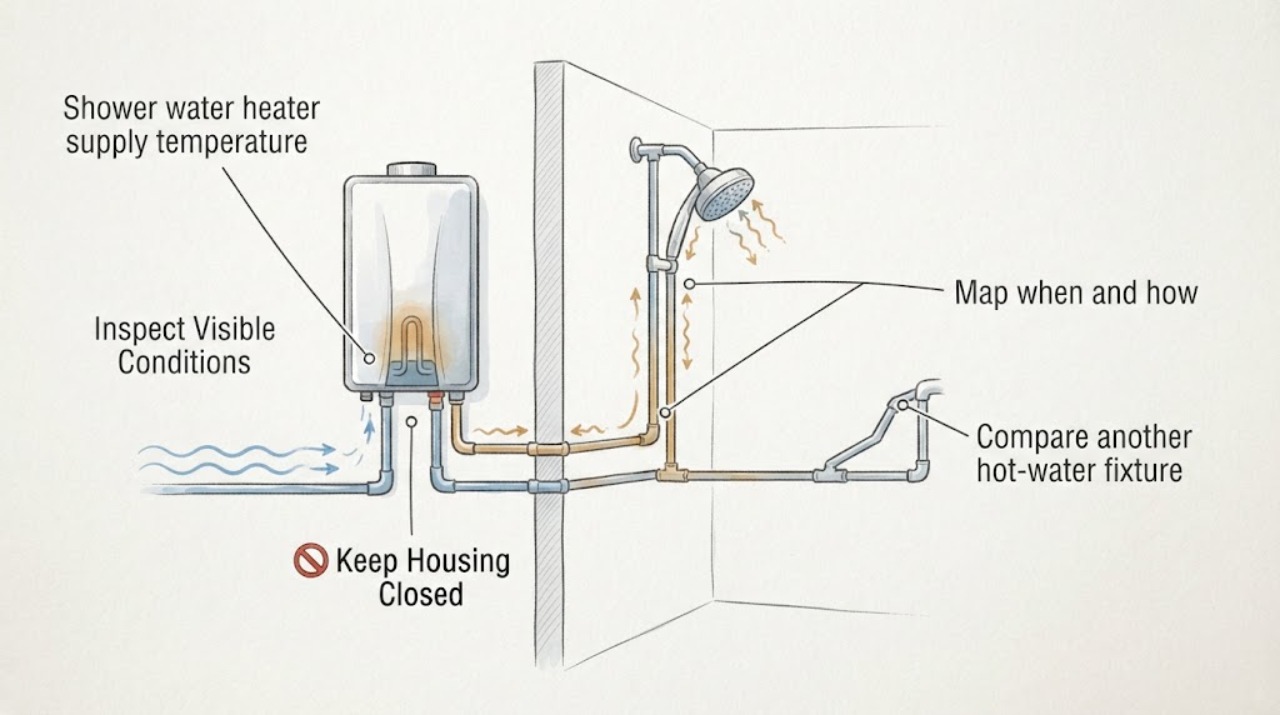
Shower water heater supply temperature fluctuates: What to Check and What to Do Next
First determine whether the temperature changes only at this shower or at other hot-water fixtures, and whether the change follows another water draw or the water heater cycling. A shower pressure-balancing or thermostatic cartridge, restricted flow, changing hot-water supply, mixing control, or a plumbing fault can produce similar symptoms.
-
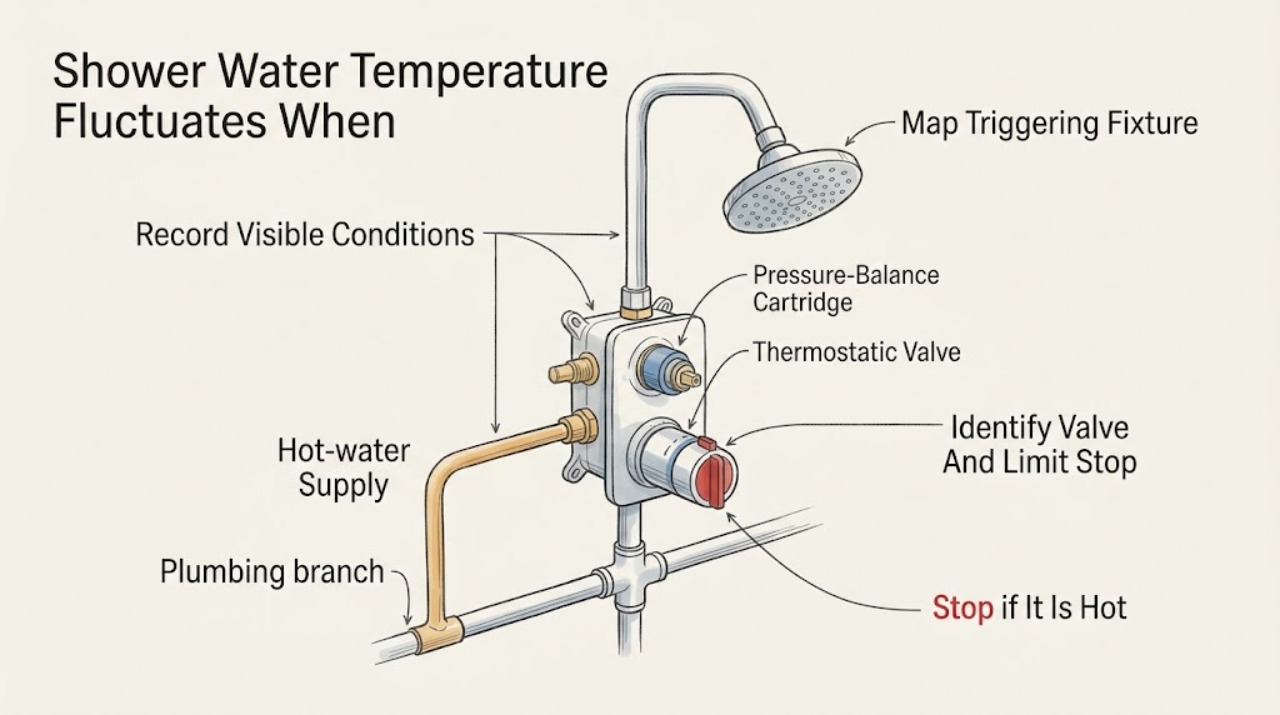
Shower Water Temperature Fluctuates When Another Fixture Runs: What to Check and What to Do Next
When shower temperature changes as a toilet, sink, dishwasher, or washer runs, the immediate trigger is usually a change in hot or cold water flow or pressure on the shared plumbing system. Pressure-balancing and thermostatic shower valves are designed to compensate, but a valve, cartridge, supply imbalance, restricted showerhead, hot-water capacity, or plumbing layout can still cause a noticeable change.
-
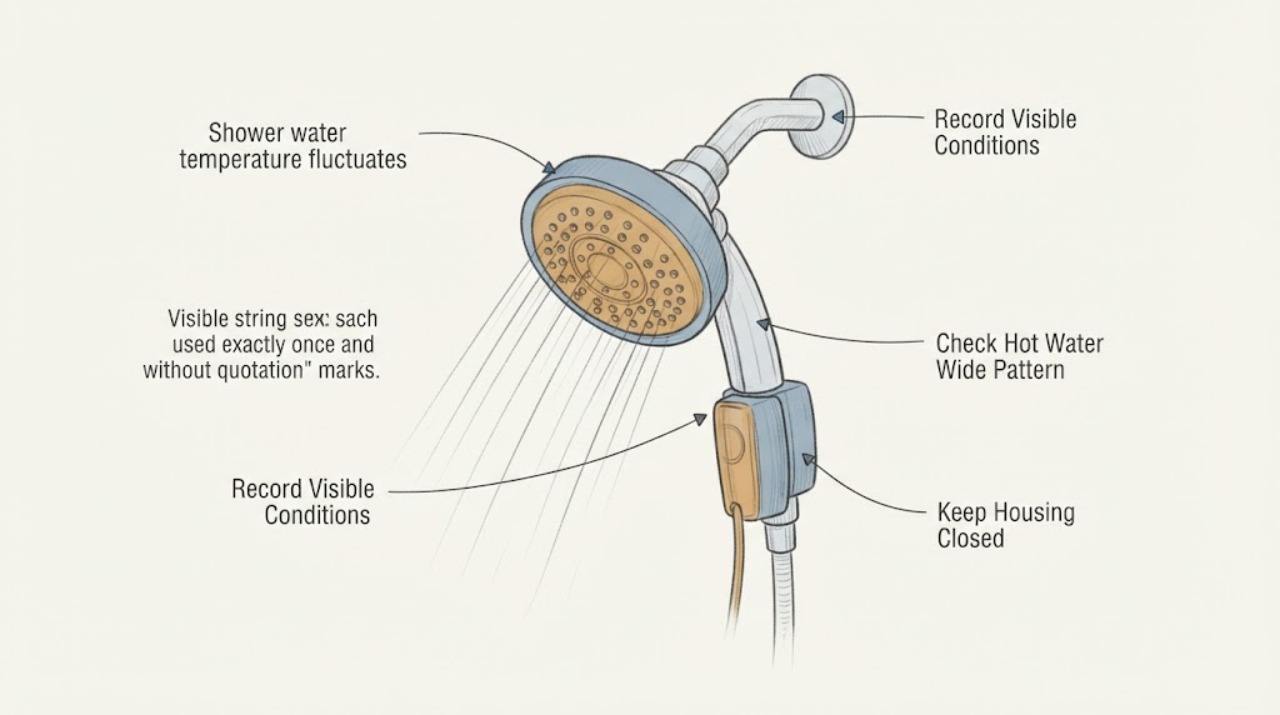
Shower water temperature fluctuates with normal flow: What to Check and What to Do Next
A shower can keep a normal-looking flow while its temperature swings because the hot and cold supply pressures or temperatures are changing, the pressure-balancing or thermostatic valve is sticking, the temperature limit is misadjusted, or the valve and showerhead are not compatible. First observe whether the change happens when another fixture runs, whether nearby hot water changes too, and whether the shower uses a pressure-balancing or thermostatic control.
-
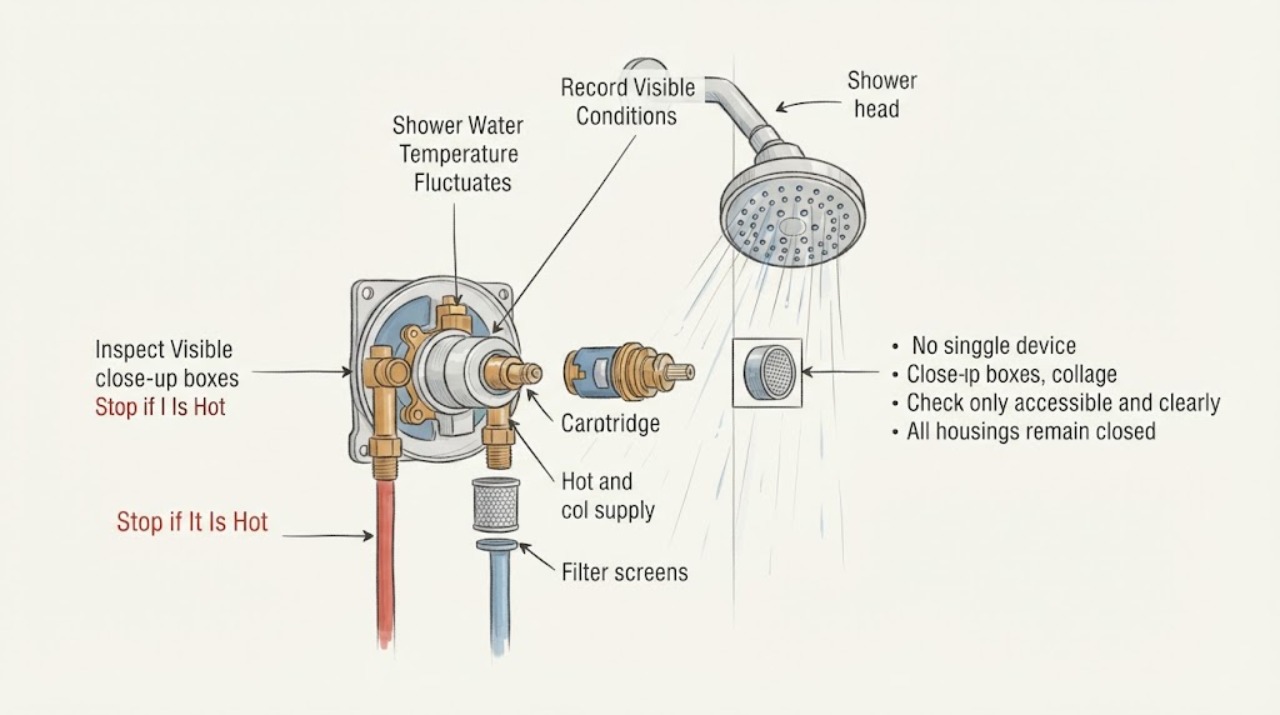
Shower Water Temperature Fluctuates: Hot and Cold Mix Is Inconsistent—What to Check and What to Do Next
A shower that swings hot and cold can be reacting to changing hot or cold supply pressure, a partially closed stop, blocked filter or valve passage, a miscalibrated or worn cartridge, or a plumbing/installation condition. First note whether the temperature changes when another fixture runs, whether only hot or cold is affected, and whether flow changes at the same time.
-
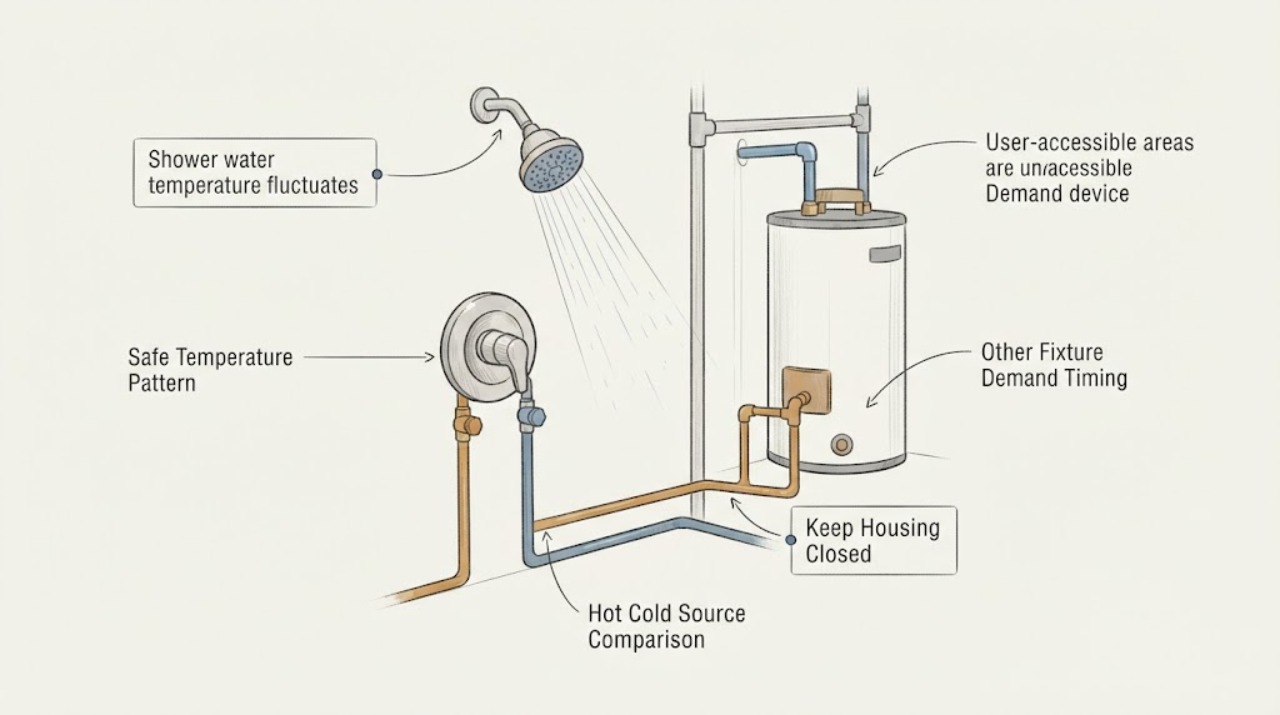
Shower water temperature fluctuates: What to Check and What to Do Next
Treat a sudden hot-to-cold or cold-to-hot change as a burn-safety problem first. Stop using the shower if the temperature is unsafe or cannot be controlled.
-
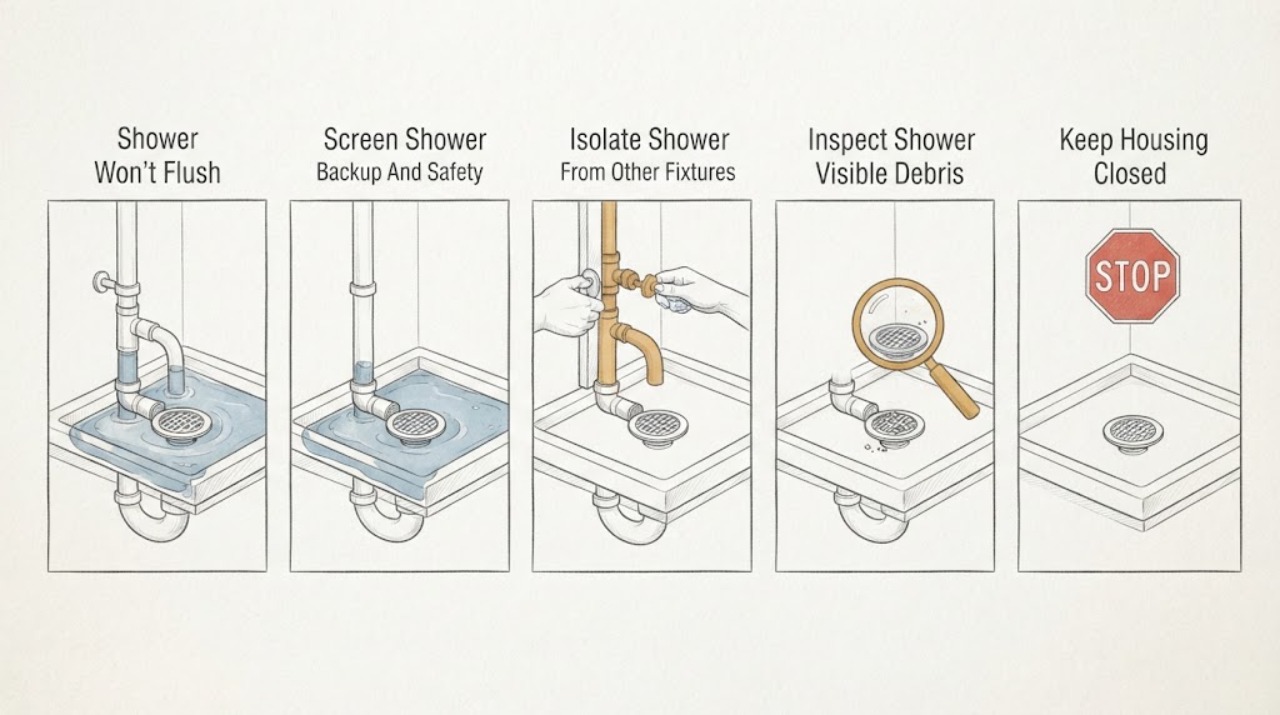
Shower Won't Flush: Check the Drain, Isolate a Backup, and Know When to Call
A shower does not flush like a toilet, so “shower won't flush” usually means the shower drain is slow, holding water, or backing up. Stop adding water and look for standing water, a sewage smell, gurgling, or water rising at another fixture.
-
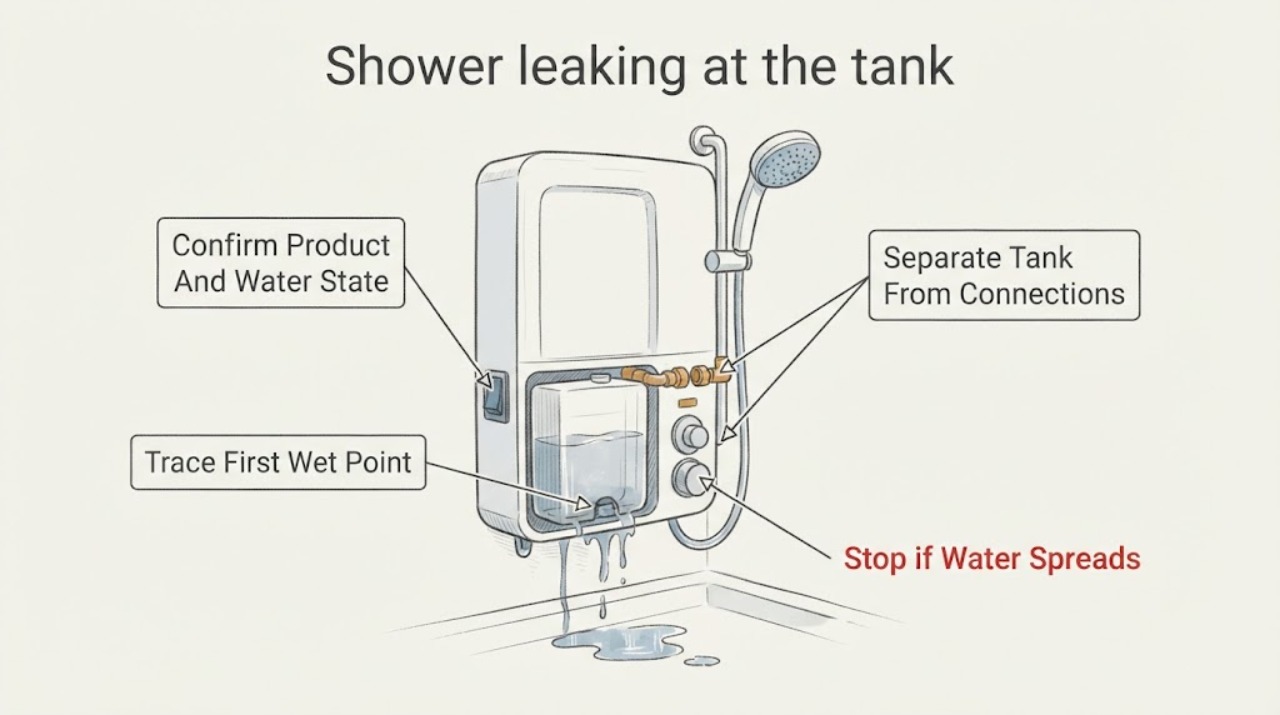
Whirlpool shower leaking at the tank: Find the first wet point
The term Whirlpool shower can describe a shower supplied by a Whirlpool-branded water-heater tank, so first confirm the model label and find the first wet point rather than assuming the tank shell is leaking. Dry the visible area, then check whether moisture returns at the tank's inlet or outlet, drain valve, temperature-and-pressure relief discharge, nearby supply pipe, shower valve or trim, drain, or wall or ceiling.