
On this page
Start here
Quick answer
A few drops from a showerhead immediately after the handle is closed can be water draining from the showerhead or shower arm. Dripping that continues, returns after the outlet has drained, or comes from around the handle, trim, tub spout, or wall is more consistent with a valve sealing, cartridge, installation, or concealed-leak problem. Dry the outlet and trim, watch exactly where fresh water appears, and note whether the shower is a new installation or worked normally before the drip began. Clean only the visible showerhead spray area if the manufacturer's instructions allow it; do not force the handle, remove a valve cartridge, open the wall, or work on the valve without shutting off the water. A continuous leak, water behind the trim or wall, sudden increase, or water damage calls for a qualified plumber.
Before you begin
Safety first
- Cartridge or valve removal, concealed connection repair, pressure-control adjustment, and any work behind the wall require water isolation and appropriate plumbing skill. The user can observe the drip location, timing, model markings, and wider pressure clues without opening the valve.
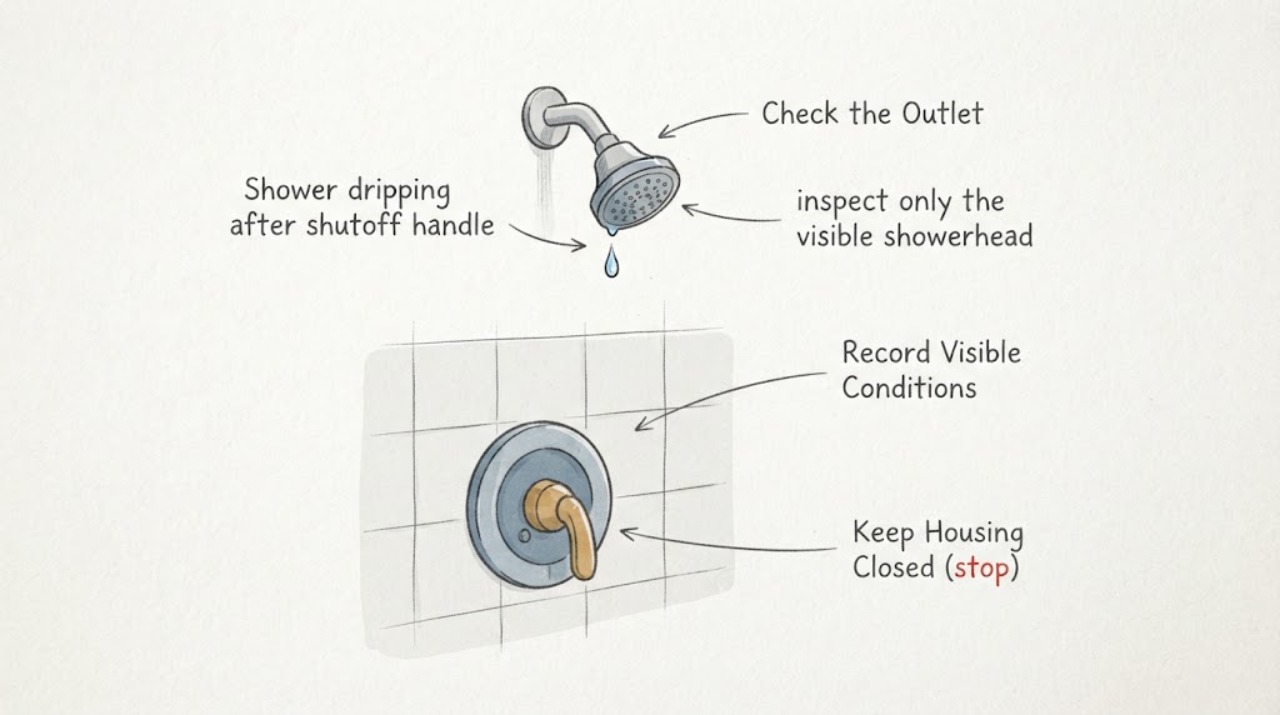
Work through in order
Diagnostic checks
Use only checks that match the exact appliance or system and its official guide.
-
Check 1
Close the shower handle normally, dry the showerhead outlet with a clean cloth, and watch for where fresh water appears and whether the drops taper off or continue; do not repeatedly cycle the handle.
Expected result: A few drops drain from the showerhead and stop, or fresh water continues from the showerhead after it has drained.
Next step: If the drip continues, proceed to identify its exact location and faucet model; do not assume that a showerhead replacement will correct a valve leak.
Why this matters
Why: A short-lived outlet drip can be residual water in the showerhead or arm. Continued fresh dripping keeps an internal valve, cartridge, debris, or pressure issue in consideration.
-
Check 2
With the handle closed and the area dry, inspect only the visible showerhead, tub spout if present, handle, escutcheon edge, and wall surface for the first place that becomes wet; do not remove trim or probe the wall.
Expected result: Water is only at the showerhead, appears around the handle or escutcheon, emerges from a tub spout, or makes the wall or ceiling damp.
Next step: Keep the shower unused if water reaches the wall or trim cavity and arrange a plumber. For an outlet-only drip, continue with the timing, installation-history, and model checks without opening the valve.
Why this matters
Why: An outlet-only drip can involve residual water or a valve seal. Water at the handle, trim, tub spout, or wall suggests a different seal or concealed connection path and can cause hidden damage.
-
Check 3
Record the faucet brand and model if visible, the handle style, and whether dripping began immediately after installation or only after the shower had operated normally for a while; use the exact manual for any model-specific guidance.
Expected result: The drip began on a new installation, began after a previously dry period, or the faucet model and valve family cannot be identified.
Next step: For an unidentified valve or persistent leak, give the plumber the photos and history rather than ordering a generic cartridge. Follow only the exact manufacturer's instructions for a permitted user check.
Why this matters
Why: A new-installation drip can relate to handle or cartridge positioning and installation details. A new symptom on an existing shower makes a worn or contaminated sealing cartridge more likely. An unidentified valve prevents safe part selection.
-
Check 4
If the showerhead instructions permit it and the head can be handled without force, clean only the visible spray openings and check whether water drains slowly from the head; do not disassemble the in-wall valve or use a tool on a stuck connection.
Expected result: Mineral debris is visible at the spray openings, the head drains slowly and the exposed outlet then stays dry, or dripping continues at the exposed outlet after cleaning or draining.
Next step: If the drip remains, stop treating the showerhead as the cause and arrange valve diagnosis. Do not remove the cartridge or turn water back on with an opened valve unless a qualified person is handling the repair.
Why this matters
Why: A restricted showerhead can retain water and make post-shutoff dripping last longer. Continued dripping at the exposed outlet after the head is clear makes a valve or cartridge sealing issue more likely.
-
Check 5
Without dismantling anything, note whether other faucets or shower fixtures also drip, whether pipes bang when water stops, or whether new water spots appear near plumbing; do not adjust a pressure control based on this observation alone.
Expected result: Only this shower drips, several fixtures drip or bang, or moisture appears at a wall, ceiling, or plumbing access area.
Next step: Tell a qualified plumber which pattern is present. Isolate the shower or the local water supply if the concealed leak is growing and it can be done safely; do not open the wall as a diagnostic experiment.
Why this matters
Why: A single shower symptom keeps a local head, cartridge, or valve issue more likely. Widespread dripping or water hammer can indicate a pressure-related plumbing condition, while wall or ceiling moisture raises concern for a concealed leak.
Use your observations
Decision map
Find the observation that best matches what you see, then follow the next safe action.
-
PATH 01Next step
What you see
Only a small amount of water comes from the showerhead immediately after shutoff, tapers off, and the exposed outlet remains dry afterward.
Do this next
Monitor the same symptom after normal use and clean only the visible head as its instructions allow. Arrange service if the drip becomes continuous, returns after draining, or appears elsewhere.
Why this path and its safety boundary
Why it matters: Residual water draining from the showerhead or arm is more likely than a valve that continues feeding the outlet.
-
PATH 02Next step
What you see
Fresh water continues from the showerhead with the handle closed, returns after the outlet has drained, or reaches a tub spout when it should be off.
Do this next
Keep the shower out of use if the flow is persistent and arrange qualified plumbing diagnosis. A cartridge is only a conditional possibility after the faucet model and valve type are confirmed.
Why this path and its safety boundary
Why it matters: The shower valve's cartridge or other internal sealing path is more likely than simple retained water; mineral debris and pressure can also contribute.
-
PATH 03Next step
What you see
Water first appears around the handle, escutcheon, wall, ceiling, or another concealed edge rather than only at the showerhead.
Do this next
Stop using the shower and arrange a plumber, especially if the damp area grows or the wall is soft or discolored. Do not remove trim or open the wall while the valve remains under pressure.
Why this path and its safety boundary
Why it matters: A seal, retaining, valve connection, or concealed leak is more likely and can damage the wall even when the showerhead drip is small.
-
PATH 04Next step
What you see
The drip began immediately after installation or a handle/cartridge repair, versus beginning only after an existing shower had been dry when closed.
Do this next
Use the exact manufacturer's installation guidance or have a plumber verify the installation and valve. Do not force the handle or order a generic replacement based only on the drip.
Why this path and its safety boundary
Why it matters: A new-installation symptom can reflect handle calibration, cartridge seating, or installation details. A delayed symptom makes a worn or contaminated cartridge more likely, but neither identifies a part without the model.
-
PATH 05Next step
What you see
Several fixtures drip, pipes bang when water stops, water spots appear, the leak is rapidly increasing, or water is reaching electrical equipment or a ceiling below.
Do this next
Stop using the affected fixtures and arrange prompt qualified plumbing service. If water is near electrical equipment, keep clear and isolate utilities only if safe; use emergency assistance for an active flooding or electrical hazard.
Why this path and its safety boundary
Why it matters: A pressure-related condition or concealed supply leak may be affecting more than the shower outlet and requires prompt plumbing attention.
Helpful context
Understand the symptom
First decide whether it is draining or still being fed
Water held in a showerhead and arm can come out after the valve closes. That should taper off rather than continue as a fresh, steady supply. Dry the spray face and nearby trim, then watch where the next water appears. A drip that persists at the exposed outlet after the shower has drained points toward the valve or cartridge; water around the handle or behind the trim follows a different path.
The leak location changes the diagnosis
A showerhead-only drip can be residual water, mineral-restricted drainage, or an internal valve that is not sealing. Water from the handle, escutcheon, tub spout, or wall can indicate a seal, retaining, connection, or concealed valve problem. Do not assume that replacing the showerhead will repair a leak that starts behind the trim.
New installation and old installation are different clues
A drip present from the first use can follow handle or cartridge positioning and installation details. A shower that was dry when closed and later begins dripping makes wear, debris, or a deteriorating cartridge more likely. The exact faucet model and valve family still determine the permitted repair and part; generic cartridge names are not enough.
Look for a plumbing-wide pressure pattern
If several fixtures drip, pipes bang when a fixture closes, or new water spots appear, the shower may be showing a broader pressure or concealed-leak condition. Do not adjust a pressure-reducing valve or open the wall as a first step. Give the plumber the shower symptom and the other observations so the supply and fixture can be assessed together.
Safety boundary
Stop conditions
- Do not force a shower handle, remove an in-wall cartridge, loosen a retaining nut, open the wall, or turn water back on after dismantling the valve unless the exact procedure is being handled by a qualified person with the water supply safely isolated.
- Keep the shower unused and arrange qualified plumbing service for continuous dripping, water around the handle or wall, a growing damp area, an unidentified valve, or a leak that began after a repair and cannot be verified from the exact manual.
- If water is rapidly flooding, reaching electrical equipment, or damaging a ceiling or wall, keep clear, isolate the water only if safe to do so, and use emergency help for an immediate safety hazard.
Only after diagnosis
Potential parts
- shower valve cartridge
Consider this only when fresh water continues from the outlet with the handle closed, the faucet model and valve family are confirmed, and a qualified diagnosis or exact manufacturer procedure supports a cartridge issue.
Cartridges are model- and valve-specific; confirm the exact faucet identification and manufacturer's fit information before selecting any part.
When checks do not resolve it
Need a professional?
Safety scope: Cartridge or valve removal, concealed connection repair, pressure-control adjustment, and any work behind the wall require water isolation and appropriate plumbing skill. The user can observe the drip location, timing, model markings, and wider pressure clues without opening the valve.
Common questions
FAQ
Is a small drip after shutting off the shower always a leak?
Not always. Water retained in the showerhead or arm can drain briefly after shutoff. Dry the outlet and watch whether fresh water continues after it has drained. Persistent dripping or water that appears around the handle, trim, tub spout, or wall needs further diagnosis.
What usually causes a shower to keep dripping with the handle closed?
A valve cartridge or another internal sealing path is a common possibility, but debris, installation or handle positioning, pressure, and a concealed leak can produce related symptoms. The faucet model and exact leak location are needed before selecting a part.
Should I replace the showerhead to stop a post-shutoff drip?
Only if the evidence points to retained water or restricted drainage in the head. If fresh water continues from the exposed outlet after the head has drained or been cleaned as directed, the valve or cartridge remains in consideration and a showerhead change may not solve it.
Why did my shower start dripping after working normally for months?
A delayed symptom can make wear, debris, or a deteriorating cartridge more likely than an initial handle-position issue. It can still be a concealed leak or pressure-related problem, so note the location and wider plumbing symptoms before arranging service.
When should a plumber handle a shower drip?
Arrange service for a continuous drip, water around the handle or behind the trim, a growing wall or ceiling spot, an unidentified valve, a leak after a repair, or any symptom accompanied by widespread dripping or water hammer. Do not open the wall or remove the cartridge while the valve is under pressure.
Read the exact guide
Official sources
- Shower Faucet: Leaking- Standard ValveMoen Solutions · Moen Standard valve system; cartridge identity and repair steps are specific to that valve family
- MultiChoiceDelta Faucet Company · Delta MultiChoice valve installation and maintenance document; exact valve and cartridge details vary by model
- Shower Faucet: Leaking-M-Core 4 Series ValveMoen Solutions · Moen M-Core 4 Series shower valve; model-specific procedures must not be generalized to other valves
- Water Pressure Alerts: Why You Need a Pressure Releasing Valve and-or a Thermal Expansion TankMoen Solutions · General Moen plumbing-system guidance; pressure diagnosis and adjustment depend on the home's installation
Community feedback
Share a repair observation
Share a plain-text repair observation. Accepted observations are published automatically; this page may take a moment to update.