
On this page
Start here
Quick answer
Stop adding water to the upstairs shower and determine whether only the shower is slow or whether the sink, tub, toilet, or another drain is also backing up. A single shower commonly points to the strainer, trap, or branch; several fixtures, gurgling, sewage odor, or water rising elsewhere points toward a shared branch, vent, stack, or sewer restriction. Remove only visible hair or debris from an accessible strainer and use a plunger only when no caustic drain product has been added and no sewage is present. Do not mix cleaners, use a chemical opener in a standing drain, open a trap after chemicals were used, cut into a pipe, or keep running water when the ceiling or floor below is wet. An upstairs backup can damage the lower level quickly, so stop and call a plumber for multiple drains, sewage, a hidden leak, repeated clogging, or any chemical exposure.
Work through in order
Diagnostic checks
Use only checks that match the exact appliance or system and its official guide.
-
Check 1
Stop the upstairs shower and do not add more water. From a safe position, compare the shower with the bathroom sink, tub, toilet, and a nearby lower-level fixture; note slow drainage, rising water, gurgling, odor, or backup at more than one fixture.
Expected result: A problem limited to the shower suggests the strainer, trap, or local branch. Several fixtures, gurgling, or water rising at another drain suggests a shared branch, stack, vent, or sewer restriction.
Next step: Keep all affected fixtures out of use and call a plumber for multiple fixtures, rising wastewater, sewage odor, or a backup that returns. Do not flush or run another fixture to test the line.
Why this matters
Why: Fixture scope determines whether a local visible obstruction might be addressed safely or whether more water could spread an upstairs backup through the building.
-
Check 2
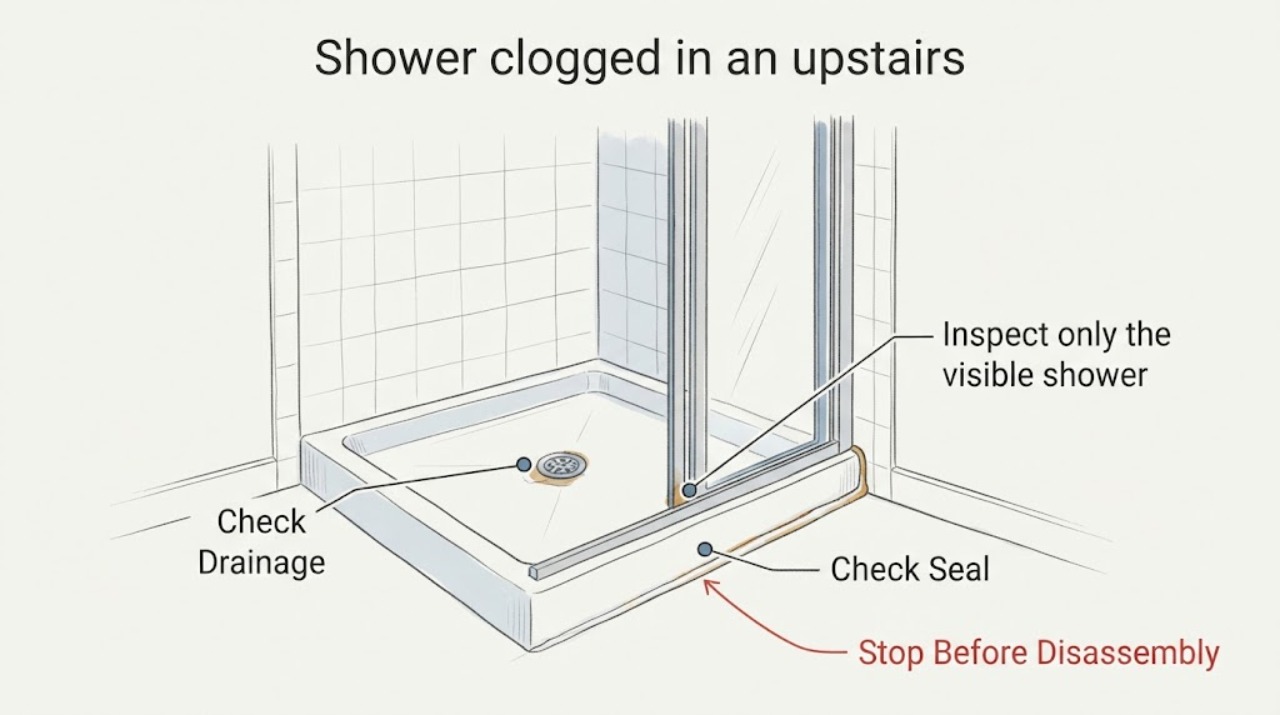
Inspect only the visible shower drain cover and the water surface from a dry, stable position; remove hair or debris by hand only if it is plainly accessible, no drain chemical was used, and there is no contaminated water. Do not reach into standing wastewater or cut the drain assembly.
Expected result: Hair or soap residue at the cover supports a local surface restriction. A clear cover with water remaining, a strong odor, or backup that returns after a small safe observation points deeper than the visible opening.
Next step: Keep the drain unused if the obstruction is not visible or water remains. Call a plumber rather than forcing a tool into the drain, opening a trap, or using an improvised chemical treatment.
Why this matters
Why: A visible strainer obstruction differs from a trap or branch blockage, and standing or contaminated water adds exposure risk.
-
Check 3
If no drain opener, bleach, acid, or other chemical has been added and no sewage is present, use a suitable plunger gently over the shower opening with enough water for a seal; stop if water rises elsewhere, splashes, or the blockage does not release promptly.
Expected result: A brief improvement limited to the shower supports a local soft obstruction. Splashback, chemical history, no improvement, or movement of water at another drain indicates that plunging is unsafe or the blockage is farther downstream.
Next step: Stop, keep all fixtures unused, and call a plumber for persistent, recurring, multi-fixture, chemical, sewage, or lower-level symptoms. Do not add another product or repeat forceful plunging.
Why this matters
Why: Plunging can move contaminated water or aerosolize a caustic product and cannot safely resolve a shared branch or sewer problem.
-
Check 4
Check the ceiling, wall, floor, light fixture area, and room below the upstairs bathroom for fresh staining, soft material, dripping, or a damp electrical fitting; do not stand in water or touch wet electrical equipment.
Expected result: A dry lower level supports a contained drain restriction but does not prove the pipe is sound. Dampness, a ceiling stain, or water near electricity means the upstairs blockage may be causing a concealed leak or overflow.
Next step: Stop using the bathroom, keep people away from the wet area, isolate utilities only from a safe and clearly accessible control, and request urgent plumbing and appropriate electrical or water-damage help.
Why this matters
Why: Water damage below an upstairs bathroom can worsen while the shower appears merely slow, and wet electrical equipment adds shock and fire risk.
-
Check 5
Record whether the blockage started after hair, construction dust, a bathroom repair, heavy rain, or work on another upstairs fixture, and whether a chemical drain product was used; do not mix products or open a pipe to inspect the blockage.
Expected result: A recent repair or debris event can restrict a local branch. A clog that follows rain, affects several fixtures, or returns after clearing may involve a shared drain or sewer condition. Chemical use changes the handling risk even when the drain looks clear.
Next step: Keep the product container or label information available and tell the plumber what was used. Leave the line unused if chemical history, sewage, or a repeated backup is present.
Why this matters
Why: Cause history helps the plumber choose a local drain, shared branch, vent, or sewer assessment and prevents chemical exposure during service.
-
Check 6
Prepare a plumber handoff with the upstairs fixture map, first backup point, water level, odor and color, lower-level moisture, visible debris, plunger result if safely attempted, chemical history, rain or repair history, and any other affected rooms; keep the bathroom out of service.
Expected result: One local shower with no lower damage differs from several fixtures, wastewater backup, a hidden leak, or a clog that returns. Those patterns require different access and may involve the private lateral or public sewer boundary.
Next step: Call a plumber for any persistent or recurring clog, multiple affected fixtures, sewage, hidden moisture, or chemical history. Contact the sewer utility or building manager when multiple units or the public line appear involved.
Why this matters
Why: A precise map limits unnecessary opening of surfaces and alerts the plumber to sewage, chemical, structural, and electrical hazards before work begins.
Use your observations
Decision map
Find the observation that best matches what you see, then follow the next safe action.
-
PATH 01Next step
What you see
Only the upstairs shower is slow and the drain cover has visible hair or soap residue, with no chemical or sewage history.
Do this next
Arrange qualified service and follow the exact model guidance.
Why this path and its safety boundary
Why it matters: Remove only plainly accessible debris and stop if the water remains or the obstruction is deeper. Arrange plumbing service rather than cutting or opening the drain.
-
PATH 02Next step
What you see
The upstairs sink, tub, toilet, or another fixture also backs up, gurgles, or changes when the shower is used.
Do this next
Arrange qualified service and follow the exact model guidance.
Why this path and its safety boundary
Why it matters: Treat it as a shared branch, stack, vent, or sewer restriction. Stop using the affected fixtures and call a plumber; do not keep flushing or adding water.
-
PATH 03Next step
What you see
The ceiling, wall, floor, or electrical fitting below the upstairs bathroom is wet or stained.
Do this next
Arrange qualified service and follow the exact model guidance.
Why this path and its safety boundary
Why it matters: Stop using the bathroom, keep clear of wet electrical equipment, isolate utilities only when safe, and request urgent plumbing and appropriate electrical or water-damage help.
-
PATH 04Next step
What you see
A drain chemical was used, or the water may contain sewage or contaminated wastewater.
Do this next
Arrange qualified service and follow the exact model guidance.
Why this path and its safety boundary
Why it matters: Do not plunge, mix products, open the trap, or handle the water. Keep people away, preserve the product information, and tell the plumber about the exposure.
-
PATH 05Next step
What you see
The clog returns, follows rain or work on another fixture, or affects several units or a lower fixture.
Do this next
Arrange qualified service and follow the exact model guidance.
Why this path and its safety boundary
Why it matters: Request a plumber to assess the shared branch or private lateral and contact the building manager or sewer utility when the public boundary may be involved.
Helpful context
Understand the symptom
“Upstairs bathroom” changes the risk assessment even when the symptom looks like hair in a shower drain. A local strainer or trap restriction may be simple, but an obstruction in a shared branch or stack can make water appear at another fixture or leak into the ceiling below. The key evidence is which fixtures are affected, when water backs up, whether the water is clean or contaminated, and whether the lower level stays dry.
Do not pour a second product into the drain to improve the first one. Poison Control warns that drain cleaners can contain corrosive acids or alkalis, can generate heat when mixed, and can splash back from a blocked drain. If a chemical has already been used, tell the plumber what product and when, and do not plunge or open the drain unless the product label or a professional says it is safe.
Safety boundary
Stop conditions
- Stop immediately for wastewater or sewage, water rising at more than one fixture, a ceiling or floor leak, damp electrical equipment, flooding, chemical fumes or splashback, unsafe footing, or structural damage below the upstairs bathroom.
- Do not mix drain chemicals, plunge after chemical use, open a trap after chemical use, cut the pipe, use a power tool in standing water, handle sewage, or keep running water to test a backup.
- Leave the bathroom out of service when the clog is persistent or recurring, the lower level is damp, the first obstruction is not visible, several fixtures are affected, or the drain boundary cannot be identified safely.
Common questions
FAQ
Why does an upstairs shower clog matter more than a downstairs shower?
A blockage upstairs can back up through other bathroom fixtures or allow water to reach the ceiling and electrical fittings below. Compare fixtures, stop adding water, and call a plumber for any multi-fixture or lower-level symptom.
Can I pour drain cleaner into a clogged shower?
Do not use or mix chemical openers in a standing or previously treated drain. Corrosive products can burn skin and lungs and can splash back; tell the plumber exactly what was used and leave the drain out of service.
How do I know if the clog is in the shower or a shared pipe?
Only the shower being slow suggests a local strainer, trap, or branch issue. Gurgling, backup at the sink, tub, toilet, or another room, or a return after clearing points toward a shared branch, stack, vent, or sewer restriction.
Read the exact guide
Official sources
- Sewer BackupsNew York City Department of Environmental Protection · Drain blockages, wastewater backups, sewage exposure, and utility or property escalation
- What’s in drain cleaner and what happens if you drink it?Poison Control · Drain-cleaner corrosivity, heat, splashback, and chemical exposure safety
- Sewer LateralsSan Francisco Public Utilities Commission · Sewer obstruction, backup, shower drain, lateral, and backwater risk context
Community feedback
Share a repair observation
Share a plain-text repair observation. Accepted observations are published automatically; this page may take a moment to update.