
On this page
Start here
Quick answer
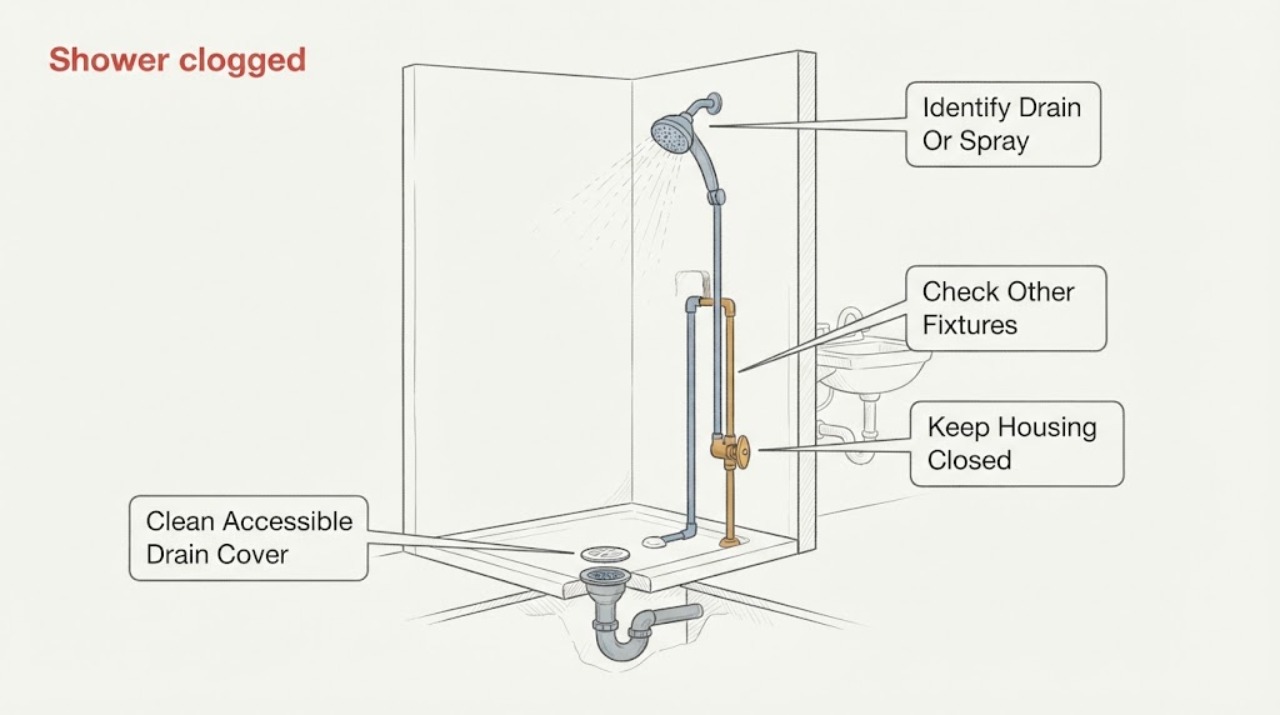
First decide whether the shower floor is filling with water or the showerhead is spraying weakly. A slow or standing shower drain is commonly a hair-and-soap blockage at the strainer or nearby drain path: safely remove and clean an accessible cover, lift out visible debris without pushing it deeper, and retest with a small amount of water. Do not mix chemicals or pour a chemical drain opener into the line; EPA advises avoiding chemical openers for clogged drains. If the drain remains slow, backs up another fixture, smells of sewage, leaks, or the blockage is beyond safe access, call a plumber. If only the spray is weak, inspect the showerhead face and debris screen and clean them according to the fixture instructions without removing the flow restrictor.
Before you begin
Safety first
- This article covers safe fixture-level observation and accessible cleaning only. A qualified plumber determines whether the issue is in the drain assembly, trap, branch, vent, building drain, septic system, shower valve, or supply and performs deeper drain clearing, leak repair, pipe access, and chemical-contaminated work.
Work through in order
Diagnostic checks
Use only checks that match the exact appliance or system and its official guide.
-
Check 1
Run the shower briefly while standing on a stable, dry surface and observe both the floor drain and spray pattern; stop before water approaches the threshold or any nearby electrical equipment.
Expected result: Water pools or drains slowly at the pan; the pan drains normally but spray is weak or uneven; both symptoms occur; or the shower is not receiving water at all.
Next step: Follow the matching drain or showerhead path below and record whether other bathroom fixtures drain normally.
Stop if: Stop for sewage, contaminated water, a leak into the wall or ceiling, an unstable surface, or water near electrical equipment.
Why this matters
Why: Pooling identifies a drain-side problem, while normal drainage with weak spray identifies a showerhead or supply-side restriction. Both symptoms can coexist, and no water at all may be a valve or supply issue rather than a clog.
-
Check 2
From safe locations, compare the shower drain with the sink, tub, toilet, or another nearby fixture without intentionally adding a large volume of water.
Expected result: Only the shower is slow; several fixtures are slow; another fixture backs up when the shower drains; or sewage odor or dirty water appears.
Next step: Keep water use low and arrange a plumber promptly for multiple-fixture symptoms, backup, sewage odor, or recurrence; otherwise continue with the accessible drain check.
Stop if: Do not test by flooding fixtures, enter wastewater, or remove a cleanout or trap without professional guidance.
Why this matters
Why: A single slow shower supports a local strainer or branch restriction. Several affected fixtures or cross-fixture backup suggests a deeper building drain, vent, or septic problem that a shower-cover cleaning will not resolve.
-
Check 3
With the shower unused and the floor dry, remove only an easily accessible drain cover or strainer as its installation permits, then use gloves and a paper towel or suitable hand tool to lift visible hair and soap residue from the cover and opening; do not force the cover.
Expected result: The cover is packed with hair or residue; the cover is clear but debris is visible just below it; the cover will not release safely; or no blockage is visible.
Next step: Clean the cover and place it back securely, then retest with a small amount of water. If flow does not improve, stop escalating the DIY attempt and arrange plumbing service.
Stop if: Do not pry against tile or a shower pan, push debris down, remove a fixed drain body, or reach into standing or contaminated water.
Why this matters
Why: Residue on the cover or just inside the opening can explain a localized slow drain. A clear opening, inaccessible cover, or blockage that cannot be lifted indicates the restriction may be deeper or the drain assembly may need service.
-
Check 4
After restoring the cover, pour or run only a small amount of clean water while watching the drain from outside the wet area; do not create a flood test or use a chemical opener.
Expected result: Water clears promptly; it still rises or drains slowly; water appears below the shower or in an adjacent ceiling; or a chemical product has already been used.
Next step: Use the shower normally only if drainage is restored and no leak is present. For persistent slow flow, leak, or prior chemical use, tell the plumber exactly what was observed and which product was used without adding another product.
Stop if: Do not mix cleaners, add boiling water to an unknown drain assembly, plunge against a fragile shower pan, or use powered drain equipment without proper training.
Why this matters
Why: Prompt drainage after visible debris removal supports a local blockage. Persistent slow drainage or a leak suggests a deeper obstruction, damaged seal, or pipe problem. A chemical already in the line creates a handling hazard for anyone opening the drain.
-
Check 5
If the pan drains normally but spray is weak or uneven, inspect the visible showerhead face, connection, and debris screen from ordinary access; follow the installed manufacturer's removal and cleaning instructions only if the head can be handled without force.
Expected result: Mineral scale or debris is visible; the screen is blocked; a hand-shower hose is kinked or leaking; the head is clear but pressure is low at several fixtures; or the connection leaks after handling.
Next step: Clean and reinstall the head only as instructed, then check for leaks. If pressure stays low, the valve or supply is affected, or the connection leaks, arrange qualified plumbing service.
Stop if: Do not drill spray openings, remove the integral flow restrictor, force a threaded connection, or open the shower valve trim as part of this check.
Why this matters
Why: Scale or a blocked screen can restrict one showerhead, while low flow at several fixtures points toward supply or valve pressure. A kink, leak, or damaged connection is a plumbing repair issue, not a reason to remove the flow restrictor.
-
Check 6
Record when the clog began, whether it follows hair or product use, whether it returns after cleaning, and whether there is odor, backup, a leak, or a change in nearby fixtures; use photos from a dry, safe position.
Expected result: The clog is a one-time local event; it recurs quickly; several fixtures are affected; or there is water damage, sewage, odor, or a suspected pipe failure.
Next step: Provide the timeline, photos, affected fixtures, water-use limits, and any cleaner already used to the plumber; keep water use low when backup is possible.
Stop if: Do not open walls, remove pipe sections, or conceal a leak or wastewater backup while waiting for service.
Why this matters
Why: A one-time visible strainer blockage may be suitable for routine cleaning. Rapid recurrence, cross-fixture effects, or water damage suggests a deeper drain, vent, supply, or building-system issue requiring a plumber.
Use your observations
Decision map
Find the observation that best matches what you see, then follow the next safe action.
-
PATH 01Safety boundary
What you see
Only the shower drains slowly, and hair or soap residue is visible at an accessible cover or strainer.
Do this next
Lift out the visible residue without pushing it down, replace the cover securely, and retest with a small amount of water.
Why this path and its safety boundary
Safety stop: Do not force the cover or reach into standing or contaminated water.
-
PATH 02Safety boundary
What you see
The cover is clear, the blockage returns, the drain remains slow after cleaning, or several fixtures are affected.
Do this next
Stop fixture-level experimentation and arrange plumbing assessment of the branch, vent, building drain, or septic system as applicable.
Why this path and its safety boundary
Safety stop: Do not remove a trap, cleanout, wall finish, or pipe section as a guess.
-
PATH 03Safety boundary
What you see
Dirty water, sewage odor, cross-fixture backup, or wastewater appears in or around the shower.
Do this next
Stop using affected fixtures, keep people and pets away from the water, and call a qualified plumber or appropriate wastewater professional promptly.
Why this path and its safety boundary
Safety stop: Do not enter wastewater, run more water to test, or mix cleaning products.
-
PATH 04Safety boundary
What you see
A chemical drain opener has already been poured in, or someone is considering adding one.
Do this next
Do not add another product or open the drain; ventilate as appropriate, keep people away from splashes, and tell the plumber the product and approximate amount used.
Why this path and its safety boundary
Safety stop: Never mix drain chemicals, bleach, acids, or other cleaners.
-
PATH 05Safety boundary
What you see
The pan drains normally but the showerhead spray is weak, uneven, or restricted.
Do this next
Inspect the visible spray face and debris screen and clean only according to the fixture instructions; arrange plumbing service if pressure is low elsewhere or the connection leaks.
Why this path and its safety boundary
Safety stop: Do not drill the head, remove its flow restrictor, or force the shower valve apart.
-
PATH 06Safety boundary
What you see
Water appears below the shower, at the wall or ceiling, around the valve, or at a connection after cleaning.
Do this next
Stop using the shower if continued use can worsen damage and arrange prompt plumbing inspection; protect the area without opening the wall.
Why this path and its safety boundary
Safety stop: Do not caulk over an active leak, tighten fittings by force, or remove wall or floor finishes.
Helpful context
Understand the symptom
Separate standing water from a weak shower spray
“The shower is clogged” can describe two different plumbing problems. If water rises around your feet or drains slowly, start at the shower drain, strainer, and nearby drain path. If the pan drains normally but water comes out of the showerhead unevenly or weakly, the likely check is the spray face, inlet, debris screen, or supply path. Do not remove a flow restrictor to compensate for a clogged screen.
Use a mechanical, non-chemical first check
Delta describes hair and soap residue collecting at the shower drain cover and recommends cleaning the cover and lifting out debris without pushing it farther into the drain. EPA advises avoiding chemical drain openers for a clogged drain. Keep the area ventilated, do not mix products, and use only a drain tool or cleaning method that is safe for the installed drain and within ordinary access.
A blockage farther down the line needs a plumber
If cleaning the visible cover and accessible debris does not restore drainage, the restriction may be farther down the trap or branch line, or the issue may affect the building drain or septic system. Multiple fixtures backing up, sewage odor or water, repeated recurrence, or a leak changes the decision from fixture cleaning to plumbing assessment. Do not open a wall, remove a trap, or use aggressive equipment as a guess.
Only after diagnosis
Potential parts
- shower drain strainer or cover
Consider this only if the existing cover is damaged, missing, or cannot be secured after the blockage is cleared; a replacement cover will not remove a deeper drain obstruction.
Confirm the drain assembly, dimensions, finish, and installation method before selecting a replacement. - showerhead debris screen or gasket
Consider this only when a showerhead-specific inspection finds a damaged or missing screen or seal and the fixture instructions identify it as replaceable.
Confirm the exact fixture and sealing arrangement; do not substitute for or remove the integral flow restrictor. - shower drain trap or branch-pipe repair
Consider this only after a plumber confirms that the obstruction or damage is beyond the strainer and requires pipe access or repair; slow drainage alone does not identify the failed section.
A qualified plumber must verify pipe material, access, local requirements, and the repair method before replacement or opening finishes.
When checks do not resolve it
Need a professional?
Arrange plumbing service when accessible debris removal does not restore drainage, the clog recurs, multiple fixtures back up, sewage or dirty water appears, there is a leak or water damage, the drain cover or valve is inaccessible, a chemical product has been used, or showerhead pressure remains low across fixtures. Keep people and pets away from contaminated water and reduce water use when a deeper backup is possible.
Safety scope: This article covers safe fixture-level observation and accessible cleaning only. A qualified plumber determines whether the issue is in the drain assembly, trap, branch, vent, building drain, septic system, shower valve, or supply and performs deeper drain clearing, leak repair, pipe access, and chemical-contaminated work.
Have this ready
- Whether the problem is standing water, slow drainage, weak spray, or both
- Which other fixtures are affected and whether cross-fixture backup or odor occurs
- Photos of the cover, visible debris, leak location, and water damage from a dry safe position
- Whether the cover or screen was removed and what was safely cleaned
- Any drain chemical used, including the product name and approximate timing
Common questions
FAQ
How do I tell whether my shower drain or showerhead is clogged?
If water pools on the shower floor, inspect the drain and cover. If the pan drains normally but spray is weak or uneven, inspect the showerhead face and debris screen. The two restrictions can occur at the same time.
What can I safely remove from a clogged shower drain?
With the shower unused and the floor dry, remove only an easily accessible cover as its installation permits and lift out visible hair or soap residue without pushing it deeper. Stop if the cover is fixed, water is contaminated, or the blockage is beyond safe access.
Should I use chemical drain opener in a clogged shower?
Avoid chemical drain openers and never mix drain products. If one has already been used, do not add another or open the drain; tell the plumber what product was used and when.
Why is only my shower clogged while other drains work?
A local strainer, trap, or branch restriction is more plausible when only the shower is slow, but a clear cover does not prove where the blockage is. If cleaning does not restore flow or the clog returns, arrange plumbing assessment.
When is a clogged shower an urgent plumbing problem?
Treat it as urgent when dirty water or sewage backs up, several fixtures are affected, water leaks into a wall or ceiling, there is a strong sewage odor, or the area cannot be safely accessed. Stop using affected fixtures and keep people away from contaminated water.
Read the exact guide
Official sources
- Clog, Be Gone!Delta Faucet · Supports identifying a clogged shower drain, cleaning the cover, lifting visible debris, and avoiding pushing debris deeper.
- How to Fix Low Pressure in Your ShowerDelta Faucet · Supports the separate showerhead path for weak spray, screen inspection, hose clues, preserving the flow restrictor, and plumbing escalation for persistent pressure problems.
- How to Care for Your Septic SystemU.S. Environmental Protection Agency · Supports avoiding chemical drain openers, not mixing drain chemicals, and escalating multiple-fixture or wastewater-backup symptoms; septic-specific examples do not prove a septic system is present.
Community feedback
Share a repair observation
Share a plain-text repair observation. Accepted observations are published automatically; this page may take a moment to update.