
On this page
Start here
Quick answer
Turn off the faucet and stop using every nearby water fixture immediately. Identify whether clear water is simply entering faster than the sink drains, or whether dirty water is coming back through the drain; protect people, cabinets, and nearby electrical equipment without reaching into contaminated water. For a single sink with clear water and no chemical drain product, remove only visible debris from the accessible stopper or strainer and make one gentle plunger attempt while sealing the overflow opening or a second basin as appropriate. Do not keep running water, pour in drain chemicals, mix products, open a trap or cleanout, or use force. If another fixture makes the sink rise, several drains are affected, wastewater or foul odor is present, the plunger does not improve the flow, or water is near electrical equipment, stop and arrange qualified plumbing, building, or wastewater service.
Before you begin
Safety first
- User checks are limited to stopping incoming water, comparing fixture behavior, removing visible debris, and one cautious plunger attempt only with clear water and no chemical exposure. Contaminated water, traps, cleanouts, supply lines, hidden piping, powered tools, electrical areas, and sewer or branch diagnosis require qualified service.
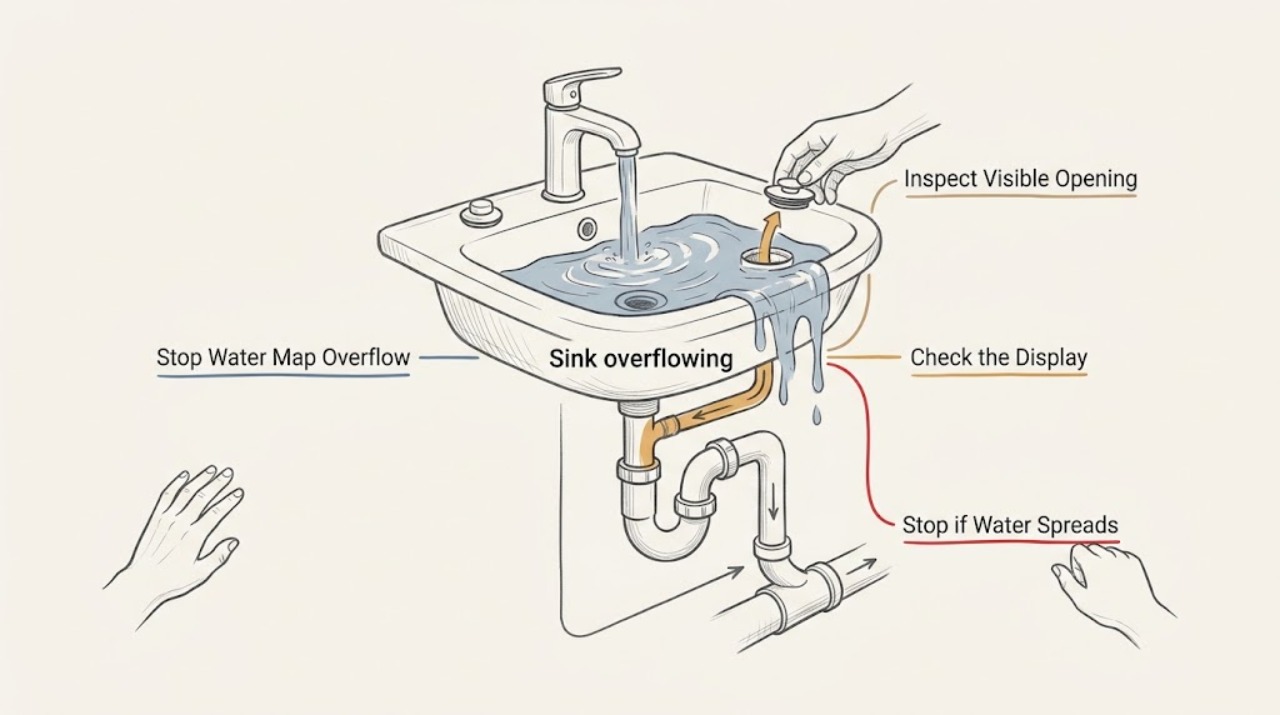
Work through in order
Diagnostic checks
Use only checks that match the exact appliance or system and its official guide.
-
Check 1
Turn off the sink faucet and stop using the toilet, dishwasher, washing machine, and nearby fixtures until the water level is stable. From a dry position, note whether the sink overflowed while its own faucet was running, whether water rises when another fixture is used, and whether the water is clear, cloudy, foul-smelling, or contains sewage-like material.
Expected result: Only this sink is full of clear water; another fixture makes the sink rise; multiple fixtures are backing up; or dirty water, foul odor, or solids are present.
Next step: For a single sink with clear water and no chemical exposure, continue only with the accessible opening check. For cross-backup, multiple fixtures, foul water, or solids, keep all water off and arrange qualified plumbing, building, or wastewater service.
Stop if: Stop immediately for wastewater, rapid overflow, unsafe flooring, or water near electrical equipment.
Why this matters
Why: A faucet filling a slow sink can be a local drain restriction. Cross-fixture movement or dirty water indicates a branch or sewer backup and a sanitation or property-damage hazard rather than a simple stopper check.
-
Check 2
With the water off and gloves on, remove only a stopper or strainer that lifts or operates normally. Pull out visible hair, food, grease, or other debris from the opening and place it in the trash; do not push it farther down, reach into standing wastewater, remove fixed plumbing, or force a corroded fitting.
Expected result: A visible mat or object is blocking the opening; the opening looks clear; the stopper is stuck or damaged; or the water is contaminated or too high for safe inspection.
Next step: Refit an intact stopper or strainer and observe whether the level falls without adding more water. If it stays high, the part cannot be removed safely, or the basin is contaminated, stop at the visible check and arrange service.
Stop if: Do not handle contaminated water, force the stopper, or remove a fixed drain fitting.
Why this matters
Why: A visible obstruction can explain a local overflow. A clear opening, stuck part, or contaminated basin leaves a deeper restriction or backup possible and makes forceful handling unsafe.
-
Check 3
Only for one sink with clear water, no sewage backup, and no chemical drain product, use a sink plunger that fits the drain. Seal the overflow opening with a damp cloth and seal a second basin if present, keep the plunger centered, and make one short, gentle attempt without letting water splash into the cabinet or onto nearby electrical equipment.
Expected result: The water level drops and the sink drains; the level does not change; the plunger cannot seal; or dirty water rises from another fixture.
Next step: If drainage improves, wait and make a small clear-water test only after the level is stable. If there is no improvement, cross-backup, or any chemical exposure, stop using the sink and arrange qualified service.
Stop if: Do not plunge after chemical exposure, during sewage backup, or when splashing could contact electrical equipment.
Why this matters
Why: A nearby minor blockage may respond to a proper seal and controlled plunger. No change or a failed seal leaves a deeper restriction possible, while cross-fixture movement indicates a wider blockage and sanitation risk.
-
Check 4
After visible debris removal or a successful plunger attempt, add only a small amount of clear water while watching the basin, overflow opening, cabinet, and nearby fixtures. Do not run a full faucet, flush a toilet, or start an appliance to test a line that is still slow.
Expected result: The water clears promptly; it drains but begins rising again; the overflow passage spills or gurgles; or another drain backs up.
Next step: Use the sink cautiously only if drainage remains normal and there is no leak. For recurrence, gurgling, cross-backup, or overflow, stop adding water and arrange plumbing service rather than repeating forceful clearing.
Stop if: Stop the test for rising water, foul odor, solids, overflow, or a leak below the sink.
Why this matters
Why: Stable drainage supports a nearby obstruction that was relieved, but recurrence or gurgling suggests residual or deeper restriction. A different fixture backing up means the problem is not isolated to the sink opening.
-
Check 5
Ask whether anyone poured drain opener, bleach, acid, or another cleaning product into the sink. If yes or uncertain, keep the water off, do not plunge or open the drain, keep people and pets away from splashes, and record the product and approximate time for the plumber.
Expected result: No chemical was used; a product was used; the product is unknown; or fumes, heat, irritation, or splashing is present.
Next step: For any exposure, stop DIY clearing, ventilate only from a safe position, keep people and pets away, and arrange qualified service with the product information. Seek local emergency or poison guidance for symptoms or direct exposure.
Stop if: Never mix drain products or proceed with a plunger, drain tool, trap, or cleanout after chemical exposure.
Why this matters
Why: No chemical exposure leaves a cautious visible check and plunger attempt possible. Known or uncertain exposure creates a handling hazard because pressure or opening the line can release the product; fumes or irritation require immediate safety action.
-
Check 6
Once the basin is stable and the cabinet is dry, look under the sink without opening fittings. Check for a visible drip from the faucet tailpiece, supply connection, or trap, a cabinet floor that is swelling, and a valve that is clearly leaking; do not disconnect the supply or trap.
Expected result: The cabinet is dry; water is dripping from a connection; the trap or cabinet is wet; a valve is corroded or stuck; or water is near an electrical appliance or outlet.
Next step: Stop using the sink and arrange qualified plumbing service for any visible leak, wet cabinet, stuck valve, or electrical proximity. If the cabinet is dry, continue only with the documented overflow result and prevention steps.
Stop if: Do not touch a wet electrical area, disconnect lines, or force a valve or trap connection.
Why this matters
Why: A supply or drain-joint leak can add water and damage the cabinet even after the basin is cleared. A wet, corroded, or electrical area requires repair and should not be tightened or dismantled by guesswork.
-
Check 7
Record the sink type, whether it has an overflow opening or second basin, the water color and odor, which fixtures were tested, visible debris, plunger result, chemical history, leak observations, and whether the overflow returns. Do not buy a trap, stopper, drain cable, or replacement faucet from the symptom alone.
Expected result: The sink drains normally and remains stable; it overflows again; other fixtures remain affected; or the drain requires access beyond the visible opening.
Next step: Keep grease, wipes, food solids, and other unsuitable waste out of the drain and use the stopper or strainer as intended. For recurrence, a wider pattern, or deeper access, give the record to a qualified plumber, building manager, or wastewater provider.
Stop if: Stop and arrange service for persistent or recurring overflow, multi-fixture backup, contaminated water, visible leakage, or any hidden-line work.
Why this matters
Why: Stable recovery supports a nearby obstruction that was relieved. Recurrence, wider backup, contaminated water, or inaccessible drainage points toward a branch, sewer, vent, structural, or fixture fault requiring diagnosis.
Use your observations
Decision map
Find the observation that best matches what you see, then follow the next safe action.
-
PATH 01Next step
What you see
The faucet was left running, only this sink is affected, and water is clear with no cross-backup.
Do this next
Keep the faucet off, remove only visible debris, and make one controlled plunger attempt if no chemical or sewage is present. Arrange service if the level does not fall or quickly rises again.
Why this path and its safety boundary
Why it matters: The drain may simply be unable to keep up because of a local stopper, strainer, or nearby restriction.
-
PATH 02Next step
What you see
Hair, food, grease, or another object is visibly blocking the accessible stopper or strainer.
Do this next
Remove only the visible material with gloves, refit the intact part, and run a small clear-water test. Stop and arrange service if overflow returns.
Why this path and its safety boundary
Why it matters: A local opening restriction is plausible, but the downstream line is not proven clear.
-
PATH 03Next step
What you see
The sink has clear water, no chemical exposure or sewage backup, and one gentle plunger attempt lowers the level.
Do this next
Test with only a small amount of clear water and monitor. Do not keep plunging if the problem returns; arrange service for recurrence or gurgling.
Why this path and its safety boundary
Why it matters: A minor blockage near the opening may have shifted or cleared.
-
PATH 04Next step
What you see
The opening is clear and a safe plunger attempt produces no change or cannot seal.
Do this next
Stop adding water and arrange qualified plumbing service. Do not escalate to chemicals, force, powered tools, or trap and cleanout disassembly.
Why this path and its safety boundary
Why it matters: A deeper restriction, trap or branch issue, vent condition, or non-drain cause may be involved.
-
PATH 05Next step
What you see
A toilet, tub, shower, washing machine, or another sink also backs up, or using one fixture makes this sink rise.
Do this next
Stop using water throughout the affected area and arrange qualified plumbing, building, or wastewater assessment. Keep people away from any dirty water.
Why this path and its safety boundary
Why it matters: The blockage is more likely in a shared branch, house drain, or sewer connection rather than at the sink opening.
-
PATH 06Next step
What you see
A drain product was used, the product is unknown, or fumes, heat, irritation, or splashing is present.
Do this next
Stop DIY clearing, keep people and pets away, provide the product information to qualified service, and seek local emergency or poison guidance for exposure symptoms.
Why this path and its safety boundary
Why it matters: The line may contain a corrosive or reactive substance; plunging or opening it can expose the user or plumber.
-
PATH 07Next step
What you see
Water drips from a supply or drain connection, the cabinet is wet, water reaches an outlet or appliance, or the floor is unsafe.
Do this next
Stop using the sink, avoid wet electrical equipment, and arrange qualified plumbing or electrical help from a dry safe position. Do not disconnect lines or force valves.
Why this path and its safety boundary
Why it matters: Property damage, shock, or further plumbing failure is possible; overflow clearing is no longer the first priority.
-
PATH 08Next step
What you see
The sink drains normally after visible debris removal or a gentle plunger attempt and remains stable in a small clear-water test.
Do this next
Use the sink normally while monitoring, keep unsuitable waste out of the drain, and arrange service if overflow, gurgling, odor, or cross-backup returns.
Why this path and its safety boundary
Why it matters: A nearby obstruction is plausible, but recurrence would indicate a different or deeper problem.
Helpful context
Understand the symptom
Stop the incoming water before diagnosing the sink
A sink overflows when water enters faster than the drain can carry it away. A stopper, strainer, or nearby trap restriction can affect one sink; a branch or sewer blockage can make a toilet, tub, or another sink back up as well. Clear water from an open faucet is different from wastewater returning through the drain. That distinction determines whether a limited visible check is reasonable or whether sanitation and property-damage risks require service.
Keep contaminated water and electrical hazards out of a DIY check
Do not put hands into dirty or foul-smelling water, and keep children and pets away. Do not plunge after chemical drain cleaner was used or may be present, mix drain products, open a trap or cleanout with standing water, disconnect a supply line, or use a powered drain tool. If water reaches an outlet, appliance, or electrical equipment, do not handle it while wet; arrange qualified help from a dry, safe position.
The result should change the next action
A sink that clears after visible debris removal or one controlled plunger attempt may have a nearby obstruction, but a quick recovery does not prove the branch line is clear. No change, rapid recurrence, gurgling, or backup at more than one fixture points farther downstream. Keep the record of what happened and what was poured into the drain for the plumber.
Safety boundary
Stop conditions
- Stop immediately for wastewater, foul odor, solids, rapid overflow, unsafe flooring, visible leakage, or water near an outlet, appliance, or electrical equipment.
- Do not plunge, mix products, open a trap or cleanout, or use a drain tool after chemical drain product was used or may be present.
- Do not disconnect supply lines, force valves or corroded fittings, open a wall, use powered drain equipment, or reach into contaminated standing water.
- Arrange qualified plumbing, building-management, wastewater, or electrical service when multiple fixtures are affected, the overflow persists or returns, the cabinet or connection leaks, or the required work is beyond the visible sink opening.
Only after diagnosis
Potential parts
- sink stopper or drain strainer
Consider this only if the accessible stopper or strainer is visibly broken and the drain works normally once the damaged part is removed or corrected.
Confirm the sink opening, overflow design, and exact dimensions before ordering; this part will not repair a trap, branch, vent, or sewer blockage.
When checks do not resolve it
Need a professional?
Call promptly for wastewater or foul odor, multiple affected fixtures, rapid overflow, chemical exposure, visible supply or drain leaks, wet electrical areas, a stuck or corroded valve, recurrence, or any work requiring a trap, cleanout, wall, branch line, sewer connection, or powered tool.
Safety scope: User checks are limited to stopping incoming water, comparing fixture behavior, removing visible debris, and one cautious plunger attempt only with clear water and no chemical exposure. Contaminated water, traps, cleanouts, supply lines, hidden piping, powered tools, electrical areas, and sewer or branch diagnosis require qualified service.
Have this ready
- Provide the sink type, overflow or second-basin layout, clear versus dirty water, fixtures affected, visible debris, plunger result, chemical history, leak location, recurrence timing, and dry-position photos.
Common questions
FAQ
What should I do first when my sink is overflowing?
Turn off the faucet and stop using nearby fixtures so no more water enters the line. Determine whether the water is clear and limited to this sink or is dirty and rising when another fixture runs. Cross-backup or wastewater requires service rather than continued plunging.
Can I use a plunger on an overflowing sink?
For one sink with clear water, no chemical exposure, and no sewage backup, one gentle, properly sealed plunger attempt may help a minor blockage near the opening. Stop for no improvement, cross-backup, splashing, or rising water and arrange qualified plumbing service.
Should I pour drain cleaner into an overflowing sink?
Do not add chemical drain opener or mix products. If a product was already used or is unknown, do not plunge or open the drain; keep people away from splashes, record the product, and arrange qualified service.
Why does another fixture make my sink overflow?
That pattern suggests a shared branch or sewer restriction rather than only the sink stopper. Stop using water throughout the affected area, keep away from dirty water, and arrange qualified plumbing, building, or wastewater assessment.
When is an overflowing sink an emergency?
Treat wastewater, foul odor, solids, rapid overflow, active leaks, water near electrical equipment, unsafe flooring, chemical exposure, or multiple backed-up fixtures as stop conditions. Avoid handling wet electrical areas and arrange qualified help from a dry safe position.
Read the exact guide
Official sources
- How to Care for Your Septic SystemU.S. Environmental Protection Agency · EPA guidance on avoiding chemical drain openers and keeping grease, wipes, oils, and toxic household chemicals out of drains, especially for homes connected to septic systems.
- Sewer BackupsNew York City Department of Environmental Protection · Government guidance on wastewater backing up into sinks and drains, stopping sewer use, contamination risk, blocked pipes, and professional or utility response.
- Troubleshooting water pressure and flowCity of Portland · Government guidance on visible plumbing leaks, water near electrical equipment, household plumbing checks, and when to call a plumber or property manager.
- Prevent Blocked DrainsCity of Tampa · Municipal guidance on reducing incoming water, plunger use for minor blockages near an opening, multi-fixture backup, cleanout observations, and the boundary between house and sewer service.
Community feedback
Share a repair observation
Share a plain-text repair observation. Accepted observations are published automatically; this page may take a moment to update.