
Plumbing guides
Toilets Repair Guides – Page 2
Guides for toilet flushing, filling, running water, leaks, and clogs.
Published toilets guides
Choose the guide that best matches the equipment and symptom you are seeing.
-
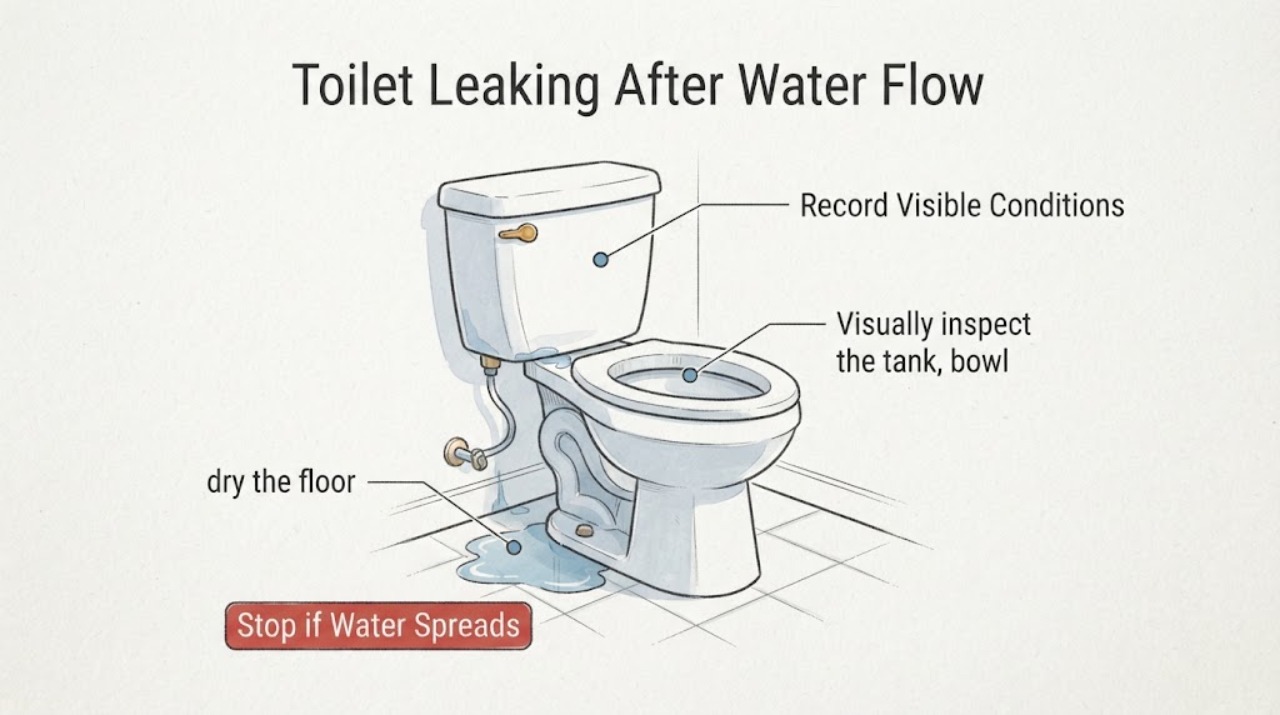
Toilet Leaking After Water Flow Is Terminated: Find the First Wet Point
The assigned condition is the exact text “after water flow is terminated e.” The final “e” is ambiguous, so do not assume it means after a flush, after the toilet shutoff is closed, or after the home's main water is turned off. Treat it as a clue that water is noticed after an incoming flow has stopped: leave the toilet out of use, confirm which valve was closed, dry the area, and locate the first point where water returns.
-
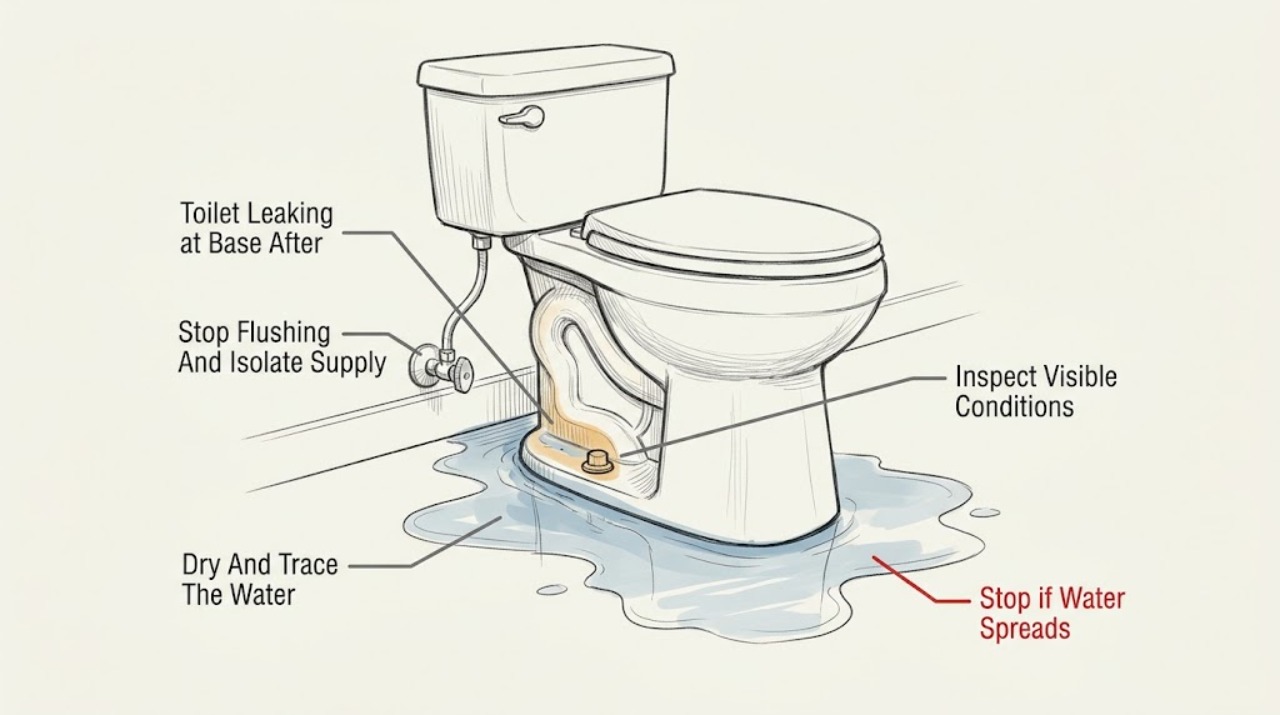
Toilet Leaking at Base After a Flush: What to Check and What to Do Next
If water appears around the base of a toilet after flushing, stop using it and close the toilet supply valve. Dry the floor, then watch one controlled visual check from a safe position to see whether water starts at the supply connection, tank-to-bowl area, bowl base, or the nearby floor or drain.
-
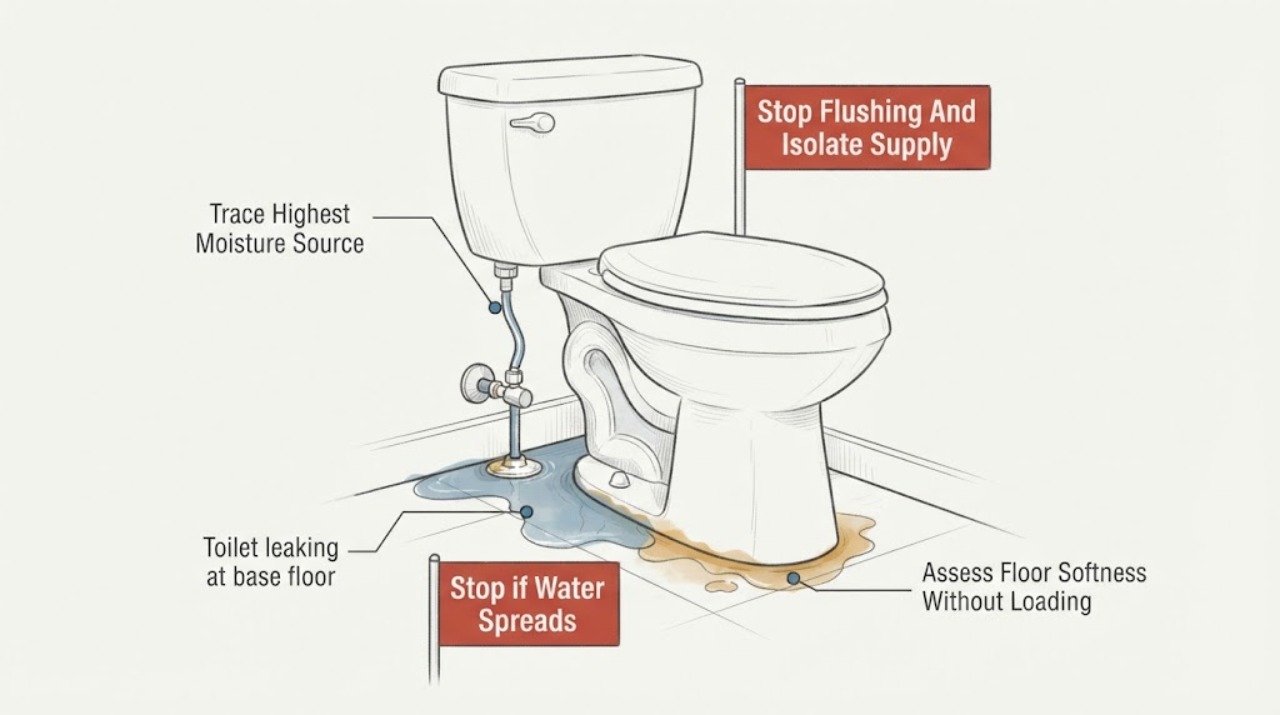
Toilet leaking at base floor may be soft: What to Check and What to Do Next
Stop flushing, close the toilet's accessible supply valve without forcing it, and keep weight off the area. Dry the visible water enough to trace where new moisture appears, but do not rock or lift the toilet, overtighten fasteners, caulk over a wet base, or pull the toilet as a first step.
-
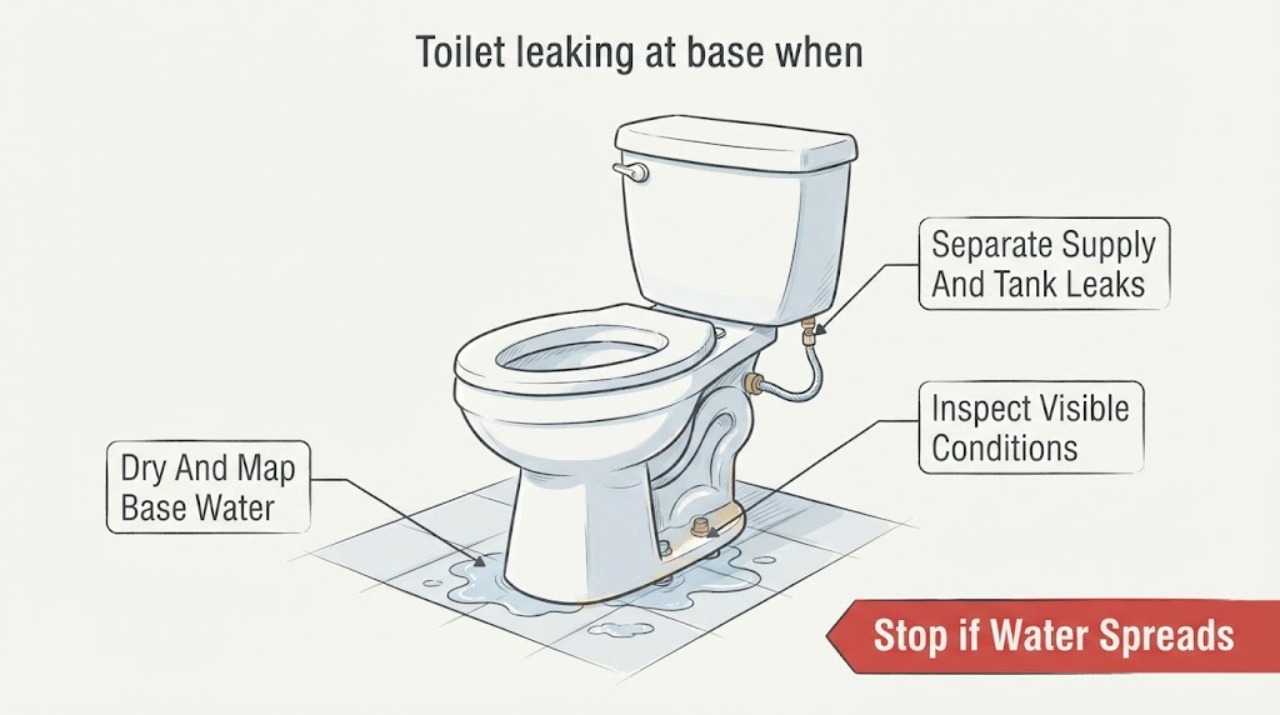
Toilet leaking at base when the bowl rocks or is stable: What to Check and What to Do Next
Water at the toilet base is not automatically a failed wax seal: it may be condensation, a supply connection, tank-to-bowl leakage that runs down the outside, or a bowl-to-floor seal/flange problem. First stop unnecessary flushing, dry the floor, and use paper towel strips to identify whether water returns at the supply connection, tank/bowl seam, bowl base, or only after a flush.
-
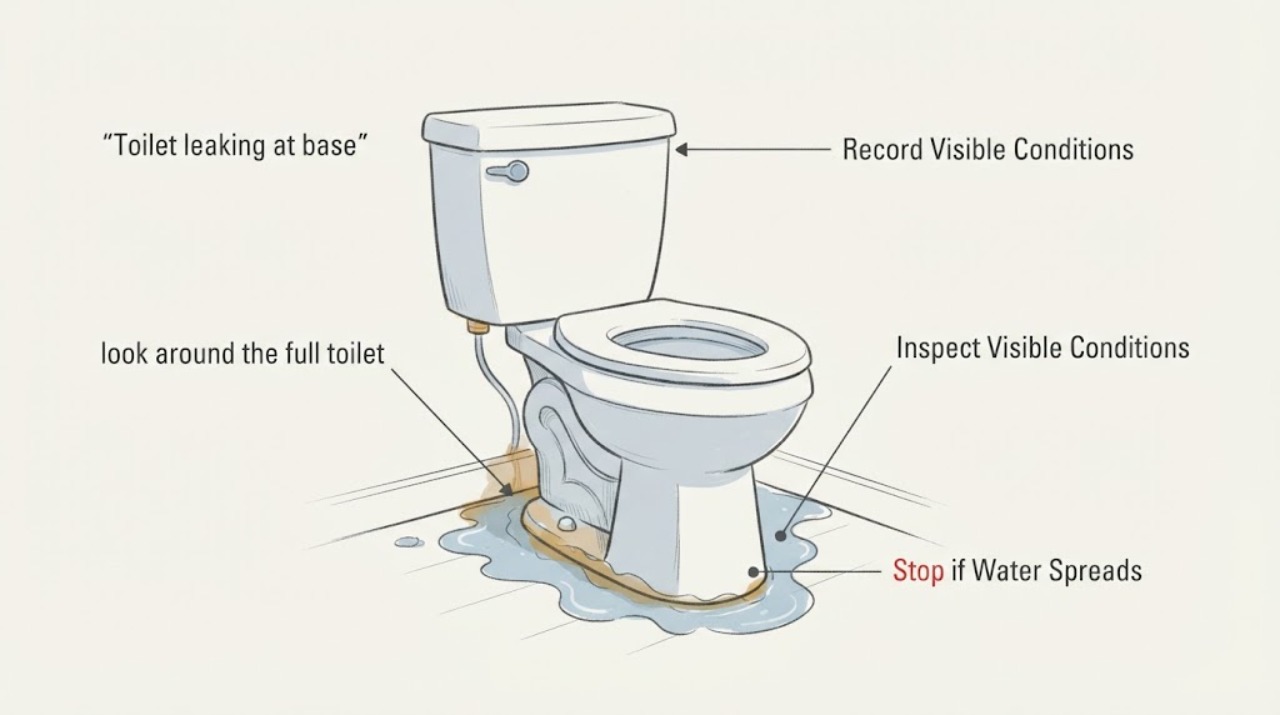
Toilet leaking at base: What to Check and What to Do Next
Stop using the toilet when water is present at the base until the source is identified. From a dry, safe position, observe whether the water appears only after a flush, is clean supply water, or may be waste-contaminated; check the visible tank and supply connection without removing parts; and note whether the bowl rocks, the floor is soft, or the leak is spreading.
-
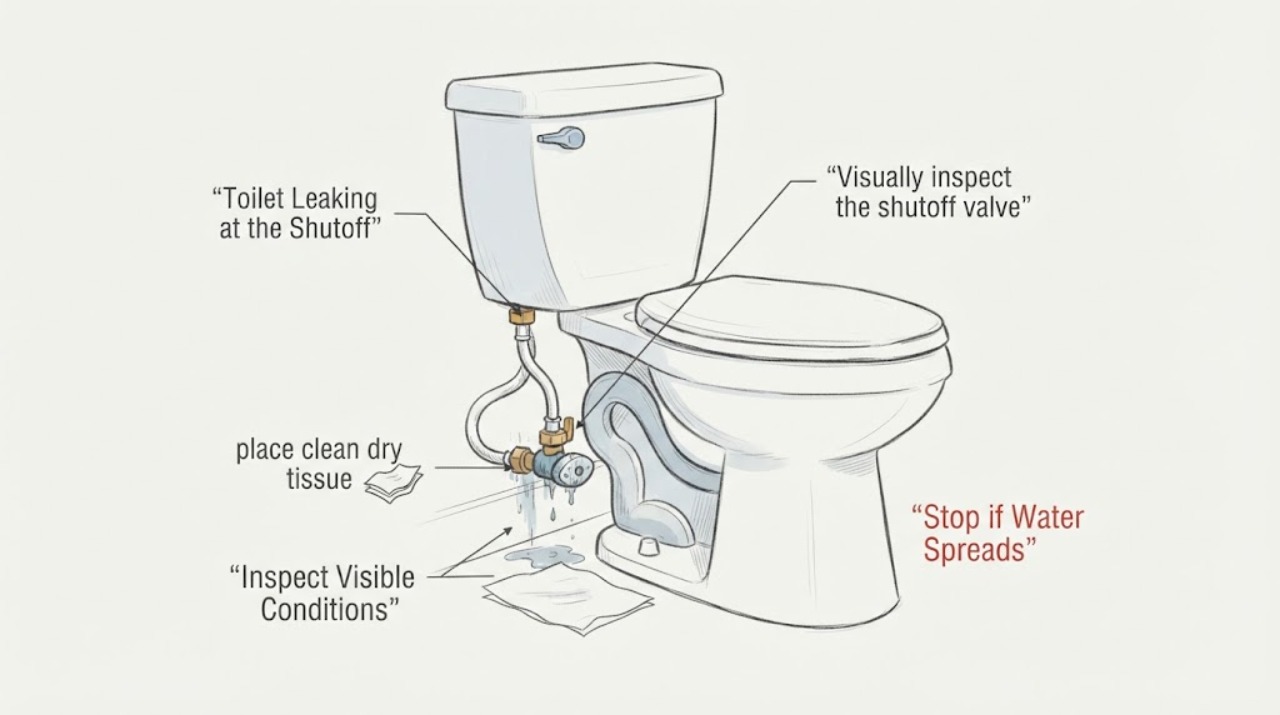
Toilet Leaking at the Shutoff Valve: Find the First Wet Point Safely
If a toilet appears to leak at its shutoff valve, first determine whether water begins at the valve, supply line, tank inlet, tank-to-bowl seam, or floor and then isolate the toilet only if the accessible valve turns normally. Turn the valve clockwise gently; never force a stiff or corroded valve.
-
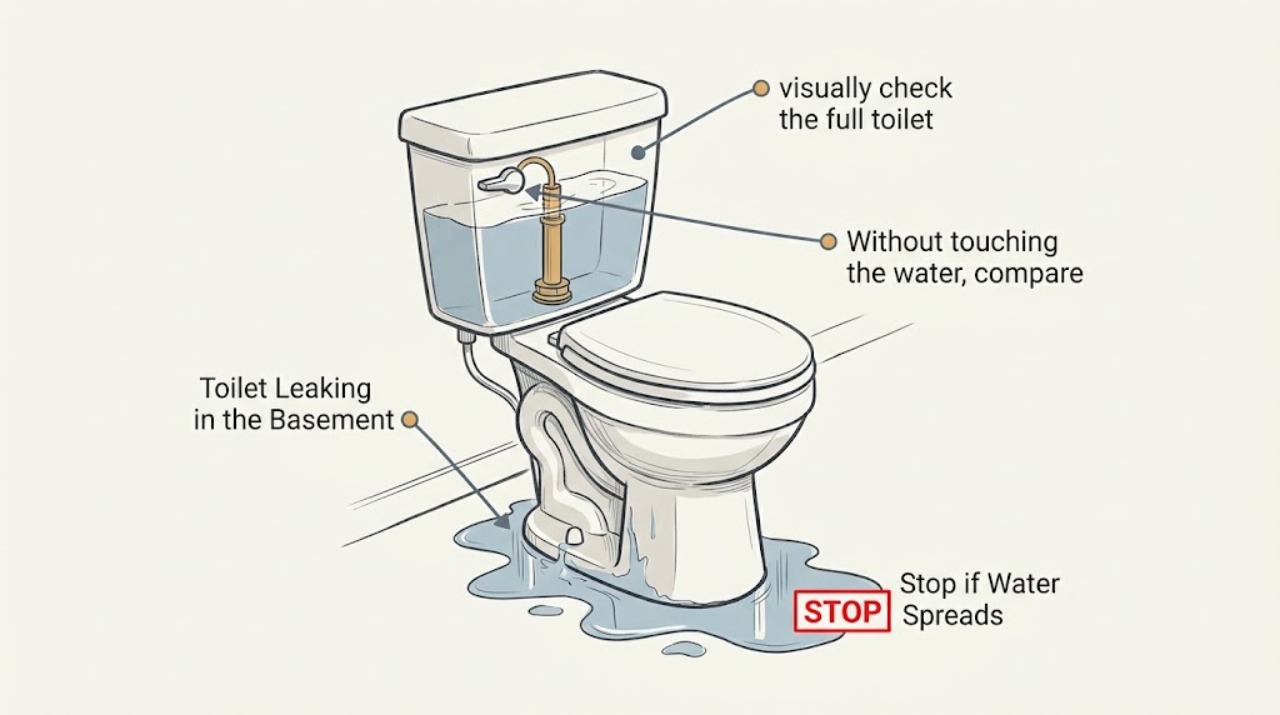
Toilet Leaking in the Basement: Find the Source Before the Damage Spreads
A basement toilet leak may come from the toilet itself, its supply connection, the drain or sewer path, a pipe or wall above it, or groundwater and condensation that only appears near the fixture. First identify whether the water is clean supply water, toilet-bowl water, or seepage from the room, then watch where it first appears and whether it changes during refill or flushing.
-
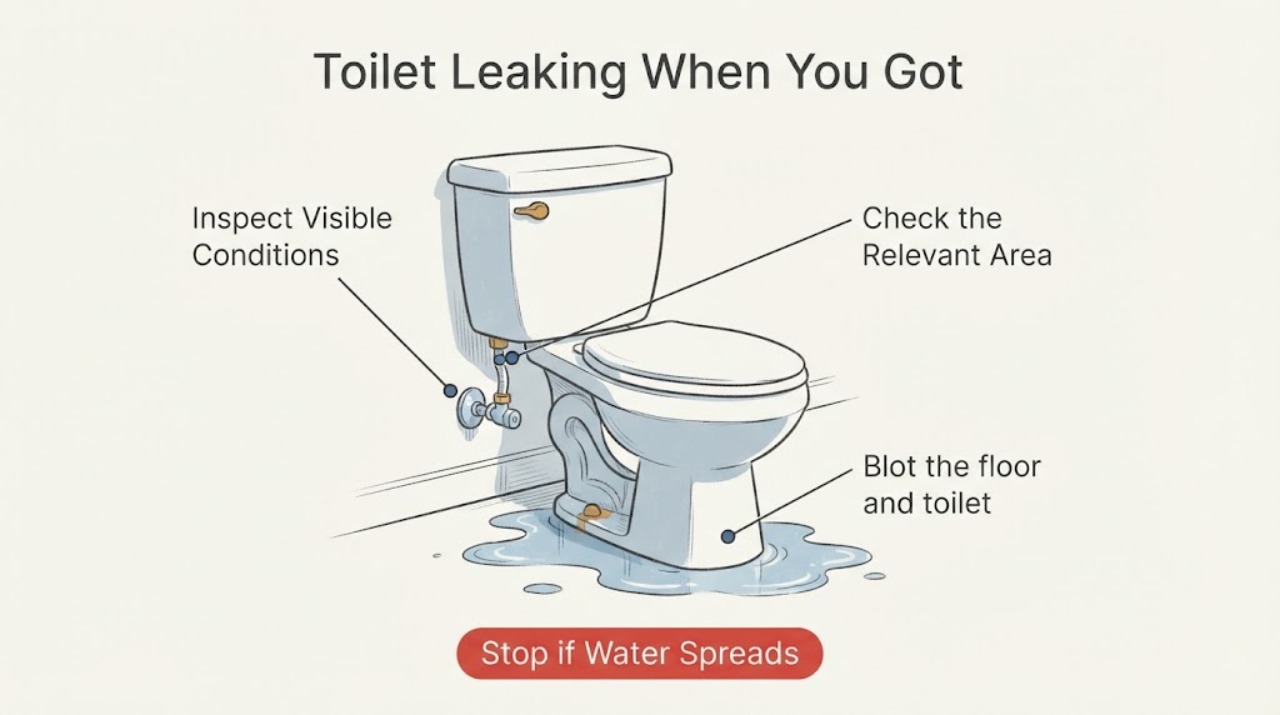
Toilet Leaking When You Got Back: Find the First Wet Point Safely
When you return and find a leaking toilet, first stop the water from a safe, accessible shutoff valve and keep people away from contaminated water. Then identify the first wet point: the supply connection or tank, the bowl or base, the flush handle, or a ceiling or wall below.
-
Toilet Leaking: Find Out Whether the Fill Valve Is the Source
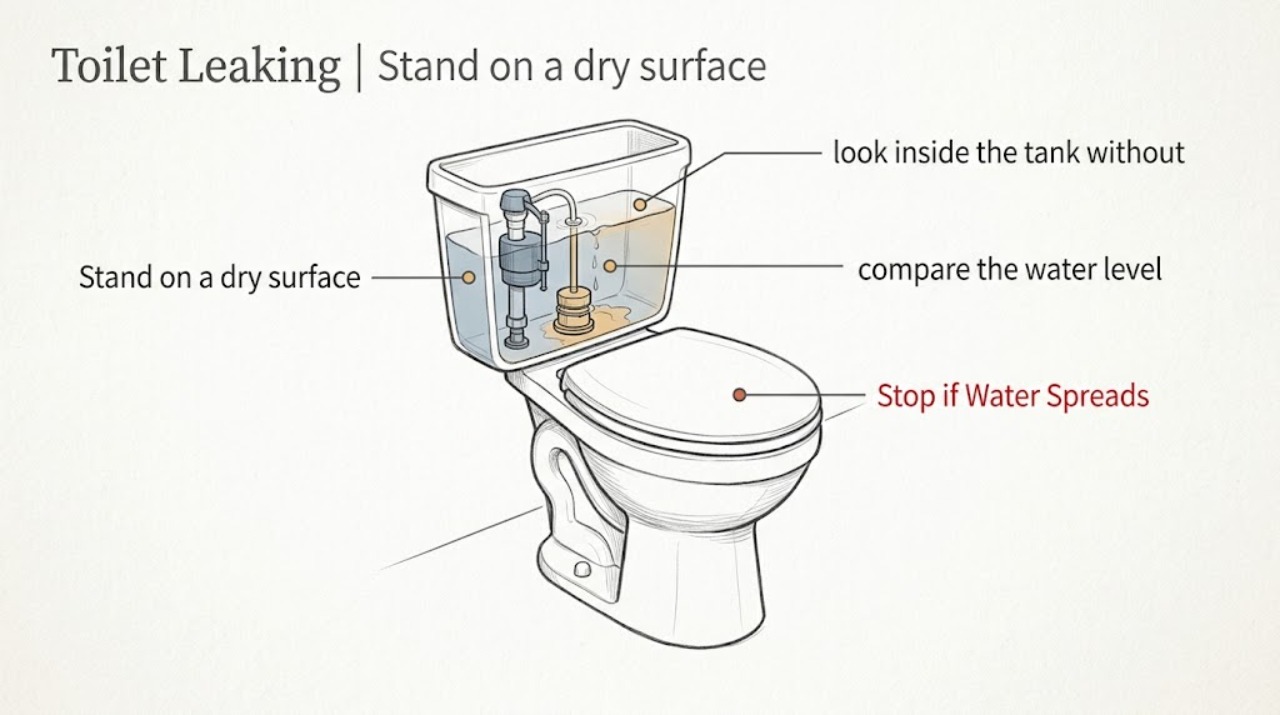
Start at the first wet point instead of assuming the toilet fill valve is leaking. Water at the supply connection or the fill-valve shank points to an external supply-side leak; water rising inside the tank and spilling into the overflow tube points to a fill valve or float-level problem; water moving from the tank into the bowl without a flush points more toward the flapper or flush-valve seal.
-
Toilet Leaking: Check the Flapper and Find the Leak Safely
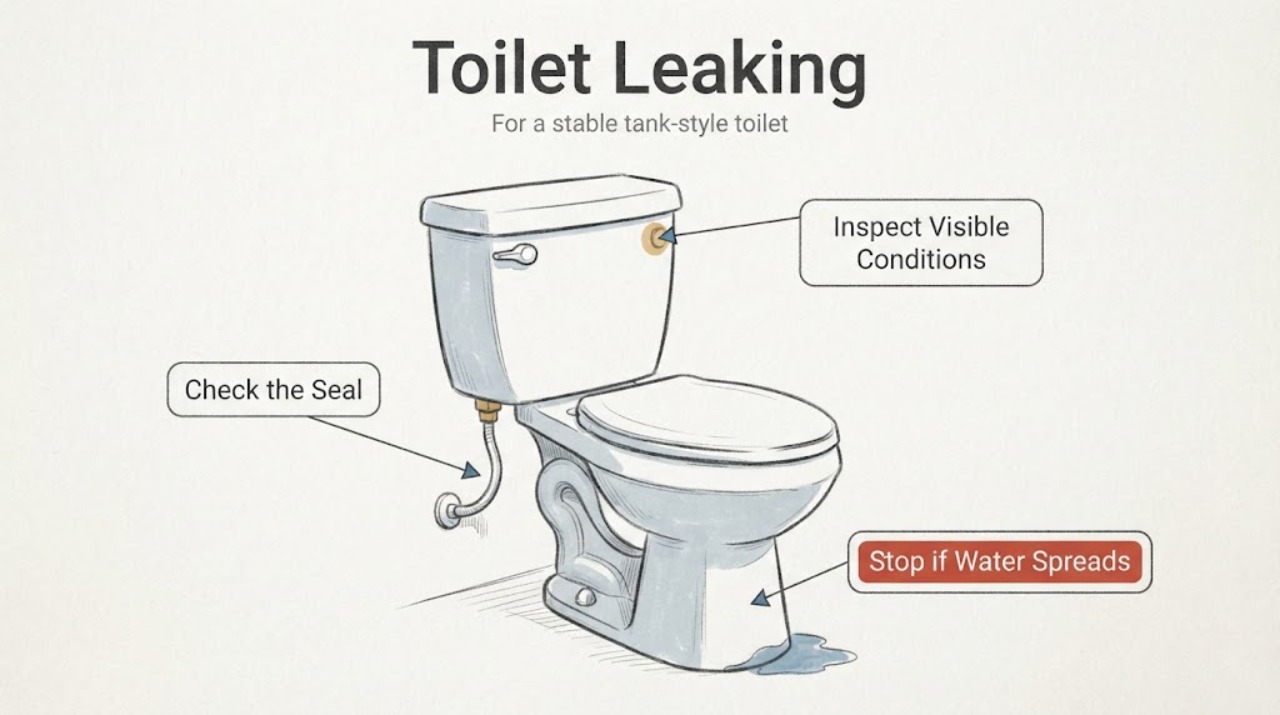
A toilet leak may be silent water passing from the tank into the bowl, a tank that keeps refilling, or water escaping outside at the supply connection, tank bolts, bowl base, or floor. For a tank-style toilet, place a small amount of food coloring in the tank without flushing and check the bowl after 10 to 15 minutes; color in the bowl supports a flapper or flush-valve seal leak.
-
Toilet leaking: find the flapper, tank, supply, or floor leak safely
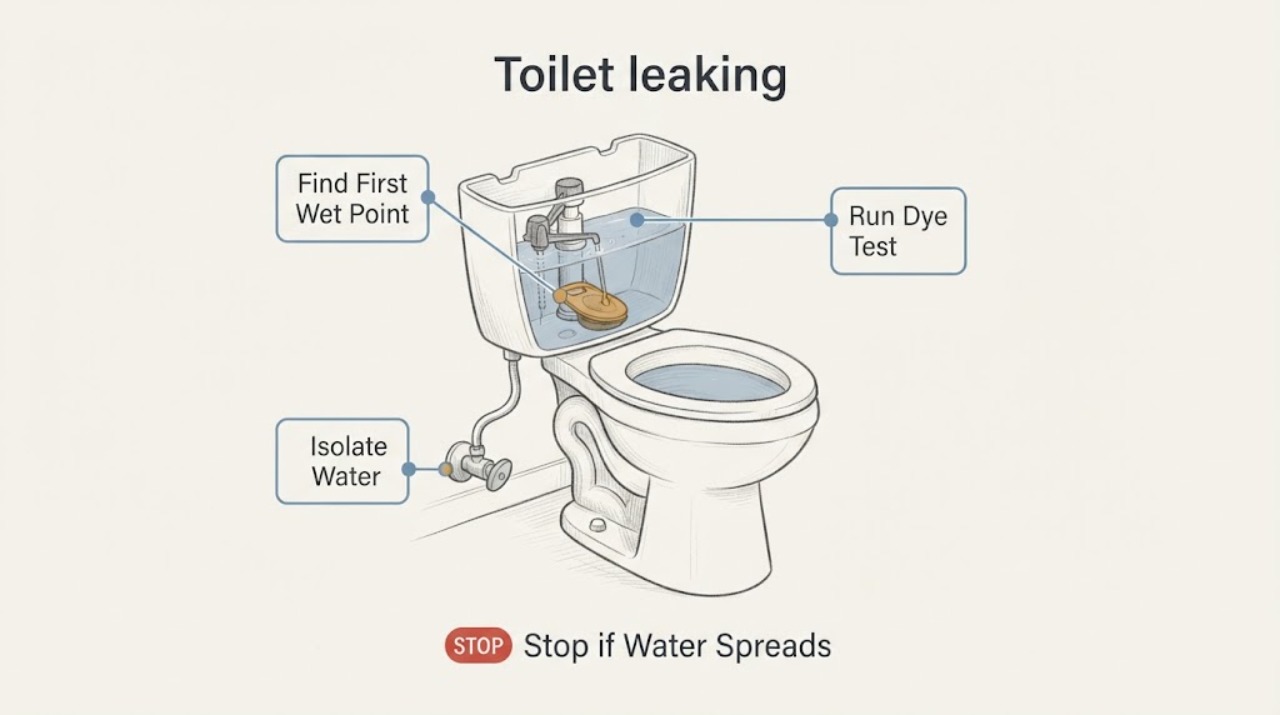
First stop the water at the toilet's local shutoff valve, turning it gently clockwise if the valve is accessible and safe to reach. Then identify the first wet point: color appearing in the bowl indicates a tank-to-bowl leak, commonly the flapper or flush valve; water entering the overflow tube points toward the fill valve; moisture at the supply connection points to the hose or shutoff; and water at the tank seam, bolts, or floor needs a plumber's assessment.
-
Toilet Leaking: How to Tell Whether a Gasket Is the First Wet Point
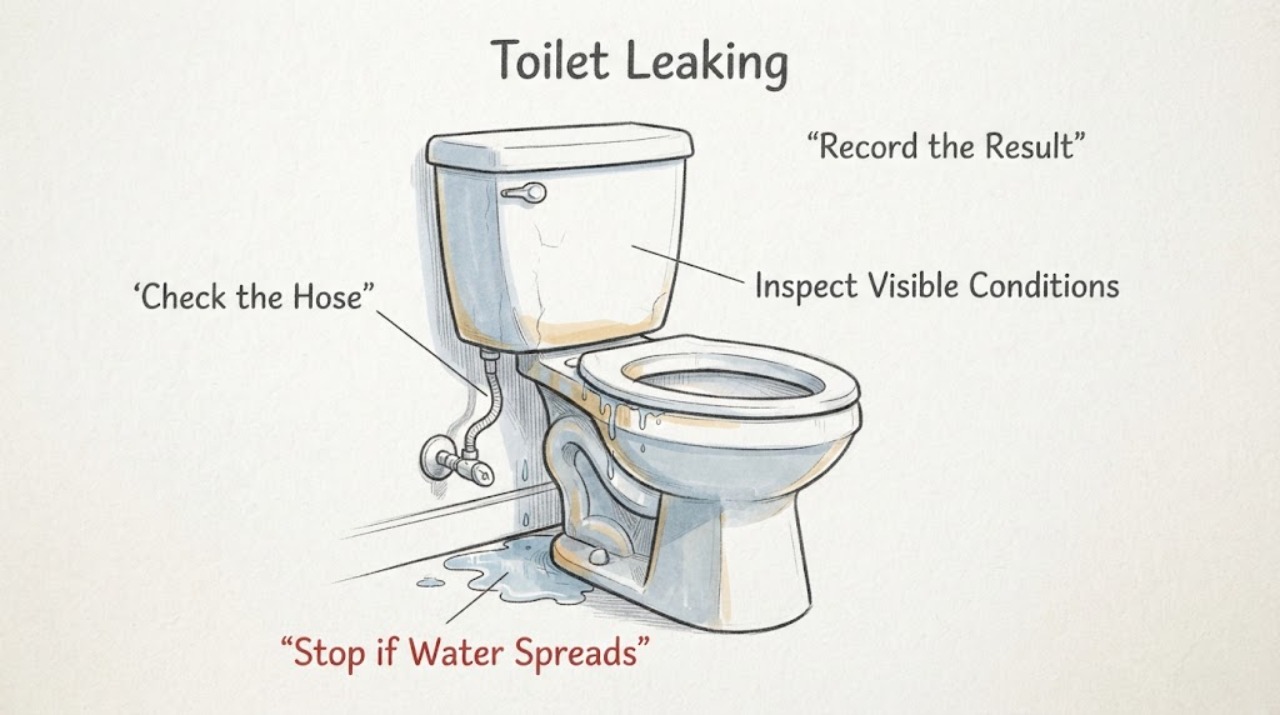
A toilet gasket can leak at several different joints, so first locate the first wet point. Water at the fill-valve shank or supply connection suggests that joint's washer or gasket; water between the tank and bowl points toward a tank-to-bowl seal; water at the bowl base points toward the bowl seal or nearby supply/drain path.
-
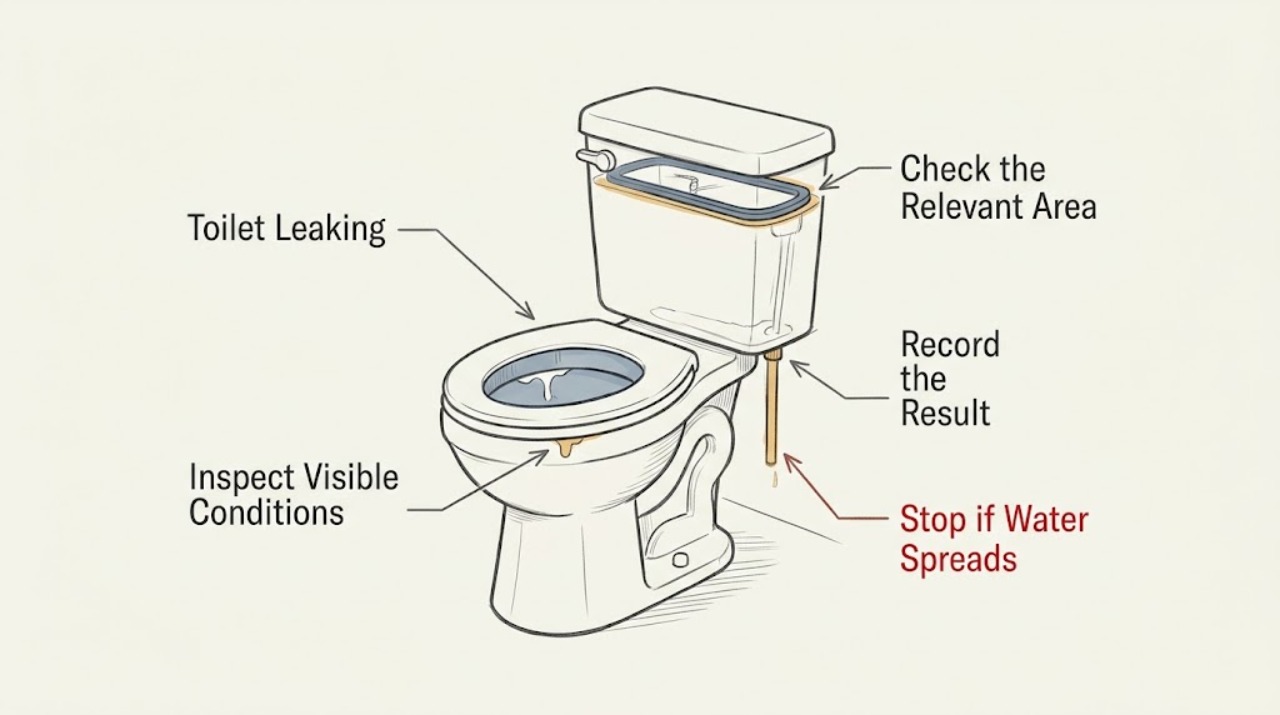
Toilet Leaking: Trace the First Wet Point Before Blaming the Tank Gasket
A leaking toilet should be isolated and traced from the first wet point. A tank-to-bowl seam can involve the tank gasket or mounting hardware, while a leak at the supply connection points to the shutoff, supply line, or its seal; water at the base can instead involve the bowl seal, a crack, or water running down from above.
-
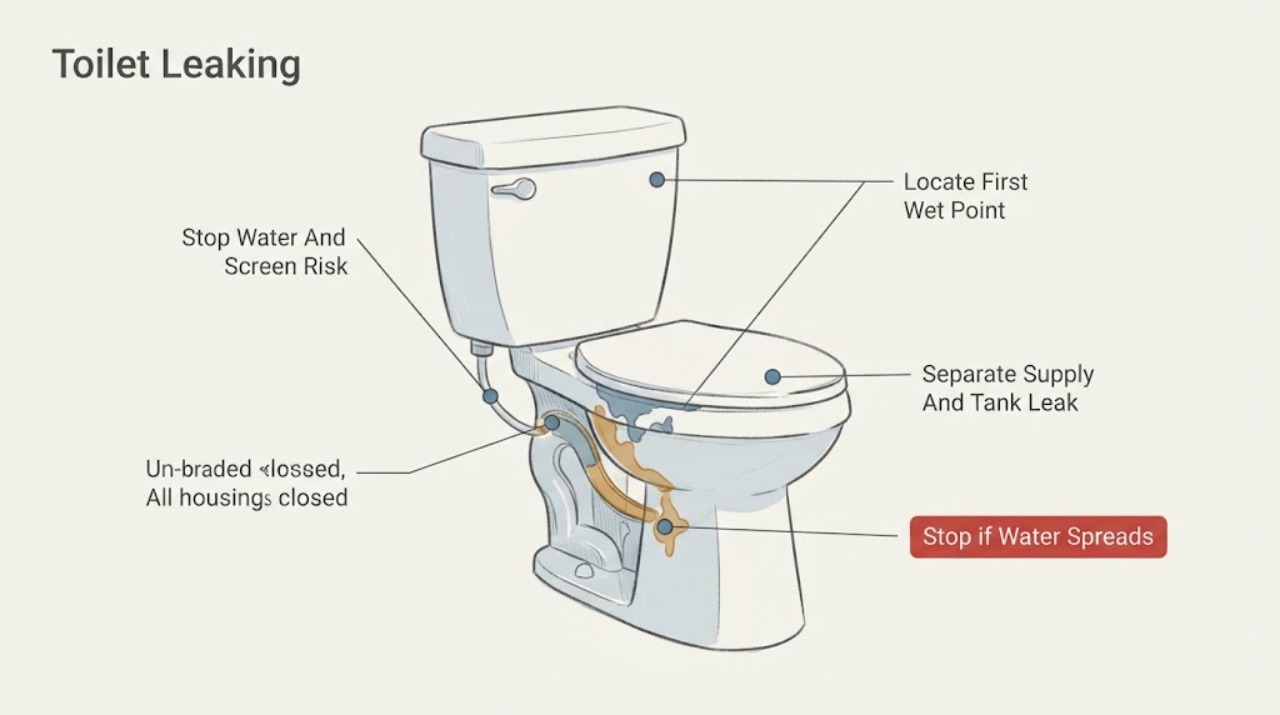
Toilet Leaking: Find the First Wet Point Before Replacing a Seal
Stop flushing and find the first place water appears: the supply connection, tank, tank-to-bowl seam, bowl, or floor/base. If the leak is active, close the toilet's accessible water-supply stop gently; if the valve will not close or water is reaching the floor, call a plumber.
-
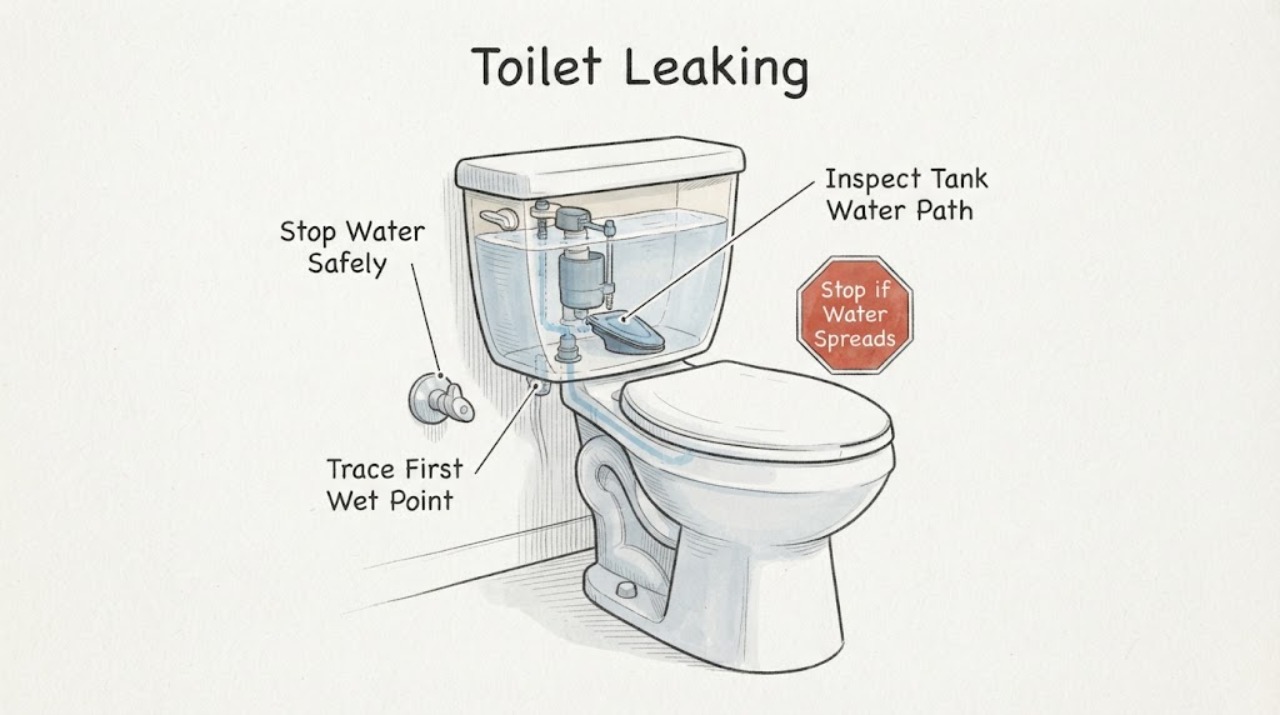
Toilet Leaking: Find the First Wet Point Before You Replace a Seal
A leaking toilet may be losing water from the tank seal or flush valve, the tank-to-bowl gasket, the supply connection, the bowl seal at the floor, or a cracked tank, bowl, or nearby pipe. First close the toilet's water shutoff if it is safe and accessible, keep the floor dry, and trace the first wet point without removing the tank or bowl.
-
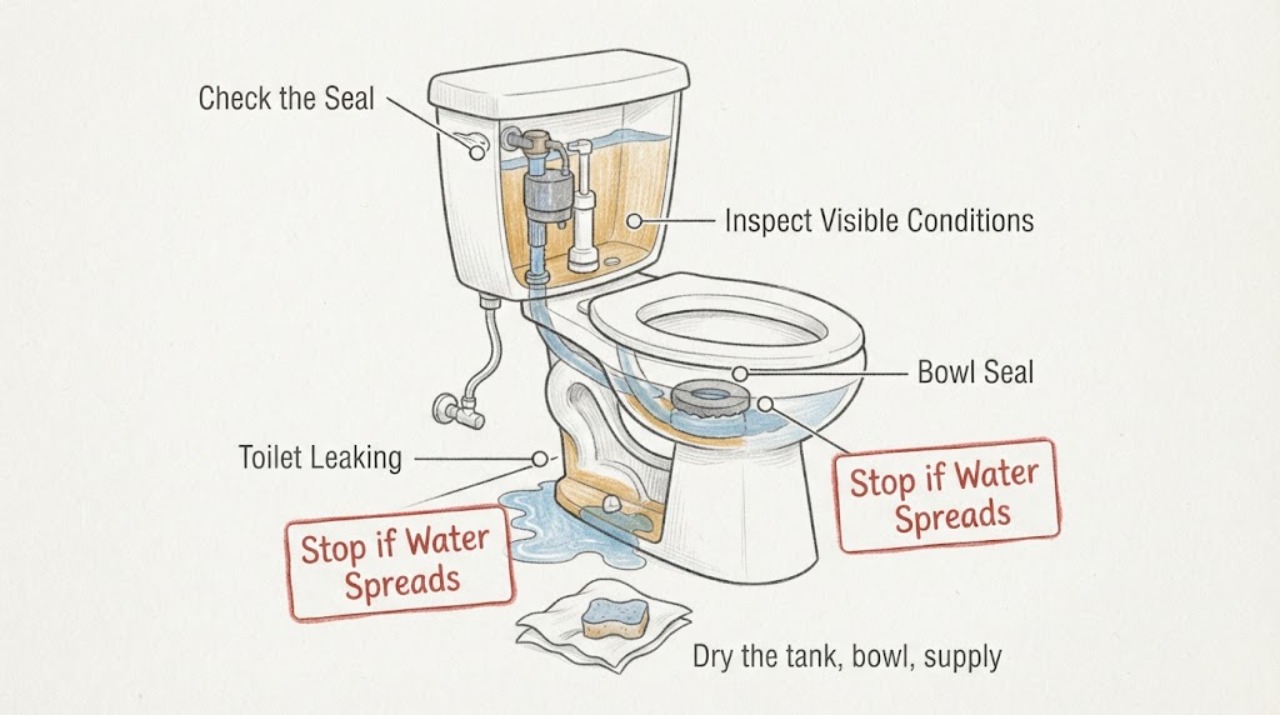
Toilet Leaking: Trace the Water Before Replacing a Part
Close the toilet's water shutoff if water is actively escaping, protect the floor, and trace the highest wet point before buying a part. Water at the supply connection, between tank and bowl, inside the tank, or at the floor has different causes: a loose or damaged supply seal, tank gasket or bolts, a flapper or flush valve, a fill valve or overflow, or a bowl-to-floor seal.
-
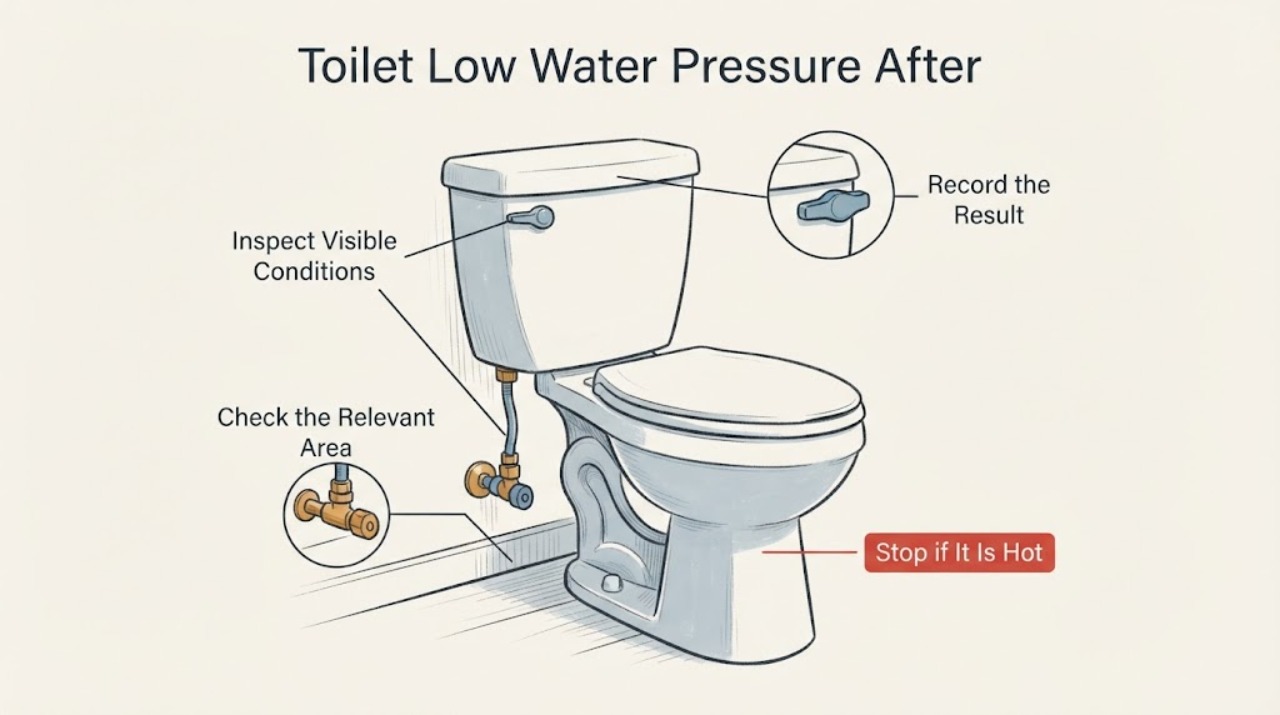
Toilet Low Water Pressure After Installing a Mixed Tap: Safe Checks
If a toilet has low refill flow after a mixed tap was installed, first confirm whether the restriction is only at the toilet or affects the cold supply elsewhere. Look for a partially closed toilet isolation valve, a kinked or strained supply hose, a disturbed stop tap, a leak, or a new pressure drop when the mixed tap is used.
-
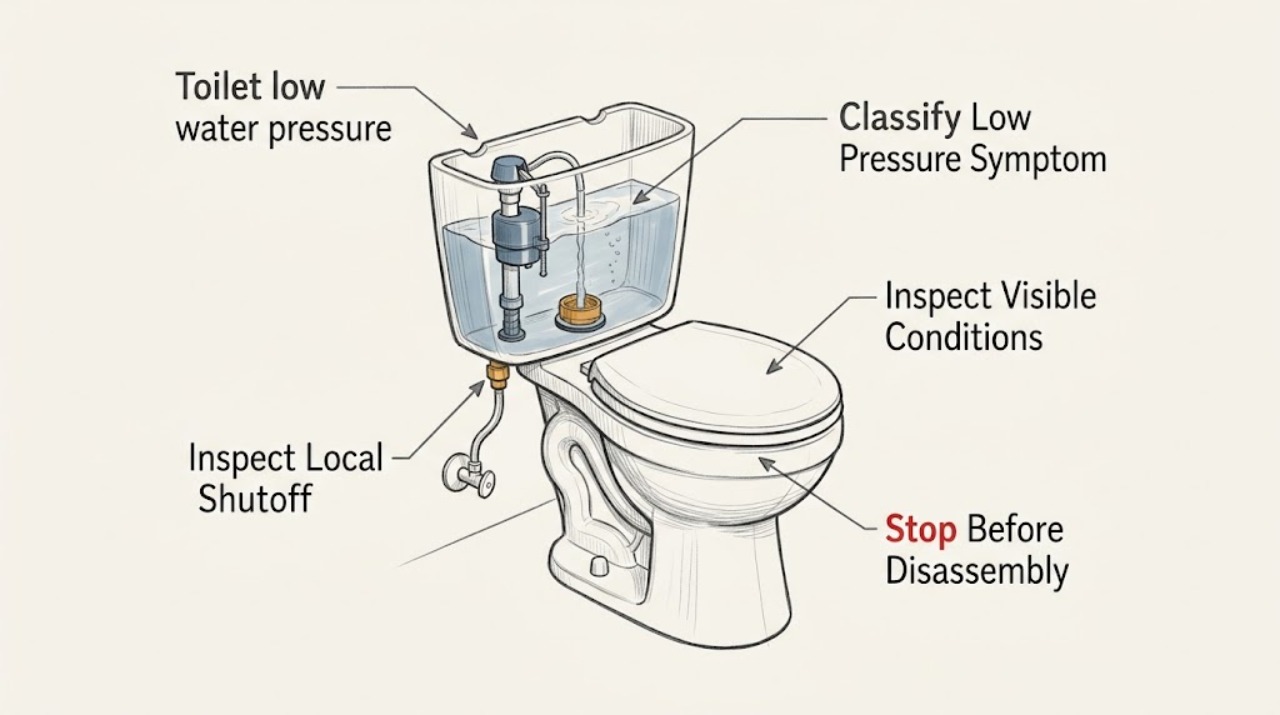
Toilet low water pressure: separate weak flushing from slow tank filling
First decide whether the complaint is a weak flush, a tank that refills slowly, or low pressure at several fixtures. For a tank toilet, check that the local shutoff is open and the supply connection is dry, then observe the tank water level and whether the fill valve stops at the normal line.
-
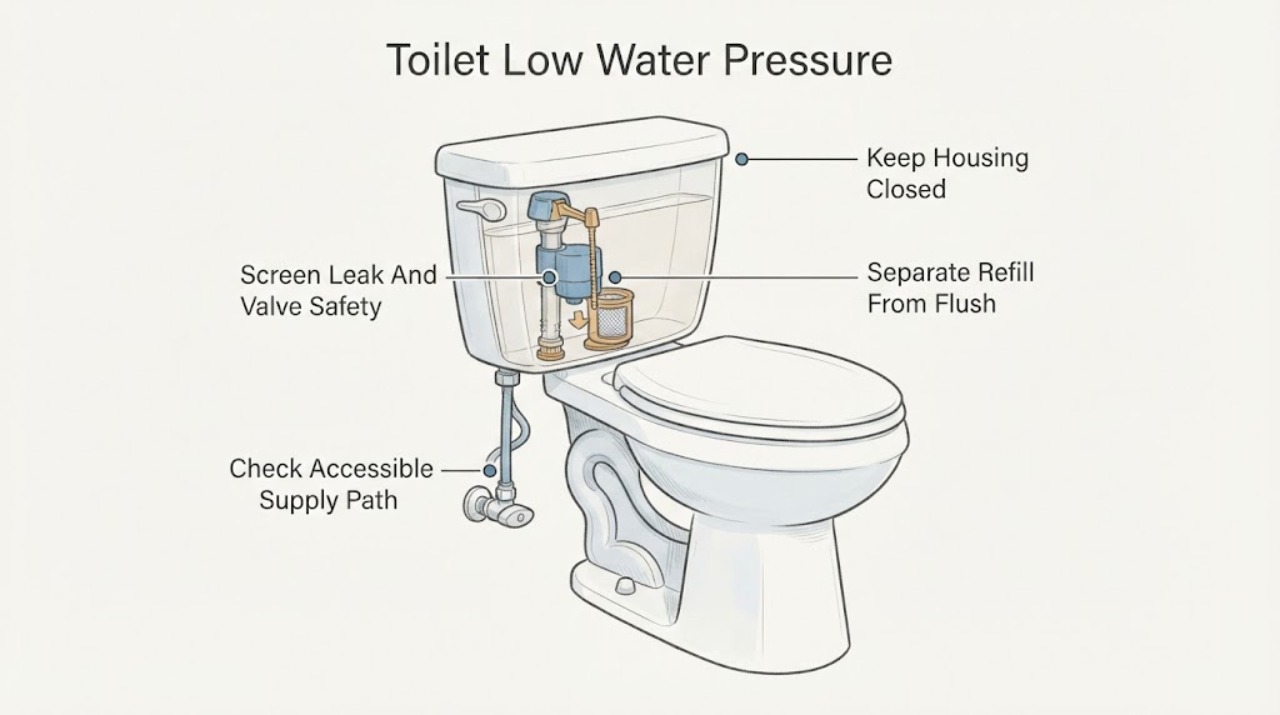
Toilet Low Water Pressure: Separate Slow Refill, Weak Flush, and Pressure-Valve Problems
A toilet that seems to have low water pressure may have a partly closed or restricted supply stop, a kinked hose, debris in the inlet or fill valve, a low tank level, a weak flush setting, a flush-valve problem, or genuinely low pressure affecting the home. First separate slow tank refill from a weak bowl flush: watch the tank level after one flush, then compare another fixture and another toilet without repeatedly cycling a suspect valve.
-
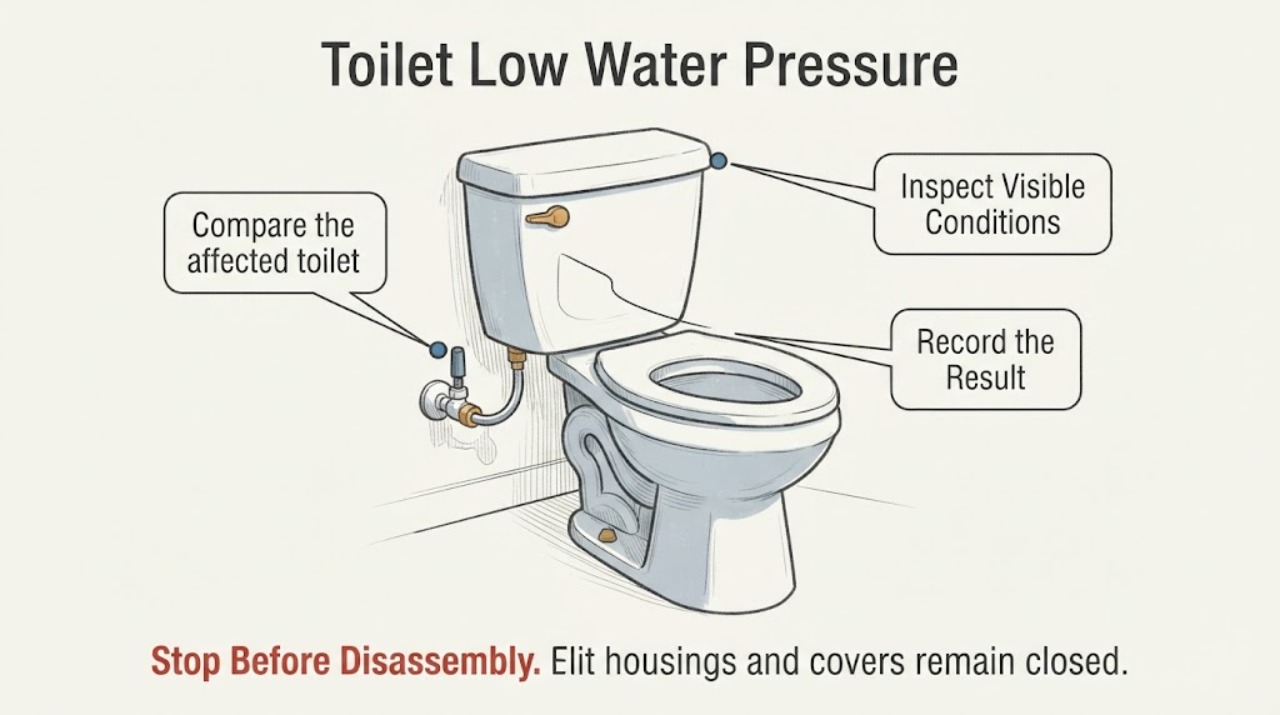
Toilet Low Water Pressure: Check the Tank, Supply, and Flush Path
Toilet low water pressure usually appears as a slow tank refill, a low tank level, or a weak flush, but those symptoms can also come from a partly closed supply stop, a kinked or restricted supply line, a fill-valve inlet, a low tank setting, blocked rim or trapway, or low pressure in the home. Compare this toilet with another fixture first, then make only safe external checks.
-
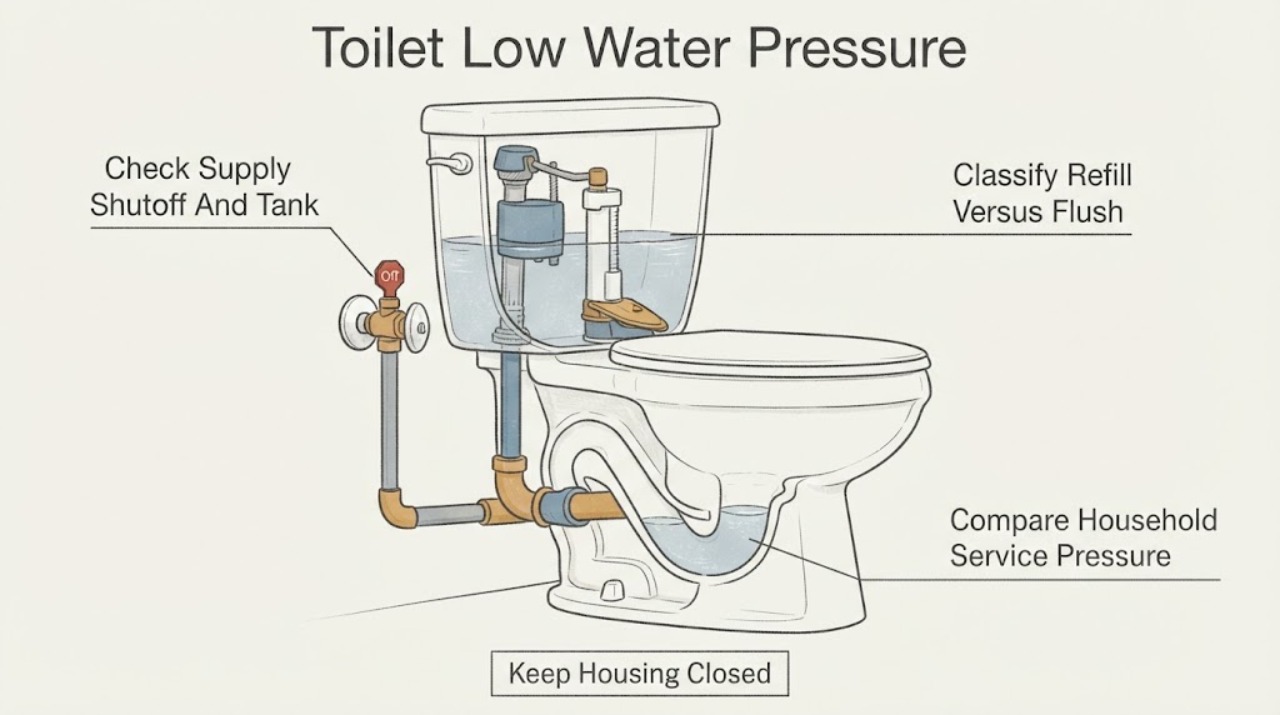
Toilet Low Water Pressure: Separate a Slow Refill from a Weak Flush
“Low water pressure” at a toilet can mean the tank refills slowly, the bowl receives a weak flush, or the whole home has reduced supply pressure. First compare the toilet with another fixture and watch one flush: a slow refill points toward the supply shutoff, inlet, fill valve, or home pressure, while a normal tank level with weak bowl movement points toward the flush valve, rim holes, trapway, waste line, or vent.
-
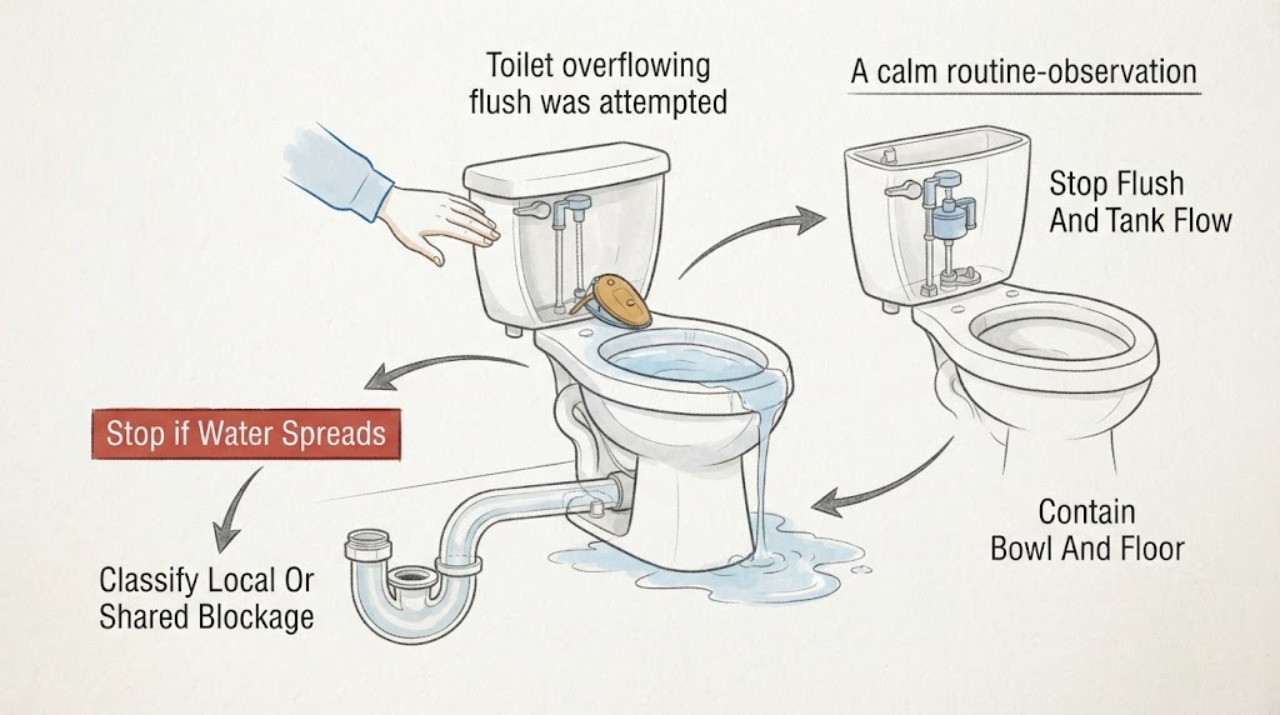
Toilet overflowing flush was attempted: What to Check and What to Do Next
If a toilet is rising after a flush was attempted, do not flush again. Turn the toilet supply valve clockwise if it turns freely; if water is still entering from the tank, remove the tank lid and hold the flapper closed or raise the float without forcing the mechanism.
-
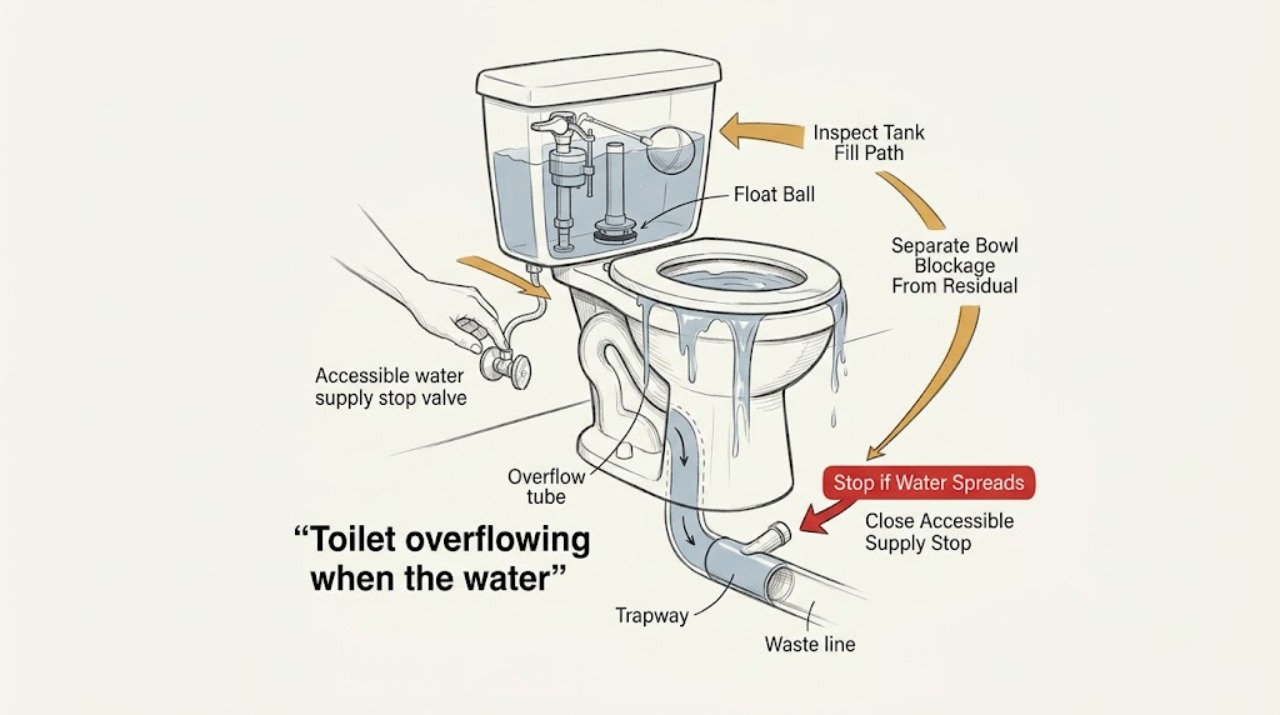
Toilet overflowing when the water supply is accessible: What to Check and What to Do Next
Stop the water before trying to clear an overflowing toilet. Since the supply stop is accessible, turn it clockwise until water stops, do not flush again, and keep people and pets away from contaminated water.
-
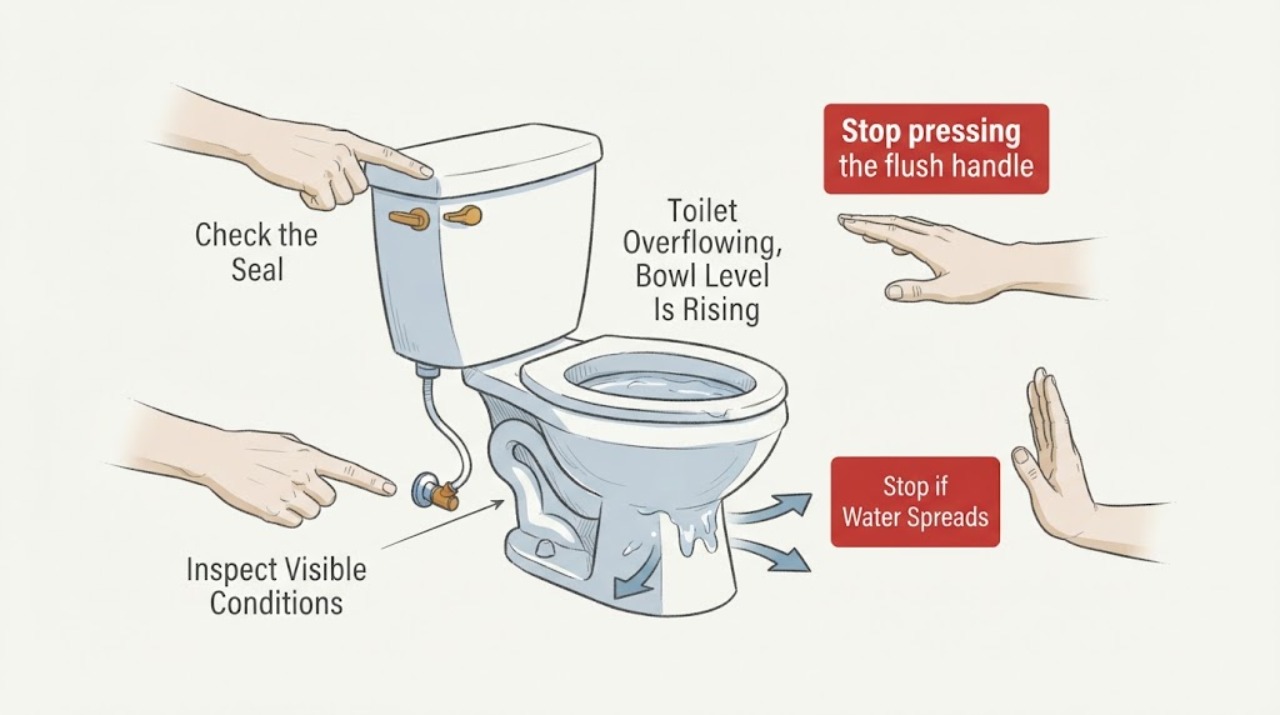
Toilet Overflowing, Bowl Level Is Rising: What to Check and What to Do Next
Stop pressing the flush handle and stop the water supply before the bowl reaches the rim. If the shutoff valve is accessible, close it; if water is still entering from the tank, lift the tank lid and hold the flapper closed or raise the float without forcing the mechanism.
-
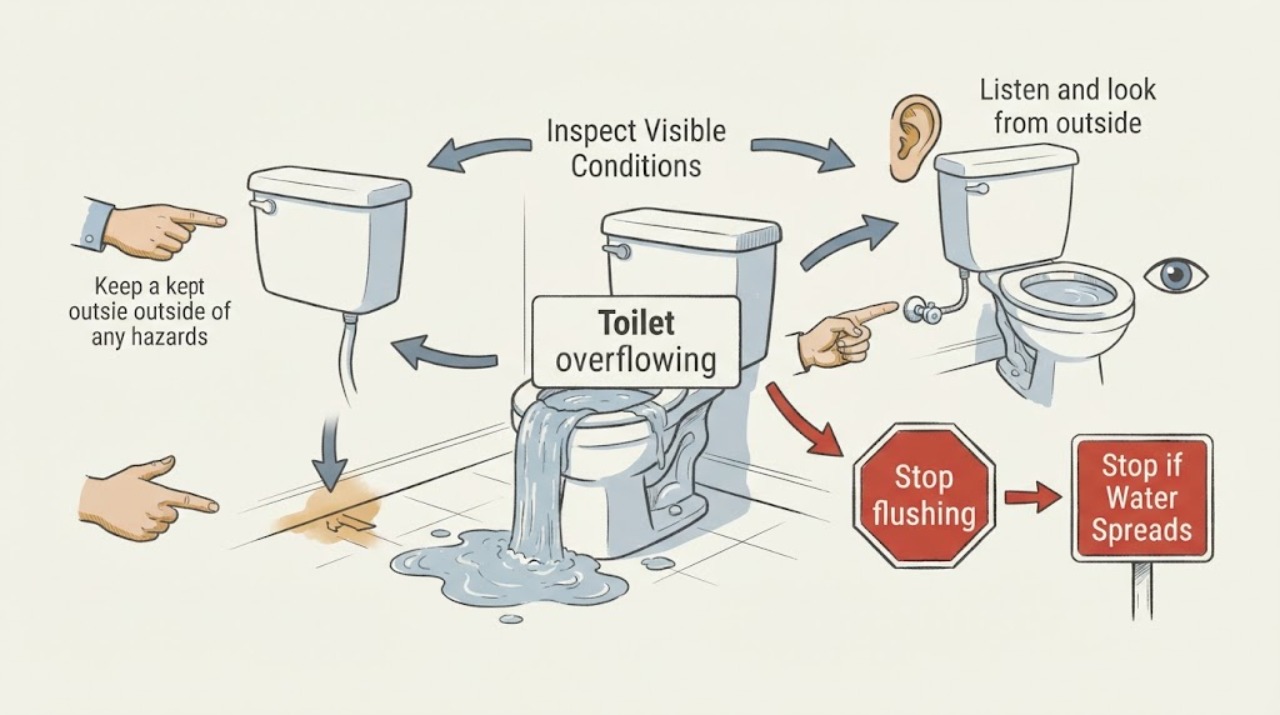
Toilet overflowing: What to Check and What to Do Next
Stop flushing immediately. From a dry, safe position, turn the toilet’s local supply shutoff clockwise if it turns normally, then keep the toilet out of service.
-
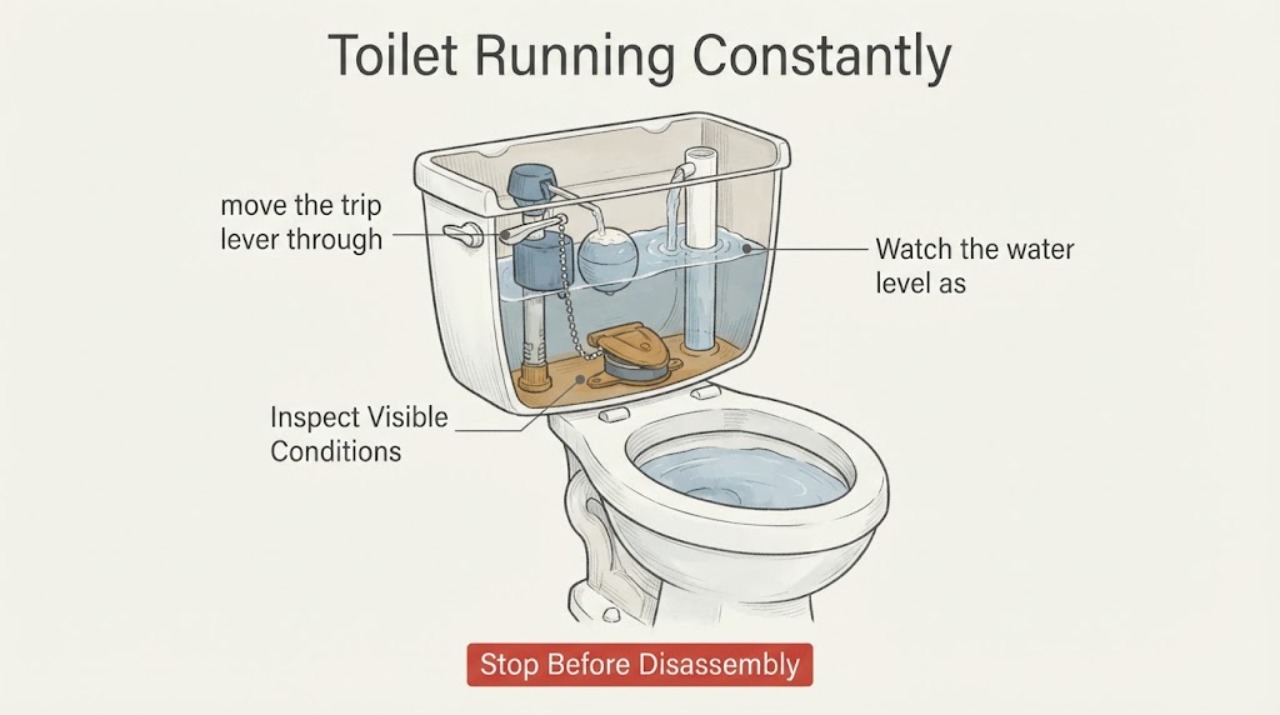
Toilet Running Constantly: Find the Leak and Restore the Shutoff
A toilet that keeps running is usually sending water from the tank into the bowl, or the tank level is high enough to spill into the overflow. Remove the tank lid and watch the water path: a ripple in the bowl with a stable tank level points toward the flush valve or flapper seal; water at the overflow points toward a fill valve, float, or level problem; a lever or chain that does not return can hold the flush valve open.
-
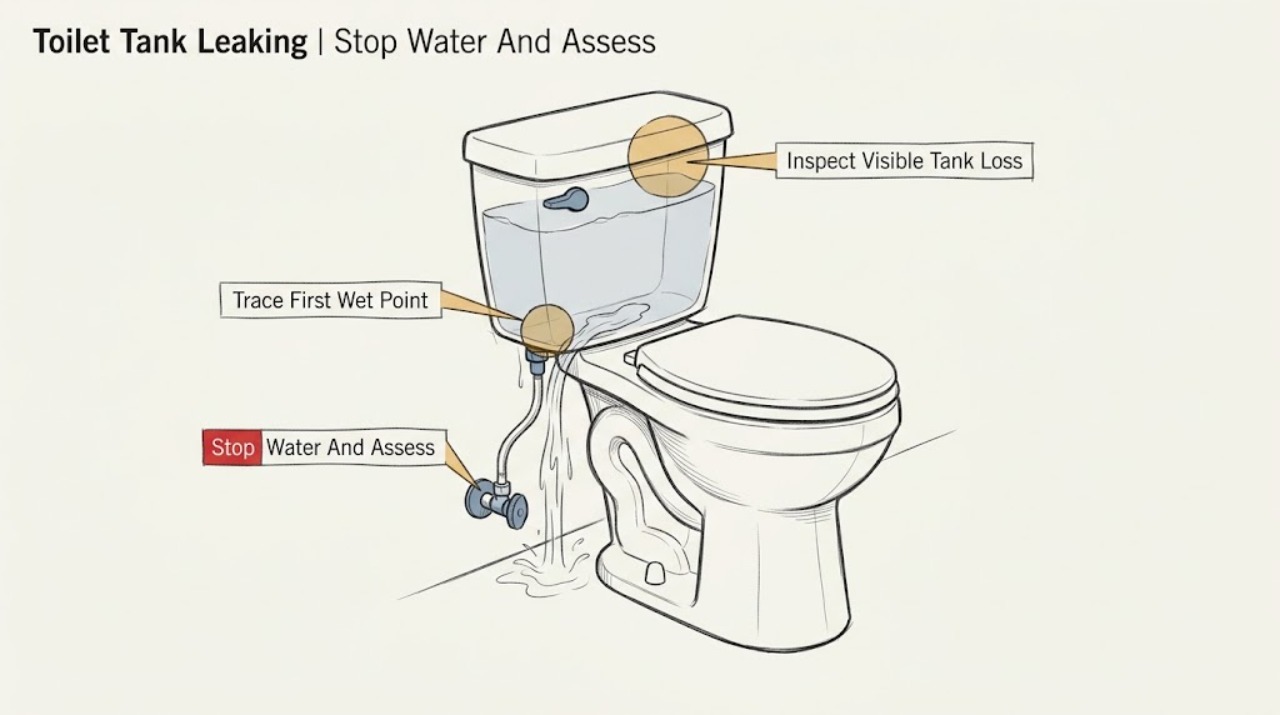
Toilet Tank Leaking: Separate Internal Water Loss from an External Leak
A toilet tank problem can be an internal leak into the bowl or an external leak at the tank, tank-to-bowl seal, flush valve, supply connection, or cracked porcelain. First close the water shutoff if it is dry, accessible, and turns normally, then trace the first wet point without removing the tank.
-
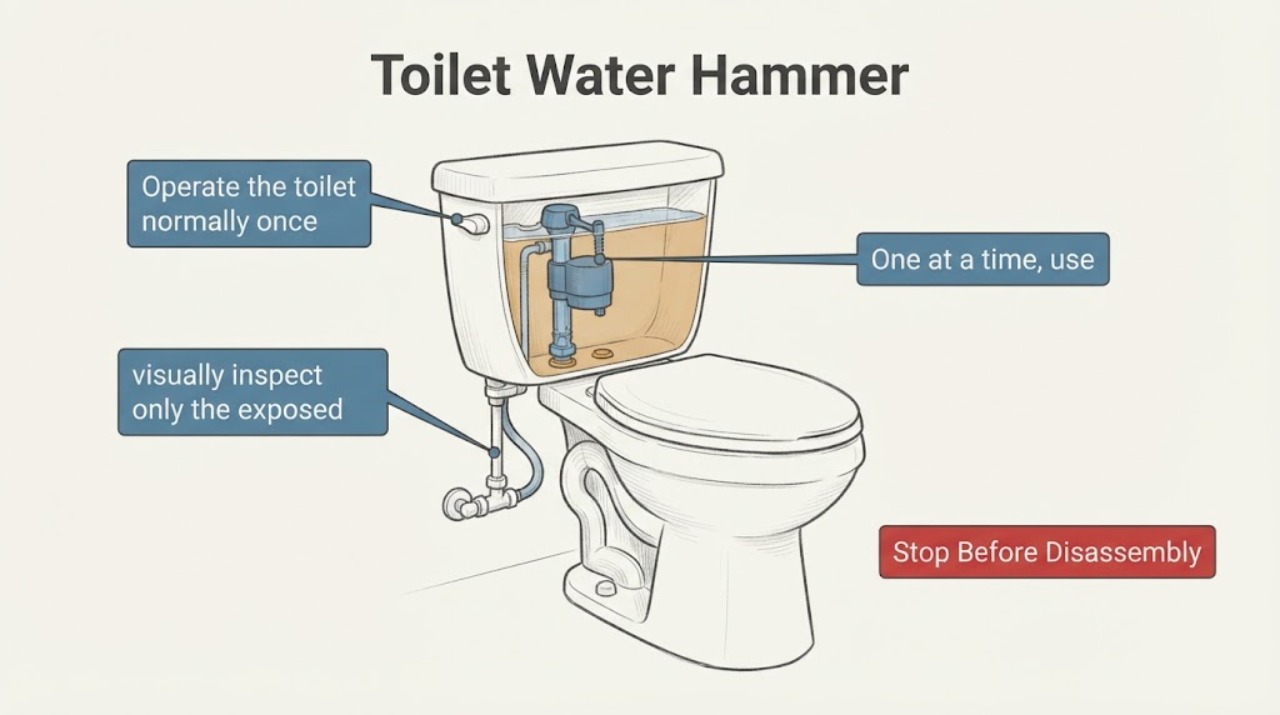
Toilet Water Hammer
A bang or thump immediately after a toilet refills is usually hydraulic shock: water stops or changes direction quickly, and the pressure surge makes a valve, hose, or pipe move. First confirm that the sound is tied to this toilet, look for an accessible loose line or leak without forcing the shutoff, and compare it with other fixtures.
-
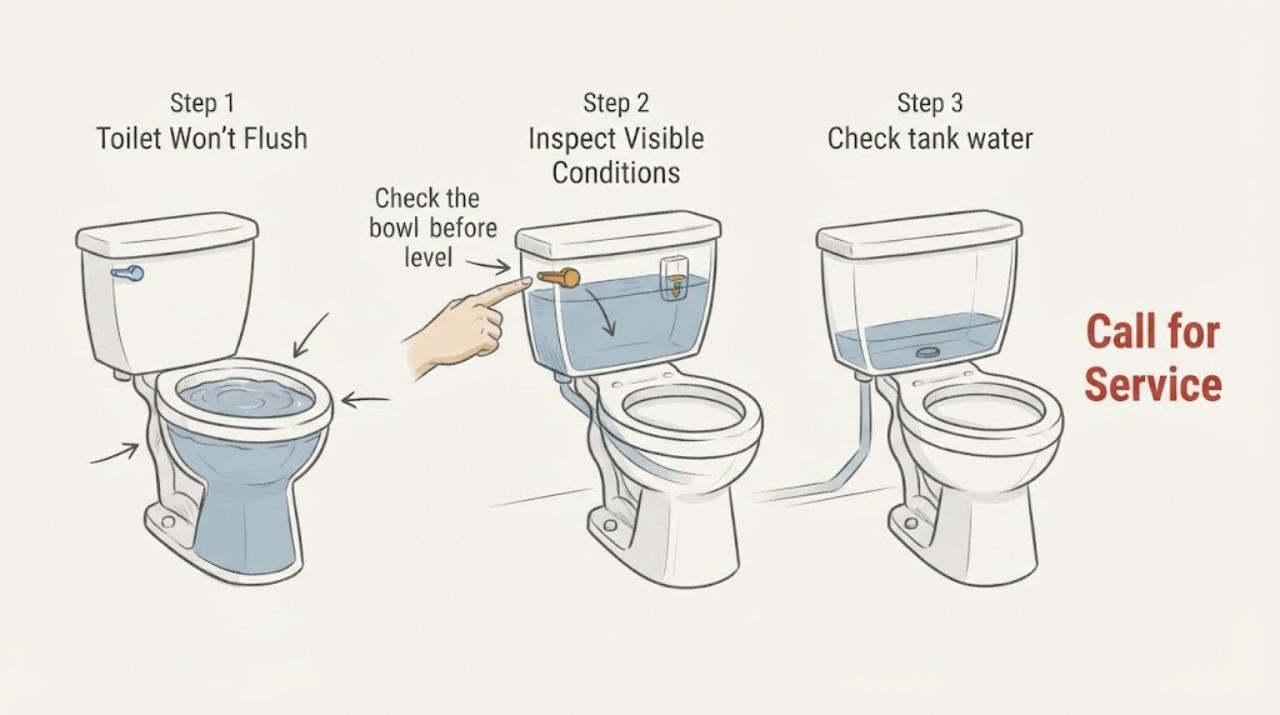
Toilet Won't Flush: Safe Checks and Next Steps
If a toilet won't flush, do not keep pressing the handle or button, especially if the bowl water is rising. First observe whether the control moves normally, whether the tank has water, whether the supply valve is open, and whether the bowl is already full or draining slowly.
-
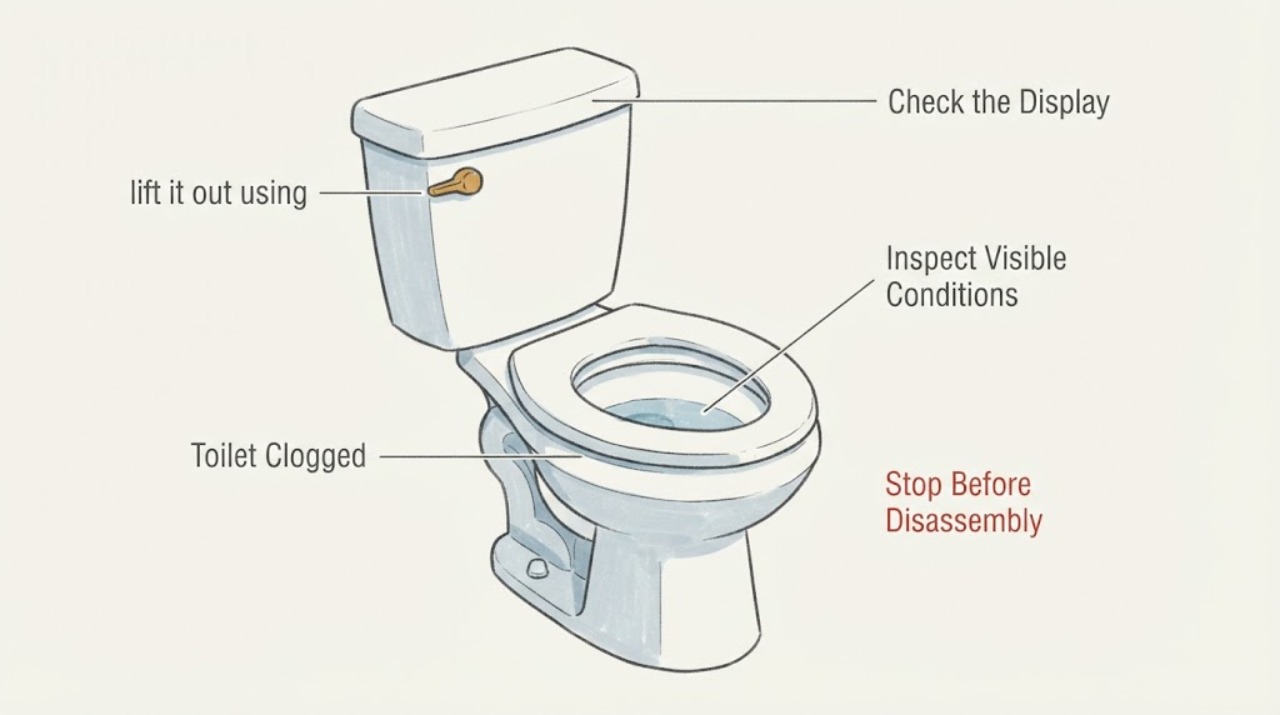
TOTO Toilet Clogged: What to Check and What to Do Next
Do not flush again if the TOTO toilet bowl is rising. Stop an automatic flush, close the toilet's shutoff valve, and, for an electronic TOTO/WASHLET model, disconnect power only from a dry, accessible connection.
-
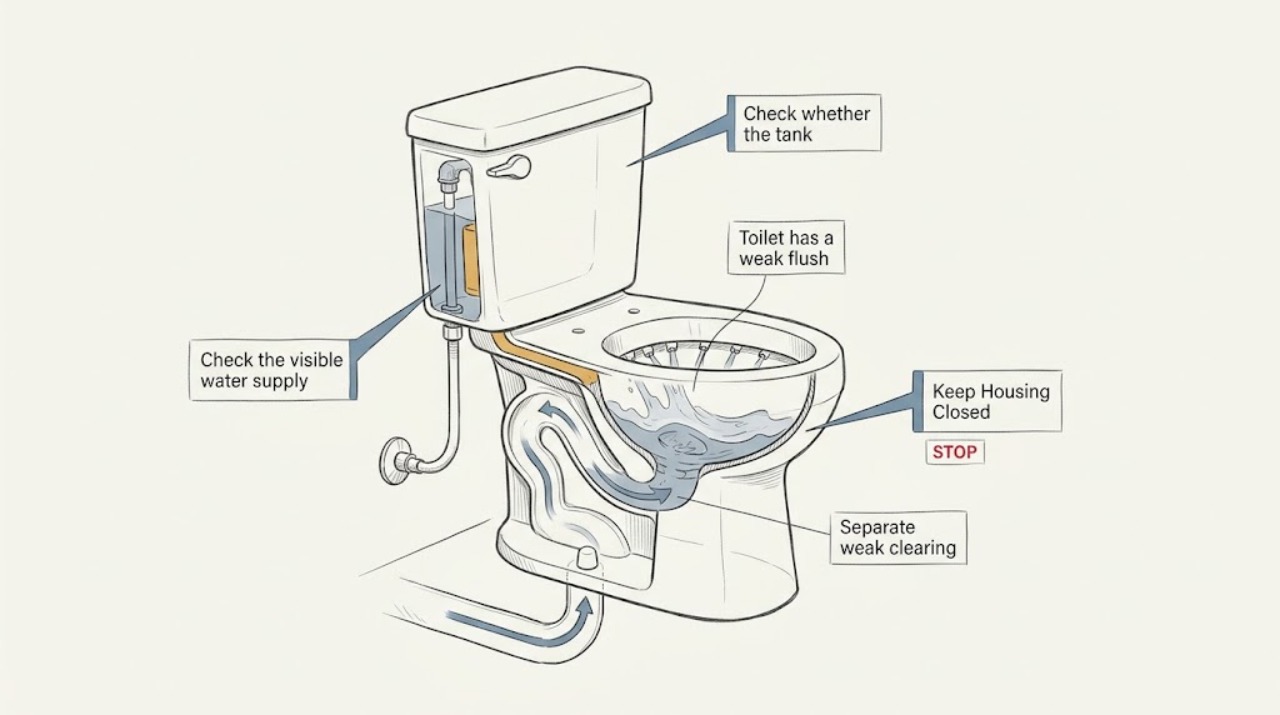
TOTO toilet has a weak flush: What to Check and What to Do Next
A TOTO toilet with a weak flush usually has one of four patterns: the bowl receives too little water, the water path or bowl openings are restricted, the trapway or drain is partly blocked, or the fixture is being used while its tank or supply is still recovering. Start by checking the visible shutoff valve, tank or control status, bowl water behavior, and any accessible filter or supply condition exactly as the model manual allows.
-
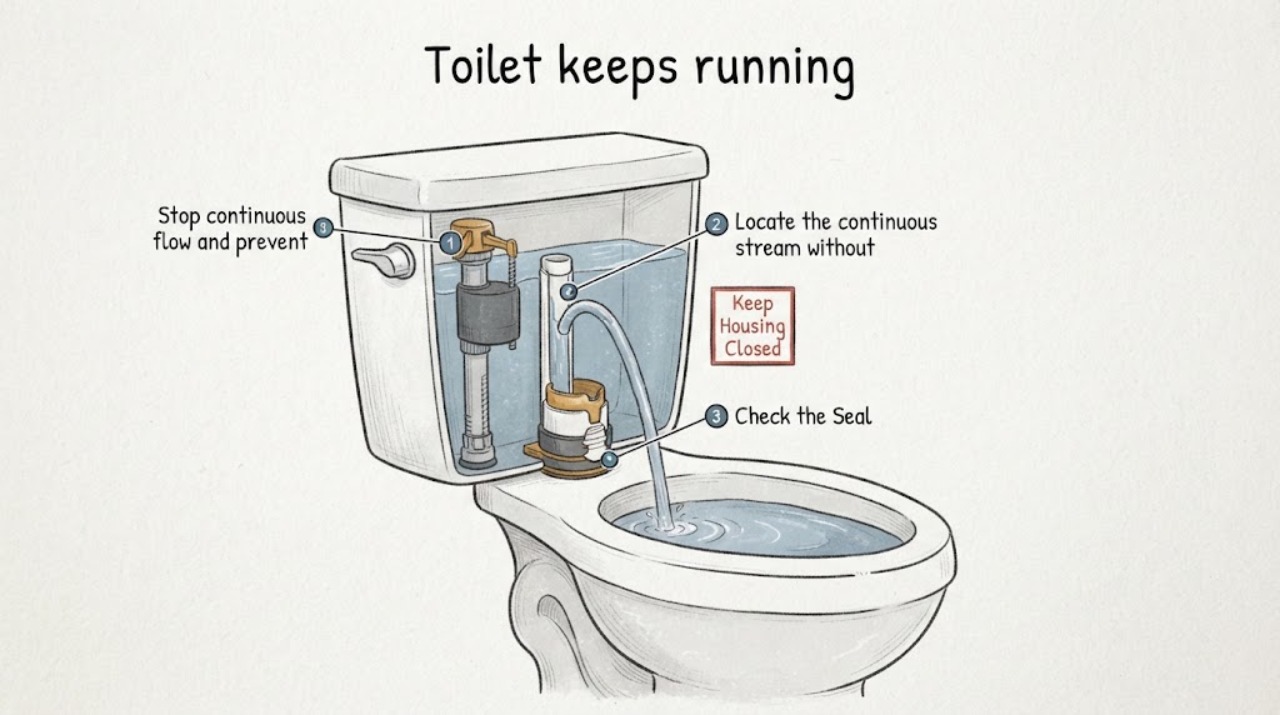
TOTO toilet keeps running: What to Check and What to Do Next
A TOTO toilet that keeps running is usually either still refilling after a flush, sending water from the tank into the bowl through a flush-valve seal or overflow path, or operating a model-specific electronic water cycle. First close the visible toilet shutoff if water is continuous or the bowl is rising, then observe from a dry position whether water enters the tank, trickles into the bowl, or comes from a supply connection.
-
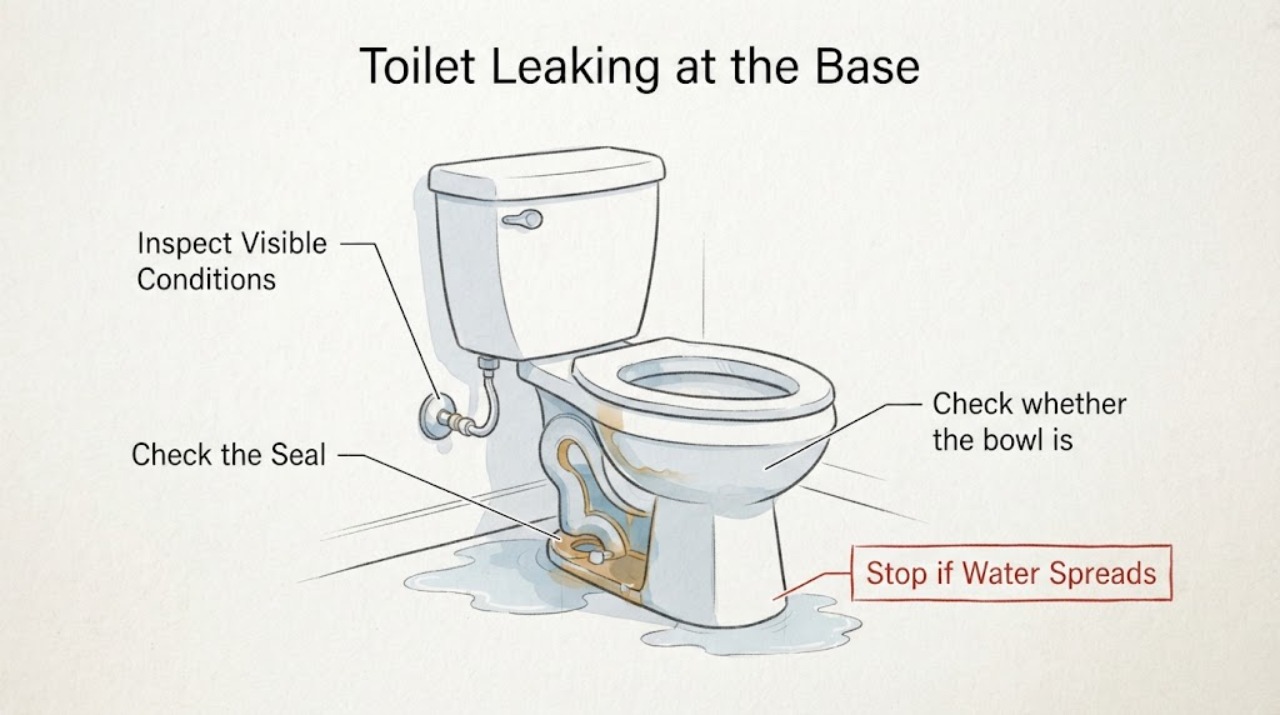
TOTO Toilet Leaking at the Base: What to Check and What to Do Next
A TOTO toilet that appears to leak at the base may have a bowl-to-floor seal or flange problem, but water can also run down from the supply connection, tank fittings, or bowl. Close the accessible shutoff if water is actively escaping, dry the toilet and floor, and identify the first wet point before touching any fastener.
-
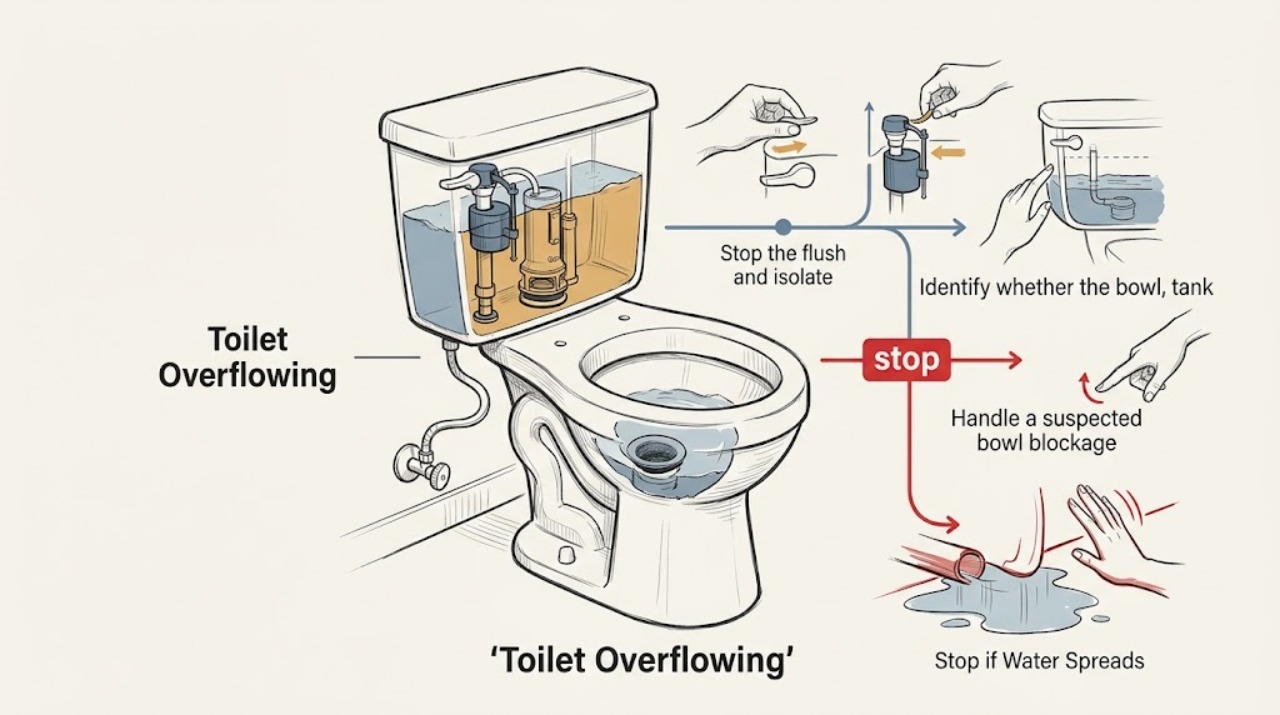
TOTO Toilet Overflowing: What to Check and What to Do Next
Stop pressing the flush handle, button, or sensor and close the toilet's nearby shutoff valve by hand if it is accessible and safe. Do not flush a TOTO bowl that is already clogged.