
On this page
Start here
Quick answer
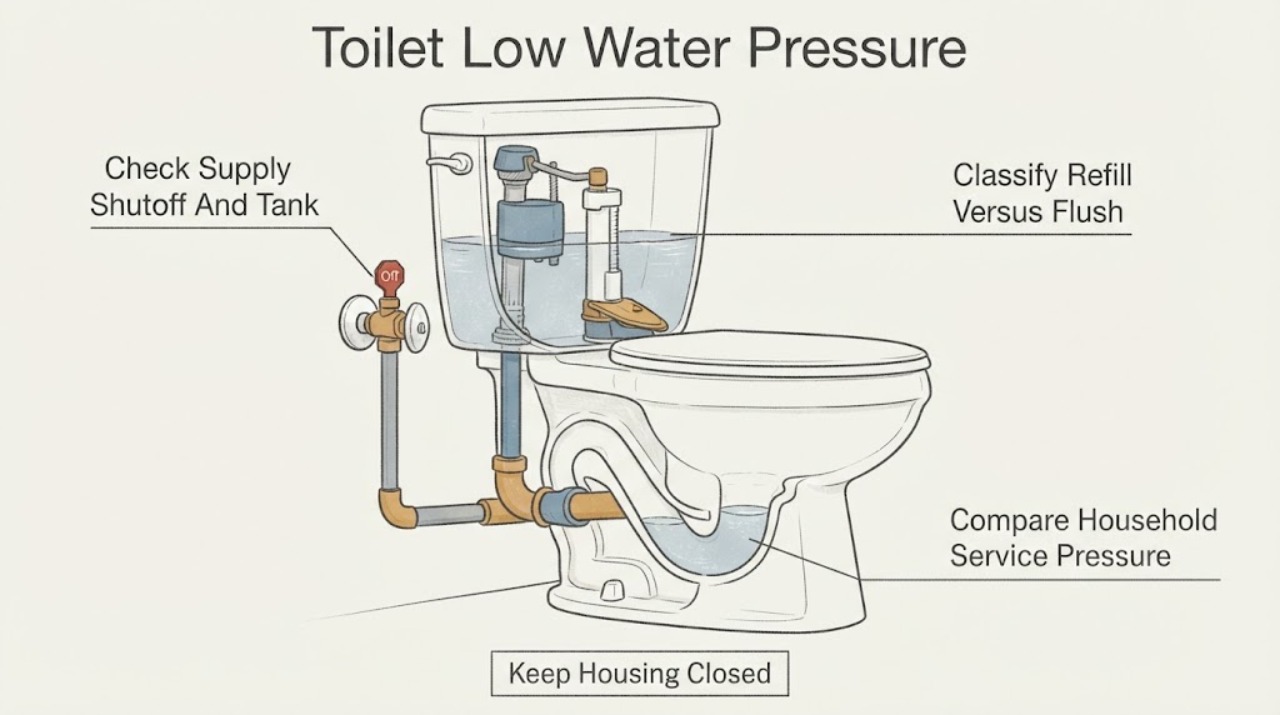
“Low water pressure” at a toilet can mean the tank refills slowly, the bowl receives a weak flush, or the whole home has reduced supply pressure. First compare the toilet with another fixture and watch one flush: a slow refill points toward the supply shutoff, inlet, fill valve, or home pressure, while a normal tank level with weak bowl movement points toward the flush valve, rim holes, trapway, waste line, or vent. Verify the visible shutoff is open and the tank reaches its marked waterline, but do not adjust hidden valves or force a blockage. If the toilet overflows, leaks, the whole home has low pressure, the tank will not refill, or a weak flush remains after accessible checks, stop and arrange qualified plumbing service.
Before you begin
Safety first
- The reader-level scope is observation, accessible shutoff and tank-level checks, fixture comparison, and visible flush-path inspection. Waste-line or vent clearing, toilet removal, pressure-regulator work, concealed leaks, valve disassembly, and contaminated-water cleanup require qualified professionals.
Work through in order
Diagnostic checks
Use only checks that match the exact appliance or system and its official guide.
-
Check 1
Watch one flush from a dry position and note the tank's refill, the bowl's water movement, and whether the problem is slow filling, weak clearing, or overflow; compare the flow at a nearby faucet without creating another toilet flush.
Expected result: Record a slow tank refill, a tank that reaches its waterline but gives a weak bowl flush, low flow at several fixtures, or water rising toward the rim.
Next step: Follow the matching branch: inspect the visible supply and tank level for slow refill, the flush path for weak clearing, or stop water use and call for help when water rises.
Stop if: Do not flush again if the bowl is rising, water is leaking onto the floor, or the tank or supply connection is uncontrolled.
Why this matters
Why: Slow refill points toward the supply shutoff, inlet, fill valve, or household pressure. A full tank with weak bowl movement points toward the flush path or waste line. Several low-flow fixtures suggest a broader supply issue. Rising water indicates an obstruction and an immediate overflow risk.
-
Check 2
Inspect the accessible toilet supply shutoff and, without removing internal valve parts, confirm it is open; lift the tank lid and compare the settled water level with the tank or flush-valve mark.
Expected result: Record a fully open shutoff and water at the marked line, a partly closed shutoff, a low tank level, sediment or a visibly restricted inlet, or water that never stops filling.
Next step: Open only a plainly accessible shutoff slowly and observe for leaks; use the model instructions for any tank-level adjustment, and arrange plumbing service for a continuing fill, damaged valve, leak, or unresolved low level.
Stop if: Do not force a seized shutoff, remove the supply line, dismantle a fill valve, or leave the tank unattended while water is running.
Why this matters
Why: A partly closed shutoff or low tank level can reduce refill or flush volume. A tank that keeps filling, a restricted inlet, or a valve that does not respond can waste water or require fill-valve service rather than a pressure adjustment.
-
Check 3
If the toilet and other fixtures are all weak, observe whether the reduction is present at multiple cold-water fixtures and, only if you already have a suitable hose-bib pressure gauge and know how to use it safely, record the static reading with water use stopped.
Expected result: Record normal flow elsewhere, low flow throughout the home, a pressure reading below the normal service range, a sudden change from prior performance, or no reliable way to measure.
Next step: For a whole-home reduction or sudden change, limit water use and contact the utility or a qualified plumber; for an isolated toilet, return to the tank and flush-path checks.
Stop if: Do not adjust a pressure-regulating valve, open a meter or utility fitting, or test pressure near electrical equipment or active leaks.
Why this matters
Why: A whole-home reduction points away from the toilet bowl and toward a leak, regulator, utility, or building supply issue. A single weak toilet with normal nearby fixtures is more likely to have a local supply or flush-path problem. A measurement without context does not identify which component failed.
-
Check 4
With the tank at its marked level and no overflow risk, inspect the visible flapper or flush-valve movement, chain or actuator slack, bowl rim holes, and any visible jet or opening for obvious mineral or foreign-material buildup; do not reach into the trapway.
Expected result: Record a valve that opens and closes fully, a chain or actuator that does not lift the valve correctly, blocked visible rim openings, a normal visible flush path, or a bowl that swirls weakly despite normal tank level.
Next step: Make only a model-directed external adjustment to a chain or actuator; use the manufacturer's cleaning guidance for accessible mineral buildup, and arrange service if the path is hidden, blocked, or still weak.
Stop if: Do not drill, use sharp objects in openings, remove the toilet, dismantle the flush valve, or pour chemical drain opener into the bowl or tank.
Why this matters
Why: A valve that does not open fully or visible openings that are obstructed can reduce flush water entering the bowl. A normal visible path with weak clearing suggests a concealed trapway, waste line, vent, or fixture-design issue rather than low supply pressure.
-
Check 5
After one accessible correction, allow the tank to refill fully and perform one controlled flush while watching the bowl, tank, supply connection, and floor for normal clearing, refill, and leaks.
Expected result: Record a complete flush with normal refill, improved but still weak clearing, the same low-pressure symptom, slow or incomplete refill, overflow, or a new leak.
Next step: Stop repeated testing and arrange qualified plumbing service for any unresolved or recurring result; provide the refill time, tank level, fixture comparison, and exact leak or overflow location.
Stop if: Do not keep flushing a slow or rising bowl, tighten fittings aggressively, remove the toilet, or open concealed plumbing.
Why this matters
Why: Improvement after a fully open shutoff, correct waterline, or visible valve adjustment supports a local setting or supply issue. Persistence, recurrence, overflow, or leakage means the concealed flush path, fill valve, waste line, vent, or supply needs professional diagnosis.
Use your observations
Decision map
Find the observation that best matches what you see, then follow the next safe action.
-
PATH 01Safety boundary
What you see
The tank fills slowly or never reaches its mark, while the nearby faucet has normal flow and the bowl is not overflowing.
Do this next
Confirm the accessible shutoff is open and use the model instructions for tank-level or fill-valve care; arrange plumbing service for a restricted inlet, continuing fill, leak, or unresolved low level.
Why this path and its safety boundary
Why it matters: The toilet's supply shutoff, inlet, fill valve, or local connection is more suspect than household water pressure.
Safety stop: Do not force the shutoff, remove the supply line, or dismantle the fill valve.
-
PATH 02Safety boundary
What you see
The tank reaches its marked level and refills normally, but bowl movement or waste clearing is weak.
Do this next
Inspect only visible valve movement and openings; arrange plumbing service if the visible path is normal or the weak flush persists.
Why this path and its safety boundary
Why it matters: The flush valve, flapper or actuator, rim holes, jet, trapway, waste line, or vent is more likely than low supply pressure.
Safety stop: Do not drill openings, remove the toilet, or use chemical drain products.
-
PATH 03Safety boundary
What you see
The toilet and multiple other fixtures have reduced flow or the home's service pressure changed suddenly.
Do this next
Limit water use and contact the utility or a qualified plumber; provide the fixture comparison and any safe gauge observation.
Why this path and its safety boundary
Why it matters: A leak, pressure-regulating device, utility restriction, or building supply problem may be affecting the whole home.
Safety stop: Do not adjust a pressure-regulating valve, open utility equipment, or keep running water when a leak is suspected.
-
PATH 04Safety boundary
What you see
The bowl rises toward the rim, overflows, or drains too slowly after a flush despite a normal tank level.
Do this next
Stop water use at the toilet, prevent contact with contaminated water, and arrange qualified plumbing service; a correctly used plunger may be considered only when there is no chemical residue and the fixture is stable.
Why this path and its safety boundary
Why it matters: A trapway, waste line, or vent obstruction is possible and the toilet is not safe to keep flushing.
Safety stop: Do not flush repeatedly, pour chemicals into the bowl, remove the toilet, or open concealed drain lines.
-
PATH 05Safety boundary
What you see
Water leaks at the tank, supply connection, bowl base, or floor, or the low-pressure or weak-flush symptom returns after a temporary improvement.
Do this next
Close the accessible toilet shutoff if it operates safely, keep the toilet out of service, and arrange prompt plumbing inspection.
Why this path and its safety boundary
Why it matters: A seal, valve, fixture, supply, or concealed drain fault remains unresolved and can damage the structure.
Safety stop: Do not overtighten fittings, remove the bowl or tank, or continue flushing a leaking or recurring fixture.
Helpful context
Understand the symptom
“Low pressure” is not always a supply-pressure fault
A toilet uses stored tank water for a gravity flush, so a weak flush can occur even when a nearby faucet has normal flow. The first useful split is refill versus flush: a tank that takes a long time to fill suggests the supply path or fill valve, while a full tank followed by weak bowl movement suggests the flush valve, rim holes, trapway, waste line, or vent. Compare symptoms before changing parts.
Use the tank waterline and other fixtures as clues
Check whether the tank reaches its marked waterline after a flush and whether another fixture has the same reduced flow. A closed or partly closed supply shutoff can limit refill. Low pressure at several fixtures points to a home supply, leak, regulator, or utility issue rather than the toilet alone. If the tank is full but the bowl swirl or clearing action is poor, look at the flush path instead.
Overflow and hidden drain work are stop points
A bowl that rises, an active leak, or water escaping around the toilet needs immediate water control and a professional boundary. Do not keep flushing an obstructed toilet, use harsh drain chemicals, remove the toilet, or open a wall or floor to reach a waste line. A visible tank or supply check is different from clearing concealed plumbing.
Safety boundary
Stop conditions
- Stop flushing for a rising or overflowing bowl, wastewater on the floor, an uncontrolled fill, or a leak at the tank, supply, bowl, or base.
- Do not pour chemical drain opener into the bowl or tank and do not mix products already present.
- Do not force a seized shutoff, dismantle the fill or flush valve, drill rim or jet openings, remove the toilet, or open concealed waste or vent lines.
- Treat low flow at several fixtures or a sudden whole-home pressure change as a supply or leak issue and arrange utility or qualified plumbing help.
- Arrange qualified plumbing service for persistent or recurring weak flush, slow refill, a tank that will not reach its mark, hidden blockage, repeated leak, or any unsafe water condition.
When checks do not resolve it
Need a professional?
Arrange urgent plumbing help for an overflowing bowl, wastewater on the floor, uncontrolled filling, or an active leak that cannot be isolated safely. Arrange prompt service for a weak flush with a normal tank level, a tank that repeatedly fills slowly or never reaches its mark, recurring symptoms, a blocked or inaccessible trapway or waste line, or low flow throughout the home. A homeowner-level check is limited to observing one flush, verifying the accessible shutoff and tank waterline, comparing other fixtures, and inspecting visible valve or opening conditions without dismantling plumbing.
Safety scope: The reader-level scope is observation, accessible shutoff and tank-level checks, fixture comparison, and visible flush-path inspection. Waste-line or vent clearing, toilet removal, pressure-regulator work, concealed leaks, valve disassembly, and contaminated-water cleanup require qualified professionals.
Common questions
FAQ
Does low water pressure always cause a weak toilet flush?
No. A toilet can have a full tank and still flush weakly because of the flush valve, rim openings, trapway, waste line, or vent. A slow refill or low flow at several fixtures points more toward a supply-pressure or local inlet problem.
What should I check when a toilet tank fills slowly?
Confirm the accessible supply shutoff is open and check whether the tank reaches its marked waterline. If it continues filling, the inlet is restricted, the valve is damaged, or a leak appears, stop adjusting and arrange plumbing service.
Why is the toilet tank full but the flush still weak?
A normal tank level shifts attention from supply pressure to the flush valve or flapper, chain or actuator movement, rim holes, jet, trapway, waste line, or vent. Inspect only visible conditions and arrange service for hidden or persistent blockage.
How can I tell if the whole house has low water pressure?
Compare the toilet with multiple fixtures. If flow is reduced everywhere or changed suddenly, a leak, regulator, utility restriction, or building supply issue is more likely. EPA describes checking service pressure with a suitable hose-bib gauge and recommends professional help for abnormal pressure or regulator work.
When should I stop troubleshooting a low-pressure toilet?
Stop for a rising or overflowing bowl, wastewater on the floor, an uncontrolled fill, a leak, a seized shutoff, or low flow at several fixtures. Arrange a plumber for a persistent weak flush, slow refill, hidden trapway or waste-line problem, recurring fault, or any condition that needs valve, pressure-regulator, or toilet removal work.
Read the exact guide
Official sources
- Home MaintenanceU.S. Environmental Protection Agency WaterSense · EPA WaterSense home-maintenance guidance used for whole-home pressure and leak branches; it does not diagnose a particular toilet's flush path.
- Troubleshooting GuideKohler Co. · Kohler toilet troubleshooting guidance used for general diagnostic branches; a particular toilet's model instructions control tank marks and component access.
- Residential ToiletsU.S. Environmental Protection Agency WaterSense · EPA WaterSense toilet guidance used to explain that flush performance is distinct from water-use labeling; it does not establish a pressure setting for an individual toilet.
- Installation GuideKohler Co. · Kohler installation and troubleshooting guidance used for general toilet flush-path differentiation; exact fixture model and local plumbing requirements control.
Community feedback
Share a repair observation
Share a plain-text repair observation. Accepted observations are published automatically; this page may take a moment to update.