
Repair problem
Low Water Pressure Troubleshooting Guides
Published FixGraph guidance for diagnosing and responding to low water pressure.
Matching published guides
Choose a guide that matches the service, equipment, and conditions you are seeing.
-
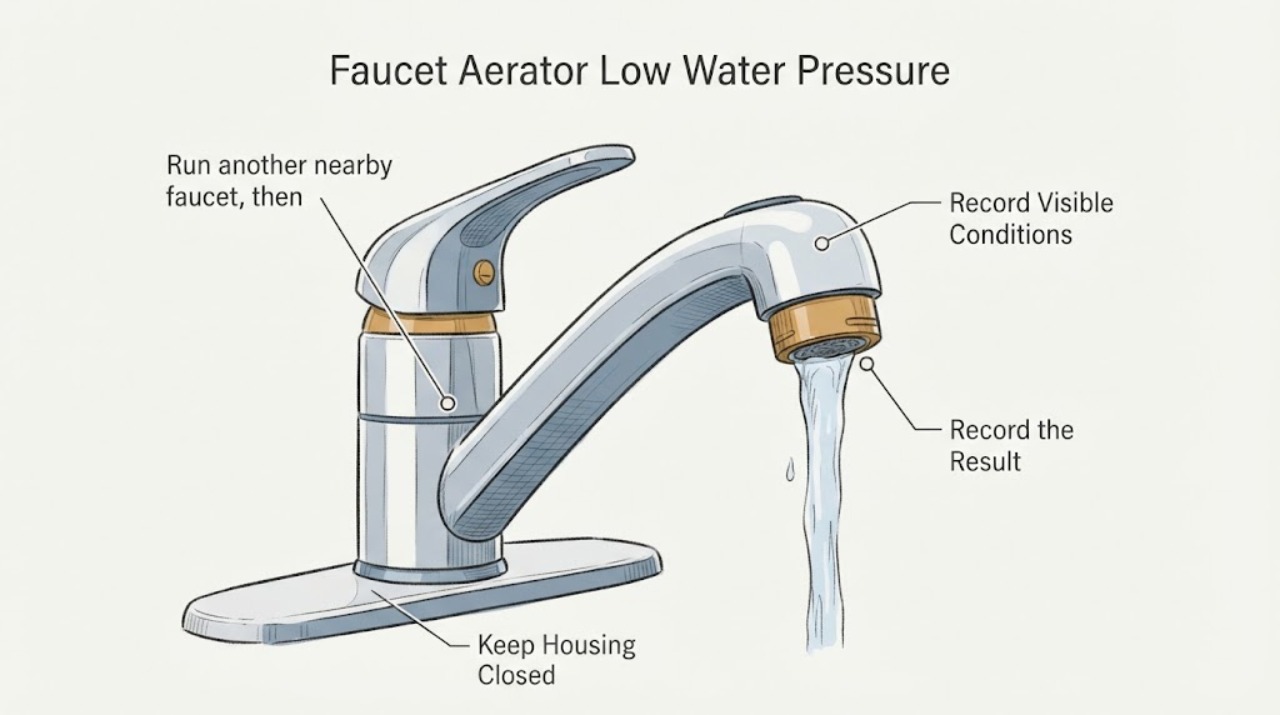
American Standard Faucet Aerator Low Water Pressure: What to Check and What to Do Next
If an American Standard faucet has weak flow, first compare this faucet with another fixture and note whether hot, cold, or both sides are affected. When the problem is isolated to this outlet, inspect the faucet aerator: American Standard identifies dirt in an aerator as a cause of distorted or reduced flow and directs the user to remove it and rinse it clean.
-
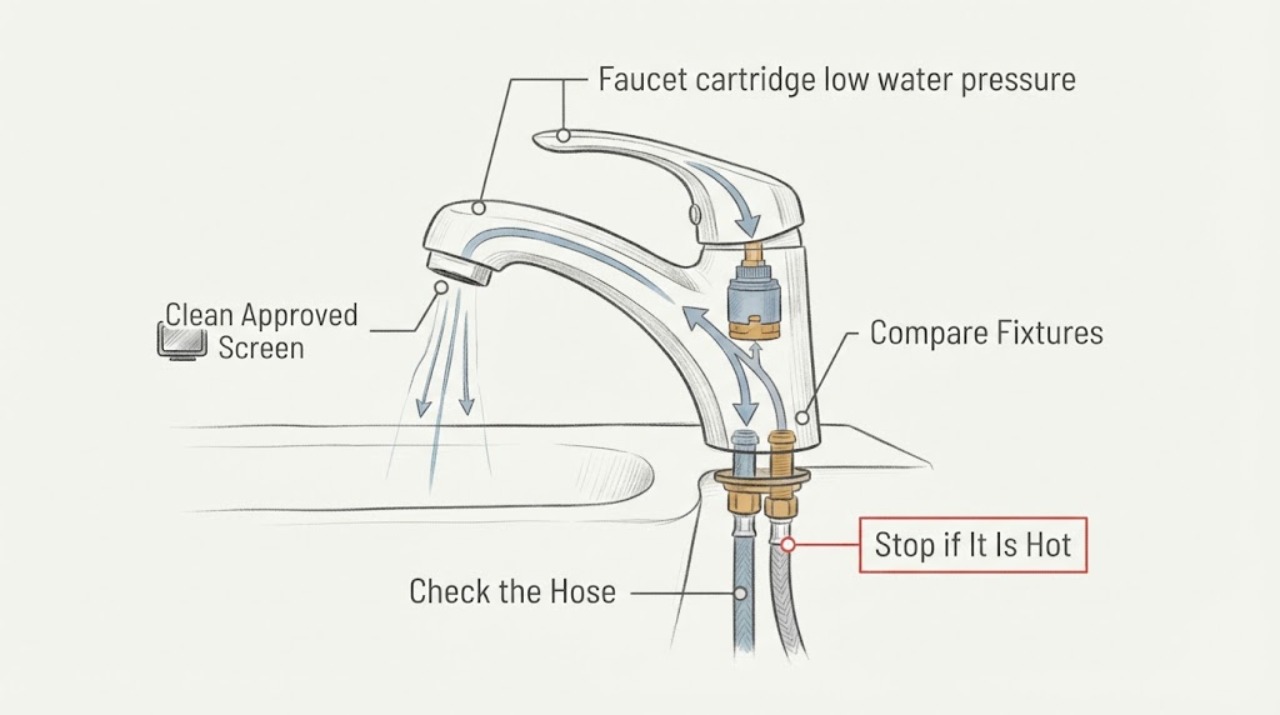
American Standard faucet cartridge low water pressure: What to Check and What to Do Next
Low pressure at an American Standard faucet is not automatically a bad cartridge. First compare this faucet with another nearby fixture and compare hot with cold; a problem isolated to one faucet can come from a partly closed supply stop, kinked hose, clogged aerator or inlet screen, blocked passage, or cartridge, while low flow throughout the home points upstream.
-
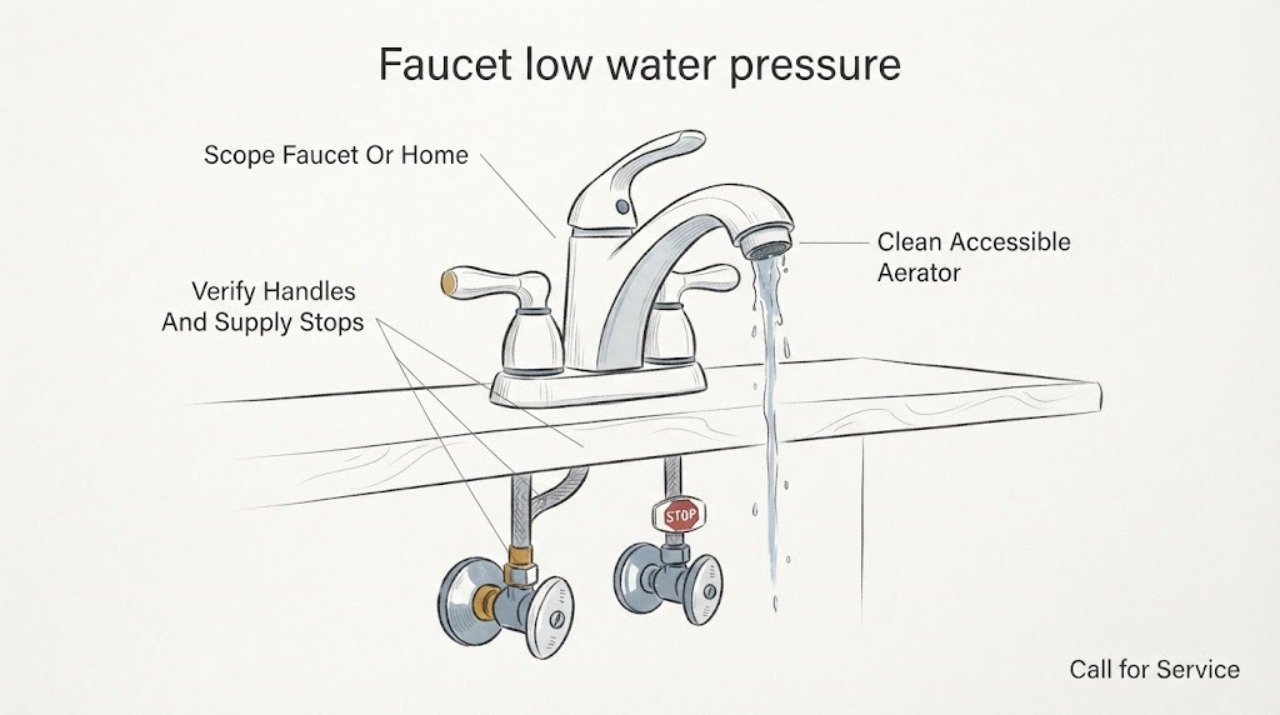
American standard faucet low water pressure: What to Check and What to Do Next
First determine whether low flow affects only the American Standard faucet, only its hot or cold side, or several fixtures in the home. Confirm the handle is fully open and the two under-sink supply stops are open without forcing them, then inspect for a kinked hose or leak.
-
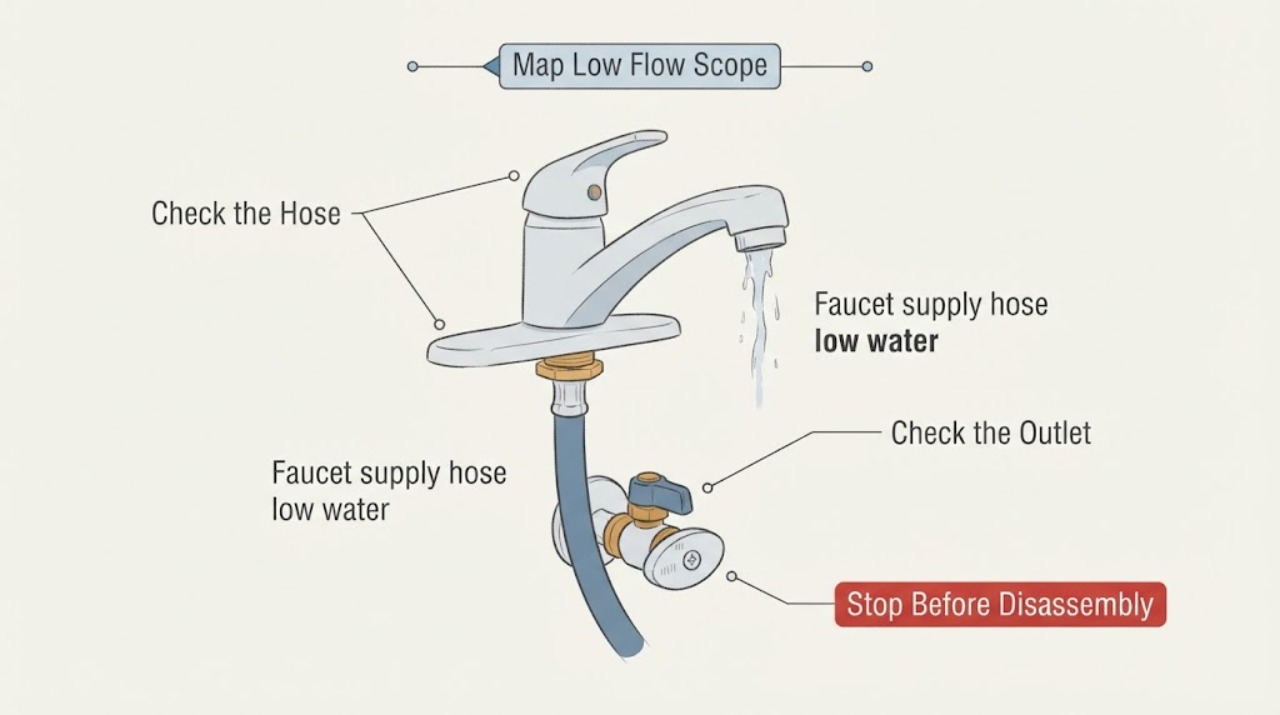
American Standard faucet supply hose low water pressure: What to Check and What to Do Next
Low flow at an American Standard faucet does not by itself prove that the supply hose is blocked. First determine whether the restriction affects one faucet, one temperature, or the whole home.
-
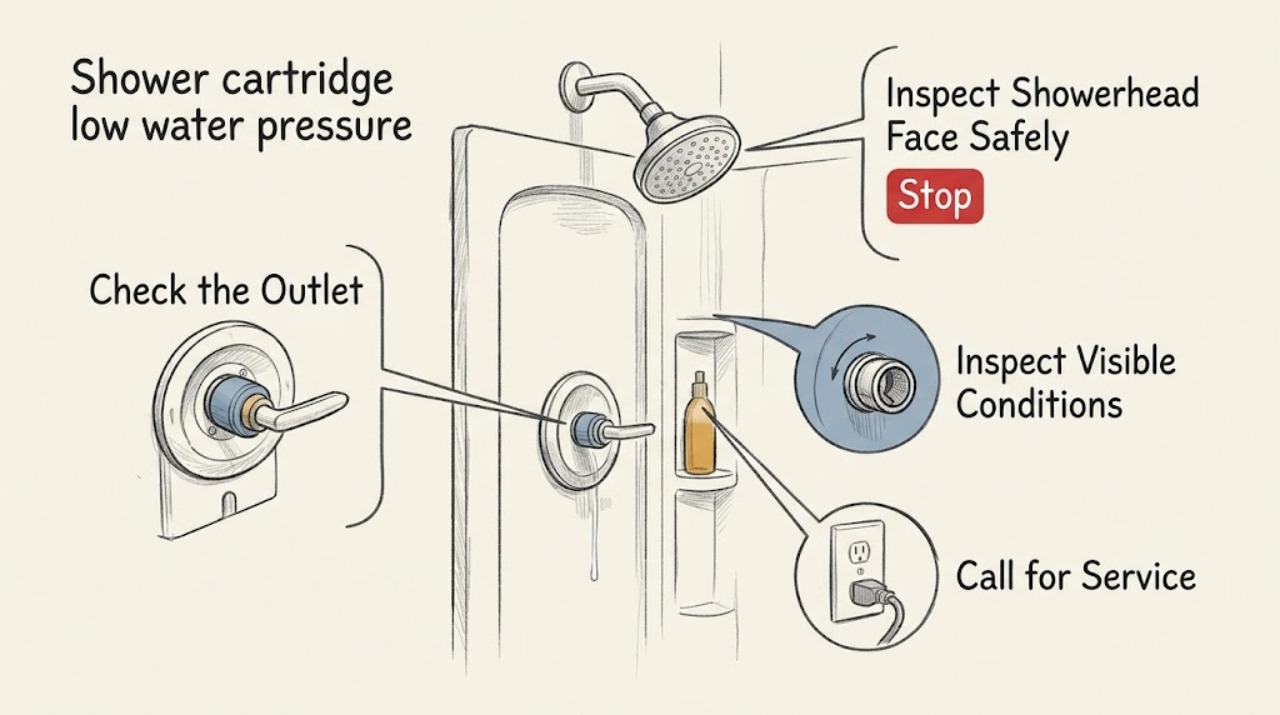
American standard shower cartridge low water pressure: What to Check and What to Do Next
Low pressure at an American Standard shower is not automatically a cartridge failure. First compare the shower with another outlet and note whether the weakness affects only the showerhead, only hot or cold water, every outlet, or the whole home.
-
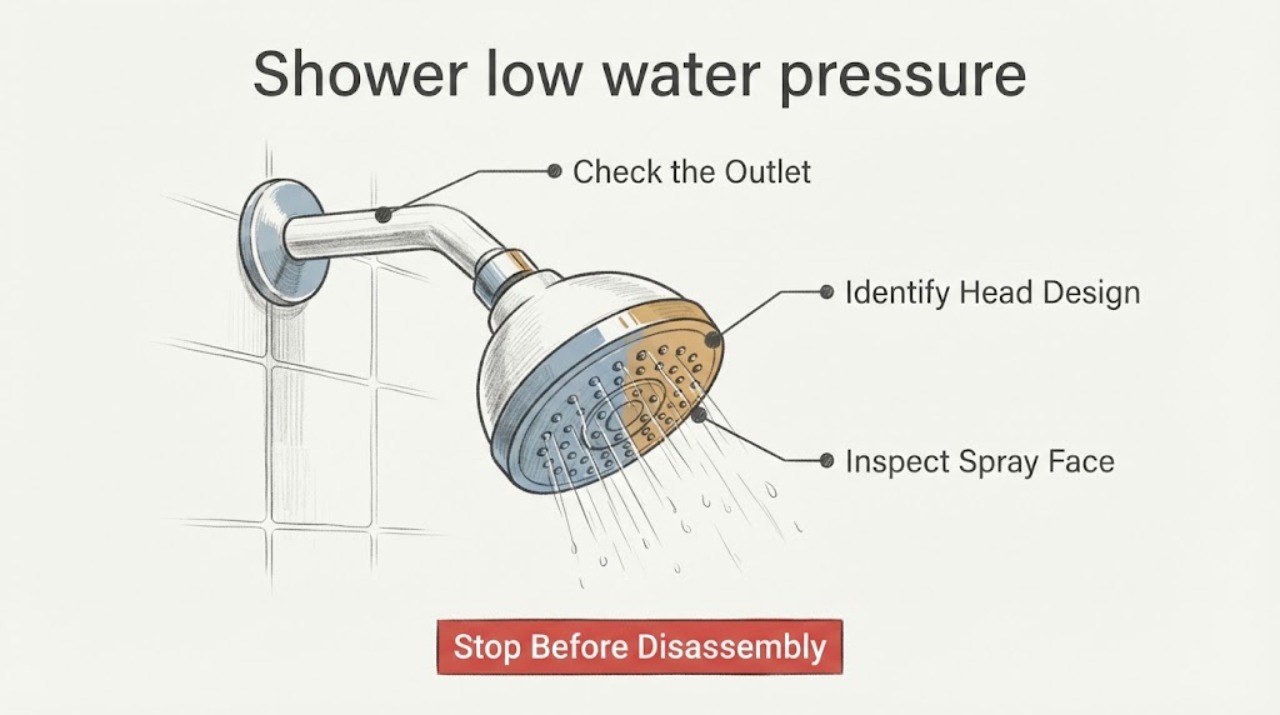
American Standard shower low water pressure: What to Check and What to Do Next
Low pressure from an American Standard shower can come from mineral scale or debris at the spray face or inlet, a pressure-compensating flow-control device, a shower valve or supply restriction, or low pressure affecting several fixtures. First compare the shower with another nearby outlet and determine whether the weakness is only at one American Standard head or affects the bathroom or house.
-
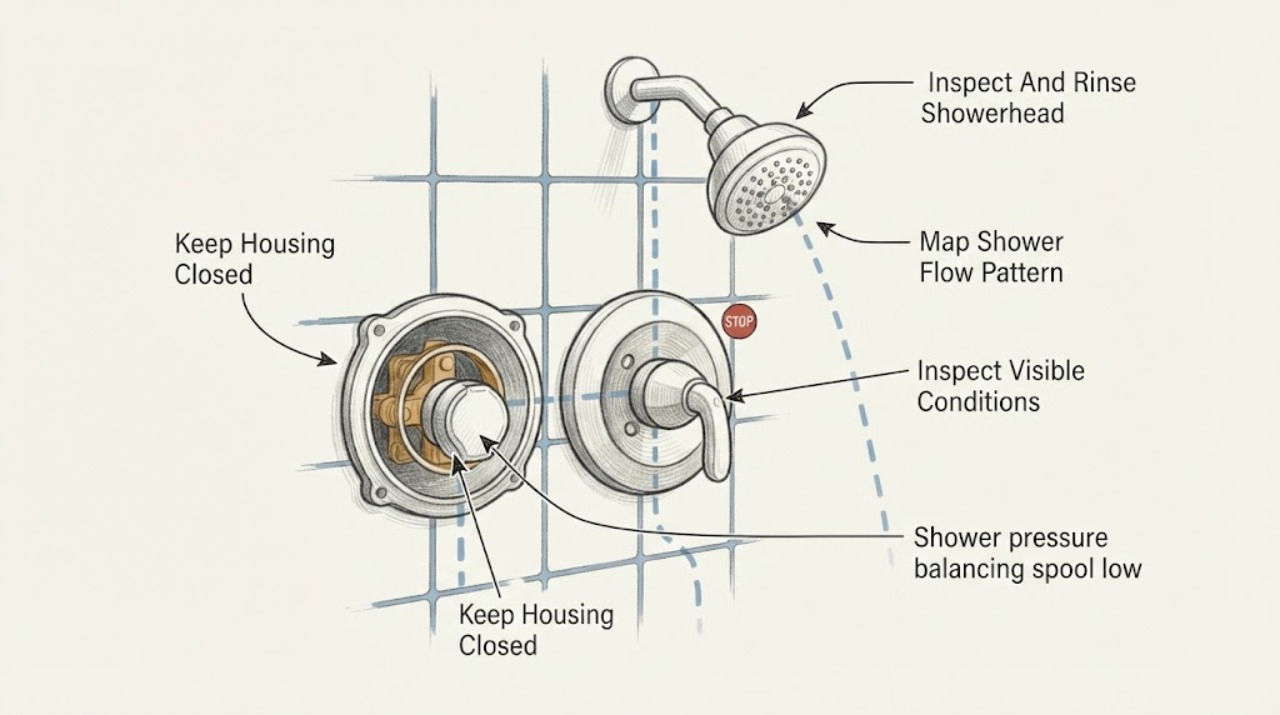
American standard shower pressure balancing spool low water: What to Check and What to Do Next
An American Standard pressure-balancing spool is primarily a temperature-safety component: American Standard describes it as responding to changes in relative hot and cold supply pressure to help maintain a steady outlet temperature. Low shower flow alone does not prove that the spool is blocked or failed.
-
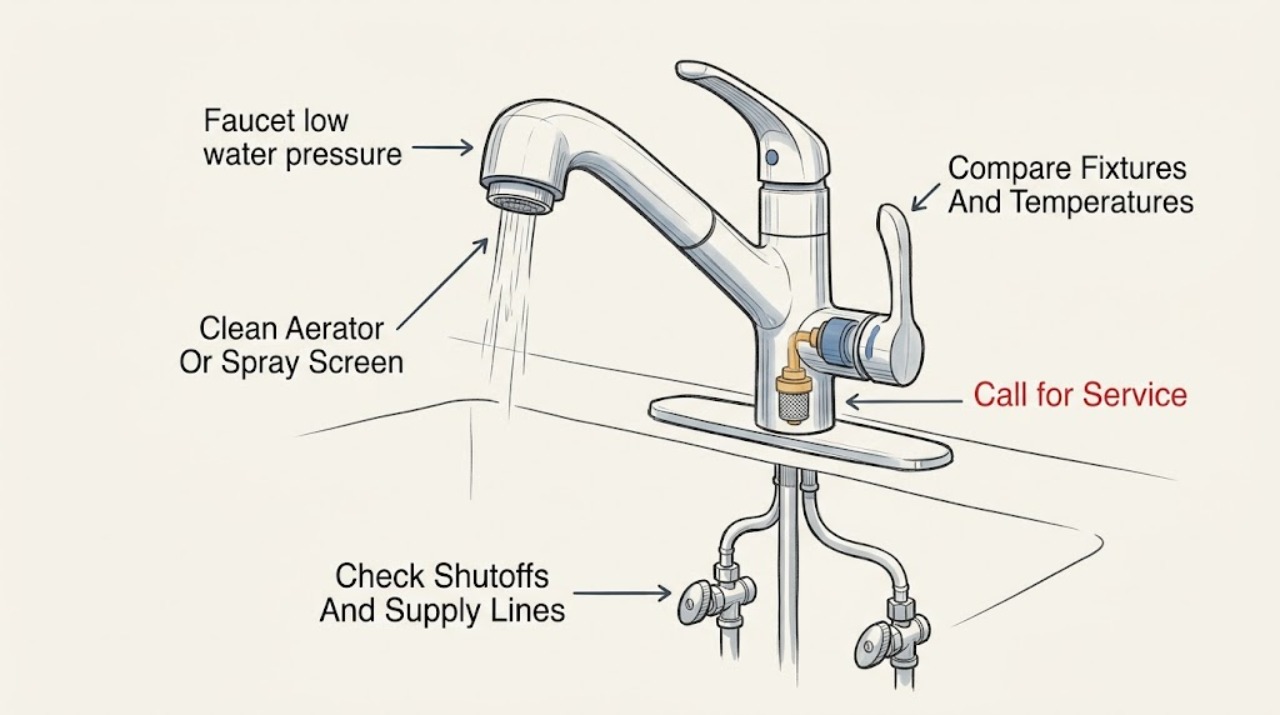
Delta faucet low water pressure: What to Check and What to Do Next
When a Delta faucet has low water pressure, first compare it with another fixture and compare hot flow with cold flow. If only this faucet is weak, clean the accessible aerator or spray-head screen, check that the hot and cold shutoff valves are open, and look for kinked supply lines.
-
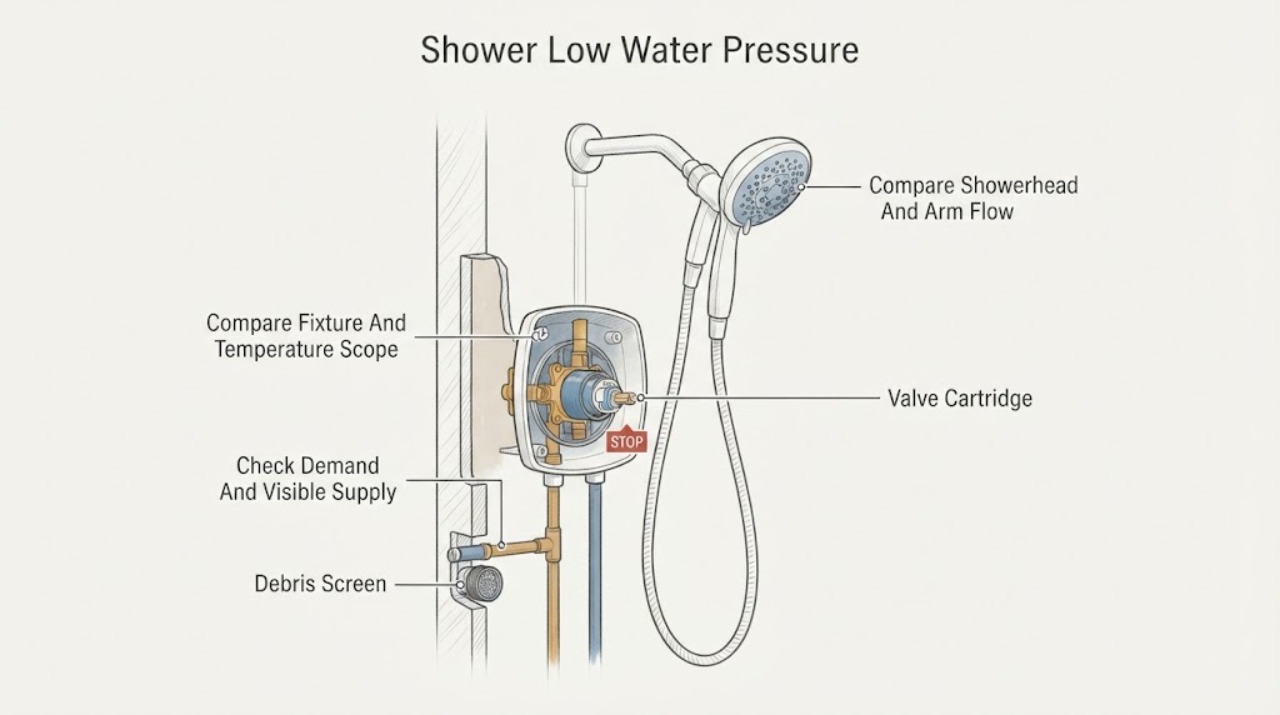
Delta Shower Low Water Pressure: What to Check and What to Do Next
For a Delta shower with low water pressure, first determine whether the restriction affects only the shower, only hot or cold water, or the whole home. Compare the flow with the showerhead removed only if the connection can be handled safely: good flow from the shower arm points toward the head, screen, flow path, or hose, while low flow before the head points toward the valve, cartridge screens, supply, or building plumbing.
-
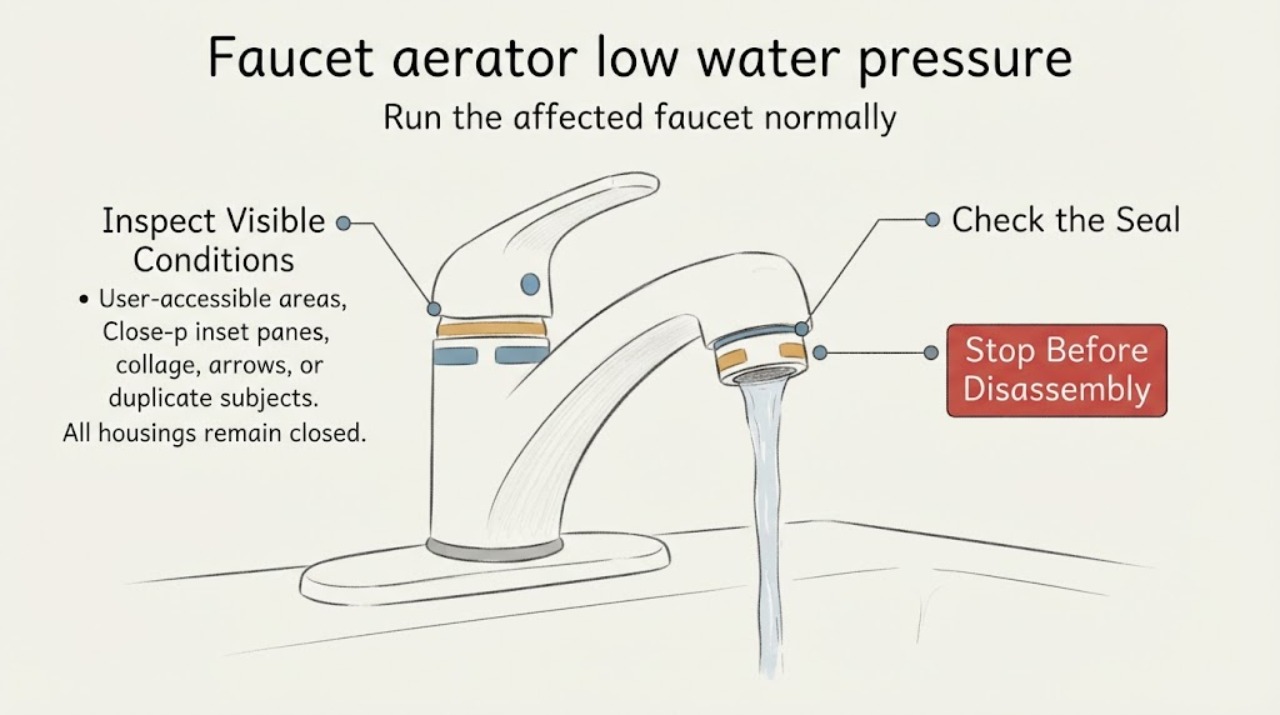
Faucet aerator low water pressure: What to Check and What to Do Next
When one faucet has weak flow, the aerator is a sensible first suspect because scale or debris can restrict its screen. Compare hot and cold flow and another nearby fixture before assuming the whole home has low pressure.
-
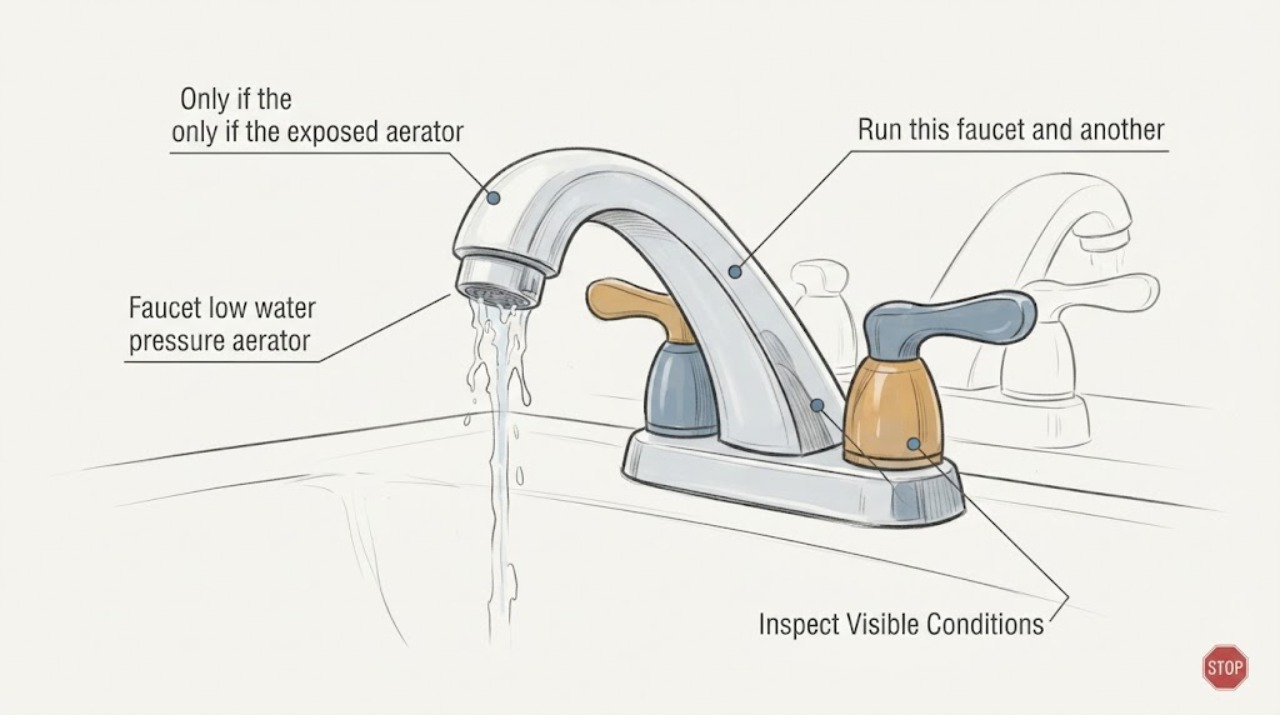
Faucet low water pressure aerator has debris: What to Check and What to Do Next
If one faucet has low flow and its aerator has visible debris, the debris may be restricting the screen or flow limiter. First compare another faucet and compare hot and cold flow so you do not mistake a house-wide supply problem for an aerator blockage.
-
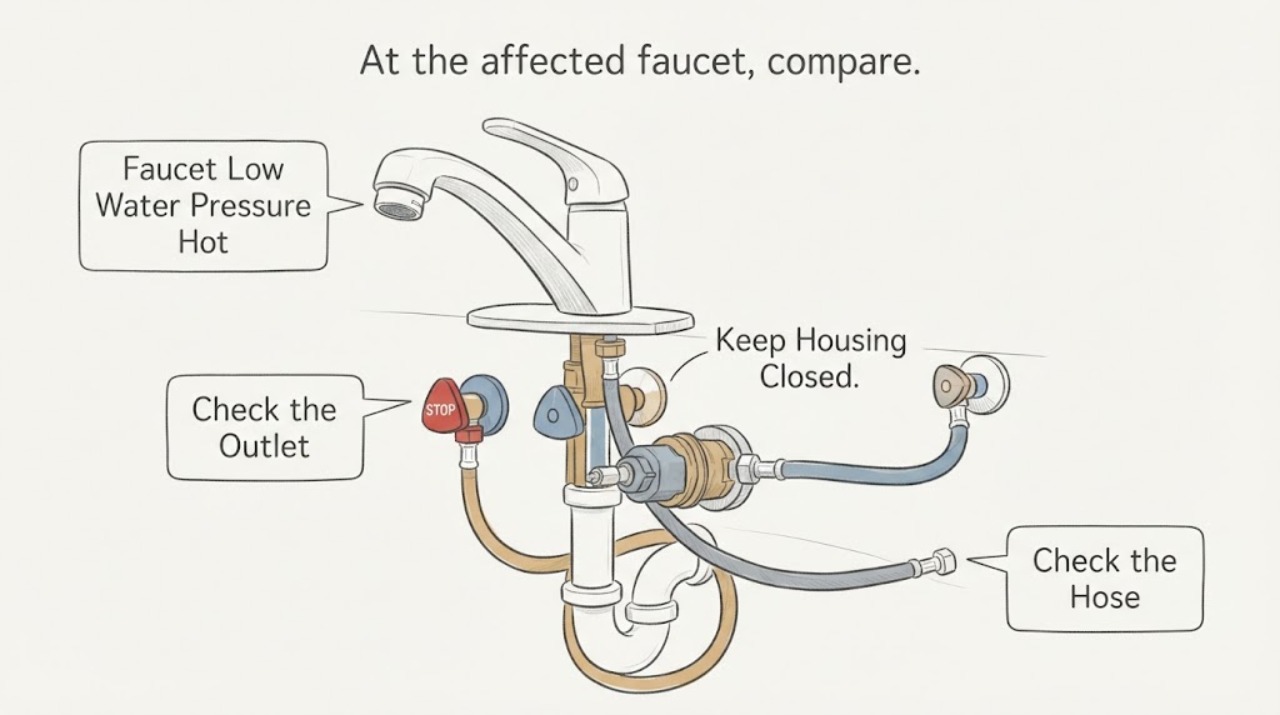
Faucet Low Water Pressure Hot or Cold Side May Differ: What to Check and What to Do Next
First compare the faucet with another fixture and compare hot flow with cold flow at the same faucet. Low flow on only one side points toward that side's shutoff, supply hose, cartridge, valve, or a localized obstruction; low flow on both sides points more toward the aerator, faucet body, common supply, or house pressure.
-
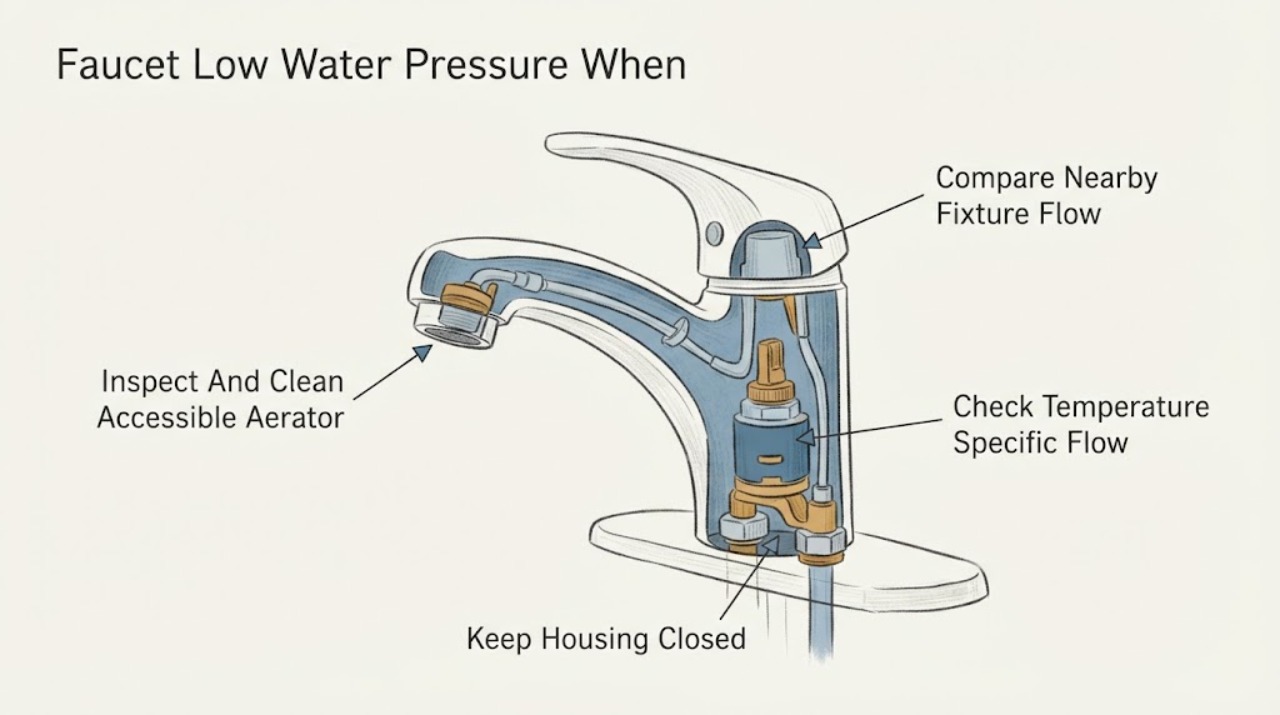
Faucet Low Water Pressure When Only One Fixture Is Affected: What to Check and What to Do Next
When only one faucet has low flow, the restriction is more likely local to that fixture than to the home's main supply, but compare another nearby faucet before assuming that. With the water running normally, note whether both hot and cold sides are weak or only one temperature is weak.
-
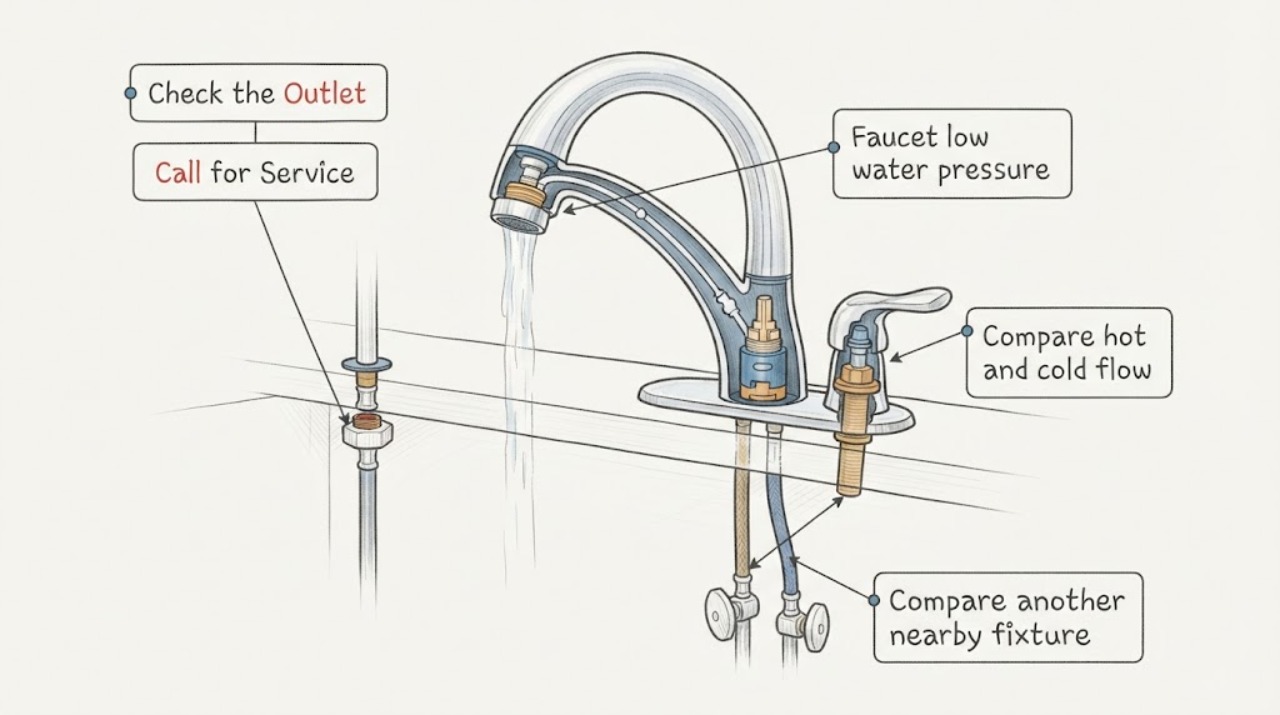
Faucet low water pressure: What to Check and What to Do Next
Start by comparing the faucet's hot and cold flow, then compare another nearby fixture and inspect only visible outlet, hose, and valve conditions. Weak flow from one side often points toward that side's supply or cartridge; weak flow from both sides can involve the aerator, cartridge, diverter, supply, or a broader water problem.
-
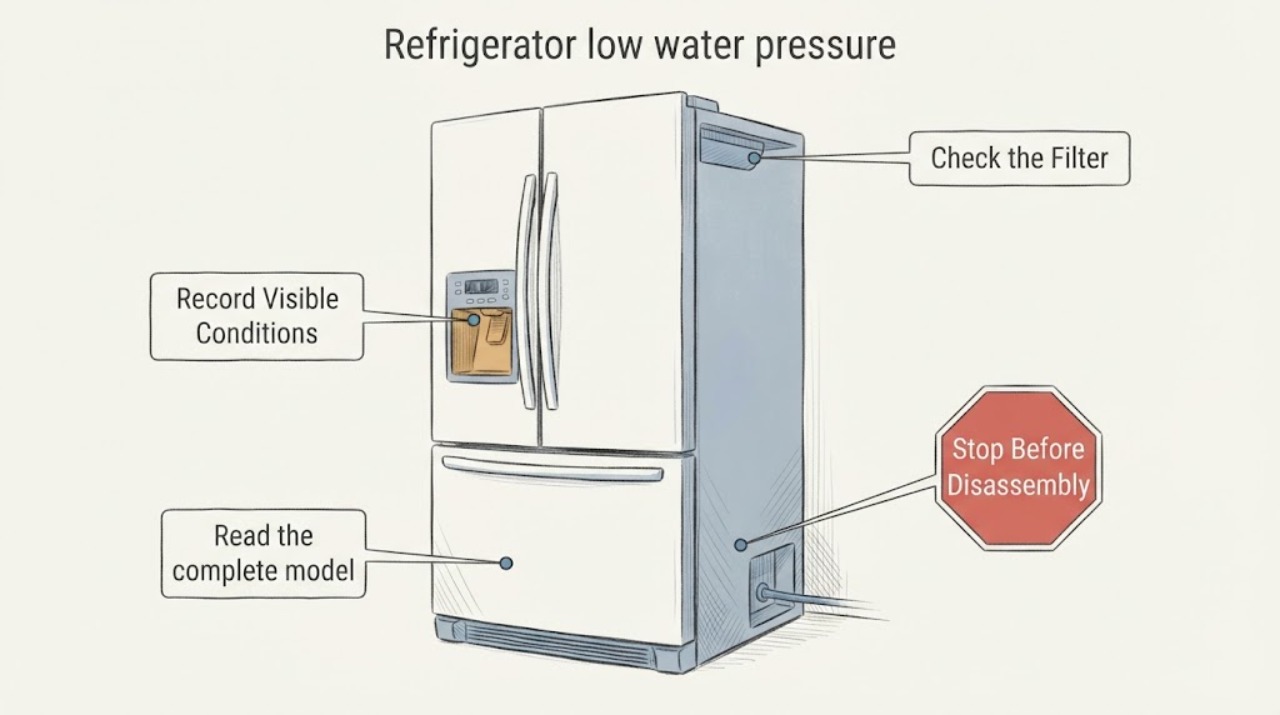
Fisher & Paykel RF170 water dispenser loses pressure
RF170 is a series label, not a complete model identity: Fisher & Paykel's opened US/CA guide covers RF170B, RF170W and RF170A, and says Automatic Ice and non-Ice & Water configurations do not have an external dispenser. Confirm the full rating-label suffix and market first.
-
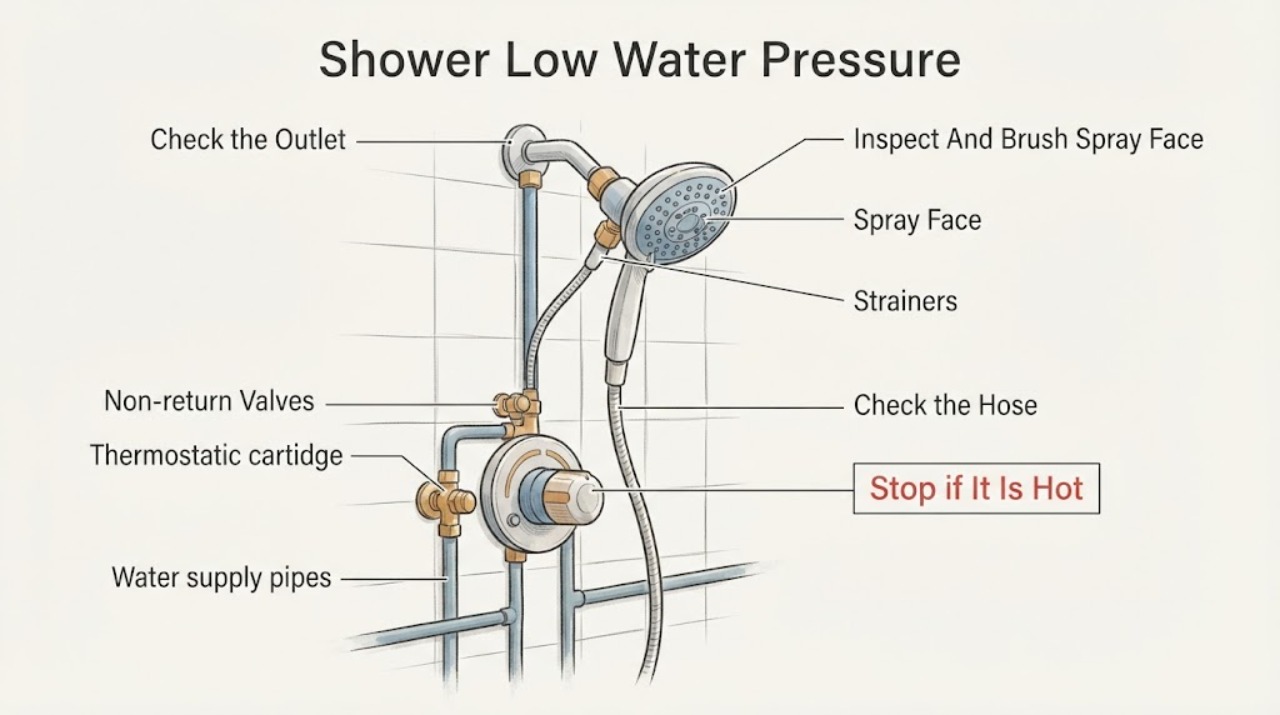
GROHE Shower Low Water Pressure: What to Check and What to Do Next
First compare the GROHE shower with another shower outlet and a nearby faucet, then compare hot and cold flow separately. If only the shower is weak or its spray pattern changed, an obstructed spray face, strainer, hose, or model-specific flow limiter is more likely.
-
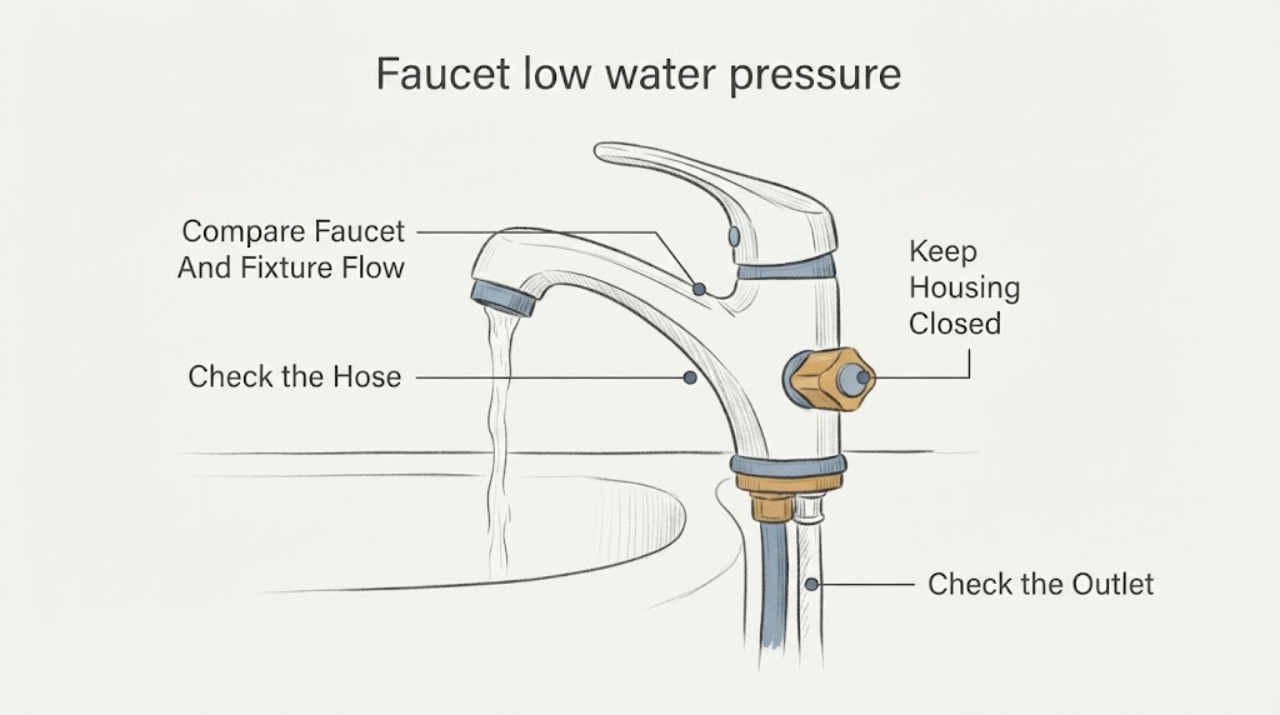
Kohler faucet low water pressure: What to Check and What to Do Next
First determine whether low flow affects only the Kohler faucet, only hot or cold water, or every fixture. Then confirm both under-sink supply stops are fully open, inspect the hot and cold hoses for kinks, and check whether the handle is reaching the full-open position.
-
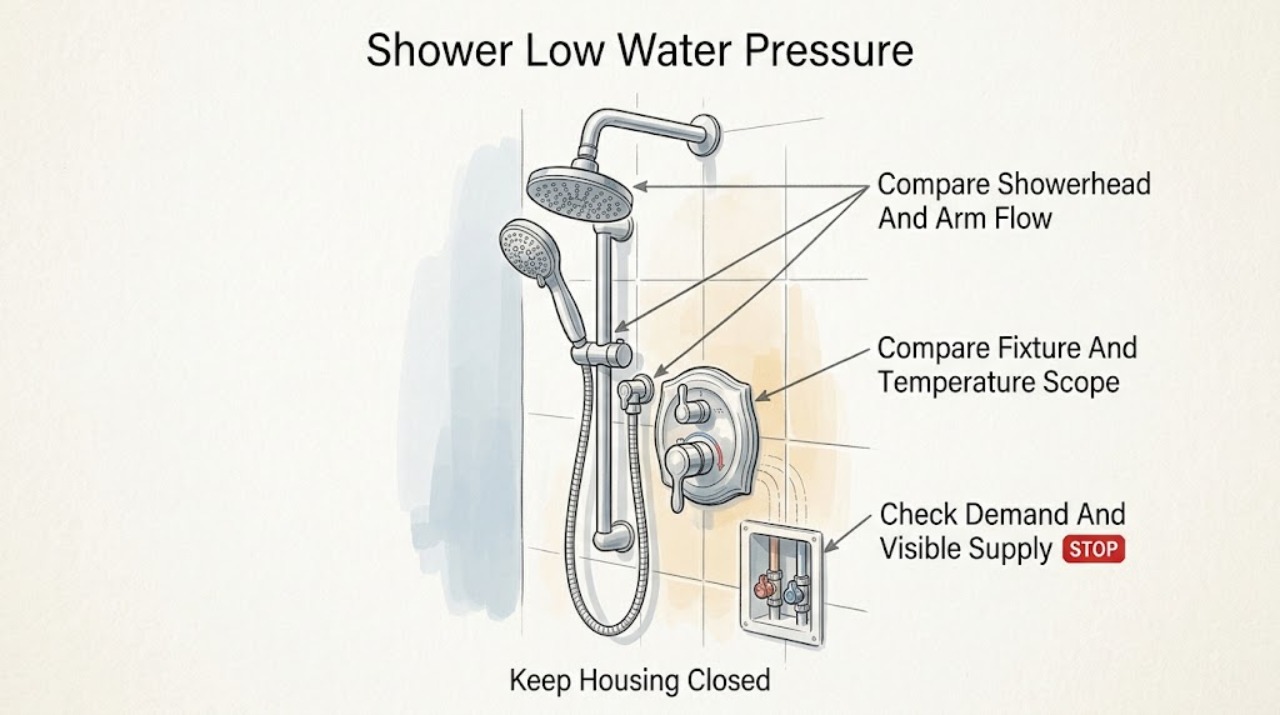
Kohler Shower Low Water Pressure: What to Check and What to Do Next
For a Kohler shower with low water pressure, first determine whether the weak flow affects only the shower, one temperature, or the whole home. Compare the showerhead stream with the shower arm only when the head can be removed safely: a normal arm stream points toward the head, screen, aerator, or hose, while weak flow at the arm points toward the valve, cartridge screens, supply stops, or building plumbing.
-
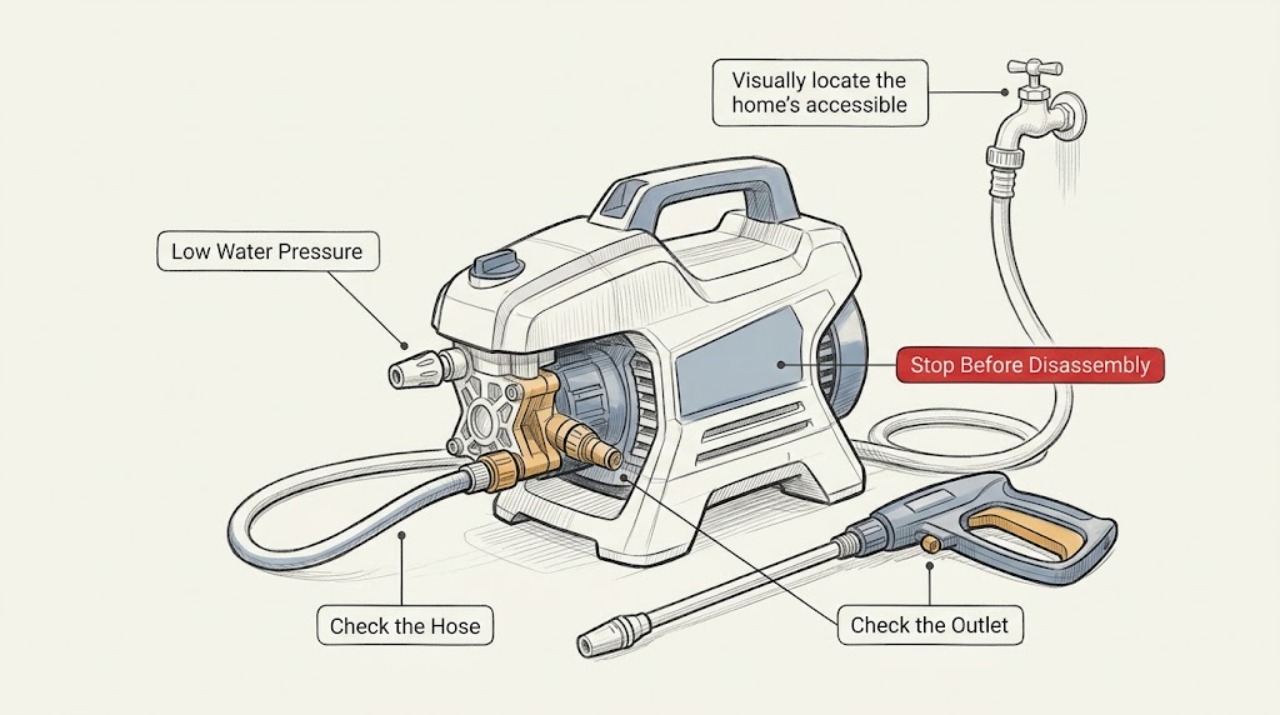
Low Water Pressure in the Home: What to Check
Start by deciding whether the problem is low pressure or low flow: compare several faucets, hot versus cold, and an outdoor hose connection if one is available. A single weak fixture often has a blocked screen or local valve, while weak flow everywhere points to a partly closed main valve, leak, pressure regulator, filter or softener restriction, or a utility disruption.
-
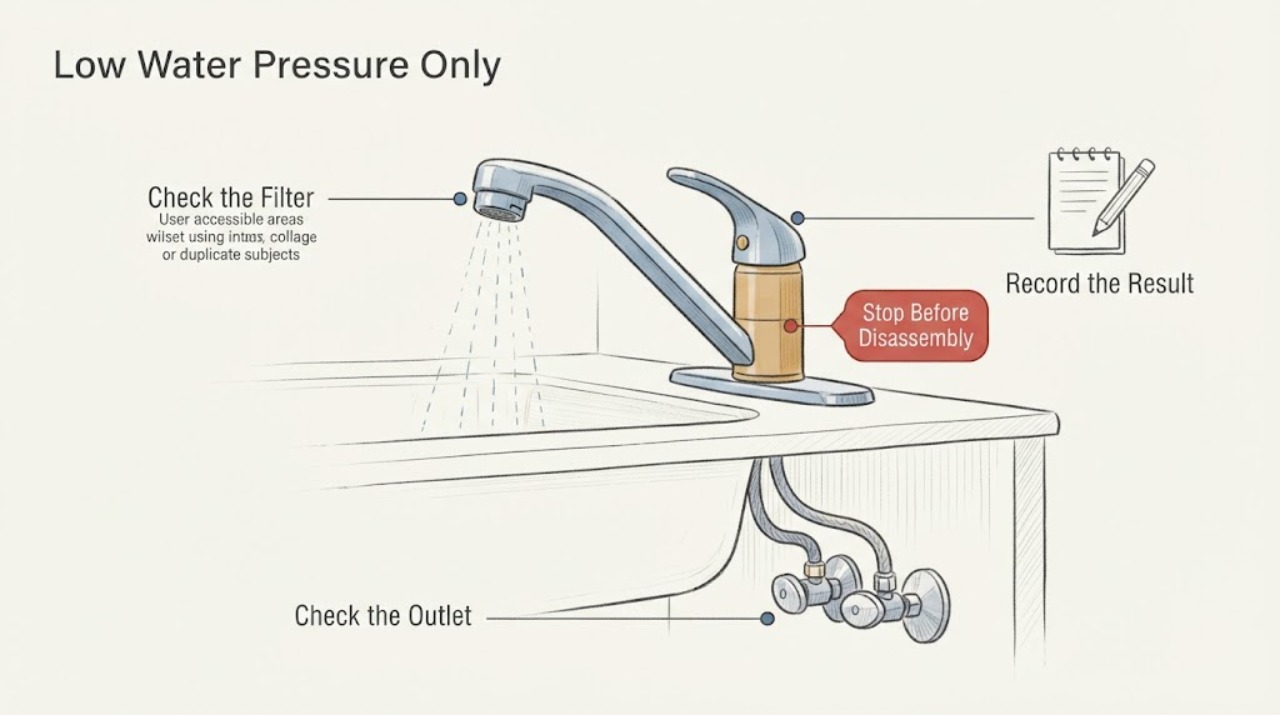
Low Water Pressure Only at the Kitchen Sink Faucet
When low water pressure occurs only at the kitchen sink faucet, compare hot and cold flow, then isolate the faucet outlet from its supply. A blocked aerator or spray-head screen, a restricted under-sink cartridge path, a partly closed shutoff, or a kinked hose is more likely than a whole-house pressure failure.
-
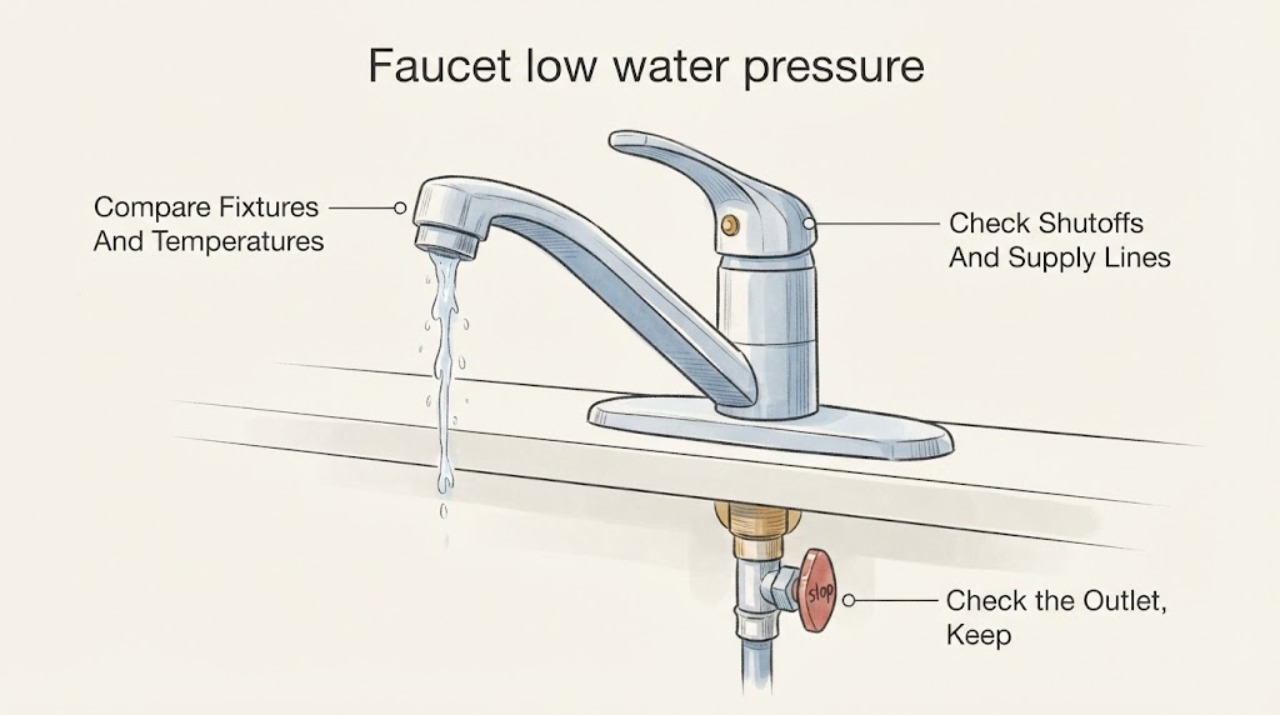
Moen faucet low water pressure: What to Check and What to Do Next
A Moen faucet with low flow may have debris in the aerator, wand screen, in-line filter, cartridge, or diverter, but a partially closed shutoff valve, kinked supply line, leak, or whole-home pressure problem can look similar. First compare the affected faucet with another fixture and determine whether both hot and cold sides are weak.
-
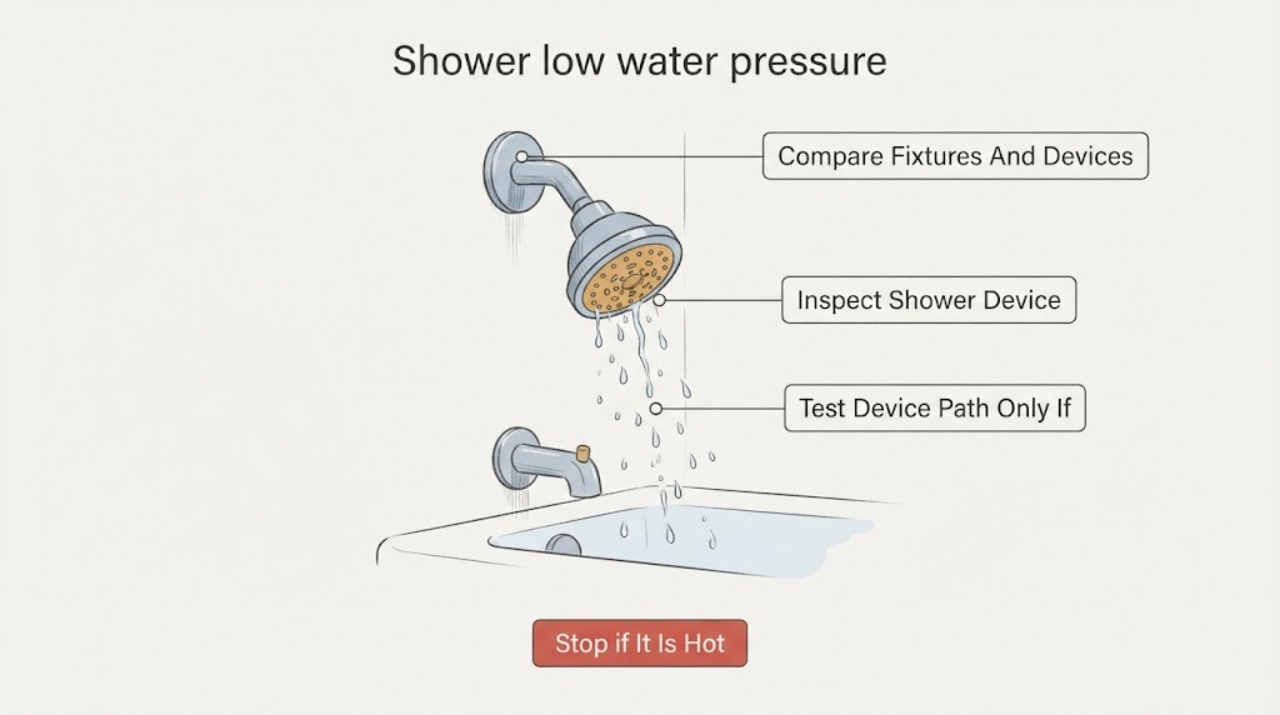
Moen shower low water pressure: What to Check and What to Do Next
Low pressure at a Moen shower can come from a blocked showerhead or hand shower, a clogged screen, a transfer or diverter valve, a mixing-valve cartridge, a partly closed service stop, or a home water-supply problem. First compare the shower with another fixture and determine whether only one shower device is weak, only hot or cold flow is weak, or every shower device is affected.
-
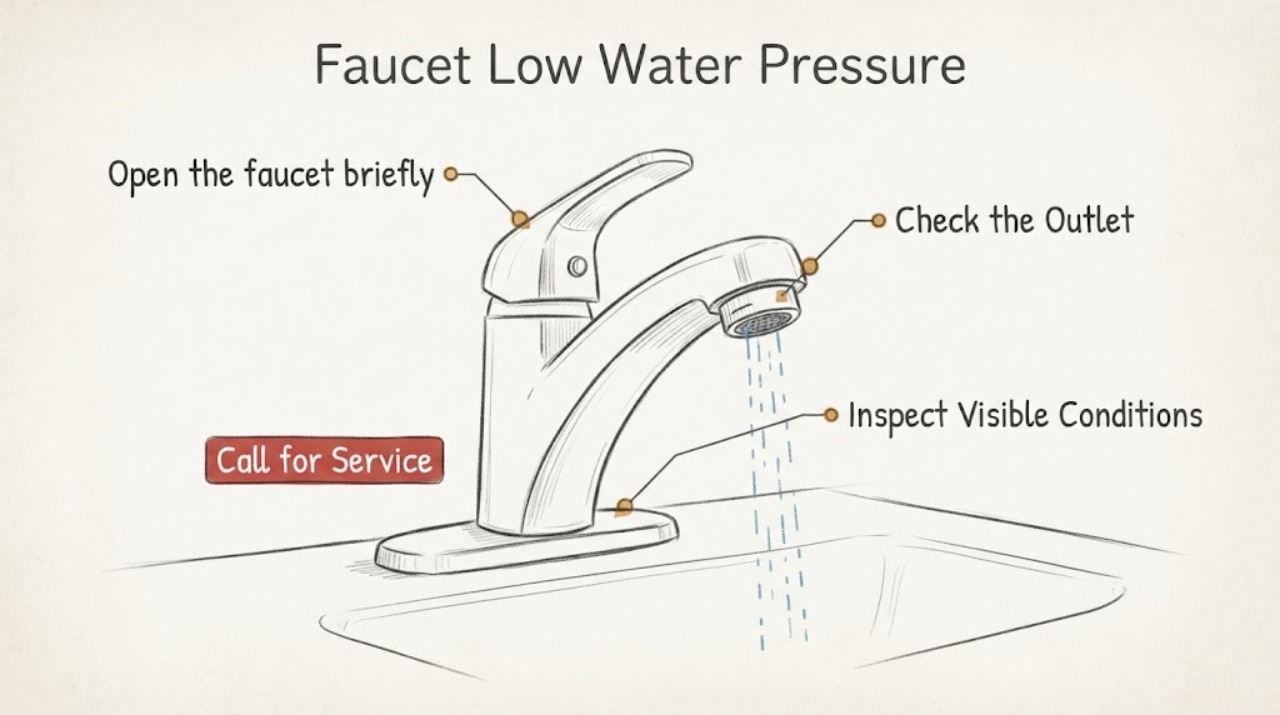
Pfister Faucet Low Water Pressure: What to Check and What to Do Next
Low flow at one Pfister faucet is often caused by debris or mineral buildup in the aerator, sprayhead, inlet screens, supply hose, or cartridge. First compare hot and cold flow and check another fixture: a problem at only one outlet points toward the faucet or its local supply, while several fixtures being weak points toward a house or utility supply issue.
-
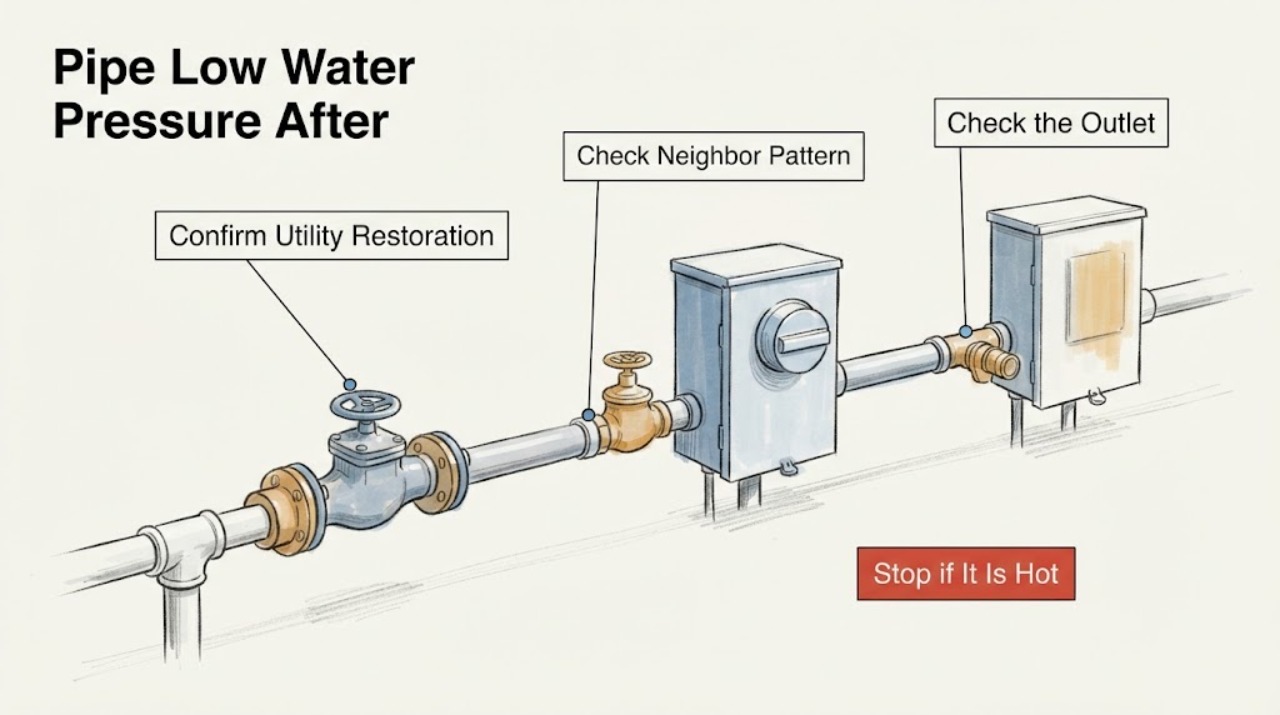
Pipe Low Water Pressure After a Water-Main Burst
Low pressure after the water company repaired a pipe burst can be a temporary distribution-system condition, air or sediment released during restoration, a still-active utility restriction, or a private valve, leak, filter, regulator, or pipe problem. First confirm the utility has declared service restored and compare cold and hot flow at several indoor fixtures, an outside hose connection if safe, and nearby properties.
-
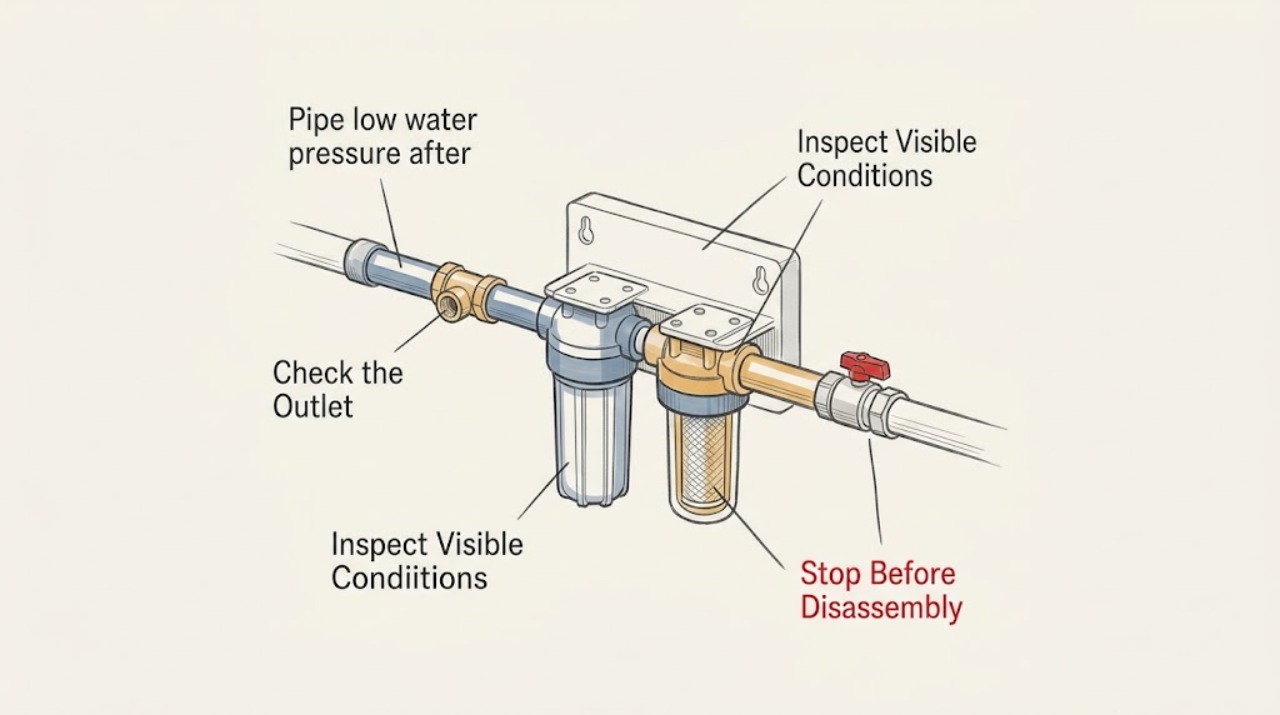
Pipe low water pressure after repair: safe checks
Low water pressure immediately after pipe repair is often a flow restriction or valve that was not fully restored, but it can also be a leak, sediment in a fixture screen or filter, a failed pressure regulator, or a problem that affects the public supply. Compare cold and hot flow at several fixtures, including an outside spigot if available, and note whether the change is throughout the home or only at one outlet.
-
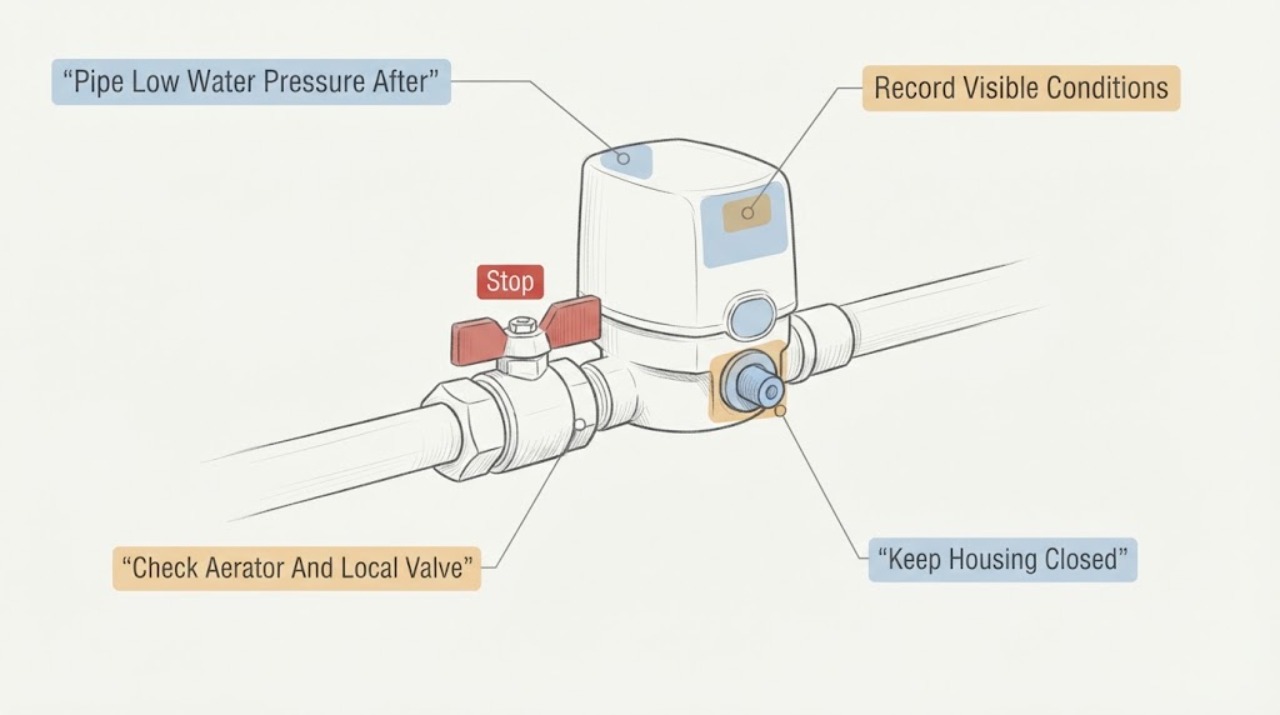
Pipe Low Water Pressure After the Main Valve Was Shut Off
Low water pressure after the main valve was shut off is often a valve-position, trapped-air, sediment, restriction, leak, or water-service issue; do not assume the pipe itself has failed. From a dry, safe position, confirm that the main shutoff valve is intended to be open and has not been left partly closed, but do not force a stiff valve or use tools on it.
-
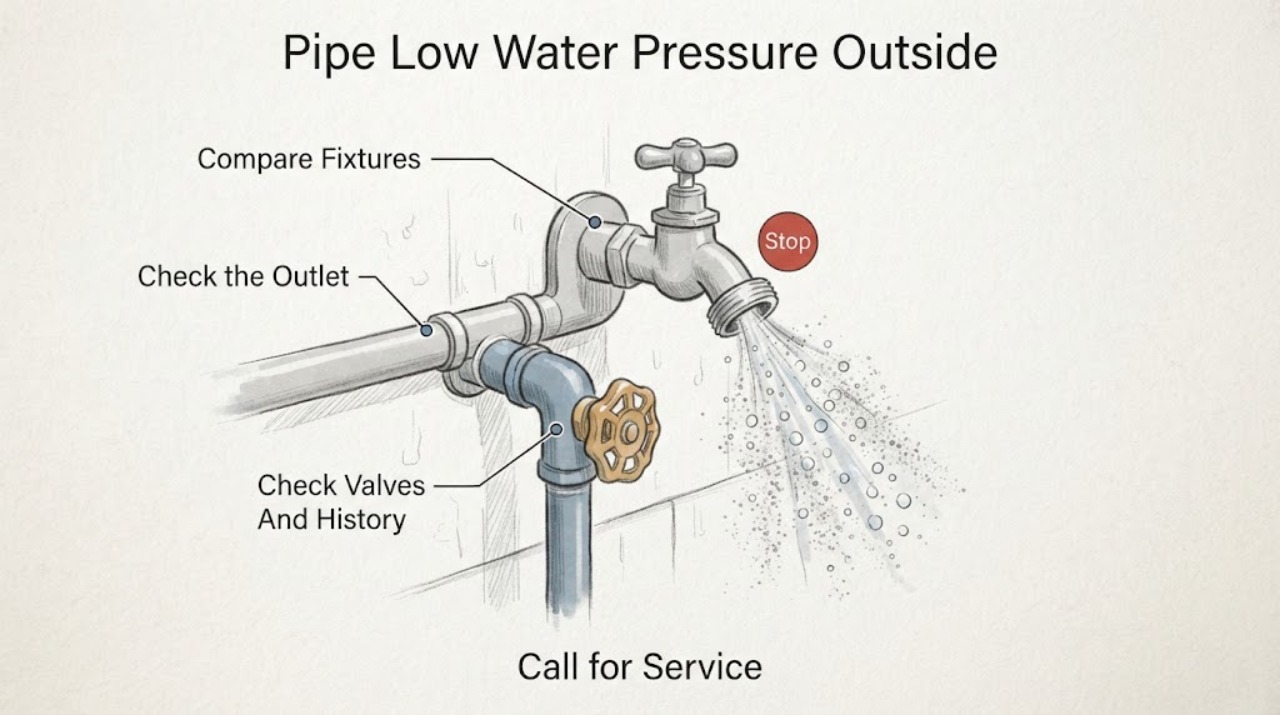
Pipe Low Water Pressure Outside: Why a Spigot Sputters When Fully Open
An outside spigot that sputters and has weak flow can be restricted at the outlet, hose, valve, or branch pipe, or it can reflect air entering a leaking or interrupted supply line. First remove any hose or nozzle only if the connection is cool, dry, and safe to handle, then compare the spigot with indoor and other outdoor fixtures.
-
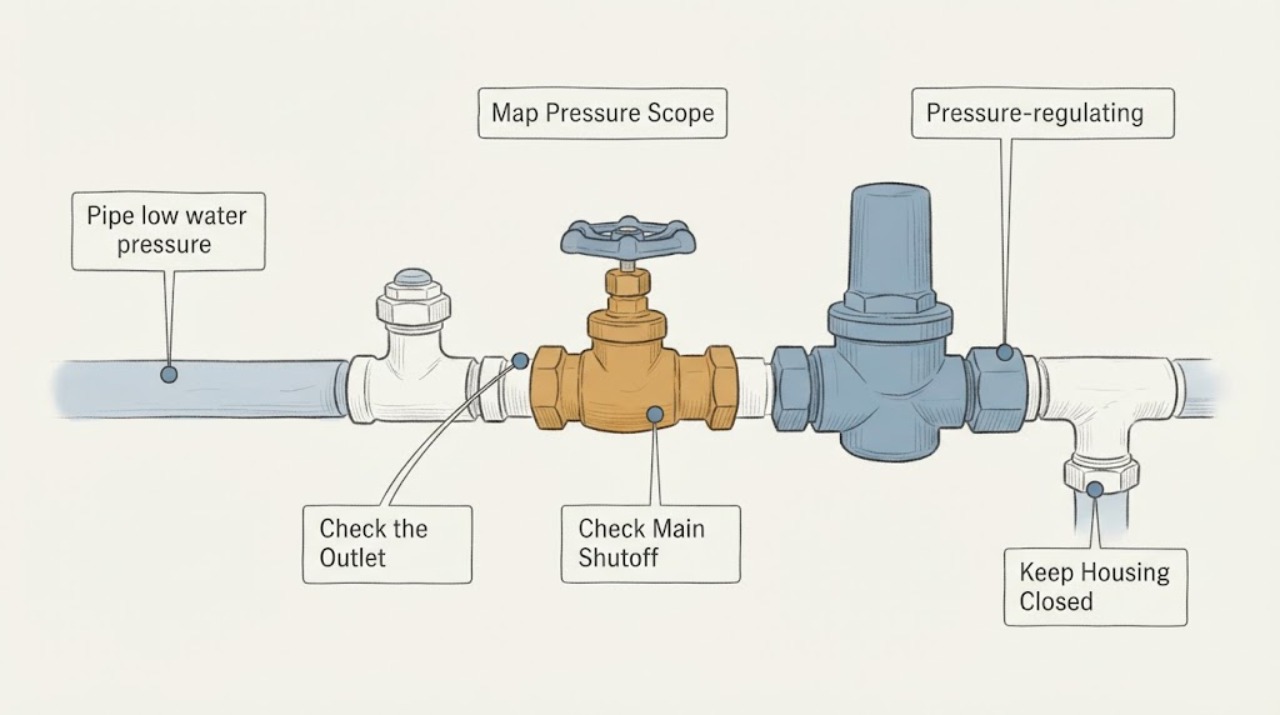
Pipe low water pressure: tell a local restriction from a whole-home supply problem
Low water pressure at a pipe or fixture is not enough to identify a failed pipe. First compare several fixtures and record whether the problem affects one outlet, hot water only, cold water only, the whole home, or only multiple fixtures running at once.
-
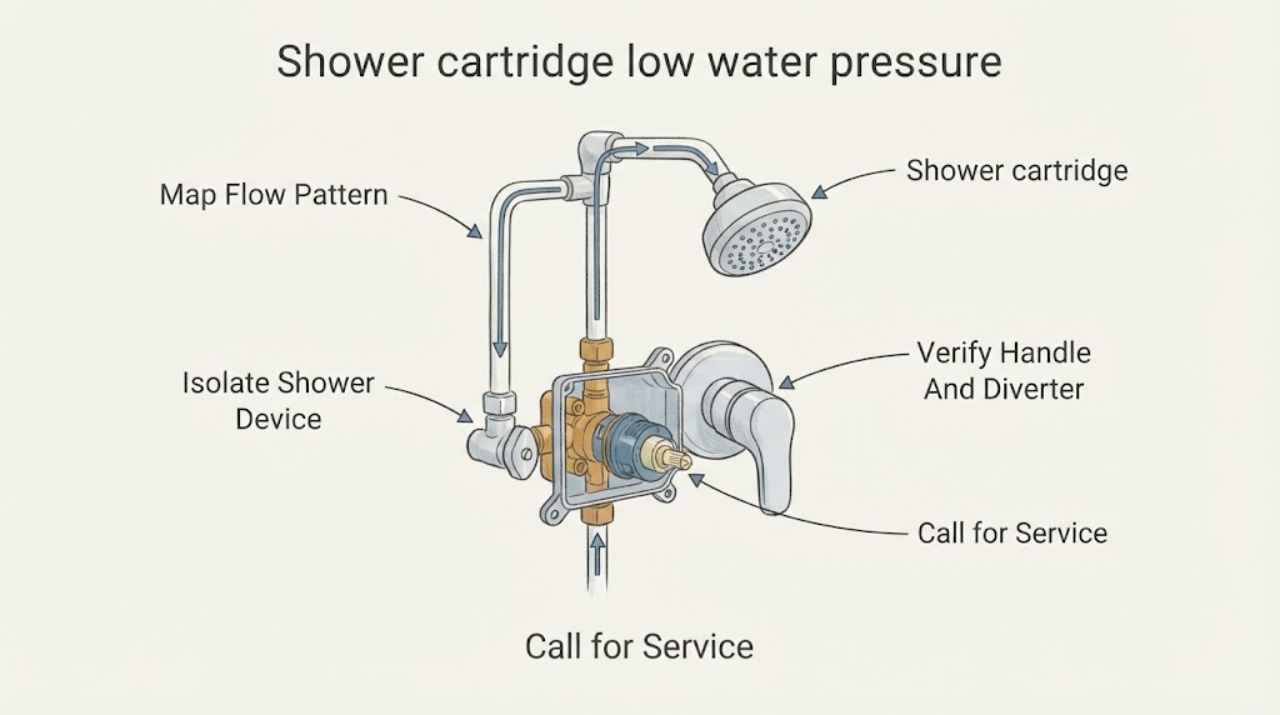
Shower cartridge low water pressure: What to Check and What to Do Next
A shower cartridge can restrict flow or create a hot-or-cold imbalance, but low pressure at the shower does not prove the cartridge is bad. First compare the affected shower with another fixture, then check whether the loss is at the showerhead or already present at the shower arm.
-
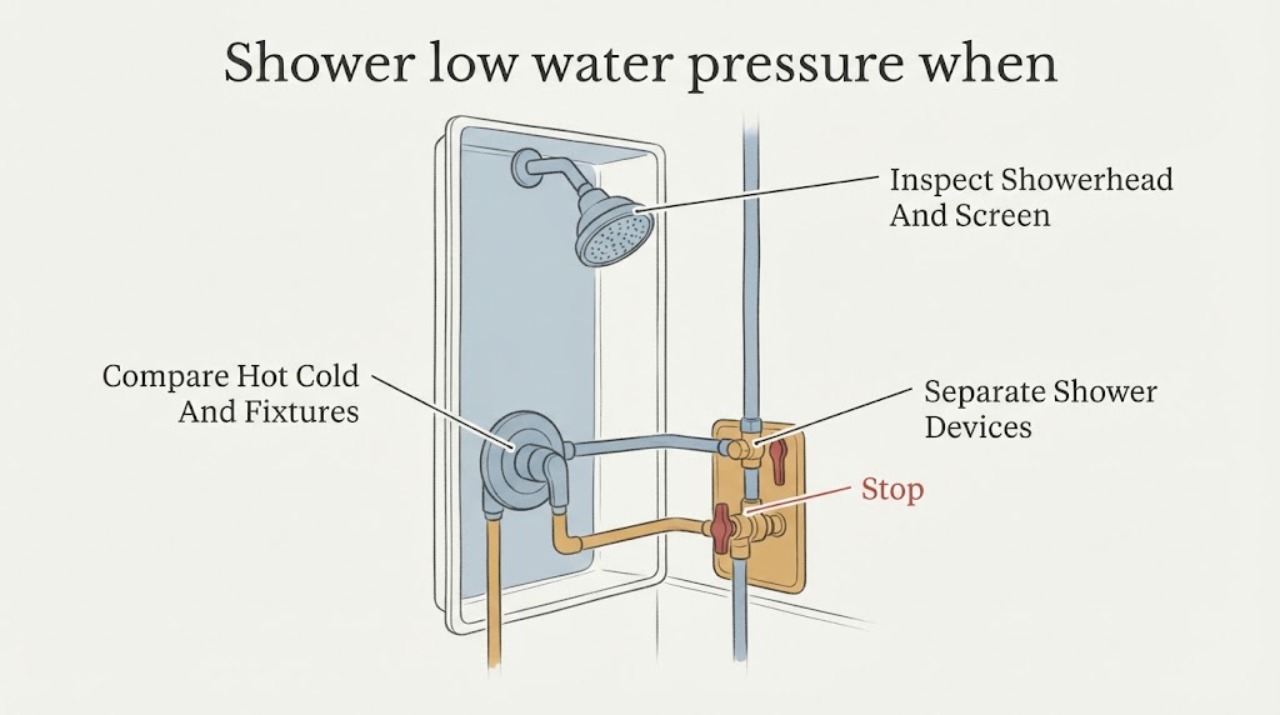
Shower low water pressure when hot and cold may differ: What to Check and What to Do Next
Compare the shower's hot and cold flow separately, then compare another shower device and another fixture before changing a part. If only hot or only cold is weak, the temperature-specific path points toward a partly closed check stop, inlet screen, balancing spool, cartridge, or supply on that side.
-
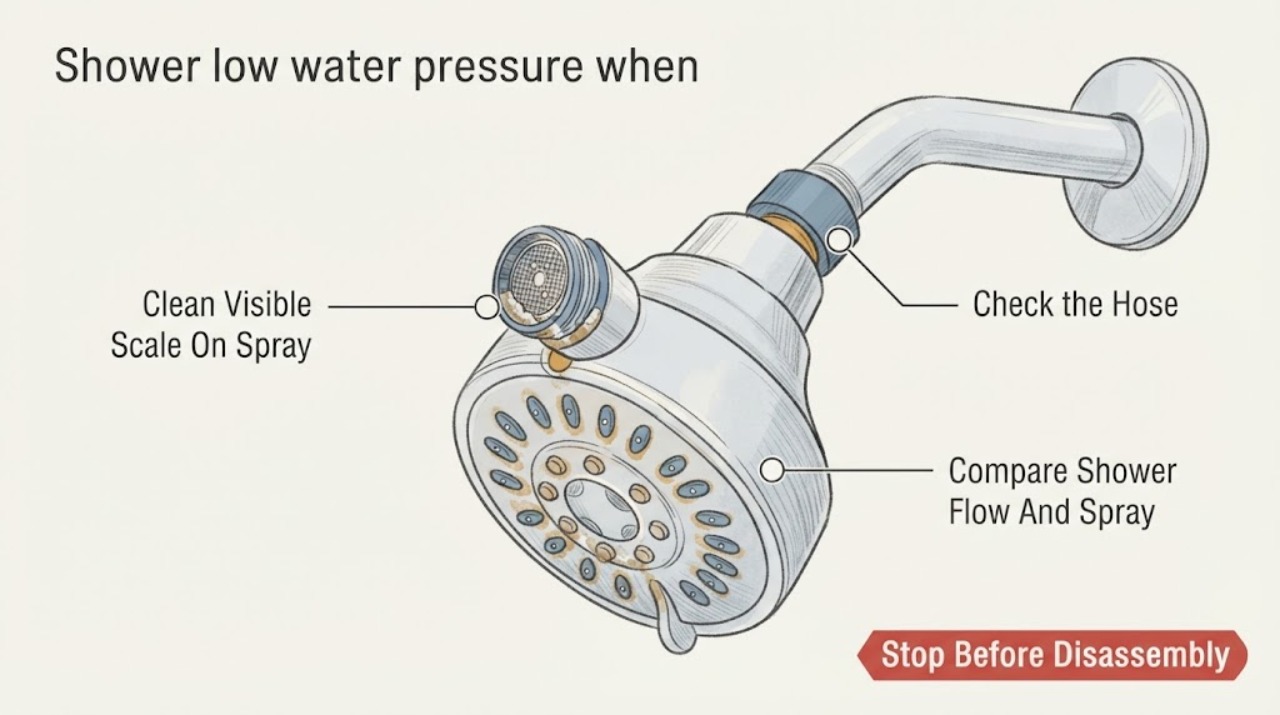
Shower low water pressure when the shower head has scale: What to Check and What to Do Next
Scale or other mineral debris can narrow the shower head spray holes, inlet screen, or flow path and make the shower feel weak. First compare this shower with another fixture and note whether every spray hole is affected or only a few.
-
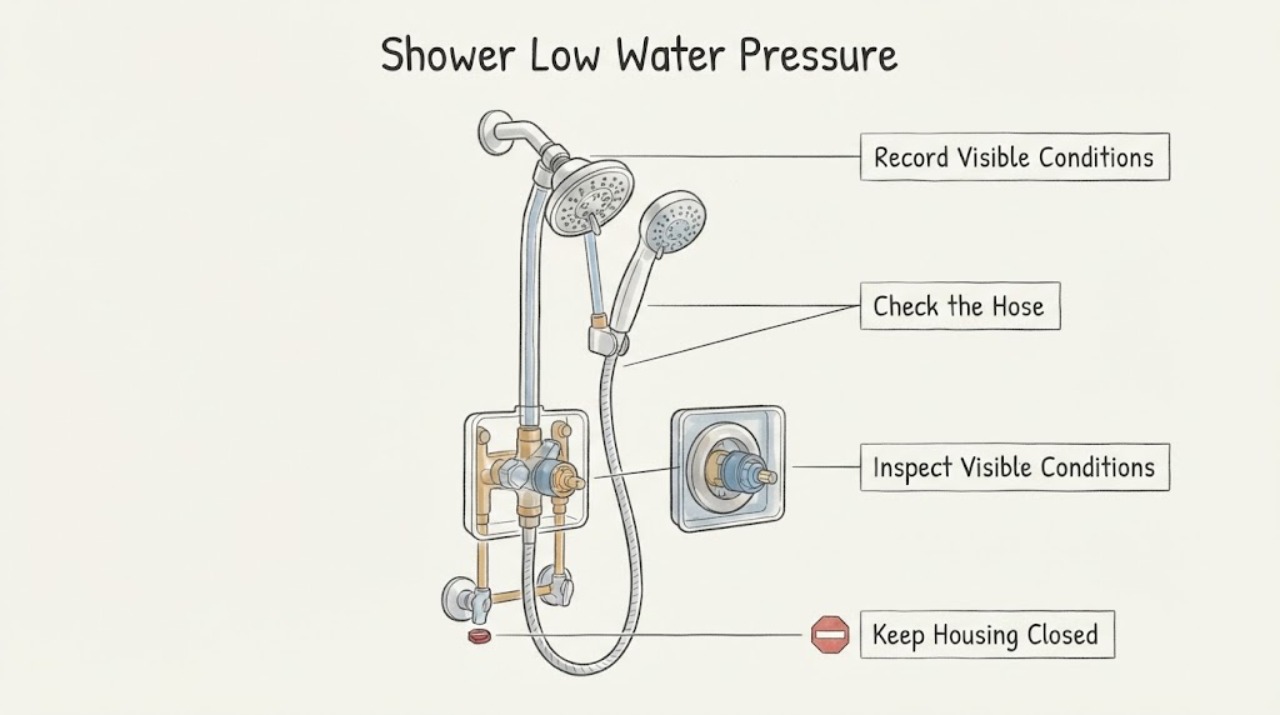
Shower Low Water Pressure: Other Fixtures May Flow Normally—What to Check and What to Do Next
If sinks and other fixtures have normal flow but the shower is weak, start at the shower device and the shower's own valve path rather than assuming the whole house has low pressure. Compare the showerhead, handheld, or body spray one at a time; inspect only accessible screens and nozzles according to the manufacturer's instructions; and, where the model instructions permit, briefly test flow with the shower device removed.
-
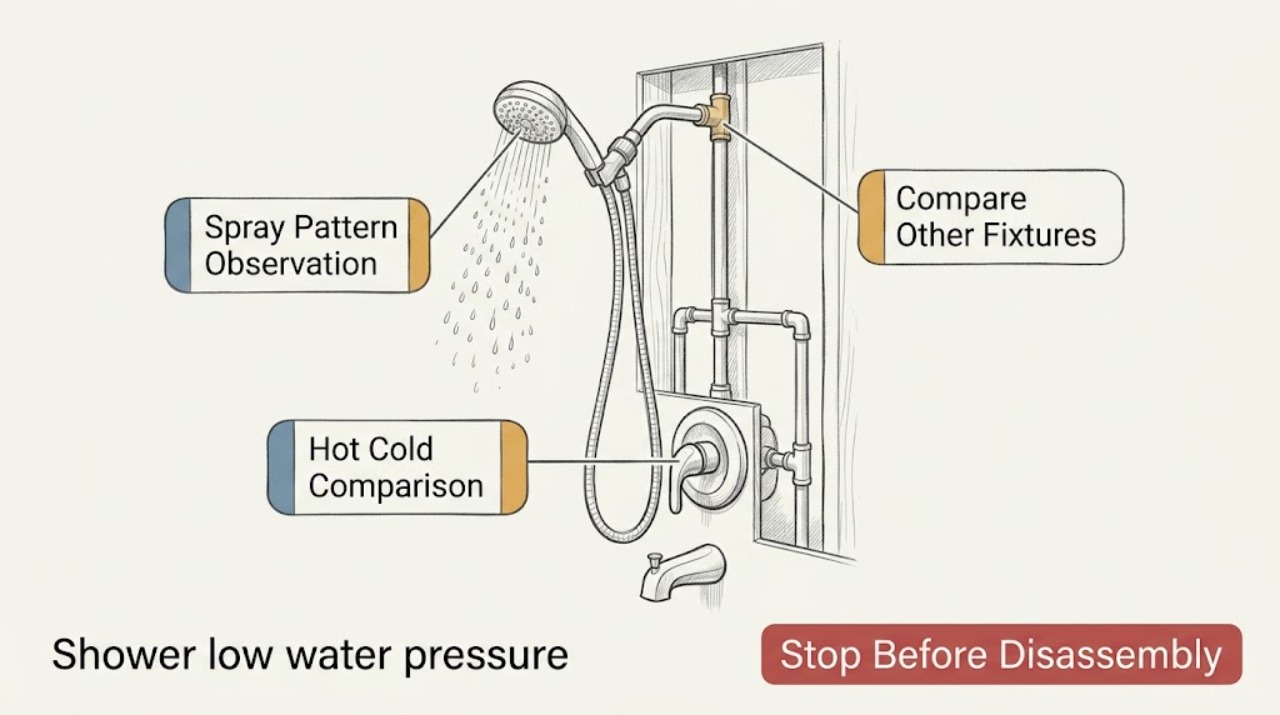
Shower low water pressure: What to Check and What to Do Next
Start by deciding whether the weak flow is limited to this shower or affects other fixtures. From a safe standing position, observe the spray pattern, compare hot and cold separately, note whether a tub spout or handheld works differently, and look for a visible kink, leak, or recent change.
-
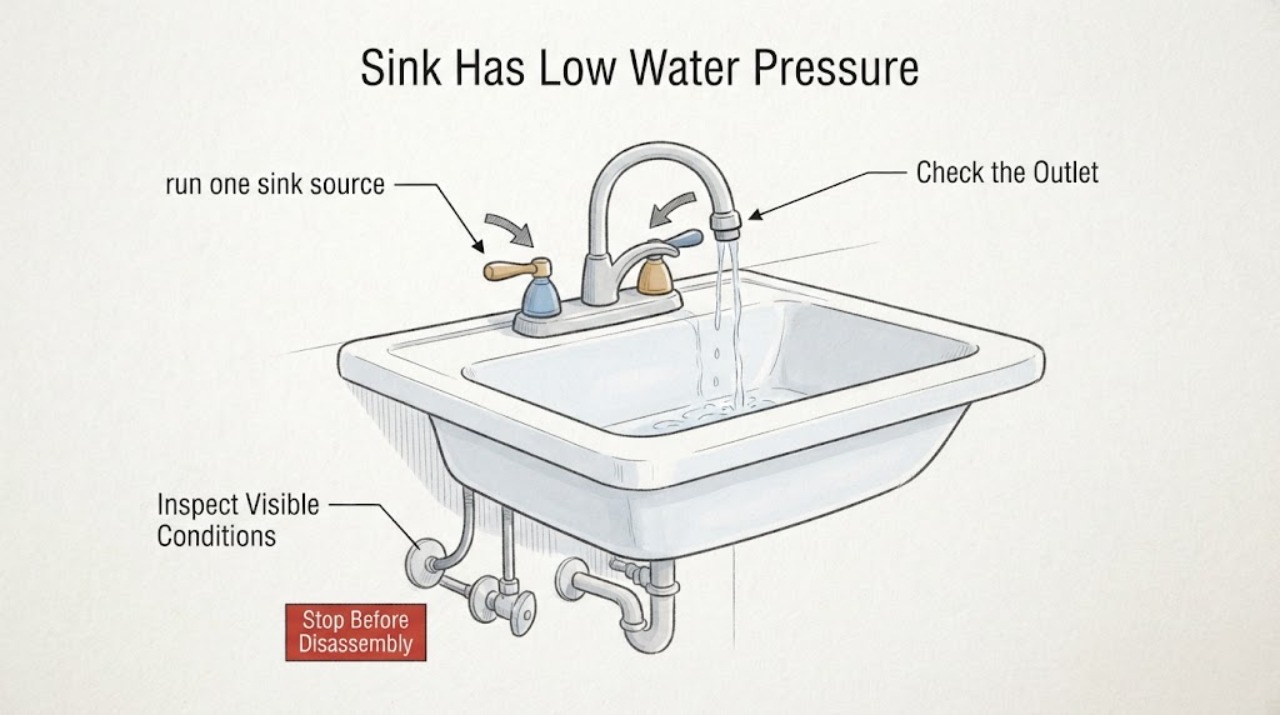
Sink Has Low Water Pressure When Two Sources Are in Use
When a sink loses pressure only while two water sources are in use, first compare one source at a time with both sources open and note whether the drop is limited to this sink or affects other fixtures.
-
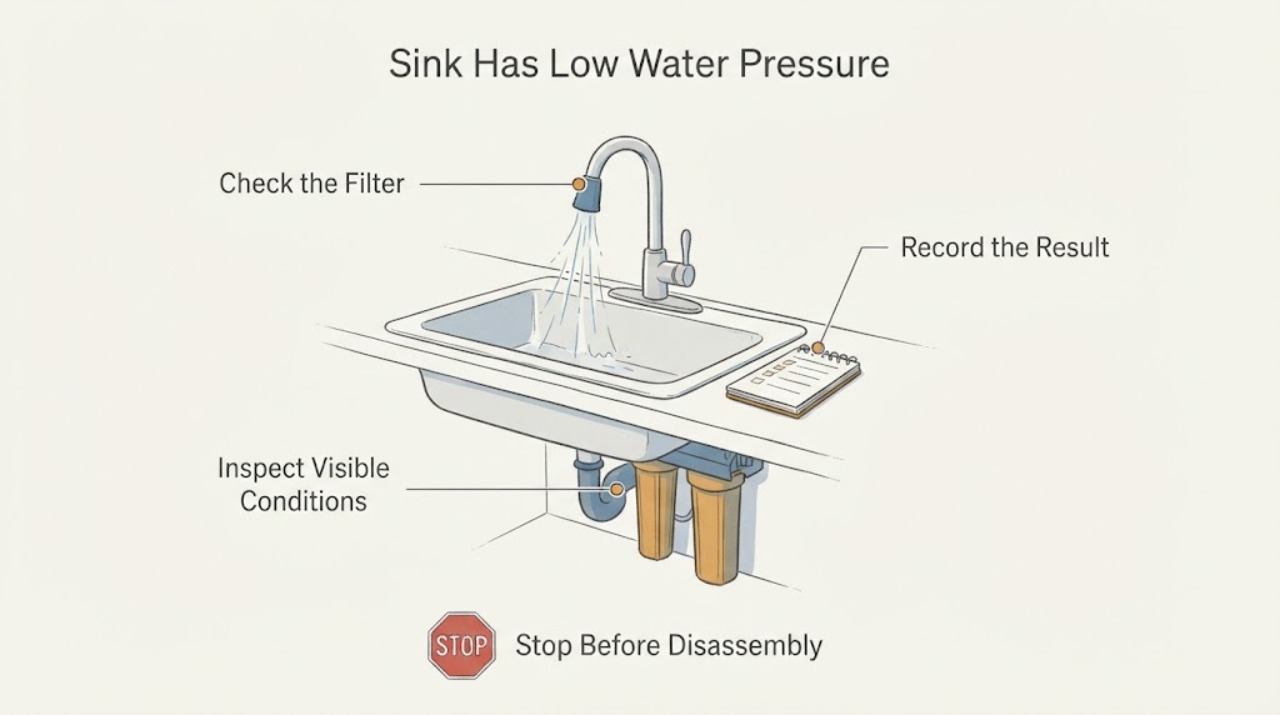
Sink Has Low Water Pressure: Check the Aerator, Filter, and Shutoff
First compare hot and cold flow at this sink with another faucet. If only this sink is weak, check the faucet aerator, any under-sink drinking-water filter, and both accessible shutoff valves for blockage, a partly closed position, or a leak.
-
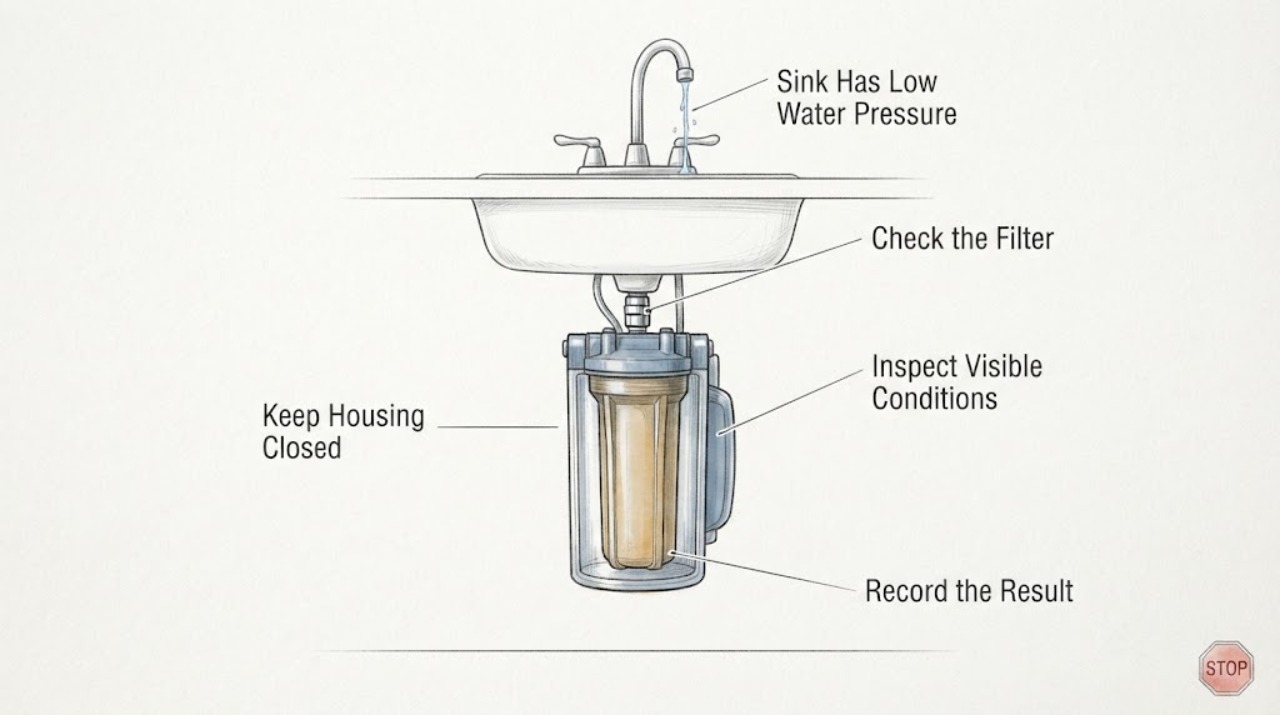
Sink Has Low Water Pressure: Check the Tank Path Without Guessing
Low pressure at one sink is usually localized to the faucet aerator, shutoff valve, supply hose, or a filter or under-sink device. If the tank component is part of the installation, it may be an under-sink water tank, filter, reverse-osmosis system, or hot-water unit, but do not assume the tank is the cause.
-
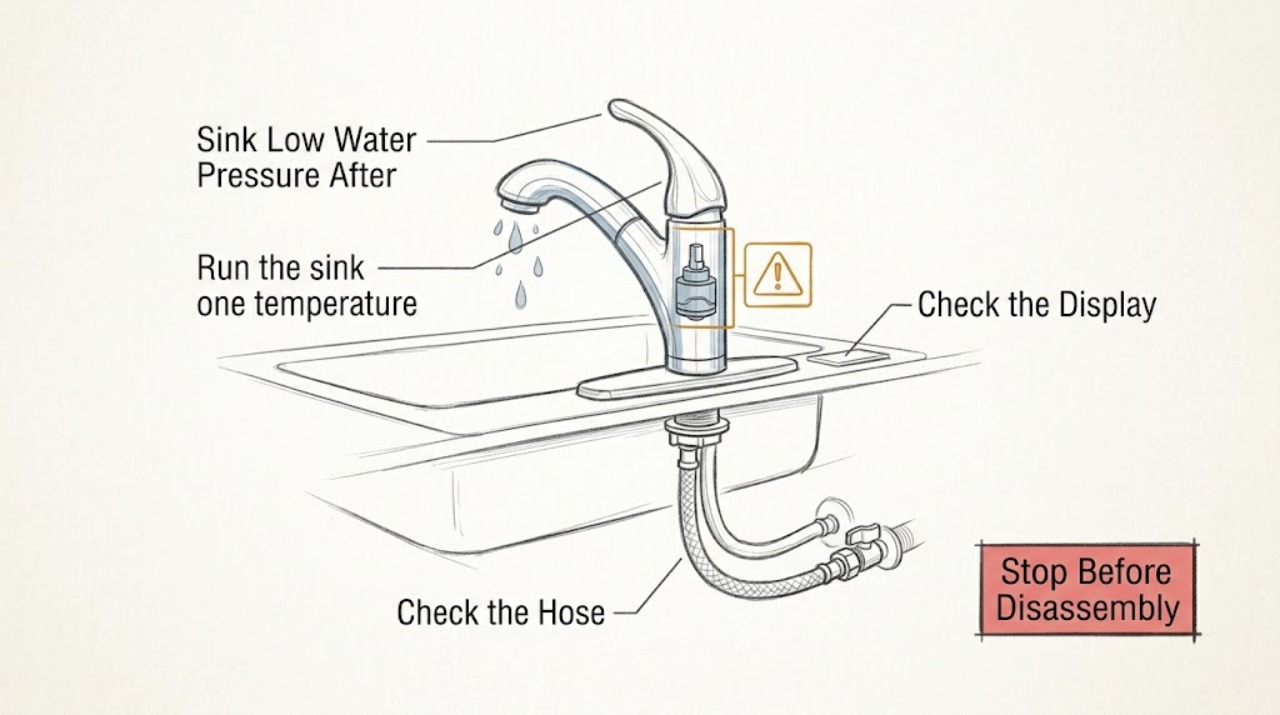
Sink Low Water Pressure After Cartridge Replacement: Safe Checks
Low flow that appears after a sink cartridge replacement is often caused by debris released during the repair, a blocked aerator or screen, a partly closed or kinked supply line, or a cartridge that is the wrong model or not seated as its instructions require. First compare hot and cold flow and determine whether other fixtures are affected.
-
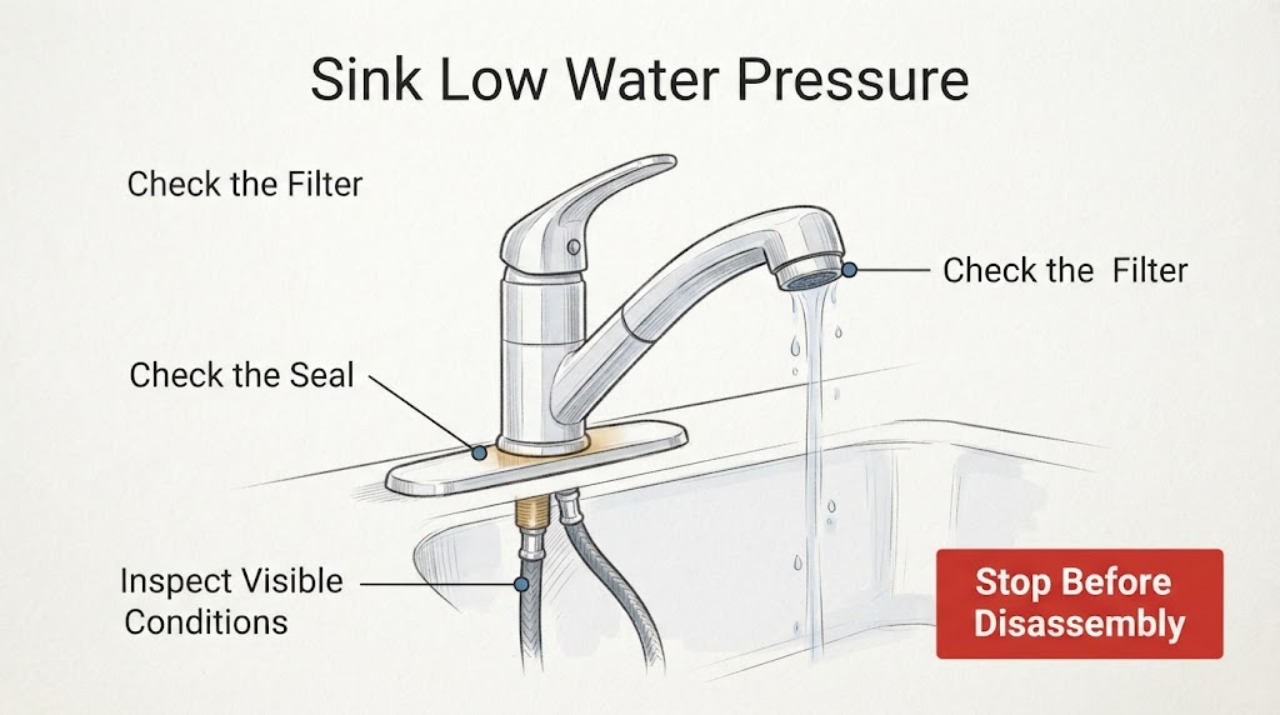
Sink Low Water Pressure at the Faucet: Check the Aerator and Supply
When low pressure is limited to the sink faucet, first compare hot and cold flow and check whether another nearby faucet is normal. A clogged aerator or flow restrictor, a partly closed under-sink valve, a kinked supply line, or a local faucet or cartridge restriction is more likely than a whole-house pressure failure.
-
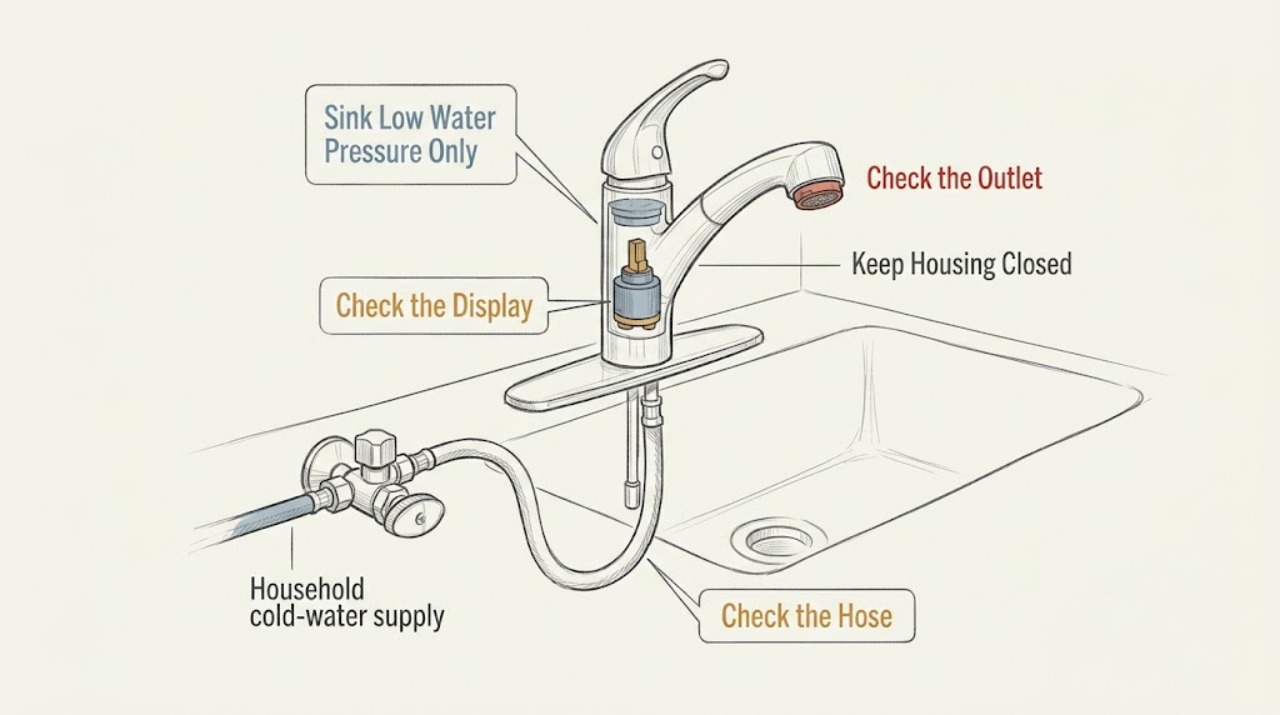
Sink Low Water Pressure Only on Cold Water: Find the Restriction Safely
If a sink has low water pressure only on cold water, first compare the cold stream at this sink with another cold fixture and compare it with the hot stream at the same sink. If only this cold side is weak, keep the area dry and inspect the cold shutoff valve, supply hose, faucet screen or aerator, and—only when the faucet design allows it—the cartridge path.
-
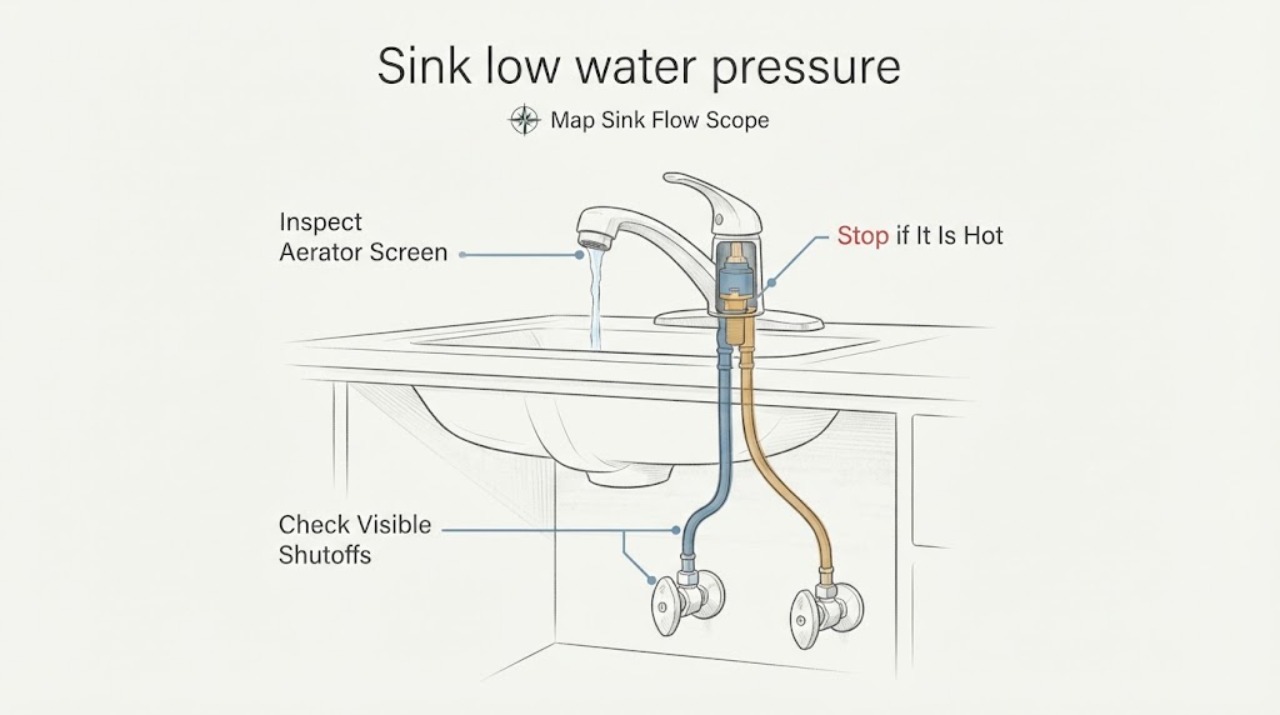
Sink low water pressure: safe checks before calling a plumber
First decide whether the sink alone is weak or whether every faucet is affected, and compare hot and cold flow. A sink-only problem is often a blocked aerator or screen, a partly closed accessible shutoff, a wand or hose screen, or another faucet-specific restriction; remove and rinse only an accessible aerator or screen and do not force a seized fitting.
-
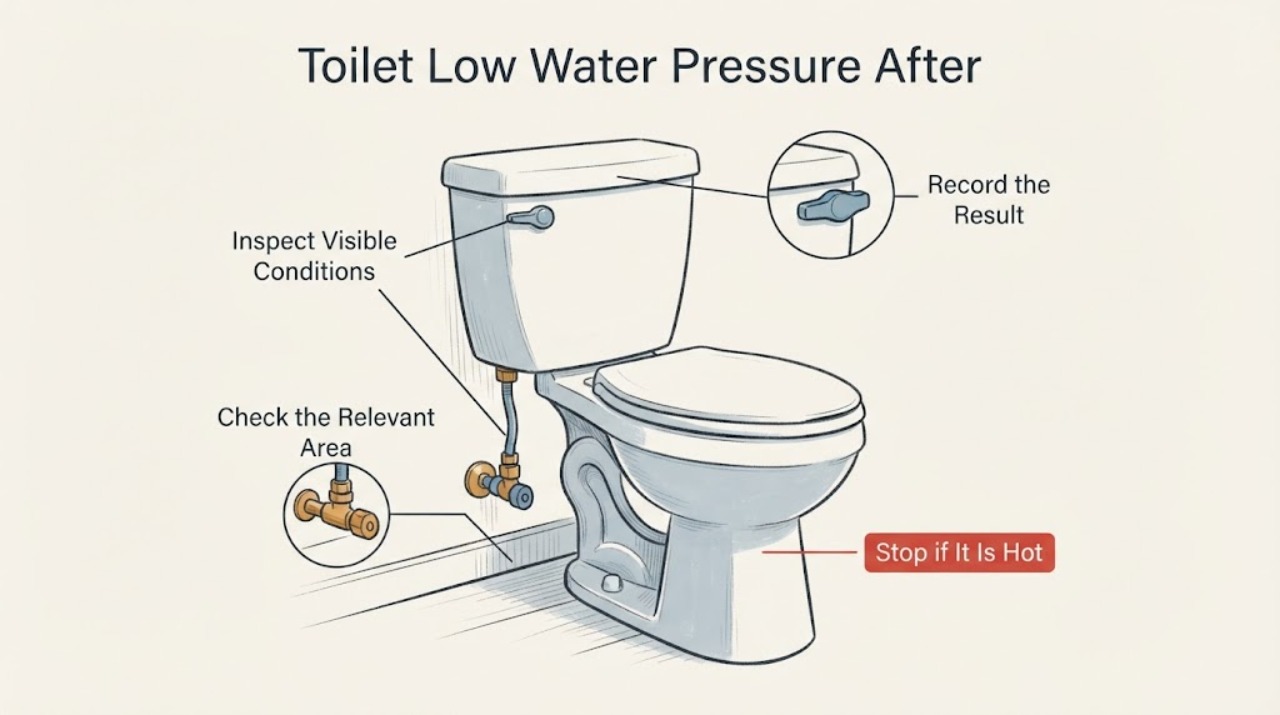
Toilet Low Water Pressure After Installing a Mixed Tap: Safe Checks
If a toilet has low refill flow after a mixed tap was installed, first confirm whether the restriction is only at the toilet or affects the cold supply elsewhere. Look for a partially closed toilet isolation valve, a kinked or strained supply hose, a disturbed stop tap, a leak, or a new pressure drop when the mixed tap is used.
-
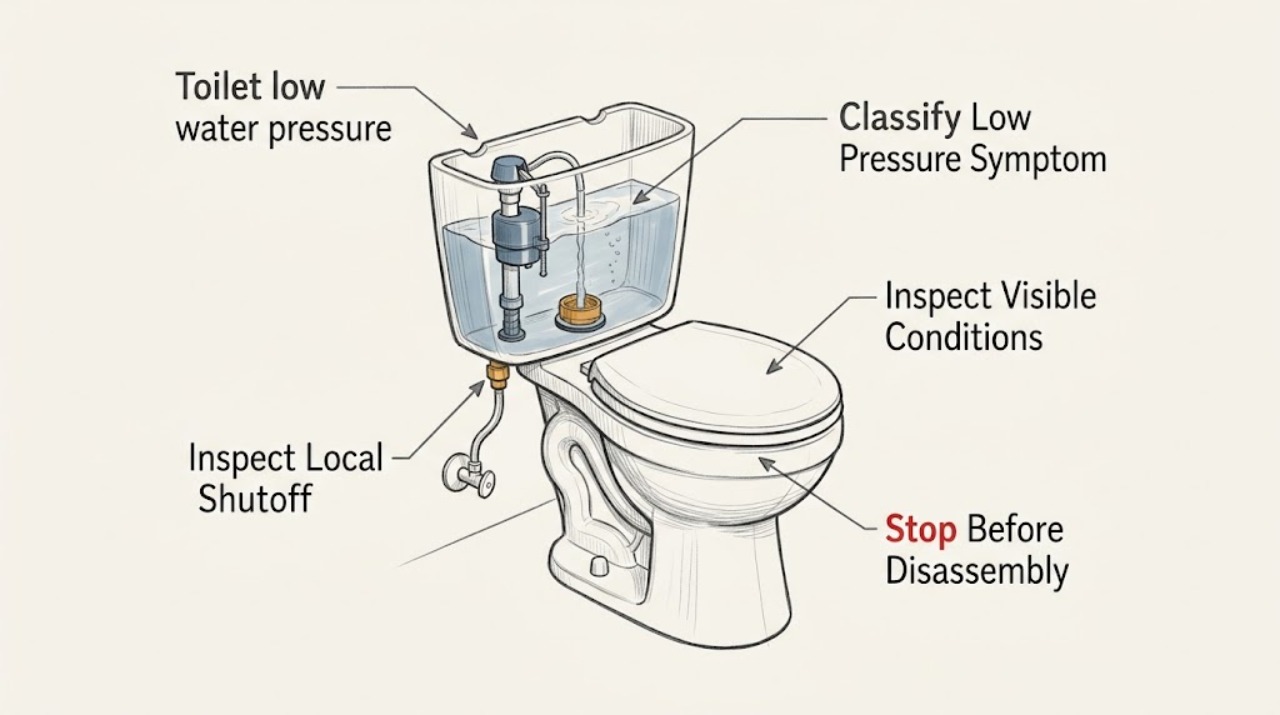
Toilet low water pressure: separate weak flushing from slow tank filling
First decide whether the complaint is a weak flush, a tank that refills slowly, or low pressure at several fixtures. For a tank toilet, check that the local shutoff is open and the supply connection is dry, then observe the tank water level and whether the fill valve stops at the normal line.
-
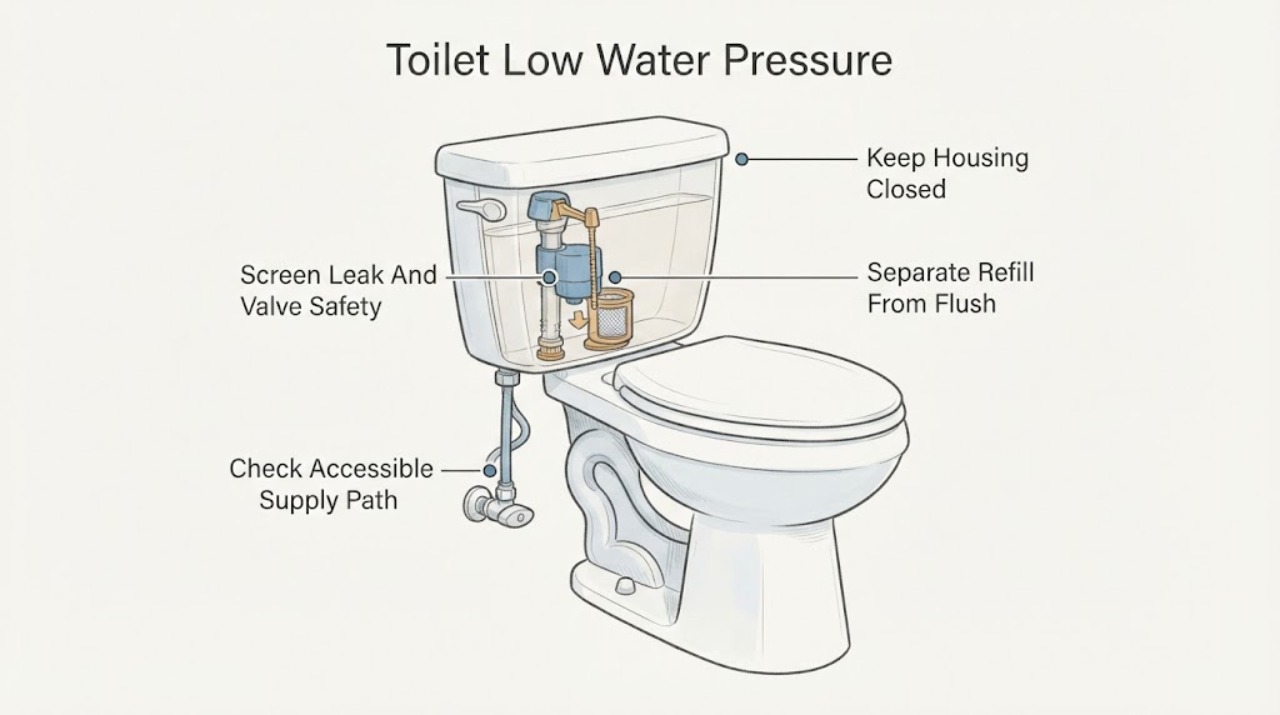
Toilet Low Water Pressure: Separate Slow Refill, Weak Flush, and Pressure-Valve Problems
A toilet that seems to have low water pressure may have a partly closed or restricted supply stop, a kinked hose, debris in the inlet or fill valve, a low tank level, a weak flush setting, a flush-valve problem, or genuinely low pressure affecting the home. First separate slow tank refill from a weak bowl flush: watch the tank level after one flush, then compare another fixture and another toilet without repeatedly cycling a suspect valve.
-
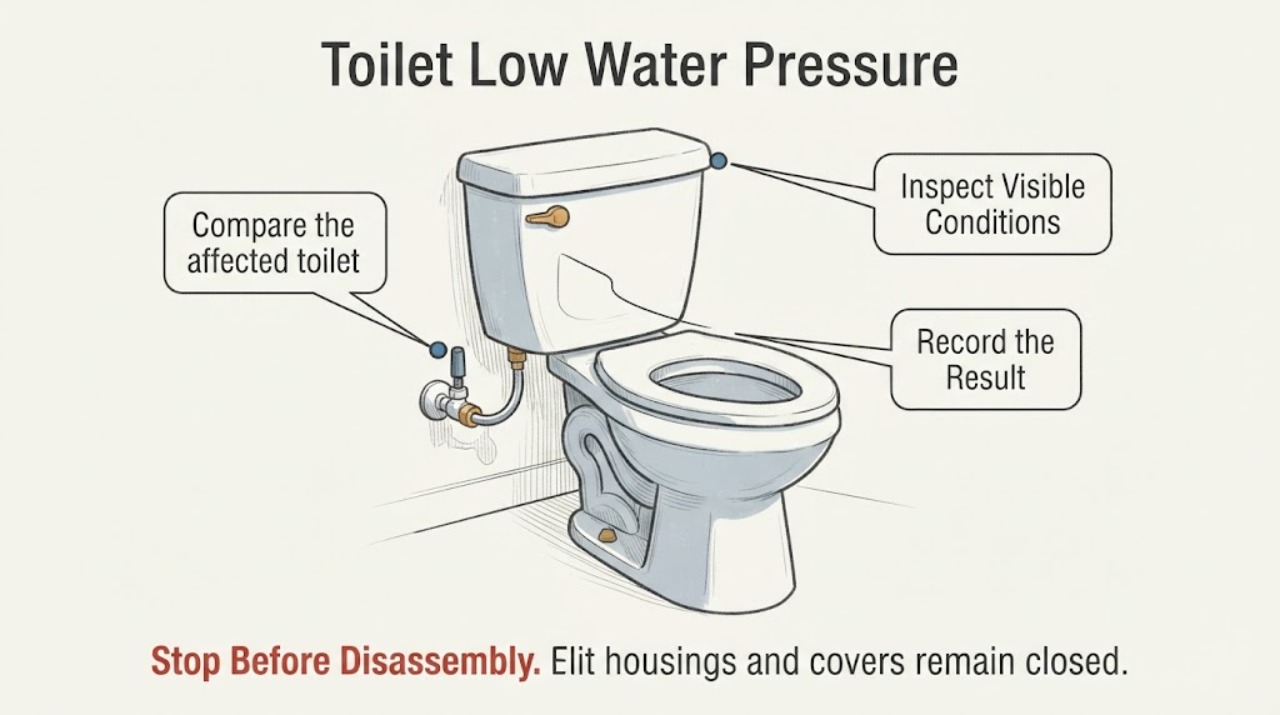
Toilet Low Water Pressure: Check the Tank, Supply, and Flush Path
Toilet low water pressure usually appears as a slow tank refill, a low tank level, or a weak flush, but those symptoms can also come from a partly closed supply stop, a kinked or restricted supply line, a fill-valve inlet, a low tank setting, blocked rim or trapway, or low pressure in the home. Compare this toilet with another fixture first, then make only safe external checks.
-
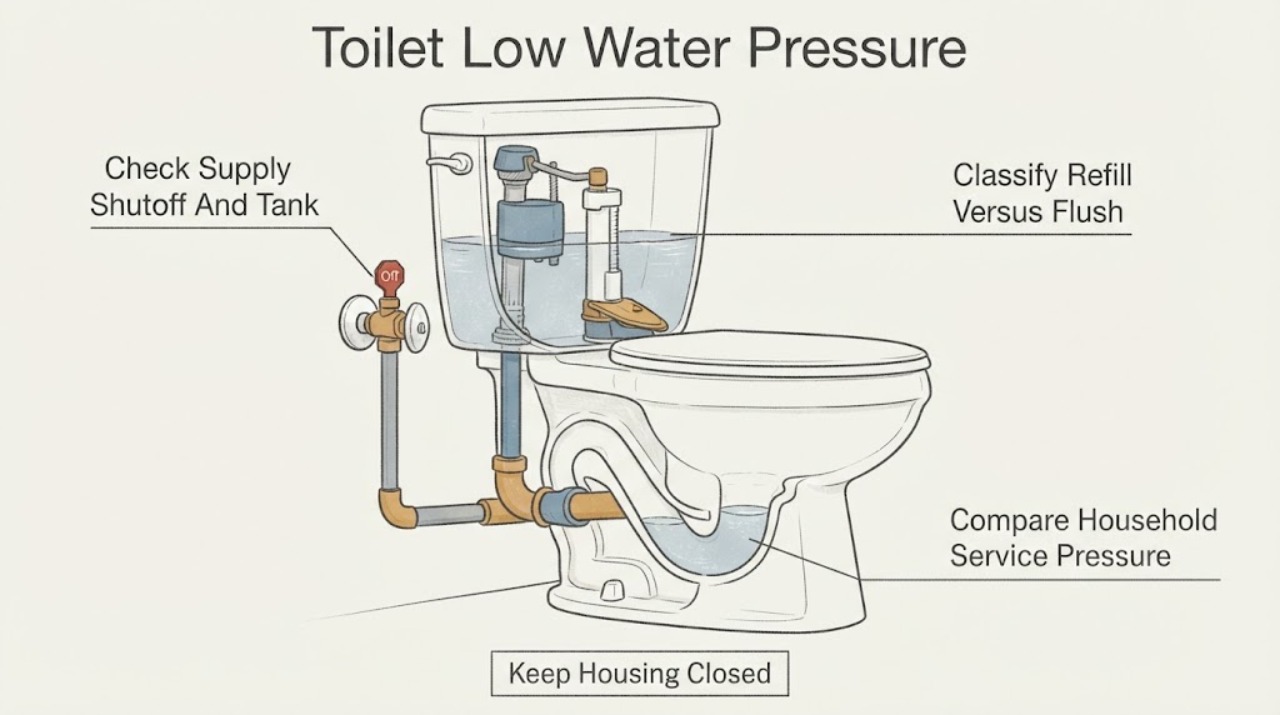
Toilet Low Water Pressure: Separate a Slow Refill from a Weak Flush
“Low water pressure” at a toilet can mean the tank refills slowly, the bowl receives a weak flush, or the whole home has reduced supply pressure. First compare the toilet with another fixture and watch one flush: a slow refill points toward the supply shutoff, inlet, fill valve, or home pressure, while a normal tank level with weak bowl movement points toward the flush valve, rim holes, trapway, waste line, or vent.
-
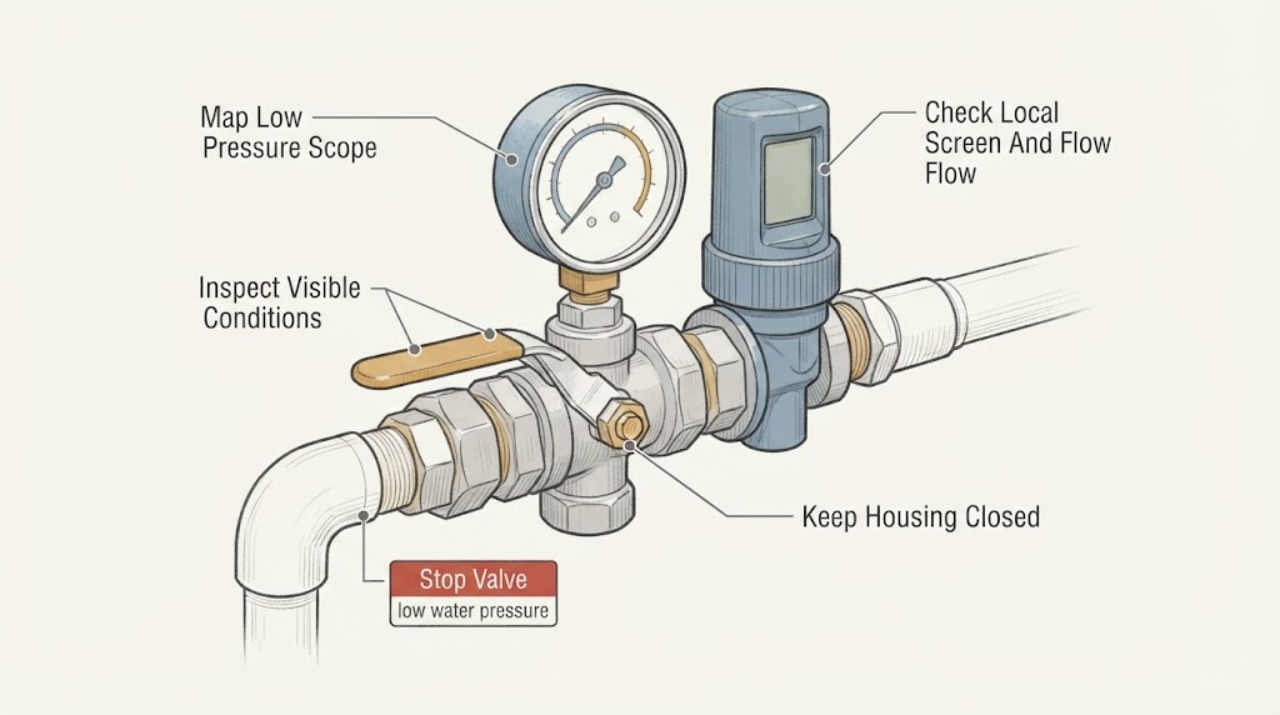
Valve low water pressure: separate a partly closed valve from a flow restriction or supply problem
Low pressure at a plumbing valve is not proof that the valve itself has failed. First compare the affected outlet with other cold and hot outlets, then check whether the accessible shutoff is fully open without forcing it.
-
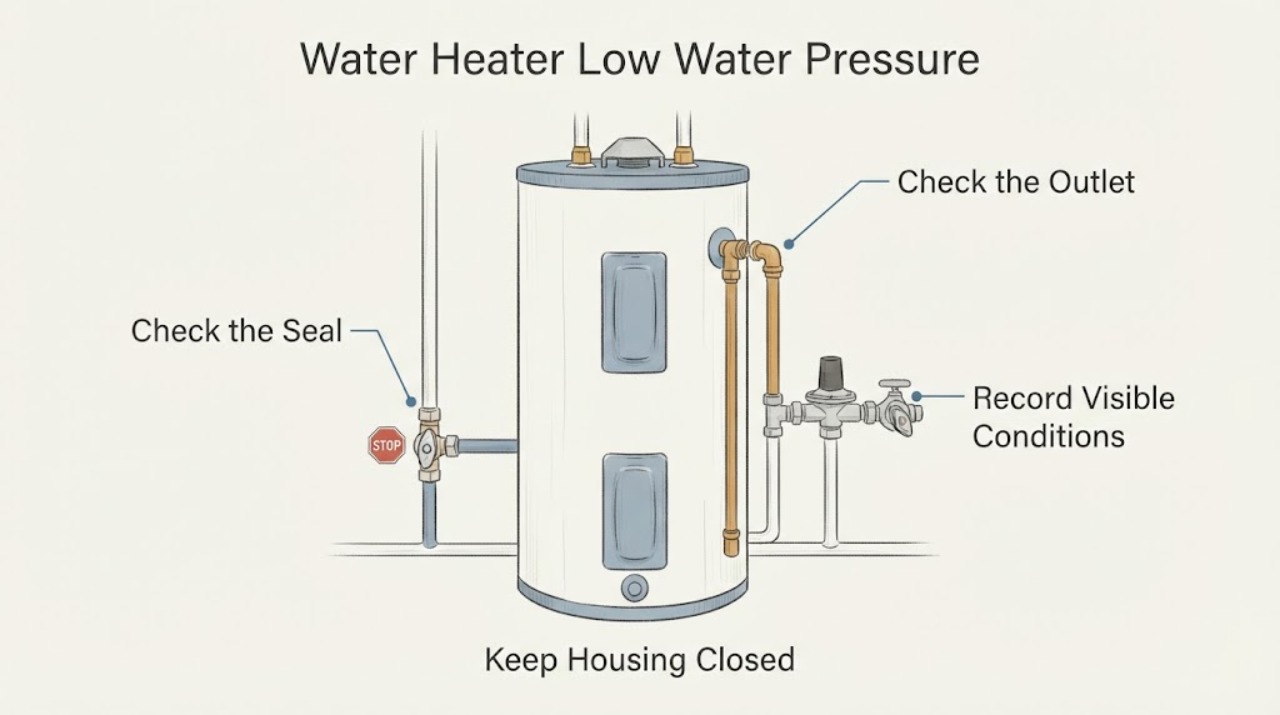
Water Heater Low Water Pressure: Trace Hot-Only Versus Whole-Home Flow
First compare one hot fixture with another hot fixture and with cold water. Low flow at only one faucet or shower points to a scaled aerator or showerhead; low flow at every hot outlet but normal cold flow points toward the heater's cold-water inlet path, a restriction, or a mixing/tempering component; low pressure on both hot and cold sides points upstream to a leak, pressure-regulating valve, well or pump, or a utility-side problem.
-
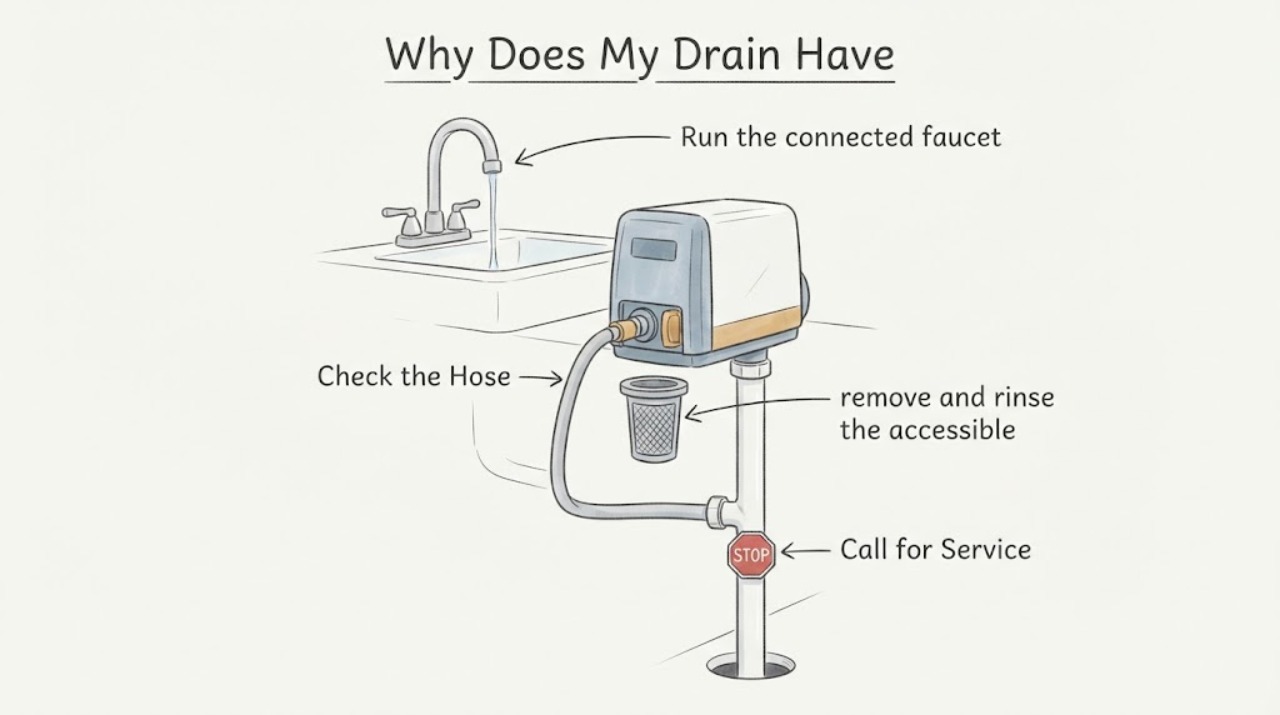
Why Does My Drain Have Low Water Pressure?
A drain does not normally have incoming water pressure; it carries water away by gravity and a vented drainage path. First decide whether the connected faucet or shower has a weak stream, or whether the basin, tub, or floor drain empties slowly.