
On this page
Start here
Quick answer
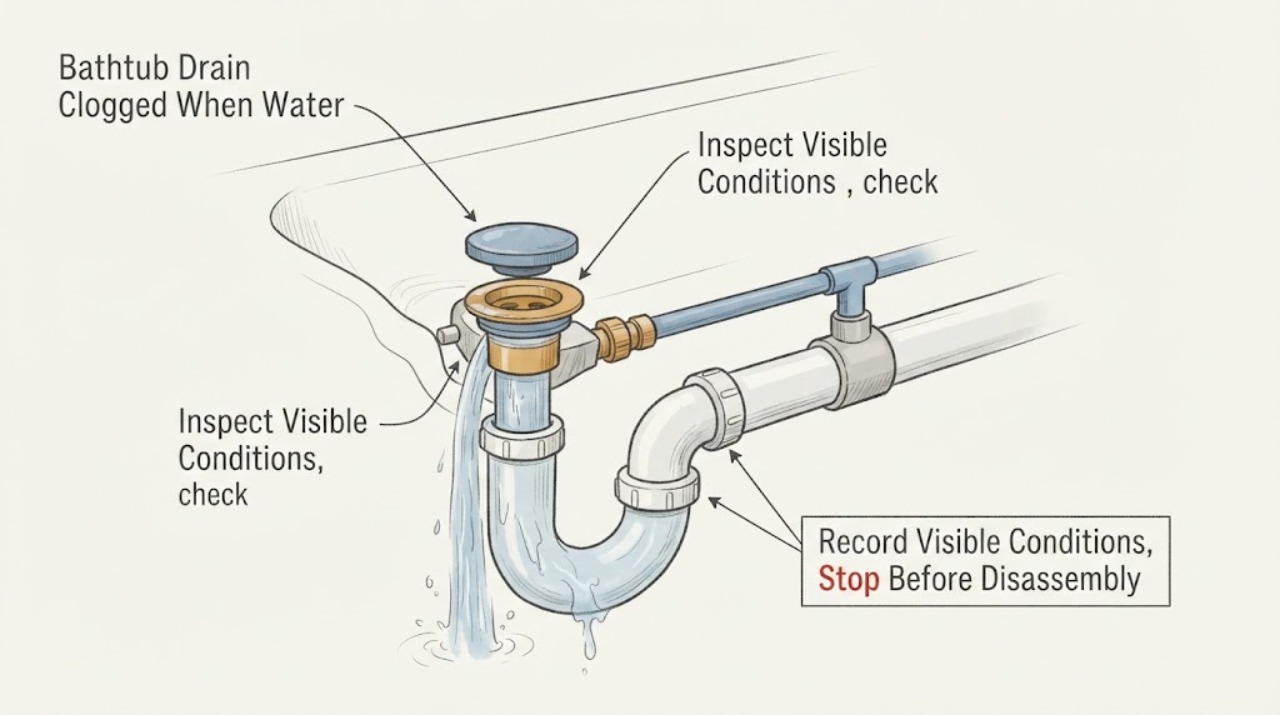
Stop adding water and first determine whether the bathtub is slow, backing up, or causing another fixture to rise. A tub-only slow drain often starts at the visible stopper or hair and soap buildup; water rising in a sink, toilet, or another tub points toward a shared branch or main drain and needs a plumber sooner. Remove only accessible surface debris, and use a plunger only when no drain chemical has been used and the tool instructions fit the drain. Never mix cleaners, pour another product into a treated drain, or plunge after chemicals may be present. Stop for sewage, fast backflow, standing water near electrical equipment, a leak through the ceiling or floor, or a clog that returns after a safe surface check, and arrange plumbing service.
Work through in order
Diagnostic checks
Use only checks that match the exact appliance or system and its official guide.
-
Check 1
Stop the bath water and observe the tub from a safe, dry position; record whether the level falls slowly, remains still, rises, or backs up onto the floor.
Expected result: The tub is merely slow, fully blocked, overflowing, or producing foul or sewage-like backflow.
Next step: Stop for overflow or sewage and arrange plumbing service; for a contained slow drain, continue only with the no-chemical external checks below.
Why this matters
Why: A slow tub-only drain can be a local restriction. Overflow or sewage-like backflow increases contamination and property-damage risk and is not a reason to keep testing.
-
Check 2
Without adding more water, check whether a nearby sink, toilet, shower, or second tub changes level or gurgles when the bathtub drains; do not repeatedly run fixtures to reproduce it.
Expected result: Only the bathtub is affected, or more than one fixture rises, drains slowly, or backs up.
Next step: Keep all affected fixtures unused and call a plumber for multiple-fixture symptoms; do not keep flushing or draining water into the system.
Why this matters
Why: A tub-only symptom is more consistent with a local stopper, trap, or branch restriction. Multiple fixtures suggest a shared branch or main-line blockage and a higher chance of wastewater backup.
-
Check 3
Ask whether any drain opener, bleach, descaler, vinegar, or other cleaner was poured into the bathtub drain, and record the product and approximate time without touching the drain water.
Expected result: No chemical was used, or a chemical product may still be in the drain or standing water.
Next step: If any product was used, do not plunge, snake, bail, or dismantle the drain; ventilate only without approaching the drain if safe, keep people away, and tell the plumber the exact product. Seek medical or poison guidance for exposure.
Why this matters
Why: A treated drain can expose a person or plumber to corrosive liquid or fumes, and mixing products can create a hazardous reaction. The safe tool choice changes immediately when chemicals are present.
-
Check 4
For a tub-only slow drain with no chemical history and no overflow, inspect the visible stopper, strainer, and drain opening using a flashlight; remove only loose surface hair or soap that is plainly accessible and do not force the fitting.
Expected result: Hair or soap is visibly blocking the opening, the stopper is not opening fully, or the opening looks clear while the slow drain remains.
Next step: Clean only the accessible surface and restore the stopper as designed; if the opening is clear or the fitting resists, stop and request a plumber rather than opening the trap or wall.
Why this matters
Why: Visible debris or a stopper that does not lift can explain a local restriction. A clear opening does not rule out a trap or deeper branch blockage.
-
Check 5
Only when the drain is free of chemical product and the tub is not overflowing, follow the plunger manufacturer's directions for a bathtub drain and stop if water or debris splashes toward you.
Expected result: The water level falls normally after the safe attempt, remains slow, or rises into the overflow or another fixture.
Next step: Do not add chemicals or repeat forceful attempts. Keep the drain unused and call a plumber if the symptom remains, returns, or affects another fixture.
Why this matters
Why: Improvement supports a movable local obstruction but does not prove the branch is clear. No change, backflow, or worsening points toward a deeper restriction or a poor seal and needs service.
-
Check 6
Inspect only visible surrounding surfaces for a wet wall, ceiling below, baseboard, loose overflow cover, or water escaping while the tub is otherwise unused; do not open the wall or ceiling.
Expected result: There is no leak evidence, or water appears outside the tub, under the floor, through a ceiling, or near an electrical outlet or fixture.
Next step: Stop using the tub, keep away from wet electrical equipment, and arrange urgent plumbing service; isolate water or electricity only from a safe, dry location.
Why this matters
Why: A leak or water near electricity is a property and shock hazard separate from a simple clog; hidden damage can continue even when the tub level falls.
-
Check 7
Prepare a plumber handoff with the tub location, slow or blocked behavior, first wet point if known, affected fixtures, chemical history, stopper observations, and what happened after any safe surface check.
Expected result: The symptom is local and repeatable, affects multiple fixtures, returns quickly, or cannot be safely tested because of chemical or wastewater exposure.
Next step: Keep the tub and connected fixtures unused until the plumber assesses the line; preserve product labels and do not add more water or cleaner.
Why this matters
Why: This sequence helps distinguish a visible stopper issue from a trap, shared branch, main-line, leak, or chemically treated drain without unsafe dismantling.
Use your observations
Decision map
Find the observation that best matches what you see, then follow the next safe action.
-
PATH 01Next step
What you see
Only the bathtub is slow, there is no overflow or chemical history, and loose debris is visible at the stopper or strainer.
Do this next
Remove only plainly accessible debris, restore the stopper as designed, and stop for service if the drain remains slow or soon clogs again.
Why this path and its safety boundary
Why it matters: A local surface restriction or stopper position is plausible.
-
PATH 02Next step
What you see
The tub is blocked or backing up and a sink, toilet, shower, or another tub is also slow, gurgling, rising, or backing up.
Do this next
Stop using all affected fixtures and call a plumber; do not keep sending water into the system or open a cleanout without professional direction.
Why this path and its safety boundary
Why it matters: A shared branch or main drain restriction is more likely than a tub-only surface clog.
-
PATH 03Next step
What you see
A drain opener, bleach, vinegar, descaler, or another cleaner may be in the tub drain or standing water.
Do this next
Do not plunge, snake, bail, mix, or dismantle the drain. Keep people and pets away, retain the label, and tell the plumber; seek medical or poison guidance for contact or fumes.
Why this path and its safety boundary
Why it matters: The drain may contain a corrosive or reactive chemical exposure hazard.
-
PATH 04Next step
What you see
The drain appears clear after a safe surface check, but the tub remains slow, the blockage returns, or water escapes outside the fixture.
Do this next
Stop repeated DIY attempts and arrange plumbing service; do not open walls, floors, traps, or connected lines without the appropriate professional assessment.
Why this path and its safety boundary
Why it matters: A deeper trap or branch restriction, stopper/overflow fault, or leak may remain.
-
PATH 05Next step
What you see
Standing water or sewage is near an electrical outlet, appliance, light, or other energized equipment, or there is active ceiling or floor leakage.
Do this next
Keep clear, stop using the fixture, and isolate water or electricity only from a safe, dry location; obtain urgent plumbing and local emergency assistance as needed.
Why this path and its safety boundary
Why it matters: The situation is a water-contamination and electrical/property safety emergency, not a routine drain cleaning task.
Helpful context
Understand the symptom
Start with the tub, not more water
Do not keep filling the bathtub to see whether it clears. Note whether water drains slowly, stops completely, rises back through the tub, or spills from another nearby fixture when the tub drains. A symptom limited to the tub can be near the stopper or trap; a response in several fixtures suggests a shared branch or main line.
Keep drain chemicals out of the diagnosis
Never combine a drain opener with bleach, vinegar, ammonia, another cleaner, or a second drain product. If any chemical has already been poured into the tub drain, do not plunge, snake, remove the trap, or reach into the water. Keep the product container or label available and tell the plumber exactly what was used.
When to use a plumber
A plumber is the right next step for sewage-colored or foul backflow, multiple fixtures affected, a fast-returning clog, a hidden leak, a drain that cannot be safely accessed, or any line that may contain chemical product. Do not open ceilings, floors, or walls to chase a leak yourself.
Safety boundary
Stop conditions
- Stop immediately for overflow, sewage-colored or foul backflow, fast rising water, multiple fixtures backing up, or a clog that returns immediately.
- Stop for any drain chemical history, fumes, skin or eye contact, or uncertainty about what is in the standing water; do not plunge, snake, bail, mix, or dismantle the drain.
- Stop for water through a ceiling or floor, a wet wall, water near electrical equipment, structural damage, or an active leak.
- Do not mix drain products, bleach, vinegar, ammonia, or other cleaners; do not apply a flame, force a stopper, open walls, or repeatedly add water to test the line.
Only after diagnosis
Potential parts
- bathtub stopper or strainer assembly
Consider only if a plumber confirms the visible stopper or strainer is damaged, misaligned, or no longer controlling flow correctly.
Confirm the drain style, dimensions, finish, and installation method before selecting a replacement. - tub overflow gasket or trim
Consider only if qualified inspection links water outside the tub to the overflow assembly rather than the drain line.
A hidden leak may require access and testing by a plumber; do not tighten or open fittings by force. - trap or branch-drain component
Consider only after a plumber identifies a damaged or inaccessible trap or branch component as the source of a recurring restriction.
Drain layout and local code requirements vary; do not select or install a hidden plumbing component from the symptom alone.
When checks do not resolve it
Need a professional?
Call a plumber for multiple fixtures affected, overflow or sewage backflow, a deep or returning clog, a drain treated with chemicals, a leak outside the tub, or a blockage that remains after a safe accessible check. Seek urgent help for water near electricity, active structural leakage, corrosive exposure, fumes, or suspected contamination.
Common questions
FAQ
Why does my bathtub drain slowly when water goes down it?
A visible stopper or strainer restriction can slow a tub by itself, while a trap or shared branch blockage can affect the tub and nearby fixtures. Stop adding water and compare the tub symptom with nearby sinks, toilets, showers, or another tub.
Can I use a plunger on a clogged bathtub drain?
Only when no drain chemical has been used and the tool instructions fit the drain. Do not plunge a chemically treated drain, a drain with unknown product history, or a drain that is overflowing toward electrical equipment; call a plumber instead.
What if another fixture backs up when the bathtub drains?
Stop using the connected fixtures and call a plumber. More than one fixture rising, gurgling, or backing up points toward a shared branch or main-line restriction rather than a simple surface hair clog.
What should I do if I already poured drain cleaner into the tub?
Do not add another product, plunge, snake, bail, or dismantle the drain. Keep people away, retain the product label, and tell the plumber exactly what was used and when. Seek medical or poison guidance for skin, eye, inhalation, or ingestion exposure.
Read the exact guide
Official sources
- Sanitary Sewer Overflows (SSOs)U.S. Environmental Protection Agency · Wastewater blockages, backups, contamination, and property or public-health risk
- Drain opener poisoningMedlinePlus, U.S. National Library of Medicine · Drain-opener exposure hazards and urgent response
- Household Hazardous Waste (HHW)U.S. Environmental Protection Agency · Household hazardous-product handling, chemical mixing, drain disposal, and lower-hazard unclogging options
Community feedback
Share a repair observation
Share a plain-text repair observation. Accepted observations are published automatically; this page may take a moment to update.