
On this page
Start here
Quick answer
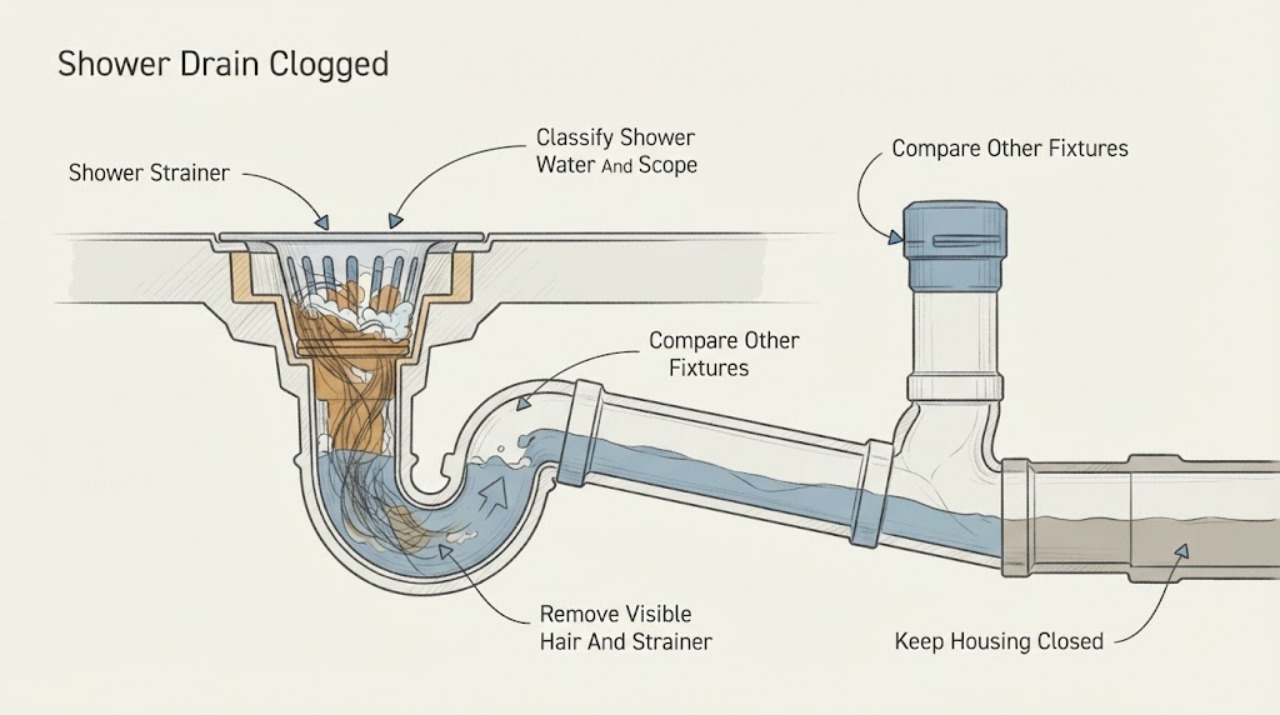
Stop the shower and first identify whether water is only slow, pooled shallowly in the tray, rising from another drain, or contaminated and backing up. For a single shower with clear shallow water, remove the strainer if it lifts without force, pull out visible hair and soap, and use a plunger only with enough water to cover its cup and with any nearby overflow opening sealed. Do not use a sharp tool, mix drain products, or pour a second product after a first one. If several fixtures are affected, water rises when no fixture is running, sewage returns, the blockage persists, or water is near electrical equipment, stop using water and call a qualified plumber or the local sewer utility. Treat any chemical already poured into the drain as a hazard and tell the plumber what product was used.
Before you begin
Safety first
- This article covers dry-position observation, accessible hair removal, and one gentle mechanical check only on an untreated local shower clog. Do not handle chemicals, wastewater, wet electricity, cleanouts, pipework, or forceful drain equipment.
Work through in order
Diagnostic checks
Use only checks that match the exact appliance or system and its official guide.
-
Check 1
Stop the shower and look from a dry, stable position at the water's appearance, depth, odor, and direction of movement. Note whether the water is only pooled in the shower, rises from the drain when another fixture runs, or appears dirty or sewage-like while all fixtures are idle.
Expected result: Clear water drains slowly, shallow water stays in the shower tray, dirty water rises, or water enters from a wall, ceiling, or another drain.
Next step: Use the single-shower, multiple-fixture, wastewater, or supply-leak branch. Keep all water use stopped when the source is uncertain.
Stop if: Stop for sewage odor, rapid rise, water near electricity, a wall or ceiling leak, structural damage, strong chemical fumes, or any need to enter contaminated water.
Why this matters
Why: Clear shallow water limited to the shower favors a local strainer, trap, or branch blockage. Dirty or rising water, especially without shower use, can indicate a wider drain or sewer backup and should not be treated as a hair-only clog.
-
Check 2
Without running more water, check whether the nearby toilet, sink, tub, floor drain, or other shower is slow or backing up. Ask whether a neighboring property has the same problem only if that can be done safely and without handling wastewater.
Expected result: Only this shower is affected, several fixtures in the home are affected, the lowest drain is rising, or neighbors also report a blockage.
Next step: For a wider problem, stop all household water use and contact a qualified plumber; contact the local sewer utility when a property-line or public sewer problem is plausible. For one shower only, continue with the safe strainer check.
Stop if: Do not flush, run taps, start laundry, or add water to test a suspected shared backup. Stop for wastewater, an overflowing manhole, or an unstable cleanout cover.
Why this matters
Why: One affected shower points toward a local trap or branch. Several fixtures, a lowest drain, or a neighboring property point toward a larger building drain, lateral, or public sewer issue; a shower may simply be the first visible outlet.
-
Check 3
If the blockage is limited to a clear, shallow shower pool and no drain chemical has been used, remove the strainer only if it is designed to lift or unscrew without force. Wear gloves, pull out visible hair and soap, place it in the waste, and wipe the accessible cover and rim.
Expected result: A removable strainer is packed with hair or soap, the strainer is stuck, the opening is clear but water remains, or the material is sharp, contaminated, or chemically wet.
Next step: Reinstall the strainer without forcing it and monitor only a small amount of clean water when the area is safe. Call a plumber for a stuck cover, deep obstruction, contaminated water, or a blockage that remains after visible buildup is removed.
Stop if: Do not force the cover, put a hand into deep standing water, pull sharp material, or continue if drain chemicals may be present.
Why this matters
Why: Hair and soap at the strainer can cause a local slow drain. A stuck cover, clear opening with retained water, sharp material, or chemical residue moves the problem beyond a safe surface clean.
-
Check 4
Only when the drain has not received a chemical product and the obstruction is local, use a clean cup plunger over the shower drain with enough plain water to seal the cup. Make controlled strokes without force, then stop and inspect the result from a safe position.
Expected result: The water level falls, the blockage does not change, dirty water rises, or liquid splashes from the drain.
Next step: If the drain clears, rinse with plain water and monitor for recurrence. If it does not, stop and call a plumber rather than adding chemicals or using a forceful tool.
Stop if: Do not plunge after drain cleaner, bleach, acid, or another unknown product; stop for fumes, skin or eye exposure, rapid backup, or water near electricity.
Why this matters
Why: A falling level suggests a minor local obstruction may have shifted. No change suggests a deeper or firmer blockage; dirty water or splash can indicate a shared backup or an unsafe contaminated drain.
-
Check 5
Ask whether any drain cleaner, bleach, descaler, toilet product, baking product, or other chemical was poured into the shower and record the product name and time. Do not add another product, use a plunger, touch the liquid, or lean over the drain when the contents are unknown.
Expected result: No chemical was used, one labeled product was used, multiple products were used, a cleaner was used shortly after another, or fumes, heat, discoloration, or skin irritation is present.
Next step: Stop, ventilate from a safe position, keep people and pets away, follow the product label and local poison or emergency guidance for exposure, and tell the plumber exactly what entered the drain. Do not attempt further clearing.
Stop if: Stop immediately for breathing difficulty, strong fumes, heat, splashing, eye or skin exposure, or a suspected chemical reaction; do not mix, neutralize, or pour another substance into the drain.
Why this matters
Why: Drain cleaners can be corrosive, and products can react when mixed directly or through the drain. Heat, fumes, or irritation may be a chemical event rather than a blockage that should be mechanically cleared.
-
Check 6
If the shower remains blocked, stop all water use and look only from a dry location for wastewater spreading toward outlets, appliances, a water heater, or wiring. Do not remove a cleanout cap; record whether water rises when nobody is using water and whether any nearby drain is affected.
Expected result: Water is near electrical equipment, wastewater keeps rising with no use, several fixtures are affected, a property-line cleanout is full, or the shower alone remains slow.
Next step: Keep people and pets away, isolate water or affected power only from a dry safe position if possible, and call a plumber. Contact the local sewer utility for a suspected public line or property-line event.
Stop if: Do not enter wastewater, touch wet equipment, pull a wet plug, open a cleanout, or run fixtures to locate the blockage.
Why this matters
Why: Standing water near electricity requires an electrical safety response. A continuing or multi-fixture backup can involve a building drain, private lateral, or public sewer and cannot be safely cleared by adding more water.
-
Check 7
Before calling a plumber, record the shower location, water appearance and depth, fixtures affected, whether the blockage changes with other water use, strainer and visible-hair findings, plunger result, chemical history, cleanout observation, and any leak or electrical concern. Photograph only from a dry, safe position.
Expected result: The record points to a local shower obstruction, a shared indoor drain, a possible public sewer issue, or a chemical or water-safety event.
Next step: Keep the shower and affected fixtures unused until the plumber or utility gives a safe restart instruction. Tell the professional about every chemical, overflow, and electrical observation.
Stop if: Do not continue DIY work when the next step requires a cable machine, pipe disassembly, cleanout opening, chemical handling, entry into wastewater, or electrical contact.
Why this matters
Why: A precise record helps the plumber choose a local drain, branch, lateral, chemical-safety, or emergency response without risky homeowner probing. It also prevents accidental exposure to an unknown product.
Use your observations
Decision map
Find the observation that best matches what you see, then follow the next safe action.
-
PATH 01Safety boundary
What you see
Only the shower is slow, the water is clear and shallow, no chemical has been used, and the strainer can be accessed without force.
Do this next
Remove visible hair and soap, reinstall the strainer, and use a gentle plunger only if the drain is untreated. Call a plumber if the water remains or the symptom returns.
Why this path and its safety boundary
Why it matters: A local hair or soap obstruction is plausible.
Safety stop: Stop for stuck hardware, sharp material, deep water, fumes, or any need to disassemble the trap.
-
PATH 02Safety boundary
What you see
A toilet, sink, tub, floor drain, another shower, or a neighboring property is also affected.
Do this next
Stop all water use and call a qualified plumber; contact the local sewer utility when the property-line or public network may be involved.
Why this path and its safety boundary
Why it matters: A shared branch, building drain, lateral, or public sewer issue is possible.
Safety stop: Do not flush, run taps, open a cleanout, or add water to test the scope.
-
PATH 03Safety boundary
What you see
Dirty or odorous water rises from the shower drain, water rises while fixtures are idle, or the lowest drain is backing up.
Do this next
Stop all water use, keep people and pets away, and call a plumber. Contact the local sewer utility for a suspected public line or property-line issue.
Why this path and its safety boundary
Why it matters: Treat the event as a possible wastewater or sewer backup, not as ordinary hair buildup.
Safety stop: Do not enter the water, use chemical cleaner, plunge unknown liquid, or handle wet electrical equipment.
-
PATH 04Safety boundary
What you see
A drain cleaner or another chemical was used, multiple products were used, or there is heat, fumes, splashing, or irritation.
Do this next
Keep clear, ventilate from a safe position, follow the product label and local emergency or poison guidance for exposure, and tell the plumber the exact product history.
Why this path and its safety boundary
Why it matters: A corrosive or reactive chemical hazard may be present in the shower drain.
Safety stop: Do not mix, neutralize, plunge, touch, or pour another product into the drain.
-
PATH 05Safety boundary
What you see
Water or wastewater reaches an outlet, appliance, heater, wiring, or electrical panel.
Do this next
Keep clear and isolate affected power only from a dry safe position if possible; call qualified electrical and plumbing help.
Why this path and its safety boundary
Why it matters: The blockage now includes an electrical shock hazard.
Safety stop: Do not enter water, touch equipment, pull a plug, or use the shower or nearby fixtures.
-
PATH 06Safety boundary
What you see
Visible hair is removed and an untreated gentle plunger does not restore drainage, or the clog repeatedly returns.
Do this next
Stop using the shower and arrange a qualified plumber. Provide the location, findings, and any prior treatment history.
Why this path and its safety boundary
Why it matters: A deeper obstruction, trap or branch issue, pipe defect, or recurring buildup needs professional assessment.
Safety stop: Do not force a sharp tool, use a cable machine without training, disassemble pipework, or add chemicals to chase the blockage.
Helpful context
Understand the symptom
Classify the shower blockage before clearing it
A shower that drains slowly with clear water is a different problem from wastewater rising through the shower, several fixtures backing up, or water coming from a wall or ceiling. Note how deep the water is, whether it changes when another fixture runs, and whether the drain cover lifts normally. Hair and soap are common bathroom buildup, but the shower can also be the lowest visible point of a larger branch or sewer blockage.
Use mechanical clearing only on a safe, untreated drain
For a single shallow blockage, remove accessible hair and soap from the strainer and use a suitable plunger without forcing the cover or trap. A plunger can spread liquid that was already poured into the drain, so do not plunge if a corrosive product is present or if you cannot identify what is in the water. Never mix cleaners, use one cleaner after another, or insert a sharp object into the pipe.
Multiple outlets and dirty water change the service path
If a toilet, sink, tub, floor drain, or a neighbor's fixture is also affected, stop using water throughout the home and arrange a plumber or contact the local sewer utility when a public line may be involved. Keep people and pets away from wastewater. Water near outlets, appliances, or wiring is an electrical hazard; do not enter it or touch equipment in it.
Safety boundary
Stop conditions
- Stop immediately for sewage odor, rapidly rising or contaminated water, chemical fumes, heat, skin or eye exposure, or water near outlets, appliances, wiring, or an electrical panel.
- Do not mix drain products, use one cleaner after another, neutralize chemicals, or plunge an untreated drain after an unknown product was used.
- Do not enter wastewater, touch wet electrical equipment, open a cleanout, force the strainer, insert sharp tools, or disassemble the trap as a first step.
- Stop all household water use when several fixtures are affected, the lowest drain backs up, or water rises while fixtures are idle.
- Call a qualified plumber when visible hair removal and one safe mechanical check do not restore drainage or when the clog recurs.
Only after diagnosis
Potential parts
- shower drain strainer or hair catcher
Consider this category only when the existing removable strainer is damaged or does not retain hair and the drain opening dimensions are confirmed.
Confirm the exact drain opening and fitting before selecting a cover; do not force a replacement into a stuck or damaged drain. - shower drain trap or branch-drain repair component
Consider this category only after a plumber confirms a trap, branch, or pipe defect rather than a removable surface clog.
Drain layout and access vary by building; the plumber must identify the repair and isolate water safely.
When checks do not resolve it
Need a professional?
Call a qualified plumber when the shower remains clogged after visible hair removal and one safe untreated mechanical check, the strainer is stuck, the trap or branch may be involved, the blockage recurs, or several fixtures are affected. Contact the local sewer utility when a property-line or public sewer problem is plausible. Seek urgent local help for chemical exposure, sewage spreading, water near electricity, structural damage, or a rapid uncontrolled overflow.
Safety scope: This article covers dry-position observation, accessible hair removal, and one gentle mechanical check only on an untreated local shower clog. Do not handle chemicals, wastewater, wet electricity, cleanouts, pipework, or forceful drain equipment.
Common questions
FAQ
What is the safest first step for a clogged shower drain?
Stop the shower and identify whether the water is clear and limited to this drain or dirty and affecting other fixtures. If it is a shallow untreated local clog, remove only accessible hair and soap from a strainer that lifts without force.
Can I use a plunger on a shower drain?
A gentle cup plunger may help a minor untreated local blockage when enough plain water seals the cup. Do not plunge if any drain chemical or unknown product is present, or if wastewater is rising or water is near electricity.
What if several drains back up at the same time?
Stop all household water use. Several affected fixtures, a lowest drain, or water rising while fixtures are idle can indicate a shared building drain, private lateral, or public sewer issue. Call a qualified plumber and contact the local sewer utility when appropriate.
Can I mix bleach and drain cleaner for a shower clog?
No. Never mix drain products, bleach, descaler, or another cleaner, and do not use one product shortly after another. Mixed chemicals can create harmful fumes, heat, and chemical burns. Tell the plumber what has already entered the drain.
When is a clogged shower drain an emergency?
Treat it as urgent when sewage rises, water is near outlets or wiring, chemicals create fumes or heat, water is uncontrolled, the blockage affects several fixtures, or a wall or ceiling is leaking. Keep clear and request qualified plumbing or emergency help.
Read the exact guide
Official sources
- Advice about blocked sinks and toiletsCity of York Council · Official council guidance focuses on sinks and toilets; its multiple-outlet and shared-drain indicators are used here only as cautious plumbing triage.
- Plumbing issuesRenfrewshire Council · Official council repair guidance; exact responsibility and emergency route depend on the property and local authority.
- Water and drainage safetyDarlington Borough Council · Official local-government household drainage guidance; local responsibility and emergency routes vary by property and area.
- Cleaning product cocktails are a risky mixAvon Fire & Rescue Service · Official fire and rescue household chemical-safety warning; follow the product label and local emergency route for exposure.
- Chemical safety in the homenidirect, Government of Northern Ireland · Official government household chemical-safety guidance; product labels and local emergency guidance also apply.
Community feedback
Share a repair observation
Share a plain-text repair observation. Accepted observations are published automatically; this page may take a moment to update.