
Repair problem
Clogged Troubleshooting Guides – Page 2
Published FixGraph guidance for diagnosing and responding to clogged.
Matching published guides
Choose a guide that matches the service, equipment, and conditions you are seeing.
-
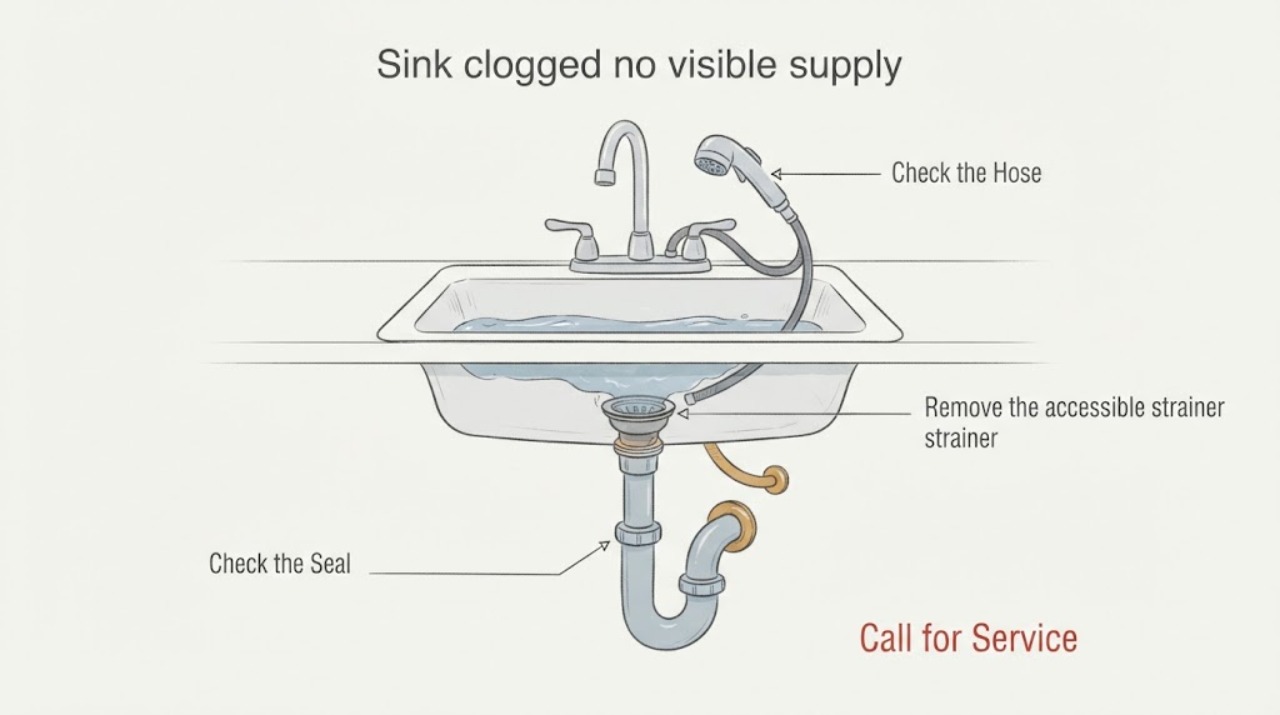
Sink clogged no visible supply leak: What to Check and What to Do Next
A sink can be fully clogged even when the faucet supply lines and shutoff valves are dry: the obstruction is usually at the stopper, strainer, P-trap, or downstream waste line rather than the pressurized supply. Dry the cabinet, keep the basin from overflowing, and briefly observe where water appears with the faucet off and then during a small, controlled flow.
-
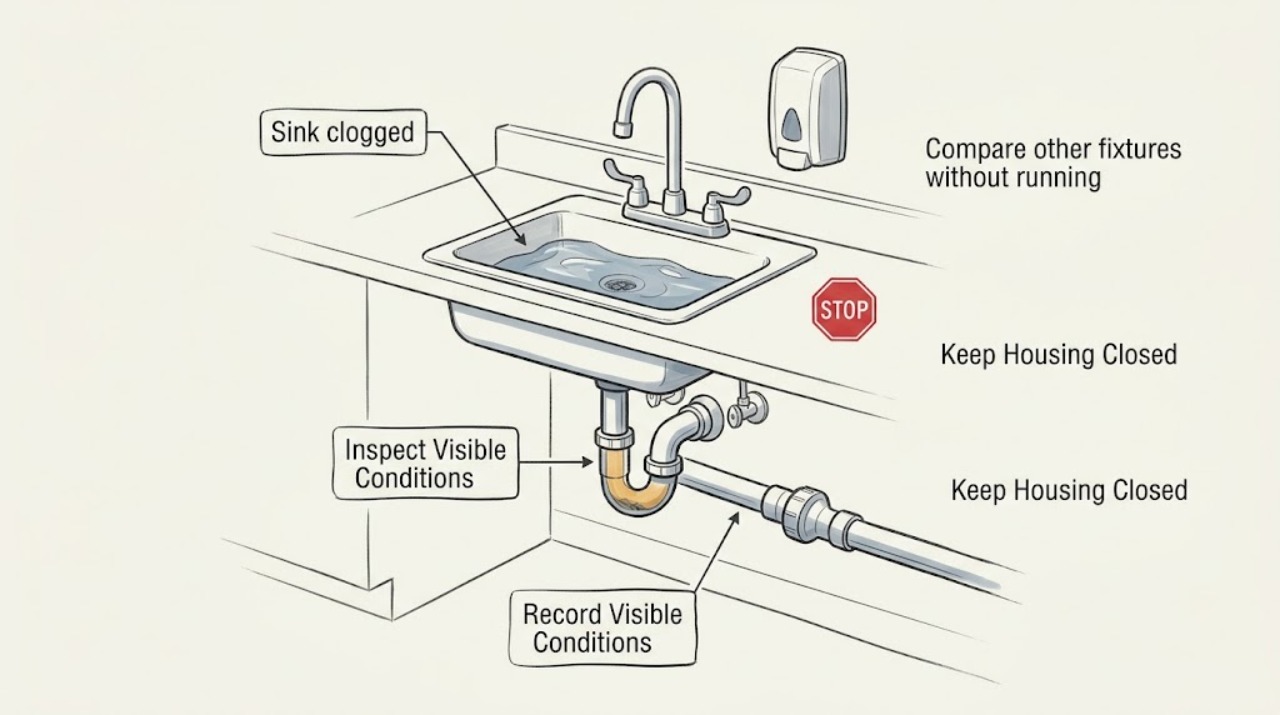
Sink clogged: What to Check and What to Do Next
First determine whether the blockage is limited to one sink or affects multiple fixtures, then note the water level, timing, gurgling, disposal context, and anything visible at the strainer. Stop adding water if the basin is filling, keep a garbage disposal switched off, and do not mix or add drain chemicals, use pressure tools, open the trap, reach into a disposal, or contact sewage.
-
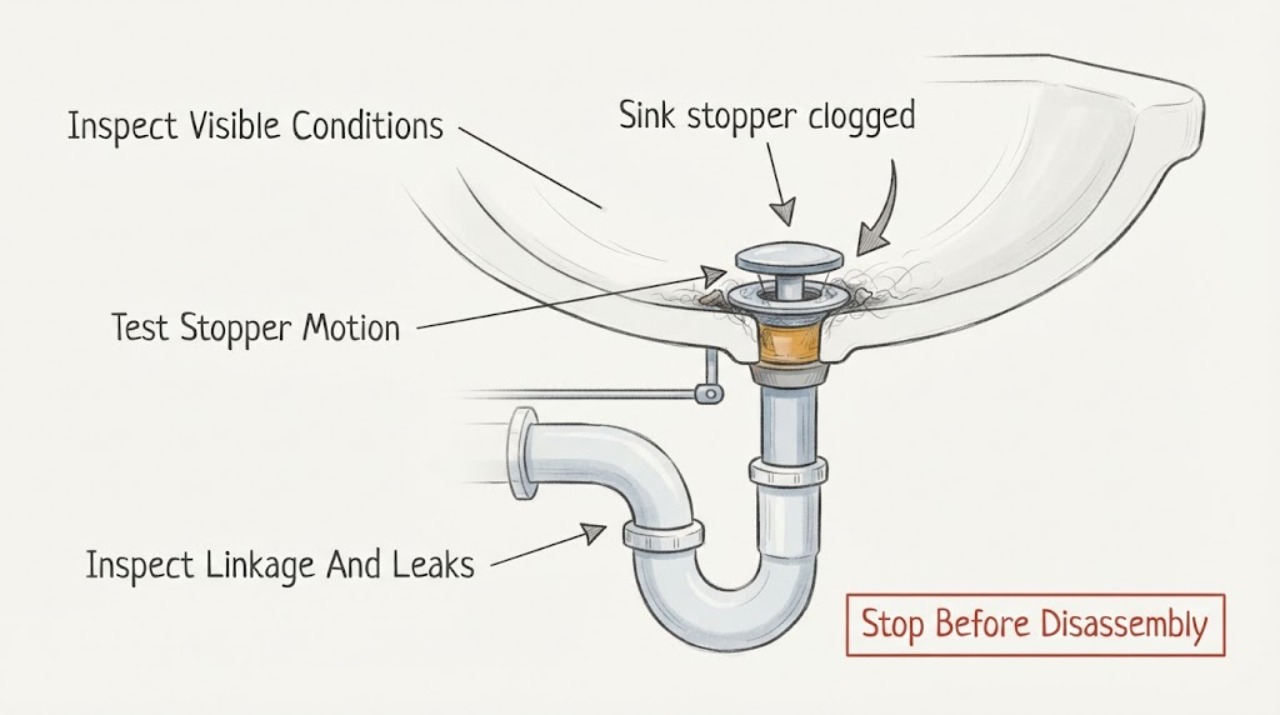
Sink stopper clogged: What to Check and What to Do Next
A clogged sink stopper can be caused by hair or residue around the stopper, a lift-rod or pop-up linkage that is not opening the stopper fully, or a blockage farther down the drain. First record whether the stopper moves and whether water drains slowly or not at all.
-
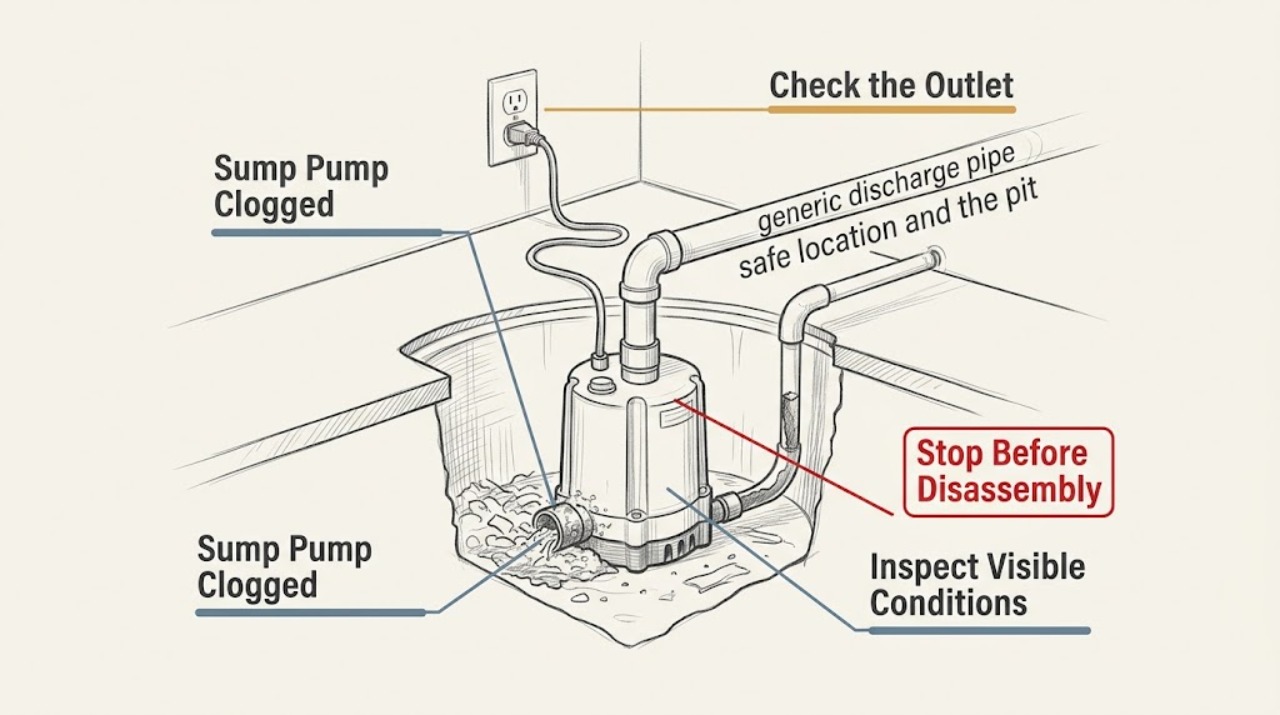
Sump Pump Clogged: Check the Discharge Line Without Entering the Water
A sump pump that runs but does not move water may have a blocked, frozen, kinked, or poorly draining discharge line, but a stuck float, failed pump, closed check or gate condition, or loss of power can look similar. Start with safety: do not step into standing water or reach into the pit, and do not touch the pump or cord until power is isolated from a dry, safe location.
-
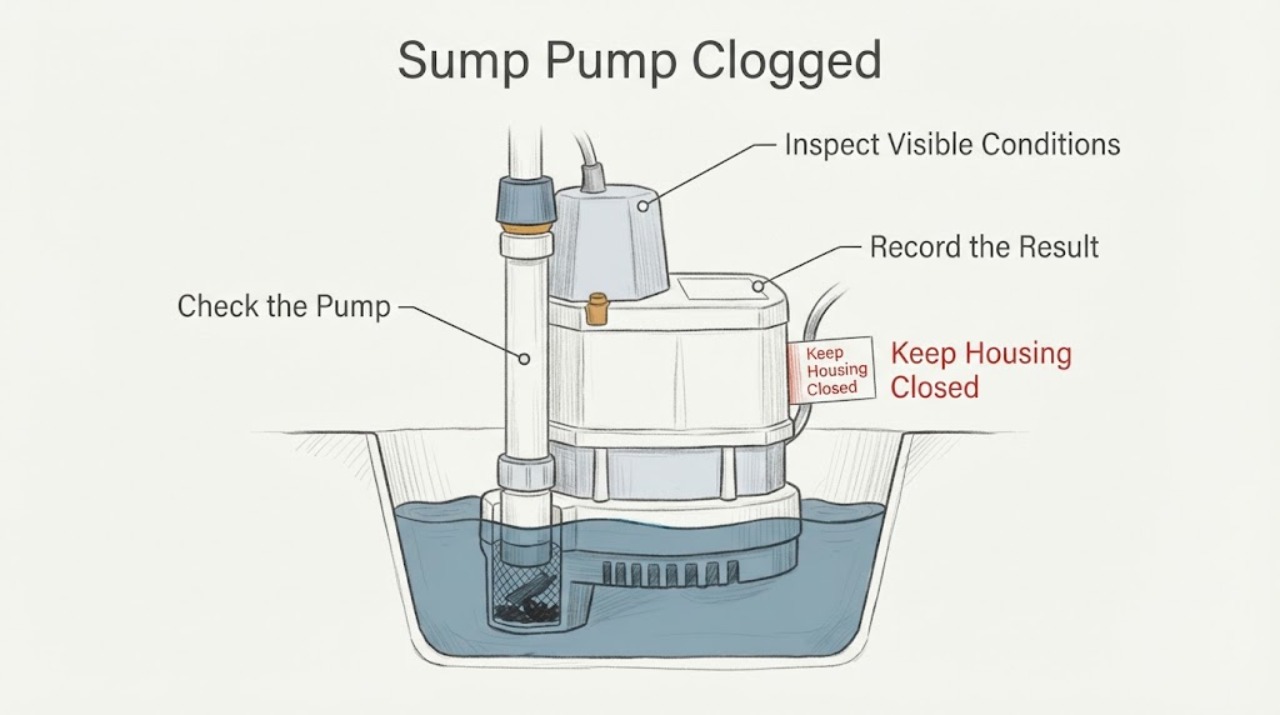
Sump Pump Clogged: Safe Checks Before a Seal Repair
A sump pump that will not move water may have debris at the inlet or impeller, a restricted discharge or check valve, a blocked float, or a model-specific seal problem. From a dry position, isolate power before handling anything, observe whether the motor runs and whether water leaves the discharge, then have a plumber inspect a suspected seal or an inaccessible blockage.
-
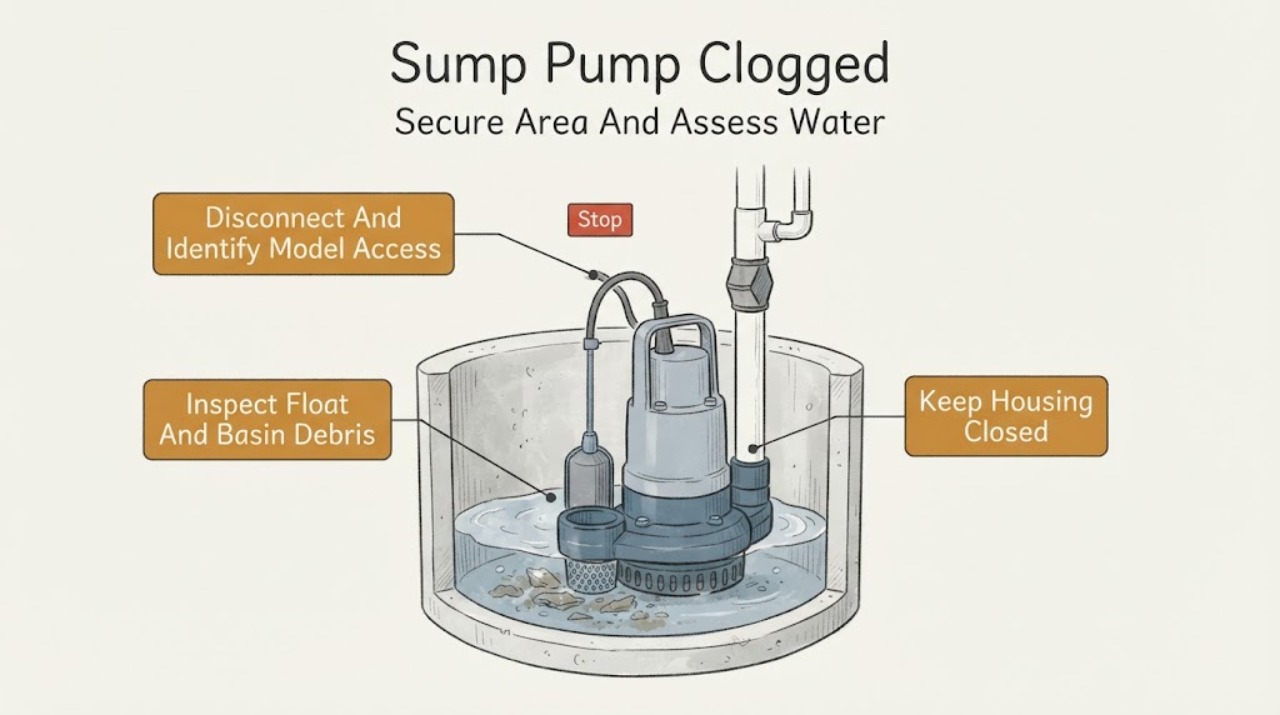
Sump Pump Clogged: Check the Intake and Float Without Entering the Water
Treat a clogged sump pump as a flooding and electrical-safety problem first. If water is rising rapidly, the pump is submerged in a way your model does not allow, the outlet or cord is wet, or you would need to stand in water, keep clear and call qualified help; never handle the pump or electrical parts while energized or wet.
-
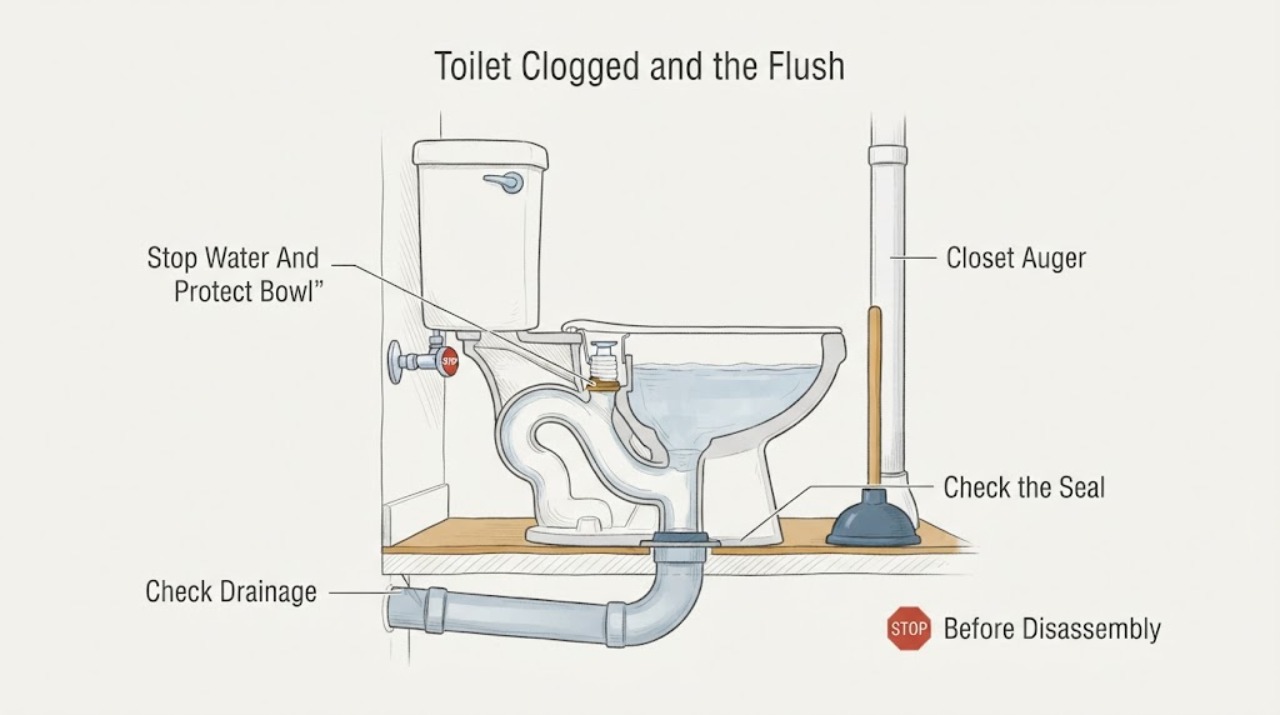
Toilet Clogged and the Flush Does Not Clear: What to Check and What to Do Next
If a toilet is clogged and the flush does not clear it, stop adding water first so the bowl cannot overflow. Close the toilet’s supply valve, or hold the flapper closed if water is still entering the bowl, then use a toilet flange plunger with enough water to seal the trap opening.
-
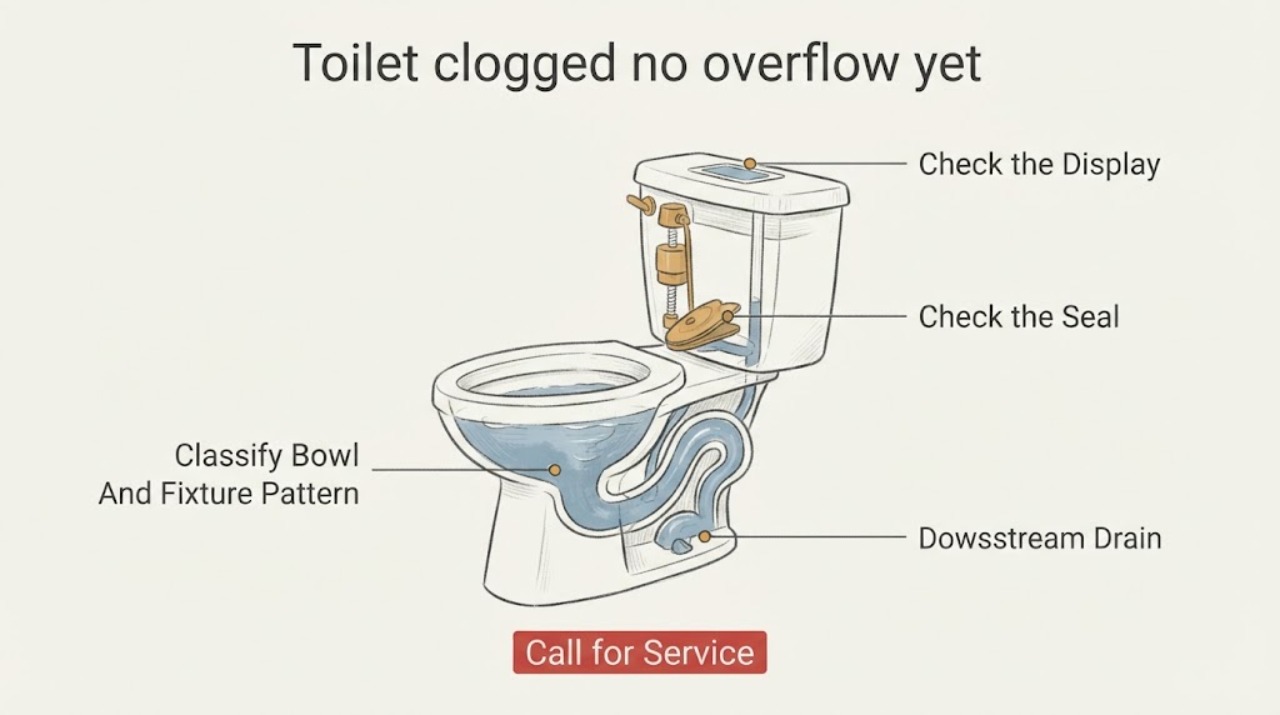
Toilet clogged no overflow yet: What to Check and What to Do Next
A toilet that is clogged but not overflowing can become an overflow quickly, so stop flushing and close the toilet's supply valve or hold the tank flapper closed before testing anything. Protect the floor, check whether the bowl is slowly dropping or staying high, and use a toilet plunger with a complete seal only when no drain cleaner may be present.
-
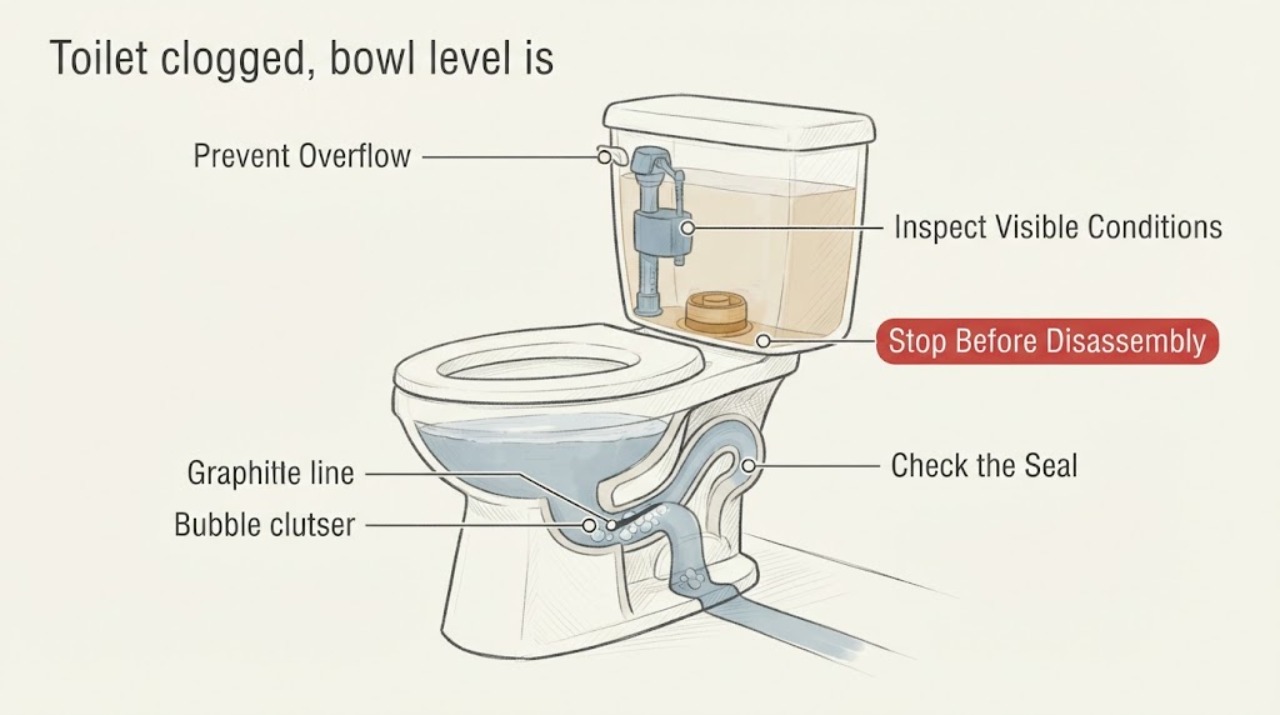
Toilet clogged, bowl level is high or slow: What to Check and What to Do Next
If a toilet bowl is high or drains slowly, prevent an overflow before testing it: do not flush again, close the normal water-supply valve if it turns easily, and keep towels ready. Confirm whether the level falls on its own, then use a toilet plunger with a full seal and controlled strokes.
-
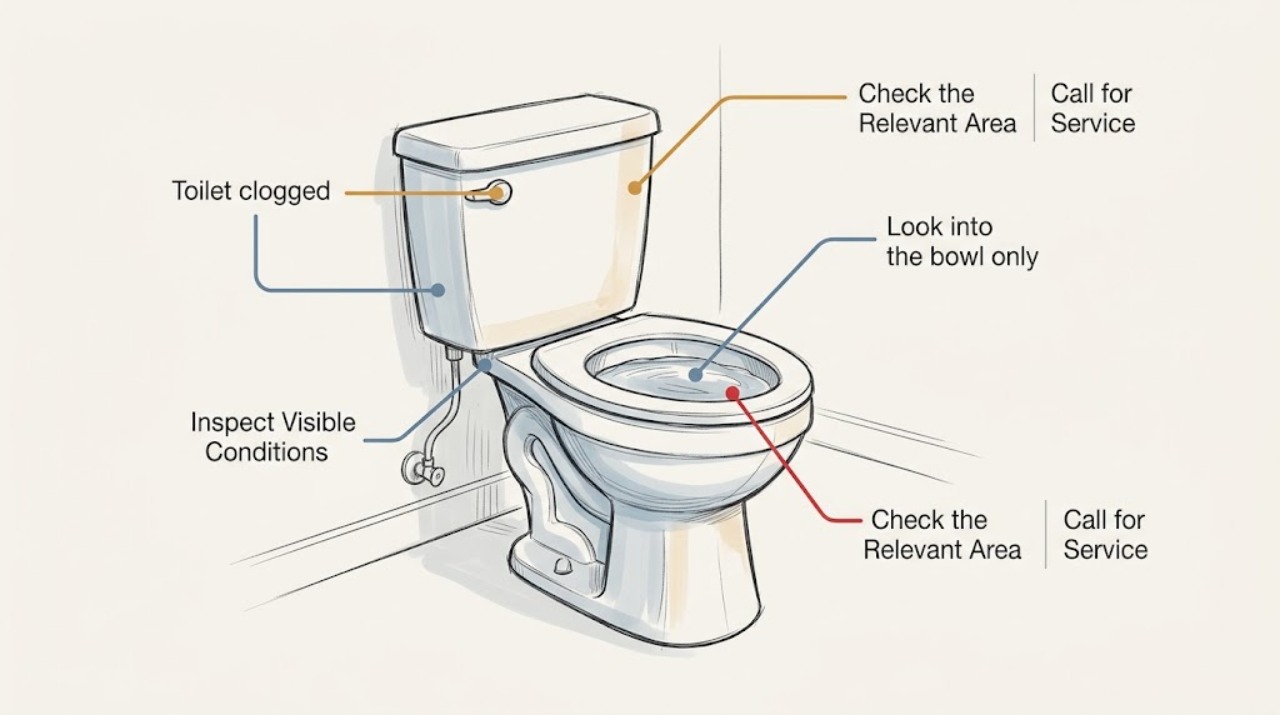
Toilet clogged: What to Check and What to Do Next
Stop flushing as soon as the bowl rises or drains slowly, and keep people away from any overflow. From a dry, safe position, note the bowl level, whether other fixtures are slow or backing up, whether a visible object is present, and whether there is sewage, odor, or water outside the bowl.
-
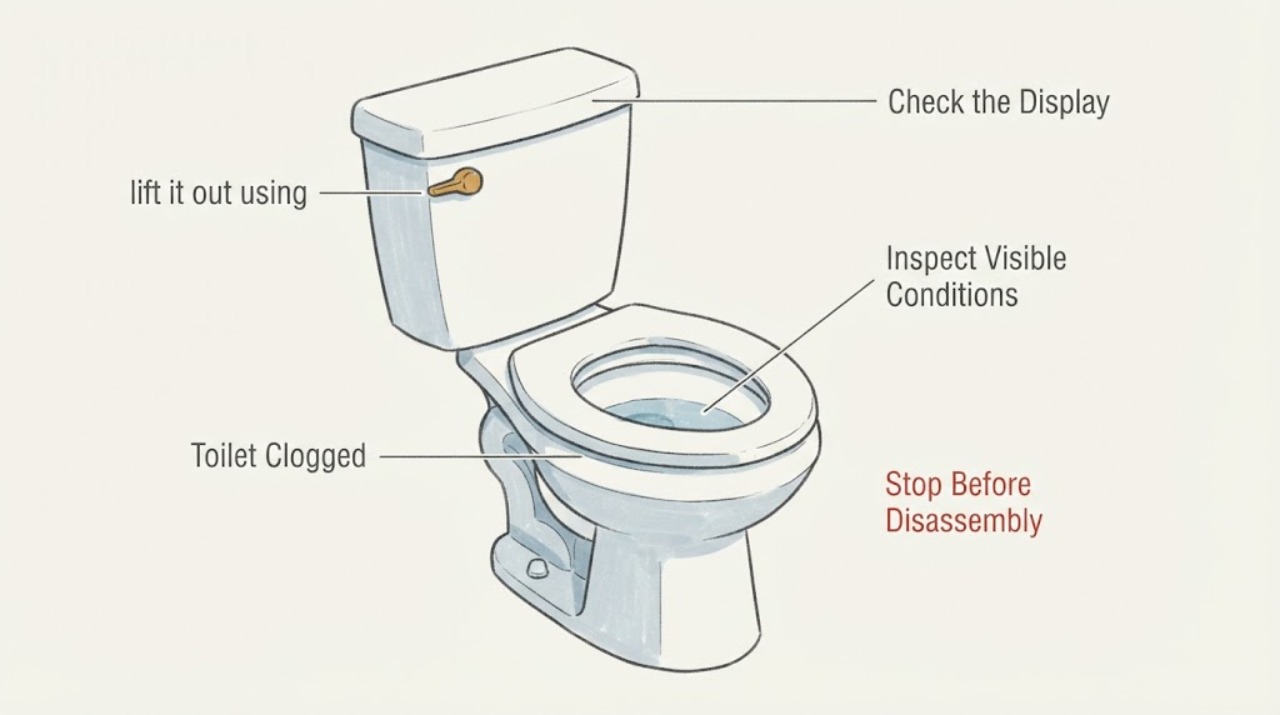
TOTO Toilet Clogged: What to Check and What to Do Next
Do not flush again if the TOTO toilet bowl is rising. Stop an automatic flush, close the toilet's shutoff valve, and, for an electronic TOTO/WASHLET model, disconnect power only from a dry, accessible connection.