
On this page
Start here
Quick answer
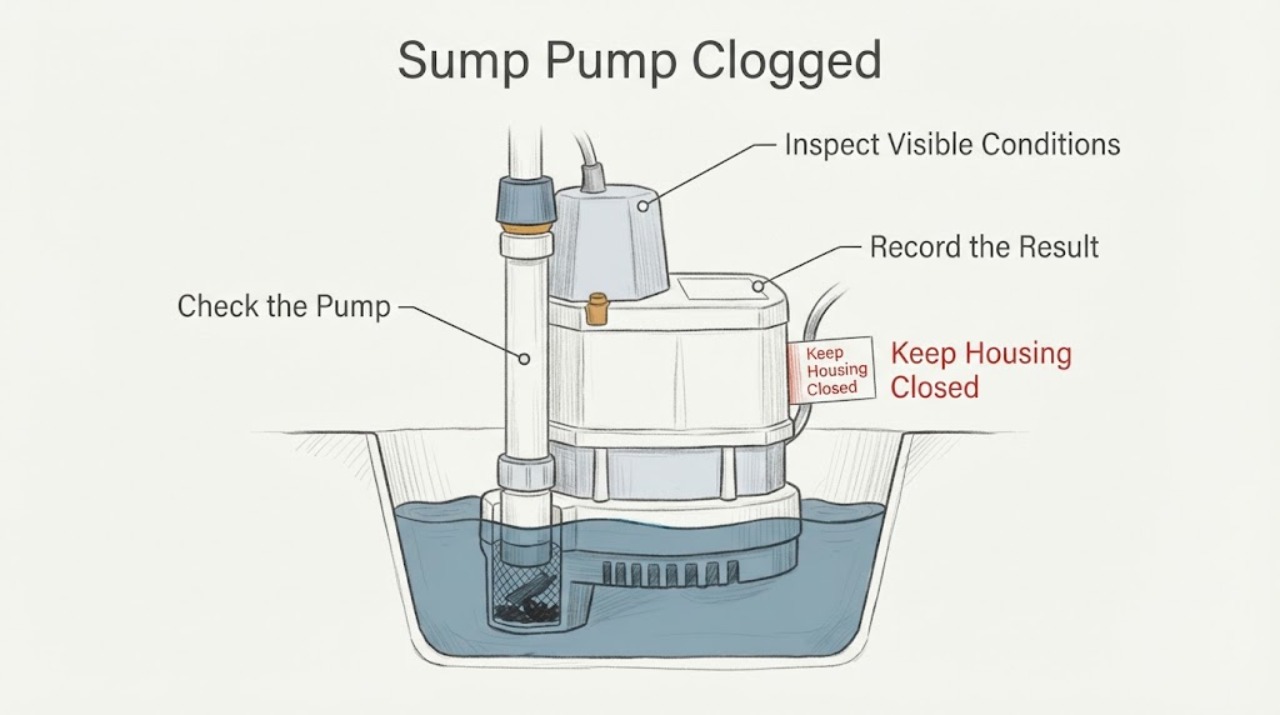
A sump pump that will not move water may have debris at the inlet or impeller, a restricted discharge or check valve, a blocked float, or a model-specific seal problem. From a dry position, isolate power before handling anything, observe whether the motor runs and whether water leaves the discharge, then have a plumber inspect a suspected seal or an inaccessible blockage. Do not reach into the pit, work around wet electrical connections, or keep testing a pump that trips protection, leaks from its housing, or cannot control the rising water.
Before you begin
Safety first
- Do not enter standing water, handle wet electrical connections, reach into the pump, open the housing, or keep testing after a trip, leak, burning smell, smoke, or rising water.
Work through in order
Diagnostic checks
Use only checks that match the exact appliance or system and its official guide.
-
Check 1
From a dry position, observe the basin water level, the pump cord and nearby receptacle, and any alarm or protection device. If water surrounds the connection, the floor is wet, or you cannot reach a control without entering water, stop and leave the area; otherwise isolate the pump at a safe, dry control point before handling it.
Expected result: The water is contained and the electrical connection remains dry, or the water is rising toward a connection or has already reached it.
Next step: With no electrical hazard, continue to the external operating check. With water at electrical equipment or uncontrolled flooding, stop troubleshooting and call a plumber and, when needed, an electrician or emergency service.
Stop if: Stop immediately for standing water at electrical equipment, a damaged cord, smoke, arcing, a hot connection, or a rapidly rising basin.
Why this matters
Why: A contained, dry setup permits a controlled inspection after power isolation. Water at an electrical connection creates shock risk and makes this a professional or emergency response, not a hands-on blockage check.
-
Check 2
Without opening the pump or reaching into the pit, note what happens when the float is supposed to call for pumping: silent, a hum, a running motor with no visible discharge, or a short cycle that leaves the level high. Look only from a dry, safe position at the outdoor discharge point.
Expected result: The motor is silent, it hums, it runs but no water exits, or it discharges and the level falls.
Next step: Record the exact sound and water response, then use the matching branch below rather than repeatedly cycling the pump.
Stop if: Stop if the pump repeatedly stalls, the protection device trips, the motor smells hot, or water rises despite operation.
Why this matters
Why: Silence points toward power, control, or float conditions; a hum or running motor with no discharge makes an obstruction, impeller, inlet, discharge, or check valve more likely. A falling level suggests the pump path works and the remaining issue may be intermittent debris, float movement, or backflow.
-
Check 3
After power is isolated and only from a safe, dry access position, visually inspect the basin for loose gravel, mud, wipes, or other debris and confirm that the float has clear space to move without contacting the basin wall, piping, or pump. Do not put fingers into the pump or move a submerged assembly by its cord.
Expected result: Debris is visible around the inlet or pump base, the float is obstructed, or the basin and float path look clear.
Next step: Remove only loose material that the manufacturer manual explicitly permits you to remove without reaching into a hazardous area; otherwise document the finding for the plumber.
Stop if: Stop for contaminated sewage, sharp objects, a damaged cord, a submerged connection, or any need to reach into the pump housing.
Why this matters
Why: Visible debris or a blocked float can explain a no-start or no-flow symptom. A clear view does not rule out an internal impeller obstruction or a seal fault, especially when the motor runs but the level does not fall.
-
Check 4
From outside the basin, trace the visible discharge route and look for a kink, ice, crushed hose, disconnected joint, closed valve, or a check-valve area that appears to be the source of backflow. Do not cut piping or open a pressurized or inaccessible joint.
Expected result: The discharge is visibly restricted or disconnected, water returns to the pit after a cycle, or the route looks open but the pump still cannot move water.
Next step: Keep the pump out of service and have a plumber clear or repair the discharge path when the restriction is not a simple, safely accessible external condition.
Stop if: Stop for a leaking joint, a burst or frozen line, sewage exposure, structural water damage, or a discharge that cannot be made safe to access.
Why this matters
Why: A restricted discharge or a check valve that does not pass flow can mimic a clogged pump and can leave the level high even while the motor runs. An apparently open route shifts suspicion toward the inlet, impeller, float, motor, or seal arrangement.
-
Check 5
Look for external seal clues without removing covers: water appearing at the motor or housing seam, leakage near a shaft or cord entry, oil-like contamination, or a pump that leaks even when the discharge path is visibly open. Keep the pump disconnected and do not try to reseal a submerged or powered housing.
Expected result: There is a housing or shaft-area leak, only the pipe joints are wet, or no external leak is visible.
Next step: Give the plumber the pump model, photos of the first wet point, and the motor/discharge behavior. Let the technician determine whether a model-specific seal, gasket, pump assembly, or blockage repair is appropriate.
Stop if: Stop for water entering the motor area, oil contamination, a cracked housing, a wet cord entry, smoke, or any request to run the pump with its housing open.
Why this matters
Why: A housing or shaft-area leak makes a seal or housing fault plausible and can expose electrical parts to water. Wet pipe joints point more toward plumbing connections. No visible leak does not prove the seal is sound because internal damage may be hidden.
-
Check 6
If the basin is dry enough to keep all electrical connections safe, the obstruction has been cleared only by a manufacturer-approved method, and no seal or housing leak is present, restore power once and observe one normal float cycle from a dry position. Watch both the discharge and the water level; do not use an extension cord or bypass a control.
Expected result: The pump starts, discharges, and lowers the level normally; it starts but does not move water; or it trips, leaks, or stops again.
Next step: Use the normal-cycle result to monitor briefly or arrange service; for any failed result, keep the system out of service and call a qualified pump or plumbing technician.
Stop if: Do not repeat the test after a trip, leak, burning smell, smoke, abnormal noise, or rising water.
Why this matters
Why: A normal cycle supports an intermittent external restriction or debris explanation. No flow, renewed leaking, a trip, or a stalled cycle means the fault remains and continued testing can worsen flooding or electrical risk.
-
Check 7
Prepare a service handoff: pump brand and model from the nameplate, basin water level, whether the motor was silent or running, discharge result, float movement, first wet point, visible debris, and any protection-device trip. Keep the basin cover and the pump in their installed position unless the manual and a qualified technician direct otherwise.
Expected result: The technician has the identity and symptom sequence, or the model and failure behavior are still unknown.
Next step: Request a qualified sump-pump or plumbing diagnosis, and mention the seal concern as a symptom-based inspection request rather than a confirmed part diagnosis.
Stop if: Escalate urgently when water is rising, the pump cannot control it, electrical equipment is wet, or the pit may contain contaminated wastewater.
Why this matters
Why: Pump designs differ in inlet, impeller, check-valve, and seal details, so the model and observed sequence determine whether a seal kit, pump replacement, or blockage service is appropriate. Guessing a seal from the word clogged risks a wrong part and another leak.
Use your observations
Decision map
Find the observation that best matches what you see, then follow the next safe action.
-
PATH 01Next step
What you see
The motor is silent and the float is obstructed or cannot move freely.
Do this next
Arrange qualified service and follow the exact model guidance.
Why this path and its safety boundary
Why it matters: Keep power isolated, clear only a visible obstruction that the model manual permits, and call service if the float or control still does not respond.
-
PATH 02Next step
What you see
The motor hums or runs but no water reaches the discharge.
Do this next
Arrange qualified service and follow the exact model guidance.
Why this path and its safety boundary
Why it matters: Treat the inlet, impeller, discharge, or check valve as the first blockage group; do not reach into the pump or dismantle a submerged housing. Arrange qualified service if the safe external inspection is inconclusive.
-
PATH 03Next step
What you see
Water leaves the discharge but returns to the basin, or the pump cycles too often.
Do this next
Arrange qualified service and follow the exact model guidance.
Why this path and its safety boundary
Why it matters: Have the check valve, float setting, and discharge route assessed; backflow or a control issue may be present rather than a clogged inlet.
-
PATH 04Next step
What you see
Water appears at the motor housing, shaft area, or cord entry.
Do this next
Arrange qualified service and follow the exact model guidance.
Why this path and its safety boundary
Why it matters: Stop operation and request a model-specific seal or housing diagnosis. Do not run the pump to see whether the leak gets worse.
-
PATH 05Next step
What you see
The pit is rising, electrical equipment is wet, or the pump has smoke, arcing, a hot connection, or a burning smell.
Do this next
Arrange qualified service and follow the exact model guidance.
Why this path and its safety boundary
Why it matters: Leave the wet area, avoid touching electrical equipment, and contact emergency or qualified electrical and plumbing help from a safe location.
Helpful context
Understand the symptom
The word clogged does not identify one part. A pump can hum with no discharge, run briefly and leave the water level high, or fail to start because debris interferes with the float. A damaged seal is a separate possibility: it can allow water into a motor area or create a leak, but the seal arrangement differs by pump design and model. Treat the seal as a conditional service finding, not as a part to order from the symptom alone.
Liberty Pumps service guidance separates a blocked discharge, stuck check valve, obstructed impeller or clogged inlet screen from an electrical or float fault. Its manual also says to disconnect power before handling the pump and to keep fingers away from suction and discharge openings. Those boundaries matter more than a quick test when the basin is wet or rising.
If the pit is filling faster than the water can be controlled, use only a safe, dry shutoff point that you can reach without entering water. If that is not possible, leave the area and arrange urgent help; a flooded basement can hide energized equipment and contaminated water.
Only after diagnosis
Potential parts
- Model-specific pump seal or gasket
Consider this only when an inspection finds a leak at the motor or shaft area and the exact pump design supports a replaceable seal or gasket.
Confirm the exact brand, model, revision, and service instructions before selecting any seal; do not assume a generic seal fits. - Pump inlet screen or debris guard
Consider this only when the model uses a removable guard and the inspection confirms damage or a missing part after the blockage is identified.
Do not order from the symptom alone. Verify the pump model and manufacturer fit information.
When checks do not resolve it
Need a professional?
Safety scope: Do not enter standing water, handle wet electrical connections, reach into the pump, open the housing, or keep testing after a trip, leak, burning smell, smoke, or rising water.
Common questions
FAQ
Does a clogged sump pump always need a new seal?
No. A blocked inlet, impeller, discharge, check valve, or float can produce the same symptom. A seal is a conditional diagnosis when the housing or shaft area leaks, and the correct design must be confirmed by model.
Can I reach into the pit to remove the clog?
Do not reach into the pump or its suction opening. Power must be isolated before handling, and wet basements can contain energized connections or contaminated water. Use only a manufacturer-approved, safely accessible inspection method or call a qualified technician.
What if the pump runs but the water level does not fall?
Observe the discharge from a dry position. A restricted discharge, check valve, inlet, or impeller can block flow even while the motor runs. If the safe external check does not identify the restriction, stop operation and arrange service.
When is a clogged sump pump an emergency?
Treat rising water, wet electrical equipment, a trip, smoke, arcing, burning odor, a housing leak, or contaminated water as a stop condition. Leave the area and obtain qualified emergency, plumbing, or electrical help from a safe location.
Read the exact guide
Official sources
- S30-Series Builder Series Sump Pumps, Installation ManualLiberty Pumps · Liberty Pumps S30-Series sump pump installation, safety, maintenance, and troubleshooting guidance
- ProductsLiberty Pumps · Liberty Pumps 240-Series sump pump product information and design applicability
Community feedback
Share a repair observation
Share a plain-text repair observation. Accepted observations are published automatically; this page may take a moment to update.