
Plumbing guides
Sump Pumps Repair Guides
Sump-pump guidance for power, switches, discharge, cycling, and drainage.
Published sump pumps guides
Choose the guide that best matches the equipment and symptom you are seeing.
-
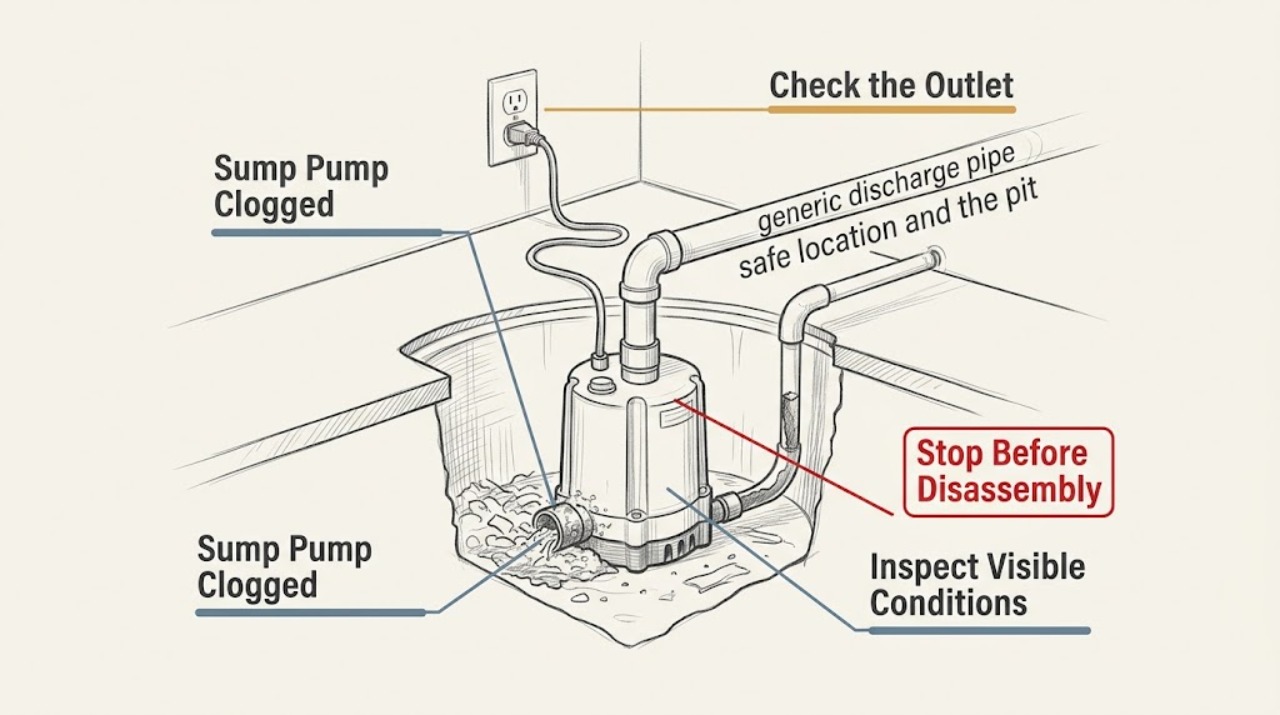
Sump Pump Clogged: Check the Discharge Line Without Entering the Water
A sump pump that runs but does not move water may have a blocked, frozen, kinked, or poorly draining discharge line, but a stuck float, failed pump, closed check or gate condition, or loss of power can look similar. Start with safety: do not step into standing water or reach into the pit, and do not touch the pump or cord until power is isolated from a dry, safe location.
-
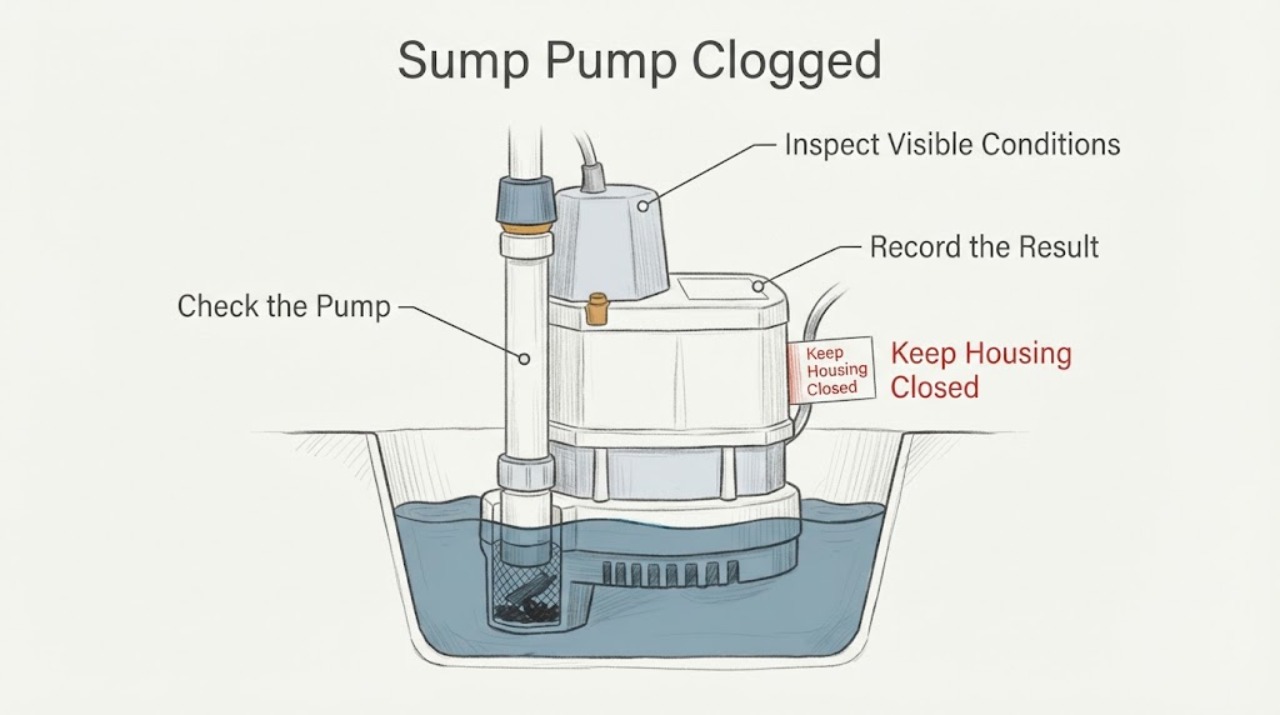
Sump Pump Clogged: Safe Checks Before a Seal Repair
A sump pump that will not move water may have debris at the inlet or impeller, a restricted discharge or check valve, a blocked float, or a model-specific seal problem. From a dry position, isolate power before handling anything, observe whether the motor runs and whether water leaves the discharge, then have a plumber inspect a suspected seal or an inaccessible blockage.
-
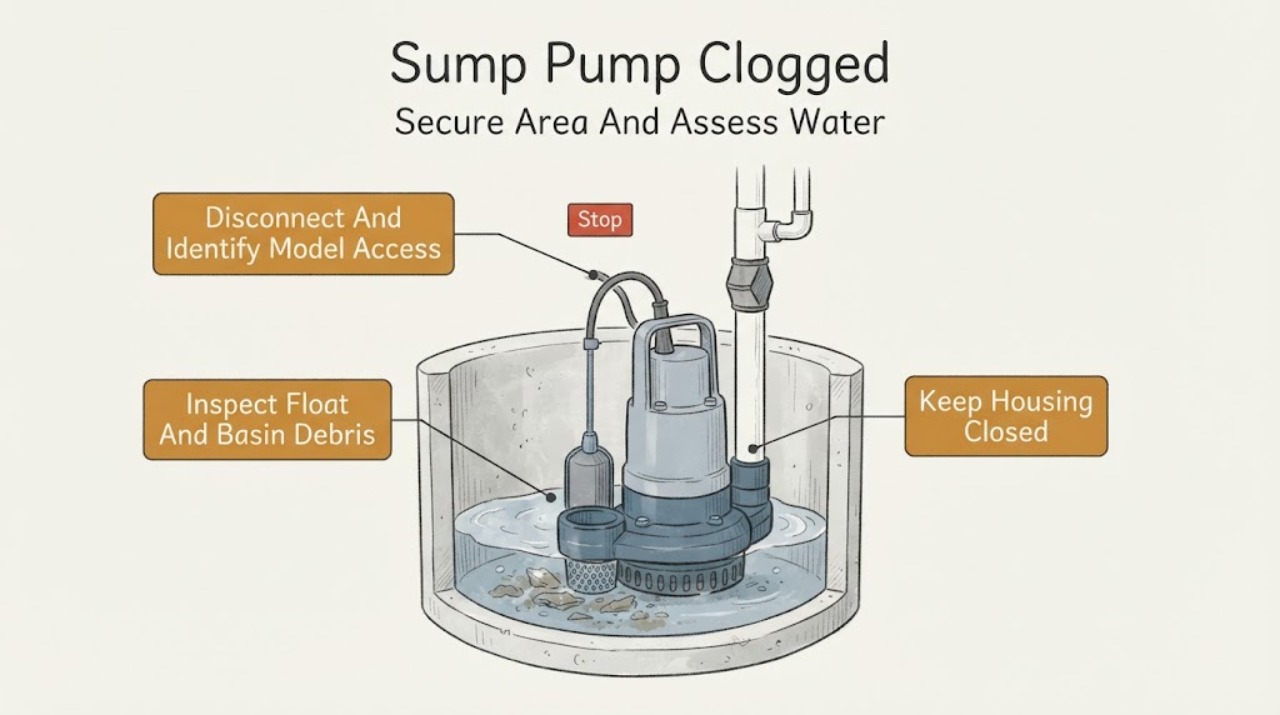
Sump Pump Clogged: Check the Intake and Float Without Entering the Water
Treat a clogged sump pump as a flooding and electrical-safety problem first. If water is rising rapidly, the pump is submerged in a way your model does not allow, the outlet or cord is wet, or you would need to stand in water, keep clear and call qualified help; never handle the pump or electrical parts while energized or wet.
-
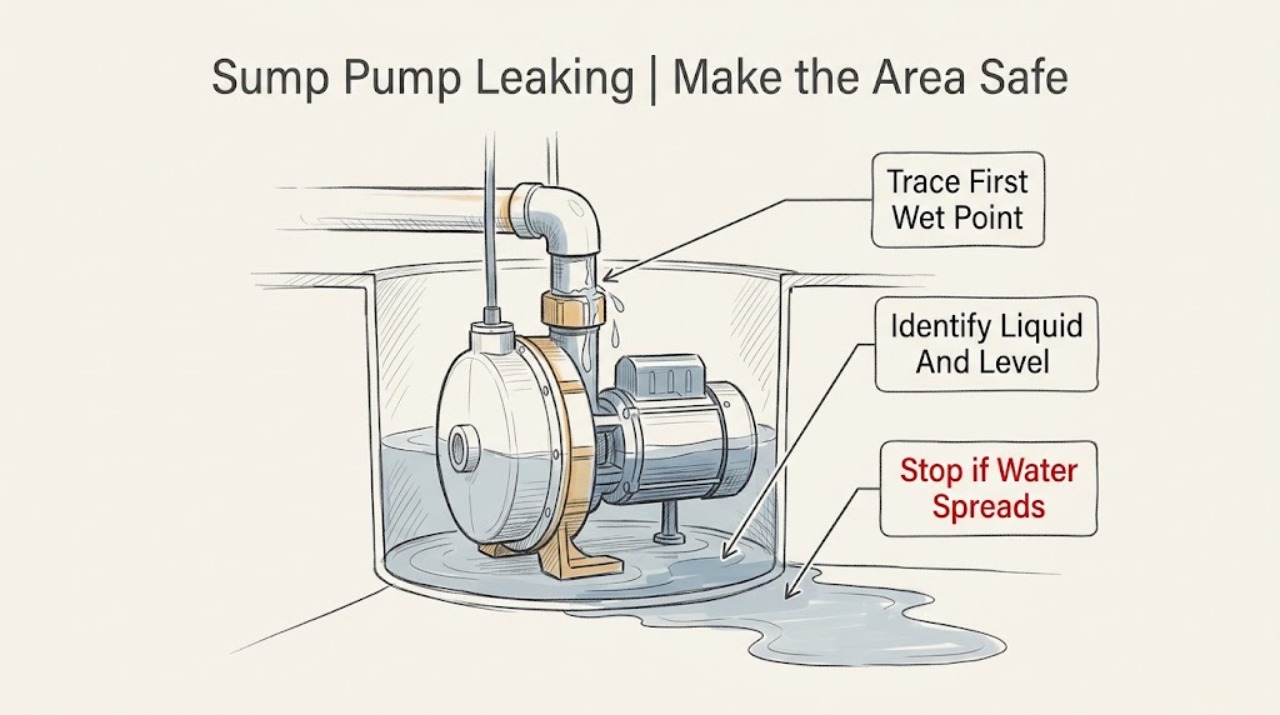
Sump Pump Leaking: Find the First Wet Point Safely
A sump pump leak may come from the tank or lid, the pump discharge connection, a check valve or pipe joint, a failed or overflowing pump, or water entering the basin from another source. Do not reach into a wet pit or handle a pump cord, plug, or junction box while standing in water.
-
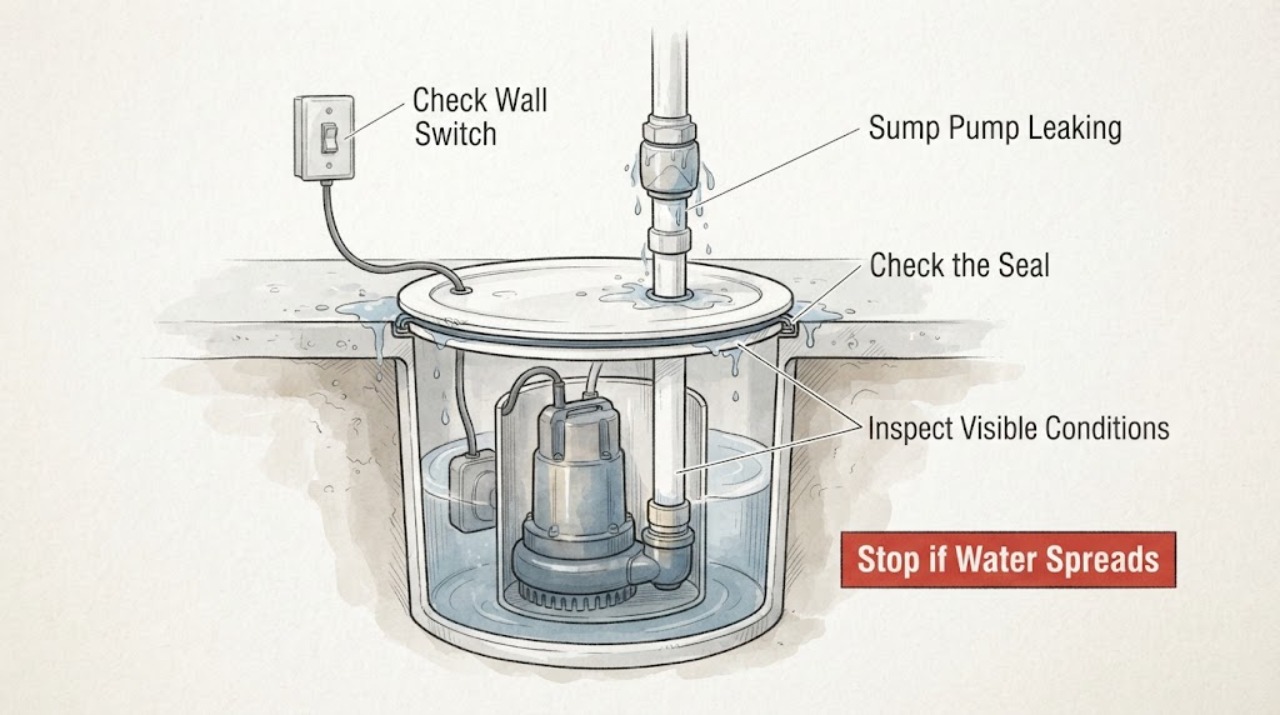
Sump Pump Leaking: Find the Leak Without Creating a Shock or Flood Risk
First decide whether water is leaking from the pump or piping, and whether it is near energized equipment or a rising sump. Keep clear of water around the plug, outlet, or control box, and disconnect the pump only from a safe, dry position; if the pit is flooding or the pump cannot keep up, use a backup pump or qualified emergency help.
-
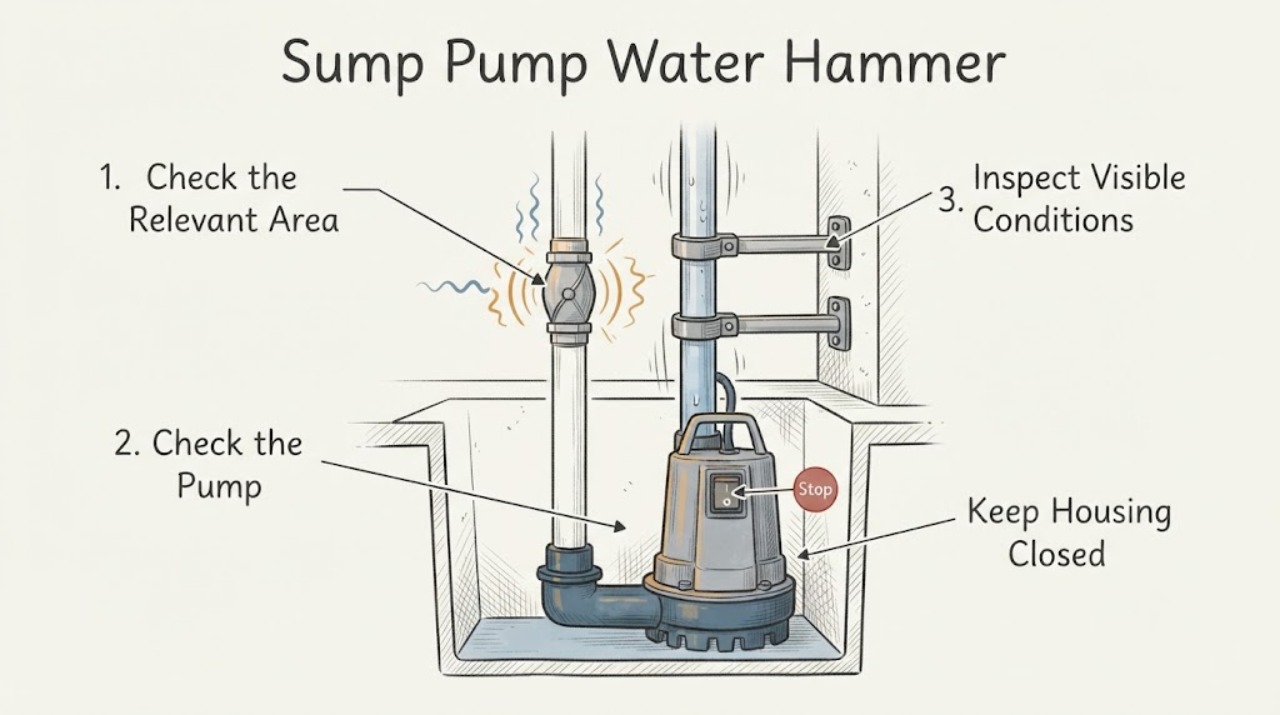
Sump Pump Water Hammer: Find the Bang and Quiet the Discharge Line
A sump pump bang that occurs just after the motor stops is commonly the discharge check valve closing as water reverses, or the water column and pipe striking a nearby wall or joist. First listen for when the noise occurs and watch the exposed discharge pipe without putting hands near the pump.